NFPA 70E Training
Our customized live online or in‑person group training can be delivered to your staff at your location.

- Live Online
- 6 hours Instructor-led
- Group Training Available
Regular Price:
$199
Coupon Price:
$149
California can proceed with its suit seeking more than $4 billion in restitution from Pacific Gas and Electric Corp., the U.S. Ninth Circuit Court of Appeals ruled recently.
In a 23-page opinion, the federal appeals court ruled that a San Francisco Superior Court should hear the lawsuit filed by state Attorney General Bill Lockyer in 2002 against San Francisco-based PG&E Corp.
In that suit, the attorney general alleged that PG&E Corp. illegally took about $4 billion to $5 billion from its utility from 1997 to 1999. The suit claimed the move violated California Public Utilities Commission rules requiring the holding company to give priority to its subsidiary's financial needs. The utility company filed for bankruptcy protection in 2001.
But U.S. District Judge Vaughn Walker ruled in 2003 that the state and the city of San Francisco, which filed a similar a lawsuit, could not seek restitution because PG&E was in bankruptcy at the time and federal bankruptcy laws blocked the restitution case from being heard in state court.
However, a three-judge panel saw things differently. In a 2-to-1 decision, the judges cleared the way for Lockyer to present the case to San Francisco Superior Court Judge Richard Kramer. The court said that the bankruptcy laws do not prohibit Lockyer and the city of San Francisco from pursuing the money.
"We're pleased that we're allowed to pursue this on behalf of ratepayers," Lockyer said in a recent phone interview.
PG&E spokesman Brian Hertzog said the transfer of money to the holding company complied with public utilities commission rules. He said the issues should have been resolved in bankruptcy court and not state court.
"The important thing for us is that it does not in any way change the fact or our view of the merits of (Lockyer's) case," Hertzog said. "The transactions between the parent and subsidiary were routine."
Hertzog said any claims of restitution should be between the parent company and its subsidiary. He said PG&E has not decided whether to appeal the ruling.
Lockyer said the state has filed about 100 lawsuits against energy firms that he said overcharged consumers during the energy crisis a few years ago. Some of those suits have been settled and to date the state has collected about $5.5 billion, he said.
Related News

No time to be silent on NZ's electricity future
New Zealand Renewable Energy Strategy examines decarbonisation, GHG emissions, and net energy as electrification accelerates,…
View more

Solar Plus Battery Storage Cheaper Than Conventional Power in Germany
Germany Solar-Plus-Storage Cost Parity signals grid parity as solar power with battery storage undercuts conventional…
View more

How the 787 uses electricity to maximise efficiency
Boeing 787 More-Electric Architecture replaces pneumatics with bleedless pressurization, VFSG starter-generators, electric brakes, and heated…
View more

Renewables surpass coal in US energy generation for first time in 130 years
Renewables Overtake Coal in the US, as solar, wind, and hydro expand grid share; EIA…
View more
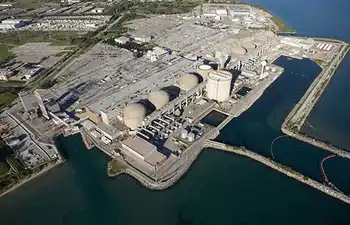
Pickering NGS life extensions steer Ontario towards zero carbon horizon
OPG Pickering Nuclear Refurbishment extends four CANDU reactors to bolster Ontario clean energy, grid reliability,…
View more

Senate Committee Advised by WIRES Counsel That Electric Transmission Still Faces Barriers to Development
U.S. Transmission Grid Modernization underscores FERC policy certainty, high-voltage infrastructure upgrades, renewables integration, electrification, and…
View more
Sign Up for Electricity Forum’s Newsletter
Stay informed with our FREE Newsletter — get the latest news, breakthrough technologies, and expert insights, delivered straight to your inbox.
Electricity Today T&D Magazine Subscribe for FREE

Stay informed with the latest T&D policies and technologies.
- Timely insights from industry experts
- Practical solutions T&D engineers
- Free access to every issue
