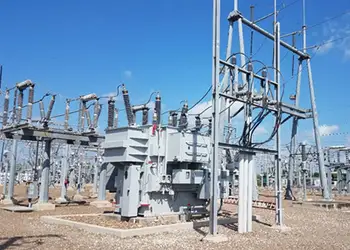
Substation Relay Protection Training
Our customized live online or in‑person group training can be delivered to your staff at your location.
- Live Online
- 12 hours Instructor-led
- Group Training Available
Regular Price:
$699
Coupon Price:
$599
DOE Clean Energy Loan Guarantees back renewable power projects and manufacturing, leveraging ARRA authority, development finance authorities, revenue-backed debt, municipal bonds, and co-guarantors to finance solar, wind, geothermal, biomass, and hydroelectric infrastructure.
Inside the Issue
Federal guarantees supporting renewable projects and components, with DFAs sharing risk to unlock low-cost debt capital.
- Authorized by the American Recovery and Reinvestment Act.
- Applies to solar, wind, geothermal, biomass, hydro projects.
- DFAs must commit at least 5% of total project debt.
- Revenue-backed or secured debt can meet DFA share.
The U.S. Department of Energy is asking governments and development finance authorities to participate in the first stage of a new federal loan guarantee program for alternative energy projects, which is expected to be used in conjunction with municipal bonds and will guarantee at least $50 billion of debt.
The program was authorized by the American Recovery and Reinvestment Act in 2009. Loans guaranteed by the federal government can be used to fund alternative energy production and manufacturing components used to generate solar, wind, geothermal, biomass, and hydroelectric power.
Development finance authorities acting as third-party lenders will be expected to provide direct debt or debt guarantees equal to at least 5% of the total project debt for the life of the loan, according to DOE documents.
The authorities would be allowed to issue revenue-backed debt or other kinds of secured debt to meet their required share of the project cost, after the department evaluates their default and loss rates over the prior 10 years.
Part of the program's novelty is that it will be the DOE's first time weighing in on the underwriting value of government-run development finance authorities, according to Steven Klein, founding partner of First Infrastructure LLC. Klein worked with the DOE on a request for information it issued October 29. The deadline for responses is January 15.
The department said it may open the program to renewable energy system manufacturing projects in which the development finance organizations - including muni issuers - could act as the lender or co-guarantor, similar to the Solyndra loan guarantee arrangement in solar manufacturing.
Klein said the DOE will be providing "an assessment of their strength, and therefore the value of their underwriting," but it will not make selections or rejections in this first stage of the program.
The DOE said it is "also seeking information for [development finance authorities] regarding any innovative and collaborative lending implementation mechanisms that utilize regional, local, or other partnerships."
Fifty-billion dollars is a conservative estimate for the amount of debt that will be guaranteed, Klein said, adding that after the DOE's first renewable-energy loan guarantee was issued, unguaranteed debt issued to complement the DOE-guaranteed loans is likely to include municipal bonds for sectors ranging from solar to biofuel companies as well. He could not estimate the total amount of muni bond issuance that would result.
The Council of Development Finance Agencies, a group representing more than 265 public, private and nonprofit development entities, said the program will encourage the use of loan guarantees for grid modernization and renewables that have been underused for years.
Agencies "would be able to issue taxable bonds and still be able to participate in this program," said Brian M. Anderson, education and policy manager for the CDFA.
"Also, there would be the question of whether [Build America Bonds] or [Recovery Zone Economic Development Bonds] would be able to be used for government-owned energy projects," Anderson added.
The DOE loan guarantees are expected to be either on parity with, or senior to, other debt, and solar projects often hinge on them for financing needs. That structure would be "sort of the opposite of TIFIA," or the Transportation Infrastructure Financing and Innovation Act program, Klein said.
TIFIA supplies Treasury-rate loans and credit assistance to public and private entities for transportation projects. TIFIA credit is usually subordinate to the project's capital market or commercial bank debt, except in cases of bankruptcy, insolvency, or liquidation, which automatically springs TIFIA up to parity debt.
Related News
Related News
Nigeria's Electricity Crisis
Nigeria Electricity Crisis undermines energy access as aging grid, limited generation, and transmission losses cause…
View more
Chester County Landfill Converts Methane to Renewable Gas
SECCRA Waga Energy RNG Partnership captures landfill methane with WAGABOX, upgrades biogas to pipeline-quality RNG,…
View more
Ontario's electricity 'recovery rate' could lead to higher hydro bills
Ontario Hydro Flat Rate sets a single electricity rate at 12.8 cents per kWh, replacing…
View more
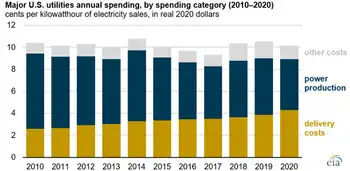
Major U.S. utilities spending more on electricity delivery, less on power production
U.S. Utility Spending Shift highlights rising transmission and distribution costs, grid modernization, and smart meters,…
View more
Trump's Proposal on Ukraine's Nuclear Plants Sparks Controversy
Ukraine Nuclear Plant Ownership Proposal outlines U.S. management of Ukrainian reactors amid the Russia-Ukraine war,…
View more
Spain and Ireland sign MoU to study undersea electricity interconnector
Spain-Ireland electricity interconnector: Governments signed a three-year MoU to study technical and economic feasibility, tasking…
View more
Sign Up for Electricity Forum’s Newsletter
Stay informed with our FREE Newsletter — get the latest news, breakthrough technologies, and expert insights, delivered straight to your inbox.
Electricity Today T&D Magazine Subscribe for FREE

Stay informed with the latest T&D policies and technologies.
- Timely insights from industry experts
- Practical solutions T&D engineers
- Free access to every issue
