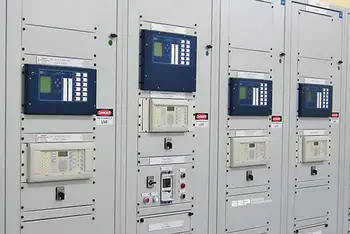
Protective Relay Training - Basic
Our customized live online or in‑person group training can be delivered to your staff at your location.
- Live Online
- 12 hours Instructor-led
- Group Training Available
Regular Price:
$699
Coupon Price:
$599
EIPC 2030 Transmission Scenarios examine NYISO-led analyses of Eastern Interconnection reliability, capital costs, production costs, and grid upgrades under Business as Usual, National RPS, and combined federal climate policy with energy efficiency and smart grid.
The Latest Developments
Three stakeholder-defined 2030 grid futures EIPC analyzed to gauge reliability, costs, and needed transmission across the Eastern Interconnection.
- Business as Usual with existing RPS and projected load growth
- National RPS meeting 30% renewables by 2030 via regional plans
- Combined federal climate policy with 42% CO2 cuts by 2030
- Production and capital costs modeled for resources and lines
- Reliability-driven transmission builds across Eastern Interconnection
The Eastern Interconnection Planning Collaborative EIPC recently announced it has completed the transmission analyses as part of an electric system transmission planning effort funded by the U.S. Department of Energy DOE.
“The EIPC has reached a major milestone with the completion of the electric system transmission analyses of the stakeholder-defined scenarios for the year 2030,” said Stephen G. Whitley, president and CEO of the New York Independent System Operator NYISO and chair of the EIPC Executive Committee.
Stakeholders had defined three scenarios as part of the first phase of the EIPC’s studies. As a result of the scenario analyses conducted as a part of the second phase, three future transmission systems were created to support the chosen scenarios from a reliability perspective.
In addition, the capital costs to install the future resources assumed in each scenario and the cost to install the supporting transmission facilities were calculated, with attention to system efficiency considerations, along with the projected annual production costs. Documentation of these results is included in a comprehensive draft report on the study.
The three scenarios chosen by stakeholders are described in the report as:
1. Business as Usual: This scenario represents a continuation of existing conditions, including load growth, regional planning such as ISO New England's 10-year plan and existing Renewable Portfolio Standards RPSs and proposed environmental regulations as they were understood in the summer of 2011.
2. National RPS: State and Regional Implementation: This scenario contemplates meeting 30 percent of the nation’s electricity requirements from renewable resources by 2030. This would be achieved by utilizing a regional implementation strategy that leverages advances in energy technologies for deployment.
3. Combined Federal Climate and Energy Policy: This scenario represents a combination of the following: a reduction of economy-wide carbon emissions by 42 percent from 2005 levels in 2030 and 80 percent in 2050 meeting 30 percent of the nation’s electricity requirements from renewable resources by 2030 and significant deployment of energy efficiency measures, demand response, distributed generation, smart grid and other low-carbon technologies. This scenario would be achieved by utilizing a nationwide/eastern interconnection-wide implementation strategy.
The EIPC project team included transmission planning expertise from EIPC members, stakeholder facilitators from The Keystone Center and technical experts from Charles River Associates to support the capacity expansion planning effort and production cost analyses.
Related News
Related News
Invest in Hydropower to Tackle Coronavirus and Climate Crisis Impacts
Hydropower Covid-19 Resilience highlights clean, reliable energy and flexible grid services, with pumped storage, automation,…
View more
Is Ontario embracing clean power?
Ontario Clean Energy Expansion signals IESO-backed renewables, energy storage, and low-CO2 power to meet EV-driven…
View more

Yet another Irish electricity provider is increasing its prices
Electric Ireland Electricity Price Increase stems from rising wholesale costs as energy suppliers adjust tariffs.…
View more
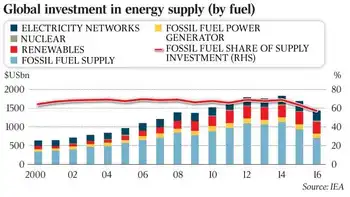
IEA warns fall in global energy investment may lead to shortages
Global Energy Investment Decline risks future oil and electricity supply, says the IEA, as spending…
View more
Smaller, cheaper, safer: Next-gen nuclear power, explained
MARVEL microreactor debuts at Idaho National Laboratory as a 100 kW, liquid-metal-cooled, zero-emissions generator powering…
View more
Alberta's Path to Clean Electricity
Alberta Clean Electricity Regulations face federal mandates and provincial autonomy, balancing greenhouse gas cuts, net-zero…
View more
Sign Up for Electricity Forum’s Newsletter
Stay informed with our FREE Newsletter — get the latest news, breakthrough technologies, and expert insights, delivered straight to your inbox.
Electricity Today T&D Magazine Subscribe for FREE

Stay informed with the latest T&D policies and technologies.
- Timely insights from industry experts
- Practical solutions T&D engineers
- Free access to every issue

