NFPA 70E Training
Our customized live online or in‑person group training can be delivered to your staff at your location.

- Live Online
- 6 hours Instructor-led
- Group Training Available
Regular Price:
$199
Coupon Price:
$149
Even if temperatures soar this summer, Toledo and other cities in the Midwest are expected to have more than enough electricity for lights, air conditioning, and appliances, experts said.
That is in part because of added standby power plants, or small plants fueled by natural gas that produce electricity during times of peak use.
Such electricity generation is expensive, however, and that will cost utilities needing it.
But FirstEnergy Corp., which owns Toledo Edison, has a locked-in rate for the next 3 1/2 years, so higher costs shouldn't show up on consumer bills.
Having enough power in the summer is especially dear to the hearts of Midwesterners who remember the great blackout of August, 2003, when instability on FirstEnergy's lines created a power failure that quickly spread to eight states.
Peak demand for electricity in the Midwest is expected to be up 9 percent from last year and nationwide is expected to be 6 percent higher, to 819,500 megawatts, according to the North American Electric Reliability Council.
The council, in New Jersey, is funded by the electricity industry to oversee the nation's power grid.
During the hottest times this summer, the council's Midwest affiliate estimated, 104,000 megawatts will be used to power air conditioners and other equipment for 40 million people.
Officials at the national reliability council asked FirstEnergy this year to install by Wednesday more than three dozen devices throughout its Ohio and Pennsylvania service territories that would automatically cut power to some customers to prevent another widespread blackout.
The utility will not say exactly where the devices are or which customers would be affected, but cuts would include homes as well as businesses.
The devices could cut about 1,300 megawatts of power. One megawatt powers roughly 500 homes.
"We would have a small outage as opposed to a big one," said FirstEnergy spokesman Ellen Raines.
"These are a last resort and we hope we never have to use them."
The utility was faulted by national investigators of the 2003 blackout for not having a working system to recognize the spreading outage and isolate it before it created the biggest blackout in the country's history.
The cost of the devices is part of the estimated $1 billion the utility will spend this year on capital improvements, operations, and maintenance to try to boost its system's reliability.
James Halloran, an energy analyst with NatCity Investments in Cleveland, said he is confident about the summer.
"The Midwest is not really a major problem," he said.
"There's a reasonably decent reserve capacity. In the last 40 years, I've seen three blackouts, and one didn't even occur in hot weather."
PJM Interconnection, a Valley Forge, Pa., firm that manages the grid in all or part of Ohio, Michigan, and 11 other states, said this week it expects to have sufficient generating capacity to meet projected use this summer.
The Farmer's Almanac predicts that conditions this summer in Ohio, part of Michigan, and surrounding states will be warm and wet.
Related News

4 ways the energy crisis hits U.S. electricity, gas, EVs
U.S. Energy Crunch disrupts fuel and power markets, driving natural gas price spikes, coal resurgence,…
View more
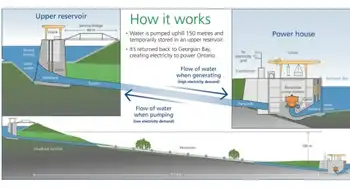
Multi-billion-dollar hydro generation project proposed for Meaford military base
Meaford Pumped Storage Project aims to balance the grid with hydro-electric generation, a hilltop reservoir,…
View more
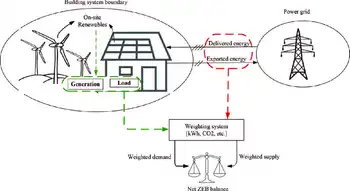
Can Canada actually produce enough clean electricity to power a net-zero grid by 2050?
Canada Clean Electricity drives a net-zero grid by 2035, scaling renewables like wind, solar, and…
View more
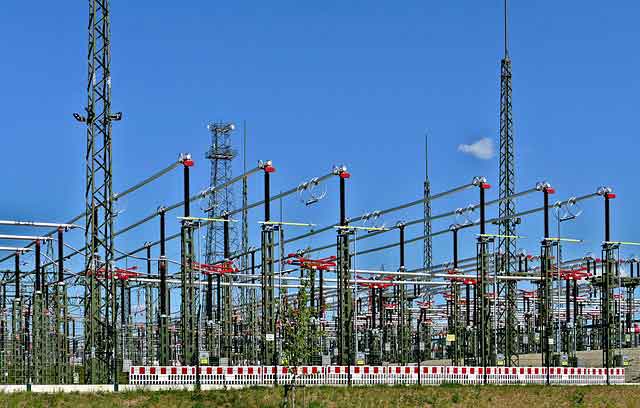
UK's Energy Transition Stalled by Supply Delays
UK Clean Energy Supply Chain Delays are slowing decarbonization as transformer lead times, grid infrastructure…
View more
Alberta breaks summer electricity record, still far short of capacity
Alberta Electricity Peak Demand surged to 10,638 MW, as AESO reported record summer load from…
View more

Green energy could drive Covid-19 recovery with $100tn boost
Renewable Energy Economic Recovery drives GDP gains, job growth, and climate targets by accelerating clean…
View more
Sign Up for Electricity Forum’s Newsletter
Stay informed with our FREE Newsletter — get the latest news, breakthrough technologies, and expert insights, delivered straight to your inbox.
Electricity Today T&D Magazine Subscribe for FREE

Stay informed with the latest T&D policies and technologies.
- Timely insights from industry experts
- Practical solutions T&D engineers
- Free access to every issue

