Protective Relay Training - Basic
Our customized live online or in‑person group training can be delivered to your staff at your location.
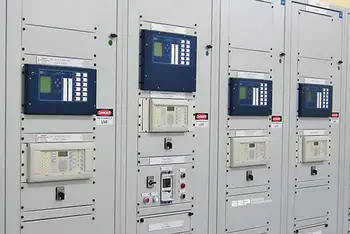
- Live Online
- 12 hours Instructor-led
- Group Training Available
Regular Price:
$699
Coupon Price:
$599
Hamilton, the country's 10th largest city, could soon see its streets, neighbourhoods and parks transformed into a massive wireless hotspot, capable of offering cheap high-speed Internet access to all who pass through.
It's a vision that was outlined recently by Art Leitch, president and chief executive officer of Hamilton Utilities Corp., which is testing the use of Wi-Fi technology as a way of interacting with the tens of thousands of smart meters to be installed in homes and businesses over the coming 18 months.
"We know we need a telecommunications system to support smart metering," said Leitch. "The need to have telecommunications connected to every smart meter with every customer would lead us to having a Wi-Fi system that would make Hamilton a whole-city hotspot."
The creation of such a hotspot would put Hamilton in the same league as many U.S. cities, such as Philadelphia, which sees ubiquitous Wi-Fi coverage as a way of bridging a "broadband divide" often ignored by cable and local phone companies.
In the process, cities can attract tourists and business professionals, give their roving police better access to law enforcement databases, and allow for remote monitoring of parking meters and other automated services.
Last year, the City of Fredericton launched its downtown Fred eZone, permitting anyone with a Wi-Fi equipped laptop or hand-held computer to wirelessly access the Internet in public spaces, from park benches to outdoor patios.
In Hamilton, however, government policy is indirectly driving the move to Wi-Fi. The province has mandated that 800,000 smart meters be in place by the end of 2007. In reaching that goal, utilities need to figure out how to send and receive data from those meters for billing and load-management purposes.
Hydro One Inc., for example, announced this week that it will use a Rogers Wireless mobile network to communicate with 25,000 meters as part of a major pilot project.
"We're investigating a business application we have to deliver. The investments have to be made anyway," said Ian Collins, president of Fibrewired Network-Hamilton, an affiliate of Hamilton Utilities. "The question is, can we create other applications and uses from that investment?"
PUC Telecom Inc., the telecommunications subsidiary of Sault Ste. Marie-based utility PUC Inc., asked the same question last February when it began testing a new broadband data service that relies on Wi-Fi hotspots.
Martin Wyant, general manager of PUC Telecom, said utilities will have to at least consider this approach, and the associated new revenues streams, as the industry moves toward the concept of an intelligence grid that can monitor network loads and prevent the kind of situations that lead to massive blackouts.
In the case of Hamilton Utilities, the decision was an easy one. Its Fibrewired affiliate has a fibre-optic network that already stretches throughout the municipality. Collins said it's a relatively simple job of connecting the fibre-optic network to Wi-Fi stations that will ultimately communicate with the smart meters.
The six-month trial, likely to begin in two months, will involve 100 smart meters in downtown Hamilton and neighbouring Stoney Creek.
"If we make the decision to go ahead and build this thing completely out, those (Wi-Fi) services would pop out quite quickly after that," said Collins.
The broadband access will not be free, but it will be affordable, he said.
Related News

P.E.I. government exploring ways for communities to generate their own electricity
P.E.I. Community Energy Independence empowers local microgrids through renewable generation, battery storage, and legislative reform,…
View more

N.S. abandons Atlantic Loop, will increase wind and solar energy projects
Nova Scotia Clean Power Plan 2030 pivots from the Atlantic Loop, scaling wind and solar,…
View more

France Demonstrates the Role of Nuclear Power Plants
France Nuclear Power Strategy illustrates a low-carbon, reliable baseload complementing renewables in the energy transition,…
View more

Setbacks at Hinkley Point C Challenge UK's Energy Blueprint
Hinkley Point C delays highlight EDF cost overruns, energy security risks, and wholesale power prices,…
View more

Energy storage poised to tackle grid challenges from rising EVs as mobile chargers bring new flexibility
EV Charging Grid Readiness addresses how rising EV adoption, larger batteries, and fast charging affect…
View more

BC Hydro suspends new crypto mining connections due to extreme electricity use
BC Hydro Cryptocurrency Mining Suspension pauses new grid connections for Bitcoin data centers, preserving electricity…
View more
Sign Up for Electricity Forum’s Newsletter
Stay informed with our FREE Newsletter — get the latest news, breakthrough technologies, and expert insights, delivered straight to your inbox.
Electricity Today T&D Magazine Subscribe for FREE

Stay informed with the latest T&D policies and technologies.
- Timely insights from industry experts
- Practical solutions T&D engineers
- Free access to every issue
