NFPA 70E Training
Our customized live online or in‑person group training can be delivered to your staff at your location.

- Live Online
- 6 hours Instructor-led
- Group Training Available
Regular Price:
$199
Coupon Price:
$149
Africa Energy Investment Barriers include weak regulatory frameworks, non-cost-reflective tariffs, thin utility creditworthiness, and slow licensing, hindering PPAs, independent power producers, grid capacity expansion, and renewables despite bankable finance and abundant resources.
What This Means
Policy gaps, low tariffs, and weak utility credit deter capital, delay PPAs, and stall grid upgrades and renewables.
- Cost-reflective tariffs are essential for bankable returns
- Strong, independent regulators improve investor confidence
- Utility creditworthiness underpins long-term PPAs
Red tape and lack of well-structured projects, rather than external funding crimped by the global downturn, are the main hurdles to boosting capacity in Africa's power sector, financiers said.
The continent is battling acute power shortages, which have also hampered economic growth, as governments fail to attract the necessary power investment to add capacity to the grids, despite abundant energy sources.
The continent has coal, uranium, hydro, solar, wind and biomass resources, which investors say could easily help deliver universal electricity access across the continent and beyond.
"The problem isn't finance and never was... if you have a decent, bankable project in the power sector in Africa, you will be able to get the finance," David Donaldson, senior manager for infrastructure at the International Finance Corporation (IFC), the World Bank's private sector lending arm, told an Africa power conference.
Donaldson said a large number of African countries have yet to put the right regulatory frameworks in place to attract private investment. Credit-worthiness of the utilities and a sound power regulator were all-important factors for energy investors looking at a 10-15 year timeline, he said.
Tariffs also continue to be too low to allow for appropriate returns, including the cost for necessary maintenance, especially as COVID-19 funding priorities evolve.
"The fundamental issue remains that if at the end of the chain users are paying less for electricity than it can conceivably cost to deliver it to them... then that's a problem that can't go away," he said.
He said governments also needed to step in and provide guarantees until tariffs reach the right levels.
Development finance bodies have put in money and expertise, and initiatives like the EU-Africa energy push aim to help streamline licensing processes that can take months to approve projects, but financiers have said more needs to be done.
Konrad Reuss, Africa Managing Director at rating agency Standard & Poor's, said developers should look at smaller projects rather than push for giant initiatives such as the Inga hydro project in the Democratic Republic of Congo (DRC) that has yet to materialize.
The Grand Inga dam could be a long-term solution to Africa's power problems, but investors have held back due to political risk and its $80 billion price tag.
"We've been talking about that for decades now... smaller projects would be the way to go," Reuss said.
The financiers mentioned Kenya as a good example of an African country which managed to attract various investors and bring independent power projects to completion, and pointed to Zambia's hydro potential as a regional asset as well.
Standard Bank's Director for CIB Project Finance Alastair Campbell said the east African country had put cost-reflective tariffs in place and also instituted a system through which by currency fluctuations could be passed on to the end consumer, eliminating one risk investors shy away from.
Industry and funders agreed that power purchase agreements (PPAs) were key to get projects off the ground amid challenges to going green this decade, and called for power producers to be able to strike deals directly with consumers, such as mines.
Related News
Related News
Two-thirds of the U.S. is at risk of power outages this summer
Home Energy Independence reduces electricity costs and outage risks with solar panels, EV charging, battery…
View more
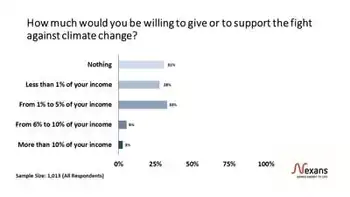
More than Two-thirds of Americans Indicate Willingness to Give or Donate Part of their Income in Support of the Fight Against Climate Change
U.S. Climate Change Donation Survey reveals Americans' willingness to fund sustainability via government incentives, electrification,…
View more
Worker injured after GE turbine collapse
GE Wind Turbine Collapse Brazil raises safety concerns at Omega Energia's Delta VI wind farm…
View more

Brand New Renewable Technology Harnesses Electricity From The Cold, Dark Night
Nighttime Thermoelectric Generator converts radiative cooling into renewable energy, leveraging outer space cold; a Stanford-UCLA…
View more
Doug Ford's New Stance on Wind Power in Ontario
Ontario Wind Power Policy Shift signals renewed investment in renewable energy, wind farms, and grid…
View more

Warren Buffett’s Secret To Cheap Electricity: Wind
Berkshire Hathaway Energy Wind Power drives cheap electricity rates in Iowa via utility-scale wind turbines,…
View more
Sign Up for Electricity Forum’s Newsletter
Stay informed with our FREE Newsletter — get the latest news, breakthrough technologies, and expert insights, delivered straight to your inbox.
Electricity Today T&D Magazine Subscribe for FREE

Stay informed with the latest T&D policies and technologies.
- Timely insights from industry experts
- Practical solutions T&D engineers
- Free access to every issue
