Protective Relay Training - Basic
Our customized live online or in‑person group training can be delivered to your staff at your location.

- Live Online
- 12 hours Instructor-led
- Group Training Available
Regular Price:
$699
Coupon Price:
$599
Global Wind Power Potential suggests wind energy resources can far exceed electricity demand, with onshore and offshore wind, taller turbines, and conservative capacity factors transforming renewable power supply in the US, China, and worldwide.
The Big Picture
Estimated global wind energy beyond demand, from onshore and offshore sites, larger turbines, and capacity factors.
- Harvard estimates wind could supply 40x current global power use.
- US lower 48 wind potential equals 16x national electricity demand.
- China could expand 2005 electricity supply 18-fold via wind.
- Assumes 2.5-3 MW turbines and a conservative 20% capacity factor.
- Taller ~100 m turbines tap stronger winds onshore and offshore.
Global wind energy potential is considerably higher than previous estimates by both wind industry groups and government agencies, according to a Harvard University study published in the Proceedings of the National Academy of Sciences of the United States.
The new research surfaced just weeks after T. Boone Pickens, citing rising financing costs, scaled back his plans for the world’s largest wind farm in west Texas.
Using data from thousands of meteorological stations, the Harvard team estimated the global wind energy potential to be 40 times greater than total current power consumption. A previous study cited in the paper put that multiple at about 7 times.
In the lower 48 states, the potential from wind power is 16 times more than total electricity demand in the United States, the researchers suggested – significantly greater than a 2008 Department of Energy study that projected wind could supply 20% of all electricity in the country by 2030.
While remote regions of Russia and Canada have the greatest theoretical potential, the Harvard study pointed out that there are real gains to be made in high-emission nations, especially China, which has been rapidly constructing coal plants. “Large-scale development of wind power in China could allow for an 18-fold increase in electricity supply relative to consumption reported for 2005,” the Harvard study said.
The findings are “further validation of what we’ve been saying – that the United States is the Saudi Arabia of wind,” said Michael Goggin, an electricity industry analyst for the American Wind Energy Association, even as U.S. wind still lags in several areas.
The authors based their calculations on the deployment of 2.5- to 3-megawatt wind turbines situated either in accessible rural areas that are neither frozen nor forested, or relatively shallow offshore locations, as U.K. wind lessons demonstrate for siting practices worldwide. They also used a conservative 20 percent estimate for capacity factor, a measure of how much energy a given turbine actually produces.
In an example of how renewable energy potential can be a moving target, Mr. Goggin explained that the U.S. wind growth in the forecasts can be attributed to the increasingly common use of very large turbines that rise to almost 100 meters.
Wind speeds are greater at higher elevations. Previous wind studies were based on the deployment of 50- to 80-meter turbines.
“As turbines start to get taller,” predicts Mr. Goggin, “we’ll see a lot more capitalization of the resource.”
Related News
Related News
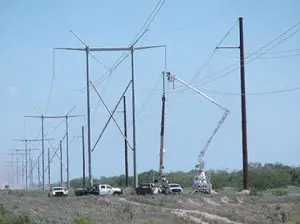
US Grid Gets an Overhaul for Renewables
FERC Transmission Planning Overhaul streamlines interregional grid buildouts, enabling high-voltage lines, renewable integration, and grid…
View more
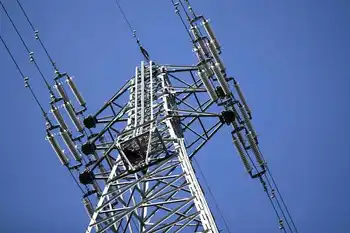
DOE Announces $34 Million to Improve America?s Power Grid
DOE GOPHURRS Grid Undergrounding accelerates ARPA-E innovations to modernize the power grid, boosting reliability, resilience,…
View more
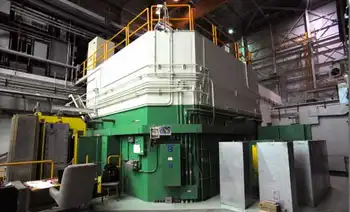
Smaller, cheaper, safer: Next-gen nuclear power, explained
MARVEL microreactor debuts at Idaho National Laboratory as a 100 kW, liquid-metal-cooled, zero-emissions generator powering…
View more

ACORE tells FERC that DOE Proposal to Subsidize Coal, Nuclear Power Plants is unsupported by Record
FERC Grid Resiliency Pricing Opposition underscores industry groups, RTOs, and ISOs rejecting DOE's NOPR, warning…
View more

Plan to End E-Vehicle Subsidies Sparks Anger in Germany
Germany EV Subsidy Cut triggers budget-crisis fallout in the automotive industry, after a constitutional court…
View more

More young Canadians would work in electricity… if they knew about it
Generation Impact Report reveals how Canada's electricity sector can recruit Millennials and Gen Z, highlighting…
View more
Sign Up for Electricity Forum’s Newsletter
Stay informed with our FREE Newsletter — get the latest news, breakthrough technologies, and expert insights, delivered straight to your inbox.
Electricity Today T&D Magazine Subscribe for FREE

Stay informed with the latest T&D policies and technologies.
- Timely insights from industry experts
- Practical solutions T&D engineers
- Free access to every issue
