Investigation underway to determine cause of Atlanta Airport blackout


utility underground workers

Arc Flash Training CSA Z462 - Electrical Safety Essentials

Our customized live online or in‑person group training can be delivered to your staff at your location.
  • Live Online
  • 6 hours Instructor-led
  • Group Training Available
Regular Price:
$249
Coupon Price:
$199
Reserve Your Seat Today

Atlanta Airport Power Outage disrupts Hartsfield-Jackson as an underground fire cripples switchgear redundancy, canceling flights during holiday travel; Georgia Power restores electricity overnight while utility crews probe causes and monitor system resilience.


Key Points

A major Hartsfield-Jackson blackout from an underground fire; power restored as switchgear redundancy is investigated.

✅ Underground fire near Plane Train tunnel damaged switchgear systems

✅ Over 1,100 flights canceled; holiday travel severely disrupted

✅ Georgia Power restored service; redundancy and root cause under review


Power has been restored at the world’s busiest airport after a massive outage Sunday afternoon left planes and passengers stranded for hours, forced airlines to cancel more than 1,100 flights and created a logistical nightmare during the already-busy holiday travel season.

An underground fire caused a complete power outage Sunday afternoon at Hartsfield-Jackson Atlanta International Airport, resulting in thousands of canceled flights at the world's busiest terminal and affecting travelers worldwide.

The massive outage didn’t just leave passengers stranded overnight Sunday, it also affected travelers with flights Monday morning schedules.

According to Paul Bowers, the president and CEO of Georgia Power,  “From our standpoint, we apologize for the inconvenience,” he said. The utility restored power to the airport shortly before midnight.

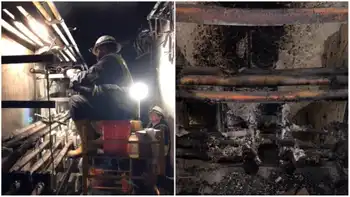
Utility Crews are monitoring the fixes that restored power and investigating what caused the fire and why it was able to damage redundant systems. Bowers said the fire occurred in a tunnel that runs along the path of the underground Plane Train tunnel near Concourse E.

Sixteen highly trained utility personnel worked in the passageway to reconnect the network.“Our investigation is going through the process of what do we do to ensure we have the redundancy going back at the airport, because right now we are a single source feed,” Bowers said.

“We will have that complete by the end of the week, and then we will turn to what caused the failure of the switchgear.”

Though the cause isn’t yet known, he said foul play is not suspected.“There are two things that could happen,” he said.

“There are inner workings of the switchgear that could create the heat that caused the fire, or the splicing going into that switchgear -- that the cable had a failure on that going into the switch gear.”

When asked if age of the system could have been a failure, Bowers said his company conducts regular inspections.“We constantly inspect,” he said. “We inspect on an annual basis to ensure the reliability of the network, and that redundancy is protection for the airport.”Bowers said he is not familiar with any similar fire or outage at the airport.

“The issue for us is to ensure the reliability is here and that it doesn’t happen again and to ensure that our network is resilient enough to withstand any kind of fire,” he said. He added that Georgia Power will seek to determine what can be done in the future to avoid a similar event, such as those experienced during regional outages in other communities.


Related News

Related News

India is now the world’s third-largest electricity producer

India Electricity Production 2017 surged to 1,160 BU, ranking third globally; rising TWh output with 334 GW capacity, strong renewables and thermal mix, 7% CAGR in generation, and growing demand, investments, and FDI inflows.


Key Points

India's 2017 power output reached 1,160 BU, third globally, supported by 334 GW capacity, rising renewables, and 7% CAGR.

✅ 1,160 BU generated; third after China and the US

✅ Installed capacity 334 GW; 65% thermal, rising renewables

✅ Generation CAGR ~7%; demand, FDI, investments rising


India now generates around 1,160.1 billion units of electricity in financial year 2017, up 4.72% from the previous year, and amid surging global electricity demand that is straining power systems. The country is behind only China which produced 6,015 terrawatt hours (TWh. 1 TW = 1,000,000 megawatts) and the US (4,327 TWh), and is ahead of Russia, Japan, Germany, and Canada.


India’s electricity production grew 34% over seven years to 2017, and the country now produces more energy than Japan and Russia, which had 27% and 8.77% more electricity generation capacity installed, respectively, than India seven years ago.

India produced 1,160.10 billion units (BU) of electricity–one BU is enough to power 10 million households (one household using average of about 3 units per day) for a month–in financial year (FY) 2017. Electricity production stood at 1,003.525 BU between April 2017-January 2018, according to a February 2018 report by India Brand Equity Foundation (IBEF), a trust established by the commerce ministry.

#google#

With a production of 1,423 BU in FY 2016, India was the third largest producer and the third largest consumer of electricity in the world, behind China (6,015 BU) and the United States (4,327 BU).

With an annual growth rate of 22.6% capacity addition over a decade to FY 2017, renewables beat other power sources–thermal, hydro and nuclear. Renewables, however, made up only 18.79% of India’s energy, up 68.65% since 2007, and globally, low-emissions sources are expected to cover most demand growth in the coming years. About 65% of installed capacity continues to be thermal.

As of January 2018, India has installed power capacity of 334.4 gigawatt (GW), making it the fifth largest installed capacity in the world after European Union, China, United States and Japan, and with much of the fleet coal-based, imported coal volumes have risen at times amid domestic supply constraints.

The government is targeting capacity addition of around 100 GW–the current power production of United Kingdom–by 2022, as per the IBEF report.


Electricity generation grew at 7% annually

India achieved a 34.48% growth in electricity production by producing 1,160.10 BU in 2017 compared to 771.60 BU in 2010–meaning that in these seven years, electricity production in India grew at a compound annual growth rate (CAGR) of 7.03%, while thermal power plants' PLF has risen recently amid higher demand and lower hydro.


Generation capacity grew at 10% annually

Of 334.5 GW installed capacity as of January 2018–up 60% from 132.30 GW in 2007–thermal installed capacity was 219.81 GW. Hydro and renewable energy installed capacity totaled 44.96 GW and 62.85 GW, respectively, said the report.

The CAGR in installed capacity over a decade to 2017 was 10.57% for thermal power, 22.06% for renewable energy–the fastest among all sources of power–2.51% for hydro power and 5.68% for nuclear power.


Growing demand, higher investments will drive future growth

Growing population and increasing penetration of electricity connections, along with increasing per-capita usage would provide further impetus to the power sector, said the report.

Power consumption is estimated to increase from 1,160.1 BU in 2016 to 1,894.7 BU in 2022, as per the report, though electricity demand fell sharply in one recent period.

Increasing investment remained one of the driving factors of power sector growth in the country.

Power sector has a 100% foreign direct investment (FDI) permit, which boosted FDI inflows in the sector.

Total FDI inflows in the power sector reached $12.97 billion (Rs 83,713 crore) during April 2000 to December 2017, accounting for 3.52% of FDI inflows in India, the report said.


Related News

View more

Cabinet Of Ministers Of Ukraine - Prime Minister: Our Goal In The Energy Sector Is To Synchronize Ukraine's Integrated Power System With Entso-e

Ukraine's EU Energy Integration aims for ENTSO-E synchronization, electricity market liberalization, EU Green Deal alignment, energy efficiency upgrades, hydrogen development, and streamlined grid connections to accelerate reform, market pricing, and sustainable growth.


Key Points

Ukraine's EU Energy Integration syncs with ENTSO-E, liberalizes power markets, and aligns with the EU Green Deal.

✅ ENTSO-E grid synchronization and cross-border trade readiness

✅ Electricity market liberalization and market-based pricing

✅ EU Green Deal alignment: efficiency, hydrogen, coal regions


Ukraine's goal in the energy sector is to ensure the maximum integration of energy markets with EU markets, and in line with the EU plan to dump Russian energy that is reshaping the region, synchronization of Ukraine's integrated energy system with ENTSO-E while leaning on electricity imports as needed to maintain stability. Prime Minister Denys Shmyhal emphasized in his statement at the Fourth Ukraine Reform Conference underway through July 7-8 in Vilnius, the Republic of Lithuania.

The Head of Government presented a plan of reforms in Ukraine until 2030. In particular, energy sector reform and environmental protection, according to the PM, include the liberalization of the electricity market, with recent amendments to the market law guiding implementation, the simplification of connection to the electrical grid system and the gradual transition to market electricity prices, alongside potential EU emergency price measures under discussion, and the monetization of subsidies for vulnerable groups.

"Ukraine shares and fully supports the EU's climate ambitions and aims to synchronize its policies in line with the EU Green Deal, including awareness of Hungary's energy alignment with Russia to ensure coherent regional planning. The interdepartmental working group has determined priority areas for cooperation with the European Union: energy efficiency, hydrogen, transformation of coal regions, waste management," said the Prime Minister.

According to Denys Shmyhal, Ukraine has supported the EU's climate ambitions to move towards climate-neutral development by 2050 within the framework of the European Green Deal and should become an integral part of it in order not only to combat the effects of climate change in synergy with the EU but, as the country prepares for winter energy challenges and strengthens resilience, within the economic strategy development aimed to enhance security and create new opportunities for Ukrainian business, with continued energy security support from partners bolstering implementation.


Related News

View more

DOE Announces $28M Award for Wind Energy

DOE Wind Energy Funding backs 13 R&D projects advancing offshore wind, distributed energy, and utility-scale turbines, including microgrids, battery storage, nacelle and blade testing, tall towers, and rural grid integration across the United States.


Key Points

DOE Wind Energy Funding is a $28M R&D effort in offshore, distributed, and utility-scale wind to lower cost and risk.

✅ $6M for rural microgrids, storage, and grid integration.

✅ $7M for offshore R&D, nacelle and long-blade testing.

✅ Up to $10M demos; $5M for tall tower technology.


The U.S. Department of Energy announced that in order to advance wind energy in the U.S., 13 projects have been selected to receive $28 million. Project topics focus on technology development while covering distributed, offshore wind growth and utility-scale wind found on land.

The selections were announced by the DOE’s Assistant Secretary for the Office of Energy Efficiency and Renewable Energy, Daniel R. Simmons, at the American Wind Energy Association Offshore Windpower Conference in Boston, as New York's offshore project momentum grows nationwide.


Wind Project Awards

According to the DOE, four Wind Innovations for Rural Economic Development projects will receive a total of $6 million to go toward supporting rural utilities via facilitating research drawing on U.K. wind lessons for deployment that will allow wind projects to integrate with other distributed energy resources.

These endeavors include:

Bergey WindPower (Norman, Oklahoma) working on developing a standardized distributed wind/battery/generator micro-grid system for rural utilities;

Electric Power Research Institute (Palo Alto, California) working on developing modeling and operations for wind energy and battery storage technologies, as large-scale projects in New York progress, that can both help boost wind energy and facilitate rural grid stability;

Iowa State University (Ames, Iowa) working on optimization models and control algorithms to help rural utilities balance wind and other energy resources; and

The National Rural Electric Cooperative Association (Arlington, Virginia) providing the development of standardized wind engineering options to help rural-area adoption of wind.

Another six projects are to receive a total of $7 million to facilitate research and development in offshore wind, as New York site investigations advance, with these projects including:

Clemson University (North Charleston, South Carolina) improving offshore-scale wind turbine nacelle testing via a “hardware-in-the-loop capability enabling concurrent mechanical, electrical and controller testing on the 7.5-megawatt dynamometer at its Wind Turbine Drivetrain Testing Facility to accelerate 1 GW on the grid progress”; and

The Massachusetts Clean Energy Center (Boston) upgrading its Wind Technology Testing Center to facilitate structural testing of 85- to 120-meter-long (roughly 278- to 393-foot-long) blades, as BOEM lease requests expand, among other projects.

Additionally, two offshore wind technology demonstration projects will receive up to $10 million for developing initiatives connected to reducing wind energy risk and cost. One last project will also be granted $5 million for the development of tall tower technology that can help overcome restrictions associated with transportation.

“These projects will be instrumental in driving down technology costs and increasing consumer options for wind across the United States as part of our comprehensive energy portfolio,” said Simmons.


Related News

View more

Can Canada actually produce enough clean electricity to power a net-zero grid by 2050?

Canada Clean Electricity drives a net-zero grid by 2035, scaling renewables like wind, solar, and hydro, with storage, smart grids, interprovincial transmission, and electrification of vehicles, buildings, and industry to cut emissions and costs.


Key Points

Canada Clean Electricity is a shift to a net-zero grid by 2035 using renewables, storage, and smart grids to decarbonize

✅ Doubles non-emitting generation for electrified transport and heating

✅ Expands wind, solar, hydro with storage and smart-grid balancing

✅ Builds interprovincial lines and faster permitting with Indigenous partners


By Merran Smith and Mark Zacharias

Canada is an electricity heavyweight. In addition to being the world’s sixth-largest electricity producer and third-largest electricity exporter in the global electricity market today, Canada can boast an electricity grid that is now 83 per cent emission-free, not to mention residential electricity rates that are the cheapest in the Group of Seven countries.

Indeed, on the face of it, the country’s clean electricity system appears poised for success. With an abundance of sunshine and blustery plains, Alberta and Saskatchewan, the Prairie provinces most often cited for wind and solar, have wind- and solar-power potential that rivals the best on the continent. Meanwhile, British Columbia, Manitoba, Quebec, and Newfoundland and Labrador have long excelled at generating low-cost hydro power.

So it would only be natural to assume that Canada, with this solid head start and its generous geography, is already positioned to provide enough affordable clean electricity to power our much-touted net-zero and economic ambitions.

But the reality is that Canada, like most countries, is not yet prepared for a world increasingly committed to carbon neutrality, in part because demand for solar electricity has lagged, even as overall momentum grows.

The federal government’s forthcoming Clean Electricity Standard – a policy promised by the governing Liberals during the most recent election campaign and restated for an international audience by Prime Minister Justin Trudeau at the United Nations’ COP26 climate summit – would require all electricity in the country to be net zero by 2035 nationwide, setting a new benchmark. But while that’s an encouraging start, it is by no means the end goal. Electrification – that is, hooking up our vehicles, heating systems and industry to a clean electricity grid – will require Canada to produce roughly twice as much non-emitting electricity as it does today in just under three decades.

This massive ramp-up in clean electricity will require significant investment from governments and utilities, along with their co-operation on measures and projects such as interprovincial power lines to build an electric, connected and clean system that can deliver benefits nationwide. It will require energy storage solutions, smart grids to balance supply and demand, and energy-efficient buildings and appliances to cut energy waste.

While Canada has mostly relied on large-scale hydroelectric and nuclear power in the past, newer sources of electricity such as solar, wind, geothermal, and biomass with carbon capture and storage will, in many cases, be the superior option going forward, thanks to the rapidly falling costs of such technology and shorter construction times. And yet Canada added less solar and wind generation in the past five years than all but three G20 countries – Indonesia, Russia and Saudi Arabia, with some experts calling it a solar power laggard in recent years. That will need to change, quickly.

In addition, Canada’s Constitution places electricity policy under provincial jurisdiction, which has produced a patchwork of electricity systems across the country that use different energy sources, regulatory models, and approaches to trade and collaboration. While this model has worked to date, given our low consumer rates and high power reliability, collaborative action and a cohesive vision will be needed – not just for a 100-per-cent clean grid by 2035, but for a net-zero-enabling one by 2050.

Right now, it takes too long to move a clean power project from the proposal stage to operation – and far too long if we hope to attain a clean grid by 2035 and a net-zero-enabling one by 2050. This means that federal, provincial, territorial and Indigenous governments must work with rural communities and industry stakeholders to accelerate the approvals, financing and construction of clean energy projects and provide investor certainty.

In doing so, Canada can set a course to carbon neutrality while driving job creation and economic competitiveness, a transition many analyses deem practical and profitable in the long run. Our closest trading partners and many of the world’s largest companies and investors are demanding cleaner goods. A clean grid underpins clean production, just as it underpins our climate goals.

The International Energy Agency estimates that, for the world to reach net zero by 2050, clean electricity generation worldwide must increase by more than 2.5 times between today and 2050. Countries are already plotting their energy pathways, and there is much to learn from each other.

Consider South Australia. The state currently gets 62 per cent of its electricity from wind and solar and, combined with grid-scale battery storage, has not lost a single hour of electricity in the past five years. South Australia expects 100 per cent of its electricity to come from renewable sources before 2030. An added bonus given today’s high energy prices: Annual household electricity costs have declined there by 303 Australian dollars ($276) since 2018.

The transition to clean energy is not about sacrificing our way of life – it’s about improving it. But we’ll need the power to make it happen. That work needs to start now.

Merran Smith is the executive director of Clean Energy Canada, a program at the Morris J. Wosk Centre for Dialogue at Simon Fraser University in Vancouver. Mark Zacharias is a special adviser at Clean Energy Canada and visiting professor at the Simon Fraser University School of Public Policy.


Related News

View more

City of Vancouver named Clean Energy Champion for Bloedel upgrades

BC Hydro Clean Energy Champions highlights Vancouver's Bloedel Conservatory electrification with a massive heat pump, clean electricity, LED lighting, deep energy efficiency, and 90% greenhouse gas reductions advancing climate action across buildings and industry.


Key Points

A BC Hydro program honoring clean electricity adoption in homes, transport, and industry to replace fossil fuels.

✅ Vancouver's Bloedel Conservatory cut GHGs by 90% with a heat pump

✅ LEDs and electrification boost efficiency, comfort, and reliability

✅ Nominations open for residents, businesses, and Indigenous groups


The City of Vancouver has been selected as BC Hydro’s first Clean Energy Champion for energy efficient upgrades made at the Bloedel Conservatory that cut greenhouse gas emissions by 90 per cent, a meaningful step given concerns about 2050 greenhouse gas targets in B.C.

BC Hydro’s Clean Energy Champions program is officially being launched today to recognize residents, businesses, municipalities, Indigenous and community groups across B.C. that have made the choice to switch from using fossil fuels to using clean electricity in three primary areas: homes and buildings, transportation, and industry, even as drought challenges power generation in B.C. The City of Vancouver is being recognized as the first champion for demonstrating its commitment to using clean energy, including power from projects like Site C's electricity, to fight climate change at its landmark Bloedel Conservatory.

Earlier this year, the City of Vancouver installed a large air source heat pump at Bloedel Conservatory – more than 50 times the size of a heat pump used in a typical B.C. home – that uses electricity instead of natural gas to heat and cool the dome's interior, which is home to more than 500 exotic plants and flowers, and 100 exotic birds, aligning with citywide debates such as Vancouver’s reversal on gas appliances policy. It is the biggest heat pump the City of Vancouver has ever installed, with 210 tonnes of cooling capacity.

A heat pump that provides cooling in the summer and heating in the winter, helping reduce reliance on wasteful air conditioning that can drive up energy bills, is ideal for the conservatory, as its dome is completely made of glass, which can be challenging for temperature regulation. While the dome experiences a lot of heat loss in the colder months, its need for cooling in warmer weather is even greater to ensure the safety of the wildlife and plants that call it home.

The clean energy upgrades do not end there though. All lighting in the building has been upgraded to energy-efficient LEDs, reflecting conservation themes highlighted by 2018 Earth Hour electricity use discussions, and outside colour-changing LEDs now surround the perimeter and light up the dome at night.

BC Hydro is calling for nominations from B.C. residents, businesses, municipalities or Indigenous and community groups that have taken steps to lower their carbon footprint and adopt new clean energy technologies, and continues to support customers through programs like its winter payment plan during colder months. If you or someone you know is a Clean Energy Champion, nominate them at bchydro.com/cleanenergychampions.


Related News

View more

China's nuclear energy on steady development track, say experts

China Nuclear Power Expansion accelerates with reactor approvals, Hualong One and CAP1400 deployments, rising gigawatts, clean energy targets, carbon neutrality goals, and grid reliability benefits to meet coastal demand and reduce emissions.


Key Points

An accelerated reactor buildout to add clean capacity, curb emissions, and improve grid reliability nationwide.

✅ Approvals surge for Hualong One and CAP1400 third-gen reactors

✅ Capacity targets approach 100 GW installed by 2030

✅ Supports carbon neutrality, energy security, and lower costs


While China has failed to accomplish its 2020 nuclear target of 58 gigawatts under operation and 30 GW under construction, insiders are optimistic about prospects for the nonpolluting energy resource in China over the next five years as the country has stepped up nuclear approvals and construction since 2020.

China expects to record 49 operating nuclear facilities and capacity of more than 51 GW as of the end of 2020. Nuclear power currently makes up around 2.4 percent of the country's total installed energy capacity, said the China Nuclear Energy Association. There are 19 facilities that have received approval and are under construction, with capacity exceeding 20 GW, ranking top globally as nuclear project milestones worldwide continue, it said.

"With surging power demand from coastal regions, more domestic technology, including next-gen nuclear, will be adopted with installations likely nearing 100 GW by the end of 2030," said Wei Hanyang, a power market analyst at Bloomberg New Energy.

Following the Fukushima nuclear reactor disaster in 2011 in Japan, China has, like many countries including Japan, Germany and Switzerland, suspended nuclear power project approvals for a period, including construction of the pilot project of Shidaowan nuclear power plant in Shandong province that uses CAP1400 technology, based on third-generation Westinghouse AP1000 reactor technology.

As China promotes greener development and prioritizes safety and security of nuclear power plant construction, it has pledged to hit peak emissions before 2030 and achieve carbon neutrality by 2060, with electricity meeting 60% of energy use by 2060 according to Shell, the Shidaowan plant, originally scheduled to launch construction in 2014 and enter service in 2018, is expected to start fuel loading and begin operations this year.

Joseph Jacobelli, an independent energy analyst and executive vice-president for Asia business at Cenfura Ltd, a smart energy services company, said recent developments confirm China's ongoing commitment to further boost the country's nuclear sector.

"The nuclear plants can help meet China's goal of reducing greenhouse gas emissions as the country reduces coal power production and provide air pollution-free energy at a lower cost to consumers. China's need for clean energy means that nuclear power generation definitely has an important place in the long-term energy mix," Jacobelli said.

He added that Chinese companies' cost control capabilities and technological advancements, and operational performance improvements such as the AP1000 refueling outage record, are also likely to continue providing domestic companies with advantages, as the cost per kilowatt-hour is very important, especially as solar, wind and other clean energy solutions become even cheaper over the next few years.

China approved two nuclear projects in 2020- Hainan Changjiang nuclear power plant unit 2 and Zhejiang San'ao nuclear power plant unit 1. This is after the country launched three new nuclear power plants in 2019 in the provinces of Shandong, Fujian and Guangdong, which marked the end of a moratorium on new projects.

The Zhejiang San'ao nuclear power plant saw concrete poured for unit 1 on Dec 31, according to its operator China General Nuclear. It will be the first of six Hualong One pressurized water reactors to be built at the site as well as the first Chinese nuclear power plant project to involve private capital.

Jointly invested, constructed and operated by CGN, Zheneng Electric Power, Wenzhou Nuclear Energy Development, Cangnan County Haixi Construction Development and Geely Maijie Investment, the project creates a new model of mixed ownership of nuclear power enterprises, said CGN.

The world's first Hualong One reactor at unit 5 of China National Nuclear Corp's Fuqing nuclear plant in Fujian province was connected to the grid in November. With the start of work on San'ao unit 1, China now has further seven Hualong One units under construction, including Fuqing 6, which is scheduled to go online this year.

CNNC is also constructing one unit at Taipingling in Guangdong and two at Zhangzhou in Fujian province. CGN is building two at its Fangchenggang site in Guangxi Zhuang autonomous region. In addition, two Hualong One units are under construction at Karachi in Pakistan, while CGN proposes to use a UK version of the Hualong One at Bradwell in the United Kingdom, aligning with the country's green industrial revolution strategy.


Related News

View more

Sign Up for Electricity Forum’s Newsletter

Stay informed with our FREE Newsletter — get the latest news, breakthrough technologies, and expert insights, delivered straight to your inbox.

Electricity Today T&D Magazine Subscribe for FREE

Stay informed with the latest T&D policies and technologies.
  • Timely insights from industry experts
  • Practical solutions T&D engineers
  • Free access to every issue

Live Online & In-person Group Training

Advantages To Instructor-Led Training – Instructor-Led Course, Customized Training, Multiple Locations, Economical, CEU Credits, Course Discounts.

Request For Quotation

Whether you would prefer Live Online or In-Person instruction, our electrical training courses can be tailored to meet your company's specific requirements and delivered to your employees in one location or at various locations.