Tennessee is test area for Nissan Leaf

By Knoxville News Sentinel


High Voltage Maintenance Training Online

Our customized live online or in‑person group training can be delivered to your staff at your location.

  • Live Online
  • 12 hours Instructor-led
  • Group Training Available
Regular Price:
$599
Coupon Price:
$499
Reserve Your Seat Today
Knoxville is about to be a test bed for a new all-electric, zero-emissions car and a network of charging stations to keep them on the road, officials with Nissan North America and others involved in the effort announced recently

In December, about 900 cars and 2,500 charging stations will be coming to three Tennessee markets - Knoxville, Nashville and Chattanooga, said Katherine Zachary, corporate spokeswoman for Nissan North America.

"We are launching the car in test markets first, then across the country," she said.

Zachary said she did not know exactly how many cars and charging stations would be in each city. The stations would be solar-assisted and be able to accommodate four to six vehicles at a time.

Knoxville Mayor Bill Haslam, TVA President and CEO Tom Kilgore and other local officials were on hand at World's Fair Park for an unveiling and demonstration of the Nissan LEAF. It's a five-seat, medium-size hatchback powered by an electric motor driven by laminated compact lithium-ion batteries. The LEAF has a range of about 100 miles on a charge, and full-charging takes about eight hours. Zachary said charging can be done through a 220-volt home outlet overnight. Batteries for the car will be made at the Nissan plant in Smyrna, Tenn.

Nissan has several partners in the effort, including the Tennessee Valley Authority, Oak Ridge National Laboratory (ORNL), the Electric Power Research Institute (EPRI), city of Knoxville and Knoxville Utilities Board.

The initial cars will be available through dealers in December, Zachary said. Nissan North American will take reservations for the LEAF this spring at its Web site, www.nissanusa.com/leaf-electric-car. Also this spring, EPRI and ORNL will begin testing the charging stations. The plan calls for three to six months of tests, then building the stations in Knoxville, Chattanooga and Nashville over the next few years.

Zachary said the proximity of TVA and ORNL were among factors making Knoxville an attractive area to test the cars and charging stations. Kilgore said the project is a natural for TVA, which produces electrical power for 9 million customers across seven states.

"These new vehicles are going to need a new kind of filling station," Kilgore told those gathered at World's Fair Park.

Kilgore said the system will help TVA toward its goal of eventually producing at least half of its power through clean and renewable energy sources.

Arshad Mansoor, vice president of power delivery and utilization at Knoxville-based EPRI said the charging stations, which his company is helping develop, are a key part of the system because they will link the technologies involved in the car with those supplying the power grid, such as TVA and KUB. Standardization is the key to developing a charging system that can be put in place across the country, Mansoor said.

The Nissan project is not the only effort to establish a charging system for electric vehicles in Knoxville. The Community Reuse Organization of East Tennessee, ORNL, Knoxville Regional Metropolitan Planning Organization and the Metropolitan Knoxville Airport Authority are working on a project to develop Pellisippi Parkway from Oak Ridge to McGhee Tyson Airport into an integrated transportation corridor, serving a variety of transportation modes and including charging stations for electrical vehicles.

The Tennessee projects are part of an overall effort by Nissan to use a $100 million grant from the Electric Transportation Engineering Corp. through the Department of Energy to put 4,700 zero-emission vehicles and 11,000 charging stations in test markets across the country.

Bill Riley, owner of Twin City Nissan, on 3247 Airport Highway in Alcoa, attended the unveiling and said he believes the car is right on the mark for the market, based on the demand he has been seeing for fuel efficient cars.

While some might doubt the chances of success for an all-electric car before a system of charging infrastructure is in place, Riley said the combination of TVA and ORNL working together should speed things along.

"I think it is going to be pushed into place fairly quickly," he said.

Related News

Hydro One will keep running its U.S. coal plant indefinitely, it tells American regulators

Hydro One-Avista Merger outlines a utility acquisition shaped by Washington regulators, Colstrip coal plant depreciation, and plans for renewables, clean energy, and emissions cuts, while Montana reviews implications for jobs, ratepayers, and a 2027 closure.


Key Points

A utility deal setting Colstrip depreciation and renewables, without committing to an early coal plant closure.

✅ Washington sets 2027 depreciation for Colstrip units

✅ Montana reviews jobs, ratepayer impacts, community fund

✅ Avista seeks renewables; no binding shutdown commitment


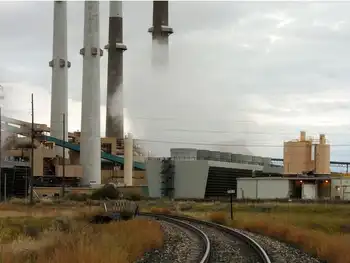
The Washington power company Hydro One is buying will be ready to close its huge coal-fired generating station ahead of schedule, thanks to conditions put on the corporate merger by state regulators there.

Not that we actually plan to do that, the company is telling other regulators in Montana, where coal unit retirements are under debate, the huge coal-fired generating station in question employs hundreds of people. We’ll be in the coal business for a good long time yet.

Hydro One, in which the Ontario government now owns a big minority stake, is still working on its purchase of Avista, a private power utility based in Spokane. The $6.7-billion deal, which Hydro One announced in July, includes a 15 per cent share in two of the four generating units in a coal plant in Colstrip, Montana, one of the biggest in the western United States. Avista gets most of its electricity from hydro dams and gas but uses the Colstrip plant when demand for power is high and water levels at its dams are low.

#google#

Colstrip’s a town of fewer than 2,500 people whose industries are the power plant and the open-pit mines that feed it about 10 million tonnes of coal a year. Two of Colstrip’s generators, older ones Avista doesn’t have any stake in, are closing in 2022. The other two will be all that keep the town in business.

In Washington, they don’t like the coal plant and its pollution. In Montana, the future of Colstrip is a much bigger concern. The companies have to satisfy regulators in both places that letting Hydro One buy Avista is in the public interest.

Ontario proudly closed the last of our coal plants in 2014 and outlawed new ones as environmental menaces, and Alberta's coal phase-out is now slated to finish by 2023. When Hydro One said it was buying Avista, which makes about $100 million in profit a year, Premier Kathleen Wynne said she hoped Ontario’s “value system” would spread to Avista’s operations.

The settlement is “an important step towards bringing together two historic companies,” Hydro One’s chief executive Mayo Schmidt said in announcing it.

The deal has approval from the Washington Utilities and Transportation Commission staff but is subject to a vote by the group’s three commissioners. It doesn’t commit Avista to closing anything at Colstrip or selling its share. But Avista and Hydro One will budget as if the Colstrip coal burners will close in 2027, instead of running into the 2040s as their owners had once planned, a timeline that echoes debates over the San Juan Generating Station in New Mexico.

In accounting terms, they’ll depreciate the value of their share of the plant to zero over the next nine years, reflecting what they say is the end of the plant’s “useful life.” Another of Colstrip’s owners, Puget Sound Energy, has previously agreed with Washington regulators that it’ll budget for a Colstrip closure in 2027 as well.

Avista and Hydro One will look for sources of 50 megawatts of renewable electricity, including independent power projects where feasible, in the next four years and another 90 megawatts to supplement Avista’s supply once the Colstrip plant eventually closes, they promise in Washington. They’ll put $3 million into a “community transition fund” for Colstrip.

The money will come from the companies’ profits and cash, the agreement says. “Hydro One will not seek cost recovery for such funds from ratepayers in Ontario,” it says specifically.

“Ontario has always been a global leader in the transition away from dirty coal power and towards clean energy,” said Doug Howell, an anti-coal campaigner with the Sierra Club, which is a party to the agreement. “This settlement continues that tradition, paving the way for the closure of the largest single source of climate pollution in the American West by 2027, if not earlier.”

Montanans aren’t as thrilled. That state has its own public services commission, doing its own examination of the corporate merger, which has asked Hydro One and Avista to explain in detail why they want to write off the value of the Colstrip burners early. The City of Colstrip has filed a petition saying it wants in on Montana hearings because “the potential closure of (Avista’s units) would be devastating to our community.”

Don’t get too worked up, an Avista vice-president urged the Montana commission just before Easter.

“Just because an asset is depreciated does not mean that one would otherwise remove that asset from service if the asset is still performing as intended,” Jason Thackston testified in a session that dealt only with what the deal with Washington state would mean to Colstrip. We’re talking strictly about an accounting manoeuvre, not an operational commitment.

Six joint owners will have to agree to close the Colstrip generators and there’s “no other tacit understanding or unstated agreement” to do that, he said.

Besides Washington and Montana, state regulators in Idaho, including those overseeing the Idaho Power settlement process, Alaska and Oregon and multiple federal authorities have to sign off on the deal before it can happen. Hydro One hopes it’ll be done in the second half of this year.


Related News

View more

It's CHEAP but not necessarily easy: Crosbie introduces PCs' Newfoundland electricity rate reduction strategy

Crosbie Hydro Energy Action Plan outlines rate mitigation for Muskrat Falls, leveraging Nalcor oil revenues, export sales, Holyrood savings, and potential Hydro-Quebec taxation to keep Newfoundland and Labrador electricity rates near 14.67 cents/kWh.


Key Points

PC plan to cap post-Muskrat rates by using Nalcor revenues, exports, and savings, with optional Accord funds.

✅ $575.4M yearly to hold rates near 14.67 cents/kWh

✅ Sources: Nalcor oil $231M, Holyrood $150M, rates/dividends $123.4M

✅ Options: export sales, restructuring, Atlantic Accord, HQ tax


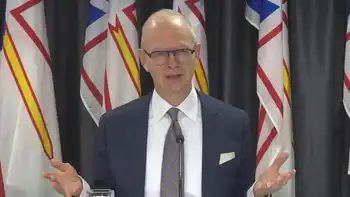
Newfoundland and Labrador PC Leader Ches Crosbie says Muskrat Falls won't drive up electricity rates, a goal consistent with an agreement to shield ratepayers from cost overruns, if he's elected premier.

According to Crosbie, who presented the party's Crosbie Hydro Energy Action Plan — acronym CHEAP — at a press conference Monday, $575.4 million is needed per year in order to keep rates from ballooning past 14.67 cents per kilowatt hour.

Here's where he thinks the money could come from:

  • Hydro rates and dividends — $123.4 million
  • Export sales — $40.1 million
  • Nalcor restructuring — $30 million
  • Holyrood savings — $150  million
  • Nalcor oil revenue — $231 million

The oil money, Crosbie said, isn't going into government coffers but being invested into the offshore which, he said, is a good place for it.

"But the plan from the beginning around Muskrat Falls was that if there was need for it — for mitigation for rates — that those revenues and operating cash flows from Nalcor oil and gas would be available to be recycled into rate mitigation, as reflected in a recent financial update on the pandemic's impact. and that's what we're going to have to do," he said.

According to Crosbie, his numbers come from the preliminary stage of the Public Utilities Board process, even as rate mitigation talks have lacked public details.

This is a recent aerial view of the Muskrat Falls project in central Labrador. The project is more than 90 per cent complete, with first power forecast for late 2019, alongside Ottawa's $5.2B support for the project. (Nalcor)

"I'm telling you this is the best information available to anyone outside of government," he said. "We're working on what we can."

The PUB estimated Nalcor restructuring could save between $10 million and $15 million, according to Crosbie, but he figures there's "enough duplication and overpayment involved in the way things are now set up that we can find $30 million there."

Currently, provincial ratepayers pay about 12 cents per kilowatt hour as electricity users have started paying for Muskrat Falls costs.

Crosbie's $575.4-million figure would put rates at 14.67 cents per kilowatt-hour in 2021, where his plan pledges to keep them.

A recent Public Utilities Board Report says there's a potential $10 million to $15 million in savings from Nalcor, but Crosbie says he can find $30 million. (CBC)

"The promise is that Muskrat Falls, when it comes online — comes in service — will not increase your rates. Between now and when that happens there are rate increases already in the pipeline up to that level of [14.67 cents per kilowatt-hour] … so that is the baseline target rate at which rates will be kept.

"In other words, Muskrat will not drive up prices for electricity to consumers beyond that point."

In addition to those savings, Crosbie's plan outlined two further steps.

"We think it could be done out of the resources that I've just identified now, but if there's a problem with that, and as a temporary measure, we can use a modest amount of the Atlantic Accord review, fiscal review, revenues," he said.


Plan 'nothing new'

Premier Dwight Ball slammed the plan at the House of Assembly on Monday, saying it lacked insight.

"It was a copy and paste exercise," he told reporters. "There's nothing new in that plan. Not at all."

"We're not leaving any stone unturned of where the opportunity would be to actually generate revenue," he said.  "We are genuinely concerned about rate mitigation and we've got to get a plan in place."


Potential to tax Hydro-Québec

Crosbie also said there's potential to tax Hydro-Québec.

According to Crosbie, tax exemptions that expired in 2016 allow the province to tax exports from the Upper Churchill, which, he said, could result in "hundreds of millions or billions" in revenue.

"It's not my philosophy to immediately go and do that because that would generate litigation — who needs more of that? — but we do need to let Quebec know that we're very aware of that, and aware of that opportunity, and invite them to come talk about a whole host of issues," Crosbie said.

Crosbie said the tax would also have to be applied to domestic consumption.

"But so massive is the potential revenue from the Upper Churchill export that there would be ways to mitigate that and negate the effect of that on consumers in the province."

Crosbie said with the Atlantic Accord revenue, he could still present a balanced budget by 2022.


Related News

View more

UK homes can become virtual power plants to avoid outages

Demand Flexibility Service rewards households and businesses for shifting peak-time electricity use, enhancing grid balancing, energy security, and net zero goals with ESO and Ofgem support, virtual power plants, and 2GW capacity this winter.


Key Points

A grid program paying homes and businesses to shift peak demand, boosting energy security and lowering winter costs.

✅ Pays £3,000/MWh for reduced peak-time usage

✅ Targets at least 2GW via virtual power plants

✅ Rolled out by suppliers with Ofgem and ESO


This month we published our analysis of the British electricity system this winter. Our message is clear: in the base case our analysis indicates that supply margins are expected to be adequate, however this winter will undoubtedly be challenging, with high winter energy costs adding pressure. Therefore, all of us in the electricity system operator (ESO) are working round the clock to manage the system, ensure the flow of energy and do our bit to keep costs down for consumers.

One of the tools we have developed is the demand flexibility service, designed to complement efforts to end the link between gas and electricity prices and reduce bills. From November, this new capability will reward homes and businesses for shifting their electricity consumption at peak times. And we are working with the government, businesses and energy providers to encourage as high a level of take-up as possible. We are confident this innovative approach can provide at least 2 gigawatts of power – about a million homes’ worth.

What began as an initiative to help achieve net zero and keep costs down is also proving to be an important tool in ensuring Britain’s energy security, alongside the Energy Security Bill progressing into law.

We are particularly keen to get businesses involved right across Britain. When the Guardian first reported on this service we had calls from businesses ranging from multinationals to an owner of a fish and chip shop asking how they could do their bit and get signed up.

We can now confirm our proposals for how much people and businesses can be paid for shifting their electricity use outside peak times. We anticipate paying a rate of £3,000 per megawatt hour, reflecting the dynamics of UK natural gas and electricity markets today. Businesses and homes can become virtual power plants and, crucially, get paid like one too. For a consumer that could mean a typical household could save approximately £100, and industrial and commercial businesses with larger energy usage could save multiples of this.

We are working with Ofgem to get this scheme launched in November and for it to be rolled out through energy suppliers. If you are interested in participating, or understanding what you could get paid, please contact your energy supplier.

Innovations such as these have never mattered more. Vladimir Putin’s unlawful aggression means we are facing unprecedented energy market volatility, across the continent where Europe’s worst energy nightmare is becoming reality, and pressures on energy supplies this winter.

As a result of Russia’s war in Ukraine, European gas is scarce and prices are high, prompting Europe to weigh emergency measures to limit electricity prices amid the crisis. Alongside this, France’s nuclear fleet has experienced a higher number of outages than expected. Energy shortages in Europe could have knock-on implications for energy supply in Britain.

We have put in place additional contingency arrangements for this winter. For example, the ability to call on generators to fire-up emergency coal units, even as the crisis is a wake-up call to ditch fossil fuels for many, giving Britain 2GW of additional capacity.

We need to be clear, it is possible that without these measures supply could be interrupted for some customers for limited periods of time. This could eventually force us to initiate a temporary rota of planned electricity outages, meaning that some customers could be without power for up to three hours at a time through a process called the electricity supply emergency code (ESEC).

Under the ESEC process we would advise the public the day before any disconnections. We are working with government and industry on planning for this so that the message can be spread across all communities as quickly and accurately as possible. This would include press conferences, social media campaigns, and working with influencers in different communities.


Related News

View more

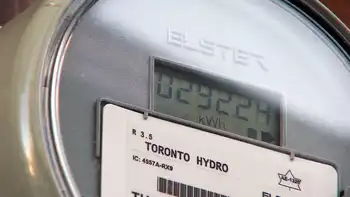
Ontario's five largest electricity providers join together to warn of holiday scams

Ontario Electricity Bill Scams: beware phishing, spoofed calls, fake invoices, and disconnection threats demanding prepaid cards, gift cards, or Bitcoin; verify with Hydro One, Alectra, Toronto Hydro, Elexicon, or Hydro Ottawa customer service.


Key Points

Fraud schemes impersonating utilities via calls, texts, emails, or fake bills to coerce instant payment with threats.

✅ Never pay by gift cards, prepaid debit, or Bitcoin.

✅ Do not call numbers in messages; use your bill or utility website.

✅ Verify IDs; report threats or door-to-door demands to police.


Ontario’s five largest electricity utilities have teamed up to warn the public about ongoing scams concerning fake phone calls, texts and bills connected to the utility accounts.

“We always receive these reports of scams and it gets increasingly higher during the holidays when people are busy and enjoying the season," said Whitney Brhelle, spokesperson with Hydro One.

Hydro One joined with Alectra Utilities, Elexicon Energy, Hydro Ottawa and Toronto Hydro to get the message out that scammers are targeting customers and threatening to turn off their power.

Scams involve impersonation of a local utility or its employees, threatening phone calls, texts or emails and pressure for immediate payment that come with threats to disconnect service the same day.

Criminals may demand payment in prepaid debit cards, gift cards or Bitcoin. Utilities said they would never call a customer without notice and threaten disconnection over the phone.

In a separate case, authorities in Montreal arrested suspects in an electricity theft ring that highlights broader energy-related crime.

“People have been calling customers and saying you need to pay your bill immediately and they are threatened with disconnection, often citing supposed changes to peak hydro rates to add pressure, which is something that we would ever do," said Kimberly Brathwaite, spokesperson with Elexicon Energy.

Scammers are also creating fake bills that look like the real thing.

“Scammers will actually take our Alectra logo and send out various authentic looking documents to people’s homes, so people have to be aware and check their statements very carefully” said Ashley Trgachef spokesperson with Alectra Utilities.

Customers are advised to never make a payment not listed on their recent bill and to ignore texts or emails with links promising refunds, and to verify any official relief fund information only through their utility and not to provide personal information or details about their account.

If you are given a number to call don’t call the number provided, you are better off to go to your bill or the utility’s website to makes sure it is the correct number for customer service and to review information about customer flexibility there.

Some scammers have even gone door to door demanding payment, and the utilities are advising anyone who feels threatened to call police.

They are also asking that you share the information with family and friends to be careful if they are contacted by someone claiming to be with their electricity company.

If you fall for a scam and money is sent, it's very difficult to get it back.  


Related News

View more

Climate change: Greenhouse gas concentrations again break records

Rising Greenhouse Gas Concentrations drive climate change, with CO2, methane, and nitrous oxide surging; WMO data show higher radiative forcing, elevated pre-industrial baselines, and persistent atmospheric concentrations despite Paris Agreement emissions pledges.


Key Points

Increasing atmospheric CO2, methane, and nitrous oxide levels that raise radiative forcing and drive warming.

✅ WMO data show CO2 at 407.8 ppm in 2018, above decade average

✅ Methane and nitrous oxide surged, elevating total radiative forcing

✅ Concentrations differ from emissions; sinks absorb about half


The World Meteorological Organization (WMO) says the increase in CO2 was just above the average rise recorded over the last decade.

Levels of other warming gases, such as methane and nitrous oxide, have also surged by above average amounts.

Since 1990 there's been an increase of 43% in the warming effect on the climate of long lived greenhouse gases.

The WMO report looks at concentrations of warming gases in the atmosphere rather than just emissions.

The difference between the two is that emissions refer to the amount of gases that go up into the atmosphere from the use of fossil fuels, such as burning coal for coal-fired electricity generation and from deforestation.

Concentrations are what's left in the air after a complex series of interactions between the atmosphere, the oceans, the forests and the land. About a quarter of all carbon emissions are absorbed by the seas, and a similar amount by land and trees, while technologies like carbon capture are being explored to remove CO2.

Using data from monitoring stations in the Arctic and all over the world, researchers say that in 2018 concentrations of CO2 reached 407.8 parts per million (ppm), up from 405.5ppm a year previously.

This increase was above the average for the last 10 years and is 147% of the "pre-industrial" level in 1750.

The WMO also records concentrations of other warming gases, including methane and nitrous oxide, and some countries have reported declines in certain potent gases, as noted in US greenhouse gas controls reports, though global levels remain elevated. About 40% of the methane emitted into the air comes from natural sources, such as wetlands, with 60% from human activities, including cattle farming, rice cultivation and landfill dumps.

Methane is now at 259% of the pre-industrial level and the increase seen over the past year was higher than both the previous annual rate and the average over the past 10 years.

Nitrous oxide is emitted from natural and human sources, including from the oceans and from fertiliser-use in farming. According to the WMO, it is now at 123% of the levels that existed in 1750.

Last year's increase in concentrations of the gas, which can also harm the ozone layer, was bigger than the previous 12 months and higher than the average of the past decade.

What concerns scientists is the overall warming impact of all these increasing concentrations. Known as total radiative forcing, this effect has increased by 43% since 1990, and is not showing any indication of stopping.

There is no sign of a slowdown, let alone a decline, in greenhouse gases concentration in the atmosphere despite all the commitments under the Paris agreement on climate change and the ongoing global energy transition efforts," said WMO Secretary-General Petteri Taalas.

"We need to translate the commitments into action and increase the level of ambition for the sake of the future welfare of mankind," he added.

"It is worth recalling that the last time the Earth experienced a comparable concentration of CO2 was three to five million years ago. Back then, the temperature was 2-3C warmer, sea level was 10-20m higher than now," said Mr Taalas.

The UN Environment Programme will report shortly on the gap between what actions countries are taking to cut carbon, for example where Australia's emissions rose 2% recently, and what needs to be done to keep under the temperature targets agreed in the Paris climate pact.

Preliminary findings from this study, published during the UN Secretary General's special climate summit last September, indicated that emissions continued to rise during 2018, although global emissions flatlined in 2019 according to the IEA.

Both reports will help inform delegates from almost 200 countries who will meet in Madrid next week for COP25, following COP24 in Katowice the previous year, the annual round of international climate talks.


Related News

View more

Three Mile Island at center of energy debate: Let struggling nuclear plants close or save them

Three Mile Island Nuclear Debate spotlights subsidies, carbon pricing, wholesale power markets, grid reliability, and zero-emissions goals as Pennsylvania weighs keeping Exelon's reactor open amid natural gas competition and flat electricity demand.


Key Points

Debate over subsidies, carbon pricing, and grid reliability shaping Three Mile Island's zero-emissions future.

✅ Zero emissions credits vs market integrity

✅ Carbon pricing to value clean baseload power

✅ Closure risks jobs, tax revenue, and reliability


Three Mile Island is at the center of a new conversation about the future of nuclear energy in the United States nearly 40 years after a partial meltdown at the Central Pennsylvania plant sparked a national debate about the safety of nuclear power.

The site is slated to close in just two years, a closure plan Exelon has signaled, unless Pennsylvania or a regional power transmission operator delivers some form of financial relief, says Exelon, the Chicago-based power company that operates the plant.

That has drawn the Keystone State into a growing debate: whether to let struggling nuclear plants shut down if they cannot compete in the regional wholesale markets where energy is bought and sold, or adopt measures to keep them in the business of generating power without greenhouse gas emissions.

""The old compromise — that in order to have a reliable, affordable electric system you had to deal with a significant amount of air pollution — is a compromise our new customers today don't want to hear about.""
-Joseph Dominguez, Exelon executive vice president
Nuclear power plants produce about two-thirds of the country's zero-emissions electricity, a role many view as essential to net-zero emissions goals for the grid.

The debate is playing out as some regions consider putting a price on planet-warming carbon emissions produced by some power generators, which would raise their costs and make nuclear plants like Three Mile Island more viable, and developments such as Europe's nuclear losses highlight broader energy security concerns.

States that allow nuclear facilities to close need to think carefully because once a reactor is powered down, there's no turning back, said Jake Smeltz, chief of staff for Pennsylvania State Sen. Ryan Aument, who chairs the state's Nuclear Energy Caucus.

"If we wave goodbye to a nuclear station, it's a permanent goodbye because we don't mothball them. We decommission them," he told CNBC.

Three Mile Island's closure would eliminate more than 800 megawatts of electricity output. That's roughly 10 percent of Pennsylvania's zero-emissions energy generation, by Exelon's calculation. Replacing that with fossil fuel-fired power would be like putting roughly 10 million cars on the road, it estimates.

A closure would also shed about 650 well-paying jobs, putting the just transition challenge in focus for local workers and communities, tied to about $60 million in wages per year. Dauphin County and Londonderry Township, a rural area on the Susquehanna River where the plant is based, stand to lose $1 million in annual tax revenue that funds schools and municipalities. The 1,000 to 1,500 workers who pack local hotels, stores and restaurants every two years for plant maintenance would stop visiting.

Pennsylvanians and lawmakers must now decide whether these considerations warrant throwing Exelon a lifeline. It's a tough sell in the nation's second-largest natural gas-producing state, which already generates more energy than it uses. And time is running out to reach a short-term solution.

"What's meaningful to us is something where we could see the results before we turn in the keys, and we turn in the keys the third quarter of '19," said Joseph Dominguez, Exelon's executive vice president for governmental and regulatory affairs and public policy.

The end of the nuclear age?

The problem for Three Mile Island is the same one facing many of the nation's 60 nuclear plants: They are too expensive to operate.

Financial pressure on these facilities is mounting as power demand remains stagnant due to improved energy efficiency, prices remain low for natural gas-fired generation and costs continue to fall for wind and solar power.

Three Mile Island is something of a special case: The 1979 incident left only one of its two reactors operational, but it still employs about as many people as a plant with two reactors, making it less efficient. In the last three regional auctions, when power generators lock in buyers for their future energy generation, no one bought power from Three Mile Island.

But even dual-reactor plants are facing existential threats. FirstEnergy Corp's Beaver Valley will sell or close its nuclear plant near the Pennsylvania-Ohio border next year as it exits the competitive power-generation business, and facilities like Ohio's Davis-Besse illustrate what's at stake for the region.

Five nuclear power plants have shuttered across the country since 2013. Another six have plans to shut down, and four of those would close well ahead of schedule. An analysis by energy research firm Bloomberg New Energy Finance found that more than half the nation's nuclear plants are facing some form of financial stress.

Today's regional energy markets, engineered to produce energy at the lowest cost to consumers, do not take into account that nuclear power generates so much zero-emission electricity. But Dominguez, the Exelon vice president, said that's out of step with a world increasingly concerned about climate change.

"What we see is increasingly our customers are interested in getting electricity from zero air pollution sources," Dominguez said. "The old compromise — that in order to have a reliable, affordable electric system you had to deal with a significant amount of air pollution — is a compromise our new customers today don't want to hear about."

Strange bedfellows

Faced with the prospect of nuclear plant closures, Chicago and New York have both allowed nuclear reactors to qualify for subsidies called zero emissions credits. Exelon lobbied for the credits, which will benefit some of its nuclear plants in those states.

Even though the plants produce nuclear waste, some environmental groups like the Natural Resources Defense Council supported these plans. That's because they were part of broader packages that promote wind and solar power, and the credits for nuclear are not open-ended. They essentially provide a bridge that keeps zero-emissions power from nuclear reactors on the grid as renewable energy becomes more viable.

Lawmakers in Pennsylvania, Ohio and Connecticut are currently exploring similar options. Jake Smeltz, chief of staff to state Sen. Aument, said legislation could surface in Pennsylvania as soon as this fall. The challenge is to get people to consider the attributes of the sources of their electricity beyond just cost, according to Smeltz.

"Are the plants worth essentially saving? That's a social choice. Do they provide us with something that has benefits beyond the electrons they make? That's the debate that's been happening in other states, and those states say yes," he said.

Subsidies face opposition from anti-nuclear energy groups like Three Mile Island Alert, as well as natural gas trade groups and power producers who compete against Exelon by operating coal and natural gas plants.

"Where we disagree is to have an out-of-market subsidy for one specific company, for a technology that is now proven and mature in our view, at the expense of consumers and the integrity of competitive markets," NRG Energy Mauricio Gutierrez told analysts during a conference call this month.

Smeltz notes that power producers like NRG would fill in the void left by nuclear plants as they continue to shut down.

"The question that I think folks need to answer is are these programs a bailout or is the opposition to the program a payout? Because at the end of the day someone is going to make money. The question is who and how much?" Smeltz said.

Changing the market

Another critic is PJM Interconnection, the regional transmission organization that operates the grid for 13 states, including Pennsylvania, and Washington, D.C.

The subsidies distort price formation and inject uncertainty into the markets, says Stu Bresler, senior vice president in charge of operations and markets at PJM.

The danger PJM sees is that each new subsidy creates a precedent for government intervention. The uncertainty makes it harder for investors to determine what sort of power generation is a sound investment in the region, Bresler explained. Those investors could simply decide to put their capital to work in other energy markets where the regulatory outlook is more stable, ultimately leading to underinvestment in places where government intervenes, he added.

Three Mile Island nuclear power plant, Londonderry Township, Pennsylvania
PJM believes longer-term, regional approaches are more appropriate. It has produced research that outlines how coal plants and nuclear energy, which provide the type of stable energy that is still necessary for reliable power supply, could play a larger role in setting prices. It is also preparing to release a report on how to put a price on carbon emissions in all or parts of the regional grid.

"If carbon emissions are the concern and that is the public policy issue with which policymakers are concerned, the simple be-all answer from a market perspective is putting a price on carbon," Bresler said.

Three Mile Island could be viable if natural gas prices rose from below $3 per million British thermal units to about $5 per mmBtu and if a "reasonable" price were applied to carbon, according to Exelon's Dominguez. He is encouraged by the fact that conversations around new pricing models and carbon pricing are gaining traction.

"The great part about this is everybody understands we have a major problem. We're losing some of the lowest-cost, cleanest and most reliable resources in America," Dominguez said.


Related News

View more

Sign Up for Electricity Forum’s Newsletter

Stay informed with our FREE Newsletter — get the latest news, breakthrough technologies, and expert insights, delivered straight to your inbox.

Electricity Today T&D Magazine Subscribe for FREE

Stay informed with the latest T&D policies and technologies.
  • Timely insights from industry experts
  • Practical solutions T&D engineers
  • Free access to every issue

Download the 2025 Electrical Training Catalog

Explore 50+ live, expert-led electrical training courses –

  • Interactive
  • Flexible
  • CEU-cerified