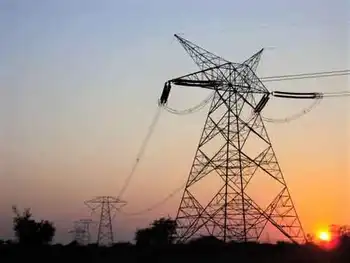
Homeowners cut power rates by almost 50%

By PR Newswire


NFPA 70e Training

Our customized live online or in‑person group training can be delivered to your staff at your location.
  • Live Online
  • 6 hours Instructor-led
  • Group Training Available
Regular Price:
$199
Coupon Price:
$149
Reserve Your Seat Today
The largest renewable energy installer in the Northeast, Alteris Renewables, in partnership with SunRun, the nation's largest home solar financing company, is enabling homeowners to cut their electricity costs up to 50% of their current rates with a solar energy system installed for as little as $3,000 down.

This program turns solar into a risk-free, budget-saver for homeowners. In addition to lowering their utility costs starting on day one, customers enjoy locked-in rates from SunRun that protect them against rising utility prices which are expected to nearly triple over the next 18 years.

Because SunRun maintains, repairs, and insures their systems, homeowners will experience clean solar-generated power without any additional hassle.

"With the SunRun solar service, we get to lock in a really low electricity rate for the next 18 years," said Teige Davidson, a homeowner in Arlington MA who recently signed-up with Alteris and SunRun. "Our family thinks this is a great opportunity to do our part to save the environment, and save money at the same time."

In addition to removing cost barriers to going solar, SunRun also eliminates the confusing responsibilities of filing for tax credits and navigating complex state and Federal incentive programs for solar.

"Alteris Renewables is one of the most trusted names in solar across Massachusetts," said Lynn Jurich, president of SunRun. "We're proud to be continuing our relationship with Alteris and helping homeowners in Massachusetts take control of their electricity costs and reduce their household pollution."

"Homeowners have struggled to lower their energy costs and their carbon footprint," said Ron French, president of the Solar Business for Alteris Renewables. "Now they can easily start energizing their homes with a powerful and environmentally-friendly solar electricity system while cutting their utility costs by up to 50%."

Related News

Climate Solution: Use Carbon Dioxide to Generate Electricity

Methane Hydrate CO2 Sequestration uses carbon capture and nitrogen injection to swap gases in seafloor hydrates along the Gulf of Mexico, releasing methane for electricity while storing CO2, according to new simulation research.


Key Points

A method injecting CO2 and nitrogen into hydrates to store CO2 while releasing methane for power.

✅ Nitrogen aids CO2-methane swap in hydrate cages, speeding sequestration

✅ Gulf Coast proximity to emitters lowers transport and power costs

✅ Revenue from methane electricity could offset carbon capture


The world is quickly realizing it may need to actively pull carbon dioxide out of the atmosphere to stave off the ill effects of climate change. Scientists and engineers have proposed various carbon capture techniques, but most would be extremely expensive—without generating any revenue. No one wants to foot the bill.

One method explored in the past decade might now be a step closer to becoming practical, as a result of a new computer simulation study. The process would involve pumping airborne CO2 down into methane hydrates—large deposits of icy water and methane right under the seafloor, beneath water 500 to 1,000 feet deep—where the gas would be permanently stored, or sequestered. The incoming CO2 would push out the methane, which would be piped to the surface and burned to generate electricity, whether sold locally or via exporters like Hydro-Que9bec to help defray costs, to power the sequestration operation or to bring in revenue to pay for it.

Many methane hydrate deposits exist along the Gulf of Mexico shore and other coastlines. Large power plants and industrial facilities that emit CO2 also line the Gulf Coast, where EPA power plant rules could shape deployment, so one option would be to capture the gas directly from nearby smokestacks, keeping it out of the atmosphere to begin with. And the plants and industries themselves could provide a ready market for the electricity generated.

A methane hydrate is a deposit of frozen, latticelike water molecules. The loose network has many empty, molecular-size pores, or “cages,” that can trap methane molecules rising through cracks in the rock below. The computer simulation shows that pushing out the methane with CO2 is greatly enhanced if a high concentration of nitrogen is also injected, and that the gas swap is a two-step process. (Nitrogen is readily available anywhere, because it makes up 78 percent of the earth’s atmosphere.) In one step the nitrogen enters the cages; this destabilizes the trapped methane, which escapes the cages. In a separate step, the nitrogen helps CO2 crystallize in the emptied cages. The disturbed system “tries to reach a new equilibrium; the balance goes to more CO2 and less methane,” says Kris Darnell, who led the study, published June 27 in the journal Water Resources Research. Darnell recently joined the petroleum engineering software company Novi Labs as a data scientist, after receiving his Ph.D. in geoscience from the University of Texas, where the study was done.

A group of labs, universities and companies had tested the technique in a limited feasibility trial in 2012 on Alaska’s North Slope, where methane hydrates form in sandstone under deep permafrost. They sent CO2 and nitrogen down a pipe into the hydrate. Some CO2 ended up being stored, and some methane was released up the same pipe. That is as far as the experiment was intended to go. “It’s good that Kris [Darnell] could make headway” from that experience, says Ray Boswell at the U.S. Department of Energy’s National Energy Technology Laboratory, who was one of the Alaska experiment leaders but was not involved in the new study. The new simulation also showed that the swap of CO2 for methane is likely to be much more extensive—and to happen quicker—if CO2 enters at one end of a hydrate deposit and methane is collected at a distant end.

The technique is somewhat similar in concept to one investigated in the early 2010s by Steven Bryant and others at the University of Texas. In addition to numerous methane hydrate deposits, the Gulf Coast has large pools of hot, salty brine in sedimentary rock under the coastline. In this system, pumps would send CO2 down into one end of a deposit, which would force brine into a pipe that is placed at the other end and leads back to the surface. There the hot brine would flow through a heat exchanger, where heat could be extracted and used for industrial processes or to generate electricity, supporting projects such as electrified LNG in some markets. The upwelling brine also contains some methane that could be siphoned off and burned. The CO2 dissolves into the underground brine, becomes dense and sinks further belowground, where it theoretically remains.

Either system faces big practical challenges, and building shared CO2 storage hubs to aggregate captured gas is still evolving. One is creating a concentrated flow of CO2; the gas makes up only .04 percent of air, and roughly 10 percent of the smokestack emission from a typical power plant or industrial facility. If an efficient methane hydrate or brine system requires an input that is 90 percent CO2, for example, concentrating the gas will require an enormous amount of energy—making the process very expensive. “But if you only need a 50 percent concentration, that could be more attractive,” says Bryant, who is now a professor of chemical and petroleum engineering at the University of Calgary. “You have to reduce the [CO2] capture cost.”

Another major challenge for the methane hydrate approach is how to collect the freed methane, which could simply seep out of the deposit through numerous cracks and in all directions. “What kind of well [and pipe] structure would you use to grab it?” Bryant asks.

Given these realities, there is little economic incentive today to use methane hydrates for sequestering CO2. But as concentrations rise in the atmosphere and the planet warms further, and as calls for an electric planet intensify, systems that could capture the gas and also provide energy or revenue to run the process might become more viable than techniques that simply pull CO2 from the air and lock it away, offering nothing in return.


Related News

View more

Scotland’s Wind Farms Generate Enough Electricity to Power Nearly 4.5 Million Homes

Scotland Wind Energy delivered record renewable power as wind turbines and farms generated 9,831,320 MWh in H1 2019, supplying clean electricity for every home twice and supporting northern England, according to WWF data.


Key Points

Term for Scotland's wind power output, highlighting 2019 records, clean electricity, and progress on decarbonization.

✅ 9,831,320 MWh generated Jan-Jun 2019 by wind farms

✅ Enough to power 4.47 million homes twice in that period

✅ Advances decarbonization and 2030 renewables, 2050 net-zero goals


Wind turbines in Scotland produced enough electricity in the first half of 2019, reflecting periods when wind led the power mix across the UK, to power every home in the country twice over, according to new data by the analytics group WeatherEnergy. The wind farms generated 9,831,320 megawatt-hours between January and June, as the UK set a wind generation record in comparable periods, equal to the total electricity consumption of 4.47 million homes during that same period.

The electricity generated by wind in early 2019 is enough to power all of Scotland’s homes, as well as a large portion of northern England’s, highlighting how wind and solar exceeded nuclear in the UK in recent milestones as well, and events such as record UK output during Storm Malik underscore this capacity.

“These are amazing figures,” Robin Parker, climate and energy policy manager at WWF, which highlighted the new data, said in a statement. “Scotland’s wind energy revolution is clearly continuing to power ahead, as wind became the UK’s main electricity source in a recent first. Up and down the country, we are all benefitting from cleaner energy and so is the climate.”

Scotland currently has a target of generating half its electricity from renewables by 2030, a goal buoyed by milestones like more UK electricity from wind than coal in 2016, and decarbonizing its energy system almost entirely by 2050. Experts say the latest wind energy data shows the country could reach its goal far sooner than originally anticipated, especially with complementary technologies such as tidal power in Scottish waters gaining traction.


Related News

View more

Washington Australia announces $600 electricity bill bonus for every household

WA $600 Electricity Credit supports households with power bills as a budget stimulus, delivering an automatic rebate via Synergy and Horizon, funded by the Bell Group settlement to aid COVID-19 recovery and local spending.


Key Points

A one-off $600 power bill credit for all Synergy and Horizon residential accounts, funded by the Bell Group settlement.

✅ Automatic, not means-tested; applied to Synergy and Horizon accounts.

✅ Can offset upcoming bills or carry forward to future statements.

✅ Funded by Bell Group payout; aims to ease cost-of-living pressures.


Washington Premier Mark McGowan has announced more than a million households will receive a $600 electricity credit on their electricity account before their next bill.

The $650 million measure will form part of Thursday's pre-election state budget, similar to legislation to lower electricity rates in other jurisdictions, which has been delayed since May because of the pandemic and will help deflect criticism by the opposition that Labor hasn't done enough to stimulate WA's economy.

Mr McGowan made the announcement on Sunday while visiting a family in the electorate of Bicton.

"Here in WA, our state is in the best possible position as we continue our strong recovery from COVID-19, but times are still tough for many West Australians, and there is always more work to do," he said.

"[The credit] will mean WA families have a bit of extra money available in the lead up to Christmas.

"But I have a request, if this credit means you can spend some extra money, use it to support our local WA businesses."

The electricity bill credit will be automatically applied to every Synergy or Horizon residential account from Sunday, echoing moves such as reconnections for nonpayment by Hydro One in Canada.

It can be applied to future bills and will not be means tested.

"The $600 credit is fully funded through the recent Bell Group settlement, for the losses incurred in the Bell Group collapse in the early 1990s," Mr McGowan said.

"It made sense that these funds go straight back to Western Australians."

In September, the liquidator for the Bell Group and its finance arm distributed funds to its five major creditors, including $670 million to the WA government. The payment marked the close of the 30-year battle to recover taxpayer funds squandered during the WA Inc era of state politics.

The payout is the result of litigation stemming from the 1988 partnership between then Labor government and entrepreneur Alan Bond in acquiring major interests in Robert Holmes à Court’s failing Bell Group, following the 1987 stock market crash.

WA shadow minister for cost of living, Tony Krsticevic, said the $600 credit was returning money back into West Australian's pockets from "WA Labor's darkest days".

“This is taxpayers’ money out of a levy which was brought in to pay for Labor’s scandalous WA Inc losses of $450 million in the 1980s,” he said.

“This money should be returned to West Australians.

“WA families are in desperate need of it because they are struggling under cost of living increases of $850 every year since 2017 under WA Labor, amid concerns elsewhere that an electricity recovery rate could lead to higher hydro bills.

“But they need more than just a one-off payment. These $850 cost of living increases are an on-going burden.”

Prior to the onset of the coronavirus pandemic, the opposition believed it was gaining traction by attacking the government's increases to fees and charges in its first three budgets, and by urging an electricity market overhaul to favor consumers.

Last year, Labor increased household fees and charges by $127.77, which came on top of increases over the prior two budgets, as other jurisdictions faced hydro rate increases of around 3 per cent.

According the state's annual report on its finances released in September, the $2.6 billion budget surplus forecast in the at the end of 2019 had been reduced by $920 million to $1.7 billion despite the impact of the coronavirus.

But total public sector net debt was at $35.4 billion, down from the $36.1 billion revision at the end of 2019 in the mid-year review.


Related News

View more

Data Center Boom Poses a Power Challenge for U.S. Utilities

U.S. Data Center Power Demand is straining electric utilities and grid reliability as AI, cloud computing, and streaming surge, driving transmission and generation upgrades, demand response, and renewable energy sourcing amid rising electricity costs.


Key Points

The rising electricity load from U.S. data centers, affecting utilities, grid capacity, and energy prices.

✅ AI, cloud, and streaming spur hyperscale compute loads

✅ Grid upgrades: transmission, generation, and substations

✅ Demand response, efficiency, and renewables mitigate strain


U.S. electric utilities are facing a significant new challenge as the explosive growth of data centers puts unprecedented strain on power grids across the nation. According to a new report from Reuters, data centers' power demands are expected to increase dramatically over the next few years, raising concerns about grid reliability and potential increases in electricity costs for businesses and consumers.


What's Driving the Data Center Surge?

The explosion in data centers is being fueled by several factors, with grid edge trends offering early context for these shifts:

  • Cloud Computing: The rise of cloud computing services, where businesses and individuals store and process data on remote servers, significantly increases demand for data centers.
  • Artificial Intelligence (AI): Data-hungry AI applications and machine learning algorithms are driving a massive need for computing power, accelerating the growth of data centers.
  • Streaming and Video Content: The growth of streaming platforms and high-definition video content requires vast amounts of data storage and processing, further boosting demand for data centers.


Challenges for Utilities

Data centers are notorious energy hogs. Their need for a constant, reliable supply of electricity places  heavy demand on the grid, making integrating AI data centers a complex planning challenge, often in regions where power infrastructure wasn't designed for such large loads. Utilities must invest significantly in transmission and generation capacity upgrades to meet the demand while ensuring grid stability.

Some experts warn that the growth of data centers could lead to brownouts or outages, as a U.S. blackout study underscores ongoing risks, especially during peak demand periods in areas where the grid is already strained. Increased electricity demand could also lead to price hikes, with utilities potentially passing the additional costs onto consumers and businesses.


Sustainable Solutions Needed

Utility companies, governments, and the data center industry are scrambling to find sustainable solutions, including using AI to manage demand initiatives across utilities, to mitigate these challenges:

  • Energy Efficiency: Data center operators are investing in new cooling and energy management solutions to improve energy efficiency. Some are even exploring renewable energy sources like onsite solar and wind power.
  • Strategic Placement: Authorities are encouraging the development of data centers in areas with abundant renewable energy and access to existing grid infrastructure. This minimizes the need for expensive new transmission lines.
  • Demand Flexibility: Utility companies are experimenting with programs as part of a move toward a digital grid architecture to incentivize data centers to reduce their power consumption during peak demand periods, which could help mitigate power strain.


The Future of the Grid

The rapid growth of data centers exemplifies the significant challenges facing the aging U.S. electrical grid, with a recent grid report card highlighting dangerous vulnerabilities. It highlights the need for a modernized power infrastructure, capable of accommodating increasing demand spurred by new technologies while addressing climate change impacts that threaten reliability and affordability.  The question for utilities, as well as data center operators, is how to balance the increasing need for computing power with the imperative of a sustainable and reliable energy future.


Related News

View more

Minnesota 2050 carbon-free electricity plan gets first hearing

Minnesota Carbon-Free Power by 2050 aims to shift utilities to renewable energy, wind and solar, boosting efficiency while managing grid reliability, emissions, and costs under a clean energy mandate and statewide climate policy.


Key Points

A statewide goal to deliver 100% carbon-free power by 2050, prioritizing renewables, efficiency, and grid reliability.

✅ Targets 100% carbon-free electricity statewide by 2050

✅ Prioritizes wind, solar, and efficiency before fossil fuels

✅ Faces utility cost, reliability, and legislative challenges


Gov. Tim Walz's plan for Minnesota to get 100 percent of its electricity from carbon-free sources by 2050, similar to California's 100% carbon-free mandate in scope, was criticized Tuesday at its first legislative hearing, with representatives from some of the state's smaller utilities saying they can't meet that goal.

Commerce Commissioner Steve Kelley told the House climate committee that the Democratic governor's plan is ambitious. But he said the state's generating system is "aging and at a critical juncture," with plants that produce 70 percent of the state's electricity coming up for potential retirement over the next two decades. He said it will ensure that utilities replace them with wind, solar and other innovative sources, and increased energy efficiency, before turning to fossil fuels.

"Utilities will simply need to demonstrate why clean energy would not work whenever they propose to replace or add new generating capacity," he said.

Walz's plan, announced last week, seeks to build on the success of a 2007 law that required Minnesota utilities to get at least 25 percent of their electricity from renewable sources by 2025. The state largely achieved that goal in 2017 thanks to the growth of wind and solar power, and the topic of climate change has only grown hotter, with some proposals like a fully renewable grid by 2030 pushing even faster timelines, hence the new goal for 2050.

But Joel Johnson, a lobbyist for the Minnkota Power Cooperative, testified that the governor's plan is "misguided and unrealistic" even with new technology to capture carbon dioxide emissions from power plants. Johnson added that even the big utilities that have set goals of going carbon-free by mid-century, such as Minneapolis-based Xcel Energy, acknowledge they don't know yet how they'll hit the net-zero electricity by mid-century target they have set.


Minnkota serves northwestern Minnesota and eastern North Dakota.

Tim Sullivan, president and CEO of the Wright-Hennepin Cooperative Electric Association in the Twin Cities area, said the plan is a "bad idea" for the 1.7 million state electric consumers served by cooperatives. He said Minnesota is a "minuscule contributor" to total global carbon emissions, even as the EU plans to double electricity use by 2050 to meet electrification demands.

"The bill would have a devastating impact on electric consumers," Sullivan said. "It represents, in our view, nothing short of a first-order threat to the safety and reliability of Minnesota's grid."

Isaac Orr is a policy fellow at the Minnesota-based conservative think tank, the Center for the American Experiment, which released a report critical of the plan Tuesday. Orr said all Minnesota households would face higher energy costs and it would harm energy-intensive industries such as mining, manufacturing and health care, while doing little to reduce global warming.

"This does not pass a proper cost-benefit analysis," he testified.

Environmental groups, including Conservation Minnesota and the Sierra Club, supported the proposal while acknowledging the challenges, noting that cleaning up electricity is critical to climate pledges in many jurisdictions.

"Our governor has called climate change an existential crisis," said Kevin Lee, director of the climate and energy program at the Minnesota Center for Environmental Advocacy. "This problem is the defining challenge of our time, and it can feel overwhelming."

Rep. Jean Wagenius, the committee chairwoman and Minneapolis Democrat who's held several hearings on the threats that climate change poses, said she expected to table the bill for further consideration after taking more testimony in the evening and would not hold a vote Tuesday.

While the bill has support in the Democratic-controlled House, it's not scheduled for action in the Republican-led Senate. Rep. Pat Garofalo, a Farmington Republican, quipped that it "has a worse chance of becoming law than me being named the starting quarterback for the Minnesota Vikings."


Related News

View more

Rolls-Royce expecting UK approval for mini nuclear reactor by mid-2024

Rolls-Royce SMR UK Approval underscores nuclear innovation as regulators review a 470 MW factory-built modular reactor, aiming for grid power by 2029 to boost energy security, cut fossil fuels, and accelerate decarbonization.


Key Points

UK regulatory clearance for Rolls-Royce's 470 MW modular reactor, targeting grid power by 2029 to support clean energy.

✅ UK design approval expected by mid 2024

✅ First 470 MW unit aims for grid power by 2029

✅ Modular, factory-built; est. £1.8b per 10-acre site


A Rolls-Royce (RR.L) design for a small modular nuclear reactor (SMR) will likely receive UK regulatory approval by mid-2024, reflecting progress seen in the US NRC safety evaluation for NuScale as a regulatory benchmark, and be able to produce grid power by 2029, Paul Stein, chairman of Rolls-Royce Small Modular Reactors.

The British government asked its nuclear regulator to start the approval process in March, in line with the UK's green industrial revolution agenda, having backed Rolls-Royce’s $546 million funding round in November to develop the country’s first SMR reactor.

Policymakers hope SMRs will help cut dependence on fossil fuels and lower carbon emissions, as projects like Ontario's first SMR move ahead in Canada, showing momentum.

Speaking to Reuters in an interview conducted virtually, Stein said the regulatory “process has been kicked off, amid broader moves such as a Canadian SMR initiative to coordinate development, and will likely be complete in the middle of 2024.

“We are trying to work with the UK Government, and others to get going now placing orders, echoing expansions like Darlington SMR plans in Ontario, so we can get power on grid by 2029.”

In the meantime, Rolls-Royce will start manufacturing parts of the design that are most unlikely to change, while advancing partnerships like a MoU with Exelon to support deployment, Stein added.

Each 470 megawatt (MW) SMR unit costs 1.8 billion pounds ($2.34 billion) and would be built on a 10-acre site, the size of around 10 football fields, though projects in New Brunswick SMR debate have prompted questions about costs and timelines.

Unlike traditional reactors, SMRs are cheaper and quicker to build and can also be deployed on ships and aircraft. Their “modular” format means they can be shipped by container from the factory and installed relatively quickly on any proposed site.


Related News

View more

Sign Up for Electricity Forum’s Newsletter

Stay informed with our FREE Newsletter — get the latest news, breakthrough technologies, and expert insights, delivered straight to your inbox.

Electricity Today T&D Magazine Subscribe for FREE

Stay informed with the latest T&D policies and technologies.
  • Timely insights from industry experts
  • Practical solutions T&D engineers
  • Free access to every issue

Live Online & In-person Group Training

Advantages To Instructor-Led Training – Instructor-Led Course, Customized Training, Multiple Locations, Economical, CEU Credits, Course Discounts.

Request For Quotation

Whether you would prefer Live Online or In-Person instruction, our electrical training courses can be tailored to meet your company's specific requirements and delivered to your employees in one location or at various locations.