Substation Protection Training - Protect Transformers, Buses and Lines
Our customized live online or in‑person group training can be delivered to your staff at your location.
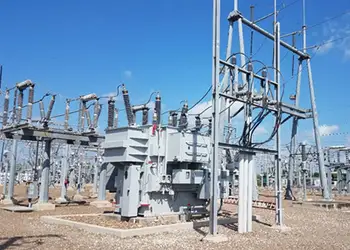
- Live Online
- 12 hours Instructor-led
- Group Training Available
Regular Price:
$799
Coupon Price:
$699
The leading economic organization of the industrialized world is being advised to condemn attempts by countries to impose carbon tariffs on certain imported goods - an initiative that the Liberal party advocates in its key election-campaign policy, the Green Shift plan.
The Organization for Economic Co-operation and Development has been told that tariffs aimed at punishing countries - mostly from such emerging markets as China - that emit high levels of greenhouse gases carry "significant" risks, including sparking a global trade war. It is advised to "speak out strongly" against such levies.
Carbon tariffs "will neither improve the global environment nor strengthen the competitiveness of OECD industries, companies and firms," the OECD was told in a briefing dated Sept. 10.
The advice was from a coalition of 36 business associations that includes the Canadian Chamber of Commerce.
"Unilateral measures are likely to be considered a violation of international trade and climate-change commitments, could trigger trade protectionism, could damage the integrity of international environmental treaties and make it more difficult to achieve a much-needed global post-Kyoto agreement on GHG emissions reductions," the association said.
The advice to the OECD was contained in a briefing stamped "draft," a copy of which has been obtained by the National Post.
Carbon tariffs are seen as a way that governments can help their domestic businesses compete in a global marketplace where rivals may not face the same kind of stringent environmental regulations. Economists at CIBC World Markets have said carbon tariffs could boost inflation, as new charges are slapped on imports, and reverse companies' march toward moving manufacturing operations to countries with less-robust climate-change policies.
It is expected that once the United States puts a price on carbon either through a carbon tax or a cap-and-trade system - it may be keen to use carbon tariffs as a weapon against the emerging economic powerhouses, most notably China. The European Union already prices carbon through its cap-and-trade system. Imposing carbon tariffs is part of the Liberal party's Green Shift plan, which Stephane Dion, has made the centerpiece of the Liberal election platform.
"We will build carbon pricing into our strategy for international trade, endeavouring where possible to ensure that goods from countries that are not pricing carbon will face a tariff reflective of carbon content," the Green Shift says.
The Liberal environmental platform adds there should be no risk to Canada's trading relationship with the United States because it is expected that the next U. S. president, whether Republican or Democratic, will pursue a policy that prices carbon.
However, the business advisory group warns the OECD that trade policy should not be used to "coerce" countries to adopt more stringent environmental policy. It adds an unintended consequence for countries that pursue carbon tariffs is that their business communities will become complacent and less productive - leading to drops in their respective standards of living.
"The initial advantage of protection for domestic companies will over time likely turn into a competitive disadvantage as companies that are partially shielded from competition tend to be less innovative, less active in seeking new business opportunities and less eager to reduce excessive costs than companies that are exposed to effective international competition," the OECD is warned.
The OECD briefing adds that carbon tariffs could undermine efforts to get consensus on a global environmental treaty.
"It is difficult to understand how OECD countries could sign an international environmental agreement, recognizing common but differentiated responsibilities, and then impose border tax adjustments on trade with those countries," the briefing says.
Related News
Current Model For Storing Nuclear Waste Is Incomplete
Nuclear Waste Corrosion accelerates as stainless steel, glass, and ceramics interact in aqueous conditions, driving…
View more

Shocking scam: fraudster pretending to be from BC Hydro attempts to extort business
BC Hydro Bitcoin Scam targets small businesses with utility impersonation, call spoofing, and disconnection threats,…
View more
How the U.S. Grid Is Adapting to Extreme Heat and Climate Stress
U.S. Grid Heat Resilience sees operators adopt a design baseline for extreme heat, use ambient-adjusted…
View more

Canadian Manufacturers and Exporters Congratulates the Ontario Government for Taking Steps to Reduce Electricity Prices
Ontario Global Adjustment Deferral offers COVID-19 electricity bill relief to industrial and commercial consumers not…
View more
Canadian Government Boosts Funding for Grid Reliability Projects
Federal funds now support Alberta grid modernization and smart technology projects to improve electricity reliability…
View more

The Evolution of Electric Vehicle Charging Infrastructure in the US
US EV Charging Infrastructure is evolving with interoperable NACS and CCS standards, Tesla Supercharger access,…
View more
Sign Up for Electricity Forum’s Newsletter
Stay informed with our FREE Newsletter — get the latest news, breakthrough technologies, and expert insights, delivered straight to your inbox.
Electricity Today T&D Magazine Subscribe for FREE

Stay informed with the latest T&D policies and technologies.
- Timely insights from industry experts
- Practical solutions T&D engineers
- Free access to every issue

