Substation Protection Training - Protect Transformers, Buses and Lines
Our customized live online or in‑person group training can be delivered to your staff at your location.
- Live Online
- 12 hours Instructor-led
- Group Training Available
Regular Price:
$799
Coupon Price:
$699
FERC market-based rates underpin competitive wholesale power markets, affirmed under the Federal Power Act and Energy Policy Act of 2005, as EPSA urges the Supreme Court to deny review to avoid costly uncertainty.
The Big Picture
Tariffs enabling competitive wholesale electricity pricing, approved by FERC under the Federal Power Act.
- Upholds FERC authority under the Federal Power Act.
- EPAct 2005 affirms market-based rate approvals.
- EPSA warns of consumer costs if overturned.
- Courts have consistently sustained the regime.
The Electric Power Supply Association EPSA has filed a brief with the U.S. Supreme Court urging the court to deny a petition for review of a decision by the U.S. Court of Appeals for the Ninth Circuit upholding the Federal Energy Regulatory Commission's FERC market-based rate authority for wholesale electricity markets.
The case is Public Citizen, Inc., v. Federal Energy Regulatory Commission and involves a Supreme Court case concerning FERC Order 697 issued in 2007 to improve market-based rate regulations. EPSA is joined on the brief by PPL Corporation, a fellow respondent in the case.
EPSA's brief argues that, "The Court should deny the petition for at least three reasons. First, no decision of this Court or any court of appeals conflicts with the lower court's holding that the Commission's market-based rate regime comports with the requirements of the Federal Power Act. Second, the court of appeals correctly held that the Commission's market-based rate regime does not violate any statutory requirement, as illustrated in a market manipulation case from related proceedings."
"In fact, Congress ratified the regime when it enacted the Energy Policy Act of 2005, an energy crisis case provided important context, Pub. L. No. 109-58, 119 Stat. 594, which includes multiple provisions that would make no sense if, as petitioners contend, the Commission lacked authority to approve market-based rate tariffs. Third, denying the petition would not raise any issues of exceptional importance."
"In contrast, granting the relief petitioners seek could have devastating consequences for the nation’s energy markets, as seen in FERC grid debates over regional markets, and the consumers who rely on those markets."
EPSA's brief concludes by stating that, "Any decision that accepts petitioners' suggestion that the Commission’s market-based program is per se unlawful under the Federal Power Act would jeopardize these markets, as noted in Power Supply Association news, and set the stage for crisis. Even if one could ignore the billions of dollars in benefits that would be lost from a retreat from a competitive, market-based regime, there is no ignoring the substantial costs that such a retreat would impose on consumers."
"Moreover, thousands of market participants have built power plants, made other investments and ordered their affairs based on the pro-competitive policies that the Commission has implemented over the last two decades, which have been consistently upheld by courts, with a recent FERC enforcement update highlighting oversight, and which Congress affirmed in the 2005 legislation."
EPSA President and CEO John E. Shelk said, "EPSA is pleased to support FERC's important work in this area as it has done in the past, including before the Ninth Circuit. As EPSA's brief documents in detail, every court that has considered the question has concluded that FERC is acting within its authority under the Federal Power Act, including a FERC delay report on procedural timing, consistent with that authority. Wholesale power markets provide tangible benefits to consumers, the economy and the environment. EPSA is hopeful that the U.S. Supreme Court will not inject costly uncertainty into the nation's electricity equation at this critical time by granting the petitioners' petition for review in this case."
Related News

4 ways the energy crisis hits U.S. electricity, gas, EVs
U.S. Energy Crunch disrupts fuel and power markets, driving natural gas price spikes, coal resurgence,…
View more

Coronavirus puts electric carmakers on alert over lithium supplies
Western Lithium Supply Localization is accelerating as EV battery makers diversify from China, boosting lithium…
View more
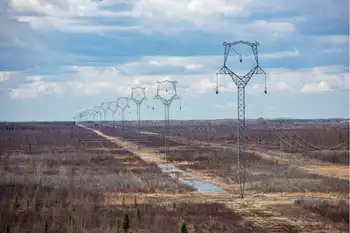
Minnesota Power energizes Great Northern Transmission Line
Great Northern Transmission Line delivers 250 MW of carbon-free hydropower from Manitoba Hydro, strengthening Midwest…
View more

Nova Scotia Eyes Offshore Wind for U.S. Power Markets
Nova Scotia is advancing offshore wind plans to meet rising electricity demand at home while…
View more

Florida PSC approves Gulf Power’s purchase of renewable energy produced at municipal solid waste plant
Gulf Power renewable energy contract underscores a Florida PSC-approved power purchase from Bay County's municipal…
View more

Basin Electric and Clenera Renewable Energy Announce Power Purchase Agreement for Montana Solar Project
Cabin Creek Solar Project Montana delivers 150 MW of utility-scale solar under a Power Purchase…
View more
Sign Up for Electricity Forum’s Newsletter
Stay informed with our FREE Newsletter — get the latest news, breakthrough technologies, and expert insights, delivered straight to your inbox.
Electricity Today T&D Magazine Subscribe for FREE

Stay informed with the latest T&D policies and technologies.
- Timely insights from industry experts
- Practical solutions T&D engineers
- Free access to every issue
