Substation Relay Protection Training
Our customized live online or in‑person group training can be delivered to your staff at your location.
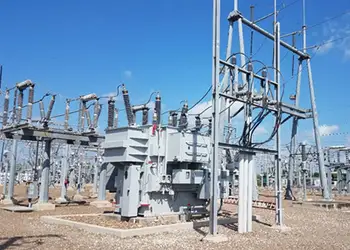
- Live Online
- 12 hours Instructor-led
- Group Training Available
Regular Price:
$699
Coupon Price:
$599
FPL Cedar Bay Coal Plant Phase-Out reduces Jacksonville coal generation, ends a purchased-power contract, cuts CO2 emissions, boosts clean energy, and delivers customer savings, supported by PSC approval, EPA goals, and expanded natural gas capacity.
What's Happening
FPL will buy Cedar Bay, end a costly contract, cut coal 90 percent, reduce CO2, and retire the Jacksonville plant early.
- $520.5M acquisition ends long-term purchased-power agreement.
- Operations cut ~90%, plant runs about 5% of the time.
- Nearly 1 million tons of CO2 emissions avoided each year.
- Projected net savings of about $70 million for customers.
Recently, Florida Power & Light Company FPL filed a petition with the Florida Public Service Commission PSC to request approval to acquire a power plant that it has had under a long-term contract to purchase power since 1988.
Upon taking ownership of the Cedar Bay Generating Plant, a 250-megawatt coal-fired facility located in Jacksonville, Fla., FPL plans to immediately terminate the contract and reduce the plant's operations by 90 percent, with the intention of eventually phasing the plant out of service amid broader coal plant retirements across Florida and beyond.
"Although years ago it made sense to buy this plant's power to serve our customers, times have changed. We have invested billions of dollars to improve the efficiency of our system, advance energy-efficient projects, reduce our fuel consumption, prevent emissions and cut costs for our customers," said Eric Silagy, president and CEO of FPL. "Now we're in a position to take ownership of the facility and effectively buy out an outmoded contract with the goal of ultimately phasing the plant out of service, which will mean reduced carbon emissions and millions of dollars in savings for our customers. This proposal is another smart step forward in our ongoing effort to serve our customers with affordable clean energy now and in the future."
"The Nature Conservancy welcomes FPL's innovative approach to promote energy solutions that will help reduce emissions in Florida," said Temperince Morgan, executive director of the Florida Chapter of The Nature Conservancy.
In 1988, the Florida PSC approved a long-term purchased-power agreement between FPL and the direct owner of the Cedar Bay plant, Cedar Bay Generating Company, Limited Partnership. The contract was based on the cost of power at the time however, recently FPL can generate electricity at a much lower cost. Also, while the Cedar Bay plant is well-run, it nonetheless emits very high rates of CO2 compared with FPL's current generation fleet, which has an overall CO2 emissions rate much lower than the national average.
Under the existing purchased-power agreement, fixed payments for capacity and operating and maintenance total more than $120 million a year currently with annual increases until the contract's expiration in 2024. Like other purchased-power agreements, the fixed payments are paid for by customers through their rates, in addition to the cost of energy when the plant is operating.
In its filing with the PSC, FPL proposes to purchase CBAS Power Inc., the indirect owner of the plant, from CBAS Power Holdings, LLC, for a price of $520.5 million. FPL would then terminate the purchased-power contract, avoiding the fixed payments that customers would otherwise pay through their rates over the remaining life of the contract.
Upon taking ownership, FPL expects to decrease plant operations by about 90 percent so that it operates no more than about 5 percent of the time based on its true economics. Reducing the plant's operations will prevent nearly 1 million tons of carbon dioxide emissions every year.
The U.S. Environmental Protection Agency EPA calculates that this amount of carbon reduction is equivalent to saving more than 100 million gallons of gasoline or switching more than 23 million incandescent light bulbs to energy-efficient compact-fluorescent lights every year.
Based on the company's current analysis of operational needs, FPL expects to permanently decommission the Cedar Bay plant within the next two to three years. In 2017, when Florida's access to clean natural gas is expected to be enhanced by the new interstate natural gas pipeline entering commercial operation and a new generation plant coming online, FPL believes that the Cedar Bay plant will no longer be economic to dispatch or needed for reliability, and therefore would be retired nearly eight years sooner than it otherwise would have been.
FPL is requesting PSC approval of the purchase by July 31, 2015, so that the purchase can be completed as soon as possible to maximize customer savings. The fixed payments under the existing purchased-power contract are paid for through the capacity cost recovery clause on a customer's electric bill, and FPL requests that the costs and customer savings associated with its proposal be handled through the same mechanism.
Compared with the current fixed payments, the net cost is expected to be slightly higher during approximately the first three years, but then significantly lower over the remaining life of the contract – producing total projected net savings of approximately $70 million for customers.
The proposed plan is consistent with FPL's ongoing strategy of making smart, innovative investments to deliver affordable clean energy for its customers. Since 2001, FPL's investments in high-efficiency natural gas generation have enabled the company to cut its use of foreign oil by more than 99 percent – from more than 40 million barrels of oil in 2001 to less than 1 million barrels annually today.

FPL has been strategically phasing out older, less efficient fossil fuel plants and modernizing power plants by replacing them with new, high-efficiency natural gas energy centers that use approximately one-third less fuel per megawatt-hour. The company has also invested heavily to increase its use of zero-emissions nuclear and solar energy and expand wind generation as part of its portfolio and recently announced plans to triple its solar capacity by the end of 2016.
Thanks in large part to the company's affordable clean energy strategy FPL is well-positioned to meet the EPA's Clean Power Plan targets for reductions in CO2 emissions – with no expected additional costs – unlike many electric utilities across the country. Likewise, by lowering the state's overall emissions rate, and as some utilities move to slash pollution with major investments, the plan filed recently will help Florida meet the EPA's proposed statewide CO2 emissions reduction goals.
"It's this kind of forward-thinking that not only identifies solutions that are truly a win-win, but also contribute to our parent company's recognition as one of the world's most admired companies and among the top 10 in the world for innovativeness and community responsibility," noted Silagy.
Related News
Related News

Oil crash only a foretaste of what awaits energy industry
Oil and Gas Profitability Decline reflects shale-driven oversupply, OPEC-Russia dynamics, LNG exports, renewables growth, and…
View more
More red ink at Manitoba Hydro as need for new power generation looms
Manitoba NDP Energy Financing Strategy outlines public ownership of renewables, halts private wind farms, stabilizes…
View more
Beating Covid Is All About Electricity
Hospital Electricity Reliability underpins ICU operations, ventilators, medical devices, and diagnostics, reducing power outages risks…
View more
France's nuclear power stations to limit energy output due to high river temperatures
France Nuclear Heatwave Output Restrictions signal reduced reactor capacity along the Rhone River, as EDF…
View more
Chester County Landfill Converts Methane to Renewable Gas
SECCRA Waga Energy RNG Partnership captures landfill methane with WAGABOX, upgrades biogas to pipeline-quality RNG,…
View more
Coronavirus could stall a third of new U.S. utility solar this year: report
U.S. Utility-Scale Solar Delays driven by the coronavirus pandemic threaten construction timelines, supply chains, and…
View more
Sign Up for Electricity Forum’s Newsletter
Stay informed with our FREE Newsletter — get the latest news, breakthrough technologies, and expert insights, delivered straight to your inbox.
Electricity Today T&D Magazine Subscribe for FREE

Stay informed with the latest T&D policies and technologies.
- Timely insights from industry experts
- Practical solutions T&D engineers
- Free access to every issue

