Florida Electric Utilities Warn About Substation Hazards

By PR Newswire


Electrical Testing & Commissioning of Power Systems

Our customized live online or in‑person group training can be delivered to your staff at your location.
  • Live Online
  • 12 hours Instructor-led
  • Group Training Available
Regular Price:
$599
Coupon Price:
$499
Reserve Your Seat Today
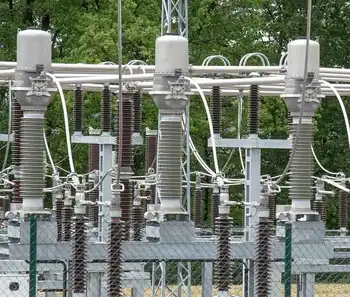
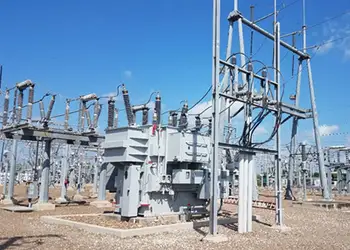
Progress Energy Florida and Tampa Electric have joined together to remind the public about the dangers of tampering with electric equipment.

Progress Energy Florida and Tampa Electric have seen an increase in theft and vandalism at electrical substations in their service areas in recent months. Many of the thefts involve metals, which are subsequently sold on the scrap market.

Substations contain high-voltage transmission lines and other equipment. They are hazardous areas surrounded by locked fences. Thefts from substations have resulted in injury and death - and can put surrounding communities at risk for extended power outages.

Progress Energy Florida and Tampa Electric encourage customers to exercise caution near all electrical equipment.

If you see any suspicious activity in or near a substation, report the information to the appropriate power company or to local law enforcement.

If you have information about thefts from a substation or other utility property, immediately report it to local law enforcement agencies.

Related News
Canada to spend $2M on study to improve Atlantic region's electricity grid

Atlantic Clean Power Superhighway outlines a federally backed transmission grid upgrade for Atlantic Canada, adding 2,000 MW of renewable energy via interprovincial ties, improved hydro access from Quebec and Newfoundland and Labrador, with utility-regulator funding.


Key Points

A federal-provincial plan upgrading Atlantic Canada's grid to deliver 2,000 MW of renewables via interprovincial links.

✅ $2M technical review to rank priority transmission projects

✅ Target: add 2,000 MW renewable power to Atlantic grid

✅ Cost-sharing by utilities, regulators, and federal-provincial funding


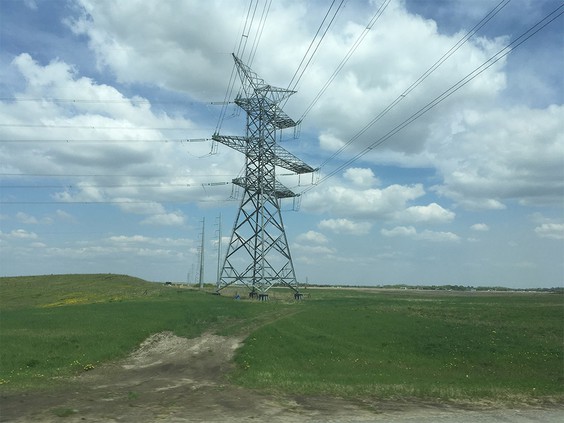
The federal government will spend $2 million on an engineering study to improve the Atlantic region's electricity grid.

The study was announced Friday at a news conference held by 10 federal and provincial politicians at a meeting of the Atlantic Growth Strategy in Halifax, which includes ongoing regulatory reform efforts for cleaner power in Atlantic Canada.

The technical review will identify the most important transmission projects including inter-provincial ties needed to move electricity across the region.

Nova Scotia Premier Stephen McNeil said the results are expected in July.

Provinces will apply to the federal government for federal funding to build the infrastructure. Utilities in each province will be expected to pay some portion of the cost by applying to respective regulators, but what share falls to ratepayers is not known.

​Federal Intergovernmental Affairs Minister Dominic LeBlanc characterized the grid improvements as something that will cost hundreds of millions of dollars.

He said the study was the first step toward "a clean power superhighway across the region.

"We have a historic opportunity to quickly get to work on upgrading ultimately a whole series of transmission links of inter-provincial ties. That's something that the government of Canada would be anxious to work with in terms of collaborating with the provinces on getting that right."

Premier McNeil referred specifically to improving hydro access from Quebec and Newfoundland and Labrador.

For context, a massive cross-border hydropower line to New York is planned, illustrating the scale of projects under consideration.


Goal of 2,000 megawatts

McNeil said the goal was to bring an additional 2,000 megawatts of renewable electricity into the region.

"I can't stress to you enough how critical this will be for the future economic success and stability of Atlantic Canada, especially as Atlantic grids face intensifying storms," he said.

Federal Immigration Minister Ahmed Hussen also announced a pilot project to attract immigrant workers will be extended by two years to the end of 2021.

International graduate students will be given 24 months to apply under the program — a one-year increase.


Related News

View more

Criminals posing as Toronto Hydro are sending out fraudulent messages

Toronto Hydro Scam Warning urges customers to spot phishing emails, fraudulent texts, fake bills, and door-to-door threats demanding bitcoin or prepaid cards, with disconnection threats; report scams to the Canadian Anti-Fraud Centre.


Key Points

Advisory on phishing, fake bills, and payment scams posing as Toronto Hydro, with steps to avoid fraud and report.

✅ Hang up suspicious calls; never pay via bitcoin or prepaid cards.

✅ Do not click links in emails or texts; compare bills and account numbers.

✅ Report fraud to the Canadian Anti-Fraud Centre: 1-888-495-8501.


Toronto Hydro has sent out a notice that criminals posing as Toronto Hydro are sending out fraudulent texts, letters and emails, similar to a recent BC Hydro scam reported in British Columbia.

The warning comes in a tweet, along with suggestions on how to protect yourself from fraud, especially as policy debates like an NDP public hydro plan can generate confusing messages.

According to Toronto Hydro, fraudsters are contacting people by phone, text, email, fake electricity bills, and even travelling door-to-door.

They threaten to disconnect the power unless an immediate payment is made, even though legitimate utilities must follow proper disconnection notices processes. The website states that in some cases, criminals request payment via pre-paid credit card or bitcoin.

It’s written on the website that Toronto Hydro does not accept these methods of payment, and they do not threaten to immediately disconnect power, a reminder that stories about power theft abroad are not a model for local billing.

If you suspect you are being targeted, you should immediately hang up any suspicious phone calls. Don’t click on any links in emails or texts asking you to accept electronic transfers, as scammers may impersonate well-known utilities during high-profile news such as Hydro One profit changes to appear credible.

Avoid sharing any personal information over the phone or in-person, and do not make any payments related to Smart Meter Deposits, as this fee does not exist and rate-setting is overseen by the Ontario Energy Board in Ontario.

And remember to always compare bills to previous ones, including the amount and account number, since major accounting decisions like a BC Hydro deferral report can fuel confusing narratives.

To report fraudulent activity, please contact:
Canadian Anti-Fraud Centre at 1-888-495-8501; quote file number 844396


Related News

View more

Electricity demand set to reduce if UK workforce self-isolates

UK Energy Networks Coronavirus Contingency outlines ESO's lockdown electricity demand forecast, reduced industrial and commercial load, rising domestic use, Ofgem guidance needs, grid resilience, control rooms, mutual aid, and backup centers.


Key Points

A coordinated plan with ESO forecasts, safeguards, and mutual aid to keep power and gas services during a lockdown.

✅ ESO forecasts lower industrial use, higher domestic demand

✅ Control rooms protected; backup sites and cross-trained staff

✅ Mutual aid and Ofgem coordination bolster grid resilience


National Grid ESO is predicting a reduction in electricity demand, consistent with residential use trends observed during the pandemic, in the case of the coronavirus spread prompting a lockdown across the country.

Its analysis shows the reduction in commercial and industrial use would outweigh an upsurge in domestic demand, mirroring Ontario demand data seen as people stayed home, according to similar analyses.

The prediction was included in an update from the Energy Networks Association (ENA), in which it sought to reassure the public that contingency plans are in place, reflecting utility disaster planning across electric and gas networks, to ensure services are unaffected by the coronavirus spread.

The body, which represents the UK's electricity and gas network companies, said "robust measures" had been put in place to protect control rooms and contact centres, similar to staff lockdown protocols considered by other system operators, to maintain resilience. To provide additional resilience, engineers have been trained across multiple disciplines and backup centres exist should operations need to be moved if, for example, deep cleaning is required, the ENA said.

Networks also have industry-wide mutual aid arrangements, similar to grid response measures outlined in the U.S., for people and the equipment needed to keep gas and electricity flowing.

ENA chief executive, David Smith, said, echoing system reliability assurances from other markets: "The UK's electricity and gas network is one of the most reliable in the world and network operators are working with the authorities to ensure that their contingency plans are reviewed and delivered in accordance with the latest expert advice. We are following this advice closely and reassuring customers that energy networks are continuing to operate as normal for the public."

Utility Week spoke to a senior figure at one of the networks who reiterated the robust measures in place to keep the lights on, even as grid alerts elsewhere highlight the importance of contingency planning. However, they pleaded for more clarity from Ofgem and government on how its workers will be treated if the coronavirus spread becomes a pandemic in the UK.


Related News

View more

Why California's Climate Policies Are Causing Electricity Blackouts

California Rolling Blackouts expose grid reliability risks amid a heatwave, as CAISO curtails power while solar output fades at sunset, wind stalls, and scarce natural gas and nuclear capacity plus PG&E issues strain imports.


Key Points

Grid outages during heatwaves from low reserves, fading solar, weak wind, and limited firm capacity.

✅ Heatwave demand rose as solar output dropped at sunset

✅ Limited imports and gas, nuclear shortfalls cut reserves

✅ Policy, pricing, and maintenance gaps increased outage risk


Millions of Californians were denied electrical power and thus air conditioning during a heatwave, raising the risk of heatstroke and death, particularly among the elderly and sick. 

The blackouts come at a time when people, particularly the elderly, are forced to remain indoors due to Covid-19, and as later heat waves would test the grid again statewide.

At first, the state’s electrical grid operator last night asked customers to voluntarily reduce electricity use. But after lapses in power supply pushed reserves to dangerous levels it declared a “Stage 3 emergency” cutting off power to people across the state at 6:30 pm.

The immediate reason for the black-outs was the failure of a 500-megawatt power plant and an out-of-service 750-megawatt unit not being available. “There is nothing nefarious going on here,” said a spokeswoman for California Independent System Operator (CAISO). “We are just trying to run the grid.”

But the underlying reasons that California is experiencing rolling black-outs for the second time in less than a year stem from the state’s climate policies, which California policymakers have justified as necessary to prevent deaths from heatwaves, and which it is increasingly exporting to Western states as a model.

In October, Pacific Gas and Electric cut off power to homes across California to avoid starting forest fires after reports that its power lines may have started fires in recent seasons. The utility and California’s leaders had over the previous decade diverted billions meant for grid maintenance to renewables. 

And yesterday, California had to impose rolling blackouts because it had failed to maintain sufficient reliable power from natural gas and nuclear plants, or pay in advance for enough guaranteed electricity imports from other states.

It may be that California’s utilities and their regulator, the California Public Utilities Commission, which is also controlled by Gov. Newsom, didn’t want to spend the extra money to guarantee the additional electricity out of fears of raising California’s electricity prices even more than they had already raised them.

California saw its electricity prices rise six times more than the rest of the United States from 2011 to 2019, helping explain why electricity prices are soaring across the state, due to its huge expansion of renewables. Republicans in the U.S. Congress point to that massive increase to challenge justifications by Democrats to spend $2 trillion on renewables in the name of climate change.

Even though the cost of solar panels declined dramatically between 2011 and 2019, their unreliable and weather-dependent nature meant that they imposed large new costs in the form of storage and transmission to keep electricity as reliable. California’s solar panels and farms were all turning off as the blackouts began, with no help available from the states to the East already in nightfall.

Electricity from solar goes away at the very moment when the demand for electricity rises. “The peak demand was steady in late hours,” said the spokesperson for CAISO, which is controlled by Gov. Gavin Newsom, “and we had thousands of megawatts of solar reducing their output as the sunset.”

The two blackouts in less than a year are strong evidence that the tens of billions that Californians have spent on renewables come with high human, economic, and environmental costs.

Last December, a report by done for PG&E concluded that the utility’s customers could see blackouts double over the next 15 years and quadruple over the next 30.

California’s anti-nuclear policies also contributed to the blackouts. In 2013, Gov. Jerry Brown forced a nuclear power plant, San Onofre, in southern California to close.

Had San Onofre still been operating, there almost certainly would not have been blackouts on Friday as the reserve margin would have been significantly larger. The capacity of San Onofre was double that of the lost generation capacity that triggered the blackout.

California's current and former large nuclear plants are located on the coast, which allows for their electricity to travel shorter distances, and through less-constrained transmission lines than the state’s industrial solar farms, to get to the coastal cities where electricity is in highest demand.

There has been very little electricity from wind during the summer heatwave in California and the broader western U.S., further driving up demand. In fact, the same weather pattern, a stable high-pressure bubble, is the cause of heatwaves, since it brought very low wind for days on end along with very high temperatures.

Things won’t be any better, and may be worse, in the winter, with a looming shortage as it produces far less solar electricity than the summer. Solar plus storage, an expensive attempt to fix problems like what led to this blackout, cannot help through long winters of low output.

California’s electricity prices will continue to rise if it continues to add more renewables to its grid, and goes forward with plans to shut down its last nuclear plant, Diablo Canyon, in 2025.

Had California spent an estimated $100 billion on nuclear instead of on wind and solar, it would have had enough energy to replace all fossil fuels in its in-state electricity mix.

To manage the increasingly unreliable grid, California will either need to keep its nuclear plant operating, build more natural gas plants, underscoring its reliance on fossil fuels for reliability, or pay ever more money annually to reserve emergency electricity supplies from its neighbors.

After the blackouts last October, Gov. Newsom attacked PG&E Corp. for “greed and mismanagement” and named a top aide, Ana Matosantos, to be his “energy czar.” 

“This is not the new normal, and this does not take 10 years to solve,” Newsom said. “The entire system needs to be reimagined.”


Related News

View more

California Gets $500M to Upgrade Power Grid

California Grid Modernization Funding will upgrade transmission and distribution, boost grid resilience, enable renewable energy integration, expand energy storage, and deploy smart grid controls statewide with over $500 million in federal infrastructure investment.


Key Points

Federal support to harden California's grid, integrate renewables, add storage, and deploy smart upgrades for reliability.

✅ Strengthens transmission and distribution for wildfire and heat resilience

✅ Integrates solar and wind with storage and advanced grid controls

✅ Deploys smart meters, DER management, and modern cybersecurity


California has recently been awarded over $500 million in federal funds to significantly improve and modernize its power grid. This substantial investment marks a pivotal step in addressing the state’s ongoing energy challenges, enhancing grid resilience, and supporting its ambitious climate goals. The funding, announced by federal and state officials, is set to bolster California’s efforts to upgrade its electrical infrastructure, integrate renewable energy sources, and ensure a more reliable and sustainable energy system for its residents.

California's power grid has faced numerous challenges in recent years, including extreme weather events, high energy demand, and an increasing reliance on renewable energy sources. The state's electrical infrastructure has struggled to keep pace with these demands, leading to concerns about reliability, efficiency, and the capacity to handle new energy technologies. The recent federal funding is a critical component of a broader strategy to address these issues and prepare the grid for future demands.

The $500 million in federal funds is part of a larger initiative to support energy infrastructure projects across the United States, including a Washington state grant that strengthens regional infrastructure. The investment aims to modernize aging grid systems, improve energy efficiency, and enhance the integration of renewable energy sources. For California, this funding represents a significant opportunity to address several key areas of concern in its power grid.

One of the primary objectives of the funding is to enhance the resilience of the power grid. California has experienced a series of extreme weather events, including wildfires and heatwaves, driven in part by climate change impacts across the U.S., which have put considerable strain on the electrical infrastructure. The new investment will support projects designed to strengthen the grid’s ability to withstand and recover from these events. This includes upgrading infrastructure to make it more robust and less susceptible to damage from natural disasters.

Another key focus of the funding is the integration of renewable energy sources. California is a leader in the adoption of solar and wind energy, and the state has set ambitious goals for increasing its use of clean energy. However, integrating these variable energy sources into the grid presents technical challenges, including ensuring a stable and reliable power supply. The federal funds will be used to develop and deploy advanced technologies that can better manage and store renewable energy, such as battery storage systems, improving the overall efficiency and effectiveness of the grid.

In addition to resilience and renewable integration, the funding will also support efforts to modernize grid infrastructure. This includes upgrading transmission and distribution systems, implementing smarter electricity infrastructure and smart grid technologies, and enhancing grid management and control systems. These improvements are essential for creating a more flexible and responsive power grid that can meet the evolving needs of California’s energy landscape.

The investment in grid modernization also aligns with California’s broader climate goals. The state has set targets to reduce greenhouse gas emissions and increase the use of clean energy sources as it navigates keeping the lights on during its energy transition. By improving the power grid and supporting the integration of renewable energy, California is making progress toward achieving these goals while also creating jobs and stimulating economic growth.

The allocation of federal funds comes at a crucial time for California. The state has faced significant challenges in recent years, including power outages, energy reliability issues, and increasing energy costs that make repairing California's grid especially complex today. The new funding is expected to address many of these concerns by supporting critical infrastructure improvements and ensuring that the state’s power grid can meet current and future demands.

Federal and state officials have expressed strong support for the funding and its potential impact. The investment is seen as a major step forward in creating a more resilient and sustainable energy system for California. It is also expected to serve as a model for other states facing similar challenges in modernizing their power grids and integrating renewable energy sources.

The federal funding is part of a broader push to address infrastructure needs across the country. The Biden administration has prioritized investment in energy infrastructure, including a $34 million DOE initiative supporting grid improvements, as part of its broader agenda to combat climate change and build a more sustainable economy. The funding for California’s power grid is a reflection of this commitment and an example of how federal resources can support state and local efforts to improve infrastructure and address pressing energy challenges.

In summary, California’s receipt of over $500 million in federal funds represents a significant investment in the state’s power grid. The funding will support efforts to enhance grid resilience, integrate renewable energy sources, and modernize infrastructure. As California continues to face challenges related to extreme weather, energy reliability, and climate goals, this investment will play a crucial role in building a more reliable, efficient, and sustainable energy system. The initiative also highlights the importance of federal support in addressing infrastructure needs and advancing environmental and economic goals.


Related News

View more

Georgia Power customers to see $21 reduction on June bills

Georgia Power June bill credit delivers PSC-approved savings, lower fuel rates, and COVID-19 relief for residential customers, driven by natural gas prices and 2018 earnings, with typical 1,000 kWh users seeing June bill reductions.


Key Points

A PSC-approved one-time credit and lower fuel rates reducing June bills for Georgia Power residential customers.

✅ $11.29 credit for 1,000 kWh usage on June bills

✅ Fuel rate cut saves $10.26 per month from June to September 2020

✅ PSC-approved $51.5M credit based on Georgia Power's 2018 results


Georgia Power announced that the typical residential customer using 1,000-kilowatt hours will receive an $11.29 credit on their June bill, reflecting a lump-sum credit model also used elsewhere.

This reflects implementation of a one-time $51.5 million credit for customers, similar to Gulf Power's bill decrease efforts, approved by the Georgia Public Service Commission, as a result of

Georgia Power's 2018 financial results.

Pairing the June credit with new, lower fuel rates recently announced, the typical residential customer would see a reduction of $21.55 in June, even as some regions face increases like Pennsylvania's winter price hikes elsewhere.

The amount each customer receives will vary based on their 2018 usage. Georgia Power will apply the credit to June bills for customers who had active accounts as of Dec. 31, 2018, and are still active or receiving a final bill as of June 2020, and the company has issued pandemic scam warnings to help customers stay informed.

Fuel rate lowered 17.2 percent

In addition to the approved one-time credit in June, the Georgia PSC recently approved Georgia Power’s plan to reduce its fuel rates by 17.2 percent and total billings by approximately $740 million over a two-year period. The implementation of a special interim reduction will provide customers additional relief during the COVID-19 pandemic through even lower fuel rates over the upcoming 2020 summer months. The lower fuel rate and special interim reduction will lower the total bill of a typical residential customer using an average of 1,000-kilowatt hours by a total of $10.26 per month from June through September 2020.

The reduction in the company’s fuel rate is driven primarily by lower natural gas prices, even as FPL proposed multiyear rate hikes in Florida, as a result of increased natural gas supplies, which the company is able to take advantage of to benefit customers due to its diverse generation sources.

February bill credit due to tax law savings

Georgia Power completed earlier this year the third and final bill credit associated with the Tax Cuts and Jobs Act of 2017, resulting in credits totaling $106 million. The typical residential customer using an average of 1,000 kilowatt-hours per month received a credit of approximately $22 on their February Georgia Power bill, a helpful offset as U.S. electric bills rose 5% in 2022 according to national data.


Related News

View more

Sign Up for Electricity Forum’s Newsletter

Stay informed with our FREE Newsletter — get the latest news, breakthrough technologies, and expert insights, delivered straight to your inbox.

Electricity Today T&D Magazine Subscribe for FREE

Stay informed with the latest T&D policies and technologies.
  • Timely insights from industry experts
  • Practical solutions T&D engineers
  • Free access to every issue

Live Online & In-person Group Training

Advantages To Instructor-Led Training – Instructor-Led Course, Customized Training, Multiple Locations, Economical, CEU Credits, Course Discounts.

Request For Quotation

Whether you would prefer Live Online or In-Person instruction, our electrical training courses can be tailored to meet your company's specific requirements and delivered to your employees in one location or at various locations.