Solar could provide 10% of generation by 2025 - study

By Business Wire


NFPA 70e Training

Our customized live online or in‑person group training can be delivered to your staff at your location.

  • Live Online
  • 6 hours Instructor-led
  • Group Training Available
Regular Price:
$199
Coupon Price:
$149
Reserve Your Seat Today
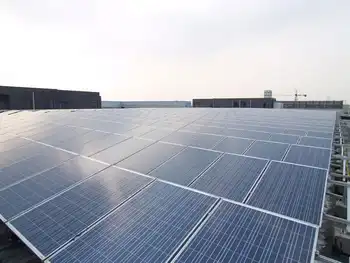
A new study makes the case that solar power is emerging as a cost-effective hedge against fossil fuels and is likely to reach cost parity with retail-electricity rates in most regions of the U.S. in less than a decade.

The Utility Solar Assessment (USA) Study, produced by clean-tech research and publishing firm Clean Edge and green-economy nonprofit Co-op America, provides a comprehensive roadmap for utilities, solar companies, and regulators to reach 10% solar in the U.S. by 2025.

The study finds that significantly scaling solar power in the U.S. will require the active involvement of utilities. The study delivers a to-do list for the three key stakeholders in the nationÂ’s solar industry. Among others, the action items include:

• For utilities: Take advantage of the unique value of solar for peak generation and alleviating grid congestion; implement solar as part of the build-out of the smart grid; and adapt to new market realities with new business models.

• For solar companies: Bring installed solar systems costs to $3 per peak watt or less by 2018; streamline installations; and make solar a truly plug-and-play technology.

• For regulators and policy makers: Pass a long-term extension of investment and production tax credits for solar and other renewables; establish open standards for solar interconnection; and give utilities the ability to “rate-base” solar.

The USA Study also reports that:

• For the first time solar power is beginning to reach cost parity with conventional energy sources. As solar prices decline and the capital and fuel costs for coal, natural gas, and nuclear plants rise, the U.S. will reach a crossover point by around 2015.

• Installed solar PV prices are projected to decline from an average $5.50-$7.00 peak watt (15-32 cents kWh) today to $3.02-$3.82 peak watt (8-18 cents kWh) in 2015 to $1.43-$1.82 peak watt (4-8 cents kWh) by 2025.

• Solar power offers a number of advantages over conventional energy sources. Among them, the ability to deliver energy at or near the point of use, zero fuel costs, minimal maintenance requirements and zero carbon-based source emissions.

• The investment to arrive at 10% solar in the U.S. is not small, reaching $450 billion to $560 billion between now and 2025, an average of $26 billion to $33 billion per year. However, given utilities’ existing capital costs such an investment is not prohibitive. To put the investment in perspective: Utilities spent an estimated $70 billion on new power plants and transmission and distribution systems in 2007 alone.

“One of the big takeaways from this report is that, in many ways, the future of solar is in the hands of utilities,” said Ron Pernick, Clean Edge cofounder and managing director and USA Study coauthor. “Reaching 10 percent of our electricity from solar sources by 2025 will require the active participation of utilities along with the support and participation of regulators and solar technology companies.”

In just the past year, a number of utilities and solar companies have announced aggressive programs to deploy large-scale solar power projects, including Southern California EdisonÂ’s plan to install 250 megawatts of distributed solar PV, Duke EnergyÂ’s stated goal of investing $100 million in rooftop solar, and Pacific Gas & ElectricÂ’s announcements to invest in thousands of megawatts of concentrating solar power in CaliforniaÂ’s deserts.

While these players are still in the vanguard, a number of other utilities are looking to join them to help bring solar power to scale – and the study shows that solar could become “ubiquitous” as with earlier semiconductor-based revolutions.

“As capital and fuel costs have doubled or tripled for coal, natural gas, and nuclear power over the past few years, solar power costs are coming down,” explains Alisa Gravitz, Co-op America executive director and USA Study project director. “For the first time in history, cost-competitive solar power is now within the planning horizon of every utility in the nation.”

The study, written by Pernick and Clean Edge contributing editor Clint Wilder, is based on interviews with more than 30 solar, utility, financial, and policy experts and leverages proprietary Clean Edge data on solar PV market size, cost and pricing history and projections, and other key market factors.

Related News
Hydroelectricity Under Pumped Storage Capacity

Pumped Storage Hydroelectricity balances renewable energy, stabilizes the grid, and provides large-scale energy storage using reservoirs and reversible turbines, delivering flexible peak power, frequency control, and rapid response to variable wind and solar generation.


Key Points

A reversible hydro system that stores energy by pumping water uphill, then generates flexible peak power.

✅ Balances variable wind and solar with rapid ramping

✅ Stores off-peak electricity in upper reservoirs

✅ Enhances grid stability, frequency control, and reserves


The expense of hydroelectricity is moderately low, making it a serious wellspring of sustainable power. The hydro station burns-through no water, dissimilar to coal or gas plants. The commonplace expense of power from a hydro station bigger than 10 megawatts is 3 to 5 US pennies for every kilowatt hour, and Niagara Falls powerhouse upgrade projects show how modernization can further improve efficiency and reliability. With a dam and supply it is likewise an adaptable wellspring of power, since the sum delivered by the station can be shifted up or down quickly (as meager as a couple of moments) to adjust to changing energy requests.

When a hydroelectric complex is developed, the task creates no immediate waste, and it for the most part has an extensively lower yield level of ozone harming substances than photovoltaic force plants and positively petroleum product fueled energy plants, with calls to invest in hydropower highlighting these benefits. In open-circle frameworks, unadulterated pumped storage plants store water in an upper repository with no normal inflows, while pump back plants use a blend of pumped storage and regular hydroelectric plants with an upper supply that is renewed to a limited extent by common inflows from a stream or waterway.

Plants that don't utilize pumped capacity are alluded to as ordinary hydroelectric plants, and initiatives focused on repowering existing dams continue to expand clean generation; regular hydroelectric plants that have critical capacity limit might have the option to assume a comparable function in the electrical lattice as pumped capacity by conceding yield until required.

The main use for pumped capacity has customarily been to adjust baseload powerplants, however may likewise be utilized to decrease the fluctuating yield of discontinuous fuel sources, while emerging gravity energy storage concepts broaden long-duration options. Pumped capacity gives a heap now and again of high power yield and low power interest, empowering extra framework top limit.

In specific wards, power costs might be near zero or once in a while negative on events that there is more electrical age accessible than there is load accessible to retain it; despite the fact that at present this is infrequently because of wind or sunlight based force alone, expanded breeze and sun oriented age will improve the probability of such events.

All things considered, pumped capacity will turn out to be particularly significant as an equilibrium for exceptionally huge scope photovoltaic age. Increased long-distance bandwidth, including hydropower imports from Canada, joined with huge measures of energy stockpiling will be a critical piece of directing any enormous scope sending of irregular inexhaustible force sources. The high non-firm inexhaustible power entrance in certain districts supplies 40% of yearly yield, however 60% might be reached before extra capaciy is fundamental.

Pumped capacity plants can work with seawater, despite the fact that there are extra difficulties contrasted with utilizing new water. Initiated in 1966, the 240 MW Rance flowing force station in France can incompletely function as a pumped storage station. At the point when elevated tides happen at off-top hours, the turbines can be utilized to pump more seawater into the repository than the elevated tide would have normally gotten. It is the main enormous scope power plant of its sort.

Alongside energy mechanism, pumped capacity frameworks help control electrical organization recurrence and give save age. Warm plants are substantially less ready to react to abrupt changes in electrical interest, and can see higher thermal PLF during periods of reduced hydro generation, conceivably causing recurrence and voltage precariousness.

Pumped storage plants, as other hydroelectric plants, including new BC generating stations, can react to stack changes in practically no time. Pumped capacity hydroelectricity permits energy from discontinuous sources, (for example, sunlight based, wind) and different renewables, or abundance power from consistent base-load sources, (for example, coal or atomic) to be put something aside for times of more popularity.

The repositories utilized with siphoned capacity are tiny when contrasted with ordinary hydroelectric dams of comparable force limit, and creating periods are regularly not exactly a large portion of a day. This technique produces power to gracefully high top requests by moving water between repositories at various heights.

Now and again of low electrical interest, the abundance age limit is utilized to pump water into the higher store. At the point when the interest gets more noteworthy, water is delivered once more into the lower repository through a turbine. Pumped capacity plans at present give the most monetarily significant methods for enormous scope matrix energy stockpiling and improve the every day limit factor of the age framework. Pumped capacity isn't a fuel source, and shows up as a negative number in postings.


Related News

View more

Sask. sets new record for power demand

SaskPower Summer Power Demand Record hits 3,520 MW as heat waves drive electricity consumption; grid capacity, renewables expansion, and energy efficiency tips highlight efforts to curb greenhouse gas emissions while meeting Saskatchewan's growing load.


Key Points

The latest summer peak load in Saskatchewan: 3,520 MW, driven by heat, with plans to expand capacity and lower emissions.

✅ New peak surpasses last August by 50 MW to 3,520 MW.

✅ Capacity target: 7,000 MW by 2030 with more renewables.

✅ Tips: AC settings, close blinds, delay heat-producing chores.


As the mercury continues to climb in Saskatchewan, where Alberta's summer electricity record offers a regional comparison, SaskPower says the province has set a new summer power demand record.

The Crown says the new record is 3,520 megawatts. It’s an increase of 50 megawatts over the previous record, or enough electricity for 50,000 homes.

“We’ve seen both summer and winter records set every year for a good while now. And if last summer is any indication, we could very well see another record before temperatures cool off heading into the fall,” said SaskPower Vice President of Transmission and Industrial Services Kory Hayko in a written release. “It’s not impossible we’ll break this record again in the coming days. It’s SaskPower’s responsibility to ensure that Saskatchewan people and businesses have the power they need to thrive. That’s what drives our investment of $1 billion every year, as outlined in our annual report, to modernize and grow the province’s electrical system.”

The previous summer consumption record of 3,740 megawatts was set last August, and similar extremes in the Yukon electricity demand highlight broader demand pressures this year. The winter demand record remains higher at 3,792 megawatts, set on Dec. 29, 2017.

SaskPower says it plans to expand its generation capacity from 4,500 megawatts now to 7,000 megawatts in 2030, with a focus on decreasing greenhouse gas emissions and doubling renewable electricity by 2030 as part of its strategy.

To reduce power bills, the Crown suggests turning down or programming air conditioning when residents aren’t home, inspecting the air conditioner to make sure it is operating efficiently, keeping blinds closed to keep out direct sunlight, delaying chores that produce heat and making sure electronics are turned off when people leave the room.

The new record beats the previous summer peak of 3,470 MW, set last August after also being broken twice in July. The winter demand record is still higher at 3,792 MW, which was set on December 29, 2017. To meet growing power demand, and amid projections that Manitoba's electrical demand could double in the next 20 years, SaskPower is expanding its generation capacity from approximately 4,500 MW now to 7,000 MW by 2030 while also reducing greenhouse gas emissions by 40 per cent from 2005 levels. To accomplish this, we will be significantly increasing the amount of renewables on our system.

Cooling and heating represents approximately a quarter of residential power bills. To reduce consumption and power bills during heat waves, SaskPower’s customers can:

Turn down or program the air conditioning when no one is home (for every degree that air conditioning is lowered for an eight-hour period, customers can save up to two per cent on their power costs);

Consider having their air conditioning unit inspected to make sure it is operating efficiently;

Keep the heat out by closing blinds and drapes, especially those with direct sunlight;

Delay chores that produce heat and moisture, like dishwashing and laundering, until the cooler parts of the day or evening; and

As with any time of the year, make sure lights, televisions and other electronics are turned off when no one's in the room. For example, a modern gaming console can use as much power as a refrigerator.


Related News

View more

Lawmakers question FERC licensing process for dams in West Virginia

FERC Hydropower Licensing Dispute centers on FERC authority, Clean Water Act compliance, state water quality certifications, Federal Power Act timelines, and Army Corps dams on West Virginia's Monongahela River licenses.


Key Points

An inquiry into FERC's licensing process and state water quality authority for hydropower at Monongahela River dams.

✅ Questions on omitted state water quality conditions

✅ Debate over starting Clean Water Act certification timelines

✅ Potential impacts on states' rights and licensing schedules


As federal lawmakers, including Democrats pressing FERC, plan to consider a bill that would expand Federal Energy Regulatory Commission (FERC) licensing authority, questions emerged on Tuesday about the process used by FERC to issue two hydropower licenses for existing dams in West Virginia.

In a letter to FERC Chairman Neil Chatterjee, Democratic leaders of the House Energy and Commerce Committee, as electricity pricing changes were being debated, raised questions about hydropower licenses issued for two dams operated by the U.S. Army Corps of Engineers on the Monongahela River in West Virginia.

U.S. Reps. Frank Pallone Jr. (D-NJ), the ranking member of the Subcommittee on Energy, Bobby Rush (D-IL), the ranking member of the Subcommittee on Environment, and John Sarbanes (D-MD), amid Maryland clean energy enforcement concerns, questioned why FERC did not incorporate all conditions outlined in a West Virginia Department of Environmental Protection water quality certificate into plans for the projects.

“By denying the state its allotted time to review this application and submit requirements on these licenses, FERC is undermining the state’s authority under the Clean Water Act and Federal Power Act to impose conditions that will ensure water quality standards are met,” the letter stated.

The House of Representatives was slated to consider the Hydropower Policy Modernization Act of 2017, H.R. 3043, later in the week. The measure would expand FERC authority over licensing processes, a theme mirrored in Maine's transmission line debate over interstate energy projects. Opponents of the bill argue that the changes would make it more difficult for states to protect their clean water interests.

West Virginia has announced plans to challenge FERC hydropower licenses for the dams on the Monongahela River, echoing Northern Pass opposition seen in New Hampshire.


Related News

View more

UK Anticipates a 16% Decrease in Energy Bills in April

UK Energy Price Cap Cut 2024 signals relief as wholesale gas prices fall; Ofgem price cap drops per Cornwall Insight, aided by LNG supply, mild winter, despite Red Sea tensions and Ukraine conflict impacts.


Key Points

A forecast cut to Great Britain's Ofgem price cap as wholesale gas falls, easing typical annual household bills in 2024.

✅ Cap falls from £1,928 to £1,620 in April 2024

✅ Forecast £1,497 in July, then about £1,541 from October

✅ Drivers: lower wholesale gas, LNG supply, mild winter


Households in Great Britain are set to experience a significant reduction in energy costs this spring, with bills projected to drop by over £300 annually. This decrease is primarily due to a decline in wholesale gas prices, offering some respite to those grappling with the cost of living crisis.

Cornwall Insight, a well-regarded industry analyst, predicts a 16% reduction in average bills from the previous quarter, potentially reaching the lowest levels since the onset of the Ukraine conflict.

The industry’s price cap, indicative of the average annual bill for a typical household, is expected to decrease from the current £1,928, set earlier this month, to £1,620 in April – a reduction of £308 and £40 less than previously forecasted in December, as ministers consider ending the gas-electricity price link to improve market resilience.

Concerns about escalating tensions in the Red Sea, where Houthi rebels have disrupted global shipping, initially led analysts to fear an increase in wholesale oil prices and subsequent impact on household energy costs.

Contrary to these concerns, oil prices have remained relatively stable, and European gas reserves have been higher than anticipated during a mild winter, with European gas prices returning to pre-Ukraine war levels since November.

Cornwall Insight anticipates that energy prices will continue to be comparatively low through 2024. They predict a further decline to £1,497 for a typical annual bill from July, followed by a slight increase to £1,541 starting in October.

This forecast is a welcome development for Britons who have been dealing with increased expenses across various sectors, from food to utilities, amidst persistently high inflation rates, with energy-driven EU inflation hitting lower-income households hardest across member states.

Energy bills saw a steep rise in 2021, which escalated further due to the Ukraine conflict in 2022, driving up wholesale gas prices. This surge prompted government intervention to subsidize bills, with the UK price cap estimated to cost around £89bn to the public purse, capping costs to a typical household at £2,500.

Cornwall Insight noted that the supply of liquified natural gas to Europe had not been as adversely affected by the Red Sea disruptions as initially feared. Moreover, the UK has been well-supplied with gas from the US, which has become a more significant supplier since the Ukraine war, even as US electricity prices have risen to multi-decade highs. Contributing factors also include lower gas prices in Asia, mild weather, and robust gas availability.

Craig Lowrey, a principal consultant at Cornwall Insight, remarked that concerns about Red Sea events driving up energy prices have not materialized, allowing households to expect a reduction in prices.

On Monday, the next-month wholesale gas price dropped by 4% to 65p a therm.

However, Lowrey cautioned that a complete return to pre-crisis energy bill levels remains unlikely due to ongoing market impacts from shifting away from Russian energy sources and persistent geopolitical tensions, as well as policy changes such as Britain’s Energy Security Bill shaping market reforms.

Richard Neudegg, director of regulation at Uswitch, welcomed the potential further reduction of the price cap in April. However, he pointed out that this offers little solace to households currently struggling with high winter energy costs during the winter. Neudegg urged Ofgem, the energy regulator, to prompt suppliers to reintroduce more competitive and affordable fixed-price deals.


Related News

View more

Global: Nuclear power: what the ‘green industrial revolution’ means for the next three waves of reactors

UK Nuclear Energy Ten Point Plan outlines support for large reactors, SMRs, and AMRs, funding Sizewell C, hydrogen production, and industrial heat to reach net zero, decarbonize transport and heating, and expand clean electricity capacity.


Key Points

A UK plan backing large, small, and advanced reactors to drive net zero via clean power, hydrogen, and industrial heat.

✅ Funds large plants (e.g., Sizewell C) under value-for-money models

✅ Invests in SMRs for factory-built, modular, lower-cost deployment

✅ Backs AMRs for high-temperature heat, hydrogen, and industry


The UK government has just announced its “Ten Point Plan for a Green Industrial Revolution”, in which it lays out a vision for the future of energy, transport and nature in the UK. As researchers into nuclear energy, my colleagues and I were pleased to see the plan is rather favourable to new nuclear power.

It follows the advice from the UK’s Nuclear Innovation and Research Advisory Board, pledging to pursue large power plants based on current technology, and following that up with financial support for two further waves of reactor technology (“small” and “advanced” modular reactors).

This support is an important part of the plan to reach net-zero emissions by 2050, as in the years to come nuclear power will be crucial to decarbonising not just the electricity supply but the whole of society.

This chart helps illustrate the extent of the challenge faced:

Electricity generation is only responsible for a small percentage of UK emissions. William Bodel. Data: UK Climate Change Committee

Efforts to reduce emissions have so far only partially decarbonised the electricity generation sector. Reaching net zero will require immense effort to also decarbonise heating, transport, as well as shipping and aviation. The plan proposes investment in hydrogen production and electric vehicles to address these three areas – which will require, as advocates of nuclear beyond electricity argue, a lot more energy generation.

Nuclear is well-placed to provide a proportion of this energy. Reaching net zero will be a huge challenge, and industry leaders warn it may be unachievable without nuclear energy. So here’s what the announcement means for the three “waves” of nuclear power.

Who will pay for it?
But first a word on financing. To understand the strategy, it is important to realise that the reason there has been so little new activity in the UK’s nuclear sector since the 1990s is due to difficulty in financing. Nuclear plants are cheap to fuel and operate and last for a long time. In theory, this offsets the enormous upfront capital cost, and results in competitively priced electricity overall.

But ever since the electricity sector was privatised, governments have been averse to spending public money on power plants. This, combined with resulting higher borrowing costs and cheaper alternatives (gas power), has meant that in practice nuclear has been sidelined for two decades. While climate change offers an opportunity for a revival, these financial concerns remain.

Large nuclear
Hinkley Point C is a large nuclear station currently under construction in Somerset, England. The project is well-advanced, with its first reactor installed and due to come online in the middle of this decade. While the plant will provide around 7% of current UK electricity demand, its agreed electricity price is relatively expensive.

Under construction: Hinkley Point C. Ben Birchall/PA

The government’s new plan states: “We are pursuing large-scale new nuclear projects, subject to value-for-money.” This is likely a reference to the proposed Sizewell C in Suffolk, on which a final decision is expected soon. Sizewell C would be a copy of the Hinkley plant – building follow-up identical reactors achieves capital cost reductions, and setbacks at Hinkley Point C have sharpened delivery focus as an alternative funding model will likely be implemented to reduce financing costs.

Other potential nuclear sites such as Wylfa and Moorside (shelved in 2018 and 2019 respectively for financial reasons) are also not mentioned, their futures presumably also covered by the “subject to value-for-money” clause.

Small nuclear
The next generation of nuclear technology, with various designs under development worldwide are smaller, cheaper, safer Small Modular Reactors (SMRs), such as the Rolls Royce “UK SMR”.

Reactors small enough to be manufactured in factories and delivered as modules can be assembled on site in much shorter times than larger designs, which in contrast are constructed mostly on site. In so doing, the capital costs per unit (and therefore borrowing costs) could be significantly lower than current new-builds.

The plan states “up to £215 million” will be made available for SMRs, Phase 2 of which will begin next year, with anticipated delivery of units around a decade from now.

Advanced nuclear
The third proposed wave of nuclear will be the Advanced Modular Reactors (AMRs). These are truly innovative technologies, with a wide range of benefits over present designs and, like the small reactors, they are modular to keep prices down.

Crucially, advanced reactors operate at much higher temperatures – some promise in excess of 750°C compared to around 300°C in current reactors. This is important as that heat can be used in industrial processes which require high temperatures, such as ceramics, which they currently get through electrical heating or by directly burning fossil fuels. If those ceramics factories could instead use heat from AMRs placed nearby, it would reduce CO₂ emissions from industry (see chart above).

High temperatures can also be used to generate hydrogen, which the government’s plan recognises has the potential to replace natural gas in heating and eventually also in pioneering zero-emission vehicles, ships and aircraft. Most hydrogen is produced from natural gas, with the downside of generating CO₂ in the process. A carbon-free alternative involves splitting water using electricity (electrolysis), though this is rather inefficient. More efficient methods which require high temperatures are yet to achieve commercialisation, however if realised, this would make high temperature nuclear particularly useful.

The government is committing “up to £170 million” for AMR research, and specifies a target for a demonstrator plant by the early 2030s. The most promising candidate is likely a High Temperature Gas-cooled Reactor which is possible, if ambitious, over this timescale. The Chinese currently lead the way with this technology, and their version of this reactor concept is expected soon.

In summary, the plan is welcome news for the nuclear sector, even as Europe loses nuclear capacity across the continent. While it lacks some specifics, these may be detailed in the government’s upcoming Energy White Paper. The advice to government has been acknowledged, and the sums of money mentioned throughout are significant enough to really get started on the necessary research and development.

Achieving net zero is a vast undertaking, and recognising that nuclear can make a substantial contribution if properly supported is an important step towards hitting that target.


Related News

View more

Blackout-Prone California Is Exporting Its Energy Policies To Western States, Electricity Will Become More Costly And Unreliable

California Blackouts expose grid reliability risks as PG&E deenergizes lines during high winds. Mandated solar and wind displace dispatchable natural gas, straining ISO load balancing, transmission maintenance, and battery storage planning amid escalating wildfire liability.


Key Points

California grid shutoffs stem from wildfire risk, renewables, and deferred transmission maintenance under mandates.

✅ PG&E deenergizes lines to reduce wildfire ignition during high winds.

✅ Mandated solar and wind displace dispatchable gas, raising balancing costs.

✅ Storage, reliability pricing, and grid upgrades are needed to stabilize supply.


California is again facing widespread blackouts this season. Politicians are scrambling to assign blame to Pacific Gas & Electric (PG&E) a heavily regulated utility that can only do what the politically appointed regulators say it can do. In recent years this has meant building a bunch of solar and wind projects, while decommissioning reliable sources of power and scrimping on power line maintenance and upgrades.

The blackouts are connected with the legal liability from old and improperly maintained power lines being blamed for sparking fires—in hopes that deenergizing the grid during high winds reduces the likelihood of fires. 

How did the land of Silicon Valley and Hollywood come to have developing world electricity?

California’s Democratic majority, from Gov. Gavin Newsom to the solidly progressive legislature, to the regulators they appoint, have demanded huge increases in renewable energy. Renewable electricity targets have been pushed up, and policymakers are weighing a revamp of electricity rates to clean the grid, with the state expected to reach a goal of 33% of its power from renewable sources, mostly solar and wind, by next year, and 60% of its electricity from renewables by 2030.

In 2018, 31% of the electricity Californians purchased at the retail level came from approved renewables. But when rooftop solar is added to the mix, about 34% of California’s electricity came from renewables in 2018. Solar photovoltaic (PV) systems installed “behind-the-meter” (BTM) displace utility-supplied generation, but still affect the grid at large, as electricity must be generated at the moment it is consumed. PV installations in California grew 20% from 2017 to 2018, benefiting from the state’s Self-Generation Incentive Program that offers hefty rebates through 2025, as well as a 30% federal tax credit.

Increasingly large amounts of periodic, renewable power comes at a price—the more there is, the more difficult it is to keep the power grid stable and energized. Since electricity must be consumed the instant it is generated, and because wind and solar produce what they will whenever they do, the rest of the grid’s power producers—mostly natural gas plants—have to make up any differences between supply and immediate demand. This load balancing is vital, because without it, the grid will crash and widespread blackouts will ensue.

California often produces a surplus of mandated solar and wind power, generated for 5 to 8 cents per kilowatt hour. This power displaces dispatchable power from natural gas, coal and nuclear plants, resulting in reliable power plants spending less time online and driving up electricity prices as the plants operate for fewer hours of the day. Subsidized and mandated solar power, along with a law passed in California in 2006 (SB 1638) that bans the renewal of coal-fired power contracts, has placed enormous economic pressure on the Western region’s coal power plants—among them, the nation’s largest, Navajo Generating Station. As these plants go off line, the Western power grid will become increasingly unstable. Eventually, the states that share their electric power in the Western Interconnect may have to act to either subsidize dispatchable power or place a value on reliability—something that was taken for granted in the growth of the America’s electrical system and its regulatory scheme.

California law regarding electricity explicitly states that “a violation of the Public Utilities Act is a crime” and that it is “…the intent of the Legislature to provide for the evolution of the ISO (California’s Independent System Operator—the entity that manages California’s grid) into a regional organization to promote the development of regional electricity transmission markets in the western states.” In other words, California expects to dictate how the Western grid operates.

One last note as to what drives much of California’s energy policy: politics. California State Senator Kevin de León (the author served with him in the State Assembly) drafted SB 350, the Clean Energy and Pollution Reduction Act. It became law in 2015. Sen. de León followed up with SB 100 in 2018, signed into law weeks before the 2018 election. SB 100 increased California’s renewable portfolio standard to 60% by 2030 and further requires all the state’s electricity to come from carbon-free sources by 2045, a capstone of the state’s climate policies that factor into the blackout debate.  

Sen. de León used his environmental credentials to burnish his run for the U.S. Senate against Sen. Dianne Feinstein, eventually capturing the endorsements of the California Democratic Party and billionaire environmentalist Tom Steyer, now running for president. Feinstein and de León advanced to the general in California’s jungle primary, where Feinstein won reelection 54.2% to 45.8%.

De León may have lost his race for the U.S. Senate, but his legacy will live on in increasingly unaffordable electricity and blackouts, not only in California, but in the rest of the Western United States—unless federal or state regulators begin to place a value on reliability. This could be done by requiring utility scale renewable power providers to guarantee dispatchable power, as policymakers try to avert a looming shortage of firm capacity, either through purchase agreements with thermal power plants or through the installation of giant and costly battery farms or other energy storage means.


Related News

View more

Sign Up for Electricity Forum’s Newsletter

Stay informed with our FREE Newsletter — get the latest news, breakthrough technologies, and expert insights, delivered straight to your inbox.

Electricity Today T&D Magazine Subscribe for FREE

Stay informed with the latest T&D policies and technologies.
  • Timely insights from industry experts
  • Practical solutions T&D engineers
  • Free access to every issue

Download the 2025 Electrical Training Catalog

Explore 50+ live, expert-led electrical training courses –

  • Interactive
  • Flexible
  • CEU-cerified