Bishop's Falls Redevelopment Complete

By


Arc Flash Training CSA Z462 - Electrical Safety Essentials

Our customized live online or in‑person group training can be delivered to your staff at your location.
  • Live Online
  • 6 hours Instructor-led
  • Group Training Available
Regular Price:
$249
Coupon Price:
$199
Reserve Your Seat Today
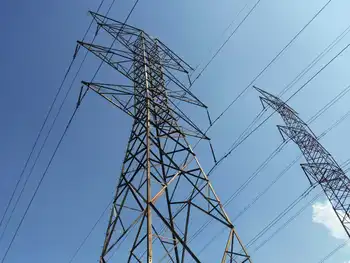
Fortis Inc. and Abitibi-Consolidated Inc. have announced that the Exploits River Hydro Partnership has completed installation of 6 new generating units and refurbishment of the remaining 3 units at Bishop's Falls Generating Station and all units are now fully operational.

The $68 million Exploits River Hydro Partnership Project involves the redevelopment of Abitibi-Consolidated's hydroelectric plants at Grand Falls-Windsor and Bishop's Falls, Newfoundland to increase annual energy production by approximately 140 gigawatt hours. Construction at the Grand Falls Generating Station, which includes the installation of a 27-megawatt turbine unit, is expected to be completed by year end. Abitibi-Consolidated will continue to use the existing annual generation at its newsprint mill in Grand Falls-Windsor while the additional energy produced will be sold to Newfoundland and Labrador Hydro under a long-term power purchase agreement.

Fortis is a diversified electric utility holding company with assets of $2 billion and annual revenues of more than $715 million. It has holdings in 6 electric distribution utilities located in Newfoundland and Labrador, Prince Edward Island, Ontario, Belize and the Cayman Islands. Fortis also owns 2 subsidiaries engaged solely in electricity generation in upper New York State and Belize. Through its wholly owned, non-utility subsidiary, Fortis has investments in real estate and hotel operations.

Abitibi-Consolidated is a global leader in newsprint, uncoated groundwood papers and lumber with ownership interests in 27 paper mills in Canada, the U.S., the U.K. and Asia (including its interest in Pan Asia Paper) and in 22 sawmills, 1 remanufacturing facility, a market pulp mill and 10 recycling centres. Abitibi-Consolidated employs approximately 16,000 people and supplies products in more than 70 countries.

Related News
Fixing California's electric grid is like repairing a car while driving

CAISO Clean Energy Transition outlines California's path to 100% carbon-free power by 2045, scaling renewables, battery storage, and offshore wind while safeguarding grid reliability, managing natural gas, and leveraging Western markets like EDAM.


Key Points

CAISO Clean Energy Transition is the plan to reach 100% carbon-free power by 2045 while maintaining grid reliability.

✅ Target: add 7 GW/year to reach 120 GW capacity by 2045

✅ Battery storage up 30x; smooths intermittent solar and wind

✅ EDAM and WEIM enhance imports, savings, and reliability


Mark Rothleder, Chief Operating Officer and Senior Vice President at the California Independent System Operator (CAISO), which manages roughly 80% of California’s electric grid, has expressed cautious optimism about meeting the state's ambitious clean energy targets while keeping the lights on across the grid. However, he acknowledges that this journey will not be without its challenges.

California aims to transition its power system to 100% carbon-free sources by 2045, ensuring a reliable electricity supply at reasonable costs for consumers. Rothleder, aware of the task's enormity, likens it to a complex car repair performed while the vehicle is in motion.

Recent achievements have demonstrated California's ability to temporarily sustain its grid using clean energy sources. According to Rothleder, the real challenge lies in maintaining this performance round the clock, every day of the year.

Adding thousands of megawatts of renewable energy into California’s existing 50-gigawatt system, which needs to expand to 120 gigawatts to meet the 2045 goal, poses a significant challenge, though recent grid upgrade funding offers some support for needed infrastructure. CAISO estimates that an addition of 7 gigawatts of clean power per year for the next two decades is necessary, all while ensuring uninterrupted power delivery.

While natural gas currently constitutes California's largest single source of power, Rothleder notes the need to gradually decrease reliance on it, even as it remains an operational necessity in the transition phase.

In 2023, CAISO added 5,660 megawatts of new power to the grid, with plans to integrate over 1,100 additional megawatts in the next six to eight months of 2024. Battery storage, crucial for mitigating the intermittent nature of wind and solar power, has seen substantial growth as California turns to batteries for grid support, increasing 30-fold in three years.

Rothleder emphasizes that electricity reliability is paramount, as consumers always expect power availability. He also highlights the potential of offshore wind projects to significantly contribute to California's power mix by 2045.

The offshore wind industry faces financial and supply chain challenges despite these plans. CAISO’s 20-year outlook indicates a significant increase in utility-scale solar, requiring extensive land use and wider deployment of advanced inverters for grid stability.

Addressing affordability is vital, especially as California residents face increasing utility bills. Rothleder suggests a broader energy cost perspective, encompassing utility and transportation expenses.

Despite smooth grid operations in 2023, challenges in previous years, including extreme weather-induced power outages driven by climate change, underscore the need for a robust, adaptable grid. California imports about a quarter of its power from neighbouring states and participates in the Western Energy Imbalance Market, which has yielded significant savings.

CAISO is also working on establishing an extended day-ahead electricity market (EDAM) to enhance the current energy market's success, building on insights from a Western grid integration report that supports expanded coordination.

Rothleder believes that a thoughtfully designed, diverse power system can offer greater reliability and resilience in the long run. A future grid reliant on multiple, smaller power sources such as microgrids could better absorb potential losses, ensuring a more reliable electricity supply for California.


Related News

View more

Ontario rolls out ultra-low electricity rates

Ontario Ultra-Low Overnight Electricity Rate lets eligible customers opt in to 2.4 cents per kWh time-of-use pricing, set by the Ontario Energy Board, as utilities roll out the plan between May 1 and Nov. 1.


Key Points

An OEB-set overnight TOU price of 2.4 cents per kWh for eligible Ontarians, rolling out in phases via local utilities.

✅ 8 of 61 utilities offering rate at May 1 launch

✅ About 20% of 5M customers eligible at rollout

✅ Enova Power delays amid merger integration work


A million households can opt into a new ultra-low overnight electricity rate offered by the Ministry of Energy, as province-wide rate changes begin, but that's just a fraction of customers in Ontario.

Only eight of the 61 provincial power utilities will offer the new rate on the May 1 launch date, following the earlier fixed COVID-19 hydro rate period. The rest have up to six months to get on board.

That means it will be available to 20 percent of the province's five million electricity consumers, the Ministry of Energy confirmed to CBC News.

The Ford government's new overnight pricing was pitched as a money saver for Ontarians, amid the earlier COVID-19 recovery rate that could raise bills, undercutting its existing overnight rate from 7.4 to 2.4 cents per kilowatt hour. Both rates are set by the Ontario Energy Board (OEB).

"We wanted to roll it out to as many people as possible," Kitchener-Conestoga PC MPP Mike Harris Jr. told CBC News. "These companies were ready to go, and we're going to continue to work with our local providers to make sure that everybody can meet that Nov. 1 deadline."

Enova Power — which serves Kitchener, Waterloo, Woolwich, Wellesley and Wilmot — won't offer the reduced overnight rate until the fall, after typical bills rose when fixed pricing ended province-wide.

Enova merger stalls adoption

The power company is the product of the recently merged Kitchener-Wilmot Hydro and Waterloo North Hydro.

The Sept. 1 merger is a major reason Enova Power isn't offering the ultra-low rate alongside the first wave of power companies, said Jeff Quint, innovation and communications manager.

"With mergers, a lot of work goes into them. We have to evaluate, merge and integrate several systems and processes," said Quint.

"We believe that we probably would have been able to make the May 1 timeline otherwise."

The ministry said retroactive pricing wouldn't be available, unlike the off-peak price freeze earlier in the pandemic, and Harris said he doesn't expect the province will issue any rebates to customers of companies that introduce the rates later than May 1.

"These organizations were able to look at rolling things out sooner. But, obviously — if you look at Toronto Hydro, London, Centre Wellington, Hearst, Renfrew — there's a dynamic range of large and smaller-scale providers there. I'm very hopeful the Region of Waterloo folks will be able to work to try and get this done as soon as we can," Harris said.


Related News

View more

Ontario Power Generation's Commitment to Small Modular Reactors

OPG Small Modular Reactors advance clean energy with advanced nuclear, baseload power, renewables integration, and grid reliability; factory built, scalable, and cost effective to support Ontario energy security and net zero goals.


Key Points

Factory built nuclear units delivering reliable, low carbon power to support Ontario's grid, renewables, climate goals.

✅ Factory built modules cut costs and shorten schedules

✅ Provides baseload power to balance wind and solar

✅ Enhances grid reliability with advanced safety and waste reduction


Ontario Power Generation (OPG) is at the forefront of Canada’s energy transformation, demonstrating a robust commitment to sustainable energy solutions. One of the most promising avenues under exploration is the development of Small Modular Reactors (SMRs), as OPG broke ground on the first SMR at Darlington to launch this next phase. These innovative technologies represent a significant leap forward in the quest for reliable, clean, and cost-effective energy generation, aligning with Ontario’s ambitious climate goals and energy security needs.

Understanding Small Modular Reactors

Small Modular Reactors are advanced nuclear power plants that are designed to be smaller in size and capacity compared to traditional nuclear reactors. Typically generating up to 300 megawatts of electricity, SMRs can be constructed in factories and transported to their installation sites, offering flexibility and scalability that larger reactors do not provide. This modular approach reduces construction time and costs, making them an appealing option for meeting energy demands.

One of the key advantages of SMRs is their ability to provide baseload power—energy that is consistently available—while simultaneously supporting intermittent renewable sources like wind and solar. As Ontario continues to increase its reliance on renewables, SMRs could play a crucial role in ensuring that the energy supply remains stable and secure.

OPG’s Initiative

In its commitment to advancing clean energy technologies, OPG has been a strong advocate for the adoption of SMRs. The province of Ontario has announced plans to develop three additional small modular reactors, part of its plans for four Darlington SMRs that would further enhance the region’s energy portfolio. This initiative aligns with both provincial and federal climate objectives, and reflects a collaborative provincial push on nuclear innovation to accelerate clean energy.

The deployment of SMRs in Ontario is particularly strategic, given the province’s existing nuclear infrastructure, including the continued operation of Pickering NGS that supports grid reliability. OPG operates a significant portion of Ontario’s nuclear fleet, and leveraging this existing expertise can facilitate the integration of SMRs into the energy mix. By building on established operational frameworks, OPG can ensure that new reactors are deployed safely and efficiently.

Economic and Environmental Benefits

The introduction of SMRs is expected to bring substantial economic benefits to Ontario. The construction and operation of these reactors will create jobs, including work associated with the Pickering B refurbishment across the province, stimulate local economies, and foster innovation in nuclear technology. Additionally, SMRs have the potential to attract investment from both domestic and international stakeholders, positioning Ontario as a leader in advanced nuclear technology.

From an environmental perspective, SMRs are designed with enhanced safety features and lower waste production compared to traditional reactors, complementing life-extension measures at Pickering that bolster system reliability. They can significantly contribute to Ontario’s goal of achieving net-zero emissions by 2050. By providing a reliable source of clean energy, SMRs will help mitigate the impacts of climate change while supporting the province's transition to a sustainable energy future.

Community Engagement and Collaboration

Recognizing the importance of community acceptance and stakeholder engagement, OPG is committed to an open dialogue with local communities and Indigenous groups. This collaboration is essential to addressing concerns and ensuring that the deployment of SMRs is aligned with the values and priorities of the residents of Ontario. By fostering a transparent process, OPG aims to build trust and support for this innovative energy solution.

Moreover, the development of SMRs will involve partnerships with various stakeholders, including government agencies, research institutions, and private industry, such as the OPG-TVA partnership to advance new nuclear technology. These collaborations will not only enhance the technical aspects of SMR deployment but also ensure that Ontario can capitalize on shared expertise and resources.

Looking Ahead

As Ontario Power Generation moves forward with plans for three additional Small Modular Reactors, the province stands at a critical juncture in its energy evolution. The integration of SMRs into Ontario’s energy landscape promises a sustainable, reliable, and economically viable solution to meet growing energy demands while addressing climate change challenges.

With the support of government initiatives, community collaboration, and continued innovation in nuclear technology, Ontario is poised to become a leader in the advancement of Small Modular Reactors. The successful implementation of these projects could serve as a model for other jurisdictions seeking to transition to cleaner energy sources, highlighting the role of nuclear power in a balanced and sustainable energy future.

In conclusion, OPG's commitment to developing Small Modular Reactors not only reinforces Ontario’s energy security but also demonstrates a proactive approach to addressing the pressing challenges of climate change and environmental sustainability. The future of energy in Ontario looks promising, driven by innovation and a commitment to clean energy solutions.


Related News

View more

Competition in Electricity Has Been Good for Consumers and Good for the Environment

Electricity Market Competition drives lower wholesale prices, stable retail rates, better grid reliability, and faster emissions cuts as deregulation and renewables adoption pressure utilities, improve efficiency, and enhance consumer choice in power markets.


Key Points

Electricity market competition opens supply to rivals, lowering prices, improving reliability, and reducing emissions.

✅ Wholesale prices fell faster in competitive markets

✅ Retail rates rose less than in monopoly states

✅ Fewer outages, shorter durations, improved reliability


By Bernard L. Weinstein

Electricity used to be boring.  Public utilities that provided power to homes and businesses were regulated monopolies and, by law, guaranteed a fixed rate-of-return on their generation, transmission, and distribution assets. Prices per kilowatt-hour were set by utility commissions after lengthy testimony from power companies, wanting higher rates, and consumer groups, wanting lower rates.

About 25 years ago, the electricity landscape started to change as economists and others argued that competition could lead to lower prices and stronger grid reliability. Opponents of competition argued that consumers weren’t knowledgeable enough about power markets to make intelligent choices in a competitive pricing environment. Nonetheless, today 20 states have total or partial competition for electricity, allowing independent power generators to compete in wholesale markets and retail electric providers (REPs) to compete for end-use customers, a dynamic echoed by the Alberta electricity market across North America. (Transmission, in all states, remains a regulated natural monopoly).

A recent study by the non-partisan Pacific Research Institute (PRI) provides compelling evidence that competition in power markets has been a boon for consumers. Using data from the U.S. Energy Information Administration (EIA), PRI’s researchers found that wholesale electricity prices in competitive markets have been generally declining or flat, prompting discussions of free electricity business models, over the last five years. For example, compared to 2015, wholesale power prices in New England have dropped more than 44 percent, those in most Mid-Atlantic States have fallen nearly 42 percent, and in New York City they’ve declined by nearly 45 percent. Wholesale power costs have also declined in monopoly states, but at a considerably slower rate.

As for end-users, states that have competitive retail electricity markets have seen smaller price increases, as consumers can shop for electricity in Texas more cheaply than in monopoly states. Again, using EIA data, PRI found that in 14 competitive jurisdictions, retail prices essentially remained flat between 2008 and 2020. By contrast, retail prices jumped an average of 21 percent in monopoly states.  The ten states with the largest retail price increases were all monopoly-based frameworks. A 2017 report from the Retail Energy Supply Association found customers in states that still have monopoly utilities saw their average energy prices increase nearly 19 percent from 2008 to 2017 while prices fell 7 percent in competitive markets over the same period.

The PRI study also observed that competition has improved grid reliability, the recent power disruptions in California and Texas, alongside disruptions in coal and nuclear sectors across the U.S., notwithstanding. Looking at two common measures of grid resiliency, PRI’s analysis found that power interruptions were 10.4 percent lower in competitive states while the duration of outages was 6.5 percent lower.

Citing data from the EIA between 2008 and 2018, PRI reports that greenhouse gas emissions in competitive states declined on average 12.1 percent compared to 7.3 percent in monopoly states. This result is not surprising, and debates over whether Israeli power supply competition can bring cheaper electricity mirror these dynamics.  In a competitive wholesale market, independent power producers have an incentive to seek out lower-cost options, including subsidized renewables like wind and solar. By contrast, generators in monopoly markets have no such incentive as they can pass on higher costs to end-users. Perhaps the most telling case is in the monopoly state of Georgia where the cost to build nuclear Plant Vogtle has doubled from its original estimate of $14 billion 12 years ago. Overruns are estimated to cost Georgia ratepayers an average of $854, and there is no definite date for this facility to come on line. This type of mismanagement doesn’t occur in competitive markets.

Unfortunately, some critics are attempting to halt the momentum for electricity competition and have pointed to last winter’s “deep freeze” in Texas that left several million customers without power for up to a week. But this example is misplaced. Power outages in February were the result of unprecedented and severe weather conditions affecting electricity generation and fuel supply, and numerous proposals to improve Texas grid reliability have focused on weatherization and fuel resilience; the state simply did not have enough access to natural gas and wind generation to meet demand. Competitive power markets were not a factor.

The benefits of wholesale and retail competition in power markets are incontrovertible. Evidence shows that households and businesses in competitive states are paying less for electricity while grid reliability has improved. The facts also suggest that wholesale and retail competition can lead to faster reductions in greenhouse gas emissions. In short, competition in power markets is good for consumers and good for the environment.

Bernard L. Weinstein is emeritus professor of applied economics at the University of North Texas, former associate director of the Maguire Energy Institute at Southern Methodist University, and a fellow of Goodenough College, London. He wrote this for InsideSources.com.


Related News

View more

The crisis in numbers: How COVID-19 has reshaped Saskatchewan

Saskatchewan COVID-19 economic impact: real-time data shows drops in electricity demand, oil well licensing, traffic and tickets, plus spikes in internet usage, government site visits, remote work, and alcohol wholesale volumes.


Key Points

COVID-19 reduced energy use, drilling and traffic, while pushing activity online; jobs, rents and sales show strain.

✅ Electricity demand down 6.7%; residential usage up

✅ Oil well license applications fell 15-fold in April

✅ Internet traffic up 16%-46%; wireless LTE up 34%


We’re only just beginning to grasp how COVID-19 has upended Saskatchewan’s economy, its government and all of our lives.

The numbers that usually make headlines — job losses, economic contraction, bankruptcies — are still well behind the pace of the virus and its toll.

But other numbers change more quickly. Saskatchewan people are using less power, and the power industry is adopting on-site staffing plans to ensure reliability as conditions evolve. We’re racking up fewer speeding tickets. And as new restrictions come, we’re clicking onto Saskatchewan.ca as much as 10,000 times per minute.

Here’s some data that provides a first glimpse into how much our province has changed in just six weeks.

Electricity use tends to rise and fall in tandem with the health of the economy, and the most recent data from SaskPower suggests businesses are powering down, while regional utilities such as Manitoba Hydro seek unpaid days off to trim costs.

Peak load requirements between March 15 and April 26 were 220 MW lower than during the same period in 2019, and elsewhere BC Hydro is posting COVID-19 updates at Site C as it manages project impacts. That’s a decrease of 6.7 per cent, with total load on April 29 at 2,551 MW. A megawatt is enough electricity to power about 1,000 homes.

Separate from pandemic impacts, an external investigation at Manitoba Hydro has drawn attention to workplace conduct issues.

But it’s not homes that are turning off the lights. SaskPower spokesman Joel Cherry said commercial and industrial usage is down, while residential demand is up, with household electricity bills rising as more people stay home.

The timing of power demand has also shifted, a pattern seen as residential electricity use rises during work-from-home routines. Peak load would usually come around 8 or 9 p.m. in April. Now it’s coming earlier, typically between 5 and 6 p.m.

Oil well applications fall 15-fold
Oil prices have cratered since late February, and producers in Saskatchewan have reacted by pulling back on drilling plans, while neighbouring Alberta provides transition support for coal workers amid broader energy shifts.

Applications for well licences fell from 242 in January to 203 in February (including nine potash and one helium operations), before dropping to 84 in March. April, the month benchmark oil prices went negative for one day, producers submitted just 15 applications.

That’s 15 times fewer than the 231 applications the Ministry of Energy and Resources received in April 2019.

Well licences are needed for drilling, operating, injecting, producing or exploring an oil and gas or potash well in the province.

There has been no clear trend in well abandonment, however. There were 176 applications for abandonment in March and 155 in April, roughly in line with figures from the year before.

SGI spokesman Tyler McMurchy believes the lower numbers might stem from a combination of lower traffic volumes during part of the month, possibly combined with a shift in police priorities. The March 2020 numbers are also well below January and February figures.

Indeed, the Ministry of Highways and infrastructure reported a 16 per cent decrease in average daily traffic last month compared to March 2019, through its traffic counts at 11 different spots on highways across the province.

In Regina, traffic counts at 16 locations dropped from a high of 2.1 million in the first week of March to a low of 1.3 million during the week of March 22. That’s a 44 per cent decrease.

Counts have gradually recovered to 1.6 million in the weeks since. The data was fairly consistent at all 16 spots, which are largely major intersections, though the city cautioned they may not be representative of Regina as a whole.

Tickets for cellphone use while driving also fell, dropping from 562 in February to 314 in March. McMurchy noted that distracted driving numbers in general have been falling since November as stiffer penalties were announced. Impaired driving tickets were up, by contrast, but still within a typical range.

Internet traffic shoots up 16 per cent, far more for rural high speed
You may be spending a lot more time on Netflix and Facebook in the age of social distancing, and SaskTel has noticed.

From late February to late April, SaskTel has seen “very significant increases in provincial data traffic.” DSL and fibre optic networks have handled a 16 per cent increase in traffic, while demand on the wireless LTE network is up 34 per cent.

Usage on the Fusion network up 46 per cent. That network serves rural areas that don’t have access to other high-speed options.

The specific reference dates for comparison were February 24 and April 27.

“We attribute these changes in data usage to the pandemic and not expected seasonal or yearly shifts in usage patterns,” said spokesman Greg Jacobs.

Saskatchewan.ca was attracting just 70 page views per minute on average in February. But page views jumped over 10,000 per minute at 2:38 p.m. on March 18, as Moe was still announcing the new measures.

That’s a 14,000 per cent increase.

For all of March, visitor sessions on the site clocked in at 3,905,061, almost four times the 944,904 recorded for February.

Bureaucracy has increasingly migrated to cyberspace, with 62 per cent of civil servants now working from home. Government Skype calls, both audio and video, have tripled from 12,000 sessions per day to 35,000.Telephone conference calls increased by a factor of 14 from the first week of February to the second full week of April, with 25 times more weekly call participants. 

The Ministry of Central Services reported a 17 per cent jump in emails received by government over the past two months, excluding the Ministry of Health.

But as civil servants spend more time on their computers, the government’s fleet is spending a lot less time on the road. The ministry has purchased 40 per cent fewer litres of fuel for its vehicles over the past four weeks, compared to the same time last year.

Alcohol wholesale volumes up 22 per cent, then fall back to normal
Retailers bought more alcohol from the Saskatchewan Liquor and Gaming Authority (SLGA) last month, just as the government began tightening pandemic restrictions.

Wholesale sales volumes were up 22 per cent over March 15 to 28, compared to the same period in 2019. SLGA spokesman David Morris said the additional demand “was likely the result of retailers stocking-up as restrictions related to COVID-19 took effect.”

But the jump didn’t last. Wholesale volumes were back to normal for the first two weeks of April. SLGA did notice a very slight uptick last week, however, with volumes out of its distribution centre up three per cent. The numbers do not include Brewer’s Distributors Ltd.

It’s unclear how much more alcohol consumers actually purchased, since province-wide retail numbers were not available.

There was no discernible trend in March for anti-anxiety medication, however. The number of prescriptions filled for benzodiazepines like Valium, Xanax and Ativan see-sawed over March, according to data provided by the College of Physicians and Surgeons, but its associate registrar does not believe the trends are statistically relevant.

One-fifth of tenants miss April rent
About 20 per cent of residential rent went totally unpaid in the first six days of April, according to the Saskatchewan Landlord Association (SLA).

The precise number is 19.7 per cent, but there’s some uncertainty due to the survey method, which is based on responses from 300 residential landlords with 14,000 units. An additional 12 per cent of tenants paid a portion of their rent, but not the full amount. The figures do not include social housing.

Cameron Choquette, the association’s executive officer, partly blames the province’s decision to suspend most landlord tenant board hearings for evictions, saying it “allows more people to take advantage of landlords by not paying their rent and not facing any consequences.”

The government has defended the suspension by saying it’s needed to ensure everyone has a safe place to self-isolate if needed during the pandemic.

March’s jobs numbers were bad, with almost 21,000 fewer Saskatchewan people employed compared to February.

April’s labour force survey is expected on Friday. But new April numbers released Wednesday show that two-thirds of the province’s businesses managed to avoid laying off staff almost entirely.

According to Statistics Canada, 66.2 per cent of businesses reported laying off between zero and one per cent of their employees due to COVID-19. That was better than any other province. Just 7.6 per cent laid off all of their employees, again the best number outside the territories. The survey period was April 3 to 24.

Some businesses are even hiring. Walmart, for instance, has hired 300 people in Saskatchewan since mid-March.

Trade and Export Development Minister Jeremy Harrison chalked the data up to a relatively more optimistic business outlook in Saskatchewan, combined with “very targeted” restrictions and a support program for small and medium businesses.

That support program, which provides $5,000 grants to qualifying businesses affected by government restrictions, has only been around for three weeks. But it’s already been bombarded with 6,317 applications.

The total value of those applications would be $24,178,000, according to Harrison. Of them, 3,586 have been approved with a value of $11,755,000.

Businesses are coming to Harrison’s ministry with thousands of questions. Since it opened in March, the Business Response Team has received 4,125 calls and 1,758 emails.

The kinds of questions have changed over the course of the pandemic. Many are now asking when they can open their doors, according to Harrison, as they wonder about “grey areas” in the Re-Open Saskatchewan plan.


Related News

View more

COVID-19 Response: Electric Power Industry Closely Coordinating With Federal Partners

ESCC COVID-19 Response coordinates utilities, public power, and cooperatives to protect the energy grid and electricity reliability, aligning with DOE, DHS, CDC, FERC, and NERC on continuity of operations, mutual assistance, and supply chain resilience.


Key Points

An industry government effort ensuring reliability, operations continuity and supply chain stability during COVID-19.

✅ Twice weekly ESCC calls align DOE, DHS, HHS, CDC, FERC, NERC priorities.

✅ Focus on control centers, generation, quarantine access, mutual aid.

✅ Resource Guide supports localized decisions and supply chain resilience.


The nation’s investor-owned electric companies, public power utilities, and electric cooperatives are working together to protect the energy grid as the U.S. grid addresses COVID-19 challenges and ensure continued access to safe and reliable electricity during the COVID-19 global health crisis.

The electric power industry has been planning for years, including extensive disaster planning across utilities, for an emergency like the COVID-19 pandemic, as well as countless other types of emergencies, and the industry is coordinating closely with government partners through the Electricity Subsector Coordinating Council (ESCC) to ensure that organizations have the resources they need to keep the lights on.

The ESCC is holding high-level coordination calls twice a week with senior leadership from the Departments of Energy, Homeland Security, and Health and Human Services, the Centers for Disease Control and Prevention, the Federal Energy Regulatory Commission, and the North American Electric Reliability Corporation. These calls help ensure that industry and government work together to resolve any challenges that arise during this health emergency and that electricity remains safe for customers.

“Electricity and the energy grid are indispensable to our society, and one of our greatest strengths as an industry is our ability to convene and adapt quickly to changing circumstances and challenging events,” said Edison Electric Institute President Tom Kuhn. “Our industry plans for all types of contingencies, with examples such as local response planning, and strong industry-government coordination and cross-sector collaboration are critical to our planning and response. We appreciate the ongoing leadership and support of our government partners as we all respond to COVID-19 and power through this crisis together.”

The ESCC quickly mobilized and established strategic working groups dedicated to identifying and solving for short-, medium-, and long-term issues facing the industry during the COVID-19 pandemic, with utilities implementing necessary precautions to maintain service across regions.

The five current areas of focus are:

1. Continuity of operations at control centers, including on-site staff lockdowns when needed
2. Continuity of operations at generation facilities
3. Access to, and operations in, restricted or quarantined areas
4. Protocols for mutual assistance
5. Supply chain challenges

“The electric power industry has taken steps to prepare for the evolving coronavirus challenges, while maintaining our commitment to the communities we serve, including customer relief efforts announced by some providers,” said National Rural Electric Cooperative Association CEO Jim Matheson. “We have a strong track record of preparing for many kinds of emergencies that could impact the ability to generate and deliver electricity. While planning for this situation is unique from other business continuity planning, we are taking actions to prepare to operate with a smaller workforce, potential disruptions in the supply chain, and limited support services for an extended period of time.”

The ESCC has developed a COVID-19 Resource Guide linked here and available at electricitysubsector.org. This document was designed to support electric power industry leaders in making informed localized decisions in response to this evolving health crisis. The guide will evolve as additional recommended practices are identified and as more is learned about appropriate mitigation strategies.

“The American Public Power Association (APPA) continues to work with our communityowned public power members and our industry and government partners to gather and share upto-date information, best practices, and guidance to support them in safely maintaining operational integrity,” said APPA CEO Joy Ditto.


Related News

View more

Sign Up for Electricity Forum’s Newsletter

Stay informed with our FREE Newsletter — get the latest news, breakthrough technologies, and expert insights, delivered straight to your inbox.

Electricity Today T&D Magazine Subscribe for FREE

Stay informed with the latest T&D policies and technologies.
  • Timely insights from industry experts
  • Practical solutions T&D engineers
  • Free access to every issue

Download the 2025 Electrical Training Catalog

Explore 50+ live, expert-led electrical training courses –

  • Interactive
  • Flexible
  • CEU-cerified