Duke Energy To Sell Stake N.Y. Power Plant

By The Buffalo News


High Voltage Maintenance Training Online

Our customized live online or in‑person group training can be delivered to your staff at your location.

  • Live Online
  • 12 hours Instructor-led
  • Group Training Available
Regular Price:
$599
Coupon Price:
$499
Reserve Your Seat Today
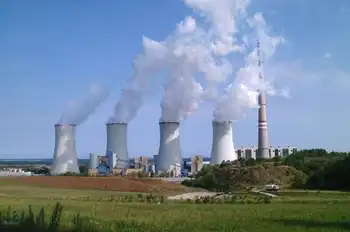
Duke Energy Corp. has agreed to sell its 50% ownership stake in the American Ref-Fuel trash-burning power plant in Niagara Falls, along with five others along the East Coast, to a group of investors for $306 million.

Duke is selling its 50% stake in Duke/UAE Ref-Fuel, which also owns waste-to-energy facilities in Pennsylvania, New Jersey, Connecticut, Massachusetts and Hempstead, N.Y., to Highstar Renewable Fuels LLC. The six plants can generate a total of 380 megawatts of electricity. The deal, which must be approved by the Federal Energy Regulatory Commission and other agencies, is expected to close by the middle of this year. The investor group includes an affiliate of insurance giant American International Group, along with DLJ Merchant Banking Partners III, a private-equity fund managed by Credit Suisse First Boston. Duke has been selling off assets, including the $240 million sale of the Empire State Pipeline to National Fuel Gas Co. last month, to help pay off debt and maintain its dividend as the energy trading industry has been dragged down by scandals, bankruptcies and a credit crunch. Duke also agreed to sell its 23.6% stake in a Canadian natural-gas pipeline for $245 million to partners Enbridge Inc. and Fort Chicago Energy Partners LP. Those sales, combined with the Empire State Pipeline deal, will top the North Carolina-based energy company's goal of raising $600 million in asset sales this year.

The six plants can generate a total of 380 megawatts of electricity. The deal, which must be approved by the Federal Energy Regulatory Commission and other agencies, is expected to close by the middle of this year.

The investor group includes an affiliate of insurance giant American International Group, along with DLJ Merchant Banking Partners III, a private-equity fund managed by Credit Suisse First Boston.

Duke has been selling off assets, including the $240 million sale of the Empire State Pipeline to National Fuel Gas Co. last month, to help pay off debt and maintain its dividend as the energy trading industry has been dragged down by scandals, bankruptcies and a credit crunch.

Duke also agreed to sell its 23.6% stake in a Canadian natural-gas pipeline for $245 million to partners Enbridge Inc. and Fort Chicago Energy Partners LP.

Those sales, combined with the Empire State Pipeline deal, will top the North Carolina-based energy company's goal of raising $600 million in asset sales this year.

Related News

Global electric power demand surges above pre-pandemic levels

Global Power Sector CO2 Surge 2021 shows electricity demand outpacing renewable energy, with coal and fossil fuels rebounding, undermining green recovery goals and climate change targets flagged by the IEA and IPCC.


Key Points

Record rise in power sector CO2 in 2021 as demand outpaced renewables and coal rebounded, undermining a green recovery.

✅ Electricity demand rose 5% above pre-pandemic levels

✅ Fossil fuels supplied 61% of power; coal led the rebound

✅ Wind and solar grew 15% but lagged demand


Carbon dioxide emissions from the global electric power sector surged past pre-pandemic levels to record highs in the first half of 2021, according to new research by London-based environmental think tank Ember.

Electricity demand and emissions are now 5% higher than where they were before the Covid-19 outbreak, which prompted worldwide lockdowns that led to a temporary drop in global greenhouse gas emissions. Electricity demand also surpassed the growth of renewable energy, and surging electricity demand is putting power systems under strain, the analysis found.

The findings signal a failure of countries to achieve a so-called “green recovery” that would entail shifting away from fossil fuels toward renewable energy, though European responses to Covid-19 have accelerated the electricity system transition by about a decade, to avoid the worst consequences of climate change.

The report found that 61% of the world’s electricity still came from fossil fuels in 2020. Five G-20 countries had more than 75% of their electricity supplied from fossil fuels last year, with Saudi Arabia at 100%, South Africa at 89%, Indonesia at 83%, Mexico at 75% and Australia at 75%.

Coal generation did fall a record 4% in 2020, but overall coal supplied 43% of the additional energy demand between 2019 and 2020, with soaring electricity and coal use underscoring persistent demand pressures. Asia currently generates 77% of the world’s coal electricity and China alone generates 53%, up from 44% in 2015.

The world’s transition out of coal power, which contributes to roughly 30% of the world’s greenhouse gas emissions, is happening far too slowly to avoid the worst impacts of climate change, the study warned. And the International Energy Agency forecasts coal generation will rebound in 2021 as electricity demand picks up again, even as renewables are poised to eclipse coal by 2025 according to other analyses.

“Progress is nowhere near fast enough. Despite coal’s record drop during the pandemic, it still fell short of what is needed,” Ember lead analyst Dave Jones said in a statement.

Jones said coal power usage must collapse by 80% by the end of the decade to avoid dangerous levels of global warming above 1.5 degrees Celsius (2.7 degrees Fahrenheit).

“We need to build enough clean electricity to simultaneously replace coal and electrify the global economy,” Jones said. “World leaders have yet to wake up to the enormity of the challenge.”

The findings come ahead of a major U.N. climate conference in Glasgow, Scotland, in November, where negotiators will push for more ambitious climate action and emissions reduction pledges from nations.

Without immediate, rapid and large-scale reductions to global emissions, scientists of the Intergovernmental Panel on Climate Change warn that the average global temperature will likely cross the 1.5 degrees Celsius threshold within 20 years.

The study also highlighted some upsides. Wind and solar generation, for instance, rose by 15% in 2020, and low-emissions sources are set to cover almost all the growth in global electricity demand in the next three years, producing nearly a tenth of the world’s electricity last year and doubling production since 2015.

Some countries now get about 10% of their electricity from wind and solar, including India, China, Japan, Brazil. The U.S. and Europe have experienced the biggest growth in wind and solar, and in the EU, wind and solar generated more electricity than gas last year, with Germany at 33% and the U.K. leads the G20 for wind power at 29%.


Related News

View more

US looks to decommission Alaskan military reactor

SM-1A Nuclear Plant Decommissioning details the US Army Corps of Engineers' removal of the Fort Greely reactor, Cold War facility dismantling, environmental monitoring, remote-site power history, and timeline to 2026 under a deactivated nuclear program.


Key Points

Army Corps plan to dismantle Fort Greely's SM-1A reactor and complete decommissioning of remaining systems by 2026.

✅ Built for remote Arctic radar support during the Cold War

✅ High costs beat diesel; program later deemed impractical

✅ Reactor parts removed; residuals monitored; removal by 2026


The US Army Corps of Engineers has begun decommissioning Alaska’s only nuclear power plant, SM-1A, which is located at Fort Greely, even as new US reactors continue to take shape nationwide. The $17m plant closed in 1972 after ten years of sporadic operation. It was out of commission from 1967 to 1969 for extensive repairs. Much of has already been dismantled and sent for disposal, and the rest, which is encased in concrete, is now to be removed.

The plant was built as part of an experimental programme to determine whether nuclear facilities, akin to next-generation nuclear concepts, could be built and operated at remote sites more cheaply than diesel-fuelled plants.

"The main approach was to reduce significant fuel-transportation costs by having a nuclear reactor that could operate for long terms, a concept echoed in the NuScale SMR safety evaluation process, with just one nuclear core," Brian Hearty said. Hearty manages the Army Corps of Engineers’ Deactivated Nuclear Power Plant Program.

#google#

He said the Army built SM-1A in 1962 hoping to provide power reliably at remote Arctic radar sites, where in similarly isolated regions today new US coal plants may still be considered, intended to detect incoming missiles from the Soviet Union at the height of the Cold War. He added that the programme worked but not as well as Pentagon officials had hoped. While SM-1A could be built and operated in a cold and remote location, its upfront costs were much higher than anticipated, and it costs more to maintain than a diesel power plant. Moreover, the programme became irrelevant because of advances in Soviet rocket science and the development of intercontinental ballistic missiles.

Hearty said the reactor was partially dismantled soon after it was shut down. “All of the fuel in the reactor core was removed and shipped back to the Atomic Energy Commission (AEC) for them to either reprocess or dispose of,” he noted. “The highly activated control and absorber rods were also removed and shipped back to the AEC.”

The SM-1A plant produced 1.8MWe and 20MWt, including steam, which was used to heat the post. Because that part of the system was still needed, Army officials removed most of the nuclear-power system and linked the heat and steam components to a diesel-fired boiler. However, several parts of the nuclear system remained, including the reactor pressure vessel and reactor coolant pumps. “Those were either kept in place, or they were cut off and laid down in the tall vapour-containment building there,” Hearty said. “And then they were grouted and concreted in place.” The Corps of Engineers wants to remove all that remains of the plant, but it is as yet unclear whether that will be feasible.

Meanwhile, monitoring for radioactivity around the facility shows that it remains at acceptable levels. “It would be safe to say there’s no threat to human health in the environment,” said Brenda Barber, project manager for the decommissioning. Work is still in its early stages and is due to be completed in 2026 at the earliest. Barber said the Corps awarded the $4.6m contract in December to a Virginia-based firm to develop a long-range plan for the project, similar in scope to large reactor refurbishment efforts elsewhere. Among other things, this will help officials determine how much of the SM-1A will remain after it’s decommissioned. “There will still be buildings there,” she said. “There will still be components of some of the old structure there that may likely remain.”


Related News

View more

5 ways Texas can improve electricity reliability and save our economy

Texas Power Grid Reliability faces ERCOT blackouts and winter storm risks; solutions span weatherization, natural gas coordination, PUC-ERCOT reform, capacity market signals, demand response, grid batteries, and geothermal to maintain resilient electricity supply.


Key Points

Texas Power Grid Reliability is ERCOT's ability to keep electricity flowing during extreme weather and demand spikes.

✅ Weatherize power plants and gas supply to prevent freeze-offs

✅ Merge PUC and Railroad Commission for end-to-end oversight

✅ Pay for firm capacity, demand response, and grid storage


The blackouts in February shined a light on the fragile infrastructure that supports modern life. More and more, every task in life requires electricity, and no one is in charge of making sure Texans have enough.

Of the 4.5 million Texans who lost power last winter, many of them also lost heat and at least 100 froze to death. Wi-Fi stopped working and phones soon lost their charges, making it harder for people to get help, find someplace warm to go or to check in on loved ones.

In some places pipes froze, and people couldn’t get water to drink or flush after power and water failures disrupted systems, and low water pressure left some health care facilities unable to properly care for patients. Many folks looking for gasoline were out of luck; pumps run on electricity.

But rather than scouting for ways to use less electricity, we keep plugging in more things. Automatic faucets and toilets, security systems and locks. Now we want to plug in our cars, so that if the grid goes down, we have to hope our Teslas have enough juice to get to Oklahoma.

The February freeze illuminated two problems with electricity sufficiency. First, power plants had mechanical failures, triggering outages for days. But also, Texans demanded a lot more electricity than usual as heaters kicked on because of the cold. The ugly truth is, the Texas power grid probably couldn’t have generated enough electricity to meet demand, even if the plants kept whirring. And that is what should chill us now.

The stories of the people who died because the electricity went out during the freeze are difficult to read. A paletero and cotton-candy vendor well known in Old East Dallas, Leobardo Torres Sánchez, was found dead in his armchair, bundled in quilts beside two heaters that had no power.

Arnulfo Escalante Lopez, 41, and Jose Anguiano Torres, 28, died from carbon monoxide poisoning after using a gas-powered generator to heat their apartment in Garland.

Pramod Bhattarai, 23, a college student from Nepal, died from carbon monoxide after using a charcoal grill to heat his home in Houston, according to news reports. And Loan Le, 75; Olivia Nguyen, 11; Edison Nguyen, 8; and Colette Nguyen, 5, died in Sugar Land after losing control of a fire they started in the fireplace to keep warm.

A 65-year-old San Antonio man with esophageal cancer died after power outages cut off supply from his oxygen machine. And local Abilene media reported that a man died in a local hospital when a loss of water pressure prevented staff from treating him.

Gloria Jones of Hillsboro, 87, was living by herself, healthy and social. According to the Houston Chronicle, as the cold weather descended, she told her friends and family she was fine. But when her children checked on her after she didn’t answer her phone, they found her on the floor beside her bed. Hospital workers tried to warm her, but they soon pronounced her dead.

Officials said in July that 210 people died because of the freezing weather, including those who died in car crashes and other weather-related causes, but that figure will be updated. The Department of State Health Services said most of those deaths were due to hypothermia.


Policy recommendation: Weatherize power plants and fuel suppliers

Texas could have avoided those deaths if power plants had worked properly. It’s mechanically possible to generate electricity in freezing temperatures; the Swedes and Finns have electricity in winter. But preparing equipment for the winter costs money, and now that the Public Utility Commission set new requirements for plant owners to weatherize equipment, we expect better reliability.

The PUC officials certainly expect better performance. Chairman Peter Lake earlier this month promised: “We go into this winter knowing that because of all these efforts the lights will stay on.”

Yet, there’s no matching requirement to weatherize key fuel supplies for natural gas-fired power plants. While the PUC and the Electric Reliability Council of Texas were busy this year coming up with standards and enforcement processes, the Texas Railroad Commission, which regulates oil and gas production, was not.

The Railroad Commission is working to ensure that natural gas producers who supply power plants have filed the proper paperwork so that they do not lose electricity in a blackout, rendering them unable to provide vital fuel. But weatherization regulations will not happen for some months, not in time for this winter.


Policy recommendation: Combine the state’s Public Utility Commission and Railroad Commission into one energy agency

Electricity and natural gas regulators came to realize the importance of natural gas suppliers communicating their electricity needs with the PUC to avoid getting cut off when the fuel is needed the most. Not last year; they realized this ten years ago, when the same thing happened and triggered a day of rolling outages.

Why did it take a decade for the companies regulated by one agency to get their paperwork in order with a separate agency? It makes more sense for a single agency to regulate the entire energy process, from wellhead to lightbulb. (Or well-to-wheel, as cars increasingly need electricity, too.)

Over the years, various legislative sunset commissions have recommended combining the agencies, with different governance suggestions, none of which passed the Legislature. We urge lawmakers in 2023 to take up the idea in earnest, hammer out the governance details, and make sure the resulting agency has the heft and resources to regulate energy in a way that keeps the industry healthy and holds it accountable.


Policy recommendation: Incentivize building more power plants

Regardless, if energy companies in February had operated their equipment exactly right, the lights likely would have still gone out. Perhaps for a shorter period, perhaps in a more shared way, allowing people to keep homes above freezing and phones charged between rolling blackouts. But Texas was heading for trouble.

Before the winter freeze, ERCOT anticipated Texas would have 74,000 MW of power generation capacity for the winter of 2021. That’s less than the usual summer fleet as some plants go down for maintenance in the winter, but sufficient to meet their wildest predictions of winter electricity demand. The power generation on hand for the winter would have met the historic record winter demand, at 65,918 MW. Even in ERCOT’s planning scenario with extreme generator failures, the grid had enough capacity.

But during the second week of February, as weather forecasts became more dire, grid operators began rapidly hiking their estimates of electricity demand. On Valentine’s Day, ERCOT estimated demand would rise to 75,573 MW in the coming week.

Clearly that is more demand than all of Texas’ winter power generation fleet of 74,000 MW could handle. Demand never reached that level because ERCOT turned off service to millions of customers when power plants failed.

This raises questions about whether the Texas grid has enough power plants to remain resilient as climate change brings more frequent bouts of extreme weather and blackout risks across the U.S. Or if we have enough power to grow, as more people and companies, more homes and businesses and manufacturing plants, move to Texas.

What a shame if the Texas Miracle, our robust and growing economy, died because we ran out of electricity.

This is no exaggeration. In November, ERCOT released its seasonal assessment of whether Texas will have enough electricity resources for the coming winter. If weather is normal, yes, Texas will be in good shape. But if extreme weather again pushes Texas to use an inordinate amount of electricity for heat, and if wind and solar output are low, there won’t be enough. In that scenario, even if power plants mostly continue to operate properly, we should brace for outages.

Further, there are few investors planning to build more power plants in Texas, other than solar and wind. Renewable plants have many good qualities, but reliability isn’t one of them. Some investors are building grid-scale batteries, a technology that promises to add reliability to the grid.

How come power plant developers aren’t building more generators, especially with flat electricity demand in many markets today?


Policy recommendation: Incentivize reliability

The Texas electrical grid, independent of the rest of the U.S., operates as a competitive market. No regulator plans a power plant; investors choose to build plants based on expectations of profit.

How it works is, power generators offer their electricity into the market at the price of their choosing. ERCOT accepts the lowest bids first, working up to higher bids as demand for power increases in the course of a day.

The idea is that Texans always get the lowest possible price, and if prices rise high, investors will build more power plants. Basic supply and demand. When the market was first set up, this worked pretty well, because the big, reliable baseload generators, the coal and nuclear industries, were the cheapest to operate and bid their power at prices that kept them online all the time. The more agile natural gas-fired plants ramped up and down to meet demand minute-by-minute, at higher prices.

Renewable energy disrupts the market in ways that are great, generating cheap, clean power that has forced some high-polluting coal plants to mothball. But the disruption also undermines reliability. Wind and solar plants are the cheapest and quickest power generation to build and they have the lowest operating cost, allowing them to bid very low prices into the power market. Wind tends to blow hardest in West Texas at night, so the abundance of wind turbines has pushed many of those old baseload plants out of the market.

That’s how markets work, and we’re not crying for coal plant operators. But ERCOT has to figure out how to operate the market differently to keep the lights on.

The PUC announced a slew of electricity market reforms last week to address this very problem, including new to market pricing and an emergency reliability service for ERCOT to contract for more back-up power. These changes cost money, but failing to make any changes could cost more lives.

Texas became the No. 1 wind state thanks in part to a smart renewable energy credit system that created financial incentives to erect wind turbines. But those credits mean that sometimes at night, wind generators bid electricity into the market at negative prices, because they will make money off of the renewable energy credits.

It’s time for the Legislature to review the credit program to determine if it’s still needed, of a similar program could be added to incentivize reliability. The market-based program worked better than anyone could have expected to produce clean energy. Why not use this approach to create what we need now: clean and reliable energy?

We were pleased that PUC commissioners discussed last week an idea that would create a market for reliable power generation capacity by adding requirements that power market participants meet a standard of reliability guarantees.

A market for reliable electricity capacity will cost more, and we hope regulators keep the requirements as modest as possible. Renewable requirements were modest, but turned out to be powerful in a competitive market.

We expect a reliability program to be flexible enough that entrepreneurs can participate with new technology, such as batteries or geothermal energy or something that hasn’t been invented yet, rather than just old reliable fossil fuels.

We also welcome the PUC’s review of pricing rules for the market. Commissioners intend for a new pricing formula to offer early price signals of pending scarcity, to allow time for industrial customers to reduce consumption or suppliers to ramp up. This is intriguing, but we hope the final implementation keeps market interventions at a minimum.

We witnessed in February a scenario in which extremely high prices on the power market did nothing to attract more electricity into the market. Power plants broke down; there was no way to generate more power, no matter how high market prices went. So the PUC was silly to intervene in the market and keep prices artificially high; the outcome was billions of dollars of debt and a proposed electricity market bailout that electricity customers will end up paying.

Nor did this PUC pricing intervention prompt power generation developers to say: “I tell you what, let’s build more plants in Texas.” In the next few years, ERCOT can expect more solar power generation to come online, but little else.

Natural gas plant operators have told the PUC that market price signals show that a new plant wouldn’t be profitable. Natural gas plants are cheaper and faster to build than nuclear reactors; if those developers cannot figure out how to make money, then the prospect of a new nuclear reactor in Texas is a fantasy, even setting aside the environmental and political opposition.


Policy proposal: Use less energy

Politicians like to imagine that technology will solve our energy problem. But the quickest, cheapest, cleanest solution to all of our energy problems is to use less. Investing some federal infrastructure money to make homes more energy efficient would cut energy use, and could help homes retain heat in an emergency.

The PUC’s plan to offer more incentives for major power users to reduce demand in a grid emergency is a good idea. Bravo – next let’s take this benefit to the masses.

Upgrading building codes to require efficiency for office buildings and apartments can help, and might have prevented the frozen pipes in so many multifamily housing units that left people without water.

When North Texas power-line utility Oncor invested in smart grid technology in past decades, part of the promise was to help users reduce demand when electricity prices rise or in emergencies. A review and upgrade of the smart technology could allow more customers to benefit from discounts in exchange for turning things off when electricity supply is tight.

Problem is, we seem to be going in the opposite direction as consumers. Forget turning off the TV and unplugging the coffee machine as we leave the house each morning; now everything is always-on and always connected to Wi-Fi. Our appliances, electronics and the services that operate them can text us when anything interesting happens, like the laundry finishes or somebody opens the patio door or the first season of Murder She Wrote is available for streaming.

As Texans plug in electric vehicles, we will need even more power generation capacity. Researchers at the University of Texas at Austin estimated that if every Texan switched to an electric vehicle, demand for electricity would rise about 30%.

Texans will need to think realistically and rationally about where that electricity is going to come from. Before we march toward a utopian vision of an all-electric world, we need to make sure we have enough electricity.

Getting this right is a matter of life and death for each of one us and for Texas.


Related News

View more

Fire in manhole leaves thousands of Hydro-Québec customers without power

Montreal Power Outage linked to Hydro-Que9bec infrastructure after an underground explosion and manhole fire in Rosemont–La Petite–Patrie, disrupting the STM Blue Line and forcing strategic, cold-weather grid restoration on Be9langer Street.


Key Points

Outage from an underground blast and manhole fire disrupted STM service; Hydro-Que9bec restored the grid in cold weather.

✅ Peak impact: 41,000 customers; 10,981 still without power by 7:00 p.m.

✅ STM Blue Line restored after afternoon shutdown; Be9langer Street reopened.

✅ Hydro-Que9bec pacing restoration to avoid grid overload in cold weather.


Hydro-Québec says a power outage affecting Montreal is connected to an underground explosion and a fire in a manhole in Rosemont—La Petite–Patrie. 

The fire started in underground pipes belonging to Hydro-Québec on Bélanger Street between Boyer and Saint-André streets, according to Montreal firefighters, who arrived on the scene at 12:18 p.m.

The electricity had to be cut so that firefighters could get into the manhole where the equipment was located.

At the peak of the shutdown, nearly 41,000 customers were without power across Montreal.  As of 7:00 p.m., 10,981 clients still had no power.

In similar storms, Toronto power outages have persisted for hundreds, underscoring restoration challenges.

Hydro-Québec spokesperson Louis-Olivier Batty said the utility is being strategic about how it restores power across the grid. 

Because of the cold, and patterns seen during freezing rain outages, it anticipates that people will crank up the heat as soon as they get their electricity back, and that could trigger an overload somewhere else on the network, Batty said.

The Metro's Blue line was down much of the afternoon, but the STM announced the line was back up and running just after 4:30 p.m.

Bélanger Street was blocked to traffic much of the afternoon, however, it has now been reopened.

Batty said once the smoke clears, Hydro-Québec workers will take a look at the equipment to see what failed. 


Related News

View more

Ontario Launches Peak Perks Program

Ontario Peak Perks Program boosts energy efficiency with smart thermostats, demand response, and incentives, reducing peak demand, electricity costs, and emissions while supporting grid reliability and Save on Energy initiatives across Ontario businesses and homes.


Key Points

A demand response initiative offering incentives via smart thermostats to cut peak electricity use and lower costs

✅ $75 sign-up, $20 yearly enrollment incentive

✅ Up to 10 summer temperature events; opt-out anytime

✅ Expanded retrofits, greenhouse support, grid savings


The Ontario government is launching the new Peak Perks program to help families save money by conserving energy, building on bill support during COVID-19 initiatives as part of the government’s $342 million expansion of Ontario’s energy-efficiency programs that will reduce demands on the provincial grid. The government is also launching three new and enhanced programs for businesses, municipalities, and other institutions, including targeted support for greenhouse growers in Southwest Ontario.

“Our government is giving families more ways to lower their energy bills with new energy-efficiency programs like Peak Perks and ultra-low overnight rates available to consumers, which will provide families a $75 financial incentive this year in exchange for lowering their energy use at peak times during the summer,” said Todd Smith, Minister of Energy. “The new programs launched today will also help meet the province’s emerging electricity system needs by providing annual electricity savings equivalent to powering approximately 130,000 homes every year and, alongside electricity cost allocation discussions, reduce costs for consumers by over $650 million by 2025.”

The new Peak Perks program provides a financial incentive for residential customers who are willing to conserve energy and reduce their air conditioning at peak times and have an eligible smart thermostat connected to a central air conditioning system or heat pump unit. Participants will receive $75 for enrolling this year, as well as $20 for each year they stay enrolled in the program starting in 2024.

Residential customers can participate in Peak Perks by enrolling and giving their thermostat manufacturer secure access to their thermostat. Participants will be notified when one of the maximum 10 annual temperature change events occurs directly by their thermostat manufacturer on their mobile app and on their thermostat. Peak Perks has been designed to ensure participants are always in control and customers can opt-out of any temperature change event without impacting their incentive.

The Peak Perks program will be available starting in June. Interested customers can visit SaveOnEnergy.ca/PeakPerks today to sign-up for the program waitlist and receive an email notice with information on how to enroll.

In addition to the financial incentive provided by Peak Perks, reducing electricity use during peak demand hours in the summer months helps customers to lower their monthly electricity bills, and measures such as a temporary off-peak rate freeze have complemented these efforts, as these periods tend to be associated with the highest costs for power. Lowering demand during peak periods also allows the province to reduce electricity sector emissions, by reducing the need for electricity generation facilities that only run at times of peak demand such as natural gas.

Ontario has also launched three new and enhanced programs, including an expanded custom Retrofit program for business, municipalities and other institutions, and industrial electricity rate relief initiatives, targeted support for greenhouse growers in Southwest Ontario, as well enhancements to the existing Local Initiatives Program. The expanded Retrofit program alone will feature over $200 million in dedicated funding to support the new custom energy-efficiency retrofit project stream, that will cover up to 50 percent of the cost of approved projects.

These new and expanded energy-efficiency programs are expected to have a strong impact in Southwest Ontario, with regional peak demand savings of 225 megawatts (MW). This, together with the Ontario-Quebec energy swap agreement, will provide additional capacity for the region and support growing economic development. The overall savings from this energy-efficiency programming will result in an estimated three million tonnes of greenhouse gas emission reductions over its lifetime - the equivalent to taking more than 600,000 vehicles off the road for one year.

“Thanks to energy efficiency efforts over the past 15 years, demand for electricity is today about 12 per cent lower than it otherwise would be,” said Lesley Gallinger, President and CEO, of the Independent Electricity System Operator, Ontario’s grid operator and provider of Save on Energy programs to home and business consumers. “Conservation is a valuable and cost-effective resource that supports system reliability and helps drive economic development as we strive towards compliance with clean electricity regulations for a decarbonized electricity grid.”


Related News

View more

Planning for our electricity future should be led by an independent body

Nova Scotia Integrated Resource Plan evaluates NSPI supply options, UARB oversight, Muskrat Falls imports, coal retirements, wind and biomass expansion, transmission upgrades, storage, and least-cost pathways to decarbonize the grid for ratepayers.


Key Points

A 25-year roadmap assessing supply, imports, costs, and emissions to guide least-cost decarbonization for Nova Scotia.

✅ Compares wind, biomass, gas, imports, and storage costs

✅ Addresses coal retirements, emissions caps, and reliability

✅ Recommends transmission upgrades and Muskrat Falls utilization


Maintaining a viable electricity network requires good long-term planning and, as a recent grid operations report notes, ongoing operational improvements. The existing stock of generating assets can become obsolete through aging, changes in fuel prices or environmental considerations. Future changes in demand must be anticipated.

Periodically, an integrated resource plan is created to predict how all this will add up during the ensuing 25 years. That process is currently underway and is led by Nova Scotia Power Inc. (NSPI) and will be submitted for approval to the Utilities and Review Board (UARB).

Coal-fired plants are still the largest single source of electricity in Nova Scotia. They need to be replaced with more environmentally friendly sources when they reach the end of their useful lives. Other sources include wind, hydroelectricity from rivers, biomass, as seen in increased biomass use by NS Power, natural gas and imports from other jurisdictions.

Imports are used sparingly today but will be an important source when the electricity from Muskrat Falls comes on stream. That project has big capacity. It can produce all the power needed in Newfoundland and Labrador (NL), where Quebec's power ambitions influence regional flows, plus the amount already committed to Nova Scotia, and still have a lot left over.

Some sources of electricity are more valuable than others. The daily amount of power from wind and solar cannot be controlled. Fuel-based sources and hydro can.

Utilities make their profits by providing the capital necessary to build infrastructure. Most of the money is borrowed but a portion, typically 30 per cent, usually comes from NSPI or a sister company. On that they receive a rate of return of nine per cent. Nova Scotia can borrow money today at less than two per cent.

The largest single investment of that type is the $1.577-billion Maritime Link connecting power from Newfoundland to Nova Scotia. It continues through to the New Brunswick border to facilitate exports to the United States. NSPI’s sister company, NSP Maritime Link Inc. (NSPML), is making nine per cent on $473 million of the cost.

There is little unexploited hydro capacity in Nova Scotia and there will not be any new coal-fired plants. Large-scale solar is not competitive in Nova Scotia’s climate. Nova Scotia’s needs would not accommodate the amount of nuclear capacity needed to be cost-effective, even as New Brunswick explores small reactors in its strategy.

So the candidates for future generating resources are wind, natural gas, biomass (though biomass criticism remains) and imports from other jurisdictions. Tidal is a promising opportunity but is still searching for a commercially viable technology. 

NSPI is commendably transparent about its process (irp.nspower.ca). At this stage there is little indication of the conclusions they are reaching but that will presumably appear in due course.

The mountains of detail might obscure the fact that NSPI is not an unbiased arbiter of choices for the future.

It is reported that they want to prematurely close the Trenton 5 coal plant in 2023-25. It is valued at $88.5 million. If it is closed early, ratepayers will still have to pay off the remaining value even though the plant will be idle. NSPI wants to plan a decommissioning of five of its other seven plants. There is a federal emissions constraint but retiring coal plants earlier than needed will cost ratepayers a lot.

Whenever those plants are closed, there will be a need for new sources of power. NSPI is proposing to plan for new investments in new transmission infrastructure to facilitate imports. Other possibilities would be additional wind farms, consistent with the shift to more wind and solar projects, thermal plants that burn natural gas or biomass, or storage for excess wind power that arrives before it can be used. The investment in storage could be anywhere from $20 million to $200 million.

These will add to the asset burden funded by ratepayers, even as industrial customers seek discounts while still paying for shuttered coal infrastructure.

External sources of new power will not provide NSPI the same opportunity: wind power by independent producers might be less expensive because they are willing to settle for less than nine per cent or because they are more efficient. Buying more power from Muskrat Falls will use transmission infrastructure we are already paying for. If a successful tidal technology is found, it will not be owned by NSPI or a sister company, which are no longer trying to perfect the technology.

This is not to suggest that NSPI would misrepresent the alternatives. But they can tilt the discussion in their favour. How tough will they be negotiating for additional Muskrat Falls power when it hurts their profits? Arguing for premature coal retirement on environmental grounds is fair game but whether the cost should be accepted is a political choice. 

NSPI is in a conflict of interest. We need a different process. An independent body should author the integrated resource plan. They should be fully informed about NSPI’s views.

They should communicate directly with Newfoundland and Labrador for Muskrat power, with independent wind producers, and with tidal power companies. The UARB cannot do any of these things.

The resulting plan should undergo the same UARB review that NSPI’s version would. This enhances the likelihood that Nova Scotians will get the least-cost alternative.


Related News

View more

Sign Up for Electricity Forum’s Newsletter

Stay informed with our FREE Newsletter — get the latest news, breakthrough technologies, and expert insights, delivered straight to your inbox.

Electricity Today T&D Magazine Subscribe for FREE

Stay informed with the latest T&D policies and technologies.
  • Timely insights from industry experts
  • Practical solutions T&D engineers
  • Free access to every issue

Download the 2025 Electrical Training Catalog

Explore 50+ live, expert-led electrical training courses –

  • Interactive
  • Flexible
  • CEU-cerified