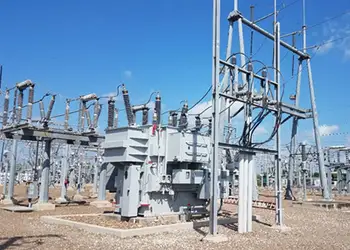
Substation Protection Training - Protect Transformers, Buses and Lines
Our customized live online or in‑person group training can be delivered to your staff at your location.
- Live Online
- 12 hours Instructor-led
- Group Training Available
Regular Price:
$799
Coupon Price:
$699
There's more caution than celebration in the business community over Alberta's steadily falling wholesale electricity prices.
The average Power Pool wholesale price in January was $131.23 per megawatt-hour, only a few pennies less than the 2000 annual average. By March, the average monthly price had fallen to $97.23, and still farther in May to $88.34.
Those are still steep prices compared to the $42.74 average in 1999, or the $14.42 average in 1996. But for five pre-dawn, low-demand hours Thursday, when the noonhour spot price reached $129.66, brokers could buy a megawatt-hour of power for $9.23.
"There is a light at the end of the tunnel," said Duane Reid-Carlson, vice-president of energy prices at Optimum Energy Management Inc. "Something's working."
There's more electricity being generated now than six months ago. The 548-megawatt Wabamun plant that had been shut down for repairs since last fall is operating at full capacity as is the 416-megawatt power plant at Nova Chemicals' Joffre site and smaller facilities.
More supply decreases the price, and so does reduced demand. "We've had flat load growth in response to (last winter's) high prices," Reid-Carlson said. Forestry and petrochemical firms, in particular, have curtailed production or energy use.
But the key factor pushing electricity rates lower is the declining price of natural gas, Reid-Carlson said. Sales of electricity by the provincial clearinghouse, the Power Pool, are determined each hour by the price of the last sale. And that last sale is usually from a gas-fuelled generator.
(Coal-fired generators are the province's cheaper "base-load" providers. Their electricity goes first in the hourly sales and does not set the hourly price.)
The uncertainty of gas prices is cause for caution among industrial consumers like Edmonton's AltaSteel Inc., a producer of recycled-steel products for the mining industry.
"We're expecting it's not going to last," said AltaSteel president Peter Ouellette.
He's not alone. Reid-Carlson forecasts the annual growth in electricity demand will be between 200 and 300 megawatts, the equivalent of two cities the size of Red Deer.
Natural gas experts also predict prices will climb again as U.S. homeowners turn on air conditioners, or the cold weather returns next winter.
The recent downward trend has had no effect on Alberta Hotel Association members, said president Jim Hansen. Four hundred have signed a five-year contract with Epcor Energy Services.
"We still have a good price," said Hansen.
At Alberta Newsprint Co., lower electricity prices cut two ways, noted general manager Iain Thomson in Whitecourt. The company, which describes itself as "one of the largest single-site users of power in the province," saves operating costs with low power rates.
It also picked up wholesale "power purchase arrangements" in last August's provincial auction, in which the average sale price was $42 per megawatt-hour. The company sells the electricity through the Power Pool -- lately at reduced rates.
Related News
Germany turns to coal for a third of its electricity
Germany's Coal Reliance reflects an energy crisis, soaring natural gas prices, and a nuclear phase-out,…
View more

Siemens Energy to unlock a new era of offshore green hydrogen production
Offshore Wind-to-Hydrogen Integration enables green hydrogen by embedding an electrolyzer in offshore turbines. Siemens Gamesa…
View more

Ontario introduces new fixed COVID-19 hydro rate
Ontario Electricity COVID-19 Recovery Rate sets a fixed price of 12.8 cents/kWh, replacing time-of-use billing…
View more
$550 Million in Clean Energy Funding to Benefit More than 250 Million Americans
EECBG Program Funding empowers states, Tribes, and local governments with DOE grants to deploy clean…
View more

Why Is Central Asia Suffering From Severe Electricity Shortages?
Central Asia power shortages strain grids across Kazakhstan, Uzbekistan, Kyrgyzstan, Tajikistan, and Turkmenistan, driven by…
View more

LOC Renewables Delivers First MWS Services To China's Offshore Wind Market
Pinghai Bay Offshore Wind Farm MWS advances marine warranty survey best practices, risk management, and…
View more
Sign Up for Electricity Forum’s Newsletter
Stay informed with our FREE Newsletter — get the latest news, breakthrough technologies, and expert insights, delivered straight to your inbox.
Electricity Today T&D Magazine Subscribe for FREE

Stay informed with the latest T&D policies and technologies.
- Timely insights from industry experts
- Practical solutions T&D engineers
- Free access to every issue

