Army to turn trash into power

By San Francisco Chronicle


Protective Relay Training - Basic

Our customized live online or in‑person group training can be delivered to your staff at your location.

  • Live Online
  • 12 hours Instructor-led
  • Group Training Available
Regular Price:
$699
Coupon Price:
$599
Reserve Your Seat Today
The water bottles, plastic foam plates and other trash discarded by American troops in Iraq's mess halls may soon be serving double-duty — as an unlikely power source to illuminate barracks and power up laptops.

The Army is preparing to deploy to Iraq two 4-ton biomass refineries designed to turn piles of trash into electricity. Each can run for 20 hours on a ton of trash, producing enough power to light a small village.

The novel machines were built by defense contractors and Purdue University scientists as part of the Army's push to reduce troops' diesel fuel use in Iraq, where convoys are frequently targeted by insurgents.

Army planners say cutting the fuel needs of the generators that power military encampments will mean fewer trips into harm's way for soldiers who drive tanker trucks. It will also free up more fuel for tanks, Humvees and other military equipment.

But first the machines, dubbed "tactical biorefineries" by the military, must perform well during their six-month test in a combat zone. They'll face windblown dust and grit, 120-degree temperatures and the risk of breakdowns when they arrive in the Baghdad area in early May.

"We want to put them under those kinds of stresses and see how they do. We want commanders to say, 'This thing is really worth looking at,'" said Jerry Warner, CEO of chief contractor Defense Life Sciences LLC of McLean, Virginia.

In 2006, the Army commissioned Defense Life Sciences, Purdue biomass experts and three other companies to build a prototype refinery. An updated version completed last year at a cost of about $1 million now sits in an unheated warehouse on Purdue's West Lafayette campus awaiting a final shakedown before deployment. The same team is currently building the second unit.

Nate Mosier, an assistant professor of agricultural and biological engineering who is overseeing the work at Purdue, said the refineries are unique in their ability to burn multiple fuels at once. They're also portable, designed to fit snugly into a standard shipping container.

The trash-to-energy process begins when unfiltered garbage is fed into a chute, falling into a grinder that chews the trash into small pieces.

Organic food waste heads to a bioreactor where an industrial fermenting process produces ethanol. In another chamber, plastic, cardboard and other trash items are heated to create low-grade propane or methane.

Those gases and the ethanol are then combusted in the refinery's modified diesel engine, which powers a 60-kilowatt generator.

About 10 percent of the electricity the refineries produce are used for the machines' power needs, but the remaining 90 percent would be available for the troops.

Beyond the military applications, the refineries could provide temporary power after natural disasters. Mosier said they could be set up near hospitals or shelters to supply power and light, while feeding off the trash those locations produce.

If they work well, a fleet of them could be built and sent to Iraq, Afghanistan or other combat zones, said Dan Nolan, who works on a program overseen by the Office of the Secretary of Defense that's trying to reduce the military's use of fossil fuels.

"This is probably the most ambitious program we've done. We think there's a high probability of success. But until we put it out there, and into the operational vacuum, we won't really know," Nolan said.

But even if they do work, the refineries will only save the military a drop in its fuel bucket. Each of the refineries should save about 115 gallons of diesel fuel a day, Nolan said. The U.S. military brings 1.29 million gallons of fuel to Iraq each day.

Another effort to reduce fuel consumption is a 5-kilowatt hybrid electric power station being tested by a contractor in California. It uses a conventional generator paired with wind turbines, solar collectors and battery storage capacity.

The biomass refineries are the first portable refineries of their kind, said John Scahill, a project manager with the Department of Energy's field office in Golden, Colo., which works on biomass projects like those that are part of the refineries.

He said that if the demonstration in Iraq is a success, it could catch the eye of private investors looking for ways to hold down their costs amid rising energy prices.

"This type of technology is going to find many more opportunities," Scahill said. "Businesses that generate some biomass waste stream have the ability to take that and convert it into something useful."

Related News
KHNP is being considered for Bulgarian Nuclear Power Plant Project

KHNP Shortlisted for Belene Nuclear Power Plant, named by the Bulgarian Energy Ministry alongside Rosatom and CNNC; highlights APR1400 reactor expertise, EPC credentials, and expansion into the European nuclear energy market.


Key Points

KHNP is a strategic investor candidate for Bulgaria's Belene NPP, leveraging APR1400 and European market entry.

✅ Selected with Rosatom and CNNC by Bulgarian Energy Ministry

✅ Builds on APR1400 reactor design and EPC track record

✅ Positions KHNP for EU nuclear projects and O&M services


Korea Hydro & Nuclear Power (KHNP) has been selected as one of the three strategic investor candidates for a Bulgarian nuclear power plant project amid global nuclear project milestones worldwide.

The Bulgarian Energy Ministry selected KHNP of Korea, RosAtom of Russia and CNNC of China as strategic investor candidates for the construction of the Belene Nuclear Power Plant, KHNP said on Dec. 20. The Belene Nuclear Power Plant is the second nuclear power plant that Bulgaria plans to build following the 2,000-megawatt Kozloduy Nuclear Power Plant built in 1991 during the Soviet Union era. The project budget is estimated at 10 billion euros.

By being included in the shortlist for the Bulgarian project, KHNP has boosted the possibility of making a foray into the European nuclear power plant market, as India takes steps to get nuclear back on track worldwide. KHNP began to export nuclear power plants in 2009 by winning the UAE Barakah Nuclear Power Plant Project, with Barakah Unit 1 reaching 100% power as it moves toward commercial operations. The UAE plant will be based on the APR1400, a next-generation Korean nuclear reactor that is used in Shin Kori Units 3 and 4 in Korea.

The ARP1400 is a Korean nuclear reactor developed by KHNP with investment of about 230 billion won for 10 years from 1992. The nuclear reactor became the first non-U.S. type reactor to receive a design certificate (DC) from the U.S. Nuclear Regulatory Commission (NRC), as China's nuclear energy program continues on a steady development track globally. By receiving the DC, its safety was internationally recognized. In June, the company also won the maintenance project for the Barakah Nuclear Power Plant, completing the entire cycle from the construction of the nuclear power plant to its design, operation and maintenance. However, U.S. and U.K. companies took part of the maintenance project for the nuclear power plant.

In July, KHNP officials visited Turkey and contacted local energy officials to prepare for nuclear power plant projects to be launched in that country, as Bangladesh develops nuclear power with IAEA assistance in the region. Earlier in May, the company also submitted a proposal to participate in the construction of a new nuclear power plant in Kazakhstan, while Kenya moves forward with plans for a $5 billion plant.


Related News

View more

Alliant aims for carbon-neutral electricity, says plans will save billions for ratepayers

Alliant Energy Net-Zero Carbon Plan outlines carbon-neutral electricity by 2050, coal retirements by 2040, major solar and wind additions, gas transition, battery storage, hydrogen, and carbon credits to reduce emissions and lower customer costs.


Key Points

Alliant Energy's strategy to reach carbon-neutral power by 2050 via coal phaseout, renewables, storage, and offsets.

✅ Targets net-zero electricity by 2050

✅ Retires all coal by 2040; expands solar and wind

✅ Uses storage, hydrogen, and offsets to bridge gaps


Alliant Energy has joined a small but growing group of utilities aiming for carbon-neutral electricity by 2050.

In a report released Wednesday, the Madison-based company announced a goal of “net-zero carbon dioxide emissions” from its electricity generation along with plans to eliminate all coal-powered generation by 2040, a decade earlier than the company’s previous target.

Alliant, which is pursuing plans that would make it the largest solar energy generator in Wisconsin, said it is on track to cut its 2005 carbon emissions in half by 2030.

Both goals are in line with targets an international group of scientists warn is necessary to avoid the most catastrophic impacts of climate change. But reducing greenhouse gasses was not the primary motivation, said executive vice president and general counsel Jim Gallegos.

“The primary driver is focused on our customers and communities and setting them up … to be competitive,” Gallegos said. “We do think renewables are going to do it better than fossil fuels.”

Alliant has told regulators it can save customers up to $6.5 billion over the next 35 years by adding more than 1,600 megawatts of renewable generation, closing one of its two remaining Wisconsin coal plants and taking other undisclosed actions.

In a statement, Alliant chairman and CEO John Larsen said the goal is part of broader corporate and social responsibility efforts “guided by our strategy and designed to deliver on our purpose — to serve customers and build stronger communities.”

Coal out; gas remains
The goal applies only to Alliant’s electricity generation — the company has no plans to stop distributing natural gas for heating — and is “net-zero,” meaning the company could use some form of carbon capture or purchase carbon credits to offset continuing emissions.

The plan relies heavily on renewable generation — seen in regions embracing clean power across North America — including the addition of up to 1,000 megawatts of new Wisconsin solar plants by the end of 2023 and 1,000 megawatts of Iowa wind generation added over the past four years — as well as natural gas generators to replace its aging coal fleet.

But Jeff Hanson, Alliant’s director of sustainability, said eliminating or offsetting all carbon emissions will require new tools, such as battery storage or possibly carbon-free fuels such as hydrogen, and awareness of the Three Mile Island debate over the role of nuclear power in the mix.

“Getting to the 2040 goals, that’s all based on the technologies of today,” Hanson said. “Can we get to net zero today? The challenge would be a pretty high bar to clear.”

Gallegos said the plan does not call for the construction of more large-scale natural gas generators like the recently completed $700 million West Riverside Energy Center in Beloit, though natural gas will remain a key piece of Alliant’s generation portfolio.

Alliant announced plans in May to close its 400-megawatt Edgewater plant in Sheboygan by the end of 2022, echoing how Alberta is retiring coal by 2023 as markets shift, but has not provided a date for the shutdown of the jointly owned 1,100-megawatt Columbia Energy Center near Portage, which received about $1 billion worth of pollution-control upgrades in the past decade.

Alliant’s Iowa subsidiary plans to convert its 52-year-old, 200-megawatt Burlington plant to natural gas by the end of next year and a pair of small coal-fired generators in Linn County by 2025. That leaves the 250-megawatt plant in Lansing, which is now 43 years old, and the 734-megawatt Ottumwa plant as the remaining coal-fired generators, even as others keep a U.S. coal plant running indefinitely elsewhere.

Earlier this year, the utility asked regulators to approve a roughly $900 million investment in six solar farms across the state with a total capacity of 675 megawatts, similar to plans in Ontario to seek new wind and solar to address supply needs. The company plans to apply next year for permission to add up to 325 additional megawatts.

Alliant said the carbon-neutral plan, which entails closing Edgewater along with other undisclosed actions, would save customers between $2 billion and $6.5 billion through 2055 compared to the status quo.

Tom Content, executive director of the Citizens Utility Board, said the consumer advocacy group wants to ensure that ratepayers aren’t forced to continue paying for coal plants that are no longer needed while also paying for new energy sources and would like to see a bigger role for energy efficiency and more transparency about the utilities’ pathways to decarbonization.

‘They could do better’
Environmental groups said the announcement is a step in the right direction, though they say utilities need to do even more to protect the environment and consumers.

Amid competition from cheaper natural gas and renewable energy and pressure from environmentally conscious investors, U.S. utilities have been closing coal plants at a record pace in recent years, as industry CEOs say a coal comeback is unlikely in the U.S., a trend that is expected to continue through the next decade.

“This is not industry leadership when we’re talking about emission reductions,” said Elizabeth Katt Reinders, regional campaign director for the Sierra Club, which has called on Alliant to retire the Columbia plant by 2026.

Closing Edgewater and Columbia would get Alliant nearly halfway to its emissions goals while saving customers more than $250 million over the next decade, according to a Sierra Club study released earlier this year.

“Retiring Edgewater was a really good decision. Investing in 1,000 megawatts of new solar is game-changing for Wisconsin,” Katt Reinders said. “In the same breath we can say this emissions reduction goal is unambitious. Our analysis has shown they can do far more far sooner.”

Scott Blankman, a former Alliant executive who now works as director of energy and air programs for Clean Wisconsin, said Alliant should not run the Columbia plant for another 20 years.

“If they’re saying they’re looking to get out of coal by 2040 in Wisconsin I’d be very disappointed,” Blankman said. “I do think they could do better.”

Alliant is the 15th U.S. investor-owned utility to set a net-zero target, according to the Natural Resources Defense Council, joining Madison Gas and Electric, which announced a similar goal last year. Minnesota-based Xcel Energy, which serves customers in western Wisconsin, was the first large investor-owned utility to set such a target, as state utilities report declining returns in coal operations.


Related News

View more

Power bill cut for 22m Thailand houses

Thailand Covid-19 Electricity Bill Relief offers energy subsidies, tariff cuts, and free power for small meters, helping work-from-home users as authorities waive charges and discount kWh rates via EGAT, MEA, PEA for three months.


Key Points

Program waiving or cutting household electricity bills for 22 million homes in March-May, easing work-from-home costs.

✅ Free power for meters <= 5 amps; up to 10M homes

✅ Up to 800 kWh: pay February rate; above, 50% discount

✅ >3,000 kWh: 30% discount; program valid March-May


The Thailand cabinet has formally approved energy authorities' decision to either waive or cut electricity charges, similar to B.C. electricity relief measures, for 22 million households where people are working at home because of the coronavirus disease.

Energy Minister Sontirat Sontijirawong said after the cabinet meeting on Tuesday that the ministers acknowledged the step taken by from the Energy Regulatory Commission, the Electricity Generating Authority of Thailand, the Metropolitan Electricity Authority and the Provincial Electricity Authority and noted parallels with Ontario's COVID-19 hydro plan rolled out to support ratepayers.

The measure would be valid for three months, from March to May, and cover 22 million households. It would cost the state 23.68 billion baht in lost revenue, he said, a pattern also seen with Ontario rate reductions affecting provincial revenues.


"The measure reduces the electricity charges burden on households. It is the cost of living of the people who are working from home to support the government's control of Covid-19," Mr Sontirat said.

The business sector also wants similar assistance, echoing sentiments from Ontario manufacturers during recent price reduction efforts. He said their requests were being considered.

Free electricity is extended to households with a power meter of no more than 5 amps. Up to 10 million households are expected to benefit, although issues like electricity payment challenges in India highlight different market contexts.

For households with a power meter over 5 amps, if their consumption does not exceed 800 units (kilowat hours), they will pay as much as they did in their February bill. The amount over 800 units will be subject to a 50 per cent discount, while elsewhere B.C. commercial consumption has fallen sharply.

Large houses that consume more than 3,000 units will get a 30 per cent discount, at a time when BC Hydro demand is down 10%.


Related News

View more

Texas utilities struggle to restore power as Harvey hampers progress

Texas Gulf Coast Power Outages from Harvey continue as flooding, high winds, and downed lines paralyze Houston and coastal utilities, while restoration crews from out-of-state work to repair infrastructure and restore electricity across impacted communities.


Key Points

Power disruptions across Houston and the Gulf Coast from Harvey, driven by flooding, wind damage, and blocked access.

✅ CenterPoint warns multi-day outages in flooded zones.

✅ AEP Texas aided by crews from Kentucky, Illinois, Missouri.

✅ Entergy expects more outages as storm nears Galveston.


Hundreds of thousands of Texans were without power along the Gulf Coast as Tropical Storm Harvey left parts of the Houston area under water, with extended Houston outages compounding response efforts.

There were roughly 280,000 customers without power along the Texas's coast and in Houston and the surrounding areas on Monday, according to reported outages by the state's investor-owned utilities. Harvey, which made landfall on Friday, caused devastating flooding and knocked out power lines along its destructive path, similar to the Louisiana grid rebuild after Laura that required weeks of restoration.

CenterPoint Energy reported more than 100,000 outages earlier on Monday, though that figure was down to 91,744 shortly after 1 p.m. on Monday.

The company said it was unable to access hard-hit areas until floodwaters recede and electric infrastructure dries out, a challenge that, as seen in Florida power restoration efforts elsewhere, has taken weeks to resolve. Outages in the most flooded areas could last for several days, CenterPoint warned.

AEP Texas's coverage area south of Houston had 150,500 customers without electricity as of 11 a.m. ET on Monday. That was down from the peak of its outages on Saturday afternoon, which affected 220,000 customers.

Former FEMA deputy director: Texas has already begun recovery from storm  1:54 PM ET Mon, 28 Aug 2017 | 05:57

Corpus Christi and the surrounding areas along the Gulf Coast were still experiencing the most outages, while persistent Toronto outages after a spring storm underscored how long recovery can take in urban areas. AEP credited assistance from out-of-state workers for helping to get the lights back on.

"Thousands of resources have arrived from across the country to help AEP Texas with restoration efforts following this historic weather event. Crews from Kentucky, Illinois, Missouri and other states have arrived and are working on restoring power to those impacted by Hurricane Harvey," AEP said in a statement.

Entergy reported 29,500 customers were without power on Monday in areas north of Houston. The company warned that additional outages were expected if Harvey moves inland near the island city of Galveston on Wednesday as anticipated, a pattern similar to New Orleans during Ida where electricity failed despite levees holding.

Houston, Beaumont and Victoria are expected to see continued periods of torrential rain through Tuesday, before Harvey begins to move north on Wednesday and out of the flood zone by Thursday.

"Our crews are safely restoring power as quickly as possible, but the continued wind, rain and flooding are having an impact on restoration efforts," Entergy said in a statement.

South of Houston, about 7,500 Texas New Mexico Power Company customers were still experiencing outages, according to the company's outage map.


Related News

View more

Germany turns to coal for a third of its electricity

Germany's Coal Reliance reflects an energy crisis, soaring natural gas prices, and a nuclear phase-out, as Destatis data show higher coal-fired electricity despite growing wind and solar generation, impacting grid stability and emissions.


Key Points

Germany's coal reliance is more coal power due to gas spikes and a nuclear phase-out, despite wind and solar growth.

✅ Coal share near one-third of electricity, per Destatis

✅ Gas-fired output falls as prices soar after Russia's invasion

✅ Wind and solar rise; grid stability and recession risks persist


Germany is relying on highly-polluting coal for almost a third of its electricity, as the impact of government policies, reflecting an energy balancing act for the power sector, and the war in Ukraine leads producers in Europe’s largest economy to use less gas and nuclear energy.

In the first six months of the year, Germany generated 82.6 kWh of electricity from coal, up 17 per cent from the same period last year, according to data from Destatis, the national statistics office, published on Wednesday. The leap means almost one-third of German electricity generation now comes from coal-fired plants, up from 27 per cent last year. Production from natural gas, which has tripled in price to €235 per megawatt hour since Russia’s invasion in late February, fell 18 per cent to only 11.7 per cent of total generation.

Destatis said that the shift from gas to coal was sharper in the second quarter. Coal-fired electricity increased by an annual rate of 23 per cent in the three months to June, while electricity generation from natural gas fell 19 per cent.

The figures highlight the challenge facing European governments in meeting clean energy goals after the Kremlin announced this week that the Nordstream 1 pipeline that takes Russian gas to Germany would remain closed until Europe removed sanctions on the country’s oil.

Germany has been trying to reduce its reliance on coal, which releases almost twice as many emissions as gas and more than 60 times those of nuclear energy, according to estimates from the Intergovernmental Panel on Climate Change, though grid expansion challenges have slowed renewable build-out in recent years.

Chancellor Olaf Scholz said the opposition CDU bore “complete responsibility” for the exit from coal and nuclear power that formed part of his predecessor Angela Merkel’s Energiewende policies, amid a continuing nuclear option debate in climate policy, which in turn raised reliance on Russian gas. At the beginning of this year, more than 50 per cent of Germany’s gas imports came from Russia, a figure that fell slightly over the opening half of 2022.

But CDU leader Friedrich Merz accused the government of “madness” over its decision to idle the country’s three remaining nuclear power stations from the end of this year, though officials have argued that nuclear would do little to solve the gas issue in the short term.

Electricity generation from nuclear energy has already halved after three of the six nuclear power plants that were still in operation at the end of 2021 were closed during the first half of this year. Berlin said on Monday it would keep on standby two of its remaining three nuclear power stations, a move to extend nuclear power during the energy crisis, which were all due to close at the end of the year.

The German government has warned of the risk of electricity shortages this winter. “We cannot be sure that, in the event of grid bottlenecks in neighbouring countries, there will be enough power plants available to help stabilise our electricity grid in the short term,” said German economy minister Robert Habeck on Monday.

However Scholz said that, after raising gas storage levels to 86 per cent of capacity, Germany would “probably get through this winter, despite all the tension”.

One bright spot from the data was the increase in use of renewable energy, highlighting a recent renewables milestone in Germany. The proportion of electricity generated from wind power generation rose by 18 per cent to 25 per cent of all electricity generation, while solar energy production increased 20 per cent.

Ángel Talavera, head of Europe economics at the consultancy Oxford Economics, said that the success in moving away from gas towards other energy sources “means that the risks of hard energy rationing over the winter are less severe now, even with little to no Russian gas flows”.

However, economists still expect a recession in the eurozone’s largest economy, amid a deteriorating German economy outlook over the near term, as a large part of the impact comes via higher prices and because industries and households still rely on gas for heating.

Separate official data also published on Wednesday showed that German industrial production slid 0.3 per cent between June and July. Production at Germany’s most energy intensive industries fell almost 7 per cent in the five months after Russia’s invasion of Ukraine.

“The demand destruction caused by the surge in prices will still send the German economy into recession over the winter,” said Talavera.


Related News

View more

Its Electric Grid Under Strain, California Turns to Batteries

California Battery Storage is transforming grid reliability as distributed energy, solar-plus-storage, and demand response mitigate rolling blackouts, replace peaker plants, and supply flexible capacity during heat waves and evening peaks across utilities and homes.


Key Points

California Battery Storage uses distributed and utility batteries to stabilize power, shift solar, and curb blackouts.

✅ Supplies flexible capacity during peak demand and heat waves

✅ Enables demand response and replaces gas peaker plants

✅ Aggregated assets form virtual power plants for grid support


Last month as a heat wave slammed California, state regulators sent an email to a group of energy executives pleading for help to keep the lights on statewide. “Please consider this an urgent inquiry on behalf of the state,” the message said.

The manager of the state’s grid was struggling to increase the supply of electricity because power plants had unexpectedly shut down and demand was surging. The imbalance was forcing officials to order rolling blackouts across the state for the first time in nearly two decades.

What was unusual about the emails was whom they were sent to: people who managed thousands of batteries installed at utilities, businesses, government facilities and even homes. California officials were seeking the energy stored in those machines to help bail out a poorly managed grid and reduce the need for blackouts.

Many energy experts have predicted that batteries could turn homes and businesses into mini-power plants that are able to play a critical role in the electricity system. They could soak up excess power from solar panels and wind turbines and provide electricity in the evenings when the sun went down or after wildfires and hurricanes, which have grown more devastating because of climate change in recent years. Over the next decade, the argument went, large rows of batteries owned by utilities could start replacing power plants fueled by natural gas.

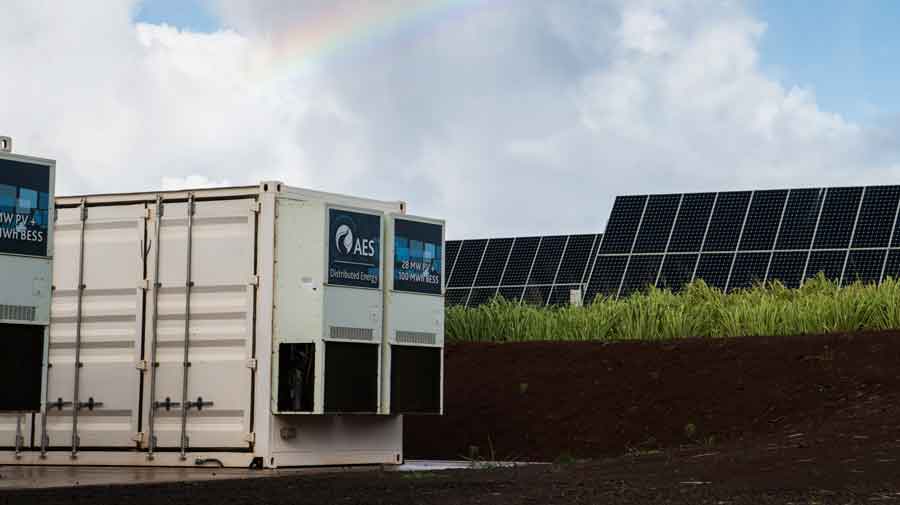
But that day appears to be closer than earlier thought, at least in California, which leads the country in energy storage. During the state’s recent electricity crisis, more than 30,000 batteries supplied as much power as a midsize natural gas plant. And experts say the machines, which range in size from large wall-mounted televisions to shipping containers, will become even more important because utilities, businesses and homeowners are investing billions of dollars in such devices.

“People are starting to realize energy storage isn’t just a project or two here or there, it’s a whole new approach to managing power,” said John Zahurancik, chief operating officer at Fluence, which makes large energy storage systems bought by utilities and large businesses. That’s a big difference from a few years ago, he said, when electricity storage was seen as a holy grail — “perfect, but unattainable.”

On Friday, Aug. 14, the first day California ordered rolling blackouts, Stem, an energy company based in the San Francisco Bay Area, delivered 50 megawatts — enough to power 20,000 homes — from batteries it had installed at businesses, local governments and other customers. Some of those devices were at the Orange County Sanitation District, which installed the batteries to reduce emissions by making it less reliant on natural gas when energy use peaks.

John Carrington, Stem’s chief executive, said his company would have provided even more electricity to the grid had it not been for state regulations that, among other things, prevent businesses from selling power from their batteries directly to other companies.

“We could have done two or three times more,” he said.

The California Independent System Operator, which manages about 80 percent of the state’s grid, has blamed the rolling blackouts on a confluence of unfortunate events, including extreme weather impacts on the grid that limited supply: A gas plant abruptly went offline, a lack of wind stilled thousands of turbines, and power plants in other states couldn’t export enough electricity. (On Thursday, the grid manager urged Californians to reduce electricity use over Labor Day weekend because temperatures are expected to be 10 to 20 degrees above normal.)

But in recent weeks it has become clear that California’s grid managers also made mistakes last month, highlighting the challenge of fixing California’s electric grid in real time, that were reminiscent of an energy crisis in 2000 and 2001 when millions of homes went dark and wholesale electricity prices soared.

Grid managers did not contact Gov. Gavin Newsom’s office until moments before it ordered a blackout on Aug. 14. Had it acted sooner, the governor could have called on homeowners and businesses to reduce electricity use, something he did two days later. He could have also called on the State Department of Water Resources to provide electricity from its hydroelectric plants.

Weather forecasters had warned about the heat wave for days. The agency could have developed a plan to harness the electricity in numerous batteries across the state that largely sat idle while grid managers and large utilities such as Pacific Gas & Electric scrounged around for more electricity.

That search culminated in frantic last-minute pleas from the California Public Utilities Commission to the California Solar and Storage Association. The commission asked the group to get its members to discharge batteries they managed for customers like the sanitation department into the grid. (Businesses and homeowners typically buy batteries with solar panels from companies like Stem and Sunrun, which manage the systems for their customers.)

“They were texting and emailing and calling us: ‘We need all of your battery customers giving us power,’” said Bernadette Del Chiaro, executive director of the solar and storage association. “It was in a very last-minute, herky-jerky way.”

At the time of blackouts on Aug. 14, battery power to the electric grid climbed to a peak of about 147 megawatts, illustrating how virtual power plants can rapidly scale, according to data from California I.S.O. After officials asked for more power the next day, that supply shot up to as much as 310 megawatts.

Had grid managers and regulators done a better job coordinating with battery managers, the devices could have supplied as much as 530 megawatts, Ms. Del Chiaro said. That supply would have exceeded the amount of electricity the grid lost when the natural gas plant, which grid managers have refused to identify, went offline.

Officials at California I.S.O. and the public utilities commission said they were working to determine the “root causes” of the crisis after the governor requested an investigation.

Grid managers and state officials have previously endorsed the use of batteries, using AI to adapt as they integrate them at scale. The utilities commission last week approved a proposal by Southern California Edison, which serves five million customers, to add 770 megawatts of energy storage in the second half of 2021, more than doubling its battery capacity.

And Mr. Zahurancik’s company, Fluence, is building a 400 megawatt-hour battery system at the site of an older natural gas power plant at the Alamitos Energy Center in Long Beach. Regulators this week also approved a plan to extend the life of the power plant, which was scheduled to close at the end of the year, to support the grid.

But regulations have been slow to catch up with the rapidly developing battery technology.

Regulators and utilities have not answered many of the legal and logistical questions that have limited how batteries owned by homeowners and businesses are used. How should battery owners be compensated for the electricity they provide to the grid? Can grid managers or utilities force batteries to discharge even if homeowners or businesses want to keep them charged up for their own use during blackouts?

During the recent blackouts, Ms. Del Chiaro said, commercial and industrial battery owners like Stem’s customers were compensated at the rates similar to those that are paid to businesses to not use power during periods of high electricity demand. But residential customers were not paid and acted “altruistically,” she said.


Related News

View more

Sign Up for Electricity Forum’s Newsletter

Stay informed with our FREE Newsletter — get the latest news, breakthrough technologies, and expert insights, delivered straight to your inbox.

Electricity Today T&D Magazine Subscribe for FREE

Stay informed with the latest T&D policies and technologies.
  • Timely insights from industry experts
  • Practical solutions T&D engineers
  • Free access to every issue

Live Online & In-person Group Training

Advantages To Instructor-Led Training – Instructor-Led Course, Customized Training, Multiple Locations, Economical, CEU Credits, Course Discounts.

Request For Quotation

Whether you would prefer Live Online or In-Person instruction, our electrical training courses can be tailored to meet your company's specific requirements and delivered to your employees in one location or at various locations.