Duke has right to cut trees on private property

By McClatchy Tribune News


Protective Relay Training - Basic

Our customized live online or in‑person group training can be delivered to your staff at your location.

  • Live Online
  • 12 hours Instructor-led
  • Group Training Available
Regular Price:
$699
Coupon Price:
$599
Reserve Your Seat Today
Two Mallard Trace homeowners hoping to save dozens of trees from the chainsaw got the decision they expected - but didn't want to hear - from the North Carolina Utilities Commission public staff.

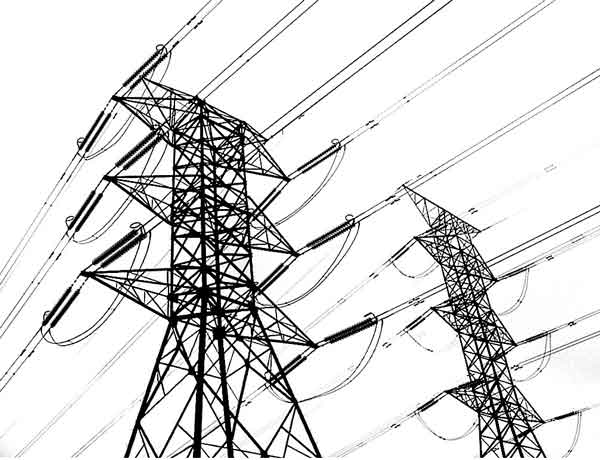
Duke Energy does indeed have the right to cut trees on their property, staff member Jay Lucas e-mailed Bryan Holladay and Karen Bezanson. The message and attachments explain that Duke Energy, which is removing trees along a transmission line beside the neighborhood, has both the right and the obligation to take trees on private property near the line if the trees could damage the line if hey fell.

Holladay and Bezanson had insisted that Duke Energy not cut trees in their yards until it proved it had the authority. "It sounds like Duke can do pretty much what it wants," Bezanson said as she, her husband, Bruce, and Holladay read through the documents.

Several Mallard Trace residents came home from work May 21 to find Duke Energy door-hangers on their houses and orange spray-paint circles on trees in or near the utility's 68-foot-wide right of way near the Mallard Creek Greenway. The door hanger said the utility was maintaining the right-of-way to protect the lines, and that work crews would arrive the following Tuesday - the day after Memorial Day - to cut down trees bearing the orange paint.

Duke Energy's right of way cuts through several yards, but not Holladay's or the Bezansons', which share a copse of mostly young hardwoods. How could Duke Energy cut their trees, on their property, the owners wondered?

Longtime Mallard Trace residents also said this was the first time since the neighborhood was built about 1990 that Duke Energy had removed trees outside of the right of way.

Why cut now, Holladay and the Bezansons wondered? The Bezansons were particularly incensed. The couple bought their home because it backs up to the county greenway, Karen Bezanson said, and because it had a 30- to 40-foot-wide cluster of trees shielding it from the power lines and the afternoon sun.

The couple also paid for a property survey before they bought their home to make sure the yard lay outside the utility right-of-way. All except for perhaps a foot or two in one corner appears to be outside it. Since then, the Bezansons have cleared out some of the underbrush in the wooded area and created a shaded haven with a hammock and an extensive garden of shade-loving shrubs and flowers on the steep hillside above the power lines.

No trees in that improved area are marked for cutting. But once the marked trees go, the afternoon sun will pour into the formerly shaded backyard haven.

"I have no problem with them coming in and trimming," Bruce Bezanson said. And he certainly understands the need to protect the power line, he said. "But I don't know why they have to clear-cut, and you have no choice about it."

The neighbors put in calls first to Duke Energy and then to the public staff of the N.C. Utilities Commission. Duke Energy staff met with Holladay and Bezanson. Karen Bezanson said she and Holladay asked for proof that Duke Energy could cut on their land.

If the utility did have the right, the homeowners wanted the tree crews to trim where possible, rather than cut down. She said the response from the Duke energy staff was that the trees needed to come down.

Lucas' e-mail to the residents included rulings by the N.C. Utilities Commission that confirms Duke Energy's right to cut any trees within 16 feet of its right-of-way that might fall and take out a transformer line, and to cut trees farther away if they pose a risk, particularly if they are dead or ailing. Lucas also provided some context for why utilities have become more aggressive in protecting their transmission lines.

"In August 2003, a massive blackout occurred in the northeastern United States and Canada that can be partially attributed to transmission lines coming into contact with trees," Lucas wrote. "As a result of this blackout, the North American Electric Reliability Corporation (a utility oversight agency) issued the attached guidelines for transmission vegetation management and guidelines for penalties. These penalties are enforced," and the fines can reach $1 million a day.

Paige Sheehan, a spokesperson for Duke Energy, said the utility tries to help residents understand the need for this work.

"Our tree-trimming practices try to balance the need for people to keep their trees but also our requirement to keep the area safe," she said.

Karen Bezanson said she is "devastated" about losing her trees, "but we got what we really, really wanted, and that was the proof... to show they could do it. "And I will never live near another power line ever again," she added.

Related News
N.S. senior suspects smart meter to blame for shocking $666 power bill

Nova Scotia Power smart meter billing raises concerns amid estimated billing, catch-up bills, and COVID-19 meter reading delays, after seniors report doubled electricity usage and higher utility charges despite consistent consumption and on-time payments.


Key Points

Smart meter billing uses digital reads, limits estimates, and may trigger catch-up charges after reading suspensions.

✅ COVID-19 reading pause led to estimated bills and later catch-ups

✅ Smart meters reduce reliance on estimated billing errors

✅ Customers can seek payment plans and bill reviews


A Nova Scotia senior says she couldn't believe her eyes when she opened her most recent power bill. 

Gloria Chu was billed $666 -- more than double what she normally pays, and similar spikes such as rising electricity bills in Calgary have drawn attention.

As someone who always pays her bi-monthly Nova Scotia Power bill in full and on time, Chu couldn't believe it.

According to her bill, her electricity usage almost tripled during the month of May, compared to last year, and is even more than it was last winter, and with some utilities exploring seasonal power rates customers may see confusing swings.

She insists she and her husband aren't doing anything differently -- but one thing has changed.

"I have had a problem since they put the smart meter in," said Chu, who lives in Upper Gulf Shore, N.S.

Chu got a big bill right after the meter was installed in January, too. That one was more than $530.

She paid it, but couldn't understand why it was so high.

As for this bill, she says she just can't afford it, especially amid a recently approved 14% rate hike in Nova Scotia.

"That's all of my CPP," Chu said. "Actually, it's more than my CPP."

Chu says a neighbor up the road who also has a smart meter had her bill double, too. In nearby Pugwash, she says some residents have seen an increase of about $20-$30.

Nova Scotia Power had put a pause on installing smart meters because of the COVID-19 pandemic, but it has resumed as of June 1, with the goal of upgrading 500,000 meters by 2021, even as in other provinces customers have faced fees for refusing smart meters during similar rollouts.

In this case, the utility says it's not the meter that's the problem, and notes that in New Brunswick some old meters gave away free electricity even as the pandemic forced Nova Scotia Power to suspend meter readings for two months.

"As a result, every one of our customers in Nova Scotia received an estimated bill," said Jennifer parker, Nova Scotia Power's director of customer care.

The utility estimated Chu's bill at $182 -- less than she normally pays -- so her latest bill is considered a catch-up bill after meter readings resumed last month.

Parker admits how estimates are calculated isn't perfect.

"There would be a lot of customers who probably had a more accurate bill because of the way that we estimate, and that's actually one of things that smart meters will get rid of, is that we won't need to do estimated billing," Parker said.

Chu isn't quite convinced.

"It is pretty smart for the power company, but it's not smart for us," she said with a laugh.

Nova Scotia Power has put a hold on her bill and says it will work with Chu on an affordable solution, though the province cannot order the utility to lower rates which limits what can be offered.

She just hopes to never see a big bill like this again, while elsewhere in Newfoundland and Labrador a lump-sum electricity credit is being provided to help customers.


Related News

View more

Crossrail will generate electricity using the wind created by trains

Urban Piezoelectric Energy Textiles capture wind-driven motion on tunnels, bridges, and facades, enabling renewable microgeneration for smart cities with decentralized power, resilient infrastructure, and flexible lamellae sheets that harvest airflow vibrations.


Key Points

Flexible piezoelectric sheets that convert urban wind and vibration into electricity on tunnels, bridges, and facades.

✅ Installed on London Crossrail to test airflow energy capture

✅ Flexible lamellae panels retrofit tunnels, bridges, facades

✅ Supports decentralized, resilient urban microgrids


Charlotte Slingsby and her startup Moya Power are researching piezo-electric textiles that gain energy from movement, similar to advances like a carbon nanotube energy harvester being explored by materials researchers. It seems logical that Slingsby originally came from a city with a reputation for being windy: “In Cape Town, wind is an energy source that you cannot ignore,” says the 27-year-old, who now lives in London.

Thanks to her home city, she also knows about power failures. That’s why she came up with the idea of not only harnessing wind as an alternative energy source by setting up wind farms in the countryside or at sea, but also for capturing it in cities using existing infrastructure.


The problem

The United Nations estimates that by 2050, two thirds of the world’s population will live in cities. As a result, the demand for energy in urban areas will increase dramatically, spurring interest in nighttime renewable technology that can operate when solar and wind are variable. Can the old infrastructure grow fast enough to meet demand? How might we decentralise power generation, moving it closer to the residents who need it?

For a pilot project, she has already installed grids of lamellae-covered plastic sheets in tunnels on London Crossrail routes; the draft in the tube causes the protrusions to flutter, which then generates electricity.

“If we all live in cities that need electricity, we need to look for new, creative ways to generate it, including nighttime solar cells that harvest radiative cooling,” says Slingsby, who studied design and engineering at Imperial College and the Royal College of Art. “I wanted to create something that works in different situations and that can be flexibly adapted, whether you live in an urban hut or a high-rise.”

The yield is low compared to traditional wind power plants and is not able to power whole cities, but Slingsby sees Moya Power as just a single element in a mixture of urban energy sources, alongside approaches like gravity power that aid grid decarbonization.

In the future, Slingsby’s invention could hang on skyscrapers, in tunnels or on bridges – capturing power in the windiest parts of the city, alongside emerging air-powered generators that draw energy from humidity. The grey concrete of tunnels and urban railway cuttings could become our cities’ most visually appealing surfaces...


Related News

View more

Alberta Advances Electricity Plans with Rate of Last Resort

Alberta Rate of Last Resort provides a baseline electricity price, boosting energy reliability, affordability, and consumer protection amid market volatility, aligning with grid modernization, integration, pricing transparency, and oversight from the Alberta Utilities Commission.


Key Points

A fallback electricity rate ensuring affordable, reliable power and consumer protection during market volatility.

✅ Guarantees a stable baseline price when markets spike

✅ Supports vulnerable customers lacking competitive offers

✅ Overseen by AUC to balance protection and competition


The Alberta government has announced significant strides in its electricity market reforms, unveiling a new plan under new electricity rules that aims to enhance energy reliability and affordability for consumers. This initiative, highlighted by the introduction of a "rate of last resort," is a critical response to ongoing challenges in the province's electricity sector, particularly following recent market volatility and increasing consumer concerns about rising electricity prices across the province.

Understanding the Rate of Last Resort

The "rate of last resort" (RLR) is designed to ensure that all Albertans have access to affordable electricity, even when they face challenges securing a competitive rate in the open market. This measure is particularly beneficial for those who may not have the means or the knowledge to navigate complex energy contracts, such as low-income families or seniors.

Under this new plan, the RLR will serve as a safety net, guaranteeing a stable and predictable rate for customers who find themselves without a competitive provider. This move is seen as a crucial step in addressing the needs of vulnerable populations who might otherwise be at risk of being shut out of the energy market.

Market Volatility and Consumer Protection

Alberta's electricity market has faced significant fluctuations over the past few years, and is headed for a reshuffle as policymakers respond to unpredictability in pricing and service availability. The rise in energy costs has caused distress among consumers, with many advocating for stronger protections against sudden price hikes.

The government's recent decision to implement the RLR is a direct acknowledgment of these concerns. By creating a baseline rate, officials aim to provide consumers with peace of mind, knowing that there is a fallback option should market conditions turn unfavorable. This initiative complements other measures aimed at enhancing consumer protections, including improved transparency in pricing, the consumer price cap on power bills being advanced, and the regulation of energy suppliers.

Broader Implications for Alberta’s Energy Landscape

This plan is not only about consumer protection; it also represents a broader shift towards a more sustainable and stable energy market in Alberta, aligning with proposed electricity market changes under consideration. The introduction of the RLR is part of a comprehensive strategy that includes investments in renewable energy and infrastructure improvements. By modernizing the grid and promoting cleaner energy sources, the government aims to reduce dependency on fossil fuels while maintaining reliability and affordability.

Additionally, this move aligns with the province's goals to meet climate targets and transition to a more sustainable energy future as Alberta is changing how it produces and pays for electricity through policy updates. As the demand for clean energy grows, Alberta is positioning itself to be a leader in this transformation, appealing to both residents and businesses committed to sustainability.

Public and Industry Reactions

The announcement has garnered mixed reactions from various stakeholders. While consumer advocacy groups have largely praised the government's efforts to protect consumers and ensure affordable electricity, some industry experts express concerns about potential long-term impacts on competition, arguing the market needs competition to remain dynamic. They argue that while the RLR provides immediate relief, it could disincentivize companies from offering competitive rates, leading to a less dynamic market in the future.

The Alberta Utilities Commission (AUC) is expected to play a pivotal role in overseeing the implementation of the RLR, ensuring that it operates effectively and that any unintended consequences are addressed swiftly. This regulatory oversight will be crucial in balancing consumer protection with the need for a competitive energy market.

Conclusion

As Alberta forges ahead with its electricity market reforms, the introduction of the rate of last resort marks a significant step in enhancing consumer protection and ensuring energy affordability. While challenges remain, the government's proactive approach reflects a commitment to addressing the needs of all Albertans, particularly those most vulnerable to market fluctuations.

In this evolving energy landscape, the RLR will serve not only as a safety net for consumers but also as a foundation for a more sustainable and reliable electricity system. As Alberta continues to adapt to changing energy demands and climate considerations, the effectiveness of these measures will be closely monitored, shaping the future of the province’s electricity market.


Related News

View more

Operating record for Bruce Power as Covid-19 support Council announced

Bruce Power Life-Extension Programme advances Ontario nuclear capacity through CANDU Major Component Replacement, reliable operation milestones, supply chain retooling for COVID-19 recovery, PPE production, ventilator projects, and medical isotope supply security.


Key Points

A program to refurbish CANDU reactors, extend asset life, and mobilize Ontario nuclear supply chain and isotopes.

✅ Extends CANDU units via Major Component Replacement

✅ Supports COVID-19 recovery with PPE and ventilator projects

✅ Boosts Ontario energy reliability and medical isotopes


Canada’s Bruce Power said on 1 May that unit 1 at the Bruce nuclear power plant had set a record of 624 consecutive days of reliable operation – the longest since it was returned to service in 2012.

It exceeded Bruce 8’s run of 623 consecutive days between May 2016 and February 2018. Bruce 1, a Candu reactor, was put into service in 1977. It was shut down and mothballed by the former Ontario Hydro in 1997, and was refurbished and returned to service in 2012 by Bruce Power.

Bruce units 3 and 4 were restarted in 2003 and 2004. They are part of Bruce Power’s Life-Extension Programme, and future planning such as Bruce C project exploration continues across the fleet, with units 3 and 4 to undergo Major Component Replacement (MCR) Projects from 2023-28, adding about 30 years of life to the reactors.

The refurbishment of Bruce 6 has begun and will be followed by MCR Unit 3 which is scheduled to begin in 2023. Nuclear power accounts for more than 60% of Ontario’s supply, with Bruce Power providing more than 30%   of the province’s electricity.

Set up of Covid recovery council
On 30 April, Bruce Power announced the establishment of the Bruce Power Retooling and Economic Recovery Council to leverage the province’s nuclear supply chain to support Ontario’s fight against Covid-19 and to help aid economic recovery.

Bruce Power’s life extension programme is Canada’s second largest infrastructure project and largest private sector infrastructure programme. It is creating 22,000 direct and indirect jobs, delivering economic benefits that are expected to contribute $4 billion to Ontario’s GDP and $8-$11 billion to Canada’s gross domestic product (GDP), Bruce Power said.

“With 90% of the investment in manufactured goods and services coming from 480 companies in Ontario and other provinces, including recent manufacturing contracts with key suppliers, we can harness these capabilities in the fight against Covid-19, and help drive our economic recovery,” the company said.

“An innovative and dynamic nuclear supply chain is more important than ever in meeting this new challenge while successfully implementing our mission of providing clean, reliable, flexible, low-cost nuclear energy and a global supply of medical isotopes,” said Bruce Power president and CEO Mike Rencheck. “We are mobilising a great team with our extended supply chain, which spans the province, to assist in the fight against Covid-19 and to help drive our economic recovery in the future.”

Greg Rickford, the Minister of Energy, Mines, Northern Development, and Minister of Indigenous Affairs, said the launch of the council is consistent with Ontario’s focus to fight Covid-19 as a top priority and a look ahead to economic recovery, and initiatives like Pickering life extensions supporting long-term system reliability.

The creation of the Council was announced during a live event on Bruce Power's Facebook page, in which Rencheck was joined by Associate Minister of Energy Bill Walker and Rocco Rossi, the president and CEO of the Ontario Chamber of Commerce.

Walker reiterated the Government of Ontario’s commitment to nuclear power over the long term and to the life extension programme, including the Pickering B refurbishment as part of this strategy.

The Council, which will be formed for the duration of the pandemic and will include of all of Bruce Power’s Ontario-based suppliers, will focus on the continued retooling of the supply chain to meet front-line Covid-19 needs to contribute to the province’s economy recovery in the short, medium and long term.

New uses for nuclear medical applications will be explored, including isotopes for the sterilisation of medical equipment and long-term supply security.

The supply chain will be leveraged to support the health care sector through the rapid production of medical Personal Protection Equipment for front line-workers and large-scale PPE donations to communities as well as participation in pilot projects to make ventilators within the Bruce Power supply chain or help identify technology to better utilise existing ventilators;

“Buy Local” tools and approaches will be emphasised to ensure small businesses are utilised fully in communities where nuclear suppliers are located.

The production of hand sanitiser and other cleaning products will be facilitated for distribution to communities.


Related News

View more

Wall Street Backs Rick Perry’s $19 Billion Data Center Venture

Wall Street backs Rick Perry’s $19 billion nuclear-powered data center venture, Fermi America, combining nuclear energy, AI infrastructure, and data centers to meet soaring electricity demand and attract major investors betting on America’s clean energy technology future.


What is "Wall Street Backs Rick Perry’s $19 Billion Nuclear-Powered Data Center Venture”?

Wall Street is backing Rick Perry’s $19 billion nuclear-powered data center venture because it combines the explosive growth of AI with the promise of clean, reliable nuclear energy.

✅ Addresses AI’s massive power demands with nuclear generation

✅ Positions Fermi America as a pioneer in energy-tech convergence

✅ Reflects investor confidence in long-term clean energy solutions

Former Texas Governor and U.S. Energy Secretary Rick Perry has returned to the energy spotlight, this time leading a bold experiment at the intersection of nuclear power and artificial intelligence. His startup, Fermi America, headquartered in Amarillo, Texas, went public this week with an initial valuation of $19 billion after its shares surged 55 percent above the opening price on the first day of trading.

The company aims to tackle one of the most pressing challenges in modern technology: the staggering energy demand of AI data centers. “Artificial intelligence, which is getting more and more embedded in all parts of our lives, the servers that host the data for artificial intelligence are stored in these massive warehouses called data centers,” said Houston Chronicle energy reporter Claire Hao. “And data centers use a ton of electricity.”

Fermi America’s plan, Hao explained, is as ambitious as it is unconventional. Fermi America has a proposal to build what it claims will be the world’s largest data center, powered by what it asserts will be the country’s largest nuclear complex. So very ambitious plans.”

According to the company’s roadmap, Fermi aims to bring its first mega reactor online by 2032, followed by three additional large reactors. In the meantime, the firm intends to integrate natural gas and solar energy by the end of next year to support early-stage operations.

While much of the energy sector’s attention has turned toward small modular reactors, Fermi’s approach focuses on traditional large-scale nuclear technology. “What Fermi is talking about building are large traditional reactors,” Hao said. “These very large traditional reactors are a tried and true technology. But the nuclear industry has a history of taking a very long time to build them, and they are also very expensive to build.” She noted that the most recent example, completed in 2023 by a Georgia utility, came in $17 billion over budget and several years late.

To mitigate such risks, Fermi has recruited specialists with international experience. “They’ve hired folks that have successfully built these projects in China and in other countries where it has been a lot smoother to build these,” Hao said. “Fermi wants to try to make it a quicker process.”

Perry’s involvement lends both visibility and controversy. In addition to co-founding the company, Griffin Perry, his son, plays a role in its management. The firm has hinted that it might even name reactors after former President Donald Trump, under whom Perry served as Secretary of Energy. Perry has framed the project as part of a national effort to regain technological ground. “He really wants to help the U.S. catch up to countries like China when it comes to delivering nuclear power for the AI race,” Hao explained. “He says we’re already behind.”

Despite the fanfare, Fermi America is still a fledgling enterprise. Founded in January and announced publicly in June, the company reported a $6.4 million loss in the first half of the year and has yet to generate any revenue. Still, its IPO exceeded expectations, opening at $21 a share and closing above $32 on the first day.

“I think that just shows there’s a lot of hype on Wall Street around artificial intelligence-related ventures,” Hao said. “Fermi, in the four months since it announced itself as a company, has found a lot of different ways to grab people’s attention.”

For now, the project represents both a technological gamble and a test of investor faith — a fusion of nuclear ambition and AI optimism that has Wall Street watching closely.


Related Articles


View more

Power customers in British Columbia, Quebec have faced fees for refusing the installation of smart meters

NB Power Smart Meter Opt-Out Fees reflect cost causation principles set before the Energy and Utilities Board, covering meter reading charges, transmitter-disable options, rollout targets, and education plans across New Brunswick's smart metering program.


Key Points

Fees NB Power may apply to customers opting out of smart meters, reflecting cost causation and meter-reading costs.

✅ Based on cost causation and meter reading expenses

✅ BC and Quebec charge monthly opt-out surcharges

✅ Policy finalized during rollout after EUB review


NB Power customers who do not want a smart meter installed on their home could be facing a stiff fee for that decision, but so far the utility is not saying how much it might be.  

"It will be based on the principles of cost causation, but we have not gotten into the detail of what that fee would be at this point," said NB Power Senior Vice President of Operations Lori Clark at Energy and Utilities Board hearings on Friday.

In other jurisdictions that have already adopted smart meters, customers not wanting to participate have faced hundreds of dollars in extra charges, while Texas utilities' pullback from smart-home networks shows approaches can differ.

In British Columbia, power customers are charged a meter reading fee of $32.40 per month if they refuse a smart meter, or $20 per month if they accept a smart meter but insist its radio transmitter be turned off. That's a cost of between $240 and $388.80 per year for customers to opt out.

In Quebec, smart meters were installed beginning in 2012. Customers who refused the devices were initially charged $98 to opt out plus a meter reading fee of $17 per month. That was eventually cut by Quebec's energy board in 2014 to a $15 refusal fee and a $5 per month meter reading surcharge.

NB Power said it may be a year or more before it settles on its own fee.

"The opt out policy will be developed and implemented as part of the roll out.  It will be one of the last things we do," said Clark.


Customers need to be on board

NB Power is in front of the New Brunswick Energy and Utilities Board seeking permission to spend $122.7 million to install 350,000 smart meters province wide, as neighboring markets grapple with major rate increases that heighten affordability concerns.  

The meters are capable of transmitting consumption data of customers back to NB Power in real time, which the utility said will allow for a number of innovations in pricing and service, and help address old meter inaccuracies that affected some households.

The meters require near universal adoption by customers to maximize their financial benefit — like eliminating more than $20 million a year NB Power currently spends to read meters manually. The utility has said the switch will not succeed if too many customers opt out.

"We certainly wouldn't be looking at making an investment of this size without having the customer with us," said Clark.

On Thursday, Kent County resident Daniel LeBlanc, who along with Roger Richard, is opposing the introduction of smart meters for health reasons, predicted a cool reception for the technology in many parts of the province, given concerns that include health effects and billing disputes in Nova Scotia reported elsewhere.

"If one were to ask most of the people in the rural areas, I'm not sure you would get a lot of takers for this infrastructure," said LeBlanc, who is concerned with the long-term effect microwave frequencies used by the meters to transmit data may have on human health.

That issue is before the EUB next week.


Haven't tested the waters

NB Power acknowledged it has not measured public opinion on adopting smart meters but is confident it can convince customers it is a good idea for them and the utility, even as seasonal rate proposals in New Brunswick have prompted consumer backlash.

"People don't understand what the smart meter is," said Clark. "We need to educate our customers first to allow them to make an informed decision so that will be part of the roll out plan."

Clark noted that smart meters, helped by stiff opting out penalties, were eventually accepted by 98 per cent of customers in British Columbia and by 97.4 per cent of customers in Quebec.

"We will check and adjust along the way if there are issues with customer uptake," said Clark.


"This is very similar to what has been done in other jurisdictions and they haven't had those challenges."


Related News

View more

Sign Up for Electricity Forum’s Newsletter

Stay informed with our FREE Newsletter — get the latest news, breakthrough technologies, and expert insights, delivered straight to your inbox.

Electricity Today T&D Magazine Subscribe for FREE

Stay informed with the latest T&D policies and technologies.
  • Timely insights from industry experts
  • Practical solutions T&D engineers
  • Free access to every issue

Live Online & In-person Group Training

Advantages To Instructor-Led Training – Instructor-Led Course, Customized Training, Multiple Locations, Economical, CEU Credits, Course Discounts.

Request For Quotation

Whether you would prefer Live Online or In-Person instruction, our electrical training courses can be tailored to meet your company's specific requirements and delivered to your employees in one location or at various locations.