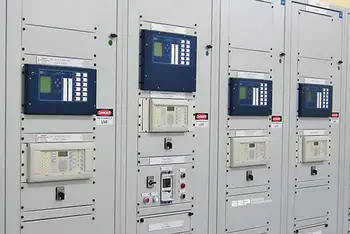
Protective Relay Training - Basic
Our customized live online or in‑person group training can be delivered to your staff at your location.
- Live Online
- 12 hours Instructor-led
- Group Training Available
Regular Price:
$699
Coupon Price:
$599
The northwestern British Columbia community of Kitimat is vowing to thwart a smelter expansion plan that would give Alcan Ltd. the right to sell excess power from its B.C. aluminum operations back to the hydro grid at lucrative prices.
Kitimat mayor Richard Wozney said he is concerned that Alcan is expanding its smelter — at a cost of $1.8-billion (U.S.) — after being given the right to sell power that he said should be used to support industrial development and create jobs in the region.
“This is not the best deal for Kitimat or for British Columbians,” said Mr. Wozney referring to an agreement between Alcan and the B.C. government, which was announced on Monday.
The district of Kitimat attempted to reinforce that view by filing a petition with the British Columbia Supreme Court last month.
The petition seeks a court declaration that power sales are a contravention of a 1950 Industrial Development Act which set the stage of construction of the Kitimat smelter and related hydro electric facilities.
The case centres on the district's view that hydro electric resources available to Alcan in the Nechako River will support a much larger smelter expansion than the one that the Montreal-based aluminum giant is contemplating.
Under the plan that was unveiled this week, Alan is set to increase its aluminum production by 60 per cent to 400,000 tonnes, a level that falls far short of the 550,000 tonne operation that the district is hoping for.
“We question why Alcan is downsizing their plans,” said Mr. Wozney. “The answer can only be that Alcan wants to entrench power sales in the original water-for-jobs agreement they signed with the Province,” he said.
Under the expansion plan, Alcan will have the right to sell sufficient excess power to keep the lights on in 225,000 homes, said B.C. Premier Gordon Campbell.
A spokeswoman for B.C. Hydro said the newly expanded smelter will require 675 megawatts of the power, much less than the 735 megawatts that she said the turbines at the nearby Kemano hydro electric power facilities can generate.
“Because of the low cost of producing electricity at Kemano — about $5 per megawatt hour versus the current long term electricity price of $75 per megawatt hour — Alcan can make very big profit by not producing aluminum and selling the corresponding electricity for export or domestic purposes,” said David Austin, a lawyer who acts for independent power producers. “ It can make money producing aluminum but not nearly as much,” he said.
The district of Kitimat is proceeding with the court case, after the B.C. Court of Appeal ruled in Alcan's favour.
Cynthia Carroll, the President of Alcan's Primary Metals Group, has said the ability to sell power was only a “minor factor” in the company's decision to proceed with the expansion.
Related News
Brazil tax strategy to bring down fuel, electricity prices seen having limited effects
Brazil ICMS Tax Cap limits state VAT on fuels, natural gas, electricity, communications, and transit,…
View more
Hydro One will keep running its U.S. coal plant indefinitely, it tells American regulators
Hydro One-Avista Merger outlines a utility acquisition shaped by Washington regulators, Colstrip coal plant depreciation,…
View more

Affordable, safe' nuclear power is key to reaching Canada's climate goals: federal minister
Canada Nuclear Power Expansion highlights SMRs, clean energy, net-zero targets, and robust regulation to deliver…
View more
California's future with income-based flat-fee utility bills is getting closer
California Income-Based Utility Fees would overhaul electricity bills as CPUC weighs fixed charges tied to…
View more
Ontario will refurbish Pickering B NGS
Pickering nuclear refurbishment will modernize Ontario's Candu reactors at Pickering B, sustaining 2,000 MW of…
View more
Russian Strikes Threaten Ukraine's Power Grid
Ukraine Power Grid Attacks intensify as missile and drone strikes hit substations and power plants,…
View more
Sign Up for Electricity Forum’s Newsletter
Stay informed with our FREE Newsletter — get the latest news, breakthrough technologies, and expert insights, delivered straight to your inbox.
Electricity Today T&D Magazine Subscribe for FREE

Stay informed with the latest T&D policies and technologies.
- Timely insights from industry experts
- Practical solutions T&D engineers
- Free access to every issue
