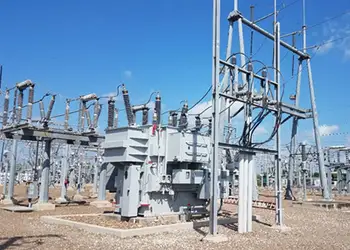
Substation Protection Training - Protect Transformers, Buses and Lines
Our customized live online or in‑person group training can be delivered to your staff at your location.
- Live Online
- 12 hours Instructor-led
- Group Training Available
Regular Price:
$799
Coupon Price:
$699
Despite the almost unbearably hot last several days, experts say electric power is adequate to meet the demand for air conditioning and other needs.
The electrical grid operator for 15 Midwest states, Midwest ISO, said it hit a record 131,434 megawatts demand the afternoon of July 17 as the temperature in Toledo again hovered in the mid-90s. But major utilities in northwest Ohio and southeast Michigan said demand was strong but may not have been a record.
One megawatt is enough to power about 1,000 households, or an area such as suburban Whitehouse.
The higher demand did result in high prices for power on the spot market. An average megawatt-hour the week before July 17 in Ohio cost a power supplier $40 to $50 on the spot market, but that price at one point soared to more than $300, said Mike Wilczek, editor of Megawatt Daily.
None of the local utilities called for customers to conserve energy, which fits with an earlier energy assessment indicating there is more than enough power this summer to supply a nine-state region extending from Indiana east to Delaware.
According to ReliabilityFirst, a new organization that now monitors the nine states, including Ohio, to insure the area's power needs are met, customers in that territory will need about 187,500 megawatts this month. The region is farther east and has more population than the Midwest ISO territory.
The region has power plants to generate 222,395 megawatts, or about 15 percent more than expected demand. That provides a good safety margin, said Jeff Mitchell, an engineering director for ReliabilityFirst.
In 1998, for example, the margin was about 10 percent. When storms shut down power plants and a searing heat wave ate up that margin, it forced rolling blackouts and loss of power by some industrial customers.
"A few years ago we were predicting a pretty tight margin, but that's changed," Mr. Mitchell said.
Mark Durbin, a spokesman for FirstEnergy Corp., a major supplier to northwest Ohio, said none of the utility's plants was out of service.
Related News

Tories 'taking the heart out of Manitoba Hydro' by promoting subsidiaries, scrapping low-cost pledges: NDP
Manitoba Hydro Privatization Debate centers on subsidiaries, Crown corporation governance, clean energy priorities, and electricity…
View more

With New Distributed Energy Rebate, Illinois Could Challenge New York in Utility Innovation
Illinois NextGrid redefines utility, customer, and provider roles with grid modernization, DER valuation, upfront rebates,…
View more

Inside Copenhagen’s race to be the first carbon-neutral city
Hedonistic Sustainability turns Copenhagen's ARC waste-to-energy plant into a public playground, blending ski slope, climbing…
View more

Renewables surpass coal in US energy generation for first time in 130 years
Renewables Overtake Coal in the US, as solar, wind, and hydro expand grid share; EIA…
View more
Integrating AI Data Centers into Canada's Electricity Grids
Canada AI Data Center Grid Integration aligns AI demand with renewable energy, energy storage, and…
View more

Nissan accepting electricity from EVs as payment for parking
Nissan V2G Parking lets EV drivers pay with electricity via bidirectional charging at the Yokohama…
View more
Sign Up for Electricity Forum’s Newsletter
Stay informed with our FREE Newsletter — get the latest news, breakthrough technologies, and expert insights, delivered straight to your inbox.
Electricity Today T&D Magazine Subscribe for FREE

Stay informed with the latest T&D policies and technologies.
- Timely insights from industry experts
- Practical solutions T&D engineers
- Free access to every issue

