Shortage Of Transmission Lines Could Deflate Texas Wind-Power Effort

By


High Voltage Maintenance Training Online

Our customized live online or in‑person group training can be delivered to your staff at your location.

  • Live Online
  • 12 hours Instructor-led
  • Group Training Available
Regular Price:
$599
Coupon Price:
$499
Reserve Your Seat Today
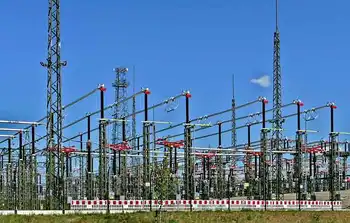
Renewable-energy advocates have warned that a lack of transmission lines could slow the state's boom in wind power.

If costly transmission lines aren't built soon, "it'll be hard to sustain the growth" in wind-generated electricity, energy consultant Mike Sloan warned the American Wind Energy Associa- tion conference at the Austin Convention Center.

Texas has experienced a wind rush since 1999, when a state law mandated that Texas add significant amounts of power from renewable sources by 2009. Also spurring the boom: federal tax credits for wind-generated power that started in 1995.

But Sloan, president of Austin-based Virtus Energy Research Associates, said the lack of transmission capacity is so acute that Texas may not generate enough renewable-based electricity to meet the 1999 state law.

"It threatens . . . possibly even the mandate itself," he said. The law requires Texas to add 2,000 new megawatts of renewable power by 2009.

The problem stems from the state's wind boom of 2001, a year in which Texas installed more wind power -- 912 megawatts -- than had been installed nationwide in any single year previously. One thousand megawatts can power 1 million homes.

Much of that power came in West Texas near McCamey, where hundreds of wind turbines dot the arid, elevated landscape.

McCamey is about 75 miles south of Midland.

But Texas' grid of electricity transmission lines hasn't been able to move all of the wind power generated in West Texas to connection points that serve the most power-hungry regions of the state.

Companies such as Austin-based Cielo Wind Power LLC have had to severely curtail production in the McCamey area in the past year or so, although pending upgrades to existing transmission lines are expected to improve the situation later this year.

A TXU Corp. executive downplayed the urgency of new transmission lines, saying there were suitable sites for wind power in other areas of the state.

John Spicer of Dallas-based TXU said it would be possible to generate 1,380 megawatts of wind-generated electricity in six regions of the state that wouldn't require new transmission lines. The biggest potential site is in Nolan County, west of Abilene.

Spicer said TXU is developing two sites but declined to name them.

Sloan said the most productive sites, however, are on West Texas mesas, where there is little vegetation to impede the strong wind.

The transmission situation doesn't immediately threaten power companies that market wind power, although long-term supply problems could hurt sales.

Austin Energy, the city-owned utility, has nearly 7,000 customers for its "Green Choice" program, which uses electricity generated by wind and methane from landfills. The utility is reviewing bids it received for additional supplies of renewable power and expects to sign a deal in June.

Related News

Can Canada actually produce enough clean electricity to power a net-zero grid by 2050?

Canada Clean Electricity drives a net-zero grid by 2035, scaling renewables like wind, solar, and hydro, with storage, smart grids, interprovincial transmission, and electrification of vehicles, buildings, and industry to cut emissions and costs.


Key Points

Canada Clean Electricity is a shift to a net-zero grid by 2035 using renewables, storage, and smart grids to decarbonize

✅ Doubles non-emitting generation for electrified transport and heating

✅ Expands wind, solar, hydro with storage and smart-grid balancing

✅ Builds interprovincial lines and faster permitting with Indigenous partners


By Merran Smith and Mark Zacharias

Canada is an electricity heavyweight. In addition to being the world’s sixth-largest electricity producer and third-largest electricity exporter in the global electricity market today, Canada can boast an electricity grid that is now 83 per cent emission-free, not to mention residential electricity rates that are the cheapest in the Group of Seven countries.

Indeed, on the face of it, the country’s clean electricity system appears poised for success. With an abundance of sunshine and blustery plains, Alberta and Saskatchewan, the Prairie provinces most often cited for wind and solar, have wind- and solar-power potential that rivals the best on the continent. Meanwhile, British Columbia, Manitoba, Quebec, and Newfoundland and Labrador have long excelled at generating low-cost hydro power.

So it would only be natural to assume that Canada, with this solid head start and its generous geography, is already positioned to provide enough affordable clean electricity to power our much-touted net-zero and economic ambitions.

But the reality is that Canada, like most countries, is not yet prepared for a world increasingly committed to carbon neutrality, in part because demand for solar electricity has lagged, even as overall momentum grows.

The federal government’s forthcoming Clean Electricity Standard – a policy promised by the governing Liberals during the most recent election campaign and restated for an international audience by Prime Minister Justin Trudeau at the United Nations’ COP26 climate summit – would require all electricity in the country to be net zero by 2035 nationwide, setting a new benchmark. But while that’s an encouraging start, it is by no means the end goal. Electrification – that is, hooking up our vehicles, heating systems and industry to a clean electricity grid – will require Canada to produce roughly twice as much non-emitting electricity as it does today in just under three decades.

This massive ramp-up in clean electricity will require significant investment from governments and utilities, along with their co-operation on measures and projects such as interprovincial power lines to build an electric, connected and clean system that can deliver benefits nationwide. It will require energy storage solutions, smart grids to balance supply and demand, and energy-efficient buildings and appliances to cut energy waste.

While Canada has mostly relied on large-scale hydroelectric and nuclear power in the past, newer sources of electricity such as solar, wind, geothermal, and biomass with carbon capture and storage will, in many cases, be the superior option going forward, thanks to the rapidly falling costs of such technology and shorter construction times. And yet Canada added less solar and wind generation in the past five years than all but three G20 countries – Indonesia, Russia and Saudi Arabia, with some experts calling it a solar power laggard in recent years. That will need to change, quickly.

In addition, Canada’s Constitution places electricity policy under provincial jurisdiction, which has produced a patchwork of electricity systems across the country that use different energy sources, regulatory models, and approaches to trade and collaboration. While this model has worked to date, given our low consumer rates and high power reliability, collaborative action and a cohesive vision will be needed – not just for a 100-per-cent clean grid by 2035, but for a net-zero-enabling one by 2050.

Right now, it takes too long to move a clean power project from the proposal stage to operation – and far too long if we hope to attain a clean grid by 2035 and a net-zero-enabling one by 2050. This means that federal, provincial, territorial and Indigenous governments must work with rural communities and industry stakeholders to accelerate the approvals, financing and construction of clean energy projects and provide investor certainty.

In doing so, Canada can set a course to carbon neutrality while driving job creation and economic competitiveness, a transition many analyses deem practical and profitable in the long run. Our closest trading partners and many of the world’s largest companies and investors are demanding cleaner goods. A clean grid underpins clean production, just as it underpins our climate goals.

The International Energy Agency estimates that, for the world to reach net zero by 2050, clean electricity generation worldwide must increase by more than 2.5 times between today and 2050. Countries are already plotting their energy pathways, and there is much to learn from each other.

Consider South Australia. The state currently gets 62 per cent of its electricity from wind and solar and, combined with grid-scale battery storage, has not lost a single hour of electricity in the past five years. South Australia expects 100 per cent of its electricity to come from renewable sources before 2030. An added bonus given today’s high energy prices: Annual household electricity costs have declined there by 303 Australian dollars ($276) since 2018.

The transition to clean energy is not about sacrificing our way of life – it’s about improving it. But we’ll need the power to make it happen. That work needs to start now.

Merran Smith is the executive director of Clean Energy Canada, a program at the Morris J. Wosk Centre for Dialogue at Simon Fraser University in Vancouver. Mark Zacharias is a special adviser at Clean Energy Canada and visiting professor at the Simon Fraser University School of Public Policy.


Related News

View more

Gulf Power to Provide One-Time Bill Decrease of 40%

Gulf Power 40% One-Time Bill Decrease approved by the Florida Public Service Commission delivers a May fuel credit and COVID-19 relief, cutting residential and business costs across rate classes while supporting budgeting and energy savings.


Key Points

PSC-approved fuel credit cutting May electric bills about 40% for homes and 40-55% for businesses as COVID-19 relief.

✅ One-time May fuel credit on customer bills

✅ Residential cut ~40%; business savings 40-55% by rate class

✅ Online tools show daily usage and projected bill


Gulf Power announced that the Florida Public Service Commission unanimously approved its request to issue a one-time decrease of approximately 40% for the typical residential customer bill beginning May 1, similar to recent Georgia Power bill reductions seen elsewhere. Business customers will also see a significant one-time decrease of approximately 40-55% in May, depending on usage and rate class.

"We are pleased that the Florida Public Service Commission has approved our request to deliver this savings to our customers when they need it most. We felt that this was the right thing to do, especially during times like these," said Gulf Power President Marlene Santos. "Our customers and communities now more than ever count on the reliable and affordable energy we deliver, and we are pleased that May bills will reflect this additional, significant savings for our customers."

In Florida, fuel savings are typically refunded to customers over the remainder of the year to provide level, predictable bills. However, given the emergent and significant financial challenges facing many customers due to COVID-19, Gulf Power instead sought approval to give customers the total annual savings in their May bill, similar to a lump-sum electricity credit approach, which will be reflected as a line-item fuel credit on their May statement.

New tools to help save energy and money

Many customers are working from home and, in general, staying at home more. More time and extra people in the home will likely increase power usage, which could lead to higher monthly bills.

Gulf Power recently added new tools to our customers' online account portal to help them better understand and manage their energy usage, including their monthly projected bill amount and a breakdown of daily energy usage, which is available for most residential customers*. Customers can now see their previous day's energy usage using their online account portal to help them more easily understand how their previous day's activities impacted energy usage, allowing them to quickly make adjustments to keep bills low. The new projected bill feature is a valuable tool to assist customers in budgeting for their next month's energy bill.

Additional energy-saving tips that can be implemented with no additional cost or equipment are also available. As always, Gulf Power's free online Energy Checkup tool will provide customers with a customized report based on their home's actual energy use.

Helping customers pay their bills

Gulf Power has a long history of working with its customers during difficult times, including periods of pandemic-related energy insecurity, and will continue to do so. Gulf Power encourages customers that are having difficulty paying their energy bill to visit GulfPower.com/help to view available resources that can provide assistance to qualifying customers.

Customers are encouraged to pay their electric bill balance each month to avoid building up a large balance, which they will continue to bear responsibility for. Gulf Power will work with the customer's personal situation and assist with a solution, similar to how utilities in Texas have waived fees during this period, to help customers fulfill their personal responsibility for their Gulf Power balance.

Those who can afford or want to help others who may need assistance with their energy bill can make a donation to Project SHARE in your online customer portal. Project SHARE donations are added to a customer's monthly bill and all contributions are distributed to local offices of The Salvation Army. Customers in need of utility bill assistance can apply for Project SHARE assistance at The Salvation Army office in their county.

Supporting our communities

The Gulf Power Foundation gave $500,000 to United Way organizations across Northwest Florida to assist those most vulnerable during this time, which has helped support food, housing and other essential needs throughout the region. In addition, the Foundation recently made a $10,000 donation to Feeding the Gulf Coast and launched an employee donation campaign to provide food for our neighbors in need, while Entergy emergency relief fund offers a similar example of industry support. In total, Gulf Power and its fellow NextEra Energy companies and employees have so far committed more than $4 million in COVID-19 emergency assistance funds that will be distributed directly to those in need and to partner organizations working on the frontlines of the crisis to provide critical support to the most vulnerable members of the community.

Lower fuel costs are enabling Gulf Power to issue a one-time decrease of approximately 40% for the typical residential customer bill in May, even as FPL faces a hurricane surcharge controversy in the state
- a significant savings amid the ongoing COVID-19 pandemic

Gulf Power will deliver savings to customers through a one-time bill decrease, rather than the standard practice of spreading out savings over the remainder of the year, even as FPL proposes multi-year rate hikes elsewhere


Related News

View more

Improve US national security, step away from fossil fuels

American Green Energy Independence accelerates electrification and renewable energy, leveraging solar, wind, and EVs to boost energy security, cut emissions, create jobs, and reduce reliance on volatile oil and natural gas markets influenced by geopolitics.


Key Points

American Green Energy Independence is a strategy to electrify, expand renewables, and enhance energy security.

✅ Electrifies vehicles, appliances, and infrastructure

✅ Expands solar, wind, and storage to stabilize grids

✅ Cuts oil dependence, strengthens energy security and jobs


As Putin's heavy hand uses Russia's power over oil and natural gas as a weapon against Europe, which is facing an energy nightmare across its markets, and the people of Ukraine, it's impossible not to wonder how we can mitigate the damages he's causing. Simultaneously, it's a devastating reminder of the freedom we so often take for granted and a warning to increase our energy independence as a nation. There are many ways we can, but one of the best is to follow the lead of the European Union and quicken our transition to green and renewable energies.

We've known it for a long time: our reliance on fossil fuels is a national security risk. Volatile prices coupled with our extreme demand mean that concerns over fossil fuel access have driven foreign policy decisions. We've seen it happen countless times — most notably during the wars in Iraq and Afghanistan — and it's played out again in Ukraine, which has leaned on imports to keep the lights on during the crisis. Concerned by Russia's power over the oil and natural gas market, the US and Europe were quite reluctant to impose the harshest, most recent sanctions because doing so will hurt their citizens' pocketbooks.

As homeowners, we know how much decisions like these can hurt, especially with gas prices being historically high even as an energy crisis isn't spurring a green shift for many consumers. However, the solution to this problem isn't to drill more, as some well-funded oil and gas interest groups have claimed. Doing so likely won't even provide a short-term solution to the problem as it takes six months to a year at minimum to build a new well with all its associated infrastructure.

The best long-term solution is to declare our independence from the global oil market amid a global energy war that is driving price hikes and invest in American-made clean energy. We need to electrify our vehicles, appliances, and infrastructure, and make America fully energy independent. This will save families thousands of dollars a year, make our country more self-sufficient, and provide hundreds of thousands of quality jobs here in the Midwest.

Already, over 600,000 Midwesterners are employed in clean-energy professions, and they make 25 percent more than the national median wage. Nationally, clean energy is the biggest job creator in our country's energy sector, employing almost three times as many workers as the fossil fuel industry.

As we employ our own citizens, we will defund Putin's Russia, which has long been funded by his powerful oil and gas industry. Instead of diversifying his economy during the oil boom of the 2010s, Putin doubled down on petroleum. We should exploit his weakness by leading a global movement to abandon the very resource that funds his warmongering. Doing so will further destabilize his economy and protect the citizens of Ukraine, especially as they prepare for winter amid energy challenges today.

We can start doing this as everyday consumers by seeking electric options like stoves, cars, or other appliances. Congress should help Americans afford these changes by providing tax credits for everyday Americans and innovators in electric vehicle and green energy industries. Doing so will spur innovation in the industry, further reducing the cost to consumers. We should also ensure that our semiconductors, solar panels, wind turbines, and other technology needed for a green future are manufactured and assembled in America. This will ensure that our energy industry is safe from price or supply shocks and reduce brownout risks linked to disruptions caused by an international crisis like the invasion of Ukraine.

In many ways, our next steps as a country can define world history for generations to come. Will we continue our reliance on oil and its tacit support of Putin's economy? Or will we intensify our shift to green energies and make our country more self-sufficient and secure? The global spotlight is on us once again to lead. We hope our country will honor the lives of its veterans and the soldiers fighting in Ukraine by strengthening energy security support and transitioning towards green energy.


Related News

View more

Alberta ratepayers on the hook for unpaid gas and electricity bills from utility deferral program

Alberta Utility Rate Rider will add a modest fee to electricity bills and natural gas charges as the AUC recovers outstanding debt from the COVID-19 deferral program via AESO and the Balancing Pool.


Key Points

A temporary surcharge on Alberta power and gas bills to recover unpaid COVID-19 deferral debt, administered by the AUC.

✅ Applies per kWh and per GJ based on consumption

✅ Recovers unpaid balances from 2020-21 bill deferrals

✅ Collected via AESO and the Balancing Pool under AUC oversight


The province says Alberta ratepayers should expect to see an extra fee on their utility bills in the coming months.

That fee is meant to recover the outstanding debt owed to gas and electricity providers resulting from last year's three-month utility deferral program offered to struggling Albertans during the pandemic.

The provincial government announced the utility deferral program in March 2020 then formalized it with legislation, alongside a consumer price cap on power bills that shaped later policy decisions.

The program allowed residential, farm and small commercial customers who used less than 250,000 kilowatt hours of electricity per year — or consumed less than 2,500 gigajoules per year — to postpone their bills amid the COVID-19 pandemic.

According to the province, 350,000 customers, or approximately 13 per cent of the natural gas and electricity consumer base, took advantage of the program.

Customers had a year to repay providers what they owed. That deadline ended June 18, 2021.

The Alberta Utilities Commission (AUC), which regulates the utilities sector and natural gas and electricity markets and oversees a rate of last resort framework, said the vast majority of consumers have squared up.

But for those who didn't, provincial legislation dictates that Alberta ratepayers must cover any unpaid debt. The legislation exempts Medicine Hat utility customers for electricity and gas co-operative customers for gas.

"When the program was announced, it was very clear that it was a deferral program and that the monies would need to be paid back," said Geoff Scotton, a spokesperson with the Alberta Utilities Commission.

"Now we're in the situation where the providers, in good faith, who enabled those payment deferrals, need to be made whole. That's really the goal here."

Amount to be determined
Margeaux Maron, a spokesperson for Associate Minister of Natural Gas and Electricity Dale Nally, said based on early estimates, $13 to $16 million of $92 million in deferred payments remain outstanding.

As a result, the province expects the average Albertan will end up paying, unlike jurisdictions offering a lump-sum credit, a fraction of a dollar extra per monthly gas and electricity bill over a handful of months.

Scotton said at this point, there are too many unknown factors to know the exact size of the rate rider. However, he said he expects it to be modest.

Scotton said affected parties first have until the end of this week to notify the AUC exactly how much they are still owed.

Those parties include the Alberta Electric System Operator and the Balancing Pool, who essentially acted as bankers with respect to the distribution and transmission of the utilities to customers who deferred their payments.

Regulated service providers may also seek reimbursement on administrative and carrying costs, even as issues like a BC Hydro fund surplus spark debate elsewhere.

Then, Scotton said, once the outstanding amounts are known, the AUC will hold a public proceeding, similar to a Nova Scotia rate case, to determine the amount and the duration of the rate rider to be applied to each natural gas and electricity bill.

The amount will be based on consumption: per kilowatt hour for electricity and per gigajoule for natural gas.

That means larger businesses will end up paying more than the average Albertan.

Scotton said the AUC will expedite the hearing process and it expects to have a decision by the end of the summer.

Rate rider a 'surprise'
Joel MacDonald with Energyrates.ca — an organization which compares energy rates across the country — said it's not the amount of the rate rider that bothers him, but the fact that the repayment process wasn't made clear at the onset of the program.

"It came to us as a bit of a surprise," MacDonald said.

He said what was sold as a deferral program seems more like an electricity rebate program, or an "ability to pay" program.

"As opposed to the retailers looking into collection methods, anything that wasn't paid is basically just being forced upon all Alberta consumers," MacDonald said.

The expectation set out in the deferral legislation and regulations state utility providers such as Enmax and Epcor are expected to use reasonable efforts to try to collect the unpaid balances. It must then detail those reasonable efforts to the AUC.

A spokesperson for Enmax said it first works with its customers to find manageable payment arrangements and connects them with support services if they are unable to pay.

Then, if payment can't be arranged, it said it will work with a collection agency, which may even result in disconnection of service.

The spokesperson said only after all efforts have failed would Enmax seek reimbursement through this program.

Use tax revenues?
MacDonald also questioned why a government program isn't being paid for through general tax revenues.

He compared the utility deferral program to a mortgage subsidy program.

"Imagine that [Canada Mortgage And Housing Corporation] said, 'Hey, we had to give mortgage deferrals and some of these people never paid back their deferrals, so we're going to add an extra $300 to everyone's mortgage,'" he said.

"You'd expect that to come off of some sort of general taxation — not being assigned to other people's mortgages, right?"

In response, Maron said due to the current fiscal challenges facing the government — and the expected minimal costs to consumers, and even as a consumer price cap on electricity remains in place — it was determined that a rate rider would be an appropriate mechanism to repay bad debt associated with the program.

Scotton said rate riders aren't unusual — they're used to fine-tune rates for a set period of time.

He said under normal circumstances, regulated service providers can apply to the AUC to impose a rate rider to recover unexpected costs. And in some instances, they can provide a credit.

But in this situation, he said the debt is aggregated and, in turn, being collected more broadly.


Related News

View more

Australia's energy transition stalled by stubbornly high demand

Australia Renewable Energy Transition: solar capacity growth, net-zero goals, rising electricity demand, coal reliance, EV adoption, grid decarbonization, heat waves, air conditioning loads, and policy incentives shaping clean power, efficiency, and emissions reduction.


Key Points

Australia targets net-zero by 2050 by scaling renewables, curbing demand, and phasing down coal and gas.

✅ Solar capacity up 200% since 2018, yet coal remains dominant.

✅ Transport leads energy use; EV uptake lags global average.

✅ Heat waves boost AC load, stressing grids and emissions goals.


A more than 200% increase in installed solar power generation capacity since 2018 helped Australia rank sixth globally in terms of solar capacity last year and emerge as one of the world's fastest-growing major renewable energy producers, aligning with forecasts that renewables to surpass coal in global power generation by 2025.

However, to realise its goal of becoming a net-zero carbon emitter by 2050, Australia must reverse the trajectory of its energy use, which remains on a rising path, even as Asia set to use half of electricity underscores regional demand growth, in contrast with several peers that have curbed energy use in recent years.

Australia's total electricity consumption has grown nearly 8% over the past decade, amid a global power demand surge that has exceeded pre-pandemic levels, compared with contractions over the same period of more than 7% in France, Germany and Japan, and a 14% drop in the United Kingdom, data from Ember shows.

Sustained growth in Australia's electricity demand has in turn meant that power producers must continue to heavily rely on coal for electricity generation on top of recent additions in supply of renewable energy sources, with low-emissions generation growth expected to cover most new demand.

Australia has sharply boosted clean energy capacity in recent years, but remains heavily reliant on coal & natural gas for electricity generation
To accomplish emissions reduction targets on time, Australia's energy use must decline while clean energy supplies climb further, as that would give power producers the scope to shut high-polluting fossil-powered energy generation systems ahead of the 2050 deadline.

DEMAND DRIVERS
Reducing overall electricity and energy use is a major challenge in all countries, where China's electricity appetite highlights shifting consumption patterns, but will be especially tough in Australia which is a relative laggard in terms of the electrification of transport systems and is prone to sustained heat waves that trigger heavy use of air conditioners.

The transport sector uses more energy than any other part of the Australian economy, including industry, and accounted for roughly 40% of total final energy use as of 2020, according to the International Energy Agency (IEA.)

Transport energy demand has also expanded more quickly than other sectors, growing by over 5% from 2010 to 2020 compared to industry's 1.3% growth over the same period.

Transport is Australia's main energy use sector, and oil products are the main source of energy type
To reduce energy use, and cut the country's fuel import bill which topped AUD $65 billion in 2022 alone, according to the Australian Bureau of Statistics, the Australian government is keen to electrify car fleets and is offering large incentives for electric vehicle purchases.

Even so, electric vehicles accounted for only 5.1% of total Australian car sales in 2022, according to the International Energy Agency (IEA).

That compares to 13% in New Zealand, 21% in the European Union, and a global average of 14%.

More incentives for EV purchases are expected, but any rapid adoption of EVs would only serve to increase overall electricity demand, and with surging electricity demand already straining power systems worldwide, place further pressure on power producers to increase electricity supplies.

Heating and cooling for homes and businesses is another major energy demand driver in Australia, and accounts for roughly 40% of total electricity use in the country.

Australia is exposed to harsh weather conditions, especially heat waves which are expected to increase in frequency, intensity and duration over the coming decades due to climate change, according to the New South Wales government.

To cope, Australians are expected to resort to increased use of air conditioners during the hottest times of the year, and with reduced power reserves flagged by the market operator, adding yet more strain to electricity systems.


Related News

View more

Neo-Nazi, woman accused of plotting 'hate-fueled attacks' on power stations, federal complaint says

Baltimore Substation Attack Plot highlights alleged neo-Nazi plans targeting electrical substations and the power grid, as FBI and DHS warn of domestic extremism threats to critical infrastructure, with arrests in Maryland disrupting potential sniper attacks.


Key Points

An alleged extremist plot to disable Baltimore's power grid by shooting substations, thwarted by federal arrests.

✅ Two suspects charged in Maryland conspiracy

✅ Targets included five substations around Baltimore

✅ FBI cites domestic extremism threat to infrastructure


A neo-Nazi in Florida and a Maryland woman conspired to attack several electrical substations in the Baltimore area, federal officials say.

Sarah Beth Clendaniel and Brandon Clint Russell were arrested and charged in a conspiracy to disable the power grid by shooting out substations via "sniper attacks," according to a criminal complaint from the U.S. Attorney's Office for the District of Maryland.

Clendaniel allegedly said she wanted to "completely destroy this whole city" and was planning to target five substations situated in a "ring" around Baltimore, the complaint said. Russell is part of a violent extremist group that has cells in multiple states, and he previously planned to attack critical infrastructure in Florida, the complaint said.

"This planned attack threatened lives and would have left thousands of Marylanders in the cold and dark," Maryland U.S. Attorney Erek Barron said in a press release. "We are united and committed to using every legal means necessary to disrupt violence, including hate-fueled attacks."

The news comes as concerns grow about an increase in targeted substation attacks on U.S. substations tied to domestic extremism.


What to know about substation attacks

Federal data shows vandalism and suspicious activities at electrical facilities soared nationwide last year, and cyber actors have accessed utilities' control rooms as well.

At the end of the year, attacks or potential attacks were reported on more than a dozen substations and one power plant across five states, and Symantec documented Russia-linked Dragonfly activity targeting the energy sector earlier. Several involved firearms.

In December, targeted attacks on substations in North Carolina left tens of thousands without power amid freezing temperatures, spurring renewed focus on protecting the U.S. power grid among officials. The FBI is investigating.

Vandalism at facilities in Washington left more than 21,000 without electricity on Christmas Day, even as hackers breached power-plant systems in other states. Two men were arrested, and one told police he planned to disrupt power to commit a burglary.

The Department of Homeland Security last year said domestic extremists had been developing "credible, specific plans" since at least 2020 and would continue to "encourage physical attacks against electrical infrastructure," and the U.S. government has condemned Russia for power grid hacking as well.

Last February, three neo-Nazis pleaded guilty to federal crimes related to a scheme to attack the grid with rifles, with each targeting a substation in a different region of the U.S., even as reports that Russians hacked into US electric utilities drew widespread attention.


Related News

View more

Sign Up for Electricity Forum’s Newsletter

Stay informed with our FREE Newsletter — get the latest news, breakthrough technologies, and expert insights, delivered straight to your inbox.

Electricity Today T&D Magazine Subscribe for FREE

Stay informed with the latest T&D policies and technologies.
  • Timely insights from industry experts
  • Practical solutions T&D engineers
  • Free access to every issue

Download the 2025 Electrical Training Catalog

Explore 50+ live, expert-led electrical training courses –

  • Interactive
  • Flexible
  • CEU-cerified