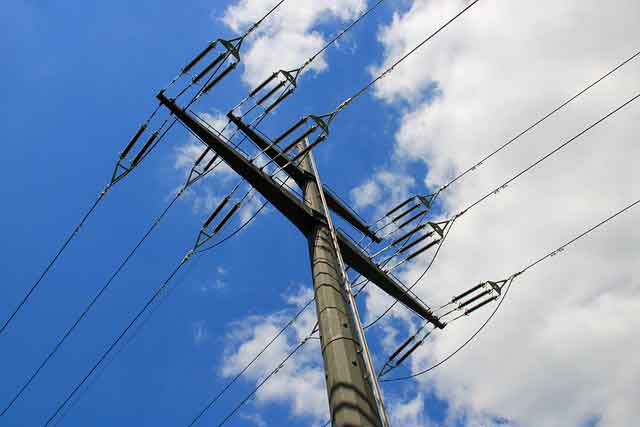
Canada to spend $2M on study to improve Atlantic region's electricity grid


meeting in halifax

Protective Relay Training - Basic

Our customized live online or in‑person group training can be delivered to your staff at your location.

  • Live Online
  • 12 hours Instructor-led
  • Group Training Available
Regular Price:
$699
Coupon Price:
$599
Reserve Your Seat Today

Atlantic Clean Power Superhighway outlines a federally backed transmission grid upgrade for Atlantic Canada, adding 2,000 MW of renewable energy via interprovincial ties, improved hydro access from Quebec and Newfoundland and Labrador, with utility-regulator funding.


Key Points

A federal-provincial plan upgrading Atlantic Canada's grid to deliver 2,000 MW of renewables via interprovincial links.

✅ $2M technical review to rank priority transmission projects

✅ Target: add 2,000 MW renewable power to Atlantic grid

✅ Cost-sharing by utilities, regulators, and federal-provincial funding


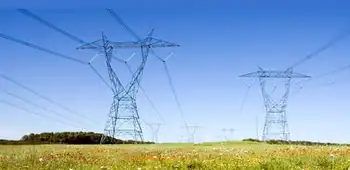
The federal government will spend $2 million on an engineering study to improve the Atlantic region's electricity grid.

The study was announced Friday at a news conference held by 10 federal and provincial politicians at a meeting of the Atlantic Growth Strategy in Halifax, which includes ongoing regulatory reform efforts for cleaner power in Atlantic Canada.

The technical review will identify the most important transmission projects including inter-provincial ties needed to move electricity across the region.

Nova Scotia Premier Stephen McNeil said the results are expected in July.

Provinces will apply to the federal government for federal funding to build the infrastructure. Utilities in each province will be expected to pay some portion of the cost by applying to respective regulators, but what share falls to ratepayers is not known.

​Federal Intergovernmental Affairs Minister Dominic LeBlanc characterized the grid improvements as something that will cost hundreds of millions of dollars.

He said the study was the first step toward "a clean power superhighway across the region.

"We have a historic opportunity to quickly get to work on upgrading ultimately a whole series of transmission links of inter-provincial ties. That's something that the government of Canada would be anxious to work with in terms of collaborating with the provinces on getting that right."

Premier McNeil referred specifically to improving hydro access from Quebec and Newfoundland and Labrador.

For context, a massive cross-border hydropower line to New York is planned, illustrating the scale of projects under consideration.


Goal of 2,000 megawatts

McNeil said the goal was to bring an additional 2,000 megawatts of renewable electricity into the region.

"I can't stress to you enough how critical this will be for the future economic success and stability of Atlantic Canada, especially as Atlantic grids face intensifying storms," he said.

Federal Immigration Minister Ahmed Hussen also announced a pilot project to attract immigrant workers will be extended by two years to the end of 2021.

International graduate students will be given 24 months to apply under the program — a one-year increase.


Related News

Related News
Irving Oil invests in electrolyzer to produce hydrogen from water

Irving Oil hydrogen electrolyzer expands green hydrogen capacity at the Saint John refinery with Plug Power technology, cutting carbon emissions, enabling clean fuel for buses, and supporting Atlantic Canada decarbonization and renewable grid integration.


Key Points

A 5 MW Plug Power unit at Irving's Saint John refinery producing low-carbon hydrogen via electrolysis.

✅ Produces 2 tonnes/day, enough to fuel about 60 hydrogen buses

✅ Uses grid power; targets cleaner supply via renewables and nuclear

✅ First Canadian refinery investing in electrolyzer technology


Irving Oil is expanding hydrogen capacity at its Saint John, N.B., refinery in a bid to lower carbon emissions and offer clean energy to customers.

The family-owned company said Tuesday it has a deal with New York-based Plug Power Inc. to buy a five-megawatt hydrogen electrolyzer that will produce two tonnes of hydrogen a day — equivalent to fuelling 60 buses with hydrogen — using electricity from the local grid and drawing on examples such as reduced electricity rates proposed in Ontario to grow the hydrogen economy.

Hydrogen is an important part of the refining process as it's used to lower the sulphur content of petroleum products like diesel fuel, but most refineries produce hydrogen using natural gas, which creates carbon dioxide emissions and raises questions explored in hydrogen's future for power companies in the energy sector.

"Investing in a hydrogen electrolyzer allows us to produce hydrogen in a very different way," Irving director of energy transition Andy Carson said in an interview.

"Instead of using natural gas, we're actually using water molecules and electricity through the electrolysis process to produce ... a clean hydrogen."

Irving plans to continue to work with others in the province to decarbonize the grid amid pressures like Ontario's push into energy storage as electricity supply tightens and ensure the electricity being used to power its hydrogen electrolyzer is as clean as possible, he said.

N.B. Power's electrical system includes 14 generating stations powered by hydro, coal, oil, wind, nuclear and diesel. The utility has committed to increasing its renewable energy sources and exploring innovations such as EV-to-grid integration piloted in Nova Scotia.

Irving said it will be the first oil refinery in Canada to invest in electrolyzer technology, as Ontario's Hydrogen Innovation Fund supports broader deployment nationwide.

The company said its goal is to offer hydrogen fuelling infrastructure in Atlantic Canada, complementing N.L.'s fast-charging network for EV drivers in the region.

"This kind of investment allows us to not just move to a cleaner form of hydrogen in the refinery. It also allows us to store and make hydrogen available to the marketplace," Carson said.

Federal watchdog warns Canada's 2030 emissions target may not be achievable
The hydrogen technology will help Irving "unlock pent up demand for hydrogen as an energy transition fuel for logistics organizations," he said.

Alberta also aims to expand its hydrogen production over the coming years, alongside British Columbia's $900 million hydrogen project moving ahead on the West Coast. 

Those plans lean on the development of carbon capture and storage (CCS) technology that aims to trap the emissions created when producing hydrogen from natural gas.


Related News

View more

PG&E keeps nearly 60,000 Northern California customers in the dark to reduce wildfire risk

PG&E Public Safety Power Shutoff reduces wildfire risk during extreme winds, triggering de-energization across the North Bay and Sierra Foothills under red flag warnings, with safety inspections and staged restoration to improve grid resilience.


Key Points

A utility protocol to de-energize lines during extreme fire weather, reducing ignition risks and improving grid safety.

✅ Triggered by red flag warnings, humidity, wind, terrain

✅ Temporary de-energization of transmission and distribution lines

✅ Inspections precede phased restoration to minimize wildfire risk


PG&E purposefully shut off electricity to nearly 60,000 Northern California customers Sunday night, aiming to mitigate wildfire risks from power lines during extreme winds.

Pacific Gas and Electric planned to restore power to 70 percent of affected customers in the North Bay and Sierra Foothills late Monday night. As crews inspect lines for safety by helicopter, vehicles and on foot, the remainder will have power sometime Tuesday.

While it was the first time the company shut off power for public safety, PG&E announced its criteria and procedures for such an event in June, said spokesperson Paul Doherty. After wildfires devastated Northern California's wine country last October, he added, PG&E developed its community wildfire safety program division to make power grids and communities more resilient, and prepares for winter storm season through enhanced local response. 

Two sagging PG&E power lines caused one of those wildfires during heavy winds, killing four people and injuring a firefighter, the California Department of Forestry and Fire Protection determined earlier this month. Trees or tree branches hitting PG&E power lines started another four wildfires in October 2017. Altogether, the power company has been blamed for igniting 13 wildfires last year.

"We're adapting our electric system our operating practices to improve safety and reliability," Doherty said of the safety program. "That's really the bottom line for us."

Turning off power to so many customers was a "last resort given the extreme fire danger conditions these communities are experiencing," Pat Hogan, senior vice president of electric operations, said in a statement. Conditions that led the company to shut off power included the National Weather Service's red flag fire warnings, humidity levels, sustained winds, temperature, dry fuel and local terrain, Doherty said, amid possible rolling blackouts during grid strain.

The company de-energized more than 78 miles of transmission lines and more than 2,150 miles of distribution power lines Sunday night. Many schools in the area were closed Monday because of the planned power outage, highlighting unequal access to electricity across communities.

Late Saturday and early Sunday, PG&E warned 97,000 customers in 12 counties that the shut off might go into effect. Through automated calls, texts and emails, the company encouraged customers to have drinking water, canned food, flashlights, prescriptions and baby supplies on hand.

Power was also turned off in Southern California on Monday.

San Diego Gas & Electric turned off service to about 360 customers near Cleveland National Forest, where multiple fires have scorched large swaths of land in recent years.

SDG&E has pre-emptively shut off power to customers in the past, most recently in December when 14,000 customers went without power.

Southern California Edison, the primary electric provider across Southern California — including Los Angeles — has a similar power shutoff program. As of Monday night, SCE had yet to turn off power in any of its service areas, a spokesperson told USA TODAY.


Related News

View more

Alberta set to retire coal power by 2023, ahead of 2030 provincial deadline

Alberta coal phaseout accelerates as utilities convert to natural gas, cutting emissions under TIER regulations and deploying hydrogen-ready, carbon capture capable plants, alongside new solar projects in a competitive, deregulated electricity market.


Key Points

A provincewide shift from coal to natural gas and renewables, cutting power emissions years ahead of the 2030 target.

✅ Capital Power, TransAlta converting coal units to gas

✅ TIER pricing drives efficiency, carbon capture readiness

✅ Hydrogen-ready turbines, solar projects boost renewables


Alberta is set to meet its goal to eliminate coal-fired electricity production years earlier than its 2030 target, amid a broader shift to cleaner energy in the province, thanks to recently announced utility conversion projects.

Capital Power Corp.’s plan to spend nearly $1 billion to switch two coal-fired power units west of Edmonton to natural gas, and stop using coal entirely by 2023, was welcomed by both the province and the Pembina Institute environmental think-tank.

In 2014, 55 per cent of Alberta’s electricity was produced from 18 coal-fired generators. The Alberta government announced in 2015 it would eliminate emissions from coal-fired electricity generation by 2030.

Dale Nally, associate minister of Natural Gas and Electricity, said Friday that decisions by Capital Power and other utilities to abandon coal will be good for the environment and demonstrates investor confidence in Alberta’s deregulated electricity market, where the power price cap has come under scrutiny.

He credited the government’s Technology Innovation and Emissions Reduction (TIER) regulations, which put a price on industrial greenhouse gas emissions, as a key factor in motivating the conversions.

“Capital Power’s transition to gas is a great example of how private industry is responding effectively to TIER, as it transitions these facilities to become carbon capture and hydrogen ready, which will drive future emissions reductions,” Nally said in an email.

Capital Power said direct carbon dioxide emissions at its Genesee power facility near Edmonton will be about 3.4 million tonnes per year lower than 2019 emission levels when the project is complete.

It says the natural gas combined cycle units it’s installing will be the most efficient in Canada, adding they will be capable of running on 30 per cent hydrogen initially, with the option to run on 95 per cent hydrogen in future with minor investments.

In November, Calgary-based TransAlta Corp. said it will end operations at its Highvale thermal coal mine west of Edmonton by the end of 2021 as it switches to natural gas at all of its operated coal-fired plants in Canada four years earlier than previously planned.

The Highvale surface coal mine is the largest in Canada, and has been in operation on the south shore of Wabamun Lake in Parkland County since 1970.

The moves by the two utilities and rival Atco Ltd., which announced three years ago it would convert to gas at all of its plants by this year, mean significant emissions reduction and better health for Albertans, said Binnu Jeyakumar, director of clean energy for Pembina.

“Alberta’s early coal phaseout is also a great lesson in good policy-making done in collaboration with industry and civil society,” she said.

“As we continue with this transformation of our electricity sector, it is paramount that efforts to support impacted workers and communities are undertaken.”

She added the growing cost-competitiveness of renewable energy, such as wind power, makes coal plant retirements possible, applauding Capital Power’s plans to increase its investments in solar power.

In Ontario, clean power policy remains a focus as the province evaluates its energy mix.

The company announced it would go ahead with its 75-megawatt Enchant Solar power project in southern Alberta, investing between $90 million and $100 million, and that it has signed a 25-year power purchase agreement with a Canadian company for its 40.5-MW Strathmore Solar project now under construction east of Calgary.


Related News

View more

N.L. lags behind Canada in energy efficiency, but there's a silver lining to the stats

Newfoundland and Labrador Energy Efficiency faces low rankings yet signs of progress: heat pumps, EV charging networks, stricter building codes, electrification to tap Muskrat Falls power and cut greenhouse gas emissions and energy poverty.


Key Points

Policies and programs improving N.L.'s energy use via electrification, EVs, heat pumps, and stronger building codes.

✅ Ranks last provincially but showing policy momentum

✅ Heat pump grants and EV charging network underway

✅ Stronger building codes and electrification can cut emissions


Ah, another day, another depressing study that places Newfoundland and Labrador as lagging behind the rest of Canada.

We've been in this place before — least-fit kids, lowest birthrate — and now we can add a new dubious distinction to the pile: a ranking of the provinces according to energy efficiency placed Newfoundland and Labrador last.

Efficiency Canada released its first-ever provincial scorecard Nov. 20, comparing energy efficiency policies among the provinces. With energy efficiency a key part of reducing greenhouse gas emissions, Newfoundland and Labrador sat in 10th place, noted for its lack of policies on everything from promoting EV uptake in Atlantic Canada to improving efficient construction codes.

But before you click away to a happier story (about, say, a feline Instagram superstar) one of the scorecard's authors says there's a silver lining to the statistics.

"It's not that Newfoundland and Labrador is doing anything badly; it's just that it could do more," said Brendan Haley, the policy director at Efficiency Canada, a new think tank based at Carleton University.

"There's just a general lack of attention to implementing efficiency policies relative to other jurisdictions, including New Brunswick's EV rebate programs on transportation."

Looking at the scorecard and comparing N.L. with British Columbia, which snagged the No. 1 spot, isn't a great look. B.C. scored 56 points out of a possible 100, while N.L. got just 15.

Haley pointed out that B.C.'s provincial government is charting progress toward 2032, when all new builds will have to be net-zero energy ready; that is, buildings that can produce as much clean energy as they consume.  

While it might not be feasible to emulate that to a T here, Haley said the province could be mandating better energy efficiency standards for new, large building projects, and, at the same time, promote electrification of such projects as a way to soak up some of that surplus Muskrat Falls electricity.

Staring down Muskrat's 'extraordinary' pressure on N.L. electricity rates

It's impossible to talk about energy efficiency in N.L. without considering that dam dilemma. As Muskrat Falls comes online, likely at the end of 2020, customer power rates are set to rise in order to pay for it, and the province is still trying to figure out the headache that is rate mitigation.

"There is a strategic choice to be made in Newfoundland and Labrador," Haley told CBC Radio's On The Go.

While having more customers using Muskrat Falls power can help with rate mitigation, including through initiatives like N.L.'s EV push to grow demand, Haley noted simply using its excess electricity for the sake of it isn't a great goal.

"That should not be an excuse, I think, to almost have a policy of wasting energy on purpose, or saying that we don't need programs that help save electricity anymore," he said.

Energy poverty
Lots of N.L. homeowners are currently feeling a chill from the spectre of rising electricity rates.

Of course, that draft could be coming from a poorly insulated and heated house, as Efficiency Canada noted 38 per cent of all households in N.L. live in what it calls "energy poverty," where they spend more than six per cent of their after-tax income on energy — that's the second highest such rate in the country.

That poverty speaks for a need for N.L.to boost efficiency incentives for vulnerable populations, although Haley noted the government is making progress. The province recently expanded its home energy savings program, doubling in the last budget year to $2 million, which gives grants to low income households for upgrades like insulation.

Can you guess what products are selling like hotcakes as Muskrat Falls looms? Heat pumps

And since Efficiency Canada compiled its scorecard, the province has introduced a $1-million heat pump program, in which 1,000 homeowners could receive $1,000 toward the purchase of a heat pump. 

That program began accepting applications Oct. 15, and one month in, has had 682 people apply, according to the Department of Municipal Affairs and Environment, along with thousands of inquiries.

Heat pump popularity
Even without that program, heat pump sales have skyrocketed in the province since 2017. That popularity doesn't come as much of a surprise to Darren Brake, the president of KSAB Construction in Corner Brook.

With more than two decades in the home building business, he's been seeing consumer demand for home energy efficiency rise to the point where a year ago, his company transitioned into only building third-party certified energy efficient homes.

"Everybody's really concerned about the escalating power costs and energy costs, I assume because of Muskrat Falls," he said.

"It's evolving now, as we speak. Everybody is all about that monthly payment."

Brake uses spray foam installation in every house he builds, to seal up any potential leaks. Without sealing the building envelope, he says, a heat pump is far less efficient. (Lindsay Bird/CBC)
And in the weakest housing market in the province in half a century, Brake has been steadily moving his, building and selling seven in the last year.

Brake's houses include heat pumps, but he said the real savings come from their heavily insulated walls, roof and floors. Homeowners looking to install a heat pump in their leaky old house, he said, won't see lower power bills in quite the same way.

"They are energy efficient, but it's more about the building envelope to make a home efficient and easy to heat. You can put a heat pump in an older home that leaks a lot of air, and you won't get the same results," he said.

Charging network coming
The other big piece to the efficiency puzzle — in the scorecard's eyes — is electric vehicles. Those could, again, use some of that Muskrat Falls energy, as well as curtail gas guzzling, but Efficiency Canada pointed to a lack of policies and incentives surrounding electrifying transportation, such as Nova Scotia's vehicle-to-grid pilot that illustrates innovation elsewhere.

Unlike Quebec or B.C., the province doesn't offer a rebate for buying EVs, even as N.W.T. encourages EVs through targeted measures, and while electric vehicles got loud applause at the House of Assembly last week, it was absent of any policy or announcement beyond the province unveiling a EV licence plate design to be used in the near future.

Electric-vehicle charging network planned for N.L. in 2020

But since the scorecard was tallied, NL Hydro has unveiled plans for a Level 3 charging network for EVs across the island, dependent on funding, with N.L.'s first fast-charging network seen as just the beginning for local drivers.

NL Hydro says while its request for proposals for an island-wide charging network closed earlier in November, there is no progress update yet, even as N.B.'s fast-charging rollout advances along the Trans-Canada. (Credit: iStock/Getty Images)
That cash appears to still be in limbo, as "we are still progressing through the funding process," said an NL Hydro spokesperson in an email, with no "additional details to release at this time."

Still, the promise of a charging network — plus the swift uptake on the heat pump program — could boost N.L.'s energy efficiency scorecard next time it's tallied, said Haley.

"It is encouraging to see the province moving forward on smart and efficient electrification," he said.


Related News

View more

Hydro One reports $1.1B Q2 profit boosted by one-time gain due to court ruling

Hydro One Q2 Earnings surge on a one-time gain from a court ruling on a deferred tax asset, lifting profit, revenue, and adjusted EPS at Ontario's largest utility regulated by the Ontario Energy Board.


Key Points

Hydro One Q2 earnings jumped on an $867M court gain, with revenue at $1.67B and adjusted EPS improving to $0.39.

✅ One-time gain: $867M from tax appeal ruling.

✅ Revenue: $1.67B vs $1.41B last year.

✅ Adjusted EPS: $0.39 vs $0.26.


Hydro One Ltd., following the Peterborough Distribution sale transaction closing, reported a second-quarter profit of $1.1 billion, boosted by a one-time gain related to a court decision.

The power utility says it saw a one-time gain of $867 million in the quarter due to an Ontario court ruling on a deferred tax asset appeal that set aside an Ontario Energy Board decision earlier.

Hydro One says the profit amounted to $1.84 per share for the quarter ended June 30, amid investor concerns about uncertainties, up from $155 million or 26 cents per share a year earlier.

Shares also moved lower after the Ontario government announced leadership changes, as seen when Hydro One shares fell on the news in prior trading.

On an adjusted basis, it says it earned 39 cents per share for the quarter, despite earlier profit plunge headlines, up from an adjusted profit of 26 cents per share in the same quarter last year.

Revenue totalled $1.67 billion, up from $1.41 billion in the second quarter of 2019, while other Canadian utilities like Manitoba Hydro face heavy debt burdens.

Hydro One is Ontario’s largest electricity transmission and distribution provider, and its CEO compensation has drawn scrutiny in the province.


Related News

View more

Parisians vote to ban rental e-scooters from French capital by huge margin

Paris E-Scooter Ban: Voters back ending rental scooters after a public consultation, citing road safety, pedestrian clutter, and urban mobility concerns; impacts Lime, Dott, and Tier operations across the capital.


Key Points

A citywide prohibition on rental e-scooters, approved by voters, to improve safety, order, and walkability.

✅ Non-binding vote shows about 90% support citywide.

✅ About 15,000 rental scooters from Lime, Dott, Tier affected.

✅ Cites 2022 injuries, fatalities, and sidewalk clutter.


Parisians have voted to rid the streets of the French capital of rental electric scooters, with an overwhelming 90% of votes cast supporting a ban, official results show, amid a wider debate over the limits of the electric-car revolution and its real-world impact.

Paris was a pioneer when it introduced e-scooters, or trottinettes, in 2018 as the city’s authorities sought to promote non-polluting forms of urban transport, amid record EV adoption in France across the country.

But as the two-wheeled vehicles grew in popularity, especially among young people, and, with similar safety concerns prompting the TTC winter ban on lithium-ion e-bikes and scooters in Toronto, so did the number of accidents: in 2022, three people died and 459 were injured in e-scooter accidents in Paris.

In what was billed as a “public consultation” voters were asked: “For or against self-service scooters?”

Twenty-one polling stations were set up across the city and were open until 7pm local time. Although 1.6 million people are eligible to vote, turnout is expected to be low.

The ban won between 85.77% and 91.77% of the votes in the 20 Paris districts that published results, according to the City of Paris website on what was billed as a rare “public consultation” and prompted long queues at ballot boxes around the city. The vote was non-binding but city authorities have vowed to follow the result, echoing Britain's transport rethink that questions simple fixes.

Paris’s socialist mayor, Anne Hidalgo, has promoted cycling and bike-sharing but supported a ban on e-scooters, as France rolls out new EV incentive rules affecting Chinese manufacturers.

In an interview with Agence France-Presses last week, Hidalgo said “self-service scooters are the source of tension and worry” for Parisians and that a ban would “reduce nuisance” in public spaces, with broader benefits for air quality noted in EV use linked to fewer asthma ER visits in recent studies as well.

Paris has almost 15,000 e-scooters across its streets, operated by companies including Lime, Dott and Tier. Detractors argue that e-scooter users disrespect the rules of the road and regularly flout a ban on riding on pavements, even as France moves to discourage Chinese EV purchases to shape the broader mobility market. The vehicles are also often haphazardly parked or thrown into the River Seine.

In June 2021, a 31-year-old Italian woman was killed after being hit by an e-scooter with two passengers onboard while walking along the Seine.

“Scooters have become my biggest enemy. I’m scared of them,” Suzon Lambert, a 50-year-old teacher from Paris, told AFP. “Paris has become a sort of anarchy. There’s no space any more for pedestrians.”


Another Parisian told BFMTV: “It’s dangerous, and people use them badly. I’m fed up.”

Julian Sezgin, aged 15, said he often saw groups of two or three teenagers on e-scooters zooming past cars on busy roads. “I avoid going on e-scooters and prefer e-bikes as, in my opinion, they are safer and more efficient,” he told the Guardian.

Bianca Sclavi, an Italian who has lived in Paris for years, said the scooters go “too fast” and should be mechanically limited so they go slower. “They are dangerous because they zip in and out of traffic,” she said. “However, it is not as bad as when they first arrived … the most dangerous are the drunk tourists!”


Related News

View more

Sign Up for Electricity Forum’s Newsletter

Stay informed with our FREE Newsletter — get the latest news, breakthrough technologies, and expert insights, delivered straight to your inbox.

Electricity Today T&D Magazine Subscribe for FREE

Stay informed with the latest T&D policies and technologies.
  • Timely insights from industry experts
  • Practical solutions T&D engineers
  • Free access to every issue

Download the 2025 Electrical Training Catalog

Explore 50+ live, expert-led electrical training courses –

  • Interactive
  • Flexible
  • CEU-cerified