PG&E Bankruptcy Will Not Affect Calpine's Commitment

By Calpine


NFPA 70b Training - Electrical Maintenance

Our customized live online or in‑person group training can be delivered to your staff at your location.

  • Live Online
  • 12 hours Instructor-led
  • Group Training Available
Regular Price:
$699
Coupon Price:
$599
Reserve Your Seat Today

San Jose, CA -- In response to Pacific Gas and Electric Company's (PG&E) April 6th Chapter 11 filing, Calpine Corporation, the San Jose, Calif.-based independent power company, stated it is confident that PG&E, through a successful reorganization, will be able to pay Calpine's Qualifying Facility (QF) subsidiaries for all past due power sales, in addition to electricity deliveries made on a going-forward basis. Calpine's QF subsidiaries sell power to PG&E under the terms of long-term QF contracts at eleven facilities, representing nearly 600 megawatts of electricity for Northern California power customers. As of March 31, 2001, Calpine has recorded approximately $267 million in accounts receivable with PG&E, plus a $68 million note receivable not yet due and payable. The company's remaining California operations, totaling approximately 700 megawatts of capacity, provide electricity to municipalities and other creditworthy third parties. Calpine's QF facilities are part of a 9,000-megawatt QF supply that provide California customers with a long-term source of electricity at prices significantly below current wholesale prices. This critical power supply represents approximately 33 percent of the state's power demand. Without these contracts in place for this summer, California faces the prospect of more blackouts and hundreds of millions of dollars in increased costs. For these QF contracts to continue, PG&E must assume the contracts in the bankruptcy proceedings. In order to assume these contracts, PG&E will be required to cure all outstanding defaults, including paying all past due amounts. If PG&E fails to assume the contracts, Calpine's QF subsidiaries will be able to sell power on the open market and seek damages from PG&E for breach of contract through the bankruptcy claims resolution process. "As the state's leading developer of new electric generating facilities, Calpine remains committed to providing innovative solutions for California's energy crisis," stated Calpine CEO Peter Cartwright. "Calpine's natural gas and geothermal Qualifying Facilities offer a critical, immediate and long-term electricity supply for California power consumers at attractive prices. We will continue to work with PG&E to resolve these issues and will be actively involved in all bankruptcy proceedings to ensure California power consumers can benefit from these vital energy resources."

Related News
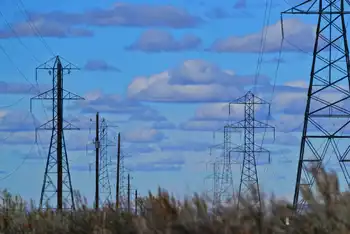
Canada will need more electricity to hit net-zero: IEA report

Canada Clean Electricity Expansion is urged by the IEA to meet net-zero targets, scaling non-emitting generation, electrification, EV demand, and grid integration across provinces to decarbonize industry, buildings, and transport while ensuring reliability and affordability.


Key Points

An IEA-backed pathway for Canada to scale non-emitting power, electrification, and grid links to meet net-zero goals.

✅ Double or triple clean generation to replace fossil fuels

✅ Integrate provincial grids to decarbonize dependent regions

✅ Manage EV and heating loads with reliability and affordability


Canada will need more electricity capacity if it wants to hit its climate targets, and cleaning up Canada's electricity will be critical, according to a new report from the International Energy Agency (IEA).

The report offers mainly a rosy picture of Canada's overall federal energy policy. But, the IEA draws attention to Canada's increasing future electricity demands, and ultimately, calls on Canada to leverage its non-emitting energy potential and expand renewable energy to hit its climate targets.  

"Canada's wealth of clean electricity and its innovative spirit can help drive a secure and affordable transformation of its energy system and help realize its ambitious goals," stated Fatih Birol, the IEA executive director, in a news release.

The IEA notes that Canada has one of the cleanest energy grids globally, with 83 per cent of electricity coming from non-emitting sources in 2020. But this reflects nationwide progress in electricity to date; the report warns this is not a reason for Canada to rest on its laurels. More electricity will be needed to displace fossil fuels if Canada wants to hit its 2030 targets, the report states, and "even deeper cuts" will be required to reach net-zero by 2050.

"Perhaps more significantly, however, Canada will need to ensure sufficient new clean generation capacity to meet the sizeable levels of electrification that its net-zero targets imply."

Investing in new coal, oil and gas projects must stop to hit climate goals, global energy agency says
The Liberals have promised to create a 100 percent net-zero-emitting electricity system by 2035, with regulating oil and gas emissions and electric car sales as part of the plan; by then, every new light-duty vehicle sold in Canada will be a zero-emission vehicle. The switch from gas guzzlers to plug-in electric vehicles will create new pressures on Canada's electrical grid, as will any turn away from fossil natural gas for home heating.

To meet these challenges, the IEA warns, Canada would need to double or triple the power generated from non-emitting sources compared to today, a shift whose cost could reach $1.4 trillion according to the Canadian Gas Association. 

"Such a shift will require significant regulatory action," the report states, highlighting the need for climate policy for electricity grids to guide implementation, and that will require the federal government to work closely with provinces and territories that control power generation and distribution.

The report notes that the further integration of territorial and provincial electrical grids could allow fossil fuel-dependent provinces, like Alberta, to decarbonize and electrify their economies.

The report, entitled Canada 2022 Energy Policy Review, offers what it calls an "in-depth" look at the commitments Canada has made to transform its energy policy. Since the IEA conducted its last review in 2015, Canada has committed to cutting greenhouse gas emissions by 40 to 45 per cent from 2005 levels by 2030 and achieving net-zero by 2050 under an extended national target.

The IEA is well-known for the production of its annual World Energy Outlook. The Paris-based autonomous intergovernmental organization provides analysis, data, and policy recommendations to promote global energy security and sustainability. Canada is a part of the intergovernmental body, which also conducts peer reviews of its members' energy policy.


Oil and gas emissions rising
Natural Resources Minister Jonathan Wilkinson responded to the report in the IEA news release.

"This report acknowledges Canada's ambitious efforts and historic investments to develop pathways to achieve net-zero emissions by 2050 and ensure a transition that aligns with our shared objective of limiting global warming to 1.5 degrees Celsius," Wilkinson's statement read.

The report notes that — despite that objective — absolute emissions from Canadian oil and gas extraction went up 26 per cent between 2000 and 2019, largely from increased production.

Minister of Natural Resources Jonathan Wilkinson responds to a question at a news conference after the federal cabinet was sworn in, in Ottawa, on Oct. 26, 2021. (Justin Tang/The Canadian Press)
"Canada will need to reconcile future growth in oil sands production with increasingly strict greenhouse gas requirements," the report states.

On the plus side, the IEA found emissions per barrel of oilsands crude have decreased by 20 per cent in the last decade from technical and operational improvements.

The improving carbon efficiency of the oilsands is a "trend that is expected to continue at even higher rates," said Ben Brunnen, vice-president of oilsands, fiscal and economic policy at the Canadian Association of Petroleum Producers.

That may become important, the IEA report notes, as energy investors and buyers look for low-carbon assets and more countries adopt net-zero policies.

Further innovation, such as carbon capture and storage, could help to turn things around for Canada's oil patch, the report says. The Liberals have also said they will place a hard cap on oil and gas emissions from production, but that does not include the burning of the fossil fuels. 

In 2021, the IEA released a report that determined to achieve net-zero by 2050, among many steps, investments needed to end in coal mines, oil and gas wells. Thursday's report, however, made no mention of that, which disappointed at least one environmental group.

"A glaring omission was that this assessment says nothing about production. We know that the most important thing we can do is to stop using and producing oil and gas," said Julia Levin, a senior climate and energy program manager at Environmental Defence.

"And yet that was absent from this report, and that really is a glaring omission, which is completely out of line with their [the IEA's] own work."


Related News

View more

The Cool Way Scientists Turned Falling Raindrops Into Electricity

Raindrop Triboelectric Energy Harvesting converts falling water into electricity using Teflon (PTFE) on indium tin oxide and an aluminum electrode, forming a transient water bridge; a low frequency nanogenerator for renewable, static electricity harvesting.


Key Points

A method using PTFE, ITO, and an aluminum electrode to turn raindrop impacts into low frequency electrical power.

✅ PTFE on ITO boosts charge transfer efficiency.

✅ Water bridge links electrodes for rapid discharge.

✅ Low frequency output suits continuous energy harvesting.


Scientists at the City University of Hong Kong have used a Teflon-coated surface and a phenomenon called triboelectricity to generate a charge from raindrops. “Here we develop a device to harvest energy from impinging water droplets by using an architecture that comprises a polytetrafluoroethylene [Teflon] film on an indium tin oxide substrate plus an aluminium electrode,” they explain in their new paper in Nature as a step toward cheap, abundant electricity in the long term.

Triboelectricity itself is an old concept. The word means “friction electricity”—from the Greek tribo, to rub or wear down, which is why a diatribe tires you out—and dates back a long, long time. Static electricity is the most famous kind of triboelectric, and related work has shown electricity from the night sky can be harvested as well in niche setups. In most naturally occurring kinds, scientists have studied triboelectric in order to avoid its effects, like explosions inside of grain silos or hospital workers touching off pure oxygen. (Blowing sand causes an electric field, and NASA even worries about static when astronauts eventually land on Mars.)

One of the most studied forms of intentional and useful triboelectric is in systems such as ocean wave generators where the natural friction of waves meets nanogenerators of triboelectric energy. These even already use Teflon, which has natural conductivity that makes it ideal for this job. But triboelectricity is chaotic, and harnessing it generally involves a bunch of complicated, intersecting variables that can vary with the hourly weather. Promises of static electricity charging devices have often been, well, so much hot, sandy wind.

The scientists at City University of Hong Kong used triboelectric ideas to turn falling raindrops into energy. They say previous versions of the same idea were not very efficient, with materials that didn’t allow for high-fidelity transfer of electrical charge. (Many sources of renewable energy aren’t yet as efficient to turn into power, both because of developing technology and because their renewability means even less efficient use could be better than, for example, fossil fuels, and advances in renewable energy storage could help.)

“[A]chieving a high density of electrical power generation is challenging,” the team explains in its paper. “Traditional hydraulic power generation mainly uses electromagnetic generators that are heavy, bulky, and become inefficient with low water supply.” Diversifying how power is generated by water sources such as oceans and rivers is good for the existing infrastructure as well as new installations.

The research team found that as simulated raindrops fell on their device, the way the water accumulated and spread created a link between their two electrodes, one Teflon-coated and the other aluminum. This watery de facto wire link closes the loop and allows accumulated energy to move through the system. Because it’s a mechanical setup, it’s not limited to salty seawater, and because the medium is already water, its potential isn’t affected by ambient humidity either.

Raindrop energy is very low frequency, which means this tech joins many other existing pushes to harvest continuously available, low frequency natural energy, including underwater 'kites' that exploit steady currents. To make an interface that increases “instantaneous power density by several orders of magnitude over equivalent devices,” as the researchers say they’ve done here, could represent a major step toward feasibility in triboelectric generation.


Related News

View more

Trump's Oil Policies Spark Shift in Wall Street's Energy Strategy

Wall Street Fossil Fuel Pivot signals banks reassessing ESG, net-zero, and decarbonization goals, reviving oil, gas, and coal financing while recalibrating clean energy exposure amid policy shifts, regulatory rollbacks, and investment risk realignment.


Key Points

A shift as major U.S. banks ease ESG limits to fund oil, gas, coal while rebalancing alongside renewables.

✅ Banks revisit lending to oil, gas, and coal after policy shifts.

✅ ESG and net-zero commitments face reassessment amid returns.

✅ Renewables compete for capital as risk models are updated.


The global energy finance sector, worth a staggering $1.4 trillion, is undergoing a significant transformation, largely due to former President Donald Trump's renewed support for the oil, gas, and coal industries. Wall Street, which had previously aligned itself with global climate initiatives and the energy transition and net-zero goals, is now reassessing its strategy and pivoting toward a more fossil-fuel-friendly stance.

This shift represents a major change from the earlier stance, where many of the largest U.S. banks and financial institutions took a firm stance on decarbonization push, including limiting their exposure to fossil-fuel projects. Just a few years ago, these institutions were vocal supporters of the global push for a sustainable future, with many committing to support clean energy solutions and abandon investments in high-carbon energy sources.

However, with the change in administration and the resurgence of support for traditional energy sectors under Trump’s policies, these same banks are now rethinking their strategies. Financial institutions are increasingly discussing the possibility of lifting long-standing restrictions that limited their investments in controversial fossil-fuel projects, including coal mining, where emissions drop as coal declines, and offshore drilling. The change reflects a broader realignment within the energy finance sector, with Wall Street reexamining its role in shaping the future of energy.

One of the most significant developments is the Biden administration’s policy reversal, which emphasized reducing the U.S. carbon footprint in favor of carbon-free electricity strategies. Under Trump, however, there has been a renewed focus on supporting the traditional energy sectors. His administration has pushed to reduce regulatory burdens on fossil-fuel companies, particularly oil and gas, while simultaneously reintroducing favorable tax incentives for the coal and gas industries. This is a stark contrast to the Biden administration's efforts to incentivize the transition toward renewable energy and zero-emissions goals.

Trump's policies have, in effect, sent a strong signal to financial markets that the fossil-fuel industry could see a resurgence. U.S. banks, which had previously distanced themselves from financing oil and gas ventures due to the pressure from environmental activists and ESG (Environmental, Social, and Governance) investors, as seen in investor pressure on Duke Energy, are now reconsidering their positions. Major players like JPMorgan Chase and Goldman Sachs are reportedly having internal discussions about revisiting financing for energy projects that involve high carbon emissions, including controversial oil extraction and gas drilling initiatives.

The implications of this shift are far-reaching. In the past, a growing number of institutional investors had embraced ESG principles, with the goal of supporting the transition to renewable energy sources. However, Trump’s pro-fossil fuel stance appears to be emboldening Wall Street’s biggest players to rethink their commitment to green investing. Some are now advocating for a “balanced approach” that would allow for continued investment in traditional energy sectors, while also acknowledging the growing importance of renewable energy investments, a trend echoed by European oil majors going electric in recent years.

This reversal has led to confusion among investors and analysts, who are now grappling with how to navigate a rapidly changing landscape. Wall Street's newfound support for the fossil-fuel industry comes amid a backdrop of global concerns about climate change. Many investors, who had previously embraced policies aimed at curbing the effects of global warming, are now finding it harder to reconcile their environmental commitments with the shift toward fossil-fuel-heavy portfolios. The reemergence of fossil-fuel-friendly policies is forcing institutional investors to rethink their long-term strategies.

The consequences of this policy shift are also being felt by renewable energy companies, which now face increased competition for investment dollars from traditional energy sectors. The shift towards oil and gas projects has made it more challenging for renewable energy companies to attract the same level of financial backing, even as demand for clean energy continues to rise and as doubling electricity investment becomes a key policy call. This could result in a deceleration of renewable energy projects, potentially delaying the progress needed to meet the world’s climate targets.

Despite this, some analysts remain optimistic that the long-term shift toward green energy is inevitable, even if fossil-fuel investments gain a temporary boost. As the world continues to grapple with the effects of climate change, and as technological advancements in clean energy continue to reduce costs, the transition to renewables is likely to persist, regardless of the political climate.

The shift in Wall Street’s approach to energy investments, spurred by Trump’s pro-fossil fuel policies, is reshaping the $1.4 trillion global energy finance market. While the pivot towards fossil fuels may offer short-term gains, the long-term trajectory for energy markets remains firmly in the direction of renewables. The next few years will be crucial in determining whether financial institutions can balance the demand for short-term profitability with their long-term environmental responsibilities.


Related News

View more

New Orleans Levees Withstood Hurricane Ida as Electricity Failed

Hurricane Ida New Orleans Infrastructure faced a split outcome: levees and pumps protected against storm surge, while the power grid collapsed as transmission lines failed, prompting large-scale restoration efforts across Louisiana and Mississippi.


Key Points

It summarizes Ida's impact: levees and pumps held, but the power grid failed, causing outages and slow restoration.

✅ Levees and pumps mitigated flooding and storm surge impacts.

✅ All transmission lines failed, crippling the power grid.

✅ Crews and drones assess damage; restoration may take weeks.


Infrastructure in the city of New Orleans turned in a mixed performance against the fury of Hurricane Ida, with the levees and pumps warding off catastrophic flooding even as the electrical grid, part of the broader Louisiana power grid, failed spectacularly.

Ida’s high winds, measuring 150 miles (240 kilometers) an hour at landfall, took out all eight transmissions lines that deliver power into New Orleans, ripped power poles in half and crumpled at least one steel transmission tower into a twisted metal heap, knocking out electricity to all of the city. A total of more than 1.2 million homes and businesses in Louisiana and Mississippi lost power. While about 90,000 customers were reconnected by Monday afternoon, many could face days without electricity, and frustration can mount as seen during the Houston outage after major storms.

In contrast, the New Orleans area’s elaborate flood defenses seem to have held up, a vindication of the Army Corps of Engineers’ $14.5 billion project to rebuild levees, flood gates and pumps in the wake of the devastation wrought by Hurricane Katrina in 2005. While there were reports of scattered deaths tied to Ida, the city escaped the kind of flooding that destroyed entire neighborhoods in Katrina’s wake, left parts of the city uninhabitable for months and claimed 1,800 lives. 

“The situation in New Orleans, as bad as it is today with the power, could be so much worse,” Louisiana Governor John Bel Edwards said Monday on the Today Show, praising the levee system’s performance. “All you have to do is go back 16 years to get a glimpse of what that would have been like.”

While the levees’ resiliency is no doubt due to the rebuilding effort that followed Katrina, the starkly different outcomes also stems from the storms’ different characteristics. Katrina slammed the coast with a 30-foot storm surge of ocean water, while preliminary estimates from Ida put its surge far lower. 


Ida’s winds, however, were stronger than Katrina’s, and that’s what ultimately took out so many power lines, a dynamic that also saw Texas utilities struggle during Harvey. Deanna Rodriguez, the chief executive officer of power provider Entergy New Orleans, declined to comment on when service would be restored, saying the company was using helicopters and drones to help assess the damage.

Michael Webber, an energy and engineering professor at the University of Texas at Austin, estimated power restoration will take days and possibly weeks, a pattern seen in Florida restoration timelines after major hurricanes, based on the initial damage reports from the storm. More than 25,000 workers from at least 32 states and Washington are mobilized to assist with power restoration efforts, similar to FPL's massive response after Irma, according to the Edison Electric Institute.

“The question is, how long will it take to rebuild these lines,” Webber said. The utilities will first need to complete their damage assessments before they can get a sense of repair timelines, a step that Gulf Power crews have highlighted in past recoveries, he said. “You can imagine that will take days at least, possibly weeks.”

The loss of electricity will have other affects as well, and even though grid resilience during the pandemic was strong, local systems face immediate constraints. Sewer substations, for example, need electricity to keep wastewater moving, said Ghassan Korban, executive director of the New Orleans Sewerage & Water Board. The storm knocked out power to about 80 of the city’s 84 pumping stations, he said at a Monday press conference. “Without electricity, wastewater backs up and can cause overflows,” he said, adding that residents should conserve water to lessen stress on the system.


Related News

View more

Climate Solution: Use Carbon Dioxide to Generate Electricity

Methane Hydrate CO2 Sequestration uses carbon capture and nitrogen injection to swap gases in seafloor hydrates along the Gulf of Mexico, releasing methane for electricity while storing CO2, according to new simulation research.


Key Points

A method injecting CO2 and nitrogen into hydrates to store CO2 while releasing methane for power.

✅ Nitrogen aids CO2-methane swap in hydrate cages, speeding sequestration

✅ Gulf Coast proximity to emitters lowers transport and power costs

✅ Revenue from methane electricity could offset carbon capture


The world is quickly realizing it may need to actively pull carbon dioxide out of the atmosphere to stave off the ill effects of climate change. Scientists and engineers have proposed various carbon capture techniques, but most would be extremely expensive—without generating any revenue. No one wants to foot the bill.

One method explored in the past decade might now be a step closer to becoming practical, as a result of a new computer simulation study. The process would involve pumping airborne CO2 down into methane hydrates—large deposits of icy water and methane right under the seafloor, beneath water 500 to 1,000 feet deep—where the gas would be permanently stored, or sequestered. The incoming CO2 would push out the methane, which would be piped to the surface and burned to generate electricity, whether sold locally or via exporters like Hydro-Que9bec to help defray costs, to power the sequestration operation or to bring in revenue to pay for it.

Many methane hydrate deposits exist along the Gulf of Mexico shore and other coastlines. Large power plants and industrial facilities that emit CO2 also line the Gulf Coast, where EPA power plant rules could shape deployment, so one option would be to capture the gas directly from nearby smokestacks, keeping it out of the atmosphere to begin with. And the plants and industries themselves could provide a ready market for the electricity generated.

A methane hydrate is a deposit of frozen, latticelike water molecules. The loose network has many empty, molecular-size pores, or “cages,” that can trap methane molecules rising through cracks in the rock below. The computer simulation shows that pushing out the methane with CO2 is greatly enhanced if a high concentration of nitrogen is also injected, and that the gas swap is a two-step process. (Nitrogen is readily available anywhere, because it makes up 78 percent of the earth’s atmosphere.) In one step the nitrogen enters the cages; this destabilizes the trapped methane, which escapes the cages. In a separate step, the nitrogen helps CO2 crystallize in the emptied cages. The disturbed system “tries to reach a new equilibrium; the balance goes to more CO2 and less methane,” says Kris Darnell, who led the study, published June 27 in the journal Water Resources Research. Darnell recently joined the petroleum engineering software company Novi Labs as a data scientist, after receiving his Ph.D. in geoscience from the University of Texas, where the study was done.

A group of labs, universities and companies had tested the technique in a limited feasibility trial in 2012 on Alaska’s North Slope, where methane hydrates form in sandstone under deep permafrost. They sent CO2 and nitrogen down a pipe into the hydrate. Some CO2 ended up being stored, and some methane was released up the same pipe. That is as far as the experiment was intended to go. “It’s good that Kris [Darnell] could make headway” from that experience, says Ray Boswell at the U.S. Department of Energy’s National Energy Technology Laboratory, who was one of the Alaska experiment leaders but was not involved in the new study. The new simulation also showed that the swap of CO2 for methane is likely to be much more extensive—and to happen quicker—if CO2 enters at one end of a hydrate deposit and methane is collected at a distant end.

The technique is somewhat similar in concept to one investigated in the early 2010s by Steven Bryant and others at the University of Texas. In addition to numerous methane hydrate deposits, the Gulf Coast has large pools of hot, salty brine in sedimentary rock under the coastline. In this system, pumps would send CO2 down into one end of a deposit, which would force brine into a pipe that is placed at the other end and leads back to the surface. There the hot brine would flow through a heat exchanger, where heat could be extracted and used for industrial processes or to generate electricity, supporting projects such as electrified LNG in some markets. The upwelling brine also contains some methane that could be siphoned off and burned. The CO2 dissolves into the underground brine, becomes dense and sinks further belowground, where it theoretically remains.

Either system faces big practical challenges, and building shared CO2 storage hubs to aggregate captured gas is still evolving. One is creating a concentrated flow of CO2; the gas makes up only .04 percent of air, and roughly 10 percent of the smokestack emission from a typical power plant or industrial facility. If an efficient methane hydrate or brine system requires an input that is 90 percent CO2, for example, concentrating the gas will require an enormous amount of energy—making the process very expensive. “But if you only need a 50 percent concentration, that could be more attractive,” says Bryant, who is now a professor of chemical and petroleum engineering at the University of Calgary. “You have to reduce the [CO2] capture cost.”

Another major challenge for the methane hydrate approach is how to collect the freed methane, which could simply seep out of the deposit through numerous cracks and in all directions. “What kind of well [and pipe] structure would you use to grab it?” Bryant asks.

Given these realities, there is little economic incentive today to use methane hydrates for sequestering CO2. But as concentrations rise in the atmosphere and the planet warms further, and as calls for an electric planet intensify, systems that could capture the gas and also provide energy or revenue to run the process might become more viable than techniques that simply pull CO2 from the air and lock it away, offering nothing in return.


Related News

View more

More young Canadians would work in electricity… if they knew about it

Generation Impact Report reveals how Canada's electricity sector can recruit Millennials and Gen Z, highlighting workforce gaps, career pathways, innovative projects, secure pay, and renewable energy opportunities to attract young talent nationwide.


Key Points

An EHRC survey on youth views of electricity careers and recruitment strategies to build a skilled workforce.

✅ Surveyed 1,500 Canadians aged 18-36 nationwide

✅ Highlights barriers: low awareness of sector roles

✅ Emphasizes fulfilling work, secure pay, innovation


Young Canadians make up far less of the electricity workforce than other sectors, says Electricity Human Resources Canada, as noted in an EHRC investment announcement that highlights sector priorities, and its latest report aims to answer the question “Why?”.

The report, “Generation Impact: Future Workforce Perspectives”, was based on a survey of 1500 respondents across Canada between the ages of 18 and 36. This cohort’s perspectives on the electricity sector were mostly Positive or Neutral, and that Millennial and Gen Z Canadians are largely open to considering careers in electricity, especially as initiatives such as a Nova Scotia energy training program expand access.

The biggest barrier is a knowledge gap in electrical safety that limits awareness of the opportunities available.

To an industry looking to develop a pipeline of young talent, “Generation Impact” reveals opportunities for recruitment; key factors that Millennial and Gen Z Canadians seek in their ideal careers include fulfilling work, secure pay and the chance to be involved in innovative projects, including specialized arc flash training in Vancouver opportunities that build expertise.

“The electricity sector is already home to the kinds of fulfilling and innovative careers that many in the Millennial and Gen Z cohorts are looking for,” said Michelle Branigan, CEO of EHRC. “Now it’s just a matter of communicating effectively about the opportunities and benefits, including leadership in worker safety initiatives, our sector can offer.”

“Engaging young workers in Canada’s electricity sector is critical for developing the resiliency and innovation needed to support the transformation of Canada’s energy future, especially as working from home drives up electricity bills and reshapes demand,” said Seamus O’Regan, Canada’s Minister of Natural Resources. “The insights of this report will help to position the sector competitively to leverage the talent and skills of young Canadians.”

“Generation Impact” was funded in part by the Government of Canada’s Student Work Placement Program and Natural Resources Canada’s Emerging Renewable Power Program, in a context of rising residential electricity use that underscores workforce needs.


Related News

View more

Sign Up for Electricity Forum’s Newsletter

Stay informed with our FREE Newsletter — get the latest news, breakthrough technologies, and expert insights, delivered straight to your inbox.

Electricity Today T&D Magazine Subscribe for FREE

Stay informed with the latest T&D policies and technologies.
  • Timely insights from industry experts
  • Practical solutions T&D engineers
  • Free access to every issue

Live Online & In-person Group Training

Advantages To Instructor-Led Training – Instructor-Led Course, Customized Training, Multiple Locations, Economical, CEU Credits, Course Discounts.

Request For Quotation

Whether you would prefer Live Online or In-Person instruction, our electrical training courses can be tailored to meet your company's specific requirements and delivered to your employees in one location or at various locations.