Egypt's renewable energy to reach 6.6 GW by year-end


mohamed shaker

Protective Relay Training - Basic

Our customized live online or in‑person group training can be delivered to your staff at your location.

  • Live Online
  • 12 hours Instructor-led
  • Group Training Available
Regular Price:
$699
Coupon Price:
$599
Reserve Your Seat Today

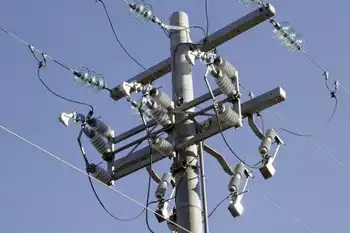
Egypt Renewable Energy Expansion targets solar and wind power projects to diversify the energy mix, adding 6.6 GW by 2020 and reaching 8,200 MW, with UK cooperation, grid upgrades, and investment in the electricity sector.


Key Points

A plan to boost solar and wind by 6.6 GW by 2020, reaching 8,200 MW and diversifying Egypt's energy mix.

✅ Adds 6.6 GW by 2020; targets 8,200 MW total capacity

✅ Focus on solar, wind, grid upgrades, and investment

✅ UK-Egypt cooperation in electricity sector projects


Egypt is planning to expand into renewable energy projects in a bid to increase its contribution to the energy mix, in step with global records being set in renewables, and amid Saudi Arabia’s 60 GW drive in the region, the country’s minister of electricity and renewable energy Mohamed Shaker said.

Renewable power is expected to add 6.6 gigawatts (GW) by the end of 2020, a scale comparable to Saudi wind expansion underway, with plans to reach 8,200 megawatts (MW) after the completion of the renewable energy projects currently under consideration, reflecting gains seen since IRENA’s 2016 record year for renewables, Shaker added in a statement on Tuesday, even as regional challenges persist.

This came during the minister’s video-conference meeting with the British ambassador to Egypt Geoffrey Adams to explore the potential means for cooperation between the two countries in the electricity sector, including lessons from the UK project backlog now affecting investments and from Ireland’s green-electricity goals being pursued.


Related News

Related News

Power firms win UK subsidies for new Channel cables project

UK Electricity Interconnectors secure capacity market subsidies, supporting winter reliability with seabed cables to France and Belgium via the Channel Tunnel, lowering consumer costs, squeezing coal, and challenging new gas plants through cross-border energy trading.


Key Points

High-voltage cables linking Britain to Europe, securing backup capacity, cutting costs and boosting winter reliability.

✅ Won capacity market contracts at record-low prices

✅ Cables to France and Belgium via Channel Tunnel, seabed routes

✅ Squeezes coal, challenges new gas; renewables may join market


New electricity cables across the Channel to France and Belgium will be a key part of keeping Britain’s lights on during winter amid record electricity prices across Europe in the early 2020s, after their owners won backup power subsidies in a government auction this week.

For the first time, interconnector operators successfully bid for a slice of hundreds of millions’ worth of contracts in the capacity market. That will help cut costs for consumers, given how electricity is priced in Europe today, and squeeze out old coal power plants.

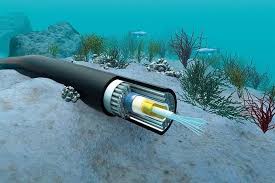
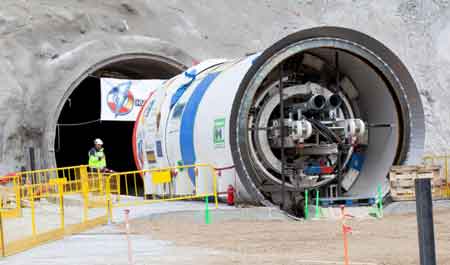
Three new interconnectors are currently being built to Europe, almost doubling existing capacity, with one along the Channel Tunnel and two on the seabed: one between Kent and Zeebrugge and one from Hampshire to Normandy. 

The interconnectors were success stories in this week’s capacity auction, which saw power firms bid to provide backup electricity in the winter of 2021/22. Prices for the four-year contracts hit a record low of £8.40 per kilowatt per year, which analysts described as a shock and well below expectations.

One industry source said the figure was “miles away” from what is needed to encourage companies to build big new gas power stations, which some argue are necessary to fill the gap when the UK’s ageing nuclear reactors close as Europe loses nuclear power across the region over the next decade.

While bad news for those firms, the low price is good for consumers. The subsidies will add about £525m to energy bills, or £5.68 for the average household, compared with £11 for the year before, according to analysts Cornwall Insight.

Existing gas power stations scooped up most of the contracts, but new gas ones lost out, as did several coal plants. Battery storage plants, a standout success in the last auction, fared comparatively poorly after changes to the rules.

Experts at Bernstein bank said the the misses by coal meant that around half the UK’s remaining coal power capacity could close from October 2019, when existing capacity market contracts run out. Chaitanya Kumar, policy adviser at thinktank Green Alliance, said: “Coal’s exit from the UK’s energy system just moved a step closer as coal contracts fell by half compared with last year.”

Tom Edwards, an analyst at Cornwall Insight, said that more interconnectors were likely to bid into future rounds of the capacity market, such as the cable being laid between Norway and the UK. Relying on foreign power supplies was fine, he said, provided Brexit did not make energy trading more difficult and the interconnectors delivered at times of need, where events like Irish grid price spikes illustrate the stress points.

However, one industry source, who wants to see new gas plants built in the UK, said the results showed that the system was not working, amid UK peak power prices that have climbed in recent trading. “That self-sufficiency doesn’t seem to be a priority at a time when we’re breaking away from Europe is a bit weird,” they said.

But the prospects for new gas plants in future rounds of the capacity market look bleak. They will very likely face a new source of competition next year, if energy regulator Ofgem approves a proposal to allow renewables to compete too.


Related News

View more

Texas utility companies waiving fees; city has yet to act

Texas Utility COVID-19 Relief suspends disconnections, waives late fees, extends payment plans, and supports broadband access as electric, gas, and internet providers help customers during the statewide emergency with speed upgrades and student WiFi initiatives.


Key Points

Texas utilities pause disconnections, waive fees, expand access, and offer flexible payment plans during COVID-19.

✅ Disconnections and late fees suspended by gas, power, internet.

✅ Payment plans and deferred balances after emergency.

✅ Bandwidth caps lifted; student WiFi access for remote learning.


In response to the COVID-19 pandemic, Texas utility companies have taken unprecedented steps to keep customers' lights on, gas flowing, and online connections stable -- even if they can't pay, amid concerns over pandemic electricity shutoffs nationwide.

Meantime, Palestine City Council members plan to discuss hardship measures Monday, as some states such as New Jersey and New York implement moratoriums on shut-offs, but have no plans yet to ease the burden of paying two other essential services during the statewide emergency -- trash collection and water. Those services are billed through the city.

For many residents, money will be tight after the statewide emergency declaration. Businesses are cutting back or closing. Workers are staying home to avoid the coronavirus.

"We are putting our customers first," Larry Ball, spokesman for Atmos Energy, a Dallas-based natural gas company, told the Herald-Press Friday. "The safety of all of our customers has always been our first priority."

While the declared emergency remains in effect, Atmos has suspended all late fees and customer disconnections, a step similar to PG&E's shutoff moratorium in California.

"Atmos Energy's commitment to safety, paired with our culture, have led us during unique times," Kevin Akers, Atmos President and CEO said. "This will be no different."

Internet Service Providers SuddenLink and Centurylink have similarly suspended all disconnections and late fees. Additionally, Centurylink, a global company serving 36 states, has promised to scrap bandwidth limits, while ensuring the highest speeds possible.

SuddenLink, a division of Altice Business, is also partnering with school districts in their service area to offer its Student WiFi product free for 60 days. That will allow students who have school-issued devices, but no dedicated home Internet access, the ability to use the Optimum WiFi Hot Spot Network to access their school's network and resources.

Electric companies such as TXU and Houston-based Gexa Energy also are working to keep customers safe and connected, and Entergy's relief fund highlights additional support for customers.

During the declared emergency, Gexa is waiving all disconnection and reconnection fees, as well as late fees, a policy focus that later intersected with debates over a proposed electricity market bailout in Texas. Payment plans will be set up for customers, after the crisis ends, Gexa Energy officials said.

"Everyone needs their power on," a Gexa spokesman said. "That is our number one priority."

TXU, based in Irving, is waiving late fees, extending payment due dates with no down-payment required, and deferring customer balances over multiple installments, while some retailers like Griddy underscored the risks of variable-rate plans.

If customers still can't pay, TXU officials said, the company will keep their lights on, a commitment underscored after the Texas winter storm outages exposed vulnerabilities. Customers in need should call 800-242-9113.

"The coronavirus is causing uncertainty and many hardships," Scott Hudson, president of TXU energy, said. "We are committed to serving our communities."


Related News

View more

Gaza electricity crisis:

Gaza Electricity Crisis drives severe power cuts in the Gaza Strip, as Hamas-PA tensions and Mahmoud Abbas's supply reductions under blockade spur fuel shortages, hospital strain, and soaring demand for batteries, LED lights, and generators.


Key Points

A prolonged Gaza power shortage from politics, blockade, and fuel cuts, disrupting daily life, hospitals, and water.

✅ Demand surges for batteries, LED lights, and generators

✅ PA cuts to Israel-supplied power deepen shortages

✅ Hospitals, water, and sanitation face critical strain


In Imad Shlayl’s electronics shop in Gaza City, the customers crowding his store are interested in only two products: LED lights and the batteries to power them.

In the already impoverished Gaza Strip, residents have learned to adapt to the fact that electricity is only available for between two and four hours a day.

But fresh anger was sparked when availability was cut further last month, at the request of the Palestinian president, Mahmoud Abbas, in an escalation of his conflict with Hamas, the Islamist group.

The shortages have defined how people live their lives, echoing Europe’s energy crisis in other regions: getting up in the middle of the night, if there is power, to run washing machines or turn on water pumps.

Only the wealthy few have frequent, long-lasting access to electricity, even as U.S. brownout risks highlight grid fragility, to power lights and fans and fridges, televisions and wifi routers, in Gaza’s stifling summer heat.

“We used to sell all sorts of things,” says Shlayl. “But it’s different these days. All we sell is batteries and chargers. Because the crisis is so deep we are selling 100 batteries a day when normally we would sell 20.”

Gaza requires 430 megawatts of power to meet daily demand, but receives only half that. Sixty megawatts are supplied by its solitary power station, now short on fuel, while the rest is provided through the Israel’s power sector and funded by Abbas’s West Bank-based Palestinian Authority (PA).

Abbas’s move to cut supplies to Gaza, which is already under a joint Israeli and Egyptian blockade – now in its 11th year – has quickly made him a hate figure among many Gazans, who question why he is punishing 2 million fellow Palestinians in what appears to be an attempt to force Hamas to relinquish control of the territory.

Though business is good for Shlayl, he is angry at the fresh shortages faced by Gazans which, as pandemic power shut-offs elsewhere have shown, affect all areas of life, from hospital emergency wards to clean water supplies.

“I’ve not done anything to be punished by anyone. It is the worst I can remember but we are expecting it to get worse and worse,” he said. “Not just electricity, but other things as well. We are in a very deep descent.”

As well as cutting electricity, the PA has cut salaries for its employees in Gaza by upwards of 30% , prompting thousands to protest on the streets of Gaza city.

Residents also blame Abbas for a backlog in processing the medical referral process for those needing to travel out of Gaza for treatment, although who is at fault in that issue is less clear cut.

The problems facing Gaza – where high levels of unemployment are endemic – is most obvious in the poorest areas.

In Gaza City’s al-Shati refugee camp, home to the head of Hamas’s political bureau, Ismail Haniyeh, whole housing blocks were dark, while in others only a handful of windows were weakly illuminated.

In the one-room kiosk selling pigeons and chickens that he manages, just off the camp’s main market, Ayman Nasser, 32, is sitting on the street with his friends in search of a sea breeze.

His face is illuminated by the light of his mobile phone. He has one battery-powered light burning in his shop.

“Part of the problem is that we don’t have any news. Who should we blame for this? Hamas, Israelis, Abbas?” he said.

 A Palestinian girl reads by candle light due to power cut at the Jabalia Camp in Gaza City
Facebook Twitter Pinterest
 A Palestinian girl reads by candlelight due to a power cut at the Jabalia camp in Gaza City. Photograph: Anadolu Agency/Getty Images
His friend, Ashraf Kashqin, interrupts: “It is all connected to politics, but it is us who is getting played by the two sides.”

If there is a question that all the Palestinians in Gaza are asking, it is what the ageing and remote Abbas hopes to achieve, a dynamic also seen in Lebanon’s electricity disputes, not least whether he hopes the cuts will lead to an insurrection against Hamas following demonstrations linked to the power supply in January.

While a senior official in the Fatah-led government on the West Bank said last month that the aim behind the move by the PA – which has been paying $12m (£9m) a month for the electricity Israel supplies to Gaza – was to “dry up Hamas’s financial resources”, others are dubious about the timing, the motive and the real impact.

Among them are human rights groups, such as Amnesty International, who have warned it could turn Gaza’s long-running crisis into a major disaster already hitting hospitals and waste treatment plants.

“For 10 years the siege has unlawfully deprived Palestinians in Gaza of their most basic rights and necessities. Under the burden of the illegal blockade and three armed conflicts, the economy has sharply declined and humanitarian conditions have deteriorated severely. The latest power cuts risk turning an already dire situation into a full-blown humanitarian catastrophe,” said Magdalena Mughrabi, of the group.

Then there is the question of timing. “Abbas is probably the only one who knows why he is doing this to Gaza,” adds Mohameir Abu Sa’da, a political science professor at Al Azhar University and analyst.

“I honestly don’t buy what he has been saying for the last three months: that he will take exceptional measures against Hamas to put pressure on it to give up control of the Gaza Strip.


Related News

View more

UK net zero policies: What do changes mean?

UK Net Zero Policy Delay shifts EV sales ban to 2035, eases boiler phase-outs, keeps ZEV mandate, backs North Sea oil and gas, accelerates onshore wind and grid upgrades while targeting 2050 emissions goals.


Key Points

Delay moves EV and heating targets to 2035, tweaks mandates, and shifts energy policy, keeping the 2050 net zero goal.

✅ EV sales ban shifts to 2035; ZEV mandate trajectory unchanged

✅ Heat pump grants rise to £7,500; boiler phase-out eased

✅ North Sea oil, onshore wind, grid and nuclear plans advance


British Prime Minister Rishi Sunak has said he would delay targets for changing cars and domestic heating to maintain the consent of the British people in the switch to net zero as part of the global energy transition under way.

Sunak said Britain was still committed to achieving net zero emissions by 2050, similar to Canada's race to net zero goals, and denied watering down its climate targets.

Here are some of the current emissions targets for Britain's top polluting sectors and how the announcement impacts them.


TRANSPORTATION
Transport accounts for more than a third (34%) of Britain's total carbon dioxide (CO2) emissions, the most of any sector.

Sunak announced a delay to introducing a ban on new petrol and diesel cars and vans. It will now come into force in 2035 rather than in 2030.

There were more than 1.1 million electric cars in use on UK roads as of April - up by more than half from the previous year to account for roughly one in every 32 cars, according to the country's auto industry trade body.

The current 2030 target was introduced in November 2020 as a central part of then-Prime Minister Boris Johnson's plans for a "green revolution". As recently as Monday, transport minister Mark Harper restated government support for the policy.

Britain’s independent climate advisers, the Climate Change Committee, estimated a 2030 phase out of petrol, diesel and hybrid vehicles could save up to 110 million tons of carbon dioxide equivalent emissions compared with a 2035 phase out.

ohnson's policy already allowed for the continued sale of hybrid cars and vans that can drive long stretches without emitting carbon until 2035.

The transition is governed by a zero-emission vehicle (ZEV) mandate, a shift echoed by New Zealand's electricity transition debates, which means manufacturers must ensure an increasing proportion of the vehicles they sell in the UK are electric.

The current proposal is for 22% of a car manufacturer's sales to be electric in 2024, rising incrementally each year to 100% in 2035.

The government said on Wednesday that all sales of new cars from 2035 would still be zero emission.

Sunak said that proposals that would govern how many passengers people should have in a car, or proposals for new taxes to discourage flying, would be scrapped.


RESIDENTIAL
Residential emissions, the bulk of which come from heating, make up around 17% of the country's CO2 emissions.

The government has a target to reduce Britain's energy consumption from buildings and industry by 15% by 2030, and had set a target to phase out installing new and replacement gas boilers from 2035, as the UK moves towards heat pumps, amid an IEA report on Canada's power needs noting more electricity will be required.

Sunak said people would have more time to transition, and the government said that off-gas-grid homes could continue to install oil and liquefied petroleum gas boilers until 2035, rather than being phased out from 2026.

However, his announcements that the government would not force anyone to rip out an existing boiler and that people would only have to make the switch when replacing one from 2035 restated existing policy.

He also said there would be an exemption so some households would never have to switch, but the government would increase an upgrade scheme that gives people cash to replace their boilers by 50% to 7,500 pounds ($9,296.25).

Currently almost 80% of British homes are heated by gas boilers. In 2022, 72,000 heat pumps were installed. The government had set a target of 600,000 heat pump installations per year by 2028.

A study for Scottish Power and WWF UK in June found that 6 million homes would need to be better insulated by 2030 to meet the government's target to reduce household energy consumption, but current policies are only expected to deliver 1.1 million.

The study, conducted by Frontier Economics, added that 1.5 million new homes would still need heat pumps installed by 2030.

Sunak said that the government would subsidise people who wanted to make their homes energy efficient but never force a household to do it.

The government also said it was scrapping policies that would force landlords to upgrade the energy efficiency of their properties.


ENERGY
The energy sector itself is a big emitter of greenhouse gases, contributing around a quarter of Britain's emissions, though the UK carbon tax on coal has driven substantial cuts in coal-fired electricity in recent years.

In July, Britain committed to granting hundreds of licences for North Sea oil and gas extraction as part of efforts to become more energy independent.

Sunak said he would not ban new oil and gas in the North Sea, and that future carbon budgets for governments would have to be considered alongside the plans to meet them.

He said the government would shortly bring forward new plans for energy infrastructure to improve Britain's grid, including the UK energy plan, while speeding up planning.

Offshore wind power developers warned earlier this month that Britain's climate goals could be at risk, even as efforts like cleaning up Canada's electricity highlight the importance of power-sector decarbonization, after a subsidy auction for new renewable energy projects did not attract any investment in those planned off British coasts.

Britain is aiming to develop 50 gigawatts (GW) of offshore wind capacity by 2030, up from around 14 GW now.

Sunak highlighted that Britain is lifting a ban on onshore wind, investing in carbon capture and building new nuclear power stations.


Related News

View more

Nissan accepting electricity from EVs as payment for parking

Nissan V2G Parking lets EV drivers pay with electricity via bidirectional charging at the Yokohama Nissan Pavilion, showcasing vehicle-to-grid, smart energy trading, and integrated mobility experiences like Ariya rides and Formula E simulators.


Key Points

A program where EV owners use V2G to pay for parking by discharging power at Nissan's Yokohama Pavilion.

✅ Pay for parking with EV energy via V2G

✅ Powered by Nissan LEAFs and solar at the Pavilion

✅ Showcases Ariya, Formula E, ProPILOT, and I2V tech


Nissan is letting customers pay for parking with electricity by discharging power from their electric car’s battery pack, a concept similar to how EV owners sell electricity back to the grid in other programs. In what the company claims to be a global first, owner of electric cars can trade energy for a parking space at Nissan Pavilion exhibition space in Yokohama, Japan, echoing how parked EVs earn from Europe's grids in comparable schemes.

The venue that showcases Nissan's future technologies, opened its doors to public on August 1 and will remain so through October 23, underscoring how stored EV energy can power buildings in broader applications. “(It) is a place where customers can see, feel, and be inspired by (the company's) near-future vision for society and mobility," says CEO Makoto Uchida. “As the world shifts to electric mobility, EVs will be integrated into society in ways that go beyond just transportation."

Apart from the innovate parking experience, people visiting the pavilion can also virtually experience the thrill of Formula E electric street racing or go for a ride in the all-new Ariya electric crossover, similar to demos at the Everything Electric show in Vancouver. Other experiences include ProPILOT advanced driver assistance system as well as Nissan’s Invisible-to-Visible (I2V) technology, which combines information from the real and virtual worlds to assist drivers, themes also explored at an EV education centre in Toronto for public outreach.

A mobility hub in front of the Pavilion offers a variety of services including EV car-sharing. The Pavilion also operates a cafe operated on power supplied by Nissan LEAF electric cars and solar energy, showcasing vehicle-to-building charging benefits on site.

As part of its Nissan NEXT transformation plan, the company plans to expand its global lineup of EVs and aims to sell more than 1 million electrified vehicles a year by the end of fiscal 2023, aligning with the American EV boom and the challenge of scaling charging infrastructure.


Related News

View more

Understanding the Risks of EV Fires in Helene Flooding

EV Flood Fire Risks highlight climate change impacts, lithium-ion battery hazards, water damage, post-submersion inspection, first responder precautions, manufacturer safeguards, and insurance considerations for extreme weather, flood-prone areas, and hurricane aftermaths.


Key Points

Water-exposed EV lithium-ion batteries may ignite later, requiring inspection, isolation, and trained responders.

✅ Avoid driving through floodwaters; park on high ground.

✅ After submersion, isolate vehicle; seek qualified inspection.

✅ Inform first responders and insurers about EV water damage.


As climate change intensifies the frequency and severity of extreme weather events, concerns about electric vehicle (EV) safety in flood-prone areas have come to the forefront. Recent warnings from officials regarding the risks of electric vehicles catching fire due to flooding from Hurricane Idalia underscore the need for heightened awareness and preparedness among consumers and emergency responders, as well as attention to grid reliability during disasters.

The alarming incidents of EVs igniting after being submerged in floodwaters have raised critical questions about the safety of these vehicles during severe weather conditions. While electric vehicles are often touted for their environmental benefits and lower emissions, it is crucial to understand the potential risks associated with their battery systems when exposed to water, even as many drivers weigh whether to buy an electric car for daily use.

The Risks of Submerging Electric Vehicles

Electric vehicles primarily rely on lithium-ion batteries, which can be sensitive to water exposure. When these batteries are submerged, they risk short-circuiting, which may lead to fires. Unlike traditional gasoline vehicles, where fuel may leak out, the sealed nature of an EV’s battery can create hazardous situations when compromised. Experts warn that even after water exposure, the risk of fire can persist, sometimes occurring days or weeks later.

Officials emphasize the importance of vigilance in flood-prone areas, including planning for contingencies like mobile charging and energy storage that support recovery. If an electric vehicle has been submerged, it is crucial to have it inspected by a qualified technician before attempting to drive it again. Ignoring this can lead to catastrophic consequences not only for the vehicle owner but also for surrounding individuals and properties.

Official Warnings and Recommendations

In light of these dangers, safety officials have issued guidelines for electric vehicle owners in flood-prone areas. Key recommendations include:

  1. Avoid Driving in Flooded Areas: The most straightforward advice is to refrain from driving through flooded streets, which can not only damage the vehicle but also pose risks to personal safety.

  2. Inspection After Flooding: If an EV has been submerged, owners should seek immediate professional inspection. Technicians can evaluate the battery and electrical systems for damage and determine if the vehicle is safe to operate.

  3. Inform Emergency Responders: In flood situations, informing emergency personnel about the presence of electric vehicles can help them mitigate risks during rescue operations, including firefighter health risks that may arise. First responders are trained to handle conventional vehicles but may need additional precautions when dealing with EVs.

Industry Response and Innovations

In response to rising concerns, electric vehicle manufacturers are working to enhance the safety features of their vehicles. This includes developing waterproof battery enclosures and improving drainage systems to prevent water intrusion, as well as exploring vehicle-to-home power for resilience during outages. Some manufacturers are also investing in research to improve battery chemistry, making them more resilient in extreme conditions.

The automotive industry recognizes that consumer education is equally important, particularly around utility impacts from mass-market EVs that affect planning. Manufacturers and safety organizations are encouraged to disseminate information about proper EV maintenance, the importance of inspections after flooding, and safety protocols for both owners and first responders.

The Role of Insurance Companies

As the risks associated with electric vehicle flooding become more apparent, insurance companies are also reassessing their policies. With increasing incidences of extreme weather, insurers are likely to adapt coverage options related to water damage and fire risks specific to electric vehicles. Policyholders should consult with their insurance providers to ensure they understand their coverage in the event of flooding.

Preparing for the Future

With the increasing adoption of electric vehicles, it is vital to prepare for the challenges posed by climate change and evolving state power grids capacity. Community awareness campaigns can play a significant role in educating residents about the risks and safety measures associated with electric vehicles during flooding events. By fostering a well-informed public, the likelihood of accidents and emergencies can be reduced.


Related News

View more

Sign Up for Electricity Forum’s Newsletter

Stay informed with our FREE Newsletter — get the latest news, breakthrough technologies, and expert insights, delivered straight to your inbox.

Electricity Today T&D Magazine Subscribe for FREE

Stay informed with the latest T&D policies and technologies.
  • Timely insights from industry experts
  • Practical solutions T&D engineers
  • Free access to every issue

Download the 2025 Electrical Training Catalog

Explore 50+ live, expert-led electrical training courses –

  • Interactive
  • Flexible
  • CEU-cerified