Consumers Coalition wants Manitoba Hydro?s proposed rate increase rejected


Manitoba Hydro applying for 5 per cent interim rate increase

Protective Relay Training - Basic

Our customized live online or in‑person group training can be delivered to your staff at your location.

  • Live Online
  • 12 hours Instructor-led
  • Group Training Available
Regular Price:
$699
Coupon Price:
$599
Reserve Your Seat Today

Manitoba Hydro Interim Rate Increase faces PUB scrutiny as consumers coalition challenges a 5% electricity rate hike, citing drought planning, retained earnings, affordability, transparency, and impacts on fixed incomes and northern communities.


Key Points

A proposed 5% electricity rate hike under PUB review, opposed by consumers citing drought planning and affordability.

✅ Coalition backs 2% hike; 5% seen as undue burden

✅ PUB review sought; interim process lacks transparency

✅ Retained earnings, efficiencies cited to offset drought


The Consumers Coalition is urging the Public Utilities Board (PUB) to reject Manitoba Hydro’s current interim rate increase application, amid ongoing debates about Hydro governance and policy.

Hydro is requesting a five per cent jump in electricity rates starting on January 1, claiming drought conditions warrant the increase but the coalition disagrees, saying a two per cent increase would be sufficient.

The coalition, which includes Harvest Manitoba, the Consumers’ Association of Canada-Manitoba, and the Aboriginal Council of Winnipeg, said a 5 per cent rate increase would put an unnecessary strain on consumer budgets, especially for those on fixed incomes or living up north.

"We feel that, in many ways, Manitobans have already paid for this drought," said Gloria Desorcy, executive director of the Consumers’ Association of Canada - Manitoba.

The coalition argues that hydroelectric companies already plan for droughts and that hydro should be using past earnings to mitigate any losses.

The group claims drought conditions would have added about 0.8 per cent to Hydro’s bottom line. They said remaining revenues from a two per cent increase could then be used to offset the increased costs of major projects like the Keeyask generating station and service its growing debt obligations.

The group also said Hydro is financially secure and is projecting a positive net income of $112 million next year without rate increases, even as utility profits can swing with market conditions, assuming the drought doesn’t continue.

They argue Hydro can use retained earnings as a tool to mitigate losses, rather than relying on deferral accounting that shifts costs, and find further efficiencies within the corporation.

"So we said two per cent, which is much more palatable for consumers especially at the time when so many consumers are struggling with so many higher bills,” said Desorcy.

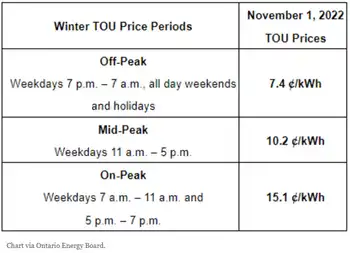
According to the coalition’s calculations, that works out to a $2-4 increase per month, and debates such as ending off-peak pricing in Ontario show how design affects bills, depending on whether electricity is used for heating, but it could be higher.

The coalition said their proposed two per cent rate increase should be applied to all Manitoba Hydro customers and have a set expiration date of January 1, 2023.

Another issue, according to the coalition, is the process of an interim rate application does not provide any meaningful transparency and accountability, whereas recent OEB decisions in Ontario have outlined more robust public processes.

Desorcy said the next step is up to the PUB, though board upheaval at Hydro One in Ontario shows how governance shifts can influence outcomes.

The board is expected to decide on the proposed increase in the next couple of weeks.


Related News

Related News
TTC Bans Lithium-Ion-Powered E-Bikes and Scooters During Winter Months for Safety

TTC Winter E-Bike and E-Scooter Ban addresses lithium-ion battery safety, mitigating fire risk on Toronto public transit during cold weather across buses, subways, and streetcars, while balancing micro-mobility access, infrastructure gaps, and evolving regulations.


Key Points

A seasonal TTC policy limiting lithium-ion e-bikes and scooters on transit in winter to cut battery fire risk.

✅ Targets lithium-ion fire hazards in confined transit spaces

✅ Applies Nov-Mar across buses, subways, and streetcars

✅ Sparks debate on equity, accessibility, and policy alternatives


The Toronto Transit Commission (TTC) Board recently voted to implement a ban on lithium-ion-powered electric bikes (e-bikes) and electric scooters during the winter months, a decision that reflects growing safety concerns. This new policy has generated significant debate within the city, particularly regarding the role of these transportation modes in the lives of Torontonians, and the potential risks posed by the technology during cold weather.

A Growing Safety Concern

The move to ban lithium-ion-powered e-bikes and scooters from TTC services during the winter months stems from increasing safety concerns related to battery fires. Lithium-ion batteries, commonly used in e-bikes and scooters, are known to pose a fire risk, especially in colder temperatures, and as systems like Metro Vancouver's battery-electric buses expand, robust safety practices are paramount. In recent years, Toronto has experienced several high-profile incidents involving fires caused by these batteries. In some cases, these fires have occurred on TTC property, including on buses and subway cars, raising alarm among transit officials.

The TTC Board's decision was largely driven by the fear that the cold temperatures during winter months could make lithium-ion batteries more prone to malfunction, leading to potential fires. These batteries are particularly vulnerable to damage when exposed to low temperatures, which can cause them to overheat or fail during charging or use. Since public transit systems are densely populated and rely on close quarters, the risk of a battery fire in a confined space such as a bus or subway is considered too high.

The New Ban

The new rule, which is expected to take effect in the coming months, will prohibit e-bikes and scooters powered by lithium-ion batteries from being brought onto TTC vehicles, including buses, streetcars, and subway trains, even as the agency rolls out battery electric buses across its fleet, during the winter months. While the TTC had previously allowed passengers to bring these devices on board, it had issued warnings regarding their safety. The policy change reflects a more cautious approach to mitigating risk in light of growing concerns.

The winter months, typically from November to March, are when these batteries are at their most vulnerable. In addition to environmental factors, the challenges posed by winter weather—such as snow, ice, and the damp conditions—can exacerbate the potential for damage to these devices. The TTC Board hopes the new ban will prevent further incidents and keep transit riders safe.

Pushback and Debate

Not everyone agrees with the TTC Board's decision. Some residents and advocacy groups have expressed concern that this ban unfairly targets individuals who rely on e-bikes and scooters as an affordable and sustainable mode of transportation, while international examples like Paris's e-scooter vote illustrate how contentious rental devices can be elsewhere, adding fuel to the debate. E-bikes, in particular, have become a popular choice among commuters who want an eco-friendly alternative to driving, especially in a city like Toronto, where traffic congestion can be severe.

Advocates argue that instead of an outright ban, the TTC should invest in safer infrastructure, such as designated storage areas for e-bikes and scooters, or offer guidelines on how to safely store and transport these devices during winter, and, in assessing climate impacts, consider Canada's electricity mix alongside local safety measures. They also point out that other forms of electric transportation, such as electric wheelchairs and mobility scooters, are not subject to the same restrictions, raising questions about the fairness of the new policy.

In response to these concerns, the TTC has assured the public that it remains committed to finding alternative solutions that balance safety with accessibility. Transit officials have stated that they will continue to monitor the situation and consider adjustments to the policy if necessary.

Broader Implications for Transportation in Toronto

The TTC’s decision to ban lithium-ion-powered e-bikes and scooters is part of a broader conversation about the future of transportation in urban centers like Toronto. The rise of electric micro-mobility devices has been seen as a step toward reducing carbon emissions and addressing the city’s growing congestion issues, aligning with Canada's EV goals that push for widespread adoption. However, as more people turn to e-bikes and scooters for daily commuting, concerns about safety and infrastructure have become more pronounced.

The city of Toronto has yet to roll out comprehensive regulations for electric scooters and bikes, and this issue is further complicated by the ongoing push for sustainable urban mobility and pilots like driverless electric shuttles that test new models. While transit authorities grapple with safety risks, the public is increasingly looking for ways to integrate these devices into a broader, more holistic transportation system that prioritizes both convenience and safety.

The TTC’s decision to ban lithium-ion-powered e-bikes and scooters during the winter months is a necessary step to address growing safety concerns in Toronto's public transit system. Although the decision has been met with some resistance, it highlights the ongoing challenges in managing the growing use of electric transportation in urban environments, where initiatives like TTC's electric bus fleet offer lessons on scaling safely. With winter weather exacerbating the risks associated with lithium-ion batteries, the policy seeks to reduce the chances of fires and ensure the safety of all transit users. As the city moves forward, it will need to find ways to balance innovation with public safety to create a more sustainable and safe urban transportation network.


Related News

View more

IAEA - COVID-19 and Low Carbon Electricity Lessons for the Future

Nuclear Power Resilience During COVID-19 shows low-carbon electricity supporting renewables integration with grid flexibility, reliability, and inertia, sustaining decarbonization, stable baseload, and system security while prices fell and demand dropped across markets.


Key Points

It shows nuclear plants providing reliable, low-carbon power and supporting grid stability despite demand declines.

✅ Low prices challenge investment; lifetime extensions are cost-effective.

✅ Nuclear provides inertia, reliability, and dispatchable capacity.

✅ Market reforms should reward flexibility and grid services.


The COVID-19 pandemic has transformed the operation of power systems across the globe, including European responses that many argue accelerated the transition, and offered a glimpse of a future electricity mix dominated by low carbon sources.

The performance of nuclear power, in particular, demonstrates how it can support the transition to a resilient, clean energy system well beyond the COVID-19 recovery phase, and its role in net-zero pathways is increasingly highlighted by analysts today.

Restrictions on economic and social activity during the COVID-19 outbreak have led to an unprecedented and sustained decline in demand for electricity in many countries, in the order of 10% or more relative to 2019 levels over a period of a few months, thereby creating challenging conditions for both electricity generators and system operators (Fig. 1). The recent Sustainable Recovery Report by the International Energy Agency (IEA) projects a 5% reduction in global electricity usage for the entire year 2020, with a record 5.7% decline foreseen in the United States alone. The sustainable economic recovery will be discussed at today's IEA Clean Energy Transitions Summit, where Fatih Birol's call to keep options open will be prominent as IAEA Director General Rafael Mariano Grossi participates.

Electricity generation from fossil fuels has been hard hit, due to relatively high operating costs compared to nuclear power and renewables, as well as simple price-setting mechanisms on electricity markets. By contrast, low-carbon electricity prevailed during these extraordinary circumstances, with the contribution of renewable electricity rising in a number of countries as analyses see renewables eclipsing coal by 2025, due to an obligation on transmission system operators to schedule and dispatch renewable electricity ahead of other generators, as well as due to favourable weather conditions.

Nuclear power generation also proved to be resilient, reliable and adaptable. The nuclear industry rapidly implemented special measures to cope with the pandemic, avoiding the need to shut down plants due to the effects of COVID-19 on the workforce or supply chains. Nuclear generators also swiftly adapted to the changed market conditions. For example, EDF Energy was able to respond to the need of the UK grid operator by curtailing sporadically the generation of its Sizewell B reactor and maintain a cost-efficient and secure electricity service for consumers.

Despite the nuclear industry's performance during the pandemic, faced with significant decreases in demand, many generators have still needed to reduce their overall output appreciably, for example in France, Sweden, Ukraine, the UK and to a lesser extent Germany (Fig. 2), even as the nuclear decline debate continues in Europe. Declining demand in France up to the end of March already contributed to a 1% drop in first quarter revenues at EDF, with nuclear output more than 9% lower than in the year before. Similarly, Russia's Rosatom experienced a significant demand contraction in April and May, contributing to an 11% decline in revenues for the first five months of the year.

Overall, the competitiveness and resilience of low carbon technologies have resulted in higher market shares for nuclear, solar and wind power in many countries since the start of lockdowns (Fig. 3), and low-emissions sources to meet demand growth over the next three years. The share of nuclear generation in South Korea rose by almost 9 percentage points during the pandemic, while in the UK, nuclear played a big part in almost eliminating coal generation for a period of two months. For the whole of 2020, the US Energy Information Administration's Short-Term Energy Outlook sees the share of nuclear generation increasing by more than one percentage point compared to 2019. In China, power production decreased during January-February 2020 by more than 8% year on year: coal power decreased by nearly 9%, hydropower by nearly 12%. Nuclear has proved more resilient with a 2% reduction only. The benefits of these higher shares of clean energy in terms of reduced emissions of greenhouse gases and other air pollutants have been on full display worldwide over the past months.

Challenges for the future

Despite the demonstrated performance of a cleaner energy system through the crisis - including the capacity of existing nuclear power plants to deliver a competitive, reliable, and low carbon electricity service when needed - both short- and long-term challenges remain.

In the shorter term, the collapse in electricity demand has accelerated recent falls in electricity prices, particularly in Europe (Fig. 4), from already economically unsustainable levels. According to Standard and Poor's Midyear Update, the large price drops in Europe result from not only COVID-19 lockdown measures but also collapsing demand due to an unusually warm winter, increased supply from renewables in a context of lower gas prices and CO2 allowances . Such low prices further exacerbate the challenging environment faced by many electricity generators, including nuclear plants. These may impede the required investments in the clean energy transition, with longer term consequences on the achievement of climate goals.

For nuclear power, maintaining and extending the operation of existing plants is essential to support and accelerate the transition to low carbon energy systems. With a supportive investment environment, a 10-20 year lifetime extension can be realized at an average cost of US $30-40/MW*h, making it among the most cost-effective low-carbon options, while also maintaining dispatchable capacity and lowering the overall cost of the clean energy transition. The IEA Sustainable Recovery report indicates that without such extensions 40% of the nuclear fleet in developed economies may be retired within a decade, adding around US$ 80 billion per year to electricity bills. The IEA note the potential for nuclear plant maintenance and extension programmes to support recovery measures by generating significant economic activity and employment.

The need for flexibility

New nuclear power projects can provide similar economic and environmental benefits and applications beyond electricity, but will be all the more challenging to finance without strong policy support and more substantive power market reforms, including improved frameworks for remunerating reliability, flexibility and other services. The need for flexibility in electricity generation and system operation - a trend accelerated by the crisis - will increasingly characterize future energy systems over the medium to longer term.

Looking further ahead, while generators and system operators successfully responded to the crisis, the observed decline in fossil fuel generation draws attention to additional grid stability challenges likely to emerge further into the energy transition. Heavy rotating steam and gas turbines provide mechanical inertia to an electricity system, thereby maintaining its balance. Replacing these capacities with variable renewables may result in greater instability, poorer power quality and increased incidence of blackouts. Large nuclear power plants along with other technologies can fill this role, alleviating the risk of supply disruptions in fully decarbonized electricity systems.

The challenges created by COVID-19 have also brought into focus the need to ensure resilience is built-in to future energy systems to cope with a broader range of external shocks, including more variable and extreme weather patterns expected from climate change.

The performance of nuclear power during the crisis provides a timely reminder of its ongoing contribution and future potential in creating a more sustainable, reliable, low carbon energy system.

Data sources for electricity demand, generation and prices: European Network of Transmission System Operators for Electricity (Europe), Ukrenergo National Power Company (Ukraine), Power System Operation Corporation (India), Korea Power Exchange (South Korea), Operador Nacional do Sistema Eletrico (Brazil), Independent Electricity System Operator (Ontario, Canada), EIA (USA). Data cover 1 January to May/June.


Related News

View more

More Managers Charged For Price Fixing At Ukraine Power Producer

DTEK Rotterdam+ price-fixing case scrutinizes alleged collusion over coal-based electricity tariffs in Ukraine, with NABU probing NERC regulators, market manipulation, consumer overpayment, and wholesale pricing tied to imported coal benchmarks.


Key Points

NABU probes alleged DTEK-NERC collusion to inflate coal power tariffs via Rotterdam+; all suspects deny wrongdoing.

✅ NABU alleges tariff manipulation tied to coal import benchmarks.

✅ Four DTEK execs and four NERC officials reportedly charged.

✅ Probe centers on 2016-2017 overpayments; defendants contest.


Two more executives of DTEK, Ukraine’s largest private power and coal producer and recently in energy talks with Octopus Energy, have been charged in a criminal case on August 14 involving an alleged conspiracy to fix electricity prices with the state energy regulator, Interfax reported.

They are Ivan Helyukh, the CEO of subsidiary DTEK Grid, which operates as Ukraine modernizes its network alongside global moves toward a smart electricity grid, and Borys Lisoviy, a top manager of power generation company Skhidenergo, according to Kyiv-based Concorde Capital investment bank.

Ukraine’s Anti-Corruption Bureau (NABU) alleges that now four DTEK managers “pressured” and colluded with four regulators at the National Energy and Utilities Regulatory Commission to manipulate tariffs on electricity generated from coal that forced consumers to overpay, reflecting debates about unjustified profits in the UK, $747 million in 2016-2017.


DTEK allegedly benefited $560 million in the scheme.

All eight suspects are charged with “abuse of office” and deny wrongdoing, similar to findings in a B.C. Hydro regulator report published in Canada.

There is “no legitimate basis for suspicions set out in the investigation,” DTEK said in an August 8 statement.

Suspect Dmytro Vovk, the former head of NERC, dismissed the investigation as a “wild goose chase” on Facebook.

In separate statements over the past week, DTEK said the managers who are charged have prematurely returned from vacation to “fully cooperate” with authorities in order to “help establish the truth.”

A Kyiv court on August 14 set bail at $400,000 for one DTEK manager who wasn’t named, as enforcement actions like the NT Power penalty highlight regulatory consequences.

The so-called Rotterdam+ pricing formula that NABU has been investigating since March 2017, similar to federal scrutiny of TVA rates, was in place from April 2016 until July of this year.

It based the wholesale price of electricity by Ukrainian thermal power plants on coal prices set in the Rotterdam port plus delivery costs to Ukraine.

NABU alleges that at certain times it has not seen documented proof that the purchased coal originated in Rotterdam, insisting that there was no justification for the price hikes, echoing issues around paying for electricity in India in some markets.

Ukraine started facing thermal-coal shortages after fighting between government forces and Russia-backed separatists in the eastern part of the country erupted in April 2014. A vast majority of the anthracite-coal mines on which many Ukrainian plants rely are located on territory controlled by the separatists.

Overnight, Ukraine went from being a net exporter of coal to a net importer and started purchasing coal from as far away as South Africa and Australia.


Related News

View more

UK families living close to nuclear power stations could get free electricity

UK Nuclear Free Electricity Incentive proposes community benefits near reactors, echoing France, supporting net zero goals, energy security, and streamlined planning, while addressing regulation and judicial review challenges for Sizewell C and future nuclear projects.


Key Points

A proposed policy to give free power to residents near reactors, supporting net zero and energy security.

✅ Free power for communities near nuclear plants

✅ Aligns with net zero and energy security goals

✅ Seeks streamlined planning and fewer approvals


UK Business Secretary Jacob Rees-Mogg has endorsed a French-style nuclear system that sees people living near nuclear power stations receive free electricity.

Speaking at an event organised by Policy Exchange think tank, Jacob Rees-Mogg said: “Nuclear power is just fundamental. There’s no way we can get to net zero emissions, or even have an intelligent electricity strategy and grid reform in the UK, without nuclear.”

Highlighting that this was his view and not a government policy announcement, he said: “We should copy the French. As I understand, if you live near a nuclear power station in France, you get free electricity and that’s great because then, I’ll have two in my garden if I get free electricity for my children as well.

“I think you want to recognise that things you do that are in the national interest, such as a state-owned generation company, must benefit those who make the sacrifice for the national interest.”

Earlier Mr Rees-Mogg stressed that he would like to see a simpler development consent process for new nuclear power plants to enable the next waves of reactors in the UK, amid concerns that Europe is losing nuclear power just when it really needs energy.

He said: “That’s a lot of regulation around that, as seen when nuclear plant plans collapsed in Wales and impacted the local economy. Did you know that Sizewell C will require 140 individual approvals from arms of the state, each one of which is potentially subject to judicial review.”


Related News

View more

BC Hydro activates "winter payment plan"

BC Hydro Winter Payment Plan lets customers spread electricity bills over six months during cold weather, easing costs amid colder-than-average temperatures in British Columbia, with low-income conservation support, energy-saving kits, and insulation upgrades.


Key Points

Allows BC Hydro customers to spread winter electricity bills over six months, with added low-income efficiency support.

✅ Spread Dec-Mar bills across six months

✅ Eases costs during colder-than-average temperatures

✅ Includes low-income conservation and energy-saving kits


As colder temperatures set in across the province again this weekend, BC Hydro says it is activating its winter payment plan to give customers the opportunity to spread out their electricity bills as demand can reach record levels during extreme cold periods.

"Our meteorologists are predicting colder-than-average temperatures will continue over the next of couple of months and we want to provide customers with help to manage their payments," said Chris O'Riley, BC Hydro's president.

All BC Hydro customers will be able to spread payments from the billing period spanning Dec. 1, 2017 to March 31, 2018 over a six-month period.

Cold weather in the second half of December 2017 led to surging electricity demand that was higher than the previous 10-year average and has at times hit all-time highs during peak usage periods, according to BC Hydro.

Hydro operations also respond to summer conditions, as drought and low rainfall can force adjustments in power generation strategies.

People who heat their homes with electricity — about 40 per cent of British Columbians —  have the highest overall bills in the province, $197 more in December than in July, when air conditioning use can affect energy costs.

This is the second year the Crown corporation has activated a cold-weather payment plan, part of broader customer assistance programs it offers.  

BC Hydro has also increased funding for its low-income conservation programs by $2.2 million for a total of $10 million over the next three years. 

The low-income program provides energy-saving kits that include things like free energy assessments, insulation upgrades and weather stripping. 


Related News

View more

Canada Faces Critical Crunch in Electrical Supply

Canada Electricity Supply Crunch underscores grid reliability risks, aging infrastructure, and rising demand, pushing upgrades in transmission, energy storage, smart grid technology, and renewable energy integration to protect industry, consumers, and climate goals.


Key Points

A nationwide power capacity shortfall stressing the grid, raising outage risks and slowing the renewable transition.

✅ Demand growth and aging infrastructure strain transmission capacity

✅ Smart grid, storage, and interties improve reliability and flexibility

✅ Accelerated renewables and efficiency reduce fossil fuel reliance


Canada, known for its vast natural resources and robust energy sector, is now confronting a significant challenge: a crunch in electrical supply. A recent report from EnergyNow.ca highlights the growing concerns over Canada’s electricity infrastructure, revealing that the country is facing a critical shortage that could impact both consumers and industries alike. This development raises pressing questions about the future of Canada’s energy landscape and its implications for the nation’s economy and environmental goals.

The Current Electrical Supply Dilemma

According to EnergyNow.ca, Canada’s electrical supply is under unprecedented strain due to several converging factors. One major issue is the rapid pace of economic and population growth, particularly in urban centers. This expansion has increased demand for electricity, putting additional pressure on an already strained grid. Compounding this issue are aging infrastructure and a lack of sufficient investment in modernizing the electrical grid to meet current and future needs, with interprovincial frictions such as the B.C. challenge to Alberta's export restrictions further complicating coordination.

The report also points out that Canada’s reliance on certain types of energy sources, including fossil fuels, exacerbates the problem. While the country has made strides in renewable energy, including developments in clean grids and batteries across provinces, the transition has not kept pace with the rising demand for electricity. This imbalance highlights a crucial gap in Canada’s energy strategy that needs urgent attention.

Economic and Social Implications

The shortage in electrical supply has significant economic and social implications. For businesses, particularly those in energy-intensive sectors such as manufacturing and technology, the risk of power outages or unreliable service can lead to operational disruptions and financial losses. Increased energy costs due to supply constraints could also affect profit margins and competitiveness on both domestic and international fronts, with electricity exports at risk amid trade tensions.

Consumers are not immune to the impact of this electrical supply crunch. The potential for rolling blackouts or increased energy prices, as debates over electricity rates and innovation continue nationwide, can strain household budgets and affect overall quality of life. Additionally, inconsistent power supply can affect essential services, including healthcare facilities and emergency services, highlighting the critical nature of reliable electricity for public safety and well-being.

Investment and Infrastructure Upgrades

Addressing the electrical supply crunch requires significant investment in infrastructure and technology, and recent tariff threats have boosted support for Canadian energy projects that could accelerate these efforts. The EnergyNow.ca report underscores the need for modernizing the electrical grid to enhance capacity and resilience. This includes upgrading transmission lines, improving energy storage solutions, and expanding the integration of renewable energy sources such as wind and solar power.

Investing in smart grid technology is also essential. Smart grids use digital communication and advanced analytics to optimize electricity distribution, detect outages, and manage demand more effectively. By adopting these technologies, Canada can better balance supply and demand, reduce the risk of blackouts, and improve overall efficiency in energy use.

Renewable Energy Transition

Transitioning to renewable energy sources is a critical component of addressing the electrical supply crunch. While Canada has made progress in this area, the pace of change needs to accelerate under the new Clean Electricity Regulations for 2050 that set long-term targets. Expanding the deployment of wind, solar, and hydroelectric power can help diversify the energy mix and reduce reliance on fossil fuels. Additionally, supporting innovations in energy storage and grid management will enhance the reliability and sustainability of renewable energy.

The EnergyNow.ca report highlights several ongoing initiatives and projects aimed at increasing renewable energy capacity. However, these efforts must be scaled up and supported by both public policy and private investment to ensure that Canada can meet its energy needs and climate goals.

Policy and Strategic Planning

Effective policy and strategic planning are crucial for addressing the electrical supply challenges, with an anticipated electricity market reshuffle in at least one province signaling change ahead. Government action is needed to support infrastructure investment, incentivize renewable energy adoption, and promote energy efficiency measures. Collaborative efforts between federal, provincial, and municipal governments, along with private sector stakeholders, will be key to developing a comprehensive strategy for managing Canada’s electrical supply.

Public awareness and engagement are also important. Educating consumers about energy conservation practices and encouraging the adoption of energy-efficient technologies can contribute to reducing overall demand and alleviating some of the pressure on the electrical grid.

Conclusion

Canada’s electrical supply crunch is a pressing issue that demands immediate and sustained action. The growing demand for electricity, coupled with aging infrastructure and a lagging transition to renewable energy, poses significant challenges for the country’s economy and daily life. Addressing this issue will require substantial investment in infrastructure, advancements in technology, and effective policy measures. By taking a proactive and collaborative approach, Canada can navigate this crisis and build a more resilient and sustainable energy future.


Related News

View more

Sign Up for Electricity Forum’s Newsletter

Stay informed with our FREE Newsletter — get the latest news, breakthrough technologies, and expert insights, delivered straight to your inbox.

Electricity Today T&D Magazine Subscribe for FREE

Stay informed with the latest T&D policies and technologies.
  • Timely insights from industry experts
  • Practical solutions T&D engineers
  • Free access to every issue

Live Online & In-person Group Training

Advantages To Instructor-Led Training – Instructor-Led Course, Customized Training, Multiple Locations, Economical, CEU Credits, Course Discounts.

Request For Quotation

Whether you would prefer Live Online or In-Person instruction, our electrical training courses can be tailored to meet your company's specific requirements and delivered to your employees in one location or at various locations.