WEC Energy Group to buy 80% stake in Illinois wind farm for $345 million


wec deal

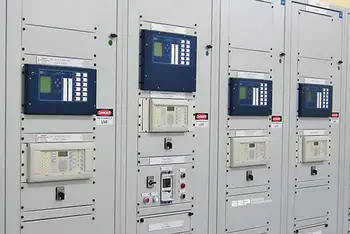
NFPA 70e Training - Arc Flash

Our customized live online or in‑person group training can be delivered to your staff at your location.
  • Live Online
  • 6 hours Instructor-led
  • Group Training Available
Regular Price:
$199
Coupon Price:
$149
Reserve Your Seat Today

WEC Energy Blooming Grove Investment underscores Midwest renewable energy growth, with Invenergy, GE turbines, and 250 MW wind power capacity, tax credits, PPAs, and utility-scale generation supplying corporate offtakers via long-term contracts.


Key Points

It is WEC Energy's $345M purchase of an 80% stake in Invenergy's 250 MW Blooming Grove wind farm in Illinois.

✅ 94 GE turbines; 250 MW utility-scale wind capacity

✅ Output contracted to two multinational offtakers

✅ Eligible for 100% bonus depreciation and wind tax credits


WEC Energy Group, the parent company of We Energies, is buying an 80% stake in a wind farm, as seen with projects like Enel's 450 MW wind farm coming online, in McLean County, Illinois, for $345 million.

The wind farm, known as the Blooming Grove Wind Farm, is being developed by Invenergy, which recently completed the largest North American wind build with GE partners, a company based in Chicago that develops wind, solar and other power projects. WEC Energy has invested in several wind farms developed by Invenergy.

With the agreement announced Monday, WEC Energy will have invested more than $1.2 billion in wind farms in the Midwest, echoing heartland investment growth across the region. The power from the wind farms is sold to other utilities or companies, as federal initiatives like DOE wind awards continue to support innovation, and the projects are separate from the investments made by WEC Energy's regulated utilities, such as We Energies, in wind power.

The project, which will consist of 94 wind turbines from General Electric, is expected to be completed this year, similar to recent project operations in the sector, and will have a capacity of 250 megawatts, WEC said in a news release.

Affiliates of two undisclosed multinational companies akin to EDF's offshore investment activity have contracted to take all of the wind farm's output.

The investment is expected to be eligible for 100% bonus depreciation and, as wind economics help illustrate key trends, the tax credits available for wind projects, WEC Energy said.


Related News

Related News

China boosts wind energy, photovoltaic and concentrated solar power

China Renewable Energy Law drives growth in wind power, solar thermal, and photovoltaic capacity, supporting grid integration and five-year plans, even as China leads CO2 emissions, with policy incentives, compliance inspections, and national resource assessments.


Key Points

A legal framework that speeds wind, solar thermal, and PV growth in China via mandates, incentives, and grid rules.

✅ 2018 renewables: 1.87T kWh, 26.7% of national power

✅ Over 100 State Council policies enabling deployment

✅ Law inspections and regional oversight across six provinces


China leads renewable energies, installing more wind power, solar thermal and photovoltaic than any other country, as seen in the China solar PV growth reported in 2016, but also leads CO2 emissions, and much remains to be done.

The effective application of Chinas renewable energy law has boosted the use of renewable energy in the country and facilitated the rapid development of the sector, as solar parity across Chinese cities indicates, a report said.

The report on compliance with renewable energy law was presented today at the current bimonthly session of the Standing Committee of the National Peoples Assembly (APN).

Electricity generated by renewable energy amounted to about 1.87 trillion kilowatts per hour in 2018, representing 26.7 percent of Chinas total energy production in the year, aligning with trends where wind and solar doubling globally over five years, the report said.

Ding Zhongli, vice president of the NPC Standing Committee, presented the report to the legislators at the second plenary meeting of the session.

An inspection of the law enforcement was carried out from August to November, as U.S. renewables hit 28% record showed momentum elsewhere. A total of 21 members of the NPC Standing Committee and the NPC Environmental Protection and Resource Conservation Committee, as well as national legislators, traveled to six regions at the provincial level on inspection visits. Twelve legislative bodies at the provincial level inspected the law enforcement efforts in their jurisdictions.

The relevant State Council agencies have implemented more than 100 regulations and policies to foster a good policy environment for the development of renewable energy, as seen in markets where U.S. renewable electricity surpassed coal in 2022. Local regulations have also been formulated based on local conditions, according to the report.

In accordance with the law, a thorough investigation of the national conditions of renewable energy resources was undertaken.

In 2008 and 2014 atlas of solar energy resources and wind energy evaluation of China were issued. The relevant agencies of the State Council have also implemented five-year plans for the development of renewable energy, which have provided guidance to the sector, while countries like Ireland's one-third green power target remain in focus within four years.

The main provisions of the law have been met, the law has been effectively applied and the purpose of the legislation has been met, and this momentum is echoed abroad, with U.S. renewables near one-fourth according to projections, Ding said.


Related News

View more

Feds "changing goalposts" with 2035 net-zero electricity grid target: Sask. premier

Canada Clean Electricity Regulations outline a 2035 net-zero grid target, driving decarbonization via wind, solar, hydro, SMRs, carbon capture, and efficiency, balancing reliability, affordability, and federal-provincial collaboration while phasing out coal and limiting fossil-fuel generation.


Key Points

Federal rules to cap CO2 from power plants and deliver a reliable, affordable net-zero grid by 2035.

✅ Applies to fossil-fired units; standards effective by Jan 1, 2035.

✅ Promotes wind, solar, hydro, SMRs, carbon capture, and efficiency.

✅ Balances reliability, affordability, and emissions cuts; ongoing consultation.


Saskatchewan’s premier said the federal government is “changing goalposts” with its proposed target for a net-zero electricity grid.

“We were looking at a net-zero plan in Saskatchewan and across Canada by the year 2050. That’s now been bumped to 2035. Well there are provinces that quite frankly aren’t going to achieve those types of targets by 2035,” Premier Scott Moe said Wednesday.

Ottawa proposed the Clean Electricity Regulations – formerly the Clean Electricity Standard – as part of its target for Canada to transition to net-zero emissions by 2050.

The regulations would help the country progress towards an updated proposed goal of a net-zero electricity grid by 2035.

“They’re un-consulted, notional targets that are put forward by the federal government without working with industries, provinces or anyone that’s generating electricity,” Moe said.

The Government of Canada was seeking feedback from stakeholders on the plan’s regulatory framework document earlier this year, up until August 2022.

“The clean electricity standard is something that’s still being consulted on and we certainly heard the views of Saskatchewan – not just Saskatchewan, many other provinces – and I think that’s something that’s being reflected on,” Jonathan Wilkinson, Canada’s minister of natural resources, said during an event near Regina Wednesday.

“We also recognize that the federal government has a role to play in helping provinces to make the kinds of changes that would need to be made in order to actually achieve a clean grid,” Wilkinson added.

The information received during the consultation will help inform the development of the proposed regulations, which are expected to be released before the end of the year, according to the federal government.


NET-ZERO ELECTRICITY GRID
The federal government said its Clean Electricity Regulations (CER) is part of a suite of measures, as the country moves towards a broad “decarbonization” of the economy, with Alberta's clean electricity path illustrating provincial approaches as well.

Net-zero emissions would mean Canada’s economy would either emit no greenhouse gas emissions or offset its emissions.

The plan encourages energy efficiency, abatement and non-emitting generation technologies such as carbon capture and storage and electricity generation options such as solar, wind, geothermal, small modular nuclear reactors (SMRs) and hydro, among others.

The government suggests consumer costs could be lowered by using some of these energy efficiency techniques, alongside demand management and a shift to lower-cost wind and solar power, echoing initiatives like the SaskPower 10% rebate aimed at affordability.

The CER focuses on three principles, each tied to affordability debates like the SaskPower rate hike in Saskatchewan:

 Maximize greenhouse gas reductions to achieve the 2035 target
 Ensure a reliable electrical grid to support Canadians and the economy
 Maintain electrical affordability

“Achieving a net-zero electricity supply is key to reaching Canada’s climate targets in two ways,” the government said in its proposed regulations.

“First, it will reduce [greenhouse gas] emissions from the production of electricity. Second, using clean electricity instead of fossil fuels in vehicles, heating and industry will reduce emissions from those sectors too.

The regulations would regulate carbon dioxide emissions from electricity generating units that combust any amount of fossil fuel, have a capacity above a small megawatt threshold and sell electricity onto a regulated electricity system.

New rules would also be implemented for the development of new electricity generation units firing fossil fuels in or after 2025 and existing units. All units would be subject to emission standards by Jan. 1, 2035, at the latest.

The federal government launched consultations on the proposed regulations in March 2022.

Canada also has a 2030 emissions reduction plan that works towards meeting its Paris Agreement target to reduce emissions by 40-45 per cent from 2005 levels by 2030. This plan includes regulations to phase out coal-fired electricity by 2030.


COLLABORATION
The province recently introduced the Saskatchewan First Act, in an attempt to confirm its own jurisdiction and sovereignty when it comes to natural resources.

The act would amend Saskatchewan’s constitution to exert exclusive legislative jurisdiction under the Constitution of Canada.

The province is seeking jurisdiction over the exploration of non-renewable resources, the development, conservation and management of non-renewable natural and forestry resources, and the operation of sites and facilities for the generation and production of electrical energy.

While the federal government and Saskatchewan have come head-to-head publicly over several policy concerns in the past year, both sides remain open to collaborating on issues surrounding natural resources.

“We do have provincial jurisdiction in the development of these natural resources. We’d like to work collaboratively with the federal government on developing some of the most sustainable potash, uranium, agri-food products in the world,” Moe said.

Minister Wilkinson noted that while both the federal and provincial governments aim to respect each other’s jurisdiction, there is often some overlap, particularly in the case of environmental and economic policies, with Alberta's electricity sector changes underscoring those tensions as well.

“My view is we should endeavour to try to figure out ways that we can work together, and to ensure that we’re actually making progress for Saskatchewanians and for Canadians,” Wilkinson said.

“I think that Canadians expect us to try to figure out ways to work together, and where there are some disputes that can’t get resolved, ultimately the Supreme Court will decide on the issue of jurisdiction as they did in the case on the price on pollution.”

Moe said Saskatchewan is always open to working with the federal government, but not at the expense of its “provincial, constitutional autonomy.”


Related News

View more

Barakah Unit 1 reaches 100% power as it steps closer to commercial operations, due to begin early 2021

Barakah Unit 1 100 Percent Power signals the APR-1400 reactor delivering 1400MW of clean baseload electricity to the UAE grid, advancing decarbonisation, reliability, and Power Ascension Testing milestones ahead of commercial operations in early 2021.


Key Points

The milestone where Unit 1 reaches full 1400MW output to the UAE grid, providing clean, reliable baseload electricity.

✅ Delivers 1400MW from a single generator to the UAE grid

✅ Enables clean, reliable baseload power with zero operational emissions

✅ Completes key Power Ascension Testing before commercial operations


The Emirates Nuclear Energy Corporation, ENEC, has announced that its operating and maintenance subsidiary, Nawah Energy Company, Nawah, has successfully achieved 100% of the rated reactor power capacity for Unit 1 of the Barakah Nuclear Energy Plant. This major milestone, seen as a crucial step in Abu Dhabi towards completion, brings the Barakah plant one step closer to commencing commercial operations, scheduled in early 2021.

100% power means that Unit 1 is generating 1400MW of electricity from a single generator connected to the UAE grid for distribution. This milestone makes the Unit 1 generator the largest single source of electricity in the UAE.

The Barakah Nuclear Energy Plant is the largest source of clean baseload electricity in the country, capable of providing constant and reliable power in a sustainable manner around the clock. This significant achievement accelerates the decarbonisation of the UAE power sector, while also supporting the diversification of the Nation’s energy portfolio as it transitions to cleaner electricity sources, similar to the steady development in China of nuclear energy programs now underway.

The accomplishment follows shortly after the UAE’s celebration of its 49th National Day, providing a strong example of the country’s progress as it continues to advance towards a sustainable, clean, secure and prosperous future, having made the UAE the first Arab nation to open a nuclear plant as it charts this path. As the Nation looks towards the next 50 years of achievements, the Barakah plant will generate up to 25 percent of the country’s electricity, while also acting as a catalyst of the clean carbon future of the Nation.

Mohamed Ibrahim Al Hammadi, Chief Executive Officer of ENEC said: "We are proud to deliver on our commitment to power the growth of the UAE with safe, clean and abundant electricity. Unit 1 marks a new era for the power sector and the future of the clean carbon economy of the Nation, with the largest source of electricity now being generated without any emissions. I am proud of our talented UAE Nationals, working alongside international experts who are working to deliver this clean electricity to the Nation, in line with the highest standards of safety, security and quality." Nawah is responsible for operating Unit 1 and has been responsible for safely and steadily raising the power levels since it commenced the start-up process in July, and connection to the grid in August.

Achieving 100% power is one of the final steps of the Power Ascension Testing (PAT) phase of the start-up process for Unit 1. Nawah’s highly skilled and certified nuclear operators will carry out a series of tests before the reactor is safely shut down in preparation for the Check Outage. During this period, the Unit 1 systems will be carefully examined, and any planned or corrective maintenance will be performed to maintain its safety, reliability and efficiency prior to the commencement of commercial operations.

Ali Al Hammadi, Chief Executive Officer of Nawah, said: "This is a key achievement for the UAE, as we safely work through the start-up process for Unit 1 of the Barakah plant. Successfully reaching 100% of the rated power capacity in a safe and controlled manner, undertaken by our highly trained and certified nuclear operators, demonstrates our commitment to safe, secure and sustainable operations as we now advance towards our final maintenance activities and prepare for commercial operations in 2021." The Power Ascension Testing of Unit 1 is overseen by the independent national regulator – the Federal Authority for Nuclear Regulation (FANR), which has conducted 287 inspections since the start of Barakah’s development. These independent reviews have been conducted alongside more than 40 assessments and peer reviews by the International Atomic Energy Agency, IAEA, and World Association of Nuclear Operators, WANO, reflecting milestones at nuclear projects worldwide that benchmark safety and performance.

This is an important milestone for the commercial performance of the Barakah plant. Barakah One Company, ENEC’s subsidiary in charge of the financial and commercial activities of the Barakah project signed a Power Purchase Agreement, PPA, with the Emirates Water and Electricity Company, EWEC, in 2016 to purchase all of the electricity generated at the plant for the next 60 years. Electricity produced at Barakah feeds into the national grid in the same manner as other power plants, flowing to homes and business across the country.

This milestone has been safely achieved despite the challenges of COVID-19. Since the beginning of the global pandemic, ENEC, and subsidiaries Nawah and Barakah One Company, along with companies that form Team Korea, including Korea Hydro & Nuclear Power, with KHNP’s work in Bulgaria illustrating its global role, have worked closely together, in line with all national and local health authority guidelines, to ensure the highest standards for health and safety are maintained for those working on the project. ENEC and Nawah’s robust business continuity plans were activated, alongside comprehensive COVID-19 prevention and management measures, including access control, rigorous testing, and waste water sampling, to support health and wellbeing.

The Barakah Nuclear Energy Plant, located in the Al Dhafra region of the Emirate of Abu Dhabi, is one of the largest nuclear energy new build projects in the world, with four APR-1400 units. Construction of the plant began in 2012 and has progressed steadily ever since. Construction of Units 3 and 4 are in the final stages with 93 percent and 87 percent complete respectively, benefitting from the experience and lessons learned during the construction of Units 1 and 2, while the construction of the Barakah Plant as a whole is now more than 95 percent complete.

Once the four reactors are online, Barakah Plant will deliver clean, efficient and reliable electricity to the UAE grid for decades to come, providing around 25 percent of the country’s electricity and, as other nations like Bangladesh expand with IAEA assistance, reinforcing global decarbonisation efforts, preventing the release of up to 21 million tons of carbon emissions annually – the equivalent of removing 3.2 million cars off the roads each year.


Related News

View more

Iran supplying 40% of Iraq’s need for electricity

Iran Electricity Exports to Iraq address power shortages and blackouts, supplying 1,200-1,500 MW and gas for 2,500 MW, amid sanctions, aging grid losses, rising peak demand, and TAVANIR plans to expand cross-border energy capacity.


Key Points

Energy flows from Iran supply Iraq with 1,200-1,500 MW plus gas yielding 2,500 MW, easing shortages and blackouts.

✅ 1,200-1,500 MW direct power; gas adds 2,500 MW generation

✅ Iraq exempt on Iranian gas, but faces US pressure

✅ Aging grid loses 25%; $30B upgrades needed


“Iran exports 1,200 megawatts to 1,500 megawatts of electricity to Iraq per day, reflecting broader regional power trade dynamics, as Iraq is dealing with severe power shortages and frequent blackouts,” Hamid Hosseini said.

As he added, Iran also exports 37 million to 38 million cubic meters of gas to the country, much of it used in combined-cycle power plants to save energy and boost generation.

On September 11, Iraq’s electricity minister, Luay al Khateeb, said the country needs Iranian gas to generate electricity for the next three or four years, as energy cooperation discussions continue between Baghdad and Tehran.

Iraq was exempted from sanctions concerning Iranian gas imports; however, the U.S. has been pressing all countries to stop trading with Tehran.

Iraq's population has been protesting to authorities over power cuts. Iran exports 1,200 megawatts of direct power supplies and its gas is converted into 2,500 MW of electricity. According to al Khateeb, the current capacity is 18,000 MW, with peak demand of 25,000 MW possible during the hot summer months when consumption surges, a figure that rises every year.

Any upgrades would need investment of at least $30 billion, with grid rehabilitation efforts underway to modernize infrastructure, as the grid is 50 years old and loses 25 percent of its capacity due to Isis attacks.

In late July, Managing Director of Gharb (West) Regional Electricity Company Ali Asadi said Iran has high capacity and potential to export electricity up to twofold of the current capacity to neighboring Iraq, as it eyes transmitting electricity to Europe to serve as a regional hub as well.

He pointed to the new strategy of Iran Power Generation, Transmission & Distribution Management Company (TAVANIR) for increasing electricity export to neighboring Iraq and reiterated, “the country enjoys high potential to export 1,200 megawatts electricity to neighboring Iraq,” while Iraq is also exploring nuclear power plants to tackle electricity shortages.


Related News

View more

Cooperation agreement for Rosatom and Russian Academy

Rosatom-RAS Cooperation drives joint R&D in nuclear energy, nuclear medicine, fusion, particle accelerators, laser technologies, fuel cycle safety, radioactive waste management, and supercomputing, aligning strategic planning and standards to accelerate innovation across Russia's nuclear sector.


Key Points

A pact uniting Rosatom and RAS on nuclear R&D, fusion, and medicine to advance nuclear technologies across Russia.

✅ Joint R&D in fusion, accelerators, lasers, and new materials

✅ Focus on fuel cycle closure, safety, and waste management

✅ Shared strategic planning, standards, and expert evaluation


Russian state atomic energy corporation Rosatom and the Russian State Academy of Sciences are to cooperate on joint scientific, technical and innovative activities in areas including nuclear energy, nuclear medicine and other areas of the electricity sector under an agreement signed in Moscow on 7 February.

The cooperation agreement was signed by Rosatom Director General Alexei Likhachov and President of the Russian Academy of Sciences Alexander Sergeev during a joint meeting to mark Russian Science Day. Under its terms, the partners will cooperate in organising research and development activities aimed at providing technological advantages in various sectors of the domestic industry, as well as creating and developing interdisciplinary scientific and technological centres and organisations supporting energy sector training and innovation. They will also jointly develop strategic planning documents, improve the technical and scientific regulatory and legal framework, and carry out expert evaluations of scientific and technical projects and scientific consultations.

Rosatom said the main areas of cooperation in the agreement are: the development of laser technologies and particle accelerators; the creation of modern diagnostic equipment, nuclear medicine and radiation therapy; controlled thermonuclear fusion; nuclear energy of the future; new materials; the nuclear fuel cycle and its closure; safety of nuclear energy and power sector pandemic response preparedness; environmental aspects of radioactive waste management; modern supercomputers, databases, application packages, and import-substituting codes; and also X-ray astronomy and nuclear planetology.

Likhachov said joint activities between Rosatom and the Academy would strengthen the Russian nuclear industry's "leadership" in the world and allow the creation of new technologies that would shape the future image of the nuclear industry in Russia. "Within the framework of the Agreement, we intend to expand work on the entire spectrum of advanced scientific research. The most important direction of our cooperation will be the integration of fundamental, exploratory and applied scientific research, including in the interests of the development of the nuclear industry. We will work together to form the nuclear energy industry of the future, and enhance grid resilience, to create new materials, new radiation technologies,” he said.

Sergeyev noted the "rich history" of cooperation between the Academy of Sciences and the nuclear industry, including modern safety practices such as arc flash training that support operations. “All major projects in the field of military and peaceful nuclear energy were carried out jointly by scientists and specialists of our organisations, which largely ensured their timeliness and success," he said.


Related News

View more

Energy Vault Secures $28M for California Green Hydrogen Microgrid

Calistoga Resiliency Centre Microgrid delivers grid resilience via green hydrogen and BESS, providing island-mode backup during PSPS events, wildfire risk, and outages, with black-start and grid-forming capabilities for reliable community power.


Key Points

A hybrid green hydrogen and BESS facility ensuring resilient, islanded power for Calistoga during PSPS and outages.

✅ 293 MWh capacity with 8.5 MW peak for critical backup

✅ Hybrid lithium-ion BESS plus green hydrogen fuel cells

✅ Island mode with black-start and grid-forming support


Energy Vault, a prominent energy storage and technology company known for its gravity storage, recently secured US$28 million in project financing for its innovative Calistoga Resiliency Centre (CRC) in California. This funding will enable the development of a microgrid powered by a unique combination of green hydrogen and battery energy storage systems (BESS), marking a significant step forward in enhancing grid resilience in the face of natural disasters such as wildfires.

Located in California's fire-prone regions, the CRC is designed to provide critical backup power during Public Safety Power Shutoff (PSPS) events—periods when utility companies proactively cut power to prevent wildfires. These events can leave communities without electricity for extended periods, making the need for reliable, independent power sources more urgent as many utilities see benefits in energy storage today. The CRC, with a capacity of 293 MWh and a peak output of 8.5 MW, will ensure that the Calistoga community maintains power even when the grid is disconnected.

The CRC features an integrated hybrid system that combines lithium-ion batteries and green hydrogen fuel cells, even as some grid-scale projects adopt vanadium flow batteries for long-duration needs. During a PSPS event or other grid outages, the system will operate in "island mode," using hydrogen to generate electricity. This setup not only guarantees power supply but also contributes to grid stability by supporting black-start and grid-forming functions. Energy Vault's proprietary B-VAULT DC battery technology complements the hydrogen fuel cells, enhancing the overall performance and resilience of the microgrid.

One of the key aspects of the CRC project is the utilization of green hydrogen. Unlike traditional hydrogen, which is often produced using fossil fuels, green hydrogen is generated through renewable energy sources like solar or wind power, with large-scale initiatives such as British Columbia hydrogen project accelerating supply, making it a cleaner and more sustainable alternative. This aligns with California’s ambitious clean energy goals and is expected to reduce the carbon footprint of the region’s energy infrastructure.

The CRC project also sets a precedent for future hybrid microgrid deployments across California and other wildfire-prone areas, with utilities like SDG&E Emerald Storage highlighting growing adoption. Energy Vault has positioned the CRC as a model for scalable, utility-scale microgrids that can be adapted to various locations facing similar challenges. Following the success of this project, Energy Vault is expanding its portfolio with additional projects in Texas, where it anticipates securing up to US$25 million in financing.

The funding for the CRC also includes the sale of an investment tax credit (ITC), a key component of the financing structure that helps make such ambitious projects financially viable. This structure is crucial as it allows companies to leverage government incentives to offset development costs, including CEC long-duration storage funding, thus encouraging further investment in green energy infrastructure.

Despite some skepticism regarding the transportation of hydrogen rather than producing it onsite, the project has garnered strong support. California’s Public Utilities Commission (CPUC) acknowledged the potential risks of transporting green hydrogen but emphasized that it is still preferable to using more harmful fuel sources. This recognition is important as it validates Energy Vault’s approach to using hydrogen as part of a broader strategy to transition to clean, reliable energy solutions.

Energy Vault's shift from its traditional gravity-based energy storage systems to battery energy storage systems, such as BESS in New York, reflects the company's adaptation to the growing demand for versatile, efficient energy solutions. The hybrid approach of combining BESS with green hydrogen represents an innovative way to address the challenges of energy storage, especially in regions vulnerable to natural disasters and power outages.

As the CRC nears mechanical completion and aims for full commercial operations by Q2 2025, it is poised to become a critical part of California’s grid resilience strategy. The microgrid's ability to function autonomously during emergencies will provide invaluable benefits not only to Calistoga but also to other communities that may face similar grid disruptions in the future.

Energy Vault’s US$28 million financing for the Calistoga Resiliency Centre marks a significant milestone in the development of hybrid microgrids that combine the power of green hydrogen and battery energy storage. This project exemplifies the future of energy resilience, showcasing a forward-thinking approach to mitigating the impact of natural disasters and ensuring a reliable, sustainable energy future for communities at risk. With its innovative use of renewable energy sources and cutting-edge technology, the CRC sets a strong example for future energy storage projects worldwide.


Related News

View more

Sign Up for Electricity Forum’s Newsletter

Stay informed with our FREE Newsletter — get the latest news, breakthrough technologies, and expert insights, delivered straight to your inbox.

Electricity Today T&D Magazine Subscribe for FREE

Stay informed with the latest T&D policies and technologies.
  • Timely insights from industry experts
  • Practical solutions T&D engineers
  • Free access to every issue

Download the 2025 Electrical Training Catalog

Explore 50+ live, expert-led electrical training courses –

  • Interactive
  • Flexible
  • CEU-cerified