Don't be taken in by scammers threatening to shut off electricity: Manitoba Hydro


manitoba hydro building

NFPA 70e Training - Arc Flash

Our customized live online or in‑person group training can be delivered to your staff at your location.

  • Live Online
  • 6 hours Instructor-led
  • Group Training Available
Regular Price:
$199
Coupon Price:
$149
Reserve Your Seat Today

Manitoba Hydro Phone Scam targets small businesses with disconnection threats, prepaid card payments, caller ID spoofing, phishing texts, and door-to-door fraud; hang up, verify your account directly, and never share banking information.


Key Points

A scam where callers threaten disconnection and demand prepaid cards; verify account status directly with Manitoba Hydro.

✅ Hang up and call Manitoba Hydro at 1-888-624-9376 to verify.

✅ Never pay by prepaid cards, gift cards, or crypto.

✅ Hydro will not cut power on one-hour notice.


Manitoba Hydro is warning customers, particularly small business owners, to be wary of high-pressure scammers, as Ontario utilities warn of scams in other provinces, threatening to shut off their electricity.

The callers demand the customer to make immediate payment by a prepaid card. Often, the calls are made in the middle of the day at a busy time, frightening the customer with aggressive threats about disconnection, as hydro disconnections have made headlines elsewhere, says hydro spokesman Bruce Owen.

"They tell them 'we have a truck on the way to cut off your power. If you don't pay in the next hour you're out of luck,'" he said.

"And because these folks have inventory in freezers and they have customers … they're willing to fork over several hundred or even several thousand dollars on a prepaid card to somebody they don't know to keep the lights on."

Maybe the business owners can't recall, with everything happening, including discussions about Hydro One peak rates in Ontario, if they've made their payments on time. They start second-guessing and believing the person on the other line, Owen says.

And they worry about losing thousands of dollars in business if they lose power. So they're more than willing to run out to a store, buy a prepaid debit card and provide the number to the caller.

"Their goal is to manipulate you into sending money before you figure out it's a scam," said Chris McColm, hydro's security and investigations supervisor. "These people are crooks and you should hang up on them."

For any customers that are in arrears, hydro will work with them to resolve the issue, Owen said.

"We do not have to take that extreme measure of cutting off or disconnecting anybody. That's not the business we're in — we don't strong arm people that way," he said.

"Anybody who's threatening to cut off your power with an hour or half-an-hour notice, well it's it's no better than someone waiting around the corner, waiting the club you over the head in the dark of night. That's what they are."


Fraud reports soar

The power utility has recorded a nearly-300 per cent jump in the number of fraud-related complaints this year over 2017. There have been 862 phone, text and e-mail scams and that could still go much higher.

The current statistics from 2018 have only calculated up to Oct. 31. In 2017, there were 221.

That jump in numbers doesn't necessarily mean there are more scammers out there.

It could simply mean people are finally getting wise to fraudsters and reporting it more, Owen says.

"At the same token, we don't hear of everybody who's been taking advantage of because once they've found out that they've been hoodwinked they don't want to tell anybody because they're so embarrassed," he said.

"These scammers can be very convincing and anyone can be victimized," McColm said.

If you are able to think clearly when some high-pressure caller gets you on the line, Owen suggests asking a few simple questions to challenge their legitimacy:

  • What street am I on?
  • What does my business look like? 
  • What's the weather outside right now?

Phone scammers can falsify their caller ID information to make it appear they're calling from a local number, but what you'll find is most of them aren't in Winnipeg or Manitoba and likely not even this country or continent, Owen says.

The key to being safe is simply to never give out banking information, Owen says. It's a message that has been stressed for years and 80-90 per cent of people understand it, but it's that other 10-20 per cent that are still being victimized.And it's not just phone calls. Many other fraud-related complaints to Manitoba Hydro this year concerned unsolicited text messages to customers saying they had been overbilled, or faced retroactive charges elsewhere, and were eligible for a refund.

This scam is also aimed at getting a customer's personal banking information, under the guise of having money put back into their account.


Also, many people, especially seniors living alone, continue to be targeted by aggressive door-to-door fraudsters, and cases like the electricity theft ring in Montreal underscore the risks, McColm says. However, he adds, hydro employees always display photo ID and will never demand to come into a home. 

If you're unsure whether a phone call, text or email is real or a scam, contact Manitoba Hydro at 1-888-624-9376.


Related News

Related News
China to build 2,000-MW Lawa hydropower station on Jinsha River

Lawa Hydropower Station approved on the Jinsha River, a Yangtze tributary, delivers 2,000 MW via four units; 784 ft dam, 12 sq mi reservoir, Sichuan-Tibet site, US$4.59b investment, Huadian stake, renewable energy generation.


Key Points

A 2,000 MW dam project on the Jinsha River with four units, a 784 ft barrier, and 8.36 billion kWh annual output.

✅ Sichuan-Tibet junction on the Jinsha River

✅ 2,000 MW capacity; four turbine-generator units

✅ 8.36 bn kWh/yr; US$4.59b total; Huadian 48% stake


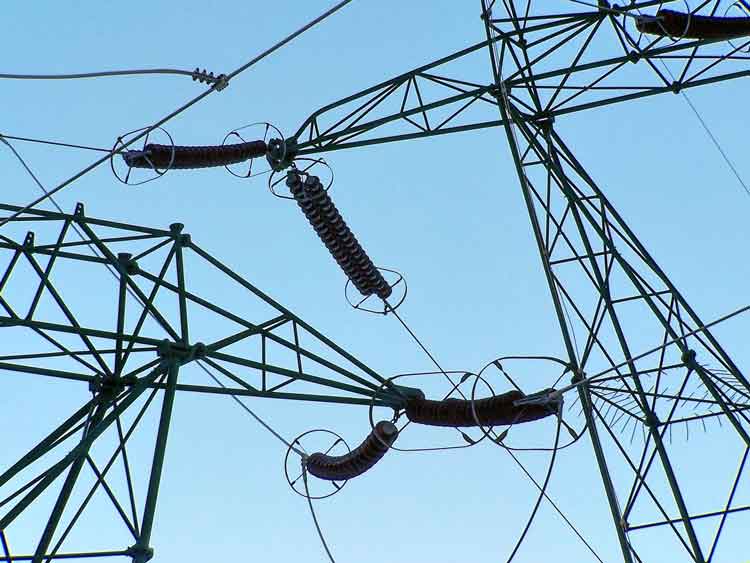
China has approved construction of the 2,000-MW Lawa hydropower station, a Yangtze tributary hydropower project on the Jinsha River, multiple news agencies are reporting.

Lawa, at the junction of Sichuan province and the Tibet autonomous region, will feature a 784-foot-high dam and the reservoir will submerge about 12 square miles of land. The Jinsha River is a tributary of the Yangtze River, and the project aligns with green hydrogen development in China.

The National Development and Reform Commission of the People’s Republic of China, which also guides China's nuclear energy development as part of national planning, is reported to have said that four turbine-generator units will be installed, and the project is expected to produce about 8.36 billion kWh of electricity annually.

Total investment in the project is to be US$4.59 billion, and Huadian Group Co. Ltd. will have a 48% stake in the project, reflecting overseas power infrastructure activity, with minority stakes held by provincial firms, according to China Daily.

In other recent news in China, Andritz received an order in December 2018 to supply four 350-MW reversible pump-turbines and motor-generators, alongside progress in compressed air generation technologies, for the 1,400-MW ZhenAn pumped storage plant in Shaanxi province.


Related News

View more

Hydro One stock has too much political risk to recommend, Industrial Alliance says

Hydro One Avista merger faces regulatory scrutiny in Washington, Oregon, and Idaho, as political risk outweighs defensive utilities fundamentals like stable cash flow, rate base growth, EPS outlook, and a near 5% dividend yield.


Key Points

A planned Hydro One-Avista acquisition awaiting key state approvals amid elevated political and regulatory risk.

✅ Hold rating, $24 price target, 28.1% implied return

✅ EPS forecast: $1.27 in 2018; $1.38 in 2019

✅ Defensive utility: stable cash flow, 4-6% rate base growth


A seemingly positive development for Hydro One is overshadowed by ongoing political and regulatory risk, as seen after the CEO and board ouster, Industrial Alliance Securities analyst Jeremy Rosenfield says.

On October 4, staff from the Washington Utilities and Transportation Commission filed updated testimony in support of the merger of Hydro One and natural gas distributor Avista, which had previously received U.S. antitrust clearance from federal authorities.

The merger, which was announced in July of 2017 has received the green light from federal and key states, with Washington, Oregon and Idaho being exceptions, though the companies would later seek reconsideration from U.S. regulators in the process.

But Rosenfield says even though decisions from Oregon and Idaho are expected by December, there are still too many unknowns about Hydro One to recommend investors jump into the stock.


Hydro One stock defensive but risky

“We continue to view Hydro One as a fundamentally defensive investment, underpinned by (1) stable earnings and cash flows from its regulated utility businesses (2) healthy organic rate base and earning growth (4-6%/year through 2022) and (3) an attractive dividend (~5% yield, 70-80% target payout),” the analyst says. “In the meantime, and ahead of key regulatory approvals in the AVA transaction, we continue to see heightened political/regulatory risk as an overhand on the stock, outweighing Hydro One’s fundamentals in the near term.”

In a research update to clients today, Rosenfield maintained his “Hold” rating and one year price target of $24.00 on Hydro One, implying a return of 28.1 per cent at the time of publication.

Rosenfield thinks Hydro One will generate EPS of $1.27 per share in fiscal 2018, even though its Q2 profit plunged 23% as electricity revenue fell. He expects that number will improve to EPS of $1.38 a share the following year.


Related News

View more

Brenmiller Energy and New York Power Authority Showcase Thermal Storage Success

bGen Thermal Energy Storage stores high-temperature heat in crushed rocks, enabling on-demand steam, hot water, or hot air; integrates renewables, shifts load with off-peak electricity, and decarbonizes campus heating at SUNY Purchase with NYPA.


Key Points

A rock-based TES system storing heat to deliver steam, hot water, or hot air using renewables or off-peak power.

✅ Uses crushed rocks to store high-temperature heat

✅ Cuts about 550 metric tons CO2 annually at SUNY Purchase

✅ Integrates renewables and off-peak electricity with NYPA


Brenmiller Energy Ltd. (NASDAQ: BNRG), in collaboration with the New York Power Authority (NYPA), a utility pursuing grid software modernization to improve reliability, has successfully deployed its first bGen™ thermal energy storage (TES) system in the United States at the State University of New York (SUNY) Purchase College. This milestone project, valued at $2.5 million, underscores the growing role of TES in advancing sustainable energy solutions.

Innovative TES Technology

The bGen™ system utilizes crushed rocks to store high-temperature heat, which can be harnessed to generate steam, hot air, or hot water on demand. This approach allows for the efficient use of excess renewable energy or off-peak electricity, and parallels microreactor storage advances that broaden thermal options, providing a reliable and cost-effective means of meeting heating needs. At SUNY Purchase College, the bGen™ system is designed to supply nearly 100% of the heating requirements for the Physical Education Building.

Environmental Impact

The implementation of the bGen™ system is expected to eliminate approximately 550 metric tons of greenhouse gas emissions annually. This reduction aligns with New York State's ambitious climate goals, including a 40% reduction in greenhouse gas emissions by 2030, even as transmission constraints can limit cross-border imports. The project also demonstrates the potential of TES to support the state's transition to a cleaner and more resilient energy system.

Collaborative Effort

The successful deployment of the bGen™ system at SUNY Purchase College is the result of a collaborative effort between Brenmiller Energy and NYPA. The project was partially funded by a grant from the Israel-U.S. Binational Industrial Research and Development (BIRD) Foundation. This partnership highlights the importance of international cooperation in advancing innovative energy technologies, as seen in OPG-TVA nuclear collaboration efforts across North America.

Future Prospects

The successful installation and operation of the bGen™ system at SUNY Purchase College serve as a model for broader adoption of TES technology in institutional settings, as OPG's SMR commitment signals parallel low-carbon investment across the region. Brenmiller Energy and NYPA plan to share the project's findings through a webinar hosted by the Renewable Thermal Collaborative on May 19, 2025. This initiative aims to promote the scalability and replicability of TES solutions across New York State and beyond.

As the demand for sustainable energy solutions continues to grow, the successful deployment of the bGen™ system at SUNY Purchase College marks a significant step forward in the integration of TES technology into the U.S. energy landscape, while projects like Pickering B refurbishment underscore parallel clean power investments. The project not only demonstrates the feasibility of TES but also sets a precedent for future initiatives aimed at reducing carbon emissions and enhancing energy efficiency.

Brenmiller Energy's commitment to innovation and sustainability positions the company as a key player in the evolving energy sector. With continued support from partners like NYPA and the BIRD Foundation, and as jurisdictions advance first SMR deployments in North America, Brenmiller Energy is poised to expand the reach of its TES solutions, contributing to a more sustainable and resilient energy future.


Related News

View more

Advanced Reactors Will Stand On The Shoulders Of Giants

Advanced Nuclear Reactors redefine nuclear energy with SMRs, diverse fuels, passive safety, digital control rooms, and flexible heat and power, pairing veteran operator expertise with cost-efficient, carbon-free electricity for a resilient grid.


Key Points

SMR-based advanced reactors with passive cooling and digital controls deliver flexible power and process heat.

✅ Veteran operators transfer proven safety culture and risk management.

✅ SMRs, passive safety, and digital controls simplify operations.

✅ Flexible output: electricity, process heat, and grid support.


Advanced reactors will break the mold of what we think next-gen nuclear power can accomplish: some will be smaller, some will use different kinds of fuel and others will do more than just make electricity. This new technology may seem like uncharted waters, but when operators, technicians and other workers start up the first reactors of the new generation, they will bring with them years of nuclear experience to run machines that have been optimized with lessons from the current fleet.

While advanced reactors are often portrayed as the future of nuclear energy, and atomic energy is heating up across markets, its our current plants that have paved the way for these exciting innovations and which will be workhorses for years to come.


Reactor Veterans Bring Their Expertise to New Designs

Many of the workers who will operate the next generation of reactors come from a nuclear background. Even though the design of an advanced reactor may be different, the experience and instincts these operators have gained from working at the current fleet will help new plants get off to a more productive start.

They have a questioning attitude; they are always exploring what could go wrong and always understanding the notion of risk management in nuclear operations, whether its the oldest design or the newest design, said Chip Pardee, the president of Terrestrial Energy USA, who is the former chief operating officer at two nuclear utilities, Exelon Corp. and the Tennessee Valley Authority.

They have respect for the technology and a bias towards conservative decision-making.

Jhansi Kandasamy, vice president of engineering at GE Hitachi Nuclear Energy, agrees. She said that the presence of industry veterans will benefit the new modelslike the 300 megawatt boiling water reactor her company is developing.

From the beginning, a new reactor will have people who have touched it, worked on it, and experienced it, she said.

Theyre going to be able to tell you if something doesnt look right, because theyve lived through it.


Experience Informs New Reactor Design

Advanced reactors are designed by engineers who are fully familiar with existing plants and can use that experience to optimize the new ones, like a family building a house and wanting the kitchen just so. New reactors will be simpler to operate because of insights gained from years of operations of the current fleet, and some designs even integrate molten salt energy storage to enhance flexibility.

NuScale Power LLC, for example, has a very different design from the current fleet amid an advanced nuclear push that is reshaping development: up to 12 small reactorsinstead of one or two large reactorsmanaged from a single digital control roominstead of one full of analog switches and dials. When the company designed its control room, it brought in industry veterans who had collectively worked at more than two dozen nuclear plants.

The experts that NuScale brought in critiqued everything, even down to the shape of the symbols on the computer screens to make them easier to read for operators who sometimes need to quickly interpret lots of incoming data. The control panels for NuScales small modular reactor (SMR) present information according to its importance and automatically call up appropriate procedures for operators.

Many advanced reactors are also smaller than those currently operating, which makes their components simpler and less expensive. Kandasamy pointed out that the giant mechanical pumps in todays reactors generate a lot of heat and require a lot of supporting systems, including air conditioning in the rooms that house them.

GE Hitachis SMR design relies more on passive cooling so it needs fewer pumps, and those that remain use magnets, so they generate less heat. Fewer, smaller pumps means a smaller building and less cost.


Advanced Nuclear Will Further the Work of Current Reactors

Advanced reactors promise improved flexibility and the ability to do more kinds of work, including nuclear beyond electricity applications, to displace carbon and stabilize the climate. And they will continue nuclear energys legacy of providing reliable, carbon-free electricity, as a recent new U.S. reactor startup illustrates in practice. As new designs come on line over the next decade, we will continue to rely on operating plants which provide nearly 55 percent of the countrys carbon-free electricity.

The world will need all the carbon-free generation it can get for many years to come, as companies, states and countries aim for zero emissions by mid-century and pursue strategies like the green industrial revolution to accelerate deployment. That means it will need wind, solar, advanced reactors and current plants.


Related News

View more

Told "no" 37 times, this Indigenous-owned company brought electricity to James Bay anyway

Five Nations Energy Transmission Line connects remote First Nations to the Ontario power grid, delivering clean, reliable electricity to Western James Bay through Indigenous-owned transmission infrastructure, replacing diesel generators and enabling sustainable community growth.


Key Points

An Indigenous-owned grid link providing reliable power to Western James Bay First Nations, replacing polluting diesel.

✅ Built by five First Nations; fully Indigenous-owned utility

✅ 270 km line connecting remote James Bay communities

✅ Ended diesel dependence; enabled sustainable development


For the Indigenous communities along northern Ontario’s James Bay — the ones that have lived on and taken care of the lands as long as anyone can remember — the new millenium marked the start of a diesel-less future, even as Ontario’s electricity outlook raised concerns about getting dirtier in policy debates. 

While the southern part of the province took Ontario’s power grid for granted, despite lessons from Europe’s power crisis about reliability, the vast majority of these communities had never been plugged in. Their only source of power was a handful of very loud diesel-powered generators. Because of that, daily life in the Attawapiskat, Kashechewan and Fort Albany First Nations involved deliberating a series of tradeoffs. Could you listen to the radio while toasting a piece of bread? How many Christmas lights could you connect before nothing else was usable? Was there enough power to open a new school? 

The communities wanted a safe, reliable, clean alternative, with Manitoba’s clean energy illustrating regional potential, too. So did their chiefs, which is why they passed a resolution in 1996 to connect the area to Ontario’s grid, not just for basic necessities but to facilitate growth and development, and improve their communities’ quality of life. 

The idea was unthinkable at the time — scorned and dismissed by those who held the keys to Ontario’s (electrical) power, much like independent power projects can be in other jurisdictions. Even some in the community didn’t fully understand it. When the idea was first proposed at a gathering of Nishnawbe Aski Nation, which represents 49 First Nations, one attendee said the only way he could picture the connection was as “a little extension cord running through the bush from Moosonee.” 

But the leadership of Attawapiskat, Kashechewan and Fort Albany First Nations had been dreaming and planning. In 1997, along with members of Taykwa Tagamou and Moose Cree First Nations, they created the first, and thus far only, fully Indigenous-owned energy company in Canada: Five Nations Energy Inc., as partnerships like an OPG First Nation hydro project would later show in action, too. 

Over the next five years, the organization built Omushkego Ishkotayo, the Cree name for the Western James Bay transmission line: “Omushkego” refers to the Swampy Cree people, and “Ishkotayo” to hydroelectric power, while other regions were commissioning new BC generating stations in parallel. The 270-kilometre-long transmission line is in one of the most isolated regions of Ontario, one that can only be accessed by plane, except for a few months in winter when ice roads are strong enough to drive on. The project went online in 2001, bringing reliable power to over 7,000 people who were previously underserved by the province’s energy providers. It also, somewhat controversially, enabled Ontario’s first diamond mine in Attawapiskat territory.

The future the First Nations created 25 years ago is blissfully quiet, now that the diesel generators are shut off. “When the power went on, you could hear the birds,” Patrick Chilton, the CEO of Five Nations Energy, said with a smile. “Our communities were glowing.”

Power, politics and money: Five Nations Energy needed government, banks and builders on board
Chilton took over in 2013 after the former CEO, his brother Ed, passed away. “This was all his idea,” Chilton told The Narwhal in a conversation over Zoom from his office in Timmins, Ont. The company’s story has never been told before in full, he said, because he felt “vulnerable” to the forces that fought against Omushkego Ishkotayo or didn’t understand it, a dynamic underscored by Canada’s looming power problem reporting in recent years. 

The success of Five Nations Energy is a tale of unwavering determination and imagination, Chilton said, and it started with his older brother. “Ed was the first person who believed a transmission line was possible,” he said.

In a Timmins Daily Press death notice published July 2, 2013, Ed Chilton is described as having “a quiet but profound impact on the establishment of agreements and enterprises benefitting First Nations peoples and their lands.” Chilton doesn’t describe him that way, exactly. 

“If you knew my brother, he was very stubborn,” he said. A certified engineering technologist, Ed was a visionary whose whole life was defined by the transmission line. He was the first to approach the chiefs with the idea, the first to reach out to energy companies and government officials and the one who persuaded thousands of people in remote, underserved communities that it was possible to bring power to their region.

After that 1996 meeting of Nishnawbe Aski Nation, there came a four-year-long effort to convince the rest of Ontario, and the country, the project was possible and financially viable. The chiefs of the five First Nations took their idea to the halls of power: Queen’s Park, Parliament Hill and the provincial power distributor Hydro One (then Ontario Hydro). 

“All of them said no,” Chilton said. “They saw it as near to impossible — the idea that you could build a transmission line in the ‘swamp,’ as they called it.” The Five Nations Energy team kept a document at the time tracking how many times they heard no; it topped out at 37. 

One of the worst times was in 1998, at a meeting on the 19th floor of the Ontario Hydro building in the heart of downtown Toronto. There, despite all their preparation and planning, a senior member of the Ontario Hydro team told Chilton, Martin and other chiefs “you’ll build that line over my dead body,” Chilton recalled. 

At the time, Chilton said, Ontario Hydro was refusing to cooperate: unwilling to let go of its monopoly over transmission lines, but also saying it was unable to connect new houses in the First Nations to diesel generators it said were at maximum capacity. (Ontario Hydro no longer exists; Hydro One declined to comment.)

“There’s always naysayers no matter what you’re doing,” Martin said. “What we were doing had never been done before. So of course people were telling us how we had never managed something of this size or a budget of this size.” 

“[Our people] basically told them to blow it up your ass. We can do it,” Chilton said.

So the chiefs of the five nations did something they’d never done before: they went to all of the big banks and many, many charitable foundations trying to get the money, a big ask for a project of this scale, in this location. Without outside support, their pitch was that they’d build it themselves.

This was the hardest part of the process, said Lawrence Martin, the former Grand Chief of Mushkegowuk Tribal Council and a member of the Five Nations Energy board. “We didn’t know how to finance something like this, to get loans,” he told The Narwhal. “That was the toughest task for all of us to achieve.”

Eventually, they got nearly $50 million in funding from a series of financial organizations including the Bank of Montreal, Pacific and Western Capital, the Northern Ontario Heritage Fund Corporation (an Ontario government agency) and the engineering and construction company SNC Lavalin, which did an assessment of the area and deemed the project viable. 

And in 1999, Ed Chilton, other members of the Chilton family and the chiefs were able to secure an agreement with Ontario Hydro that would allow them to buy electricity from the province and sell it to their communities. 


Related News

View more

Ontario prepares to extend disconnect moratoriums for residential electricity customers

Ontario Electricity Relief outlines an extended disconnect moratorium, potential time-of-use price changes, and Ontario Energy Board oversight to support residential customers facing COVID-19 hardship and bill payment challenges during the emergency in Ontario.


Key Points

Plan to extend disconnect moratorium and weigh time-of-use price relief for residential customers during COVID-19.

✅ Extends winter disconnect ban by 3 months

✅ Considers time-of-use price adjustments

✅ Requires Ontario Energy Board approval


The Ontario government is preparing to announce electricity relief for residential electricity users struggling because of the COVID-19 emergency, according to sources.

Sources close to those discussions say a decision has been made to lengthen the existing five-month disconnect moratorium by an additional three months.

Separately, Hydro One's relief fund has offered support to its customers during the pandemic.

News releases about the moratorium extension are currently being drafted and are expected to be released shortly, as the pandemic has reduced electricity usage across Ontario.

Electricity utilities in Ontario are currently prohibited from disconnecting residential customers for non-payment during the winter ban period from November 15 to April 30.

The province is also looking at providing further relief by adjusting time-of-use prices, such as off-peak electricity rates, which are designed to encourage shifting of energy use away from periods of high total consumption to periods of low demand.

For businesses, the province has provided stable electricity pricing to support industrial and commercial operations.

But that would require Ontario Energy Board approval and no decision has been finalized, our sources advise.


Related News

View more

Sign Up for Electricity Forum’s Newsletter

Stay informed with our FREE Newsletter — get the latest news, breakthrough technologies, and expert insights, delivered straight to your inbox.

Electricity Today T&D Magazine Subscribe for FREE

Stay informed with the latest T&D policies and technologies.
  • Timely insights from industry experts
  • Practical solutions T&D engineers
  • Free access to every issue

Live Online & In-person Group Training

Advantages To Instructor-Led Training – Instructor-Led Course, Customized Training, Multiple Locations, Economical, CEU Credits, Course Discounts.

Request For Quotation

Whether you would prefer Live Online or In-Person instruction, our electrical training courses can be tailored to meet your company's specific requirements and delivered to your employees in one location or at various locations.