No Decision In Market Manipulation Case

By The Oregonian Newspaper


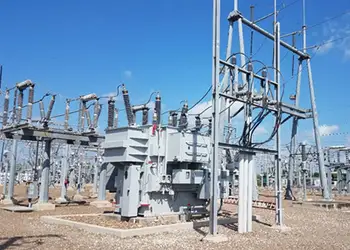
Substation Relay Protection Training

Our customized live online or in‑person group training can be delivered to your staff at your location.
  • Live Online
  • 12 hours Instructor-led
  • Group Training Available
Regular Price:
$699
Coupon Price:
$599
Reserve Your Seat Today
Portland General Electric and federal regulators failed to reach agreement this week on whether the Oregon utility helped its parent company, Enron, manipulate electricity markets during the 2000-01 energy crisis.

Settlement talks, held in Washington, D.C., marked the second time PGE attorneys and Federal Energy Regulatory Commission staff have huddled to try to hammer out a settlement. An agreement could range from absolving PGE of any wrongdoing to forcing the utility to pay refunds.

PGE attorney Jay Dudley declined to provide details about the meeting or to say whether any progress was made.

"At the conclusion, there was a promise to continue the discussions," he said.

The faltering discussions increase the likelihood that the investigation will proceed until a hearing before an administrative law judge, now scheduled for June 2. Initially, the hearing had been set for April 1, but Jeffie Massey, the judge assigned to the inquiry, recently pushed back the date.

Massey also took the unusual step of allowing oral testimony at the hearing, noting the "unique nature" of the proceeding.

A decision from Massey is due July 17.

Two other utilities, Avista Corp. of Spokane and El Paso Electric in Texas, previously reached settlement agreements with the FERC staff over their alleged involvement in trades with Enron. If the deals are finalized, Avista will be absolved and El Paso will pay refunds.

FERC launched its investigation into PGE's trading practices in August, focusing on trades with Enron that occurred over a 17-day stretch in the spring of 2000. The now-bankrupt Enron has been at the center of controversies over greedy, manipulative traders and the degree to which their activities may have contributed to the year-long crisis.

FERC's trial staff has argued that PGE aided Enron in a strategy dubbed "Death Star." The tactic created false congestion on California's transmission grid and allowed Enron to collect payments for easing an overload that never actually existed.

PGE's involvement violated federal regulations governing trades between affiliated companies, the trial staff maintains.

PGE argues that it never knowingly helped out Enron and that the affiliate transactions were legal.

Judge Massey won't weigh in on the matter until the hearing is held and a decision issued. But her recent order to revise the procedural schedule drew an unusually sharp response from PGE.

In her Jan. 17 order, Massey wrote, "Evidence reveals that Portland General Electric Co. has, apparently, admitted that it engaged in most of the manipulative transactions and posting violations identified in staff's direct case."

PGE shot back that Massey's remarks indicated she already had assumed the utility's guilt.

"It appears that the presiding judge has strayed from the role of impartial decision-maker and has now adopted the cloak of chief prosecutor," PGE attorneys wrote in a Jan. 23 response.

"For the record, Portland General does not admit to engaging in any "manipulative" trades," the filing continues. "Yes, it does concede that it entered into the so-called 17 days transaction with EPMI (Enron Power Marketing Inc.), but PGE has disputed and will continue to dispute that at the time it became involved in those transactions neither it or its employees believed them to be improper."

The motion asks Massey to clarify the meaning of her remarks. It also asked for more details on what type of additional testimony might be allowed during oral arguments.

Dudley said PGE is concerned that other parties in the case might withhold new information until the last minute in an effort to "ambush" the utility.

In addition to FERC, interveners in the case include the City of Tacoma, whose public utility bought high-priced power during the energy crisis and was forced to dramatically increase customer rates to cover the costs. It blames Enron, PGE and others for contributing to the market run-up and is seeking refunds.

Philip Chabot, an attorney for Tacoma, is pushing for more time to gather evidence against PGE, and he said he supported Massey's latest efforts to revise the schedule.

Massey "clearly understands that up to this point no one has had adequate access to information," he said.

Chabot said PGE has failed to persuade him of its innocence.

"Not for a minute do I believe PGE didn't know what it was doing when it aided Enron in Death Star," he said.

Melinda Davison, an attorney for the Industrial Customers of Northwest Utilities, another party in the case, said she will file documents today countering PGE's efforts to limit testimony.

"We think it's an appropriate accommodation by the judge to create a full and complete record," she said.

Related News
ATCO Electric agrees to $31 million penalty following regulator's investigation

ATCO Electric administrative penalty underscores an Alberta Utilities Commission probe into a sole-sourced First Nation contract, Jasper transmission line overpayments, and nondisclosure to ratepayers, sparked by a whistleblower and pending settlement approval.


Key Points

A $31M AUC settlement over alleged overpayment, sole-sourcing, and nondisclosure tied to a Jasper transmission line.

✅ $31M administrative penalty; AUC settlement pending approval

✅ Sole-sourced First Nation contract to protect related ATCO deal

✅ Overpayment concealed when seeking recovery from ratepayers


Regulated Alberta utility ATCO Electric has agreed to pay a $31 million administrative penalty after an Alberta Utilities Commission utilities watchdog investigation found it deliberately overpaid a First Nation group for work on a new transmission line, and then failed to disclose the reasons for it when it applied to be reimbursed by ratepayers for the extra cost.

An agreed statement of facts contained in a settlement agreement between ATCO Electric Ltd. and the commission's enforcement staff says the company sole-sourced a contract in 2018 for work that was necessary for an electric transmission line to Jasper, Alta., even as BC Hydro marked a Site C transmission line milestone elsewhere.

The company that won the contract was co-owned by the Simpcw First Nation in Barriere, B.C., while debates over a First Nations electricity line in Ontario underscore related issues, and the agreement says one of the reasons for the sole-sourcing was that another of Calgary-based ATCO's subsidiaries had a prior deal with the First Nation for infrastructure projects that included the provision of work camps on the Trans Mountain Pipeline expansion project.

The statement of facts says ATCO Electric feared that if it didn't grant the contract to the First Nation group and instead put the work to tender, amid legal pressures such as a treaty rights challenge, the group might back out of its deal with ATCO Structures and Logistics and partner with another, non-ATCO company on the Trans Mountain work.

The agreed statement says ATCO Electric paid several million dollars more than market value for some of the Jasper line work, while a Manitoba-Minnesota line delay was being weighed in another jurisdiction, and staff attempted to conceal the reasons for the overpayment when they sought to recover the extra money from Alberta consumers.

It states the investigation was sparked by a whistleblower, and notes the agreement between the utility commission's enforcement staff and ATCO Electric must still be approved by the Alberta Utilities Commission, a process comparable to hearings that consider oral traditional evidence on interprovincial lines.

The commission must be satisfied the settlement is in the public interest, a consideration often informed by concerns from Site C opponents in other regions.


Related News

View more

Energy Security Support to Ukraine

U.S. Energy Aid to Ukraine delivers emergency electricity grid equipment, generators, transformers, and circuit breakers, supports ENTSO-E integration, strengthens energy security, and advances decarbonization to restore power and heat amid Russian attacks.


Key Points

U.S. funding and equipment stabilize Ukraine's power grid, strengthen energy security, and advance ENTSO-E integration.

✅ $53M for transformers, breakers, surge arresters, disconnectors

✅ $55M for generators and emergency heat to municipalities

✅ ENTSO-E integration, cybersecurity, nuclear safety support


In the midst of Russia’s continued brutal attacks against Ukraine’s energy infrastructure, Secretary of State Blinken announced today during a meeting of the G7+ on the margins of the NATO Ministerial in Bucharest that the United States government is providing over $53 million to support acquisition of critical electricity grid equipment. This equipment will be rapidly delivered to Ukraine on an emergency basis to help Ukrainians persevere through the winter, as the country prepares for winter amid energy challenges. This supply package will include distribution transformers, circuit breakers, surge arresters, disconnectors, vehicles and other key equipment.

This new assistance is in addition to $55 million in emergency energy sector support for generators and other equipment to help restore emergency power and heat to local municipalities impacted by Russia’s attacks on Ukraine’s power system, while both sides accuse each other of energy ceasefire violations that complicate repairs. We will continue to identify additional support with allies and partners, and we are also helping to devise long-term solutions for grid restoration and repair, along with our assistance for Ukraine’s effort to advance the energy transition and build an energy system decoupled from Russian energy.

Since Russia’s further invasion on February 24, working together with Congress, the Administration has provided nearly $32 billion in assistance to Ukraine, including $145 million to help repair, maintain, and strengthen Ukraine’s power sector in the face of continued attacks. We also have provided assistance in areas such as EU integration and regional electricity trade, including electricity imports to stabilize supply, natural gas sector support to maximize resource development, support for nuclear safety and security, and humanitarian relief efforts to help Ukrainians to overcome the impacts of energy shortages.

Since 2014, the United States has provided over $160 million in technical support to strengthen Ukraine’s energy security, including to strengthen EU interconnectivity, increase energy supply diversification, and promote investments in energy efficiency, renewable energy, and clean energy technologies and innovation.  Much of this support has helped prepare Ukraine for its eventual interconnection with Europe’s ENTSO-E electricity grid, aligning with plans to synchronize with ENTSO-E across the integrated power system, including the island mode test in February 2022 that not only demonstrated Ukraine’s progress in meeting the EU’s technical requirements, but also proved to be critical considering Russia’s subsequent military activity aimed at disrupting power supplies and distribution in Ukraine.


Department of Energy (DOE)

  • With the increased attacks on Ukraine’s electricity grid and energy infrastructure in October, DOE worked with the Ukrainian Ministry of Energy and DOE national laboratories to collate, vet, and help prioritize lists of emergency electricity equipment for grid repair and stabilization amid wider global energy instability affecting supply chains.
  • Engaged at the CEO level U.S. private sector and public utilities and equipment manufacturers to identify $35 million of available electricity grid equipment in the United States compatible with the Ukrainian system for emergency delivery. Identified $17.5 million to support purchase and transportation of this equipment.
  • With support from Congress, initiated work on full integration of Ukraine with ENTSO-E to support resumption of Ukrainian energy exports to other European countries in the region, including funding for energy infrastructure analysis, collection of satellite data and analysis for system mapping, and work on cyber security, drawing on the U.S. rural energy security program to inform best practices.
  • Initiated work on a new dynamic model of interdependent gas and power systems of Europe and Ukraine to advance identification and mitigation of critical vulnerabilities.
  • Delivered emergency diesel fuel and other critical materials needed for safe operation of Ukrainian nuclear power plants, as well as initiated the purchase of three truck-mounted emergency diesel backup generators to be delivered to improve plant safety in the event of the loss of offsite power.

U.S. Department of State

  • Building on eight years of technical engagement, the State Department continued to provide technical support to Naftogaz and UkrGasVydobuvannya to advance corporate governance reform, increase domestic gas production, provide strategic planning, and assess critical sub-surface and above-ground technical issues that impact the company’s core business functions.
  • The State Department is developing new programs focused on emissions abatement, decarbonization, and diversification, acknowledging the national security benefits of reducing reliance on fossil fuels to support Ukraine’s ambitious clean energy and climate goals and address the impacts of reduced supplies of natural gas from Russia.
  • The State Department led a decades-long U.S. government engagement to develop and expand natural gas reverse flow (west-to-east) routes to enhance European and Ukrainian energy security. Ukraine is now able to import natural gas from Europe, eliminating the need for Ukraine to purchase natural gas from Gazprom.


Related News

View more

Ontario Supports Plan to Safely Continue Operating the Pickering Nuclear Generating Station

Pickering Nuclear Generating Station Refurbishment will enable OPG to deliver reliable, clean electricity in Ontario, cut CO2 emissions, support jobs, boost Cobalt-60 medical isotopes supply, and proceed under CNSC oversight alongside small modular reactor leadership.


Key Points

A plan to assess and renew Pickering's B units, extending safe, clean, low-cost power in Ontario for up to 30 years.

✅ Extends zero-emissions baseload by up to 30 years

✅ Requires CNSC approval and rigorous safety oversight

✅ Supports Ontario jobs and Cobalt-60 isotope production


The Ontario government is supporting Ontario Power Generation’s (OPG) continued safe operation of the Pickering Nuclear Generating Station. At the Ontario government’s request, as a formal extension request deadline approaches, OPG reviewed their operational plans and concluded that the facility could continue to safely generate electricity.

“Keeping Pickering safely operating will provide clean, low-cost, and reliable electricity to support the incredible economic growth and new jobs we’re seeing, while building a healthier Ontario for everyone,” said Todd Smith, Minister of Energy. “Nuclear power has been the safe and reliable backbone of Ontario’s electricity system since the 1970s and our government is working to secure that legacy for the future. Our leadership on Small Modular Reactors and consideration of a refurbishment of Pickering Nuclear Generating Station are critical steps on that path.”

Maintaining operations of Pickering Nuclear Generation Station will also protect good-paying jobs for thousands of workers in the region and across the province. OPG, which reported 2016 financial results that provide context for its operations, employs approximately 4,500 staff to support ongoing operation at its Pickering Nuclear Generating Station. In total, there are about 7,500 jobs across Ontario related to the Pickering Nuclear Generating Station.

Further operation of Pickering Nuclear Generating Station beyond September 2026 would require a complete refurbishment. The last feasibility study was conducted between 2006 and 2009. With significant economic growth and increasing electrification of industry and transportation, and a growing electricity supply gap across the province, Ontario has asked OPG to update its feasibility assessment for refurbishing Pickering “B” units at the Nuclear Generating Station, based on the latest information, as a prudent due diligence measure to support future electricity planning decisions. Refurbishment of Pickering Nuclear Generating Station could result in an additional 30 years of reliable, clean and zero-emissions electricity from the facility.

“Pickering Nuclear Generating Station has never been stronger in terms of both safety and performance,” said Ken Hartwick, OPG President and CEO. “Due to ongoing investments and the efforts of highly skilled and dedicated employees, Pickering can continue to safely and reliably produce the clean electricity Ontarians need.”

Keeping Pickering Nuclear Generating Station operational would ensure Ontario has reliable, clean, and low-cost energy, even as planning for clean energy when Pickering closes continues across the system, while reducing CO2 emissions by 2.1 megatonnes in 2026. This represents an approximate 20 per cent reduction in projected emissions from the electricity sector in that year, which is the equivalent of taking up to 643,000 cars off the road annually. It would also increase North America’s supply of Cobalt-60, a medical isotope used in cancer treatments and medical equipment sterilization, by about 10 to 20 per cent.

OPG requires approval from the Canadian Nuclear Safety Commission (CNSC) for its revised schedule. The CNSC, which employs a rigorous and transparent decision-making process, will make the final decision regarding Pickering’s safe operating life, even though the station was slated to close as planned earlier. OPG will continue to ensure the safety of the Pickering facility through rigorous monitoring, inspections, and testing.


Related News

View more

Siemens Energy to unlock a new era of offshore green hydrogen production

Offshore Wind-to-Hydrogen Integration enables green hydrogen by embedding an electrolyzer in offshore turbines. Siemens Gamesa and Siemens Energy align under H2Mare to decarbonize industry, advance the Paris Agreement, and unlock scalable, off-grid renewable production.


Key Points

A method integrating electrolyzers into offshore wind turbines to generate green hydrogen and reduce carbon emissions.

✅ Integrated electrolyzer at turbine base for off-grid operation

✅ Enables scalable, cost-efficient green hydrogen production

✅ Supports decarbonization targets under Paris Agreement


To reach the Paris Agreement goals, the world will need vast amounts of green hydrogen and, with offshore wind growth accelerating, wind will provide a large portion of the power needed for its production.

Siemens Gamesa and Siemens Energy announced today that they are joining forces combining their ongoing wind-to-hydrogen developments to address one of the major challenges of our decade - decarbonizing the economy to solve the climate crisis.

The companies are contributing with their developments to an innovative solution that fully integrates an electrolyzer into an offshore wind turbine as a single synchronized system to directly produce green hydrogen. The companies intend to provide a full-scale offshore demonstration of the solution by 2025/2026. The German Federal Ministry of Education and Research, reflecting Germany's clean energy progress, announced today that the developments can be implemented as part of the ideas competition 'Hydrogen Republic of Germany'.

'Our more than 30 years of experience and leadership in the offshore wind industry, coupled with Siemens Energy's expertise in electrolyzers, brings together brilliant minds and cutting-edge technologies to address the climate crisis. Our wind turbines play a huge role in the decarbonization of the global energy system, and the potential of wind to hydrogen means that we can do this for hard-to-abate industries too. It makes me very proud that our people are a part of shaping a greener future,' said Andreas Nauen, Siemens Gamesa CEO.

Christian Bruch, CEO of Siemens Energy, explains: 'Together with Siemens Gamesa, we are in a unique position to develop this game changing solution. We are the company that can leverage its highly flexible electrolyzer technology and create and redefine the future of sustainable offshore energy production. With these developments, the potential of regions with abundant offshore wind, such as the UK offshore wind sector, will become accessible for the hydrogen economy. It is a prime example of enabling us to store and transport wind energy, thus reducing the carbon footprint of economy.'

Over a time frame of five years, Siemens Gamesa plans to invest EUR 80 million and Siemens Energy is targeting to invest EUR 40 million in the developments. Siemens Gamesa will adapt its development of the world's most powerful turbine, the SG 14-222 DD offshore wind turbine to integrate an electrolysis system seamlessly into the turbine's operations. By leveraging Siemens Gamesa's intricate knowledge and decades of experience with offshore wind, electric losses are reduced to a minimum, while a modular approach ensures a reliable and efficient operational set-up for a scalable offshore wind-to-hydrogen solution. Siemens Energy will develop a new electrolysis product to not only meet the needs of the harsh maritime offshore environment and be in perfect sync with the wind turbine, but also to create a new competitive benchmark for green hydrogen.

The ultimate fully integrated offshore wind-to-hydrogen solution will produce green hydrogen using an electrolyzer array located at the base of the offshore wind turbine tower, blazing a trail towards offshore hydrogen production. The solution will lower the cost of hydrogen by being able to run off grid, much like solar-powered hydrogen in Dubai showcases for desert environments, opening up more and better wind sites. The companies' developments will serve as a test bed for making large-scale, cost-efficient hydrogen production a reality and will prove the feasibility of reliable, effective implementation of wind turbines in systems for producing hydrogen from renewable energy.

The developments are part of the H2Mare initiative which is a lighthouse project likely to be supported by the German Federal Ministry of Education and Research ideas competition 'Hydrogen Republic of Germany'. The H2mare initiative under the consortium lead of Siemens Energy is a modular project consisting of multiple sub-projects to which more than 30 partners from industry, institutes and academia are contributing. Siemens Energy and Siemens Gamesa will contribute to the H2Mare initiative with their own developments in separate modular building blocks.

About hydrogen and its role in the green energy transition

Currently 80 million tons of hydrogen are produced each year and production is expected to increase by about 20 million tons by 2030. Just 1% of that hydrogen is currently generated from green energy sources. The bulk is obtained from natural gas and coal, emitting 830 million tons of CO2 per year, more than the entire nation of Germany or the global shipping industry. Replacing this current polluting consumption would require 820 GW of wind generating capacity, 26% more than the current global installed wind capacity. Looking further ahead, many studies suggest that by 2050 production will have grown to about 500 million tons, with a significant shift to green hydrogen already signaled by projects like Brazil's green hydrogen plant now underway. The expected growth will require between 1,000 GW and 4,000 GW of renewable capacity by 2050 to meet demand, and in the U.S. initiatives like DOE hydrogen hubs aim to catalyze this build-out, which highlights the vast potential for growth in wind power.


Related News

View more

Notley announces plans to move Alberta's electricity grid to net-zero by 2035 if elected

Alberta NDP Net-Zero Electricity Plan targets a 2035 clean grid, expands renewable energy, cuts emissions, creates jobs, and boosts economic diversification and rural connectivity, aligning Alberta with Canada's 2050 climate goals.


Key Points

A policy to achieve a net-zero electricity grid by 2035, advance renewable energy, cut emissions, and grow jobs.

✅ Net-zero electricity grid target set for 2035

✅ Scales renewable energy and emissions reductions

✅ Focus on jobs, rural connectivity, and diversification


Ahead of the NDP’s weekend convention, Alberta’s Opposition leader has committed to transforming the province’s energy sector and moving the province’s electricity grid to net-zero by 2035, despite debate over the federal 2035 net-zero electricity grid target in other provinces, should an orange crush wash over Alberta in the next election.

NDP Leader Rachel Notley said they would achieve this as part of the path towards Canada’s 2050 net-zero emissions goal, aligning with broader clean grids trends, which will help preserve and create jobs in the province.

“I think it’s an important goal. It’s a way of framing the work that we’re going to do within our energy industry and our energy sector, including how Alberta produces and pays for electricity going forward,” said Notley. “We know the world is moving toward different objectives and we still have the ability to lead on that front, but we need to lay down the markers early and focus on reaching those goals.”

Premier Jason Kenney has previously called the 2050 target “aspirational,” and, as the electricity sector faces profound change in Alberta, Notley said, once the work begins, it’s likely they would meet the objective earlier than proposed to reduce greenhouse gas emissions that contribute to global warming.

This is just one key issue that will be addressed at the party’s online convention, which is the first since the NDP’s defeat by the UCP in the last provincial election. Notley said other key issues will address economic diversification, economic recovery, job creation and social issues, as Alberta’s electricity market is headed for a reshuffle too. The focus, as she puts it, is “jobs, jobs, jobs.”

Attendees will also debate more than 140 policy resolutions over the weekend, including the development of a safe supply drug policy, banning coal mining in the Rocky Mountains and providing paid sick leave for workers.

Outside the formal agenda, debate over electricity market competition continues in Alberta as stakeholders weigh options.

Notley said an area of growing focus for the NDP will be rural Alberta, which is typically a conservative stronghold. One panel presentation during the convention will focus on connecting and building relationships with rural Albertans and growing the NDP profile in those areas.

“We think that we have a lot to offer rural Alberta and that, quite frankly, the UCP and (Kenney), in particular, have profoundly taken rural Alberta for granted,” she said. “Because of that, we think with a renewed energy amongst our membership to go out to parts of the province where we haven’t been previously as active, and talk about what they have been subjected to in the last two years, that we have huge opportunities there.”

Delegates will be asked to support a call for high-speed internet coverage across Alberta, which would remove barriers to access in rural Alberta and Indigenous communities, said the convention guidebook.

The convention comes as the NDP has a wide lead on the UCP, according to the latest polls. A Leger online survey of 1,001 Albertans conducted between March 5 to 8 found 40 per cent of respondents support the NDP, compared to just 20 per cent for the UCP.

Notley said it’s “encouraging” to see, but they aren’t taking anything for granted.

“I’ve always believed that Alberta Democrats have to work twice as hard as anybody else in the political spectrum, or the political arena,” she said. “So what we’re going to do is continue to do exactly what we have been, not only being a strong and I would argue fearless Opposition, but also trying to match every oppositional position with something that is propositional — offering Albertans a different vision, including an Alberta path to clean electricity where possible.”


Related News

View more

Failed PG&E power line blamed for Drum fire off Hwy 246 last June

PG&E Drum Fire Cause identified as a power line failure in Santa Barbara County, with arcing electricity igniting vegetation near Buellton on Drum Canyon Road; 696 acres burned as investigators and CPUC review PG&E safety.


Key Points

A failed PG&E power line sparked the 696-acre Drum Fire near Buellton; the utility is conducting its own probe.

✅ Power line failed between poles, arcing ignited vegetation.

✅ 696 acres burned; no structures damaged or injuries.

✅ PG&E filed CPUC incident report; ongoing investigation.


A downed Pacific Gas and Electric Co. power line was the cause of the Drum fire that broke out June 14 on Drum Canyon Road northwest of Buellton, a reminder that a transformer explosion can also spark multiple fires, the Santa Barbara County Fire Department announced Thursday.

The fire broke out about 12:50 p.m. north of Highway 246 and burned about 696 acres of wildland before firefighters brought it under control, although no structures were damaged or mass outages like the Los Angeles power outage occurred, according to an incident summary.

A team of investigators pinpointed the official cause as a power line that failed between two utility poles and fell to the ground, and as downed line safety tips emphasize, arcing electricity ignited the surrounding vegetation, said County Fire Department spokesman Capt. Daniel Bertucelli.

In response, a PG&E spokesman said the utility is conducting its own investigation and does not have access to whatever data investigators used, and, as the ATCO regulatory penalty illustrates, such matters can draw significant oversight, but he noted the company filed an electric incident report on the wire with the California Public Utilities Commission on June 14.

"We are grateful to the first responders who fought the 2020 Drum fire in Santa Barbara County and helped make sure that there were no injuries or fatalities, outcomes not always seen in copper theft incidents, and no reports of structures damaged or burned," PG&E spokesman Mark Mesesan said.

"While we are continuing to conduct our own investigation into the events that led to the Drum fire, and as the Site C watchdog inquiry shows, oversight bodies can seek more transparency, PG&E does not have access to the Santa Barbara County Fire Department's report."

He said PG&E remains focused on reducing wildfire risk across its service area while limiting the scope and duration of public safety power shutoffs, including strategies like line-burying decisions adopted by other utilities, and that the safety of customers and communities it serves are its most important responsibility.


Related News

View more

Sign Up for Electricity Forum’s Newsletter

Stay informed with our FREE Newsletter — get the latest news, breakthrough technologies, and expert insights, delivered straight to your inbox.

Electricity Today T&D Magazine Subscribe for FREE

Stay informed with the latest T&D policies and technologies.
  • Timely insights from industry experts
  • Practical solutions T&D engineers
  • Free access to every issue

Download the 2025 Electrical Training Catalog

Explore 50+ live, expert-led electrical training courses –

  • Interactive
  • Flexible
  • CEU-cerified