Metal Clad Switchgear Protection Explained
By William Conklin, Technical Editor
By William Conklin, Technical Editor
Our customized live online or in‑person group training can be delivered to your staff at your location.

Request for Quotation Service
Buyers Submit Free RFQs to top suppliers, no obligation.
Suppliers Browse real project RFQs directly from buyers.
Trust Electricity Forum 40 years connection buyers and suppliers.
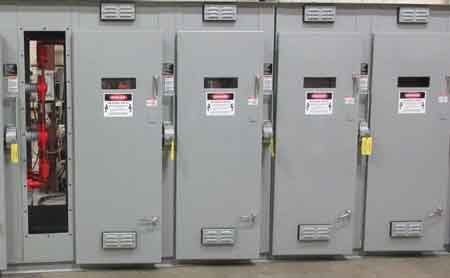
Metal-clad switchgear is used when a medium-voltage fault cannot spread or extend outages. Grounded compartments isolate breakers and buses, reducing arc-flash exposure and keeping maintenance predictable.
This equipment is selected to control how a system fails, not just how it runs. In plants, large commercial sites, and institutions, a single MV event can escalate into broader shutdowns if arc energy, fault paths, and breaker interactions are not physically contained by the lineup design.
Metal-clad construction enforces separation between the breaker, bus, cable terminations, and control sections, so a problem in one area is less likely to propagate into the next. That separation protects uptime and reduces exposure during switching, troubleshooting, and planned maintenance, especially when adjacent feeders must remain energized.
To understand how metal clad switchgear fits into broader system safety, see our full guide on electrical protection, covering technologies that reduce risk across medium-voltage environments.
When dealing with electricity, safety is non-negotiable. metal clad switchgear is engineered with a multitude of safety features to protect both personnel and equipment. Constructed according to the stringent IEEE C37.20.2 standard, these units boast a robust metal enclosure that shields live parts from accidental contact. Effective insulation plays a vital role in preventing short circuits and ensuring safe operation. Furthermore, many modern units incorporate advanced arc flash protection, minimizing the risk of dangerous arc flash incidents that can lead to serious injuries. Thorough training for personnel interacting with this equipment is crucial to ensure safe operation and that maintenance procedures are diligently followed. Proper arc fault circuit interrupter protection is essential in switchgear design to mitigate hazards caused by arc flash incidents.
Think you know Electrical Protection? Take our quick, interactive quiz and test your knowledge in minutes.
Reliable operation in a metal-clad lineup depends less on the presence of circuit breakers than on how they are applied, coordinated, and maintained. When breaker ratings, protection settings, or interrupting capacity are mismatched to system fault levels, a routine fault can escalate into widespread outages or equipment damage. In medium-voltage systems, delayed clearing or improper coordination does not just interrupt service; it can expose upstream equipment to stress it was never designed to withstand.
Metal-clad switchgear enforces disciplined breaker integration by physically separating power sections and defining clear interfaces between protection, control, and interruption. When breakers operate as intended, faults are cleared quickly and selectively. When they do not, the consequences are immediate and visible across the system. Understanding how different circuit breaker types behave under fault conditions is essential to avoiding misapplication and ensuring the lineup fails in a controlled, predictable way.
Metal clad switchgear finds its place in a diverse array of applications across various sectors. In industrial settings, it powers heavy machinery, intricate production lines, and essential processes. Commercial buildings rely on it for lighting, HVAC systems, and other vital services. Institutions, including hospitals and data centers, depend on it for an uninterrupted power supply to life-saving equipment and sensitive data systems. Whether it's within an electrical substation or at the heart of a manufacturing plant, metal clad switchgear provides a safe and dependable solution for controlling and distributing power. If you're analyzing system capacity, explore how available fault current impacts the performance and safety of metal clad installations.
Metal-clad switchgear rarely fails without warning, but those warnings are often missed when maintenance becomes routine or deferred. Loose connections, degraded insulation, and mechanical wear inside breakers and compartments change fault behavior long before a visible outage occurs. When these conditions go unaddressed, clearing times increase, arc energy rises, and minor faults can escalate into extended shutdowns or internal damage.
Regular inspection and testing exist to confirm that the switchgear will behave predictably when a fault occurs, not simply to satisfy maintenance schedules. Breaker operation checks, insulation testing, and protection verification are the controls that determine whether the lineup isolates a problem cleanly or allows it to propagate. Coordination between relays and breakers is vital in protection schemes—read about relay and circuit breaker coordination to optimize your setup.
While metal clad switchgear offers a high level of protection and performance, other types cater to specific applications and budget considerations. For instance, metal-enclosed switchgear offers a cost-effective alternative for medium-voltage applications with lower fault current requirements. When unique needs arise, a custom solution can be engineered to meet the specific demands of a particular installation. Understanding the nuances of different types, including high voltage and indoor options, empowers engineers to select the most suitable solution for their electrical system.
Metal clad switchgear must be supported by effective overcurrent protection devices to detect and isolate faults quickly.
For engineers selecting between switchgear options, our article on what is switchgear offers a helpful overview of types, functions, and design considerations.
Stay informed with our FREE Electrical Protection Newsletter — get the latest news, breakthrough technologies, and expert insights, delivered straight to your inbox.
Advantages To Instructor-Led Training – Instructor-Led Course, Customized Training, Multiple Locations, Economical, CEU Credits, Course Discounts.
Request For QuotationWhether you would prefer Live Online or In-Person instruction, our electrical training courses can be tailored to meet your company's specific requirements and delivered to your employees in one location or at various locations.