Arc Flash Training Online: Benefits, Cost, and Updates
By William Conklin, Technical Editor
By William Conklin, Technical Editor
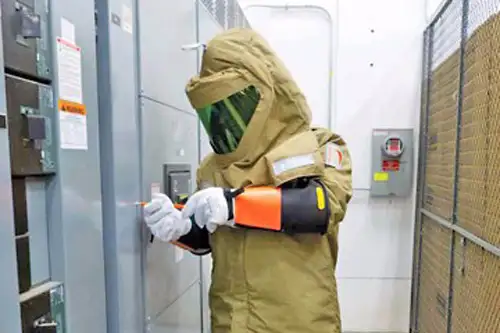
Our customized live online or in‑person group training can be delivered to your staff at your location.
Request for Quotation Service
Buyers Submit Free RFQs to top suppliers, no obligation.
Suppliers Browse real project RFQs directly from buyers.
Trust Electricity Forum 40 years connection buyers and suppliers.
Arc flash training online delivers live instructor-led NFPA 70E and CSA Z462 safety courses for electrical workers. The 6-hour format covers incident energy, PPE selection, arc flash boundaries, and OSHA-aligned safe work practices.
The decision between live online and self-paced video training matters more for arc flash than for most technical topics. Arc flash training requires workers to apply judgment under real conditions: reading a label and deciding whether to proceed, selecting PPE based on calculated incident energy rather than habit, and determining whether energized work is justified or whether the equipment must be de-energized first. Those decisions do not come from watching a video. They come from instruction where a worker can ask about their specific equipment, their specific facility, and the conditions they actually work in.
Live online delivery makes that instruction accessible to distributed teams, remote sites, and workers who cannot attend in-person sessions, without the quality reduction associated with self-paced e-learning. A qualified instructor delivers the same course, answers the same questions, and works through the same scenarios. The worker is at their desk rather than in a classroom. The instruction is equivalent.
The standard online arc flash training course runs for 6 hours and is delivered in a single day as a live, instructor-led session. The format is video-conference-based, not asynchronous. Participants attend at a scheduled time, interact with the instructor throughout, and complete the session in one sitting. This mirrors the in-person format in structure and content. The difference is location, not quality.
The six-hour duration reflects the scope of NFPA 70E and CSA Z462 requirements for qualified person training. A course that adequately covers the standard cannot be compressed to two or three hours without removing content that workers need to apply the standard correctly. Courses that claim full compliance in under four hours typically omit either the hazard assessment methodology, the PPE selection decision process, or the safe work practice application sections that form the operational core of the training.
Think you know Arc Flash? Take our quick, interactive quiz and test your knowledge in minutes.
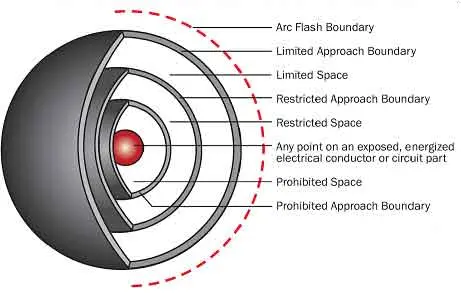
A course aligned with NFPA 70E and CSA Z462 for qualified electrical workers covers arc flash and shock hazard physics, the regulatory framework governing energized electrical work, how incident energy is calculated and what it means for PPE selection, how arc flash boundaries are established and applied in the field, the four NFPA 70E PPE categories and the minimum arc rating required for each, how to read and interpret arc flash labels, when energized work is justified and when it is not, how to complete an energized work permit, lockout tagout procedures for establishing an electrically safe work condition, and verification of zero energy state before work begins.
Workers who complete the course must be able to apply that content in real work conditions. The measure of a good course is not whether participants can pass a quiz. It is whether they can read a label on a switchgear lineup, determine the required PPE, assess whether their planned working distance is inside or outside the arc flash boundary, and make a correct decision about proceeding.
A recorded video delivers the same information to every viewer in the same sequence without variation. A live instructor responds to the room. When a participant asks whether a specific task on their 480V MCC lineup requires an energized work permit, a live instructor can work through that scenario. When a group of maintenance technicians is confused about the difference between the PPE category method and an incident energy analysis, a live instructor can explain it with examples from equipment they recognize.
This is not a marginal difference for arc flash training. The standard requires workers to apply judgment, not to recall facts. Judgment develops through instruction that engages with real situations. That engagement does not happen in a recorded video.
Participants who complete the live online course receive a certificate of completion identifying the employee's name, completion date, and training provider. Under NFPA 70E Article 110.2(E) and OSHA enforcement practice, training must be documented to be considered compliant. An undocumented course is treated as a course that did not occur. The certificate provides the documentation employers need for OSHA recordkeeping and internal audit purposes.
Most live online courses also award Continuing Education Units (CEUs) and Professional Development Hours (PDHs). The EF Training Institute's NFPA 70E course awards 0.6 CEUs and 6 PDHs per completion.
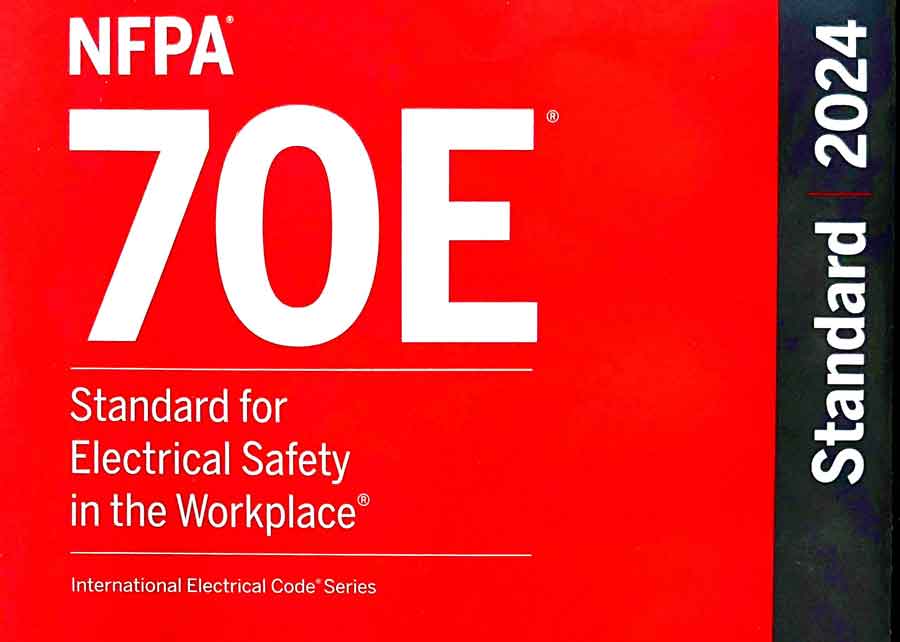
For US workers, the applicable standard is NFPA 70E. The live online NFPA 70E course is designed for maintenance electricians and technicians, electrical engineers who perform or oversee field work, safety managers and EHS professionals, project managers and supervisors who plan or authorize energized work, contractors working on client electrical systems, and inspectors and compliance officers. The registration fee is USD 149. NFPA 70E Training, OSHA Aligned Arc Flash Safety Course runs six hours from 10 a.m. to 4:30 p.m. Eastern Time, delivered live online by a certified NFPA 70E instructor.
For Canadian workers, the applicable standard is CSA Z462. The live online CSA Z462 arc flash course covers the same scope as the NFPA 70E course, with content and regulatory references aligned to Canadian workplace electrical safety requirements. The registration fee is CAD 249. Arc Flash Training - CSA Z462 Electrical Safety Certification is delivered over six hours by an instructor certified in CSA Z462. Workers completing the Canadian course receive a certificate of completion and CEU credits.
Stay informed with our FREE Arc Flash Newsletter — get the latest news, breakthrough technologies, and expert insights, delivered straight to your inbox.
Facilities with workers in both the US and Canada should confirm which standard applies in each jurisdiction. The technical content of NFPA 70E and CSA Z462 is closely aligned, but the regulatory references, provincial requirements, and documentation language differ. A worker trained under NFPA 70E is not automatically compliant under CSA Z462 for Canadian regulatory purposes.
NFPA 70E Article 110.2(D)(3) requires retraining at intervals not exceeding three years. CSA Z462 sets the same maximum interval. Both standards require retraining sooner when job assignments change and expose a worker to new hazard types, when equipment or process changes introduce new energy sources, or when an annual inspection or audit reveals deficiencies in a worker's knowledge or application of the procedure.
The three-year interval is a ceiling, not a recommendation. Many facilities set a two-year retraining schedule as a best practice, particularly where equipment changes frequently or where maintenance staff turnover is high. A worker who completed training three years ago under a previous version of NFPA 70E and has not been retrained since the 2024 edition was published may be working from outdated procedural knowledge, particularly regarding the energized work justification requirements that were updated in recent editions.
For the full regulatory requirements governing training content, documentation, and retraining triggers under both standards, see Arc Flash Training Requirements - CSA Z462 And NFPA 70E.
Organizations that need to qualify their full maintenance and operations workforce can access group live online or in-person delivery. Group sessions are customized to the facility's equipment, work practices, and regulatory environment. Instructors can incorporate site-specific scenarios, equipment-specific hazard examples, and facility procedure reviews into the course content.
Group delivery yields higher retention than individual enrollment because participants work through scenarios they recognize at their own facility. It also produces a consistent baseline of knowledge across the workforce, reducing variability in how energized work decisions are made from shift to shift. Group training is available for organizations of any size. For pricing and scheduling, see Electrical Safety Training – NFPA 70E and CSA Z462 Courses.
Live online training covers the regulatory framework, hazard recognition, PPE selection methodology, and safe work practice requirements. It does not replace equipment-specific energy control procedures, facility arc flash studies, or site-specific hazard analysis. A worker who completes the course is trained in the standard. They are not trained on their facility's specific equipment unless that content is incorporated through customized group delivery.
For information on how the standard's requirements translate into daily energized work decisions and the full scope of what NFPA 70E requires of employers and qualified workers, see Arc Flash Training | NFPA 70E And CSA Z462 Safety.
Explore 50+ live, expert-led electrical training courses –