AES withdraws interest from British power plant

By Associated Press


Substation Relay Protection Training

Our customized live online or in‑person group training can be delivered to your staff at your location.

  • Live Online
  • 12 hours Instructor-led
  • Group Training Available
Regular Price:
$699
Coupon Price:
$599
Reserve Your Seat Today
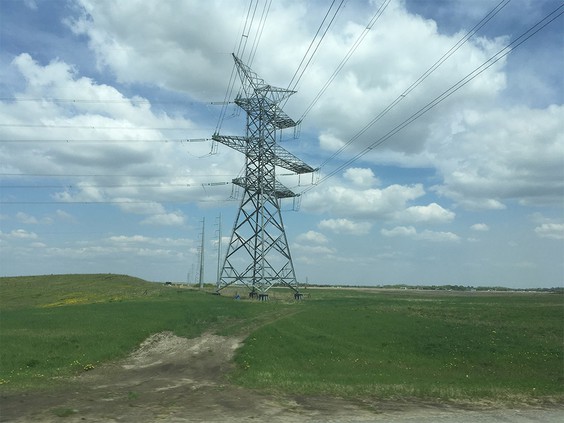
The failure of efforts to reduce crippling debts at Britain's biggest power plant has led the facility's U.S. owners to abandon their investment, throwing its future into doubt.

Two independent directors took control of the Drax power plant after its creditors rejected the financial restructuring plan proposed by its parent, AES Corp. AES of Arlington, Va., withdrew its four directors from Drax after banks and bondholders missed a midnight deadline for accepting the plan. AES had proposed slashing Drax's 1.3 billion pound ($2.1 billion) debt by offering to pay 47 pence for every pound the plant owes.

AES has now given up on Drax and is writing off its investment, Drax said. The U.S. company paid $1.9 billion for Drax in 1999.

It was not clear if AES still would be liable for any of Drax's debts. AES staff at the company's Arlington headquarters did not immediately respond to calls seeking comment.

Drax is the largest coal-fired power station in Western Europe. Located near Selby in North Yorkshire, the plant ran into difficulties last year after its biggest customer, the electricity supplier TXU Europe, failed to pay a 50 million pound ($80 million) bill. TXU was later put into financial administration, a step toward bankruptcy.

TXU had contracted to buy 60 percent of Drax's electricity output at rates that proved to be well above current market prices. Electricity prices have dropped 40 percent since 1998, due to increased competition and excess production capacity.

Drax's troubles mirror those of other British electricity providers. Britain's largest electricity company, British Energy PLC, has had to restructure and write off much of its 1.3 billion pound debt to avoid bankruptcy. It has blamed its financial losses largely on declining electricity prices.

Gordon Horsfield, one of Drax's independent directors, said the plant was continuing talks with ``a number of parties'' interested in its restructuring.

``The plant is largely self-sufficient and will continue to operate normally,'' said Horsfield, a former executive at financial services group PricewaterhouseCoopers.

AES provided just four of Drax's 480 staff.

International Power PLC offered in July to buy a stake in Drax, assume some of its debt and manage the plant. The offer expires on Aug. 22.

Related News
A Texas-Sized Gas-for-Electricity Swap

Texas Heat Pump Electrification replaces natural gas furnaces with electric heating across ERCOT, cutting carbon emissions, lowering utility bills, shifting summer peaks to winter, and aligning higher loads with strong seasonal wind power generation.


Key Points

Statewide shift from gas furnaces to heat pumps in Texas, reducing emissions and bills while moving grid peak to winter.

✅ Up to $452 annual utility savings per household

✅ CO2 cuts up to 13.8 million metric tons in scenarios

✅ Winter peak rises, summer peak falls; wind aligns with load


What would happen if you converted all the single-family homes in Texas from natural gas to electric heating?

According to a paper from Pecan Street, an Austin-based energy research organization, the transition would reduce climate-warming pollution, save Texas households up to $452 annually on their utility bills, and flip the state from a summer-peaking to a winter-peaking system. And that winter peak would be “nothing the grid couldn’t evolve to handle,” according to co-author Joshua Rhodes, a view echoed by analyses outlining Texas grid reliability improvements statewide today.

The report stems from the reality that buildings must be part of any comprehensive climate action plan.

“If we do want to decarbonize, eventually we do have to move into that space. It may not be the lowest-hanging fruit, but eventually we will have to get there,” said Rhodes.

Rhodes is a founding partner of the consultancy IdeaSmiths and an analyst at Vibrant Clean Energy. Pecan Street commissioned the study, which is distilled from a larger original analysis by IdeaSmiths, at the request of the nonprofit Environmental Defense Fund.

In an interview, Rhodes said, “The goal and motivation were to put bounding on some of the claims that have been made about electrification: that if we electrify a lot of different end uses or sectors of the economy...power demand of the grid would double.”

Rhodes and co-author Philip R. White used an analysis tool from the National Renewable Energy Laboratory called ResStock to determine the impact of replacing natural-gas furnaces with electric heat pumps in homes across the ERCOT service territory, which encompasses 90 percent of Texas’ electricity load.

Rhodes and White ran 80,000 simulations in order to determine how heat pumps would perform in Texas homes and how the pumps would impact the ERCOT grid.

The researchers modeled the use of “standard efficiency” (ducted, SEER 14, 8.2 HSPF air-source heat pump) and “superior efficiency” (ductless, SEER 29.3, 14 HSPF mini-split heat pump) heat pump models against two weather data sets — a typical meteorological year, and 2011, which had extreme weather in both the winter and summer and highlighted blackout risks during severe heat for many regions.

Emissions were calculated using Texas’ power sector data from 2017. For energy cost calculations, IdeaSmiths used 10.93 cents per kilowatt-hour for electricity and 8.4 cents per therm for natural gas.

Nothing the grid can't handle
Rhodes and White modeled six scenarios. All the scenarios resulted in annual household utility bill savings — including the two in which annual electricity demand increased — ranging from $57.82 for the standard efficiency heat pump and typical meteorological year to $451.90 for the high-efficiency heat pump and 2011 extreme weather year.

“For the average home, it was cheaper to switch. It made economic sense today to switch to a relatively high-efficiency heat pump,” said Rhodes. “Electricity bills would go up, but gas bills can go down.”

All the scenarios found carbon savings too, with CO2 reductions ranging from 2.6 million metric tons with a standard efficiency heat pump and typical meteorological year to 13.8 million metric tons with the high-efficiency heat pump in 2011-year weather.

Peak electricity demand in Texas would shift from summer to winter. Because heat pumps provide both high-efficiency space heating and cooling, in the scenario with “superior efficiency” heat pumps, the summer peak drops by nearly 24 percent to 54 gigawatts compared to ERCOT’s 71-gigawatt 2016 summer peak, even as recurring strains on the Texas power grid during extreme conditions persist.

The winter peak would increase compared to ERCOT’s 66-gigawatt 2018 winter peak, up by 22.73 percent to 81 gigawatts with standard efficiency heat pumps and up by 10.6 percent to 73 gigawatts with high-efficiency heat pumps.

“The grid could evolve to handle this. This is not a wholesale rethinking of how the grid would have to operate,” said Rhodes.

He added, “There would be some operational changes if we went to a winter-peaking grid. There would be implications for when power plants and transmission lines schedule their downtime for maintenance. But this is not beyond the realm of reality.”

And because Texas’ wind power generation is higher in winter, a winter peak would better match the expected higher load from all-electric heating to the availability of zero-carbon electricity.


A conservative estimate
The study presented what are likely conservative estimates of the potential for heat pumps to reduce carbon pollution and lower peak electricity demand, especially when paired with efficiency and demand response strategies that can flatten demand.

Electric heat pumps will become cleaner as more zero-carbon wind and solar power are added to the ERCOT grid, as utilities such as Tucson Electric Power phase out coal. By the end of 2018, 30 percent of the energy used on the ERCOT grid was from carbon-free sources.

According to the U.S. Energy Information Administration, three in five Texas households already use electricity as their primary source of heat, much of it electric-resistance heating. Rhodes and White did not model the energy use and peak demand impacts of replacing that electric-resistance heating with much more energy efficient heat pumps.

“Most of the electric-resistance heating in Texas is located in the very far south, where they don’t have much heating at all,” Rhodes said. “You would see savings in terms of the bills there because these heat pumps definitely operate more efficiently than electric-resistance heating for most of the time.”

Rhodes and White also highlighted areas for future research. For one, their study did not factor in the upfront cost to homeowners of installing heat pumps.

“More study is needed,” they write in the Pecan Street paper, “to determine the feasibility of various ‘replacement’ scenarios and how and to what degree the upgrade costs would be shared by others.”

Research from the Rocky Mountain Institute has found that electrification of both space and water heating is cheaper for homeowners over the life of the appliances in most new construction, when transitioning from propane or heating oil, when a gas furnace and air conditioner are replaced at the same time, and when rooftop solar is coupled with electrification, aligning with broader utility trends toward electrification.

More work is also needed to assess the best way to jump-start the market for high-efficiency all-electric heating. Rhodes believes getting installers on board is key.

“Whenever a homeowner’s making a decision, if their system goes out, they lean heavily on what the HVAC company suggests or tells them because the average homeowner doesn’t know much about their systems,” he said.

More work is also needed to assess the best way to jump-start the market for high-efficiency all-electric heating, and how utility strategies such as smart home network programs affect adoption too. Rhodes believes getting installers on board is key.


Related News

View more

PG&E keeps nearly 60,000 Northern California customers in the dark to reduce wildfire risk

PG&E Public Safety Power Shutoff reduces wildfire risk during extreme winds, triggering de-energization across the North Bay and Sierra Foothills under red flag warnings, with safety inspections and staged restoration to improve grid resilience.


Key Points

A utility protocol to de-energize lines during extreme fire weather, reducing ignition risks and improving grid safety.

✅ Triggered by red flag warnings, humidity, wind, terrain

✅ Temporary de-energization of transmission and distribution lines

✅ Inspections precede phased restoration to minimize wildfire risk


PG&E purposefully shut off electricity to nearly 60,000 Northern California customers Sunday night, aiming to mitigate wildfire risks from power lines during extreme winds.

Pacific Gas and Electric planned to restore power to 70 percent of affected customers in the North Bay and Sierra Foothills late Monday night. As crews inspect lines for safety by helicopter, vehicles and on foot, the remainder will have power sometime Tuesday.

While it was the first time the company shut off power for public safety, PG&E announced its criteria and procedures for such an event in June, said spokesperson Paul Doherty. After wildfires devastated Northern California's wine country last October, he added, PG&E developed its community wildfire safety program division to make power grids and communities more resilient, and prepares for winter storm season through enhanced local response. 

Two sagging PG&E power lines caused one of those wildfires during heavy winds, killing four people and injuring a firefighter, the California Department of Forestry and Fire Protection determined earlier this month. Trees or tree branches hitting PG&E power lines started another four wildfires in October 2017. Altogether, the power company has been blamed for igniting 13 wildfires last year.

"We're adapting our electric system our operating practices to improve safety and reliability," Doherty said of the safety program. "That's really the bottom line for us."

Turning off power to so many customers was a "last resort given the extreme fire danger conditions these communities are experiencing," Pat Hogan, senior vice president of electric operations, said in a statement. Conditions that led the company to shut off power included the National Weather Service's red flag fire warnings, humidity levels, sustained winds, temperature, dry fuel and local terrain, Doherty said, amid possible rolling blackouts during grid strain.

The company de-energized more than 78 miles of transmission lines and more than 2,150 miles of distribution power lines Sunday night. Many schools in the area were closed Monday because of the planned power outage, highlighting unequal access to electricity across communities.

Late Saturday and early Sunday, PG&E warned 97,000 customers in 12 counties that the shut off might go into effect. Through automated calls, texts and emails, the company encouraged customers to have drinking water, canned food, flashlights, prescriptions and baby supplies on hand.

Power was also turned off in Southern California on Monday.

San Diego Gas & Electric turned off service to about 360 customers near Cleveland National Forest, where multiple fires have scorched large swaths of land in recent years.

SDG&E has pre-emptively shut off power to customers in the past, most recently in December when 14,000 customers went without power.

Southern California Edison, the primary electric provider across Southern California — including Los Angeles — has a similar power shutoff program. As of Monday night, SCE had yet to turn off power in any of its service areas, a spokesperson told USA TODAY.


Related News

View more

NL Consumer Advocate says 18% electricity rate hike 'unacceptable'

Newfoundland and Labrador electricity rate hike examines a proposed 18.6% increase under the PUB's Rate Stabilization Plan, driven by oil prices at Holyrood, with Consumer Advocate concerns over rate shock and use of RSP balances.


Key Points

A proposed 18.6% July 2017 increase under the RSP, driven by oil prices, now under PUB review for potential mitigation.

✅ PUB flags potential rate shock from proposed adjustment

✅ RSP balances cited to offset increases without depleting fund

✅ Oil-fired Holyrood volatility drives fuel cost uncertainty


How much of a rate hike is reasonable for users of electricity in Newfoundland and Labrador?

That's a question before the Public Utilities Board (PUB) as it examines an application by Newfoundland and Labrador Hydro, which could see consumers pay up to 18.6 per cent more as of July 1, reflecting regional pressures seen in Nova Scotia, where regulators approved a 14% rate hike earlier this year.

"The estimated rate increase for July 2017 is such a significant increase that it may be argued that it would cause rate shock," said the PUB, asking the company to revise its application.

NL Hydro said the price adjustment is part of what happens every year through the Rate Stabilization Plan (RSP), which is used to offset the ups and downs of oil prices.

"The cost of fuel is volatile and as long as we rely on oil-fired generation at Holyrood, customers will continue to be impacted by this electricity price uncertainty," said the company in a statement to CBC News.

It noted that customers received a break from RSP adjustments in 2015 and 2016, even as costs from the Muskrat Falls project begin to be reflected.

The PUB noted that under the rate stabilization plan, prices have gone up or down by about 10 per cent in the past.

The regulatory board said the impact of the latest request would be a 27.6 per cent hike to Newfoundland Power, with "an estimated average end customer impact of 18.6 per cent."

Hydro's estimates are based on an average price for oil of $81.40 per barrel from July 2017 to June 2018, according to the PUB.


'Unacceptable' burden: Consumer Advocate

"To burden ratepayers with an 18 per cent rate increase is unacceptable," said Consumer Advocate Dennis Browne, echoing pushback in Nova Scotia, where the premier urged regulators to reject a 14% hike at the time.

Browne is arguing that there is money in the RSP to reduce the proposed increase, including the possibility of a lump-sum bill credit for customers.

"These ratepayer balances — which, according to NL Power, totals $77.4 million — are not the property of Hydro," he wrote in a letter to the PUB.

"No utility has the right to squirrel away ratepayers' money to be used by that utility for some future purpose. The Board has jurisdiction over those balances," Browne said.

Browne also wants the RSP overhauled so that it can be applied to price fluctuations every quarter, as opposed to annually.

Hydro has expressed concern that depleting the rate stabilization fund would lead to other, more significant, rate increases in the future.

It said several alternatives to mitigate high rates have been provided to the PUB, which has final say, similar to how Manitoba Hydro scaled back a planned increase in the next year.


Related News

View more

Electricity is civilization": Winter looms over Ukraine battlefront

Ukraine Power Grid Restoration accelerates across liberated Kharkiv, restoring electricity, heat, and water amid missile and drone strikes, demining operations, blackouts, and winterization efforts, showcasing resilience, emergency repairs, and critical infrastructure recovery.


Key Points

Ukraine's rapid push to repair war-damaged grids, restore heat and water, and stabilize key services before winter.

✅ Priority repairs restore electricity and water in liberated Kharkiv.

✅ Crews de-mine lines and work under shelling, drones, and missiles.

✅ Winterization adds generators, mobile stoves, and large firewood supplies.


On the freshly liberated battlefields of northeast Ukraine, a pile of smashed glass windows outside one Soviet-era block of apartments attests to the violence of six months of Russian occupation, and of Ukraine’s sweeping recent military advances.

Indoors, in cramped apartments, residents lived in the dark for weeks on end.

Now, with a hard winter looming, they marvel at the speed and urgency with which Ukrainian officials have restored another key ingredient to their survival: electric power, a critical effort to keep the lights on this winter across communities.

Among those things governments strive to provide are security, opportunity, and minimal comfort. With winter approaching, and Russia targeting Ukraine’s infrastructure, add to that list heat and light, even as Russia hammers power plants nationwide. It’s requiring a concerted effort.

“Thank God it works! Electricity is civilization – it is everything,” says Antonina Krasnokutska, a retired medical worker, looking affectionately at the lightbulb that came on the day before, and now burns again in her tiny spotless kitchen.

“Without electricity there is no TV, no news, no clothes washing, no charging the phone,” says Ms. Krasnokutska, her gray hair pulled back and a small crucifix around her neck.

“Before, it was like living in the Stone Age,” says her grown son, Serhii Krasnokutskyi, who is more than a head taller. “As soon as it got dark, everyone would go to sleep.”

He shows a picture on his phone from a few days earlier, of a tangle of phone and computer charging cables – including his – plugged in at a local shop with a generator.

“We are very grateful for the people who repaired this electricity, even with shelling continuing,” he says. “They have a very complicated job.”

Indeed, although a lack of power might have been a novel inconvenience during the warm summer season, it increasingly has become a matter of great urgency for Ukrainian citizens and officials.

Coping through Ukraine’s winter with dignity and any degree of security will require courage and perseverance, as the severity and suffering that the season can bring here are being weaponized by Russia, as it seeks to compensate for a string of battlefield losses.

In recent days, Russian attacks have specifically targeted Ukraine’s electrical and other civilian infrastructure – all with the apparent aim of making this winter as hard as possible for Ukrainians, even as Moscow employs other measures to spread the hardship across Europe, while Ukraine helps Spain amid blackouts through grid support.

Ukrainian President Volodymyr Zelenskyy said Monday that Russian barrages across the country with missiles and Iran-supplied kamikaze drones had destroyed 30% of Ukraine’s power stations in the previous eight days, including strikes on western Ukraine that caused outages. Thousands of towns have been left without electricity.

Kharkiv’s challenges
Emblematic of the national challenge is the one facing officials in the northeast Kharkiv region, where Ukraine recaptured more than 3,000 square miles in a September counteroffensive. Ukrainian forces are still making gains on that front, as well as in the south toward Kherson, where Wednesday Russia started evacuating civilians from the first major city it occupied, after launching its three-pronged invasion last February.

Across the Kharkiv region, Ukrainians are stockpiling as much wood, fuel, and food as possible while they still can, and adopting new energy solutions as they prepare, from sources as diverse as the floorboards of destroyed schools and the pine forests in Izium, which are pockmarked with abandoned Russian trenches adjacent to a mass burial site.

“Of course, we have this race against time,” says Serhii Mahdysyuk, the Kharkiv regional director in charge of housing, services, fuel, and energy. “Unfortunately, we probably stand in front of the biggest challenge in Ukraine.”

That is not only because of the scale of liberated territory, he says, but also because the Kharkiv region shares a long border with Russia, as well as with the Russian-controlled areas of the eastern Donbas.

“It’s a great mixture of all threats, and we are sure that shelling and bombings will continue, but we are ready for this,” says Mr. Mahdysyuk. “We know our weak spots that Russia can destroy, but we are prepared for what to do in these situations.”

Ukraine’s battlefield gains have meant a surging need to pick up the pieces after Russian occupation, even as electricity reserves are holding if no new strikes occur, to ensure habitable conditions as more and more surviving residents require services, and as others return to scenes of devastation.

Restoring electricity is the top priority, amid shifting international assistance such as the end of U.S. grid support, because that often restarts running water, too, says Mr. Mahdysyuk. But before that, the area beneath broken power lines must be de-mined.

Indeed, members of an electricity team reconnecting cables on the outskirts of Balakliia – one of the first towns to see power restored, at the end of September – say they lost two fellow workers in the previous two weeks. One died after stepping on an anti-personnel mine, another when his vehicle hit an anti-tank device.

Ukrainian electricity workers restore power lines damaged during six months of Russian military occupation in Balakliia, Ukraine, Sept. 29, 2022. Ukrainians in liberated territory say the restoration of the electrical grid, and with it often the water supply, is a return to civilization.
“For now, our biggest problem is mines,” says the team leader, who gave the name Andrii. “It’s fine within the cities, but in the fields it’s a disaster because it’s very difficult to see them. There is a lot of [them] around here – it will take years and years to get rid of.”

Yet officials only have a few weeks to execute plans to provide for hundreds of thousands of residents in this region, in their various states of need and distress. Some 50 field kitchens capable of feeding 200 to 300 people each have been ordered. Another 1,000 mobile stoves are on their way.

And authorities will provide nearly 200,000 cubic yards of firewood for those who have no access to it, and may have no other means of keeping warm – or where shelling continues to disrupt repairs, says Mr. Mahdysyuk.

“The level of opportunity and resources we have is not the same as the level of destruction,” he says. People in districts and buildings too destroyed to have services restored soon, such as in Saltivka in Kharkiv city, may be moved.


Related News

View more

Scottish Wind Delivers Equivalent Of 98% Of Country’s October Electricity Demand

Scotland Wind Energy October saw renewables supply the equivalent of 98 percent of electricity demand, as onshore wind outpaced National Grid needs, cutting emissions and powering households, per WWF Scotland and WeatherEnergy.


Key Points

A monthly update showing Scottish onshore wind met the equivalent of 98% of electricity demand in October.

✅ 98% of monthly electricity demand equivalent met by wind

✅ 16 days exceeded total national demand, per data

✅ WWF Scotland and WeatherEnergy cited; lower emissions


New figures publicized by WWF Scotland have revealed that wind energy generated the equivalent of 98% of the country’s electricity demand in October, or enough electricity to power millions of Scottish homes across the country.

Scotland has regularly been highlighted as a global wind energy leader, and over the last few years has repeatedly reported record-breaking months for wind generation. Now, it’s all very well and good to say that Scottish wind delivered 98% of the country’s electricity demand, but the specifics are a little different — hence why WWF Scotland always refers to it as wind providing “the equivalent of 98%” of Scotland’s electricity demand. That’s why it’s worth looking at the statistics provided by WWF Scotland, sourced from WeatherEnergy, part of the European EnergizAIR project:

  • National Grid demand for the month – 1,850,512 MWh
  • What % of this could have been provided by wind power across Scotland – 98%
  • Best day – 23rd October 2018, generation was 105,900.94 MWh, powering 8.72m homes, 356% of households. Demand that day was 45,274.5MWh – wind generation was 234% of that.
  • Worst day – 18th October 2018 when generation was 18,377.71MWh powering 1,512,568 homes, 62% of households. Demand that day was 73,628.5MWh – wind generation was 25%
  • How many days generation was over 100% of households – 27
  • How many days generation was over 100% of demand – 16

“What a month October proved to be, with wind powering on average 98 per cent of Scotland’s entire electricity demand for the month, at a time when wind became the UK’s main power source and exceeding our total demand for a staggering 16 out of 31 days,” said Dr Sam Gardner, acting director at WWF Scotland.

“These figures clearly show wind is working, it’s helping reduce our emissions and is the lowest cost form of new power generation. It’s also popular, with a recent survey also showing more and more people support turbines in rural areas. That’s why it’s essential that the UK Government unlocks market access for onshore wind at a time when we need to be scaling up electrification of heat and transport.”

Alex Wilcox Brooke, Weather Energy Project Manager at Severn Wye Energy Agency, added: “Octobers figures are a prime example of how reliable & consistent wind production can be, with production on 16 days outstripping national demand.”


Related News

View more

China's Data Centers Alone Will Soon Use More Electricity Than All Of Australia

Cloud Data Centers Environmental Impact highlights massive electricity use, carbon emissions, and cooling demands, with coal-heavy grids in China; big tech shifts to renewable energy, green data centers, and cooler climates to boost sustainability.


Key Points

Energy use, emissions, and cooling load of cloud systems, and shifts to renewables to reduce climate impact.

✅ Global data centers use 3-5% of electricity, akin to airlines

✅ Cooling drives energy demand; siting in cool climates saves power

✅ Shift from coal to renewables lowers CO2 and improves PUE


A hidden environmental price makes storing data in the cloud a costly convenience.

Between 3 to 5% of all electricity used globally comes from data centers that house massive computer systems, with computing power forecasts warning consumption could climb, an amount comparable to the airline industry, says Ben Brock Johnson, Here & Now’s tech analyst.

Instead of stashing information locally on our own personal devices, the cloud allows users to free up storage space by sending photos and files to data centers via the internet.

The cloud can also use large data sets to solve problems and host innovative technologies that make cities and homes smarter, but storing information at data centers uses energy — a lot of it.

"Ironically, the phrase 'moving everything to the cloud' is a problem for our actual climate right now," Johnson says.

A new study from Greenpeace and North China Electric Power University reports that in five years, China's data centers alone will consume as much power as the total amount used in Australia in 2018. The industry's electricity consumption is set to increase by 66% over that time.

Buildings storing data produced 99 million metric tons of carbon last year in China, the study finds, with SF6 in electrical equipment compounding warming impacts, which is equivalent to 21 million cars.

The amount of electricity required to run a data center is a global problem, but in China, 73% of these data centers run on coal, even as coal-fired electricity is projected to fall globally this year.

The Chinese government started a pilot program for green data centers in 2015, which Johnson says signals the country is thinking about the environmental consequences of the cloud.

"Beijing’s environmental awareness in the last decade has really come from a visible impact of its reliance on fossil fuels," he says. "The smog of Chinese cities is now legendary and super dangerous."

The country's solar power innovations have allowed the country to surpass the U.S. in cleantech, he says.

Chinese conglomerate Alibaba Group has launched data centers powered by solar and hydroelectric power.

"While I don't know how committed the government is necessarily to making data centers run on clean technology," Johnson says. "I do think it is possible that a larger evolution of the government's feelings on environmental responsibility might impact this newer tech sector."

In the U.S., there has been a big push to make data centers more sustainable amid warnings that the electric grid is not designed for mounting climate impacts.

Canada has made notable progress decarbonizing power, with nationwide electricity gains supporting cleaner data workloads.

Apple now says all of its data centers use clean energy. Microsoft is aiming for 70% renewable energy by 2023, aligning with declining power-sector emissions as producers move away from coal.

Amazon is behind the curve, for once, with about 50%, Johnson says. Around 1,000 employees are planning to walk out on Sept. 20 in protest of the company’s failure to address environmental issues.

"Environmental responsibility fits the brand identities these companies want to project," he says. "And as large tech companies become more competitive with each other, as Apple becomes more of a service company and Google becomes a device company, they want to convince users more and more to think of them as somehow different even if they aren't."

Google and Facebook are talking about building data centers in cooler places like Finland and Sweden instead of hot deserts like Nevada, he says.

In Canada, cleaning up electricity is critical to meeting climate pledges, according to recent analysis.

Computer systems heat up and need to be cooled down by air conditioning units, so putting a data center in a warm climate will require greater cooling efforts and use more energy.

In China, 40% of the electricity used at data centers goes toward cooling equipment, according to the study.

The more data centers consolidate, Johnson says they can rely on fewer servers and focus on larger cooling efforts.

But storing data in the cloud isn't the only way tech users are unknowingly using large amounts of energy: One Google search requires an amount of electricity equivalent to powering a 60-watt light bulb for 17 seconds, magazine Yale Environment 360 reports.

"In some ways, we're making strides even as we are creating a bigger problem," he says. "Which is like, humanity's MO, I guess."


Related News

View more

Sign Up for Electricity Forum’s Newsletter

Stay informed with our FREE Newsletter — get the latest news, breakthrough technologies, and expert insights, delivered straight to your inbox.

Electricity Today T&D Magazine Subscribe for FREE

Stay informed with the latest T&D policies and technologies.
  • Timely insights from industry experts
  • Practical solutions T&D engineers
  • Free access to every issue

Live Online & In-person Group Training

Advantages To Instructor-Led Training – Instructor-Led Course, Customized Training, Multiple Locations, Economical, CEU Credits, Course Discounts.

Request For Quotation

Whether you would prefer Live Online or In-Person instruction, our electrical training courses can be tailored to meet your company's specific requirements and delivered to your employees in one location or at various locations.