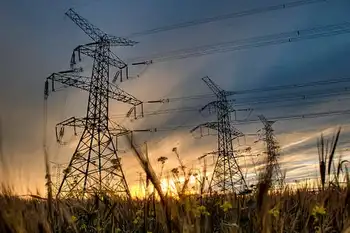
Storm roared through Kansas City

By Source Primedia


Protective Relay Training - Basic

Our customized live online or in‑person group training can be delivered to your staff at your location.

  • Live Online
  • 12 hours Instructor-led
  • Group Training Available
Regular Price:
$699
Coupon Price:
$599
Reserve Your Seat Today
The phone has been ringing off the hook at Tann Electric since a winter ice storm roared through Kansas City last week.

Frozen tree limbs crashed on power lines and ripped the meter housings apart from homes, leaving 387,000 homes without power. John Tann, president and owner of Tann Electric, said all 15 of his electricians responded to the disaster, the worst ice storm in Kansas Citys history.

Our philosophy is to get the power back on to the people as soon as we can, Tann said. Weve been fairly successful in getting peoples power back on the day they call us.

Tann Electric, a 10-year-old service company in Lenexa, Kan., specializes in electrical and datacom work for residential customers. In the first few days of the ice storm, freezing rain covered the streets of Kansas City, transformers blew and entire neighborhoods turned pitch black. Tann said his customer service crew handled hundreds of phone calls.

The thing that Ive compared it to is the Jerry Lewis Telethon, Tann said. We tried to handle every call that came in. I know that weve had some customers say that they couldnt get through, but we try to answer the phone and take calls every day.

Tann Electric temporarily lost power, but with its computers on backup and its phone system still in operation, they continued to take service calls.

We had a few less lights, but we kept on going, Tann said. Since the storm, we have probably taken 250 calls.

The Lenexa, Kan.-based division of McBride Electric, an electrical contracting company which has corporate offices in San Diego, also was busy with storm repair work. Robin Yessen, McBride Electrics division manager, said the company spent much of its time in the early days of the storms aftermath rebuilding service entrances. The ice storm pulled a lot of meter housings away from homes, he said. Kansas City Power & Light (KCP&L) asked us to bring the meter housings back to code.

He added that there are some concerns about utilities doing quick-fix repairs to restore service.

No one knows if the equipments been compromised, he said. Are the lugs damaged? Is the drop from the utility damaged? Is a loose fitting going to cause arcing and sparking? The problem may not be apparent once the electricitys turned on. In one case, a utility contractor had wired around a meter. Electricity creates heat that will cause failure over time, so bad repairs may not be apparent immediately.

The danger of fire is also of real concern for the electrical contractors and homeowners, Tann said.

One of the fire departments here in town said weve had more fires in the last five days than weve had in the last five years, he said. The services are coming down and then they get arcing on the back of their house.

Very few of Tanns customers had backup generators, but they may think about getting them now that Kansas City has had two crippling ice storms in five years.

Weve had enough long-term power outages here that people after 1996 were talking seriously about it and then they forgot it, Tann said. This might make them think more about putting up a permanently installed backup system or a temporary backup system where they can roll a generator outside and bring a cord in and throw a transfer switch and be powered back on.

McBride Electrics Yessen said the radio ads that his company ran several days after the storm drew many calls.

Its not like were trying to corner the market, he said. But this could be a good time for homeowners to upgrade their equipment particularly if homeowners insurance policy covers it. We have seen grounding problems in about 80 percent of the homes weve inspected. Weve installed about 50 ground rods.

I dont know if our companys going to turn any profit (on this work), considering transportation and per-diem costs. But were happy to help out, and I think it shows people the quality of work we do.

Other Kansas City area electrical companies have had a busy week. Thomas Hiemer, principal and owner of TM Sales, a rep agency in North Kansas City, Mo., with a strong focus on utility work, said his manufacturers have been working around the clock to make the products that utilities need to restore power.

We worked all through the weekend to bring material in and allocate it to the various utilities and the various customers, he said. There are thousands of lines and poles that are down. Of course, to replace them, you need ground wire. We have a manufacturer of bare copper that has worked all through the weekend to get bare copper for grounding to the utilities.

Milbank Manufacturing makes the sockets and thousands of those have been pulled off the wall. Each utility has its own specifications, so weve been taking substitute meters available from all over the country, taking them to all the utilities to have them sign off that, Yes this meter will work with this modification. Every utility has their own version of how they want their meter socket, whether they want to have a fifth terminal or a separate lug, or whatever it is that they want.

Our manufacturers have been extremely responsive, especially Millbank Manufacturing, Allen Wire, and Tyco. Without them doing what theyve done, people would still not have power. You cant turn the power back on in the home unless youve got a new socket to put the new meter in. Youve got to ground all the transformers, and you cant do that without the ground wire, and you cant hook up the wire without the hardware. Plus, weve been supplying the overhead wire too. Its been real interesting.

Hiemer said that while the Kansas City metropolitan area has had some big ice storms over the years, no other storm has been of this magnitude.

Just from the ice storms we have had in the past, we knew that we needed to gear up, so we contacted our manufacturers and said, Get ready. Can you put some extra manufacturing capacity just for our type of products? They did and its paid off big dividends.

He added that with some of the utility products that were in highest demand, his company has done three to four months of business in four or five days.

This was the storm of the century, he said. Weve had them bad before, but not to this extent. A large tree that has an inch and a half of ice on it, that could be an extra six tons of weight. When six tons comes down on top of a power line, its not going to withstand that. It just rips everything right off the wall.

Mark Gauldin, operations manager for Temple Electrics Kansas and Missouri locations said the last few days have been a whirlwind.

What day is it? It may sound like a stupid question, but when you dont go home, you just dont know what day it is, Gauldin said. We havent left here since Tuesday night, when we first started realizing what was happening.

Temple Electric, a Dallas-based utility specialist, supplies KCP&L with about 80 percent of its material. Temple has had a person on site at KCP&L facilities and also has been working with other utilities, including Western Resources and Utilicorp. It also pulls stock from its other locations around the country, including Oklahoma and Pennsylvania.

Along with battling with power outages at three of its four Kansas City metropolitan locations, Temple Electric has been supplying utilities with transformers, wires, poles, meters, sockets, ties and wraps.

We had enough materials for the first three days, and after that weve basically moving material in and out, said Gauldin. After two days weve already sold as much as we sell in 30 days. In one location, weve done a months worth of business in two days.

The flow of material has not been a problem, and the supply chain has been real good. Our customers said they were really surprised that the material got to them as quick. We pull from 28 manufacturers.

Everybody may complain about KCP&L being slow in getting the power back on, but I dont think people have any idea what it takes to move materials just so we can get it to them. Theyve got 300 crews working, and thats pretty phenomenal. This will be definitely one that theyll be writing about in the record books.

Gaulden said a well-timed acquisition has helped Temple Electric service the need for utility products. In addition, the company had also been getting ready to move to a larger facility and had already hired on new staff and rented moving trucks when the storm hit.

There was a utility distributor that went bankrupt here in Kansas City about two months ago, and we purchased their inventory and facility. Theres probably a million dollars of material that we had to pull from. We really had a gold mine, but we didnt realize it at the time.

We were trying to figure out how we were going to move it. Well, we certainly figured it out. Weve probably shipped in $400,000 or $500,000 in the last two days and weve brought in probably $700,000 or 800,000. Weve moved a million dollars of material in two days.

Our branch here normally does $20 million. Were going to do a third of this years business in a months time. The last time the ice storm hit people said, We had a good year this month. Thats about what it will amount to. For more information, visit CEE News' online special section ">

Related News
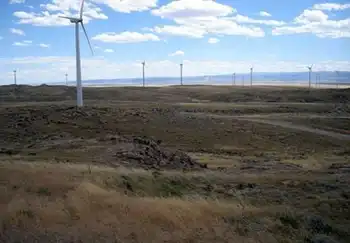
Electricity users in Newfoundland have started paying for Muskrat Falls

Muskrat Falls rate mitigation offsets Newfoundland Power's rate stabilization decrease as NL Hydro begins cost recovery; Public Utilities Board approval enables collections while Labrador-Island Link nears commissioning, stabilizing electricity rates despite megaproject delays, overruns.


Key Points

Muskrat Falls rate mitigation is NL Hydro's cost recovery via power rates to stabilize bills as commissioning nears.

✅ Offsets 6.4% decrease with a 6.1% rate increase

✅ About 6% now funds NL Hydro's rate mitigation

✅ Collections begin as Labrador-Island Link nears commissioning


With their July electricity bill, Newfoundland Power customers have begun paying for Muskrat Falls, though a lump-sum credit was also announced to offset costs and bills haven't significantly increased — yet.

In a July newsletter, Newfoundland Power said electricity bills were set to decrease by 6.4 per cent as part of the annual rate stabilization adjustment, which reflects the cost of electricity generation.

Instead, that decrease has been offset by a 6.1 increase in electricity rates so Newfoundland and Labrador Hydro can begin recovering the cost of Muskrat Falls, with a $5.2-billion federal package also underpinning the project, the $13-billion hydroelectric megaproject that is billions over budget and years behind schedule.

That means for residential customers, electricity rates will decrease to 12.346 cents per kilowatt, though the basic customer charge will go up slightly from $15.81 to $15.83. According to an N.L. Hydro spokesperson, about six per cent of electricity bills will now go toward what it calls a "rate mitigation fund." 

N.L. Hydro claims victory in Muskrat Falls arbitration dispute with Astaldi
Software troubles blamed for $260M Muskrat Falls cost increase, with N.L. power rates stable for now
The spokesperson said N.L. Hydro is expecting the rate increase to result in $43 million this year, according to a recent financial update from the energy corporation — a tiny fraction of the project's cost. 

N.L. Hydro asked the Public Utilities Board to approve the rate increase, a process similar to Nova Scotia's recent 14% approval by its regulator, in May. In a letter, Energy, Industry and Technology Minister Andrew Parsons supported the increase, though he asked N.L. Hydro to keep electricity rates "as close to current levels as possible. 

Province modifies order in council
Muskrat Falls is not yet fully online — largely due to software problems with the Labrador-Island Link transmission line — and an order in council dictated that ratepayers on the island of Newfoundland would not begin paying for the project until the project was fully commissioned. 

The provincial government modified that order in council so N.L. Hydro can begin collecting costs associated with Muskrat Falls once the project is "nearing" commissioning.

In June, N.L. Hydro said the project was expected to finally be completed by the end of the year.

In an interview with CBC News, Progressive Conservative interim leader David Brazil said the decision to begin recovering the cost of Muskrat Falls from consumers should have been delayed.

"There was an opportunity here for people to get some reprieve when it came to their electricity bills and this administration chose not to do that, not to help the people while they're struggling," he said.

In a statement, Parsons said reducing the rate was not an option, and would have resulted in increased borrowing costs for Muskrat Falls.

"Reducing the rate for one year to have it increase significantly the following year is not consistent with rate mitigation and also places an increased financial burden on taxpayers one year from now," Parsons said.

Decision 'reasonable': Consumer advocate
Brazil said his party didn't know the payments from Muskrat Falls would start in July, and criticized the government for not being more transparent.

A person wearing a blue shirt and black blazer stands outside on a lawn.
N.L. consumer advocate Dennis Browne says it makes sense to begin recouping the cost of Muskrat Falls. (Garrett Barry/CBC)
Newfoundland and Labrador consumer advocate Dennis Browne said the decision to begin collecting costs from consumers was "reasonable."

"We're into a financial hole due to Muskrat Falls, and what has happened is in order to stabilize rates, we have gone into rate stabilization efforts," he said.

In February, the provincial and federal governments signed a complex agreement to shield ratepayers aimed at softening the worst of the financial impact from Muskrat Falls. Browne noted even with the agreement, the provincial government will have to pay hundreds of millions in order to stabilize electricity rates.

"Muskrat Falls would cost us $0.23 a kilowatt, and that is out of the range of affordability for most people, and that's why we're into rate mitigation," he said. "This was part of a rate mitigation effort, and I accepted it as part of that."


Related News

View more

As Maine debates 145-mile electric line, energy giant with billions at stake is absent

Hydro-Quebec NECEC Transmission Line faces Maine PUC scrutiny over clean energy claims, greenhouse gas emissions, spillage capacity, resource shuffling, and Massachusetts contracts, amid opposition from natural gas generators and environmental groups debating public need.


Key Points

A $1B Maine corridor for Quebec hydropower to Massachusetts, debated over emissions, spillage, and public need.

✅ Maine PUC weighing public need and ratepayer benefits

✅ Emissions impact disputed: resource shuffling vs new supply

✅ Hydro-Quebec spillage claims questioned without data


As Maine regulators are deciding whether to approve construction of a $1 billion electricity corridor across much of western Maine, the Canadian hydroelectric utility poised to make billions of dollars from the project has been absent from the process.

This has left both opponents and supporters of the line arguing about how much available energy the utility has to send through a completed line, and whether that energy will help fulfill the mission of the project: fighting climate change.

And while the utility has avoided making its case before regulators, which requires submitting to cross-examination and discovery, it has engaged in a public relations campaign to try and win support from the region's newspapers.

Government-owned Hydro-Quebec controls dams and reservoirs generating hydroelectricity throughout its namesake province. It recently signed agreements to sell electricity across the proposed line, named the New England Clean Energy Connect, to Massachusetts as part of the state's effort to reduce its dependence on fossil fuels, including natural gas.

At the Maine Public Utilities Commission, attorneys for Central Maine Power Co., which would build and maintain the line, have been sparring with the opposition over the line's potential impact on Maine and its electricity consumers. Leading the opposition is a coalition of natural gas electricity generators that stand to lose business should the line be built, as well as the Natural Resources Council of Maine, an environmental group.

That unusual alliance of environmental and business groups wants Hydro-Quebec to answer questions about its hydroelectric system, which they argue can't deliver the amount of electricity promised to Massachusetts without diverting energy from other regions.

In that scenario, critics say the line would not produce the reduction in greenhouse gas emissions that CMP and Hydro-Quebec have made a central part of their pitch for the project. Instead, other markets currently buying energy from Hydro-Quebec, such as New York, Ontario and New Brunswick, would see hydroelectricity imports decrease and have to rely on other sources of energy, including coal or oil, to make up the difference. If that happened, the total amount of clean energy in the world would remain the same.

Opponents call this possibility "greenwashing." Massachusetts regulators have described these circumstances as "resource shuffling."

But CMP spokesperson John Carroll said that if hydropower was diverted from nearby markets to power Massachusetts, those markets would not turn to fossil fuels. Rather they would seek to develop other forms of renewable energy "leading to further reductions in greenhouse gas emissions in the region."

Hydro-Quebec said it has plenty of capacity to increase its electricity exports to Massachusetts without diverting energy from other places.

However, Hydro-Quebec is not required to participate -- and has not voluntarily participated -- in regulatory hearings where it would be subject to cross examinations and have to testify under oath. Some participants wish it would.

At a January hearing at the Maine Public Utilities Commission, hearing examiner Mitchell Tannenbaum had to warn experts giving testimony to "refrain from commentary regarding whether Hydro-Quebec is here or not" after they complained about its absence when trying to predict potential ramifications of the line.

"I would have hoped they would have been visible and available to answer legitimate questions in all of these states through which their power is going to be flowing," said Dot Kelly, a member of the executive committee at the Maine Chapter of the Sierra Club who has participated in the line's regulatory proceedings as an individual. "If you're going to have a full and fair process, they have to be there."

[What you need to know about the CMP transmission line proposed for Maine]

While Hydro-Quebec has not presented data on its system directly to Maine regulators, it has brought its case to the press. Central to that case is the fact that it's "spilling" water from its reservoirs because it is limited by how much electricity it can export. It said that it could send more water through its turbines and lower reservoir levels, eliminating spillage and creating more energy, if only it had a way to get that energy to market. Hydro-Quebec said the line would make that possible, and, in doing so, help lower emissions and fight climate change.

"We have that excess potential that we need to use. Essentially, it's a good problem to have so long as you can find an export market," Hydro-Quebec spokesperson Serge Abergel told the Bangor Daily News.

Hydro-Quebec made its "spillage" case to the editorial boards of The Boston Globe, The Portland Press Herald and the BDN, winning qualified endorsements from the Globe and Press Herald. (The BDN editorial board has not weighed in on the project).

Opponents have questioned why Hydro-Quebec is willing to present their case to the press but not regulators.

"We need a better answer than 'just trust us,'" Natural Resources Council of Maine attorney Sue Ely said. "What's clear is that CMP and HQ are engaging in a full-court publicity tour peddling false transparency in an attempt to sell their claims of greenhouse gas benefits."

Energy generators aren't typically parties to public utility commission proceedings involving the building of transmission lines, but Maine regulators don't typically evaluate projects that will help customers in another state buy energy generated in a foreign country.

"It's a unique case," said Maine Public Advocate and former Democratic Senate Minority Leader Barry Hobbins, who has neither endorsed nor opposed the project. Hobbins noted the project was not proposed to improve reliability for Maine electricity customers, which is typically the point of new transmission line proposals evaluated by the commission. Instead, the project "is a straight shot to Massachusetts," Hobbins said.

Maine Public Utilities Commission spokesperson Harry Lanphear agreed. "The Commission has never considered this type of project before," he said in an email.

In order to proceed with the project, CMP must convince the Maine Public Utilities Commission that the proposed line would fill a "public need" and benefit Mainers. Among other benefits, CMP said it will help lower electricity costs and create jobs in Maine. A decision is expected in the spring.

Given the uniqueness of the case, even the commission seems unsure about how to apply the vague "public need" standard. On Jan. 14, commission staff asked case participants to weigh in on how it should apply Maine law when evaluating the project, including whether the hydroelectricity that would travel over the line should be considered "renewable" and whether Maine's own carbon reduction goals are relevant to the case.

James Speyer, an energy consultant whose firm was hired by natural gas company and project opponent Calpine to analyze the market impacts of the line, said he has testified before roughly 20 state public utility commissions and has never seen a proceeding like this one.

"I've never been in a case where one of the major beneficiaries of the PUC decision is not in the case, never has filed a report, has never had to provide any data to support its assertions, and never has been subject to cross examination," Speyer said. "Hydro-Quebec is like a black box."

Hydro-Quebec would gladly appear before the Maine Public Utilities Commission, but it has not been invited, said spokesperson Abergel.

"The PUC is doing its own process," Abergel said. "If the PUC were to invite us, we'd gladly intervene. We're very willing to collaborate in that sense."

But that's not how the commission process works. Individuals and organizations can intervene in cases, but the commission does not invite them to the proceedings, commission spokesperson Lanphear said.

CMP spokesperson Carroll dismissed concerns over emissions, noting that Hydro-Quebec is near the end of completing a more than 15-year effort to develop its clean energy resources. "They will have capacity to satisfy the contract with Massachusetts in their reservoirs," Carroll said.

While Maine regulators are evaluating the transmission line, Massachusetts' Department of Public Utilities is deciding whether to approve 20-year contracts between Hydro-Quebec and that state's electric utilities. Those contracts, which Hydro-Quebec has estimated could be worth close to $8 billion, govern how the utility sells electricity over the line.

Dean Murphy, a consultant hired by the Massachusetts Attorney General's office to review the contracts, testified before Massachusetts regulators that the agreements do not require a reduction in global greenhouse gas emissions. Murphy also warned the contracts don't actually require Hydro-Quebec to increase the total amount of energy it sends to New England, as energy could be shuffled from established lines to the proposed CMP line to satisfy the contracts.

Parties in the Massachusetts proceeding are also trying to get more information from Hydro-Quebec. Energy giant NextEra is currently trying to convince Massachusetts regulators to issue a subpoena to force Hydro-Quebec to answer questions about how its exports might change with the construction of the transmission line. Hydro-Quebec and CMP have opposed the motion.

Hydro-Quebec has a reputation for guarding its privacy, according to Hobbins.

"It would have been easier to not have to play Sherlock Holmes and try to guess or try to calculate without having a direct 'yes' or 'no' response from the entity itself," Hobbins said.

Ultimately, the burden of proving that Maine needs the line falls on CMP, which is also responsible for making sure regulators have all the information they need to make a decision on the project, said former Maine Public Utilities Commission Chairman Kurt Adams.

"Central Maine Power should provide the PUC with all the info that it needs," Adams said. "If CMP can't, then one might argue that they haven't met their burden."

'They treat HQ with nothing but distrust'

If completed, the line would bring 9.45 terawatt hours of electricity from Quebec to Massachusetts annually, or about a sixth of the total amount of electricity Massachusetts currently uses every year (and roughly 80 percent of Maine's annual load). CMP's parent company Avangrid would make an estimated $60 million a year from the line, according to financial analysts.

As part of its legally mandated efforts to reduce carbon emissions and fight climate change, Massachusetts would pay the $950 million cost of constructing the line. The state currently relies on natural gas, a fossil fuel, for nearly 70 percent of its electricity, a figure that helps explain natural gas companies' opposition to the project.

A panel of experts recently warned that humanity has 12 years to keep global temperatures from rising above 1.5 degrees Celsius and prevent the worst effects of climate change, which include floods, droughts and extreme heat.

The line could lower New England's annual carbon emissions by as much as 3 million metric tons, an amount roughly equal to Washington D.C.'s annual emissions. Opponents worry that reduction could be mostly offset by increases in other markets.

But while both sides have claimed they are fighting for the environment, much of the debate features giant corporations with headquarters outside of New England fighting over the future of the region's electricity market, echoing customer backlash seen in other utility takeovers.

Hydro-Quebec is owned by the people of Quebec, and CMP is owned by Avangrid, which is in turn owned by Spanish energy giant Iberdrola. Leading the charge against the line are several energy companies in the Fortune 500, including Houston-based Calpine and Florida-based NextEra Energy.

However, only one side of the debate counts environmental groups as part of its coalition, and, curiously enough, that's the side with fossil fuel companies.

Some environmental groups, including the Natural Resources Council of Maine and Environment Maine, have come out against the line, while others, including the Acadia Center and the Conservation Law Foundation, are still deciding whether to support or oppose the project. So far, none have endorsed the line.

"It is discouraging that some of the environmental groups are so opposed, but it seems the best is the enemy of the good," said CMP's Carroll in an email. "They seem to have no sense of urgency; and they treat HQ with nothing but distrust."

Much of the environmentally minded opposition to the project focuses on the impact the line would have on local wildlife and tourism.

Sandi Howard administers the Say NO To NECEC Facebook page and lives in Caratunk, one of the communities along the proposed path of the line. She said opposition to the line might change if it was proven to reduce emissions.

"If it were going to truly reduce global CO2 emissions, I think it would be be a different conversation," Howard said.


Not the first choice

Before Maine, New Hampshire had its own debate over whether it should serve as a conduit between Quebec and Massachusetts. The proposed Northern Pass transmission line would have run the length of the state. It was Massachusetts' first choice to bring Quebec hydropower to its residents.

But New Hampshire's Site Evaluation Committee unanimously voted to reject the Northern Pass project in February 2018 on the grounds that the project's sponsor, Eversource, had failed to prove the project would not interfere with local business and tourism. Though it was the source of the electricity that would have traveled over the line, Hydro-Quebec was not a party to the proceedings.

In its decision, the committee noted the project would not reduce emissions if it was not coupled with a "new source of hydropower" and the power delivered across the line was "diverted from Ontario and New York." The committee added that it was unclear if the power would be new or diverted.

The next month, Massachusetts replaced Northern Pass by selecting CMP's proposed line. As the project came before Maine regulators, questions about Hydro-Quebec and emissions persisted. Two different analyses of CMP's proposed line, including one by the Maine Public Utility Commission's independent consultant, found the line would greatly reduce New England's emissions.

But neither of those studies took into account the line's impact on emissions outside of New England. A study by Calpine's consultant, Energyzt, found New England's emissions reduction could be mostly offset by increased emissions in other areas, including New Brunswick and New York, that would see hydroelectricity imports shrink as energy was redirected to fulfill the contract with Massachusetts.

'They failed in any way to back up those spillage claims'

Hydro-Quebec seemed content to let CMP fight for the project alone before regulators for much of 2018. But at the end of the year, the utility took a more proactive approach, meeting with editorial boards and providing a two-page letter detailing its "spillage" issues to CMP, which entered it into the record at the Maine Public Utilities Commission.

The letter provided figures on the amount of water the utility spilled that could have been converted into sellable energy, if only Hydro-Quebec had a way to get it to market. Instead, by "spilling" the water, the company essentially wasted it.

Instead of sending water through turbines or storing it in reservoirs, hydroelectric operators sometimes discharge water held behind dams down spillways. This can be done for environmental reasons. Other times it is done because the operator has so much water it cannot convert it into electricity or store it, which is usually a seasonal issue: Reservoirs often contain the most water in the spring as temperatures warm and ice melts.

Hydro-Quebec said that, in 2017, it spilled water that could have produced 4.5 terawatt hours of electricity, or slightly more than half the energy needed to fulfill the Massachusetts contracts. In 2018, the letter continued, Hydro-Quebec spilled water that could have been converted into 10.4 terawatts worth of energy. The company said it didn't spill at all due to transmission constraints prior to 2017.


The contracts Hydro-Quebec signed with the Massachusetts utilities are for 9.45 terawatt hours annually for 20 years. In its letter, the utility essentially showed it had only one year of data to show it could cover the terms of the contract with "spilled" energy.

"Reservoir levels have been increasing in the last 15 years. Having reached their maximum levels, spillage maneuvers became necessary in 2017 and 2018," said Hydro-Quebec spokesperson Lynn St. Laurent.

By providing the letter through CMP, Hydro-Quebec did not have to subject its spillage figures to cross examination.

Dr. Shaleen Jain, a civil and environmental engineering professor at the University of Maine, said that, while spilled water could be converted into power generation in some circumstances, spills happen for many different reasons. Knowing whether spillage can be translated into energy requires a great deal of analysis.

"Not all of it can be repurposed or used for hydropower," Jain said.

In December, one of the Maine Public Utility Commission's independent consultants, Gabrielle Roumy, told the commission that there's "no way" to "predict how much water would be spilled each and every year." Roumy, who previously worked for Hydro-Quebec, added that even after seeing the utility's spillage figures, he believed it would need to divert energy from other markets to fulfill its commitment to Massachusetts.

"I think at this point we're still comfortable with our assumptions that, you know, energy would generally be redirected from other markets to NECEC if it were built," Roumy said.

In January, Tanya Bodell, the founder and executive director of consultant Energyzt, testified before the commission on behalf of Calpine that it was impossible to know why Hydro-Quebec was spilling without more data.

"There's a lot of details you'd have to look at in order to properly assess what the reason for the spillage is," Bodell said. "And you have to go into an hourly level because the flows vary across the year, within the month, the week, the days. ...And, frankly, it would have been nice if Hydro-Quebec was here and brought their model and allowed us to see how this could help them to sell more."

Even though CMP and Hydro-Quebec's path to securing approval of the project does not go through the Legislature, and despite a Maine court ruling that energized Hydro-Quebec's export bid, lawmakers have taken notice of Hydro-Quebec's absence. Rep. Seth Berry, D-Bowdoinham, the House chairman of the Joint Committee On Energy Utilities and Technology and a frequent critic of CMP, said he would like to see Hydro-Quebec "show up and subject their proposal to examination and full analysis and public examination by the regulators and the people of Maine."

"They're trying to sell an incredibly lucrative proposal, and they failed in any way to back up those spillage claims with defensible numbers and defensible analysis," Berry said.

Berry was part of a bipartisan group of Maine lawmakers that wrote a letter to Massachusetts regulators last year expressing concerns about the project, which included doubts about whether the line would actually reduce global gas emissions. On Monday, he announced legislation that would direct the state to create an independent entity to buy out CMP from its foreign investors.


'No benefit to remaining quiet'

Hydro-Quebec would like to provide answers, but "there is always a commercially sensitive information concern when we do these things," said spokesperson Abergel.

"There might be stuff we can do, having an independent study that looks at all of this. I'm not worried about the conclusion," Abergel said. "I'm worried about how long it takes."

Instead of asking Hydro-Quebec questions directly, participants in both Maine and Massachusetts regulatory proceedings have had to direct questions for Hydro-Quebec to CMP. That arrangement may be part of Hydro-Quebec's strategy to control its information, said former Maine Public Utilities Commissioner David Littell.

"From a tactical point of view, it may be more beneficial for the evidence to be put through Avangrid and CMP, which actually doesn't have that back-up info, so can't provide it," Littell said.

Getting information about the line from CMP, and its parent company Avangrid, has at times been difficult, opponents say.

In August 2018, the commission's staff warned CMP in a legal filing that it was concerned "about what appears to be a lack of completeness and timeliness by CMP/Avangrid in responding to data requests in this proceeding."

The trouble in getting information from Hydro-Quebec and CMP only creates more questions for Hydro-Quebec, said Jeremy Payne, executive director of the Maine Renewable Energy Association, which opposes the line in favor of Maine-based renewables.

"There's a few questions that should have relatively simple answers. But not answering a couple of those questions creates more questions," Payne said. "Why didn't you intervene in the docket? Why are you not a party to the case? Why won't you respond to these concerns? Why wouldn't you open yourself up to discovery?"

"I don't understand why they won't put it to bed," Payne said. "If you've got the proof to back it up, then there's no benefit to remaining quiet."


Related News

View more

Ottawa hands N.L. $5.2 billion for troubled Muskrat Falls hydro project

Muskrat Falls funding deal delivers federal relief to Newfoundland and Labrador: Justin Trudeau outlines loan guarantees, transmission investment, Hibernia royalties, and $10-a-day child care to stabilize hydroelectric costs and curb electricity rate hikes.


Key Points

A $5.2b federal plan aiding NL hydro via loan guarantees, transmission funds, and Hibernia royalties to curb power rates.

✅ $1b for transmission and $1b in federal loan guarantees

✅ $3.2b via Hibernia royalty transfers through 2047

✅ Limits power rate hikes; adds $10-a-day child care in NL


Prime Minister Justin Trudeau was in Newfoundland and Labrador Wednesday to announce a $5.2-billion ratepayer protection plan to help the province cover the costs of a troubled hydroelectric project ahead of an expected federal election call.

Trudeau's visit to St. John's, N.L., wrapped up a two-day tour of Atlantic Canada that featured several major funding commitments, and he concluded his day in Newfoundland and Labrador by announcing the province will become the fourth to strike a deal with Ottawa for a $10-a-day child-care program.

As he addressed reporters, the prime minister was flanked by the six Liberal members of Parliament from the province. He alluded to the mismanagement that led the over-budget Muskrat Falls hydroelectric project to become what Liberal Premier Andrew Furey has called an "anchor around the collective souls" of the province.

"The pressures and challenges faced by Newfoundlanders and Labradorians for mistakes made in the past is something that Canadians all needed to step up on, and that's exactly what we did," Trudeau said.

Furey, who joined Trudeau for the two announcements and was effusive in his praise for the federal government, said the federal funding will help Newfoundland and Labrador avoid a spike in electricity rates as customers start paying for Muskrat Falls ahead of when the project begins generating power this November.

"Muskrat Falls has been the No. 1 issue facing Newfoundlanders and Labradorians now for well over a decade," Furey said, adding that he is regularly asked by people whether their electricity rates are going to double, a concern other provinces address through rate legislation in Ontario as well.

"We landed on a deal today that I think -- I know -- is a big deal for Newfoundland and Labrador and will finally get the muskrat off our back," he said.

The agreement-in-principle between the two governments includes a $1-billion investment from Ottawa in a transmission through Quebec portion of the project, as well as $1 billion in loan guarantees. The rest will come from annual transfers from Ottawa equivalent to its annual royalty gains from its share in the Hibernia offshore oilfield, which sits off the coast of St. John's. Those transfers are expected to add up to about $3.2 billion between now and 2047, when the oilfield is expected to run dry.

The money will help cover costs set to come due when the Labrador project comes online, preventing rate increases that would have been needed to pay the bills, and officials have discussed a lump-sum bill credit to help households. Though electricity rates in the province will still rise, to 14.7 cents per kilowatt hour from the current 12.5 cents, that's well below the projected 23 cents that officials had said would be needed to cover the project's costs.

Muskrat Falls was commissioned in 2012 at a cost of $7.4 billion, but its price tag has since ballooned to $13.1 billion. Ottawa previously backed the project with billions of dollars in loan guarantees, and in December, Trudeau announced he had appointed Serge Dupont, former deputy clerk of the Privy Council, to oversee rate mitigation talks with the province about financially restructuring the project.

Its looming impact on the provincial budget is set against an already grim financial situation: the province projected an $826-million deficit in its latest budget, and a recent financial update from the provincial energy corporation reflected pandemic impacts, coupled with $17.2 billion in net debt.

After visiting with children from a daycare centre in the College of the North Atlantic, Trudeau and Furey announced that in 2023, the average cost of regulated child care in the province for children under six would be cut to $10 a day from $25 a day. Trudeau said that within five years, almost 6,000 new daycare spaces would be created in the province.

"As part of the agreement, a new full-day, year-round pre-kindergarten program for four-year-olds will also start rolling out in 2023," the prime minister told reporters. "For parents, this agreement is huge."

Newfoundland and Labrador is the fourth province, after Prince Edward Island, Nova Scotia and British Columbia, to sign on to the federal government's child-care program.


Related News

View more

PG&E Rates Set to Stabilize in 2025

PG&E 2024 Rate Hikes signal sharp increases to fund wildfire safety, infrastructure upgrades, and CPUC-backed reliability, with rates expected to stabilize in 2025, affecting rural residents, businesses, and high-risk zones across California.


Key Points

PG&E’s 2024 hikes fund wildfire safety and grid upgrades, with pricing expected to stabilize in 2025.

✅ Driven by wildfire safety, infrastructure, and reinsurance costs

✅ Largest impacts in rural, high-risk zones; business rates vary

✅ CPUC oversight aims to ensure necessary, justified investments


Pacific Gas and Electric (PG&E) is expected to implement a series of rate hikes that, amid analyses of why California electricity prices are soaring across the state, will significantly impact California residents. These increases, while substantial, are anticipated to be followed by a period of stabilization in 2025, offering a sense of relief to customers facing rising costs.

PG&E, one of the largest utility providers in the state, announced that its 2024 rate hikes are part of efforts to address increasing operational costs, including those related to wildfire safety, infrastructure upgrades, and regulatory requirements. As California continues to face climate-related challenges like wildfires, utilities like PG&E are being forced to adjust their financial models to manage the evolving risks. Wildfire-related liabilities, which have plagued PG&E in recent years, play a significant role in these rate adjustments. In response to previous fire-related lawsuits, including a bankruptcy plan supported by wildfire victims that reshaped liabilities, and the increased cost of reinsurance, PG&E has made it clear that customers will bear part of the financial burden.

These rate hikes will have a multi-faceted impact. Residential users, particularly those in rural or high-risk wildfire zones, will see some of the largest increases. Business customers will also be affected, although the adjustments may vary depending on the size and energy consumption patterns of each business. PG&E has indicated that the increases are necessary to secure the utility’s financial stability while continuing to deliver reliable service to its customers.

Despite the steep increases in 2024, PG&E's executives have assured that the company's pricing structure will stabilize in 2025. The utility has taken steps to balance the financial needs of the business with the reality of consumer affordability. While some rate hikes are inevitable given California's regulatory landscape and climate concerns, PG&E's leadership believes the worst of the increases will be seen next year.

PG&E’s anticipated stabilization comes after a year of scrutiny from California regulators. The California Public Utilities Commission (CPUC) has been working closely with PG&E to scrutinize its rate request and ensure that hikes are justifiable and used for necessary investments in infrastructure and safety improvements. The CPUC’s oversight is especially crucial given the company’s history of safety violations and the public outrage over past wildfire incidents, including reports that its power lines may have sparked fires in California, which have been linked to PG&E’s equipment.

The hikes, though significant, reflect the broader pressures facing utilities in California, where extreme weather patterns are becoming more frequent and intense due to climate change. Wildfires, which have grown in severity and frequency in recent years, have forced PG&E to invest heavily in fire prevention and mitigation strategies, including compliance with a judge-ordered use of dividends for wildfire mitigation across its service area. This includes upgrading equipment, inspecting power lines, and implementing more rigorous protocols to prevent accidents that could spark devastating fires. These investments come at a steep cost, which PG&E is passing along to consumers through higher rates.

For homeowners and businesses, the potential for future rate stabilization offers a glimmer of hope. However, the 2024 increases are still expected to hit consumers hard, especially those already struggling with high living costs. The steep hikes have prompted public outcry, with calls for action as bills soar amplifying advocacy group arguments that utilities should absorb more of the costs related to climate change and fire prevention instead of relying on ratepayers.

Looking ahead to 2025, the expectation is that PG&E’s rates will stabilize, but the question remains whether they will return to pre-2024 levels or continue to rise at a slower rate. Experts note that California’s energy market remains volatile, and while the rates may stabilize in the short term, long-term cost management will depend on ongoing investments in renewable energy sources and continued efforts to make the grid more resilient to climate-related risks.

As PG&E navigates this challenging period, the company’s commitment to transparency and working with regulators will be crucial in rebuilding trust with its customers. While the immediate future may be financially painful for many, the hope is that the utility's focus on safety and infrastructure will lead to greater long-term stability and fewer dramatic rate increases in the years to come.

Ultimately, California residents will need to brace for another tough year in terms of utility costs but can find reassurance that PG&E’s rate increases will eventually stabilize. For those seeking relief, there are ongoing discussions about increasing energy efficiency, exploring renewable energy alternatives, and expanding assistance programs for lower-income households to help mitigate the financial strain of these price hikes.


Related News

View more

Wartsila to Power USA’s First Battery-Electric High-Speed Ferries

San Francisco Battery-Electric Ferries will deliver zero-emission, high-speed passenger service powered by Wartsila electric propulsion, EPMS, IAS, batteries, and shore power, advancing maritime decarbonization under the REEF program and USCG Subchapter T standards.


Key Points

They are the first US zero-emission high-speed passenger ferries using integrated electric propulsion and shore power

✅ Dual 625 kW motors enable up to 24-knot service speeds

✅ EPMS, IAS, DC hub, and shore power streamline operations

✅ Built to USCG Subchapter T for safety and compliance


Wartsila, a global leader in sustainable marine technology, has been selected to supply the electric propulsion system for the United States' first fully battery-electric, zero-emission high-speed passenger ferries. This significant development marks a pivotal step in the decarbonization of maritime transport, aligning with California's ambitious environmental goals, including recent clean-transport investments across ports and corridors.

A Leap Toward Sustainable Maritime Transport

The project, commissioned by All American Marine (AAM) on behalf of San Francisco Bay Ferry, involves the construction of three 150-passenger ferries, reflecting broader U.S. advances like the Washington State Ferries hybrid upgrade now underway. These vessels will operate on new routes connecting the rapidly developing neighborhoods of Treasure Island and Mission Bay to downtown San Francisco. The ferries are part of the Rapid Electric Emission Free (REEF) Ferry Program, a comprehensive initiative by San Francisco Bay Ferry to transition its fleet to zero-emission propulsion technology. The first vessel is expected to join the fleet in early 2027.

Wärtsilä’s Role in the Project

Wärtsilä's involvement encompasses the supply of a comprehensive electric propulsion system, including the Energy and Power Management System (EPMS), integrated automation system (IAS), batteries, DC hub, transformers, electric motors, and shore power supply. This extensive scope underscores Wärtsilä’s expertise in providing integrated solutions for emission-free marine transportation. The company's extensive global experience in developing and supplying integrated systems and solutions for zero-emission high-speed vessels, as seen with electric ships on the B.C. coast operating today, was a key consideration in the selection process.

Technical Specifications of the Ferries

The ferries will be 100 feet (approximately 30 meters) in length, with a beam of 26 feet and a draft of 5.9 feet. Each vessel will be powered by dual 625-kilowatt electric motors, enabling them to achieve speeds of up to 24 knots. The vessels will be built to U.S. Coast Guard Subchapter T standards, ensuring compliance with stringent safety regulations.

Environmental and Operational Benefits

The transition to battery-electric propulsion offers numerous environmental and operational advantages. Electric ferries produce zero emissions during operation, as demonstrated by Berlin's electric ferry deployments, significantly reducing the carbon footprint of maritime transport. Additionally, electric propulsion systems are generally more efficient and require less maintenance compared to traditional diesel engines, leading to lower operational costs over the vessel's lifespan.

Broader Implications for Maritime Decarbonization

This project is part of a broader movement toward sustainable maritime transport in the United States. San Francisco Bay Ferry has also approved the purchase of two larger 400-passenger battery-electric ferries for transbay routes, further expanding its commitment to zero-emission operations. The agency has secured approximately $200 million in funding from local, state, and federal sources, echoing infrastructure bank support seen in B.C., to support these initiatives, including vessel construction and terminal electrification.

Wartsila’s involvement in this project highlights the company's leadership in the maritime industry's transition to sustainable energy solutions, including hybrid-electric pathways like BC Ferries' new hybrids now in service. With a proven track record in supplying integrated systems for zero-emission vessels, Wärtsilä is well-positioned to support the global shift toward decarbonized maritime transport.

As the first fully battery-electric high-speed passenger ferries in the United States, these vessels represent a significant milestone in the journey toward sustainable and environmentally responsible maritime transportation, paralleling regional advances such as the Kootenay Lake electric-ready ferry entering service. The collaboration between Wärtsilä, All American Marine, and San Francisco Bay Ferry exemplifies the collective effort required to realize a zero-emission future for the maritime industry.

The deployment of these battery-electric ferries in San Francisco Bay not only advances the city's environmental objectives but also sets a precedent for other regions to follow. With continued innovation and collaboration, the maritime industry can look forward to a future where sustainable practices are the standard, not the exception.


Related News

View more

South Africa's Eskom could buy less power from wind farms during lockdown

Eskom Wind Power Curtailment reflects South Africa's lockdown-driven drop in electricity demand, prompting grid-balancing measures as Eskom signals reduced IPP procurement from renewable energy projects during low-demand hours, despite guarantees and flexible generation constraints.


Key Points

A temporary reduction of wind IPP purchases by Eskom to balance surplus grid capacity during the COVID-19 lockdown slump

✅ Demand drop of 7,500 MW reduced need for variable renewables.

✅ Curtailment likely during low-demand early-morning hours.

✅ IPP revenues protected via contract extensions and guarantees.


South African state utility Eskom has told independent wind farms that it could buy less of their power in the coming days, as electricity demand has plummeted during a lockdown, reflecting the Covid-19 impact on renewables worldwide, aimed at curbing the spread of the coronavirus.

Eskom, which is mired in a financial crisis and has struggled to keep the lights on in the past year, said on Tuesday that power demand had dropped by more than 7,500 megawatts since the lockdown started on Friday and that it had taken offline some of its own generators.

The utility supplements its generating capacity, which is mainly derived from coal, by buying power from solar and wind farms, as wind becomes a competitive source of electricity globally, under contracts signed as part of the government’s renewable energy programme.

Spokesman Sikonathi Mantshantsha said Eskom had not yet curtailed power procurement from wind farms but that it had told them, echoing industry warnings on wind investment risk seen by the sector, this could happen “for a few hours a day during the next few days, perhaps until the lockdown is lifted”.

“Most of them are able to feed power into the grid in the early hours of the day. That coincides with the lowest demand period and can highlight curtailment challenges when supply exceeds need. And we now have a lot more capacity than needed,” Mantshantsha said.

During the lockdown imposed by President Cyril Ramaphosa, businesses apart from those deemed “essential services” are closed, mirroring Spanish wind factory closures elsewhere. Many power-hungry mines and furnaces have suspended operations.

Eskom has relatively little of its own “flexible generation” capacity, which can be ramped up or down easily, unlike regions riding a renewables boom in South Australia to export power.

The government has committed to buy up to 200 billion rand ($11.1 billion) of electricity from independent power producers and has issued state guarantees for those purchases.

“They will be compensated for their losses, amid U.S. utility-solar slowdowns being reported - each day lost will be added to their contracts,” Mantshantsha said of the wind farms. “In the end they will not be worse off.”


Related News

View more

Sign Up for Electricity Forum’s Newsletter

Stay informed with our FREE Newsletter — get the latest news, breakthrough technologies, and expert insights, delivered straight to your inbox.

Electricity Today T&D Magazine Subscribe for FREE

Stay informed with the latest T&D policies and technologies.
  • Timely insights from industry experts
  • Practical solutions T&D engineers
  • Free access to every issue

Download the 2025 Electrical Training Catalog

Explore 50+ live, expert-led electrical training courses –

  • Interactive
  • Flexible
  • CEU-cerified