Scottish Power close to UK wind farm go-ahead

By


Protective Relay Training - Basic

Our customized live online or in‑person group training can be delivered to your staff at your location.

  • Live Online
  • 12 hours Instructor-led
  • Group Training Available
Regular Price:
$699
Coupon Price:
$599
Reserve Your Seat Today
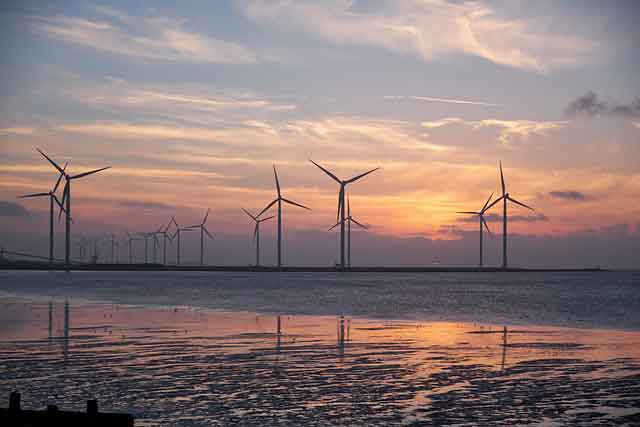
Scottish Power said recently it was close to getting consent for two wind farms as progress had been made in resolving radar interference from turbines at the sites, both near airports.

Objections to wind farms from airport authorities and the ministry of defence because of worries the towering turbines will interfere with radar systems are a major hurdle for the wind power industry.

Scottish Power has commissioned Marconi to design software which will remove images of the turbines from radar screens.

BAA Plc, which operates the Edinburgh and Glasgow airports, had blocked the company's 300 megawatt Whitelee project, the largest onshore wind farm in the UK with 140 turbines, and the much smaller Blacklaw scheme.

"We are in the final stages of the planning process for both projects. Talks are progressing positively with the BAA and (the Civil Aviation Authority)," a Scottish Power spokesman said.

A spokesman for BAA said it was waiting to review the software which would also have to be approved by the safety review group of the industry's main regulator, the CAA.

"We are optimistic (the software) will be acceptable," said the BAA spokesman.

Scottish Power needs approval from the CAA before the schemes can be given the go ahead by the Scottish Executive.

The government sees wind power as key to meeting its target of generating 10 percent of Britain's electricity from green sources by 2010.

According to industry body the British Wind Energy Association, the ministry of defence has objected to around 30 percent of enquiries to build wind farms.

"This is the single biggest constraint affecting the industry," said Chris Shears, a board member of the association responsible for radar issues.

"If this solution works in Scotland, then it could work elsewhere," he added.

The ministry has blocked offshore wind power projects at Shell Flats and Southport off the north English coast.

Related News
BC Hydro Expects To See Electricity Usage Rise This Holiday Season

BC Hydro Holiday Electricity Usage is set to rise as energy demand increases during peak 4-10 pm on Christmas and Boxing Day, driven by larger gatherings, more cooking, and eased COVID-19 restrictions province-wide.


Key Points

Expected rise in power demand on Christmas and Boxing Day evenings versus 2020, driven by larger gatherings and cooking.

✅ Peak hours 4-10 pm expected to rise in provincial load.

✅ 2020 saw 4% and 7% drops vs 2019 on Christmas and Boxing Day.

✅ Holiday lighting adds ~3% to use; switching to LED can save ~$40.


BC Hydro data showed residential electricity load in the Cariboo and throughout the province, even as drought affects generation dynamics heading into winter, dropped on Christmas Day and Boxing Day in 2020.

Northern Community Relations Manager, Bob Gammer, said the decrease was due in part to more people following the COVID-19 restrictions and not getting together for big meals, even though 2018 Earth Hour usage increased elsewhere illustrates how behavior can sometimes raise demand.

However, this year Gammer said between 4 and 10 pm on those two days, BC Hydro does expect to see a change in overall usage, aligning with all-time high demand trends reported recently in B.C.

“On Christmas Day and Boxing Day, we expect to see increases through those hours and a little bit more so between 4 and 10 pm we should see the amount of power being consumed across the province, as record-breaking 2021 demand indicated earlier, going up compared to what it was on those two days last year.”

In 2020 on Christmas Day evening hydro usage dropped by over 4 percent and Boxing Day evening decreased by 7 percent compared to 2019, whereas regions like Calgary's winter demand have seen spikes during extreme cold.

Gammer added after BC Hydro surveyed their customers and introduced a winter payment plan, they expect to see a lot more cooking happening on Christmas Day and Boxing Day this year as people are intending to have larger gatherings and visit friends.

We asked Gammer about hydro usage when it comes to homes decked out for the holidays, and how that compares to newer loads like crypto mining activity in B.C.

“The Christmas lighting displays people have, not just indoors but outdoors as well, what we’re seeing is about a 3 percent increase in electricity consumption overall through the Christmas season. If people switch, if you still have older lights that are incandescent, switch those over to LED, and through the season it could wind up saving you $40 in electricity just switching over about 8 strings of lights to LED.”


Related News

View more

Crossrail will generate electricity using the wind created by trains

Urban Piezoelectric Energy Textiles capture wind-driven motion on tunnels, bridges, and facades, enabling renewable microgeneration for smart cities with decentralized power, resilient infrastructure, and flexible lamellae sheets that harvest airflow vibrations.


Key Points

Flexible piezoelectric sheets that convert urban wind and vibration into electricity on tunnels, bridges, and facades.

✅ Installed on London Crossrail to test airflow energy capture

✅ Flexible lamellae panels retrofit tunnels, bridges, facades

✅ Supports decentralized, resilient urban microgrids


Charlotte Slingsby and her startup Moya Power are researching piezo-electric textiles that gain energy from movement, similar to advances like a carbon nanotube energy harvester being explored by materials researchers. It seems logical that Slingsby originally came from a city with a reputation for being windy: “In Cape Town, wind is an energy source that you cannot ignore,” says the 27-year-old, who now lives in London.

Thanks to her home city, she also knows about power failures. That’s why she came up with the idea of not only harnessing wind as an alternative energy source by setting up wind farms in the countryside or at sea, but also for capturing it in cities using existing infrastructure.


The problem

The United Nations estimates that by 2050, two thirds of the world’s population will live in cities. As a result, the demand for energy in urban areas will increase dramatically, spurring interest in nighttime renewable technology that can operate when solar and wind are variable. Can the old infrastructure grow fast enough to meet demand? How might we decentralise power generation, moving it closer to the residents who need it?

For a pilot project, she has already installed grids of lamellae-covered plastic sheets in tunnels on London Crossrail routes; the draft in the tube causes the protrusions to flutter, which then generates electricity.

“If we all live in cities that need electricity, we need to look for new, creative ways to generate it, including nighttime solar cells that harvest radiative cooling,” says Slingsby, who studied design and engineering at Imperial College and the Royal College of Art. “I wanted to create something that works in different situations and that can be flexibly adapted, whether you live in an urban hut or a high-rise.”

The yield is low compared to traditional wind power plants and is not able to power whole cities, but Slingsby sees Moya Power as just a single element in a mixture of urban energy sources, alongside approaches like gravity power that aid grid decarbonization.

In the future, Slingsby’s invention could hang on skyscrapers, in tunnels or on bridges – capturing power in the windiest parts of the city, alongside emerging air-powered generators that draw energy from humidity. The grey concrete of tunnels and urban railway cuttings could become our cities’ most visually appealing surfaces...


Related News

View more

Why Canada should invest in "macrogrids" for greener, more reliable electricity

Canadian electricity transmission enables grid resilience, long-distance power trade, and decarbonization by integrating renewables, hydroelectric storage, and HVDC links, providing backup during extreme weather and lowering costs to reach net-zero, clean energy targets.


Key Points

An interprovincial high-voltage grid that shares clean power to deliver reliable, low-cost decarbonization.

✅ Enables resilience by sharing power across weather zones

✅ Integrates renewables with hydro storage via HVDC links

✅ Lowers decarbonization costs through interprovincial trade


As the recent disaster in Texas showed, climate change requires electricity utilities to prepare for extreme events. This “global weirding” is leaving Canadian electricity grids increasingly exposed to harsh weather that leads to more intense storms, higher wind speeds, heatwaves and droughts that can threaten the performance of electricity systems.

The electricity sector must adapt to this changing climate while also playing a central role in mitigating climate change. Greenhouse gas emissions can be reduced a number of ways, but the electricity sector is expected to play a central role in decarbonization, including powering a net-zero grid by 2050 across Canada. Zero-emissions electricity can be used to electrify transportation, heating and industry and help achieve emissions reduction in these sectors.

Enhancing long-distance transmission is viewed as a cost-effective way to enable a clean and reliable power grid, and to lower the cost of meeting our climate targets. Now is the time to strengthen transmission links in Canada, with concepts like a western Canadian electricity grid gaining traction.


Insurance for climate extremes
An early lesson from the Texas power outages is that extreme conditions can lead to failures across all forms of power supply. The state lost the capacity to generate electricity from natural gas, coal, nuclear and wind simultaneously. But it also lacked cross-border transmission to other electricity systems that could have bolstered supply.

Join thousands of Canadians who subscribe to free evidence-based news.
Long-distance transmission offers the opportunity to escape the correlative clutch of extreme weather, by accessing energy and spare capacity in areas not beset by the same weather patterns. For example, while Texas was in its deep freeze, relatively balmy conditions in California meant there was a surplus of electricity generation capability in that region — but no means to get it to Texas. Building new transmission lines and connections across broader regions, including projects like a hydropower line to New York that expand access, can act as an insurance policy, providing a back-up for regions hit by the crippling effects of climate change.

A transmission tower crumpled under the weight of ice.
The 1998 Quebec ice storm left 3.5 million Quebecers and a million Ontarians, as well as thousands in in New Brunswick, without power. CP Photo/Robert Galbraith
Transmission is also vulnerable to climate disruptions, such as crippling ice storms that leave wires temporarily inoperable. This may mean using stronger poles when building transmission, or burying major high-voltage transmission links, or deploying superconducting cables to reduce losses.

In any event, more transmission links between regions can improve resilience by co-ordinating supply across larger regions. Well-connected grids that are larger than the areas disrupted by weather systems can be more resilient to climate extremes.


Lowering the cost of clean power
Adding more transmission can also play a role in mitigating climate change. Numerous studies have found that building a larger transmission grid allows for greater shares of renewables onto the grid, ultimately lowering the overall cost of electricity.

In a recent study, two of us looked at the role transmission could play in lowering greenhouse gas emissions in Canada’s electricity sector. We found the cost of reducing greenhouse gas emissions is lower when new or enhanced transmission links can be built between provinces.

Average cost increase to electricity in Canada at different levels of decarbonization, with new transmission (black) and without new transmission (red). New transmission lowers the cost of reducing greenhouse gas emissions. (Authors), Author provided
Much of the value of transmission in these scenarios comes from linking high-quality wind and solar resources with flexible zero-emission generation that can produce electricity on demand. In Canada, our system is dominated by hydroelectricity, but most of this hydro capacity is located in five provinces: British Columbia, Manitoba, Ontario, Québec and Newfoundland and Labrador.

In the west, Alberta and Saskatchewan are great locations for building low-cost wind and solar farms. Enhanced interprovincial transmission would allow Alberta and Saskatchewan to build more variable wind and solar, with the assurance that they could receive backup power from B.C. and Manitoba when the wind isn’t blowing and the sun isn’t shining.

When wind and solar are plentiful, the flow of low cost energy can reverse to allow B.C. and Manitoba the opportunity to better manage their hydro reservoir levels. Provinces can only benefit from trading with each other if we have the infrastructure to make that trade possible.

A recent working paper examined the role that new transmission links could play in decarbonizing the B.C. and Alberta electricity systems. We again found that enabling greater electricity trade between B.C. and Alberta can reduce the cost of deep cuts to greenhouse gas emissions by billions of dollars a year. Although we focused on the value of the Site C project, in the context of B.C.'s clean energy shift, the analysis showed that new transmission would offer benefits of much greater value than a single hydroelectric project.

The value of enabling new transmission links between Alberta and B.C. as greenhouse gas emissions reductions are pursued. (Authors), Author provided
Getting transmission built
With the benefits that enhanced electricity transmission links can provide, one might think new projects would be a slam dunk. But there are barriers to getting projects built.

First, electricity grids in Canada are managed at the provincial level, most often by Crown corporations. Decisions by the Crowns are influenced not simply by economics, but also by political considerations. If a transmission project enables greater imports of electricity to Saskatchewan from Manitoba, it raises a flag about lost economic development opportunity within Saskatchewan. Successful transmission agreements need to ensure a two-way flow of benefits.

Second, transmission can be expensive. On this front, the Canadian government could open up the purse strings to fund new transmission links between provinces. It has already shown a willingness to do so.

Lastly, transmission lines are long linear projects, not unlike pipelines. Siting transmission lines can be contentious, even when they are delivering zero-emissions electricity. Using infrastructure corridors, such as existing railway right of ways or the proposed Canadian Northern Corridor, could help better facilitate co-operation between regions and reduce the risks of siting transmission lines.

If Canada can address these barriers to transmission, we should find ourselves in an advantageous position, where we are more resilient to climate extremes and have achieved a lower-cost, zero-emissions electricity grid.


Related News

View more

PG&E restoring power after intentional shut-offs affect 20,500 customers

PG&E power restoration continues across Butte and Yuba counties after PSPS shut-offs from high winds and dry weather, with crews patrolling overhead lines, repairing damage, and reopening community resource centers near Lake Berryessa.


Key Points

PG&E power restoration safely re-energizes lines after PSPS, using inspections and repairs to restore service.

✅ Crews patrolled 800 miles of overhead lines for hazards

✅ Repairs followed wind damage; gradual re-energization

✅ Resource centers offered water, outlets, air conditioning


Pacific Gas and Electric Co. field crews have begun restoring power to approximately 20,500 customers in Butte and Yuba counties after the utility shut off electricity to reduce wildfire risk because of gusty winds and dry weather conditions.

More than half of the affected customers had electricity again as of 1:47 p.m. Sunday, according to PG&E, and by 4 p.m. all of Yuba County power had been restored.

The utility also cut electricity for about 1,600 customers in parts of Napa, Solano and Yolo counties, primarily in the Lake Berryessa area, in a PSPS event separate from statewide grid conservation alerts that can trigger rolling blackouts. Power to those areas was switched off at 6:15 a.m. Saturday but was restored by the evening.

As the danger subsided Sunday, utility workers, as part of PG&E's local response planning for winter storms, worked throughout Butte and Yuba counties to re-energize power lines. The shut-offs affected areas including eastern Chico, Oroville and fire-ravaged Paradise.

Technicians checked lines for damage or fire hazards, like vegetation that could interfere with live wires, Pasion said, as part of broader pandemic grid preparedness that informed utility protocols.

PG&E “patrolled approximately 800 miles of overhead power lines,” the company said in a statement. “Crews found instances of damage to de-energized equipment caused by the extreme weather event and are making necessary repairs.”

While the shut-offs inconvenienced businesses and homeowners, they also highlighted energy inequality across impacted neighborhoods, and some called 911 with emergencies and confusion.

A half hour into the shut-off Saturday night, Butte County sheriff’s dispatchers received a call from a person requesting a welfare check on an individual whose care required electricity, according to department call logs. Two calls overnight from the Magalia area requested medical assistance because residents had oxygen concerns for medically sensitive spouses.

One woman requested an ambulance because her “husband was running out of oxygen,” according to the logs.

Around 4:11 a.m. Sunday, a resident of Hidden Valley Mobile Home Park in Oroville called about a tree falling into a trailer, causing a power line to fall, but noted that the electricity was off.

In a comparable storm-related outage, Sudbury Hydro crews worked to reconnect service after severe weather in Ontario.

And there were multiple calls asking for information about the shut-off, including one caller around midnight who was “demanding PG&E turn his power back on.”

The calls led the Butte County Sheriff’s Office to tweet a reminder Sunday afternoon that 911 is reserved for emergencies and requests for information about the power shutdown should be done through PG&E.

The utility opened a community resource center at Harrison Stadium in Oroville (Butte County) on Sunday morning to provide restrooms, bottled water, power outlets and air conditioning to residents. About 40 people showed up at the center in the first few hours, officials said.

“It’s a small but steady stream,” Pasion said.

Power was being restored to parts of Oroville as of 11 a.m. Sunday.

PG&E officials said it could take up to 48 hours for power to be restored in some areas.

For perspective, during severe storms in Ontario, Hydro One crews restored power to more than 277,000 customers within days.


Related News

View more

Brazil government considers emergency Coronavirus loans for power sector

Brazil Energy Emergency Loan Package aims to bolster utilities via BNDES as coronavirus curbs electricity demand. Aneel and the Mines and Energy Ministry weigh measures while Eletrobras privatization and auctions face delays.


Key Points

An emergency plan supporting Brazilian utilities via BNDES and banks during coronavirus demand slumps and payment risks.

✅ Modeled on 2014-2015 sector loans via BNDES and private banks

✅ Addresses cash flow from lower demand and bill nonpayment

✅ Auctions and Eletrobras privatization delayed amid outbreak


Brazil’s government is considering an emergency loan package for energy distributors struggling with lower energy use and facing lost revenues because of the coronavirus outbreak, echoing strains seen elsewhere such as Germany's utility troubles during the energy crisis, an industry group told Reuters.

Marcos Madureira, president of Brazilian energy distributors association Abradee, said the package being negotiated by companies and the government could involve loans from state development bank BNDES or a pool of banks, but that the value of the loans and other details was not yet settled.

Also, Brazil’s Mines and Energy Ministry is indefinitely postponing projects to auction off energy transmission and generation assets planned for this year because of the coronavirus, even as the need for electricity during COVID-19 remained critical, it said in the Official Gazette.

The coronavirus outbreak will also delay the privatization of state-owned utility Eletrobras, its chief executive officer said on Monday.

The potential loan package under discussion would resemble a similar measure in 2014 and 2015 that offered about 22 billion reais ($4.2 billion) in loans to the sector as Brazil was entering its deepest recession on record, and drawing comparisons to a proposed Texas market bailout after a winter storm, Madureira said.

Public and private banks including BNDES, Caixa Economica Federal, Itau Unibanco and Banco Bradesco participated in those loans.

Three sources involved in the discussions said on condition of anonymity that the Mines and Energy Ministry and energy regulator Aneel were considering the matter.

Aneel declined to comment. The Mines and Energy Ministry and BNDES did not immediately respond to requests for comment.

Energy distributors worry that reduced electricity demand during COVID-19 could result in deep revenue losses.

The coronavirus has led to widespread lockdowns of non-essential businesses in Brazil, while citizens are being told to stay home. That is causing lost income for many hourly and informal workers in Brazil, who could be unable to pay their electricity bills, raising risks of pandemic power shut-offs for vulnerable households.

The government sees a loan package as a way to stave off a potential chain of defaults in the sector, a move discussed alongside measures such as a Brazil tax strategy on energy prices, one of the sources said.

On a conference call with investors about the company’s latest earnings, Eletrobras CEO Wilson Ferreira Jr. said privatization would be delayed, without giving any more details on the projected time scale.

The largest investors in Brazil’s energy distribution sector include Italy’s Enel, Spain’s Iberdrola via its subsidiary Neoenergia and China’s State Grid via CPFL Energia, with Chinese interest also evidenced by CTG's bid for EDP, as well as local players Energisa e Equatorial Energia. 


Related News

View more

Working From Home Will Drive Up Electricity Bills for Consumers

Remote Work Energy Costs are rising as home offices and telecommuting boost electricity bills; utilities, broadband usage, and COVID-19-driven stay-at-home policies affect productivity, consumption patterns, and household budgets across the U.K. and Europe.


Key Points

Remote Work Energy Costs are increased household electricity and utility expenses from telecommuting and home office use.

✅ WFH shifts energy load from offices to households.

✅ Higher device, lighting, and heating/cooling usage drives bills.

✅ Broadband access gaps limit remote work equity.


Household electricity bills are set to soar, with rising residential electricity use tied to the millions of people now working at home to avoid catching the coronavirus.

Running laptops and other home appliances will cost consumers an extra 52 million pounds ($60 million) each week in the U.K., according to a study from Uswitch, a website that helps consumers compare the energy prices that utilities charge.

For each home-bound household, the pain to the pocketbook may be about 195 pounds per year extra, even as some utilities pursue pandemic cost-cutting to manage financial pressures.

The rise in price for households comes even as overall demand is falling rapidly in Europe, with wide swaths of the economy shut down to keep workers from gathering in one place, and the U.S. grid overseer issuing warnings about potential pandemic impacts on operations.

People stuck at home will plug in computers, lights and appliances when they’d normally be at the office, increasing their consumption.

With the Canadian government declaring a state of emergency due to the coronavirus, companies are enabling work-from-home structures to keep business running and help employees follow social distancing guidelines, and some utilities have even considered housing critical staff on site to maintain operations. However, working remotely has been on the rise for a while.

“The coronavirus is going to be a tipping point. We plodded along at about 10% growth a year for the last 10 years, but I foresee that this is going to really accelerate the trend,” Kate Lister, president of Global Workplace Analytics.

Gallup’s State of the Workplace 2017 study found that 43% of employees work remotely with some frequency. Research indicates that in a five-day workweek, working remotely for two to three days is the most productive. That gives the employee two to three days of meetings, collaboration and interaction, with the opportunity to just focus on the work for the other half of the week.

Remote work seems like a logical precaution for many companies that employ people in the digital economy, even as some federal agencies sparked debate with an EPA telework policy during the pandemic. However, not all Americans have access to the internet at home, and many work in industries that require in-person work.

According to the Pew Research Center, roughly three-quarters of American adults have broadband internet service at home. However, the study found that racial minorities, older adults, rural residents and people with lower levels of education and income are less likely to have broadband service at home. In addition, 1 in 5 American adults access the internet only through their smartphone and do not have traditional broadband access. 

Full-time employees are four times more likely to have remote work options than part-time employees. A typical remote worker is college-educated, at least 45 years old and earns an annual salary of $58,000 while working for a company with more than 100 employees, according to Global Workplace Analytics, and in Canada there is growing interest in electricity-sector careers among younger workers. 

New York, California and other states have enacted strict policies for people to remain at home during the coronavirus pandemic, which could change the future of work, and Canadian provinces such as Saskatchewan have documented how the crisis has reshaped local economies across sectors.

“I don’t think we’ll go back to the same way we used to operate,” Jennifer Christie, chief HR officer at Twitter, told CNBC. “I really don’t.”


Related News

View more

Sign Up for Electricity Forum’s Newsletter

Stay informed with our FREE Newsletter — get the latest news, breakthrough technologies, and expert insights, delivered straight to your inbox.

Electricity Today T&D Magazine Subscribe for FREE

Stay informed with the latest T&D policies and technologies.
  • Timely insights from industry experts
  • Practical solutions T&D engineers
  • Free access to every issue

Live Online & In-person Group Training

Advantages To Instructor-Led Training – Instructor-Led Course, Customized Training, Multiple Locations, Economical, CEU Credits, Course Discounts.

Request For Quotation

Whether you would prefer Live Online or In-Person instruction, our electrical training courses can be tailored to meet your company's specific requirements and delivered to your employees in one location or at various locations.