By Allegheny Energy Supply


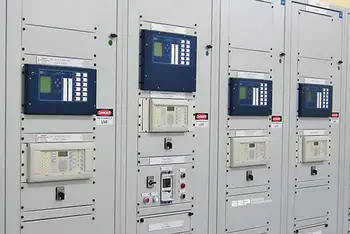
Substation Relay Protection Training

Our customized live online or in‑person group training can be delivered to your staff at your location.
  • Live Online
  • 12 hours Instructor-led
  • Group Training Available
Regular Price:
$699
Coupon Price:
$599
Reserve Your Seat Today
-- Allegheny Energy, Inc. has announced its subsidiary, Allegheny Energy Supply, has completed the sale of approximately 150,000 Pennsylvania and Ohio retail customer accounts in deregulated markets to Dominion Retail, Inc., a subsidiary of Dominion.

"Allegheny Energy Supply continually evaluates business opportunities in the retail marketplace," said Michael P. Morrell, President, Allegheny Energy Supply. "At this point in time, we have made the business decision to accept Dominion Retail's offer to purchase the noted retail customer accounts. However, we will continue to evaluate future opportunities in the retail marketplace and remain committed to Customer Choice."

Included in the sale are approximately 105,000 residential and commercial accounts in the Duquesne Light service territory in southwestern Pennsylvania and approximately 45,000 residential and commercial accounts in First Energy's northern Ohio service territory.

Prices and other terms will not change for the customers, who will continue to receive one bill from their local utility. Dominion Retail will replace Allegheny Energy as electricity supplier, but consumers' local utility companies will continue to deliver the electricity, read meters, send bills, collect payments, provide service and respond to emergencies.

"Our total residential and commercial customer base will grow to nearly 1 million customer accounts in eight states in the Northeast and Midwest with this purchase," said Paul D. Koonce, Senior Vice President, Portfolio Management of Dominion. "That includes more than 600,000 customers purchasing natural gas or electricity through Customer Choice programs, and 375,000 accounts for energy-related products and services. We look forward to providing more customers with low, stable energy prices as Customer Choice programs become more popular throughout the Midwest, Mid-Atlantic, and Northeast."

Allegheny Energy Supply will communicate details of the transition to all affected customers in the near future. If customers have questions in the interim, they should call 1-888-232-4642, Monday through Friday from 8 a.m. to 4:30 p.m. and Saturday from 10 a.m. to 2 p.m.

Allegheny Energy is an integrated Fortune 500 energy company with a balanced portfolio of businesses, including Allegheny Energy Supply, a national energy merchant which owns and operates electric generating facilities and supplies energy and energy-related commodities in selected domestic retail and wholesale markets; Allegheny Power, which delivers low-cost, reliable electric and natural gas service to about three million people in Maryland, Ohio, Pennsylvania, Virginia, and West Virginia; and a business segment offering fiber-optic and data services, energy procurement and management, and energy services. With headquarters in Hagerstown, Md., Allegheny Energy is included on the Standard and Poor's 500 index, the Barron's 500 list, and the Forbes "Platinum 400" list of America's best big companies. Information is available at www.alleghenyenergy.com.

Dominion is one of the nation's largest producers of energy, with a production capability of more than 3 trillion British thermal unit of energy per day. Dominion has a diversified and integrated energy portfolio consisting of nearly 24,000 megawatts of generation, 5.1 trillion cubic feet equivalent of proved natural gas reserves, 7,600 miles of natural gas transmission pipeline and the nation's largest underground natural gas storage system with more than 950 billion cubic feet of storage capacity. Dominion also serves 3.9 million franchise natural gas and electric customers in five states. In addition, Dominion owns a managing equity interest in Dominion Fiber Ventures LLC, owner of Dominion Telecom. For more information about Dominion, visit the company's web site at www.dom.com.

Related News
Group of premiers band together to develop nuclear reactor technology

Small Modular Reactors in Canada are advancing through provincial collaboration, offering nuclear energy, clean power and carbon reductions for grids, remote communities, and mines, with factory-built modules, regulatory roadmaps, and pre-licensing by the nuclear regulator.


Key Points

Compact, factory-built nuclear units for clean power, cutting carbon for grids, remote communities, and industry.

✅ Provinces: Ontario, Saskatchewan, New Brunswick collaborate

✅ Targets coal replacement, carbon cuts, clean baseload power

✅ Modular, factory-made units; 5-10 year deployment horizon


The premiers of Ontario, Saskatchewan and New Brunswick have committed to collaborate on developing nuclear reactor technology in Canada. 

Doug Ford, Scott Moe and Blaine Higgs made the announcement and signed a memorandum of understanding on Sunday in advance of a meeting of all the premiers. 

They will be working on the research, development and building of small modular reactors as a way to help their individual provinces reduce carbon emissions and move away from non-renewable energy sources like coal. 

Small modular reactors are easy to construct, are safer than large reactors and are regarded as cleaner energy than coal, the premiers say. They can be small enough to fit in a school gym. 

SMRs are actually not very close to entering operation in Canada, though Ontario broke ground on its first SMR at Darlington recently, signaling early progress. Natural Resources Canada released an "SMR roadmap" last year, with a series of recommendations about regulation readiness and waste management for SMRs.

In Canada, about a dozen companies are currently in pre-licensing with the Canadian Nuclear Safety Commission, which is reviewing their designs.

"Canadians working together, like we are here today, from coast to coast, can play an even larger role in addressing climate change in Canada and around the world," Moe said.  

Canada's Paris targets are to lower total emissions 30 per cent below 2005 levels by 2030, and nuclear's role in climate goals has been emphasized by the federal minister in recent remarks. Moe says the reactors would help Saskatchewan reach a 70 per cent reduction by that year.

The provinces' three energy ministries will meet in the new year to discuss how to move forward and by the fall a fully-fledged strategy for the reactors is expected to be ready.

However, don't expect to see them popping up in a nearby field anytime soon. It's estimated it will take five to 10 years before they're built. 

Ford lauds economic possibilities
The provincial leaders said it could be an opportunity for economic growth, estimating the Canadian market for this energy at $10 billion and the global market at $150 billion.

Ford called it an "opportunity for Canada to be a true leader." At a time when Ottawa and the provinces are at odds, Higgs said it's the perfect time to show unity. 

"It's showing how provinces come together on issues of the future." 

P.E.I. premier predicts unity at Toronto premiers' meeting
No other premiers have signed on to the deal at this point, but Ford said all are welcome and "the more, the merrier."

But developing new energy technologies is a daunting task. Higgs admitted the project will need national support of some kind, though he didn't specify what. The agreement signed by the premiers is also not binding. 

About 8.6 per cent of Canada's electricity comes from coal-fired generation. In New Brunswick that figure is much higher — 15.8 per cent — and New Brunswick's small-nuclear debate has intensified as New Brunswick Premier Blaine Higgs has said he worries about his province's energy producers being hit by the federal carbon tax.

Ontario has no coal-fired power plants, and OPG's SMR commitment aligns with its clean electricity strategy today. In Saskatchewan, burning coal generates 46.6 per cent of the province's electricity.

How would it work?
The federal government describes small modular reactors (SMRs) as the "next wave of innovation" in nuclear energy technology, and collaborations like the OPG and TVA partnership are advancing development efforts, and an "important technology opportunity for Canada."

Traditional nuclear reactors used in Canada typically generate about 800 megawatts of electricity, and Ontario is exploring new large-scale nuclear plants alongside SMRs, or enough to power about 600,000 homes at once (assuming that 1 megawatt can power about 750 homes).

The International Atomic Energy Agency (IAEA), the UN organization for nuclear co-operation, considers a nuclear reactor to be "small" if it generates under 300 megawatts.

Designs for small reactors ranging from just 3 megawatts to 300 megawatts have been submitted to Canada's nuclear regulator, the Canadian Nuclear Safety Commission, for review as part of a pre-licensing process, while plans for four SMRs at Darlington outline a potential build-out pathway that regulators will assess.

Ford rallying premiers to call for large increase in federal health transfers
Such reactors are considered "modular" because they're designed to work either independently or as modules in a bigger complex (as is already the case with traditional, larger reactors at most Canadian nuclear power plants). A power plant could be expanded incrementally by adding additional modules.

Modules are generally designed to be small enough to make in a factory and be transported easily — for example, via a standard shipping container.

In Canada, there are three main areas where SMRs could be used:

Traditional, on-grid power generation, especially in provinces looking for zero-emissions replacements for CO2-emitting coal plants.
Remote communities that currently rely on polluting diesel generation.
Resource extraction sites, such as mining and oil and gas.


Related News

View more

Hydro One employees support Province of Ontario in the fight against COVID-19

Hydro One COVID-19 Quarantine Support connects Ontario's Ministry of Health with trained customer service teams to contact travellers, encourage self-isolation, explain quarantine rules, and share public health guidance to slow community transmission.


Key Points

Hydro One helps Ontario's MOH contact travellers and guide self-isolation for quarantine compliance.

✅ Trained agents contact returning travellers in Ontario

✅ Guidance on self-isolation, symptoms, and quarantine compliance

✅ Supports public health while freeing front-line resources


Hydro One Networks Inc. ("Hydro One") announced support to the Ministry of Health (MOH) with its efforts in contacting travellers entering Ontario to ensure they comply with Canada's mandatory quarantine measures to combat COVID-19. Hydro One has volunteered employees from its customer service operations to contact thousands of returning travellers to provide them with timely guidance on how to self-isolate and spot the symptoms of the virus to help stop its spread.

"Our team is ready to lend a helping hand and support the province to help fight this invisible enemy," said Mark Poweska, President and CEO, Hydro One. "Our very dedicated customer service staff are highly professional and will be a valuable resource in supporting the province as it works to keep Ontarians safe and slow the spread of COVID-19."

"We have seen a tremendous response from all our companies across Ontario to help us fight the COVID-19 outbreak. With this one, Hydro One is helping the province to remind Ontarians they need to stay safe at home, especially self-isolating customers throughout Ontario," said Christine Elliott, Deputy Premier and Minister of Health. "We thank them for stepping up to be part of the fantastic province-wide effort acting together and allowing our front line workers to focus their efforts where they are needed most during this challenging time."

"We are pleased to see Hydro One volunteer its resources and expertise to support in the fight against COVID-19," said Greg Rickford, Minister of Energy, Northern Development and Mines. "In these unprecedented times, I am proud to see leaders in the energy sector rise to the challenge, from restoring power after major storms to supporting the people of our province."

Hydro One and its employees play a critical role in maintaining Ontario's electricity system. Since the COVID-19 outbreak began, Hydro One has been monitoring the evolving situation and adapting its operations, including on-site lockdowns for key staff as needed to ensure it continues to deliver the service Ontarians depend on while keeping our employees, customers and the public safe.

Hydro One has also developed a number of customer support measures during COVID-19, including a new Pandemic Relief Fund to offer payment flexibility and financial assistance to customers experiencing financial hardship, suspending late payment fees and returning approximately $5 million in security deposits to businesses across Ontario.

"Customers are counting on us now more than ever – not only to keep the lights on across the province, but to offer support during this difficult time," said Poweska. "Hydro One will continue to collaborate with industry partners and the province, including mutual aid assistance with other utilities, to find new ways to offer support where it is needed."

More information about how Hydro One is supporting its customers, including its ban on disconnections and other measures, can be found at www.HydroOne.com/PandemicRelief .


Related News

View more

Ontario First Nations urge government to intervene in 'urgently needed' electricity line

East-West Transmission Project Ontario connects Thunder Bay to Wawa, facing OEB bidding, Hydro One vs NextBridge, First Nations consultation, environmental assessment, Pukaskwa National Park route, and reliability needs for Northwestern Ontario industry and communities.


Key Points

A 450 km Thunder Bay-Wawa power line proposal facing OEB bidding, Hydro One competition, and First Nations consultation.

✅ Competing bids: Hydro One vs NextBridge under OEB rules

✅ First Nations cite duty to consult and environmental review gaps

✅ Route debate: Pukaskwa Park vs bypass; jobs and reliability at stake


Leaders of six First Nations are urging the Ontario government to "clean up" the bureaucratic process that determines who will build an "urgently needed" high-capacity power transmission line to service northern Ontario.

The proposed 450 kilometre East-West Transmission Project is set to stretch from Thunder Bay to Wawa, providing much-needed electricity to northern Ontario. NextBridge Infrastructure, in partnership with Bamkushwada Limited Partnership (BLP) — an entity the First Nations created in order to become co-owners and active participants in the economic development of the line — have been the main proponents of the project since 2012 and were awarded the right to construct.

In 2018, Hydro One appealed to the previous Liberal government with a proposal to build the transmission line with lower maintenance costs. On Dec. 20, the Ontario Energy Board (OEB) issued a decision that said it will issue the contract to construct the project to the company with the lowest bid, even as a Manitoba Hydro line delay followed a board recommendation in a comparable case.

The transmission regime in Ontario allows competing bids at the beginning of a project to designate a transmitter, and then again at the end of the project to award leave to construct.

As a result, the Hydro One was permitted to submit a competing bid, five years after it was first proposed. The chiefs of the six First Nations say that will delay the project by two years, impede their land and violate their rights. The former Liberal government under which the project was initiated "left the door open" for competition to enter this late in the construction, according to the community leaders.

"The former government created this mess and Hydro One has taken advantage of this loophole," Fort William First Nation Chief Peter Collins said in a Queen's Park news conference on Thursday. "Hydro One is an interloper coming in at the last minute, trying taking over the project and all the hard work that has been done, without doing the work it needs to do."


Mess will explode, says chief

According to Collins, the Ontario Energy Board is likely to choose Hydro One's late submission in February, "causing this mess to explode." The electricity and distribution utility has not completed any of the legal requirements demanded by a project of this magnitude, Collins said, including extensive consultations with First Nations, such as oral traditional evidence hearings that inform regulators, and thorough environment assessments. He speculated that by ignoring these two things, even though in B.C. Ottawa did not oppose a Site C work halt pending a treaty rights challenge, Hydro One's bid will be the lowest cost.

"Hydro One's interference is a big problem," said Collins. He was flanked by the leaders of the Pic Mobert First Nation, Opwaaganasiniing (also known as the Red Rock Indian Band), Michipicoten, Biigtigong Nishnaabeg — or Pic River First Nation — and Pays Plat First Nation.

Collins also highlighted that Hydro One's proposed route for the transmission line will go through Pukaskwa National Park on which there are Aboriginal title claims, and noted that an opponent of the Site C dam has been sharing concerns with northerners, underscoring the need for meaningful engagement. NextBridge's proposal, Collins said, will go around the park.

If Hydro One is awarded the construction project, at risk, too, are as many as 1,000 job opportunities in northern Ontario (including the Ring of Fire) that are expected from NextBridge's proposal, as well as the "many millions" in contracting opportunities for the communities, Collins said.

"That companies such as Hydro One can do this and dissolve all that has been developed by NextBridge and our [partnership] and all the opportunities we have created will signal to ... everyone in Ontario that Ontario's not open for business, at least fair business," Collins said.


Ontario Energy Minister 'disappointed' by OEB's decision

In an email statement to National Observer, Energy Minister Greg Rickford's press secretary said the government acknowledged the concerns of the First Nations leaders, and is "disappointed that the OEB continues to stall on this important project."

"The East-West Tie project is a priority for Ontario because it is needed to provide a reliable and adequate supply of electricity to northwestern Ontario to support economic growth," she wrote.

In October, Rickford wrote to the OEB outlining his expectation that a prompt decision would be made through an efficient and fair process.

Despite the minister’s request, the OEB delayed a decision on this project in December — as in B.C., a utilities watchdog has pressed for answers on Site C dam stability — pushing the service date back to at least 2021. In 2017, NextBridge said that, pending OEB approval, it would start construction in 2018, with completion scheduled for 2020.

Without the transmission line, the community faces a higher likelihood of power outages and less reliable electricity overall.

"Our government takes the duty to consult seriously and it is committed to ensuring that all Indigenous communities are properly consulted and kept informed regardless of the result of the OEB process," Rickford's office's statement said.

In a letter sent to Premier Doug Ford, Rickford and to Environment Minister Rod Phillips, all members of the Bamkushwada Limited Partnership said they will be compelled to appeal the OEB's decision if the right to construct is given to Hydro One.

The entire situation, they wrote in their letter, is "an undeniable mess" that requires government intervention.

"If the Ontario government can correct this looming outcome, it is incumbent on the Ontario government to do so," they wrote, urging the government to "take all legal means to prevent the OEB from rendering an unconstitutional and unjust decision."

"Our First Nations and the north have waited five long years for this transmission project," Collins said. "Enough is enough."


Related News

View more

Ukraine Helps Spain Amid Blackouts

Ukraine-Spain Power Aid highlights swift international solidarity as Kyiv offers grid restoration expertise to Spain after unprecedented blackouts, aiding energy infrastructure recovery, interconnectors, and emergency response while operators restore power across Spain and Portugal.


Key Points

Ukraine sends grid experts to help Spain recover from blackouts, restore power, and reinforce energy infrastructure.

✅ Ukraine offers grid restoration expertise and emergency support.

✅ Partial power restored; cause of blackouts under investigation.

✅ EU funding and Ukrenergo bolster infrastructure resilience.


In a remarkable display of international solidarity, Ukraine has extended assistance to Spain as the country grapples with widespread power outages. On April 28, 2025, Spain and neighboring Portugal experienced unprecedented blackouts that disrupted daily life, including internet connectivity and subway operations. The two nations declared a state of emergency as they worked to restore power.

Ukraine's Offer of Assistance

In response to the crisis, Ukrainian President Volodymyr Zelensky reached out to Spanish Prime Minister Pedro Sánchez, offering support to help restore Spain's power grid. Zelensky emphasized Ukraine's extensive experience in managing energy challenges, particularly in fighting to keep the lights on during sustained Russian attacks on its energy infrastructure. He instructed Ukraine’s Energy Minister, Herman Haluschchenko, to mobilize technical experts to assist Spain swiftly. As of April 29, grid operators in both Spain and Portugal reported partial restoration of power, with recovery efforts ongoing. Authorities continue to investigate the cause of the outages. 

Ukraine's Energy Crisis: A Background

Ukraine's offer of assistance is particularly poignant given its own recent struggles with energy security. Throughout 2024, Russia launched numerous aerial strikes targeting Ukraine's energy infrastructure, including strikes on western Ukraine that severely damaged power generation facilities and transmission networks. These attacks led to significant challenges during the winter season, including widespread blackouts and difficulties in heating households, prompting efforts to keep the lights on this winter across the country. Despite these adversities, Ukraine managed to navigate the winter without major power shortages, thanks to rapid repairs and the resilience of its energy sector. 

International Support for Ukraine

The international community has played a crucial role in supporting Ukraine's energy sector, even as U.S. support for grid restoration has shifted, with continued aid from European partners. In July 2024, the European Union allocated nearly $110 million through the KfW Development Bank to modernize high-voltage substations and develop interconnectors with continental Europe's power system. This funding has been instrumental in repairing and restoring equipment damaged by Russian attacks and enhancing the protection of Ukraine's substations. Since the onset of the conflict, Ukraine's energy grid operator, Ukrenergo, has received international assistance totaling approximately €1.5 billion. 

A Gesture of Solidarity

Ukraine's offer to assist Spain underscores the deepening ties between the two nations and reflects a broader spirit of international cooperation. While Spain continues its recovery efforts, the support from Ukraine serves as a reminder of the importance of solidarity, and of Ukraine's electricity reserves that help prevent further outages in times of crisis. As both countries work towards restoring and securing their energy infrastructures, their collaboration highlights the shared challenges and mutual support that define the European community.

Ukraine's proactive stance in offering assistance to Spain amidst the recent blackouts exemplifies the strength of international partnerships and the shared commitment to new energy solutions that overcome energy challenges. As the situation develops, the continued cooperation between nations will be pivotal in ensuring energy security and resilience as winter looms over Ukraine once more.


Related News

View more

Why rolling back European electricity prices is tougher than appears

EU Energy Price Crisis drives soaring electricity bills as natural gas sets pay-as-clear power prices; leaders debate price caps, common gas purchasing, market reform, renewables, and ETS changes amid Ukraine war supply shocks.


Key Points

A surge in gas-driven power costs linked to pay-as-clear pricing, supply shocks, and policy rifts across the EU market.

✅ Gas sets marginal power price via pay-as-clear mechanism

✅ Spain pushes decoupling and temporary price caps

✅ EU weighs joint gas buying, efficiency, more renewables


Nothing grabs politicians' attention faster than angry voters, and they've had plenty to be furious about as natural gas and electricity bills have soared to stomach-churning levels in recent months, as this UK natural gas analysis illustrates across markets.

That's led to a scramble to figure out ways to get those costs down, with emergency price-limiting measures under discussion — but that's turning out to be very difficult, so the likeliest result is that EU leaders meeting later this week won't come up with any solutions.

“There is no single easy answer to tackle the high electricity prices given the diversity of situations among Member States. Some options are only suitable for specific national contexts,” the European Commission said on Wednesday. “They all carry costs and drawbacks.” 

The initial problem was a surge in gas demand in Asia last year coupled with lower-than-normal Russian gas deliveries that left European gas storage at unusually low levels. Now the war in Ukraine is making matters even worse, as pressure grows for the bloc to rapidly cut its imports of Russian oil, coal and natural gas — although some national leaders reject the economic costs that would entail.

"We will end this dependence as quickly as we can, but to do that from one day to the next would mean plunging our country and all of Europe into a recession," German Chancellor Olaf Scholz warned on Wednesday.

The problem for the bloc is that its liberalized electricity market is tightly tied to the price of natural gas; power prices are set by the final input needed to balance demand — called pay-as-clear — which in most cases is set by natural gas. That's led to countries with large amounts of cheaper renewable or nuclear energy seeing sharp spikes in power prices thanks to the cost of that final bit of gas-fired electricity.

A Spanish-led coalition that includes Portugal, Belgium and Italy wants deep reforms to the EU price model, fueling a broader electricity market revamp debate in Brussels.

Others, such as the Netherlands and Germany, strongly oppose such an approach, echoing how nine countries oppose reforms at the EU level, and want to focus on cushioning the effects of the high prices on consumers and businesses, while letting the market operate. 

A third group, largely in Central Europe, wants to use the price spike to revamp or scrap the bloc's Emissions Trading System and to rethink its Fit for 55 climate legislation.

The European Commission has been holding the middle ground — arguing that the current market model makes sense, but encouraging countries to boost the amount of renewable electricity, in a wake-up call to ditch fossil fuels for Europe, to cut energy use and increase efficiency.

In draft conclusions of this week's European Council summit, seen by POLITICO, EU leaders, amid a France-Germany tussle over reform, call for things like a common approach to buying gas, aimed at preventing countries from competing against each other. But there's no big movement on electricity prices.

“It does not seem realistic to expect a result on the energy discussion at this European Council,” one diplomat said, stressing that the governments will need to see more analysis before committing to any more steps.

Looking for action
Spain wanted a much more robust response. Madrid has been arguing since last summer for “decoupling” gas from the electricity market; together with Portugal, it also mulled limiting the wholesale price of electricity to €180 per megawatt-hour — a proposal that Spain abandoned under fire from industry and consumer groups. 

Now Madrid is pushing to get a specific permission in the summit's final conclusions that would allow countries to voluntarily apply certain short-term solutions such as gas price cap strategies, according to a draft with track changes seen by POLITICO.

The issue with a cap is if gas prices are higher than the cap, Spain might not be able to buy any gas.


Related News

View more

Electrifying Manitoba: How hydro power 'absolutely revolutionized' the province

Manitoba Electrification History charts arc lights, hydroelectric dams, Winnipeg utilities, transmission lines, rural electrification, and Manitoba Hydro to today's wind, solar, and EV transition across the provincial power grid, driving modernization and reliability.


Key Points

Manitoba's power evolution from arc lights to hydro and rural electrification, advancing wind and solar on a modern grid.

✅ 1873 Winnipeg arc light predates Edison and Bell.

✅ 1919 Act built transmission lines, rural electrification.

✅ Hydroelectric dams reshaped lands and affected First Nations.


The first electric light in Manitoba was turned on in Winnipeg in 1873, but it was a century ago this year that the switch was flipped on a decision that would bring power to the fingertips of people across the province.

On March 12, 1873, Robert Davis — who owned the Davis House hotel on Main Street, about a block from Portage Avenue — used an electric arc light to illuminate the front of his building, according to A History of Electric Power in Manitoba, published by Manitoba Hydro.

That type of light used an an inert gas in a glass container to create an electric arc between two metal electrodes.

"The lamp in front of the Davis Hotel is quite an institution," a Manitoba Free Press report from the day said. "It looks well and guides the weary traveller to a haven of rest, billiards and hot drinks."

A ladder crew from the Winnipeg Electric Street Railway Company working on an electric trolley line in 1905. (I.F. Allen/Manitoba Hydro archives)

The event took place six years before Thomas Edison's first incandescent lamp was invented and three years before the first complete sentence was spoken over the telephone by Alexander Graham Bell.

"Electrification probably had a bigger influence on the lives of Manitobans than virtually anything else," said Gordon Goldsborough, head researcher with the Manitoba Historical Society.

"It's one of the most significant changes in the lives of Manitobans ever, because basically it transformed so many aspects of their lives. It wasn't just one thing — it touched pretty much every aspect of life."


Winnipeg gets its 1st street lamps

In the pioneer days of lighting and street railway transportation in Winnipeg, multiple companies formed in an effort to take advantage of the new utility: Winnipeg Gas Company, Winnipeg General Power Company, Manitoba Electric and Gas Light Company, and The North West Electric Light and Power Company.

In October 1882, the first four street lamps, using electric arc lights, were turned on along Main Street from Broadway to the CPR crossing over the Assiniboine River.

They were installed privately by P.V. Carroll, who came from New York to establish the Manitoba Electric Light & Power Company and try to win a contract for illuminating the rest of the city's streets.

He didn't get it. Newspaper reports from the time noted many outages and other problems and general disappointment in the quality of the light.

Instead, the North West Electric Light and Power Company won that contract and in June 1883 it lit up the streets.

Workers erect a wooden hydro pole beside the Belmont Hotel in 1936. Belmont is a small community southeast of Brandon. (Manitoba Hydro archives)

Over the years, other companies would bring power to the city as it became more reliable, including the Winnipeg Electric Street Railway Company (WERCo), which built the streetcar system and sold electric heat, light and power.

But it was the Brandon Electric Light Company that first tapped into a new source of power — hydro. In 1900, a dam was built across the Minnedosa River (now known as the Little Saskatchewan River) in western Manitoba, and the province's first hydroelectric generating station was created.

The first transmission line was also built, connecting the station with Brandon.

By 1906, WERCo had taken over the Winnipeg General Power Company and the Manitoba Electric and Gas Light Company, and changed its name to the Winnipeg Electric Railway Company. Later, it became the Winnipeg Electric Company, or WECo.

It also took a cue from Brandon, building a hydroelectric plant to provide more power. The Pinawa dam site operated until 1951 and is now a provincial park.

The Minnedosa River plant was the first hydroelectric generating station in Manitoba. (Manitoba Hydro archives)

The City of Winnipeg Hydroelectric System was also formed in 1906 as a public utility to combat the growing power monopoly held by WECo, and to get cheaper power. The city had been buying its supply from the private company "and the City of Winnipeg didn't quite like that price," said Bruce Owen, spokesman for Manitoba Hydro.

So the city funded and built its own dam and generating station site on the Winnipeg River in Pointe du Bois — about 125 kilometres northeast of Winnipeg — which is still in operation today.

"All of a sudden, not only did we have street lights … businesses had lights, power was supplied to homes, people no longer had to cook on wood stoves or walk around with kerosene lanterns. This city took off," said Owen.

"It helped industry grow in the city of Winnipeg. Within a few short years, a second plant had to be built, at Slave Falls."


Lighting up rural Manitoba

While the province's two biggest cities enjoyed the luxury of electricity and the conveniences it brought, the patchwork of power suppliers had also created a jumble of contracts with differing rates and terms, spurring periodic calls for a western Canadian electricity grid to improve coordination.

Meanwhile, most of rural Manitoba remained in the dark.

The Pinawa Dam was built by the Winnipeg Electric Street Railway Company in 1906 and operated until 1951. (Manitoba Hydro archives)

The Pinawa Dam site now, looking like some old Roman ruins. (Darren Bernhardt/CBC)

That began to change in 1919 when the Manitoba government passed the Electric Power Transmission Act, with the aim of supplying rural Manitoba with electrical power. The act enabled the construction of transmission lines to carry electricity from the Winnipeg River generating stations to communities all over southern Manitoba.

It also created the Manitoba Power Commission, predecessor to today's Manitoba Hydro, to purchase power from the City of Winnipeg — and later WECo — to supply to those other communities.

The first transmission line, a 97-kilometre link between Winnipeg and Portage la Prairie, opened in late 1919, and modern interprovincial projects like Manitoba-Saskatchewan power line funding continue that legacy today. The power came from Pointe du Bois to a Winnipeg converter station that still stands at the corner of Stafford Street and Scotland Avenue, then went on to Portage la Prairie.

"That's the remarkable thing that started in 1919," said Goldsborough.

Every year after that, the list of towns connected to the power grid became longer "and gradually, over the early 20th century, the province became electrified," Goldsborough said.

"You'd see these maps that would spider out across the province showing the [lines] that connected each of these communities — a precursor to ideas like macrogrids — to each other, and it was really quite remarkable."

By 1928, 33 towns were connected to the Manitoba Power Commission grid. That rose to 44 by 1930 and 140 by 1939, according to the Manitoba Historical Society.


Power on the farm

Still, one group who could greatly use electricity for their operations — farmers — were still using lanterns, steam and coal for light, heat and power.

"The power that came to the [nearest] town didn't extend to them," said Goldsborough.

It was during the Second World War, as manual labour was hard to come by on farms, that the Manitoba Power Commission recognized the gap in its grid.

It met with farmers to explain the benefits electricity could bring and surveyed their interest. When the war ended in 1945, the farm electrification process got underway.

Employees, their spouses, and children pose for a photo outside of Great Falls generating station in 1923. (Manitoba Hydro archives)

Farmers were taught wiring techniques and about the use of motors for farm equipment, as well as about electric appliances and other devices to ease the burden of domestic life.

"The electrification of the 1940s and '50s absolutely revolutionized rural life," said Goldsborough.

"Farmers had to provide water for all those animals and in a lot of cases [prior to electrification] they would just use a hand pump, or sometimes they'd have a windmill. But these were devices that weren't especially reliable and they weren't high capacity."

Electric motors changed everything, from pumping water to handling grain, while electric heat provided comfort to both people and animals.

Workers build a hydro transmission line tower in an undated photo from Manitoba Hydro. (Manitoba Hydro archives)

"Now you could have heat lamps for your baby chickens. They would lose a lot of chickens normally, because they would simply be too cold," Goldsborough said.

Keeping things warm was important, but so too was refrigeration. In addition to being able to store meat in summer, it was "something to prolong the life of dairy products, eggs, anything," said Manitoba Hydro's Owen.

"It's all the things we take for granted — a flick of a switch to turn the lights on instead of walking around with a lantern, being able to have maybe a bit longer day to do routine work because you have light."

Agriculture was the backbone of the province but it was limited without electricity, said Owen.

Connecting it to the grid "brought it into the modern age and truly kick-started it to make it a viable part of our economy," he said. "And we still see that today."

In 1954, when the farm electrification program ended, Manitoba was the most wired of the western provinces, with 75 per cent of farms and 100,000 customers connected.

The success of the farm electrification program, combined with the post-war boom, brought new challenges, as the existing power generation could not support the new demand.

The three largest players — City Hydro, WECo and the Manitoba Power Commission, along with the provincial government  — created the Manitoba Hydro-Electric Board in 1949 to co-ordinate generation and distribution of power.

A float in a Second World War victory parade represents a hydroelectric dam and the electricity it generates to power cities. (Manitoba Hydro archives)

More hydroelectric generating stations were built and more reorganizations took place. WECo was absorbed by the board and its assets split into separate companies — Greater Winnipeg Gas and Greater Winnipeg Transit.

Its electricity distribution properties were sold to City Hydro, which became the sole distributor in central Winnipeg. The Manitoba Power Commission became sole distributor of electricity in the suburbs and the rest of Manitoba.


Impacts on First Nations

Even as the lives of many people in the province were made easier by the supply of electricity, many others suffered from negative impacts in the rush of progress.

Many First Nations were displaced by hydro dams, which flooded their ancestral lands and destroyed their traditional ways of life.

"And we hear stories about the potential abuses that occurred," said Goldsborough. "So you know, there are there pluses but there are definitely minuses."

In the late 1950s, the Manitoba Power Commission continued to grow and expand its reach, this time moving into the north by buying up private utilities in The Pas and Cranberry Portage.

In 1961, the provincial government merged the commission with the Manitoba Hydro-Electric Board to create Manitoba Hydro.

In 1973, 100 years after the first light went on at that Main Street hotel, the last of the independent power utilities in the province — the Northern Manitoba Power Company Ltd. — was taken over by Hydro.

Winnipeg Hydro, previously called City Hydro, joined the fold in 2002.

Today, Manitoba Hydro operates 15 generating stations and serves 580,262 electric power customers in the province, as well as 281,990 natural gas customers.


New era

And now, as happened in 1919, a new era in electricity distribution is emerging as alternative sources of power — wind and solar — grow in popularity, and as communities like Fort Frances explore integrated microgrids for resilience.

"There's a bit of a clean energy shift happening," said Owen, adding use of biomass energy — energy production from plant or animal material — is also expanding.

"And there's a technological change going on and that's the electrification of vehicles. There are only really several hundred [electric vehicles] in Manitoba on the streets right now. But we know at some point, with affordability and reliability, there'll be a switch over and the gas-powered internal combustion engine will start to disappear."

'We're just a little behind here': Manitoba electric vehicle owners call for more charging stations

That means electrical utilities around the world are re-examining their capabilities, as climate change increasingly stresses grids, said Owen.

"It's coming [and we need to know], are we in a position to meet it? What will be the demands on the system on a path to a net-zero grid by 2050 nationwide?" he said.

"It may not come in my lifetime, but it is coming."


Related News

View more

Sign Up for Electricity Forum’s Newsletter

Stay informed with our FREE Newsletter — get the latest news, breakthrough technologies, and expert insights, delivered straight to your inbox.

Electricity Today T&D Magazine Subscribe for FREE

Stay informed with the latest T&D policies and technologies.
  • Timely insights from industry experts
  • Practical solutions T&D engineers
  • Free access to every issue

Download the 2025 Electrical Training Catalog

Explore 50+ live, expert-led electrical training courses –

  • Interactive
  • Flexible
  • CEU-cerified