Asian countries achieve energy understanding

By China Daily


Arc Flash Training CSA Z462 - Electrical Safety Essentials

Our customized live online or in‑person group training can be delivered to your staff at your location.
  • Live Online
  • 6 hours Instructor-led
  • Group Training Available
Regular Price:
$249
Coupon Price:
$199
Reserve Your Seat Today
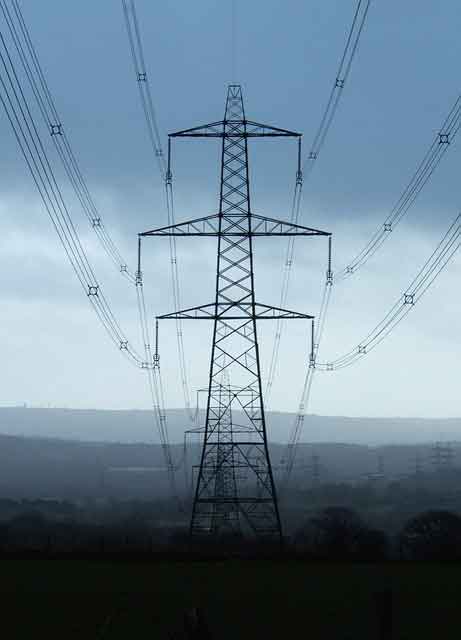
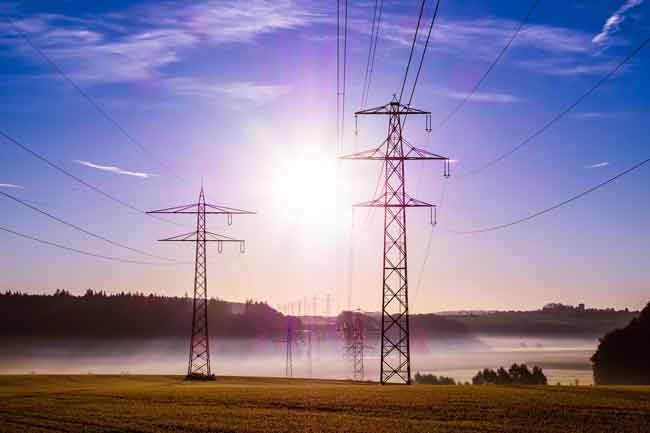
A mutual understanding has been reached between China and four countries from East Asia and the Asia-Pacific region in three areas on accelerating renewable energy use and energy efficiency co- operation.

The consensus was reached at the two-day East-Asia Consulting Conference of the Renewable Energy & Energy Efficiency Partnership (REEEP), which closed yesterday in Beijing.

The conference is among the six regional sessions of preparations for the formal start of REEEP on October 23, according to Li Junfeng, organizer of the REEEP East-Asia regional conference and secretary-general of the Chinese Renewable Energy Industries Association.

The three common understandings reached between China, Australia, South Korea, Mongolia and Japan are on energy policy, energy technological standards and a financing system for renewable energy.

Li said the framework of the consensus was agreed at the conference, but specific details will not be released until the REEEP global preparatory conference on September 14-15 in London.

"REEEP should attach great importance to East Asia as energy generated in the region accounts for 20 per cent of the global figure and the electric power production there mainly relies on coal," said a conference report.

Meanwhile, East Asia is rich in renewable energy, especially water energy, solar energy, wind energy and bioenergy.

China has committed itself to using clean energy and enhancing energy efficiency in eight laws and regulations. It is predicted that the amount of solar energy put into use in 2010 will be four times the figure it was in 2000, and the increase in wind energy is expected to be 650 per cent.

The REEEP initiative was launched by the British Government in partnership with several countries, businesses and civil society organizations at the World Summit on Sustainable Development, which was held last year in Johannesburg, South Africa.

REEEP aims to foster international collaboration in order to accelerate the growth of markets in modern renewable and energy efficiency.

-

-

Related News
New York Faces Soaring Energy Bills

New York faces soaring energy bills as utilities seek record rate hikes, aging grid infrastructure demands upgrades, and federal renewable policies shift. Consumers struggle with affordability, late payments, and rising costs of delivery and energy supply across the state.


Why is New York Facing Soaring Energy Bills?

New York faces soaring energy bills because utilities are raising rates to cover the costs of grid upgrades, inflation, and policy-driven changes in energy supply.

✅ Utilities seek double-digit rate hikes across the state

✅ Aging infrastructure and storm repairs increase delivery costs

✅ Federal policies and gas dependence push energy prices higher

New Yorkers are bracing for another wave of energy bill increases as utilities seek record-high rate hikes and policy changes ripple through the state’s power system. Electric bills in New York are the highest they’ve been in over a decade, and more than a million households are now at least two months behind on payments, a sign of pandemic energy insecurity that continues to strain budgets, owing utilities nearly $2 billion.

Record numbers of households have had their electricity or gas shut off this year — more than 61,000 in May alone — despite pandemic shut-off suspensions that had offered temporary relief, the highest the Public Utility Law Project (PULP) has ever recorded. “This August was the group’s busiest month ever,” said Laurie Wheelock, PULP’s executive director, citing a surge in calls to its hotline. “The top concern on people’s minds: rate hikes.”

Utilities across the state are pushing for significant price increases, citing aging infrastructure, the need for climate adaptation, and higher operating costs, as California regulators face calls for action amid rising bills. “We used to see single-digit rate hikes and now we see double-digit rate hikes,” said Jessica Azulay, executive director of the Alliance for a Green Economy. “That’s a new normal that is unacceptable.”

Several utilities have requested delivery rate increases of 25 percent or more, with some proposals as high as 39 percent. Upstate utilities NYSEG and RG&E are seeking to raise electric and gas bills by about $33 a month, although regulators are unlikely to approve the full amount.

The companies argue the hikes are needed “to pay for rebuilding an aging grid and expanding its capacity to meet residents’ and businesses’ service demands,” including storm repairs. They also claim the plan would create more than 1,000 jobs.

James Denn, a spokesperson for the Public Service Commission (PSC), said much of the cost pressure stems from “inflation, higher interest rates, supply chain disruptions, the global push to upgrade electrical infrastructure, and, most recently, the rising risk and uncertainty from tariffs,” trends reflected in U.S. electricity price data over the past two years.

While some have blamed New York’s clean-energy transition, a PSC report found that state climate policies account for only 5 to 9.5 percent of the average household’s electric bill, or approximately $10 to $12 per month. The bulk of the increases still come from traditional spending on infrastructure, storm resilience, and system expansion.

On the supply side, costs are rising too. President Donald Trump’s recent policies have threatened renewable-energy investment nationwide, even as states’ renewable ambitions carry significant costs, potentially adding to New York’s woes. His July “megabill” phases out a 30 percent federal tax credit for solar and wind unless projects begin construction by mid-2026. Industry experts warn that the changes could make renewables “more expensive to build” and “increase reliance on gas.”

“It just means more expensive power,” said Marguerite Wells of the Alliance for Clean Energy New York.

The state estimates Trump’s policy shifts could cost New York $60 billion in lost renewable investment. With fewer clean-energy projects moving forward, gas — which already supplies roughly half of the state’s electricity — will remain the dominant source, tying energy prices to volatile global markets and the kinds of price drivers seen in California in recent years.

Governor Kathy Hochul has called affordability “our greatest short-term challenge,” while consumer advocates are demanding reforms to reduce utility profits and overhaul “rate design,” and to strengthen protections such as the emergency disconnection moratorium that applies during declared emergencies.

“There is definitely a groundswell of concern,” Wheelock said. “We go to meetings and we’re getting questions about rate design, like, ‘What is the revenue decoupling mechanism?’ Never had that question before.”


Related Articles


View more

N.S. abandons Atlantic Loop, will increase wind and solar energy projects

Nova Scotia Clean Power Plan 2030 pivots from the Atlantic Loop, scaling wind and solar, leveraging Muskrat Falls via the Maritime Link, adding battery storage and transmission upgrades to decarbonize grid and retire coal.


Key Points

Nova Scotia's 2030 roadmap to replace coal with wind, solar, hydro imports, storage, and grid upgrades.

✅ 1,000 MW onshore wind to supply 50% by 2030

✅ Battery storage sites and New Brunswick transmission upgrades

✅ Continued Muskrat Falls imports via Maritime Link


Nova Scotia is abandoning the proposed Atlantic Loop in its plan to decarbonize its electrical grid by 2030 amid broader discussions about independent grid planning nationwide, Natural Resources and Renewables Minister Tory Rushton has announced.

The province unveiled its clean power plan calling for 30 per cent more wind power and five per cent more solar energy in the Nova Scotia power grid over the coming years. Nova Scotia's plan relies on continued imports of hydroelectricity from the Muskrat Falls project in Labrador via the Emera-owned Maritime Link.

Right now Nova Scotia generates 60 per cent of its electricity by burning fossil fuels, mostly coal, and some increased use of biomass has also factored into the mix. Nova Scotia Power must close its coal plants by 2030 when 80 per cent of electricity must come from renewable sources in order reduce greenhouse gas emissions causing climate changes.

Critics have urged reducing biomass use in electricity generation across the province.

The clean power plan calls for an additional 1,000 megawatts of onshore wind by 2030 which would then generate 50 per cent of the the province's electricity, while also advancing tidal energy in the Bay of Fundy as a complementary source.    

"We're taking the things already know and can capitalize on while we build them here in Nova Scotia," said Rushton, "More importantly, we're doing it at a lower rate so the ratepayers of Nova Scotia aren't going to bear the brunt of a piece of equipment that's designed and built and staying in Quebec."

The province says it can meet its green energy targets without importing Quebec hydro through the Atlantic loop. It would have brought hydroelectric power from Quebec into New Brunswick and Nova Scotia via upgraded transmission links. But the government said the cost is prohibitive, jumping to $9 billion from nearly $3 billion three years ago with no guarantee of a secure supply of power from Quebec.

"The loop is not viable for 2030. It is not necessary to achieve our goal," said David Miller, the provincial clean energy director. 

Miller said the cost of $250 to $300 per megawatt hour was five times higher than domestic wind supply.

Some of the provincial plan includes three new battery storage sites and expanding the transmission link with New Brunswick. Both were Nova Scotia Power projects paused by the company after the Houston government imposed a cap on the utility's rate increased in the fall of 2022.

The province said building the 345-kilovolt transmission line between Truro, N.S., and Salisbury, N.B., and an extension to the Point Lepreau Nuclear Generating Station, as well as aligning with NB Power deals for Quebec electricity underway, would enable greater access to energy markets.

Miller says Nova Scotia Power has revived both.

Nova Scotia Power did not comment on the new plan, but Rushton spoke for the company.

"All indications I've had is Nova Scotia Power is on board for what is taking place here today," he said.


Related News

View more

BC Hydro electricity demand down 10% amid COVID-19 pandemic

BC Hydro electricity demand decline reflects COVID-19 impacts across British Columbia, with reduced industrial load, full reservoirs, strategic spilling, and potential rate increases, as hydropower plants adjust operations at Seven Mile, Revelstoke, and Site C.


Key Points

A 10% COVID-19-driven drop in BC power use, prompting reservoir spilling, plant curtailment, and potential rate hikes.

✅ 10% load drop; industrial demand down 7% since mid-March

✅ Reservoirs near capacity; controlled spilling to mitigate risk

✅ Possible rate hikes; Site C construction continues


Elecricity demand is down 10 per cent across British Columbia, an unprecedented decline in commercial electricity consumption sparked by the COVID-19 pandemic, according to a BC Hydro report.

Power demand across hotels, offices, recreational facilities and restaurants have dwindled as British Columbians self isolate, and bill relief for residents and businesses was introduced during this period.

The shortfall means there's a surplus of water in reservoirs across the province.

"This drop in load in addition to the spring snow melt is causing our reservoirs to reach near capacity, which could lead to environmental concerns, as well as public safety risks if we don't address the challenges now," said spokesperson Tanya Fish.

Crews will have to strategically spill reservoirs to keep them from overflowing, a process that can have negative impacts on downstream ecosystems. Excessive spilling can increase fish mortality rates.

Spilling is currently underway at the Seven Mile and Revelstoke reservoirs. In addition, several small plants have been shut down.

Site C and hydro rates
According to the report, titled Demand Dilemma, the decline could continue into April 2021 and drop by another two per cent, even as a regulator report alleged BC Hydro misled oversight bodies.

Major industry — forestry, mining and oil and gas — accounts for about 30 per cent of BC Hydro's overall electricity load. Energy demand from these customers has dropped by seven per cent since mid-March, while in Manitoba a Consumers Coalition has urged rejection of proposed rate increases.

BC Hydro says a prolonged drop in demand could have an impact on future rates, which could potentially go up as the power provider looks to recoup deferred operating costs and financial losses.

In Manitoba, Manitoba Hydro's debt has grown significantly, underscoring the financial risks utilities face during demand shocks.

Fish said the crown corporation still expects there to be increased demand in the long-term. She said construction of the Site C Dam is continuing as planned to support clean-energy generation in the province. There are currently nearly 1,000 workers on-site.


Related News

View more

US Electricity Market Reforms could save Consumers $7bn

PJM and MISO Electricity-Market Reforms promise consumer savings by enabling renewables, wind, solar, and storage participation in wholesale markets, enhancing grid flexibility, reliability services, and real-time pricing across the Midwest, Great Lakes, and Mid-Atlantic.


Key Points

Market rule updates enabling renewables and storage, improving reliability and lowering consumer costs.

✅ Removes barriers to renewables, storage, demand response

✅ Improves intermarket links and real-time price signals

✅ Rewards flexible resources and reliability services


Electricity-market reforms to enable more renewables generation and storage in the Midwest, Great Lakes, and Mid-Atlantic could save consumers in the US and Canada more than $6.9 billion a year, according to a new report.

The findings may have major implications for consumer groups, large industrial companies, businesses, and homeowners in those regions, said the Wind-Solar Alliance, (WSA), which commissioned the Customer Focused and Clean report.

The WSA is a non-profit organisation supporting the growth of renewables. American Wind Energy Association CEO Tom Kiernan is listed as WSA secretary, amid ongoing debates about the US wind market today.

"Consumers are looking for clean energy, affordable and reliable energy that will keep their monthly electricity bills low," said Kristin Munsch, president of the Board of the Consumer Advocates of the PJM States, which represents over 65 million consumers in 13 states.

"There is great potential to achieve those goals with the cost-effective integration of wind, solar and battery storage plants into our wholesale power markets."

The report found the average residential customer in the PJM and Midcontinent Independent System Operator (MISO) regions, covering 29 US states and the Canadian province of Manitoba, could each save up to $48 a year as lower wholesale electricity prices materialize with significantly more wind, solar and storage on the grid.

The average annual home electricity, for example in New Jersey, in the PJM region, was just over $106 in 2018, according to the US Energy Information Administration.

The latest report quantifies the findings of a previous one for the WSA, published in November 2018, which found that outdated wholesale market rules in the US were preventing full participation by renewable energy, including wind power.


Outdated rules

"The existing wholesale power market rules were largely developed for slower-to-react conventional generators, such as coal and nuclear plants," said Michael Milligan, president of Milligan Grid Solutions and co-author of the new report.

"This report demonstrates the benefits of updating the rules to better accommodate the characteristics and potential contributions of wind and solar and other newer sources of low-cost generation."

With more renewables generation on the grid, customers would benefit the most from increasing power-system flexibility through market structures, the new report concluded. It called for the removal of artificial barriers preventing renewables, storage and demand response from participating in markets.

The report also advocated improving the connections between markets, thereby lowering transaction costs of imports and exports between neighbouring systems.

"There are currently artificial barriers that are preventing the full participation of renewables, storage and other new technologies in the PJM and MISO markets," said Michael Goggin, vice president of Grid Strategies and co-author of the report.

"Providing consumers with a real-time price signal that allows them to adjust their demand, rewarding flexible resources for their capabilities through improved market design, and allowing renewable and storage resources to participate in reliability-services markets would yield the greatest consumer benefits," he said.

PJM and MISO, which incorporate some of the windiest areas of the country, are currently reviewing their market designs as part of a broader grid overhaul underway.


Related News

View more

EU Plans To Double Electricity Use By 2050

European Green Deal Electrification accelerates decarbonization via renewables, electric vehicles, heat pumps, and clean industry, backed by sustainable finance, EIB green lending, just transition funds, and energy taxation reform to phase out fossil fuels.


Key Points

An EU plan to replace fossil fuels with renewable electricity in transport, buildings, and industry, supported by green finance.

✅ Doubles electricity's share to cut CO2 and phase out fossil fuels.

✅ Drives EVs, heat pumps, and electrified industry via renewables.

✅ Funded by EIB lending, EU budget, and just transition support.


The European Union is preparing an ambitious plan to completely decarbonize by 2050. Increasing the share of electricity in Europe’s energy system – electricity that will increasingly come from renewable sources - will be at the center of this strategy, aligning with the broader global energy transition under way, the new head of the European Commission’s energy department said yesterday.

This will mean more electric cars, electric heating and electric industry. The idea is that fossil fuels should no longer be a primary energy source, heating homes, warming food or powering cars. In the medium term they should only be used to generate electricity, a shift mirrored by New Zealand's electricity shift efforts, which then powers these things, resulting in less CO2 emissions.

“First assessments show we need to double the share of electricity in energy consumption by 2050,” Ditte Juul-Jørgensen said at an event in Brussels this week, a goal echoed by recent calls to double investment in power systems from world leaders. “We’ve already seen an increase in the last decade, but we need to go further”.

Juul-Jørgensen, who started in her job as director-general of the commission’s energy department in August, has come to the role at a pivotal time for energy. The 2050 decarbonization proposal from the Commission, the EU’s executive branch, is expected to be approved next month by EU national leaders. A veto from Poland that has blocked adoption until now is likely to be overcome if Poland and other Eastern European countries are offered financial assistance from a “just transition fund”, according to EU sources.

Ursula von der Leyen, the incoming President of the Commission, has promised to unveil a “European Green Deal” in her first 100 days in office designed to get the EU to its 2050 goal. Juul-Jørgensen will be working with the incoming EU Energy Commissioner, Kadri Simson, on designing this complex strategy. The overall aim will be to phase out fossil fuels, and increase the use of electricity from green sources, amid trends like oil majors pivoting to electric across Europe today.

“This will be about how do we best make use of electricity to feed into other sectors,” Juul-Jørgensen said. “We need to think about transforming it into other sources, and how to best transport it.”

“But the biggest challenge from what I see today is that of investment and finance - the changes we have to make are very significant.”


Financing problems

The Commission is going to try to tackle the challenges of financing the energy transition with two tools: dedicated climate funding in the EU budget, and dedicated climate lending from the European Investment Bank.

“The EIB will play an increasing role in future. We hope to see agreement [with the EIB board] on that in the coming months so there’s a clear operator in the EIB to support the green transition. We’re looking at something around €400 billion a year.”

The Commission’s proposed dedicated climate spending in the next seven-year budget must still be approved by the 28 EU national governments. Juul-Jørgensen said there is unanimous agreement on the amount: 25% of the budget. But there is disagreement about how to determine what is green spending.

“A lot of work has been ongoing to ensure that when it comes to counting it reflects the reality of the investments,” she said. “We’re working on the taxonomy on sustainable finance - internally identifying sectors contributing to overall climate objectives.”


Electricity pact

Juul-Jørgensen was speaking at an event organized by the the Electrification Alliance, a pact between nine industry organizations to lobby for electricity to be put at the heart of the European green deal. They signed a declaration at the event calling for a variety of measures to be included in the green deal, reflecting debates over a fully renewable grid by 2030 in other jurisdictions, including a change to the EU’s energy taxation regime which incentivizes a switch from fossil fuel to electricity consumption.

“Electrification is the most important solution to turn the vision of a fossil-free Europe into reality,” said Laurence Tubiana, CEO of the European Climate Foundation, one of the signatories, and co-architect of the Paris Agreement.

“We are determined to deliver, but we must be mindful of the different starting points and secure sufficient financing to ensure a fair transition”, said Magnus Hall, President of electricity industry association Eurelectric, another signatory.

The energy taxation issue has been particularly tricky for the EU, since any change in taxation rules requires the unanimous consent of all 28 EU countries. But experts say that current taxation structures are subsidizing fossil fuels and punishing electricity, as recent UK net zero policy changes illustrate, and unless this is changed the European Green Deal can have little effect.

“Yes this issue will be addressed in the incoming commission once it takes up its function,” Juul-Jørgensen said in response to an audience question. “We all know the challenge - the unanimity requirement in the Council - and so I hope that member states will agree to the direction of work and the need to address energy taxation systems to make sure they’re consistent with the targets we’ve set ourselves.”

But some are concerned that the transformation envisioned by the green deal will have negative impacts on some of the most vulnerable members of society, including those who work in the fossil fuel sector.

This week the Centre on Regulation in Europe sent an open letter to Frans Timmermans, the Commission Vice President in charge of climate, warning that they need to be mindful of distributional effects. These worries have been heightened by the yellow vest protests in France, which were sparked by French President Emmanuel Macron’s attempt to increase fuel taxes for non-electric cars.

“The effectiveness of climate action and sustainability policies will be challenged by increasing social and political pressures,” wrote Máximo Miccinilli, the center’s director for energy. “If not properly addressed, those will enhance further populist movements that undermine trust in governance and in the public institutions.”

Miccinilli suggests that more research be done into identifying, quantifying and addressing distributional effects before new policies are put in place to phase out fossil fuels. He proposes launching a new European Observatory for Distributional Effects of the Energy Transition to deal with this.

EU national leaders are expected to vote on the 2050 decarbonization target, building on member-state plans such as Spain's 100% renewable electricity goal by mid-century, at a summit in Brussels on December 12, and Von der Leyen will likely unveil her European Green Deal in March.


Related News

View more

Quebec Halts Crypto Mining Electricity Requests

Hydro-Quebec Crypto Mining Pause signals a temporary halt as blockchain power requests surge; energy regulator review will weigh electricity demand, winter peak constraints, tariffs, investments, and local jobs to optimize grid stability and revenues.


Key Points

A provincial halt on new miner power requests as Hydro-Quebec sets rules to safeguard demand, winter peaks, and rates.

✅ Temporary halt on new electricity sales to crypto miners

✅ Regulator to rank projects by jobs, investment, and revenue

✅ Winter peak demand and tariffs central to new framework


Major Canadian electricity provider Hydro-Québec will temporarily stop processing requests from cryptocurrency miners in order for the company to fulfil its obligations to supply energy to the entire province, while its global ambitions adjust to changing demand, according to a press release published June 7.

Hydro-Québec is experiencing “unprecedented” demand from blockchain companies, which reportedly exceeds the electric utility’s short and medium-term capacity. In this regard, the Quebec provincial government has ordered Hydro-Québec to halt electric power sales to cryptocurrency miners, and, following the New Hampshire rejection of Northern Pass announced a new framework for this category of electricity consumers.

In the coming days, Hydro-Québec will reportedly file an application to local energy regulator Régie de l'énergie, proposing a selection process for blockchain industry projects so as “not to miss the opportunities offered by this industry.” Regulators will reportedly target companies which can offer the province the most profitable economic advantages, including investments and local job creation.

#google#

Régie de l'énergie is instructed to consider “the need for a reserved block of energy for this category of consumers, the possibility of maximizing Hydro-Québec's revenues, and issues related to the winter peak period” as well as interprovincial arrangements like the Ontario-Québec electricity deal under discussion. Éric Filion, President of Hydro-Québec Distribution, said:

"The blockchain industry is a promising avenue for Hydro-Québec. Guidelines are nevertheless required to ensure that the development of this industry maximizes spinoffs for Québec without resulting in rate increases for our customers. We are actively participating in the Régie de l'énergie's process so that these guidelines can be produced as quickly as possible."

With this move, the government of Québec deviates from its decision to reportedly open the electricity market to miners at the end of last month, even as an Ontario-Quebec energy swap helps manage electricity demands. In March, the government said it was not interested in providing cheap electricity to Bitcoin miners, stating that cryptocurrency mining at a discount without any sort of “added value” for the local economy was unfavorable.


Related News

View more

Sign Up for Electricity Forum’s Newsletter

Stay informed with our FREE Newsletter — get the latest news, breakthrough technologies, and expert insights, delivered straight to your inbox.

Electricity Today T&D Magazine Subscribe for FREE

Stay informed with the latest T&D policies and technologies.
  • Timely insights from industry experts
  • Practical solutions T&D engineers
  • Free access to every issue

Live Online & In-person Group Training

Advantages To Instructor-Led Training – Instructor-Led Course, Customized Training, Multiple Locations, Economical, CEU Credits, Course Discounts.

Request For Quotation

Whether you would prefer Live Online or In-Person instruction, our electrical training courses can be tailored to meet your company's specific requirements and delivered to your employees in one location or at various locations.