Chubu Electric Claims Hamaoka Nuclear Plant Quake-Resistant

By Kyodo News


CSA Z463 Electrical Maintenance -

Our customized live online or in‑person group training can be delivered to your staff at your location.

  • Live Online
  • 6 hours Instructor-led
  • Group Training Available
Regular Price:
$249
Coupon Price:
$199
Reserve Your Seat Today
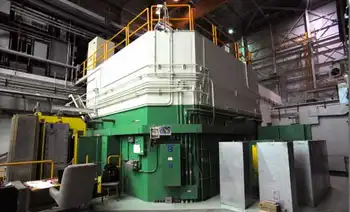
Chubu Electric Power Co. has recently argued that its Hamaoka nuclear plant in Shizuoka Prefecture is sufficiently earthquake-resistant after a seismologist warned of a catastrophe if a major earthquake hits the Tokai region.

"The structures of the nuclear plant are directly rooted in the rock bed and can tolerate a quake of magnitude 8.5," the utility claimed on its Web site.

"Its seismic safety has been confirmed by national safety inspections," said the power supplier to the Tokai and other central Japan regions after Katsuhiko Ishibashi, a professor at Kobe University, called it insufficient.

The plant also has machinery that automatically shuts down reactors at times of quakes, the company said, dismissing the possibility that an earthquake-induced nuclear disaster could occur at the Hamaoka plant as Ishibashi warned.

Ishibashi sounded his warning at a general meeting of the International Union of Geodesy and Geophysics held in Sapporo.

Another seismologist, Kiyoo Mogi, who was chairman of the Coordinating Committee for Earthquake Prediction, has also issued a similar warning, indicating a growing concern among academic experts.

Related News
Reconciliation and a Clean Electricity Standard

Clean Electricity Standard (CES) sets utility emissions targets, uses tradable credits, and advances decarbonization via technology-agnostic benchmarks, carbon capture, renewable portfolio standards, upstream methane accounting, and cap-and-trade alternatives in reconciliation policy.


Key Points

CES sets utility emissions targets using tradable credits and benchmarks to drive power-sector decarbonization.

✅ Annual clean energy targets phased to 2050

✅ Tradable credits for compliance across utilities

✅ Includes upstream methane and lifecycle emissions


The Biden Administration and Democratic members of Congress have supported including a clean electricity standard (CES) in the upcoming reconciliation bill. A CES is an alternative to pricing carbon dioxide through a tax or cap-and-trade program and focuses on reducing greenhouse gas emissions produced during electricity generation by establishing targets, while early assessments show mixed results so far. In principle, it is a technology-agnostic approach. In practice, however, it pushes particular technologies out of the market.

The details of the CES are still being developed, but recent legislation may provide insight into how the CES could operate. In May, Senator Tina Smith and Representative Ben Ray Luján introduced the Clean Energy Standard Act of 2019 (CESA), while Minnesota's 100% carbon-free mandate offers a state-level parallel, and in January 2020, the House Energy and Commerce Committee released a discussion draft of the Climate Leadership and Environmental Action for our Nation’s (CLEAN) Future Act. Both bills increase the clean energy target annually until 2050 in order to phase out emissions. Both bills also create a credit system where clean sources of electricity as determined by a benchmark, carbon dioxide emitted per kilowatt-hour, receive credits. These credits may be transferred, sold, and auctioned so utilities that fail to meet targets can procure credits from others, as large energy customers push to accelerate clean energy globally.

The bills’ benchmarks vary, and while the CLEAN Future Act allows natural gas-fired generators to receive partial credits, CESA does not. Under both bills, these generators would be expected to install carbon capture technology to continue meeting increasing targets for clean electricity generation. Both bills go beyond considering the emissions resulting from generation and include upstream emissions for natural gas-fired generators. Natural gas, a greenhouse gas, that is leaked upstream of a generator during transportation is to be included among its emissions. The CLEAN Future Act also calls for newly constructed hydropower generators to account for the emissions associated with the facility’s construction despite producing clean electricity. These additional provisions demonstrate not only the CES’s inability to fully address the issue of emissions but also the slippery slope of expanding the program to include other markets, echoing cost and reliability concerns as California exports its energy policies across the West.

A majority of states have adopted clean energy, electricity, or renewable portfolio standards, with some considering revamping electricity rates to clean the grid, leaving legislators with plenty of examples to consider. As they weigh their options, legislators should consider if they are effectively addressing the problem at hand, economy-wide emissions reductions, and at what cost, drawing on examples like New Mexico's 100% clean electricity bill to inform trade-offs.


Related News

View more

Electricity is civilization": Winter looms over Ukraine battlefront

Ukraine Power Grid Restoration accelerates across liberated Kharkiv, restoring electricity, heat, and water amid missile and drone strikes, demining operations, blackouts, and winterization efforts, showcasing resilience, emergency repairs, and critical infrastructure recovery.


Key Points

Ukraine's rapid push to repair war-damaged grids, restore heat and water, and stabilize key services before winter.

✅ Priority repairs restore electricity and water in liberated Kharkiv.

✅ Crews de-mine lines and work under shelling, drones, and missiles.

✅ Winterization adds generators, mobile stoves, and large firewood supplies.


On the freshly liberated battlefields of northeast Ukraine, a pile of smashed glass windows outside one Soviet-era block of apartments attests to the violence of six months of Russian occupation, and of Ukraine’s sweeping recent military advances.

Indoors, in cramped apartments, residents lived in the dark for weeks on end.

Now, with a hard winter looming, they marvel at the speed and urgency with which Ukrainian officials have restored another key ingredient to their survival: electric power, a critical effort to keep the lights on this winter across communities.

Among those things governments strive to provide are security, opportunity, and minimal comfort. With winter approaching, and Russia targeting Ukraine’s infrastructure, add to that list heat and light, even as Russia hammers power plants nationwide. It’s requiring a concerted effort.

“Thank God it works! Electricity is civilization – it is everything,” says Antonina Krasnokutska, a retired medical worker, looking affectionately at the lightbulb that came on the day before, and now burns again in her tiny spotless kitchen.

“Without electricity there is no TV, no news, no clothes washing, no charging the phone,” says Ms. Krasnokutska, her gray hair pulled back and a small crucifix around her neck.

“Before, it was like living in the Stone Age,” says her grown son, Serhii Krasnokutskyi, who is more than a head taller. “As soon as it got dark, everyone would go to sleep.”

He shows a picture on his phone from a few days earlier, of a tangle of phone and computer charging cables – including his – plugged in at a local shop with a generator.

“We are very grateful for the people who repaired this electricity, even with shelling continuing,” he says. “They have a very complicated job.”

Indeed, although a lack of power might have been a novel inconvenience during the warm summer season, it increasingly has become a matter of great urgency for Ukrainian citizens and officials.

Coping through Ukraine’s winter with dignity and any degree of security will require courage and perseverance, as the severity and suffering that the season can bring here are being weaponized by Russia, as it seeks to compensate for a string of battlefield losses.

In recent days, Russian attacks have specifically targeted Ukraine’s electrical and other civilian infrastructure – all with the apparent aim of making this winter as hard as possible for Ukrainians, even as Moscow employs other measures to spread the hardship across Europe, while Ukraine helps Spain amid blackouts through grid support.

Ukrainian President Volodymyr Zelenskyy said Monday that Russian barrages across the country with missiles and Iran-supplied kamikaze drones had destroyed 30% of Ukraine’s power stations in the previous eight days, including strikes on western Ukraine that caused outages. Thousands of towns have been left without electricity.

Kharkiv’s challenges
Emblematic of the national challenge is the one facing officials in the northeast Kharkiv region, where Ukraine recaptured more than 3,000 square miles in a September counteroffensive. Ukrainian forces are still making gains on that front, as well as in the south toward Kherson, where Wednesday Russia started evacuating civilians from the first major city it occupied, after launching its three-pronged invasion last February.

Across the Kharkiv region, Ukrainians are stockpiling as much wood, fuel, and food as possible while they still can, and adopting new energy solutions as they prepare, from sources as diverse as the floorboards of destroyed schools and the pine forests in Izium, which are pockmarked with abandoned Russian trenches adjacent to a mass burial site.

“Of course, we have this race against time,” says Serhii Mahdysyuk, the Kharkiv regional director in charge of housing, services, fuel, and energy. “Unfortunately, we probably stand in front of the biggest challenge in Ukraine.”

That is not only because of the scale of liberated territory, he says, but also because the Kharkiv region shares a long border with Russia, as well as with the Russian-controlled areas of the eastern Donbas.

“It’s a great mixture of all threats, and we are sure that shelling and bombings will continue, but we are ready for this,” says Mr. Mahdysyuk. “We know our weak spots that Russia can destroy, but we are prepared for what to do in these situations.”

Ukraine’s battlefield gains have meant a surging need to pick up the pieces after Russian occupation, even as electricity reserves are holding if no new strikes occur, to ensure habitable conditions as more and more surviving residents require services, and as others return to scenes of devastation.

Restoring electricity is the top priority, amid shifting international assistance such as the end of U.S. grid support, because that often restarts running water, too, says Mr. Mahdysyuk. But before that, the area beneath broken power lines must be de-mined.

Indeed, members of an electricity team reconnecting cables on the outskirts of Balakliia – one of the first towns to see power restored, at the end of September – say they lost two fellow workers in the previous two weeks. One died after stepping on an anti-personnel mine, another when his vehicle hit an anti-tank device.

Ukrainian electricity workers restore power lines damaged during six months of Russian military occupation in Balakliia, Ukraine, Sept. 29, 2022. Ukrainians in liberated territory say the restoration of the electrical grid, and with it often the water supply, is a return to civilization.
“For now, our biggest problem is mines,” says the team leader, who gave the name Andrii. “It’s fine within the cities, but in the fields it’s a disaster because it’s very difficult to see them. There is a lot of [them] around here – it will take years and years to get rid of.”

Yet officials only have a few weeks to execute plans to provide for hundreds of thousands of residents in this region, in their various states of need and distress. Some 50 field kitchens capable of feeding 200 to 300 people each have been ordered. Another 1,000 mobile stoves are on their way.

And authorities will provide nearly 200,000 cubic yards of firewood for those who have no access to it, and may have no other means of keeping warm – or where shelling continues to disrupt repairs, says Mr. Mahdysyuk.

“The level of opportunity and resources we have is not the same as the level of destruction,” he says. People in districts and buildings too destroyed to have services restored soon, such as in Saltivka in Kharkiv city, may be moved.


Related News

View more

Bomb Cyclone Leaves Half a Million Without Power in Western Washington

Western Washington Bomb Cyclone unleashed gale-force winds, torrential rain, and coastal flooding, causing massive power outages from Seattle to Tacoma; storm surge, downed trees, and blocked roads hindered emergency response and infrastructure repairs.


Key Points

A rapidly deepening storm with severe winds, rain, flooding, and major power outages across Western Washington.

✅ Rapid barometric pressure drop intensified the system

✅ Gale-force winds downed trees and power lines

✅ Coastal flooding and storm surge disrupted transport


A powerful "bomb cyclone" recently hit Western Washington, causing widespread destruction across the region. The intense storm left more than half a million residents without power, similar to B.C. bomb cyclone outages seen to the north, with outages affecting communities from Seattle to Olympia. This weather phenomenon, marked by a rapid drop in atmospheric pressure, unleashed severe wind gusts, heavy rain, and flooding, causing significant disruption to daily life.

The bomb cyclone, which is a rapidly intensifying storm, typically features a sharp drop in barometric pressure over a short period of time. This creates extreme weather conditions, including gale-force winds, torrential rain, and coastal flooding, as seen during California storm impacts earlier in the season. In Western Washington, the storm struck just as the region was beginning to prepare for the winter season, catching many off guard with its strength and unpredictability.

The storm's impact was immediately felt as high winds downed trees, power lines, and other infrastructure. By the time the worst of the storm had passed, utility companies had reported widespread power outages, with more than 500,000 customers losing electricity. The outages were particularly severe in areas like Seattle, Tacoma, and the surrounding communities. Crews worked tirelessly in difficult conditions to restore power, but many residents faced extended outages, underscoring US grid climate vulnerabilities that complicate recovery efforts, with some lasting for days due to the scope of the damage.

The power outages were accompanied by heavy rainfall, leading to localized flooding. Roads were inundated, making it difficult for first responders and repair crews to reach affected areas. Emergency services were stretched thin as they dealt with downed trees, blocked roads, and flooded neighborhoods. In some areas, floodwaters reached homes, forcing people to evacuate. In addition, several schools were closed, and public transportation services were temporarily halted, leaving commuters stranded and businesses unable to operate.

As the storm moved inland, its effects continued to be felt. Western Washington’s coastal regions were hammered by high waves and storm surges, further exacerbating the damage. The combination of wind and rain also led to hazardous driving conditions, prompting authorities to advise people to stay off the roads unless absolutely necessary.

While power companies worked around the clock to restore electricity, informed by grid resilience strategies that could help utilities prepare for future events, challenges persisted. Fallen trees and debris blocked access to repair sites, and the sheer number of outages made it difficult for crews to restore power quickly. Some customers were left in the dark for days, forced to rely on generators, candles, and other makeshift solutions. The storm's intensity left a trail of destruction, requiring significant resources to address the damages and rebuild critical infrastructure.

In addition to the immediate impacts on power and transportation, the bomb cyclone raised important concerns about climate change and the increasing frequency of extreme weather events. Experts note that storms like these are becoming more common, with rapid intensification leading to more severe consequences and compounding pressures such as extreme-heat electricity costs for households. As the planet warms, scientists predict that such weather systems will continue to grow in strength, posing greater challenges to cities and regions that are not always prepared for such extreme events.

In the aftermath of the storm, local governments and utility companies faced the daunting task of not only restoring services but also assessing the broader impact of the storm on communities. Many areas, especially those hit hardest by flooding and power outages, will require substantial recovery efforts. The devastation of the bomb cyclone highlighted the vulnerability of infrastructure in the face of rapidly changing weather patterns and water availability, as seen in BC Hydro drought adaptations nearby, and reinforced the need for greater resilience in the face of future storms.

The storm's impact on the Pacific Northwest is a reminder of the power of nature and the importance of preparedness. As Western Washington recovers, there is a renewed focus on strengthening infrastructure, including expanded renewable electricity to diversify supply, improving emergency response systems, and ensuring that communities are better equipped to handle the challenges posed by increasingly severe weather events. For now, residents remain hopeful that the worst is behind them and are working together to rebuild and prepare for whatever future storms may bring.

The bomb cyclone has left an indelible mark on Western Washington, but it also serves as a call to action for better preparedness, more robust infrastructure, and a greater focus on combating climate change to mitigate the impact of such extreme weather in the future.


Related News

View more

The biggest problem facing the U.S. electric grid isn't demand. It's climate change

US power grid modernization addresses aging infrastructure, climate resilience, extreme weather, EV demand, and clean energy integration, using AI, transmission upgrades, and resilient substations to improve reliability, reduce outages, and enable rapid recovery.


Key Points

US power grid modernization strengthens infrastructure for resilience, reliability, and clean energy under rising demand.

✅ Hardening substations, lines, and transformers against extreme weather

✅ Integrating EV load, DERs, and renewables into transmission and distribution

✅ Using AI, sensors, and automation to cut outages and speed restoration


The power grid in the U.S. is aging and already struggling to meet current demand, with dangerous vulnerabilities documented across the system today. It faces a future with more people — people who drive more electric cars and heat homes with more electric furnaces.

Alice Hill says that's not even the biggest problem the country's electricity infrastructure faces.

"Everything that we've built, including the electric grid, assumed a stable climate," she says. "It looked to the extremes of the past — how high the seas got, how high the winds got, the heat."

Hill is an energy and environment expert at the Council on Foreign Relations. She served on the National Security Council staff during the Obama administration, where she led the effort to develop climate resilience. She says past weather extremes can no longer safely guide future electricity planning.

"It's a little like we're building the plane as we're flying because the climate is changing right now, and it's picking up speed as it changes," Hill says.

The newly passed infrastructure package dedicates billions of dollars to updating the energy grid with smarter electricity infrastructure programs that aim to modernize operations. Hill says utility companies and public planners around the country are already having to adapt. She points to the storm surge of Hurricane Sandy in 2012.

Article continues after sponsor message

"They thought the maximum would be 12 feet," she says. "That storm surge came in close to 14 feet. It overcame the barriers at the tip of Manhattan, and then the electric grid — a substation blew out. The city that never sleeps [was] plunged into darkness."

Hill noted that Con Edison, the utility company providing New York City with energy, responded with upgrades to its grid: It buried power lines, introduced artificial intelligence, upgraded software to detect failures. But upgrading the way humans assess risk, she says, is harder.

"What happens is that some people tend to think, well, that last storm that we just had, that'll be the worst, right?" Hill says. "No, there is a worse storm ahead. And then, probably, that will be exceeded."

In 2021, the U.S. saw electricity outages for millions of people as a result of historic winter storms in Texas, a heatwave in the Pacific Northwest and Hurricane Ida along the Gulf Coast. Climate change will only make extreme weather more likely and more intense, driving longer, more frequent outages for utilities and customers.

In the West, California's grid reliability remains under scrutiny as the state navigates an ambitious clean energy shift.

And that has forced utility companies and other entities to grapple with the question: How can we prepare for blackouts and broader system stress we've never experienced before?

A modern power station in Maryland is built for the future
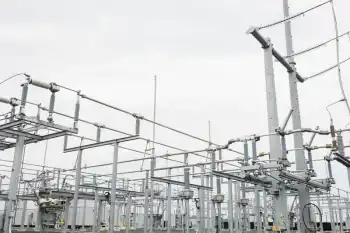
In the town of Edgemere, Md., the Fitzell substation of Baltimore Gas and Electric delivers electricity to homes and businesses. The facility is only a year or so old, and Laura Wright, the director of transmission and substation engineering, says it's been built with the future in mind.

She says the four transformers on site are plenty for now. And to counter the anticipated demand of population growth and a future reliance on electric cars, she says the substation has been designed for an easy upgrade.

"They're not projecting to need that additional capacity for a while, but we designed this station to be able to take that transformer out and put in a larger one," Wright says.

Slopes were designed to insulate the substation from sea level rise. And should the substation experience something like a catastrophic flooding event or deadly tornado, there's a plan for that too.

"If we were to have a failure of a transformer," Wright says, "we can bring one of those mobile transformers into the substation, park it in the substation, connect it up in place of that transformer. And we can do that in two to three days."

The Fitzell substation is a new, modern complex. Older sites can be knocked down for weeks.

That raises the question: Can the amount of money dedicated to the power grid in the new infrastructure legislation actually make meaningful changes to the energy system across the country, where studies find more blackouts than other developed nations persist?

"The infrastructure bill, unfortunately, only scratches the surface," says Daniel Cohan, an associate professor in civil and environmental engineering at Rice University.

Though the White House says $65 billion of the infrastructure legislation is dedicated to power infrastructure, a World Resources Institute analysis noted that only $27 billion would go to the electric grid — a figure that Cohan also used.

"If you drill down into how much is there for the power grid, it's only about $27 billion or so, and mainly for research and demonstration projects and some ways to get started," he says.

Cohan, who is also author of the forthcoming book Confronting Climate Gridlock, says federal taxpayer dollars can be significant but that most of the needed investment will eventually come from the private sector — from utility companies and other businesses spending "many hundreds of billions of dollars per decade," even as grid modernization affordability remains a concern. He also says the infrastructure package "misses some opportunities" to initiate that private-sector action through mandates.

"It's better than nothing, but, you know, with such momentous challenges that we face, this isn't really up to the magnitude of that challenge," Cohan says.

Cohan argues that thinking big, and not incrementally, can pay off. He believes a complete transition from fossil fuels to clean energy by 2035 is realistic and attainable — a goal the Biden administration holds — and could lead to more than just environmental benefit.

"It also can lead to more affordable electricity, more reliable electricity, a power supply that bounces back more quickly when these extreme events come through," he says. "So we're not just doing it to be green or to protect our air and climate, but we can actually have a much better, more reliable energy supply in the future."


Related News

View more

Scientists Built a Genius Device That Generates Electricity 'Out of Thin Air'

Air-gen Protein Nanowire Generator delivers clean energy by harvesting ambient humidity via Geobacter-derived conductive nanowires, generating continuous hydrovoltaic electricity through moisture gradients, electrodes, and proton diffusion for sustainable, low-waste power in diverse climates.


Key Points

A device using Geobacter protein nanowires to harvest humidity, producing continuous DC power via proton diffusion.

✅ 7 micrometer film between electrodes adsorbs water vapor.

✅ Output: ~0.5 V, 17 uA/cm2; stack units to scale power.

✅ Geobacter optimized via engineered E. coli for mass nanowires.


They found it buried in the muddy shores of the Potomac River more than three decades ago: a strange "sediment organism" that could do things nobody had ever seen before in bacteria.

This unusual microbe, belonging to the Geobacter genus, was first noted for its ability to produce magnetite in the absence of oxygen, but with time scientists found it could make other things too, like bacterial nanowires that conduct electricity.

For years, researchers have been trying to figure out ways to usefully exploit that natural gift, and they might have just hit pay-dirt with a device they're calling the Air-gen. According to the team, their device can create electricity out of… well, almost nothing, similar to power from falling snow reported elsewhere.

"We are literally making electricity out of thin air," says electrical engineer Jun Yao from the University of Massachusetts Amherst. "The Air-gen generates clean energy 24/7."

The claim may sound like an overstatement, but a new study by Yao and his team describes how the air-powered generator can indeed create electricity with nothing but the presence of air around it. It's all thanks to the electrically conductive protein nanowires produced by Geobacter (G. sulfurreducens, in this instance).

The Air-gen consists of a thin film of the protein nanowires measuring just 7 micrometres thick, positioned between two electrodes, referencing advances in near light-speed conduction in materials science, but also exposed to the air.

Because of that exposure, the nanowire film is able to adsorb water vapour that exists in the atmosphere, offering a contrast to legacy hydropower models, enabling the device to generate a continuous electrical current conducted between the two electrodes.

The team says the charge is likely created by a moisture gradient that creates a diffusion of protons in the nanowire material.

"This charge diffusion is expected to induce a counterbalancing electrical field or potential analogous to the resting membrane potential in biological systems," the authors explain in their study.

"A maintained moisture gradient, which is fundamentally different to anything seen in previous systems, explains the continuous voltage output from our nanowire device."

The discovery was made almost by accident, when Yao noticed devices he was experimenting with were conducting electricity seemingly all by themselves.

"I saw that when the nanowires were contacted with electrodes in a specific way the devices generated a current," Yao says.

"I found that exposure to atmospheric humidity was essential and that protein nanowires adsorbed water, producing a voltage gradient across the device."

Previous research has demonstrated hydrovoltaic power generation using other kinds of nanomaterials – such as graphene-based systems now under study – but those attempts have largely produced only short bursts of electricity, lasting perhaps only seconds.

By contrast, the Air-gen produces a sustained voltage of around 0.5 volts, with a current density of about 17 microamperes per square centimetre, and complementary fuel cell solutions can help keep batteries energized, with a current density of about 17 microamperes per square centimetre. That's not much energy, but the team says that connecting multiple devices could generate enough power to charge small devices like smartphones and other personal electronics – concepts akin to virtual power plants that aggregate distributed resources – all with no waste, and using nothing but ambient humidity (even in regions as dry as the Sahara Desert).

"The ultimate goal is to make large-scale systems," Yao says, explaining that future efforts could use the technology to power homes via nanowire incorporated into wall paint, supported by energy storage for microgrids to balance supply and demand.

"Once we get to an industrial scale for wire production, I fully expect that we can make large systems that will make a major contribution to sustainable energy production."

If there is a hold-up to realising this seemingly incredible potential, it's the limited amount of nanowire G. sulfurreducens produces.

Related research by one of the team – microbiologist Derek Lovley, who first identified Geobacter microbes back in the 1980s – could have a fix for that: genetically engineering other bugs, like E. coli, to perform the same trick in massive supplies.

"We turned E. coli into a protein nanowire factory," Lovley says.

"With this new scalable process, protein nanowire supply will no longer be a bottleneck to developing these applications."


Related News

View more

Kyiv warns of 'difficult' winter after deadly strikes

Ukraine Winter Energy Attacks strain the power grid as Russian missile strikes hit critical infrastructure, causing blackouts, civilian casualties, and damage in Kyiv, Kherson, and Kharkiv, underscoring air defense needs and looming cold-weather risks.


Key Points

Russian strikes on energy infrastructure cause outages, damage, and harm as Ukraine braces for freezing winter months.

✅ Russian missile barrage targets critical infrastructure nationwide.

✅ Power cuts reported in 400 localities; grid stability at risk.

✅ Kyiv seeks more air defenses as winter threats intensify.


Ukraine has warned that a difficult winter looms ahead after a massive Russian missile barrage targeted civilian infrastructure, killing three in the south and wounding many across the country.

Russia launched the strikes as Ukraine prepares for a third winter during Moscow's 19-month long invasion and as President Volodymyr Zelensky made his second wartime trip to Washington amid a U.S. end to grid support announcement.

"Most of the missiles were shot down. But only the majority. Not all," Zelensky said, calling for the West to provide Kyiv with more anti-missile systems to help keep the lights on this winter amid ongoing attacks.

The fresh attack came as Poland said it would honour pre-existing commitments of weapons supplies to Kyiv, a day after saying it would no longer arm its neighbour in a mounting row between the two allies.

Moscow hit cities from Rivne in western Ukraine to Kherson in the south, the capital Kyiv and cities in the centre and northeast of the country.

Kyiv also reported power cuts across the country -- in almost 400 cities, towns and villages -- as Russia targeted power plants across the grid, but said it was "too early" to tell if this was the start of a new Russian campaign against its energy sites.

Officials added that electricity reserves could limit scheduled outages if no new large-scale strikes occur.

Last winter many Ukrainians had to go without electricity and heating in freezing temperatures as Russia hit Kyiv's energy facilities.

"Difficult months are ahead: Russia will attack energy and critically important facilities," said Oleksiy Kuleba, the deputy head of Kyiv's presidential office.

Ukraine also said that it had struck a military airfield in Moscow-annexed Crimea, a claim denied by Russian-installed authorities.

'Ceilings fell down'
Russia's overnight strikes were deadliest in the southern Kherson, where three people were killed.

In Kyiv's eastern Darnitsky district, frightened residents of a dormitory woke up to their rooms with shattered windows and parked cars outside completely burnt out.

Communities have also adopted new energy solutions to cope with winter blackouts, from generators to shared warming points.

Debris from a downed missile in the capital wounded seven people, including a child.

"God, god, god," Maya Pelyukh, a cleaner who lives in the building, said as she looked at her living room covered in broken glass and debris on her bed.

Her windows and door were blown away, with the 50-year-old saying she crawled out from under a door frame.

Some residents outside were still in dressing gowns as they watched emergency workers put out a fire the authorities said had spread over 400 square meters (4,300 square feet).

In the northeastern city of Kharkiv seamstresses were clearing a damaged clothing factory, with a Russian missile hitting nearby.

"The ceilings fell down. Windows were blown out. There are chunks of the road inside," Yulia Barantsova said, as she cleared a sewing machine from dust and rubble.


Related News

View more

Sign Up for Electricity Forum’s Newsletter

Stay informed with our FREE Newsletter — get the latest news, breakthrough technologies, and expert insights, delivered straight to your inbox.

Electricity Today T&D Magazine Subscribe for FREE

Stay informed with the latest T&D policies and technologies.
  • Timely insights from industry experts
  • Practical solutions T&D engineers
  • Free access to every issue

Live Online & In-person Group Training

Advantages To Instructor-Led Training – Instructor-Led Course, Customized Training, Multiple Locations, Economical, CEU Credits, Course Discounts.

Request For Quotation

Whether you would prefer Live Online or In-Person instruction, our electrical training courses can be tailored to meet your company's specific requirements and delivered to your employees in one location or at various locations.