By Office of the Governor


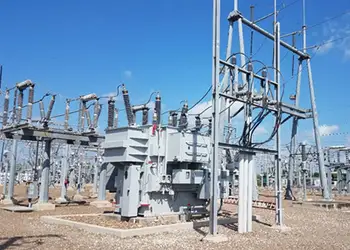
Substation Relay Protection Training

Our customized live online or in‑person group training can be delivered to your staff at your location.
  • Live Online
  • 12 hours Instructor-led
  • Group Training Available
Regular Price:
$699
Coupon Price:
$599
Reserve Your Seat Today
July 24, 2003 - New York State Governor George E. Pataki today announced that he has received commitments from the Governors of nine northeast states to join New York State in a regional strategy to reduce carbon dioxide emissions from power plants. The initiative proposed by the Governor would involve developing a market-based emissions trading system to require power generators to reduce emissions.

"By taking bold steps to control pollution and investing in the development of alternative and more efficient energy initiatives, New York State has led the nation in improving air quality," Governor Pataki said. "I thank the leaders of northeast states who have joined New York in this historic initiative to build on those efforts by working together to develop an effective regional strategy to further reduce harmful emissions." On April 25, 2003, Governor Pataki sent letters to 10 governors encouraging their participation in the regional strategy. The Governor directed Public Service Commission Chairman William M. Flynn and Department of Environmental Conservation (DEC) Commissioner Erin M. Crotty to contact their counterparts and gauge their respective state's level of interest within 90 days. The two agency leaders provided an assessment of the progress made on the initiative. To date, the governors of Connecticut, Vermont, New Hampshire, Delaware, Maine, New Jersey, Pennsylvania, Massachusetts, and Rhode Island have sent letters expressing their interest in working with New York to develop a cap and trade program for carbon dioxide emissions from power plants. Maryland has indicated that they may participate in the discussions at a later date. Ashok Gupta, Director of the Air and Energy Program for the Natural Resources Defense Council said, "With such a positive bi-partisan response to address climate change pollution, the Northeast can now move expeditiously to establish a framework for a multi-state cap and trade program for reducing carbon dioxide emissions from power plants. The debate in the Northeast is no longer about climate science but how best to use existing technologies to reduce emissions and minimize energy costs at the same time." The Greenhouse Gas Task Force was formed by Governor Pataki in June 2001 to assist the state in developing policy recommendations and strategies to reduce New York's greenhouse gas (GHG) emissions. A majority of the Task Force members agreed and recommended that the State pursue a regional approach to reducing emissions. An independent facilitator, the Center for Clean Air Policy, based in Washington D.C., issued a report based upon the Task Force process in April. James T. B. Tripp, general counsel of Environmental Defense, a national environmental organization, and a member of Governor Pataki's Greenhouse Gas Task Force said, "We strongly support the Governor's exciting, multi-state, regional power plant carbon cap initiative. Since the nine northeastern states that have joined this initiative have about 1/5 of the nation's population, this is not only a major regional initiative, but a critical national precedent as to how to deal with global warming. Environmental Defense helped to pioneer the use of cap and trade systems to reduce sulfur dioxide emissions from power plants as part of the federal Clean Air Act amendments of 1990. The tough challenge lies ahead as these states undertake discussions to set multi-state power plant carbon baselines, the basis for a cap and trade system, that are both fair and efficient. We are prepared to help these states with the best science and economics available to meet this challenge with the hopes that this system can be in place within two years." Paul J. Elston, board member of the League of Conservation Voters and a member of the Greenhouse Gas Task Force, said, "The positive response from almost all of the northeastern governors to work toward a regional carbon cap-and-trade program is great news for the environment. We thank Governor Pataki for outstanding leadership on the important national and international issue. This effort could define the roadmap and set the standard for a national program." Gavin J. Donohue, President and Chief Executive Officer of the Independent Power Producers of New York said, "The New York power generating industry is pleased that New York and the other Northeast states recognize air pollution is a regional problem that needs a regional solution. I thank Governor Pataki for this initiative, and Chairman Flynn and Commissioner Crotty should be commended for bringing together such diverse interests to work toward a common plan of action." DEC Commissioner Erin Crotty said, "Governor Pataki's vision and leadership have made New York a national leader in improving air quality. With a collaborative approach among northeast states, we can make tremendous strides in taking pollutants out of our skies. The support we have witnessed in response to the Governor's proposal is an important first step as we foster partnerships that will work toward improving public health and the environment through reductions in carbon dioxide emissions." New York State Public Service Commission Chairman William M. Flynn said, "Governor Pataki's recognition that regional cooperation among states is a key to developing effective strategies for reducing carbon dioxide emissions has received broad support from our neighboring states. Just as electricity is being traded in larger, more regional markets, it makes sense to move forward with a regional cap and trade program for emissions, and I look forward to working with my counterparts on this important issue." Leaders from the states participating in the regional initiative will next convene in September 2003 to begin detailed discussions on the development of the initiative. The overall goal of the group is to reach an agreement by April 2005 on a flexible, market-based cap and trade program.

On April 25, 2003, Governor Pataki sent letters to 10 governors encouraging their participation in the regional strategy. The Governor directed Public Service Commission Chairman William M. Flynn and Department of Environmental Conservation (DEC) Commissioner Erin M. Crotty to contact their counterparts and gauge their respective state's level of interest within 90 days. The two agency leaders provided an assessment of the progress made on the initiative.

To date, the governors of Connecticut, Vermont, New Hampshire, Delaware, Maine, New Jersey, Pennsylvania, Massachusetts, and Rhode Island have sent letters expressing their interest in working with New York to develop a cap and trade program for carbon dioxide emissions from power plants. Maryland has indicated that they may participate in the discussions at a later date.

Ashok Gupta, Director of the Air and Energy Program for the Natural Resources Defense Council said, "With such a positive bi-partisan response to address climate change pollution, the Northeast can now move expeditiously to establish a framework for a multi-state cap and trade program for reducing carbon dioxide emissions from power plants. The debate in the Northeast is no longer about climate science but how best to use existing technologies to reduce emissions and minimize energy costs at the same time."

The Greenhouse Gas Task Force was formed by Governor Pataki in June 2001 to assist the state in developing policy recommendations and strategies to reduce New York's greenhouse gas (GHG) emissions. A majority of the Task Force members agreed and recommended that the State pursue a regional approach to reducing emissions. An independent facilitator, the Center for Clean Air Policy, based in Washington D.C., issued a report based upon the Task Force process in April.

James T. B. Tripp, general counsel of Environmental Defense, a national environmental organization, and a member of Governor Pataki's Greenhouse Gas Task Force said, "We strongly support the Governor's exciting, multi-state, regional power plant carbon cap initiative. Since the nine northeastern states that have joined this initiative have about 1/5 of the nation's population, this is not only a major regional initiative, but a critical national precedent as to how to deal with global warming. Environmental Defense helped to pioneer the use of cap and trade systems to reduce sulfur dioxide emissions from power plants as part of the federal Clean Air Act amendments of 1990. The tough challenge lies ahead as these states undertake discussions to set multi-state power plant carbon baselines, the basis for a cap and trade system, that are both fair and efficient. We are prepared to help these states with the best science and economics available to meet this challenge with the hopes that this system can be in place within two years."

Paul J. Elston, board member of the League of Conservation Voters and a member of the Greenhouse Gas Task Force, said, "The positive response from almost all of the northeastern governors to work toward a regional carbon cap-and-trade program is great news for the environment. We thank Governor Pataki for outstanding leadership on the important national and international issue. This effort could define the roadmap and set the standard for a national program."

Gavin J. Donohue, President and Chief Executive Officer of the Independent Power Producers of New York said, "The New York power generating industry is pleased that New York and the other Northeast states recognize air pollution is a regional problem that needs a regional solution. I thank Governor Pataki for this initiative, and Chairman Flynn and Commissioner Crotty should be commended for bringing together such diverse interests to work toward a common plan of action."

DEC Commissioner Erin Crotty said, "Governor Pataki's vision and leadership have made New York a national leader in improving air quality. With a collaborative approach among northeast states, we can make tremendous strides in taking pollutants out of our skies. The support we have witnessed in response to the Governor's proposal is an important first step as we foster partnerships that will work toward improving public health and the environment through reductions in carbon dioxide emissions."

New York State Public Service Commission Chairman William M. Flynn said, "Governor Pataki's recognition that regional cooperation among states is a key to developing effective strategies for reducing carbon dioxide emissions has received broad support from our neighboring states. Just as electricity is being traded in larger, more regional markets, it makes sense to move forward with a regional cap and trade program for emissions, and I look forward to working with my counterparts on this important issue."

Leaders from the states participating in the regional initiative will next convene in September 2003 to begin detailed discussions on the development of the initiative. The overall goal of the group is to reach an agreement by April 2005 on a flexible, market-based cap and trade program.

Related News
German official says nuclear would do little to solve gas issue

Germany Nuclear Phase-Out drives policy amid gas supply risks, Nord Stream 1 shutdown fears, Russia dependency, and energy security planning, as Robert Habeck rejects extending reactors, favoring coal backup, storage, and EU diversification strategies.


Key Points

Ending Germany's last reactors by year end despite gas risks, prioritizing storage, coal backup, and EU diversification.

✅ Reactors' legal certification expires at year end

✅ Minimal gas savings from extending nuclear capacity

✅ Nord Stream 1 cuts amplify energy security risks


Germany’s vice-chancellor has defended the government’s commitment to ending the use of nuclear power at the end of this year, amid fears that Russia may halt natural gas supplies entirely.

Vice-Chancellor Robert Habeck, who is also the economy and climate minister and is responsible for energy, argued that keeping the few remaining reactors running would do little to address the problems caused by a possible natural gas shortfall.

“Nuclear power doesn’t help us there at all,” Habeck, said at a news conference in Vienna on Tuesday. “We have a heating problem or an industry problem, but not an electricity problem – at least not generally throughout the country.”

The main gas pipeline from Russia to Germany shut down for annual maintenance on Monday, as Berlin grew concerned that Moscow may not resume the flow of gas as scheduled.

The Nord Stream 1 pipeline, Germany’s main source of Russian gas, is scheduled to be out of action until July 21 for routine work that the operator says includes “testing of mechanical elements and automation systems”.

But German officials are suspicious of Russia’s intentions, particularly after Russia’s Gazprom last month reduced the gas flow through Nord Stream 1 by 60 percent.

Gazprom cited technical problems involving a gas turbine powering a compressor station that partner Siemens Energy sent to Canada for overhaul.

Germany’s main opposition party has called repeatedly to extend nuclear power by keeping the country’s last three nuclear reactors online after the end of December. There is some sympathy for that position in the ranks of the pro-business Free Democrats, the smallest party in Chancellor Olaf Scholz’s governing coalition.

In this year’s first quarter, nuclear energy accounted for 6 percent of Germany’s electricity generation and natural gas for 13 percent, both significantly lower than a year earlier. Germany has been getting about 35 percent of its gas from Russia.

Habeck said the legal certification for the remaining reactors expires at the end of the year and they would have to be treated thereafter as effectively new nuclear plants, complete with safety considerations and the likely “very small advantage” in terms of saving gas would not outweigh the complications.

Fuel for the reactors also would have to be procured and Scholz has said that the fuel rods are generally imported from Russia.

Opposition politicians have argued that Habeck’s environmentalist Green party, which has long strongly supported the nuclear phase-out, is opposing keeping reactors online for ideological reasons, even as some float a U-turn on the nuclear phaseout in response to the energy crisis.

Reducing dependency on Russia
Germany and the rest of Europe are scrambling to fill the gas storage in time for the northern hemisphere winter, even as Europe is losing nuclear power at a critical moment and reduce their dependence on Russian energy imports.

Prior to the Russian invasion of Ukraine, Berlin had said it considered nuclear energy dangerous and in January objected to European Union proposals that would let the technology remain part of the bloc’s plans for a climate-friendly future that includes a nuclear option for climate change pathway.

“We consider nuclear technology to be dangerous,” government spokesman Steffen Hebestreit told reporters in Berlin, noting that the question of what to do with radioactive waste that will last for thousands of generations remains unresolved.

While neighbouring France aimed to modernise existing reactors, Germany stayed on course to switch off its remaining three nuclear power plants at the end of this year and phase out coal by 2030.

Last month, Germany’s economy minister said the country would limit the use of natural gas for electricity production and make a temporary recourse to coal generation to conserve gas.

“It’s bitter but indispensable for reducing gas consumption,” Robert Habeck said.


Related News

View more

Egypt, China's Huawei discuss electricity network's transformation to smart grid

Egypt-Huawei Smart Grid advances Egypt's energy sector with digital transformation, grid modernization, and ICT solutions, enhancing power generation, transmission, and distribution while enabling renewable integration, data analytics, cybersecurity, and scalable infrastructure nationwide.


Key Points

An Egypt-Huawei project to modernize Egypt's grid into a smart network using ICT, analytics, and scalable infrastructure.

✅ Gradual migration to a smart grid to absorb higher load

✅ Boosts generation, transmission, and distribution efficiency

✅ ICT training supports workforce and digital transformation


Egypt and China's tech giant Huawei on Thursday discussed the gradual transformation of Egypt's electricity network to a smart grid model, Egyptian Ministry of Electricity and Renewable Energy said.

Egyptian Minister of Electricity and Renewable Energy Mohamed Shaker met with Huawei's regional president Li Jiguang in Cairo, where they discussed the cooperation, the ministry said in a statement.

The meeting is part of Egypt's plans to develop its energy sector based on the latest technologies and smarter electricity infrastructure initiatives, it added.

During the meeting, Shaker hailed the existing cooperation between Egypt and China in several mega projects, citing regional efforts like the Philippines power grid upgrades, welcoming further cooperation with China to benefit from its expertise and technological progress.

"The future vision of the Egyptian electricity sector is based on the gradual transformation of the current network from a typical one to a smart grid that would help absorb the large amounts of generated power," Shaker said.

Shaker highlighted his ministry's efforts to improve its services, including power generation, transportation and grid improvements across distribution.

Li, president of Huawei Northern Africa Enterprise Business Group, commended the rapid and remarkable development of the projects implemented by the Egyptian ministry to establish a strong infrastructure along with a smart grid that supports the digital grid transformation.

The Huawei official added that despite the challenges the corporation faced in the first half of 2020, it has managed to achieve revenues growth, which shows Huawei's strength and stability amid global challenges such as cybersecurity fears in critical infrastructure.

In late February, Egypt's Ministry of Higher Education and Scientific Research and Huawei discussed plans to provide training to develop the skills of Egyptian university students talented in information and communications technology, including emerging topics like 5G energy use considerations.


Related News

View more

Alberta Electricity market needs competition

Alberta Electricity Market faces energy-only vs capacity debate as transmission, distribution, and administration fees surge; rural rates rise amid a regulated duopoly of investor-owned utilities, prompting calls for competition, innovation, and lower bills.


Key Points

Alberta's electricity market is an energy-only system with rising delivery charges and limited rural competition.

✅ Energy-only design; capacity market scrapped

✅ Delivery charges outpace energy on monthly bills

✅ Rural duopoly limits competition and raises rates


Last week, Alberta’s new Energy Minister Sonya Savage announced the government, through its new electricity rules, would be scrapping plans to shift Alberta’s electricity to a capacity market and would instead be “restoring certainty in the electricity system.”


The proposed transition from energy only to a capacity market is a contentious subject as a market reshuffle unfolds across the province that many Albertans probably don’t know much about. Our electricity market is not a particularly glamorous subject. It’s complicated and confusing and what matters most to ordinary Albertans is how it affects their monthly bills.


What they may not realize is that the cost of their actual electricity used is often just a small fraction of their bill amid rising electricity prices across the province. The majority on an average electricity bill is actually the cost of delivering that electricity from the generator to your house. Charges for transmission, distribution and franchise and administration fees are quickly pushing many Alberta households to the limit with soaring bills.


According to data from Alberta’s Utilities Consumer Advocate (UCA), and alongside policy changes, in 2004 the average monthly transmission costs for residential regulated-rate customers was below $2. In 2018 that cost was averaging nearly $27 a month. The increase is equally dramatic in distribution rates which have more than doubled across the province and range wildly, averaging from as low as $10 a month in 2004 to over $80 a month for some residential regulated-rate customers in 2018.


Where you live determines who delivers your electricity. In Alberta’s biggest cities and a handful of others the distribution systems are municipally owned and operated. Outside those select municipalities most of Alberta’s electricity is delivered by two private companies which operate as a regulated duopoly. In fact, two investor-owned utilities deliver power to over 95 per cent of rural Alberta and they continue to increase their share by purchasing the few rural electricity co-ops that remained their only competition in the market. The cost of buying out their competition is then passed on to the customers, driving rates even higher.


As the CEO of Alberta’s largest remaining electricity co-op, I know very well that as the price of materials, equipment and skilled labour increase, the cost of operating follows. If it costs more to build and maintain an electricity distribution system there will inevitably be a cost increase passed on to the consumer. The question Albertans should be asking is how much is too much and where is all that money going with these private- investor-owned utilities, as the sector faces profound change under provincial leadership?


The reforms to Alberta’s electricity system brought in by Premier Klein in the late 1900s and early 2000s contributed to a surge in investment in the sector and led to an explosion of competition in both electricity generation and retail. 


More players entered the field which put downward pressure on electricity rates, encouraged innovation and gave consumers a competitive choice, even as a Calgary electricity retailer urged the government to scrap the overhaul. But the legislation and regulations that govern rural electricity distribution in Alberta continue to facilitate and even encourage the concentration of ownership among two players which is certainly not in the interests of rural Albertans.


It is also not in the spirit of the United Conservative Party platform commitment to a “market-based” system. A market-based system suggests more competition. Instead, what we have is something approaching a monopoly for many Albertans. The UCP promised a review of the transition to a capacity market that would determine which market would be best for Alberta, and through proposed electricity market changes has decided that we will remain an energy-only market.
Consumers in rural Alberta need electricity to produce the goods that power our biggest industries. Instead of regulating and approving continued rate increases from private multinational corporations, we need to drive competition and innovation that can push rates down and encourage growth and investment in rural-based industries and communities.


Related News

View more

Yukon eyes connection to B.C. electricity grid

Yukon-BC Electricity Intertie could link Yukon to BC's hydroelectric power, enabling renewable energy integration, net-zero grid goals by 2035, transmission expansion for mining, and stronger Arctic energy security through a coast-to-coast network.


Key Points

A link connecting Yukon's grid to BC hydro to import renewables, cut emissions, and strengthen northern energy security.

✅ Enables renewable imports to meet 2035 net-zero electricity target

✅ Supports mining growth with reliable, low-carbon power

✅ Enhances Arctic energy security via national grid integration


Yukon's energy minister says Canada's push for more green energy and a net-zero electricity grid should spark renewed interest in connecting the territory's power to British Columbia, home to the Electric Highway network.

Minister of Energy, Mines and Resources John Streicker says linking the territory's power grid to the south would help with the national move to renewable energy, including new wind turbines being added in the Yukon, support the mineral extraction required for green projects, and improve northern energy and Arctic security.

"We're getting to the moment in time when we will want an electricity grid which stretches from coast to coast to coast. … I think that the moment is coming for this — it's sort of a nation-building moment. And I think that from the Yukon's perspective, we're very interested," Streicker said in an interview.

The idea of a link, originally proposed to span 763 kilometres between Whitehorse and Iskut, B.C., was first floated in 2016 but sat on the shelf after a viability study put the price tag at as much as $1.7 billion, even as a study indicates B.C. may need to double its power output to electrify all road vehicles.


Two years later, Yukon's then-energy-minister Ranj Pillai — now premier — mused again about the possibility of connecting to power from B.C., where green energy ambitions include the Site C hydro dam.

The idea appeared to have been resurrected at this year's Western Premiers' Conference in June, with both Pillai and B.C. Premier David Eby publicly mentioning early conversations about grid development and interties.

At the conference, Eby said British Columbia was fortunate to have the ability to support other jurisdictions with its hydro electricity.

"So certainly part of the conversation was how do we support each other in sharing our strength, including emerging hydrogen projects across the province?" he said.

"And one of those that British Columbia was able to put on the table is if we can find ways to enter ties with, for example, with the Yukon, to support them in their efforts to access more electricity to grow their economy and decarbonize their electrical grid, then that's very good news for everybody."

The federal government has set a target of making the country's electricity grid net-zero by 2035, while jurisdictions like the N.W.T. plan for more residents to drive electric vehicles as part of the transition.


Related News

View more

New Hampshire rejects Quebec-Massachusetts transmission proposal

Northern Pass Project faces rejection by New Hampshire regulators, halting Hydro-Quebec clean energy transmission lines to Massachusetts; Eversource vows appeal as the Site Evaluation Committee cites development concerns and alternative routes through Vermont and Maine.


Key Points

A project to transmit Hydro-Quebec power to Massachusetts via New Hampshire, recently rejected by state regulators.

✅ New Hampshire SEC denied the transmission application

✅ Up to 9.45 TWh yearly from Hydro-Quebec to Massachusetts

✅ Eversource plans appeal; alternative routes via Vermont, Maine


Regulators in the state of New Hampshire on Thursday rejected a major electricity project being piloted by Quebec’s hydro utility and its American partner, Eversource.

Members of New Hampshire’s Site Evaluation Committee unanimously denied an application for the Northern Pass project a week after the state of Massachusetts green-lit the proposal.

Both states had to accept the project, as the transmission lines were to bring up to 9.45 terawatt hours of electricity per year from Quebec’s hydroelectric plants to Massachusetts as part of Hydro-Quebec’s export bid to New England, through New Hampshire.

The 20-year proposal was to be the biggest export contract in Hydro-Quebec’s history, in a region where Connecticut is leading a market overhaul that could affect pricing, and would generate up to $500 million in annual revenues for the provincial utility.

Hydro-Quebec’s U.S. partner, Eversource, said in a new release it was “shocked and outraged” by the New Hampshire regulators’ decision and suggested it would appeal.

“This decision sends a chilling message to any energy project contemplating development in the Granite State,” said Eversource. “We will be seeking reconsideration of the SEC’s decision, as well as reviewing all options for moving this critical clean energy project forward, including lessons from electricity corridor construction in Maine.”

The New Hampshire Union Leader reported Thursday the seven members of the evaluation committee said the project’s promoters couldn’t demonstrate the proposed energy transport lines wouldn’t interfere with the region’s orderly development.

Hydro-Quebec spokesman Serge Abergel said the decision wasn’t great news but it didn’t put a end to the negotiations between the company and the state of Massachusetts.

The hydro utility had proposed alternatives routes through Vermont and Maine amid a 145-mile transmission line debate over the corridor should the original plan fall through.

“There is a provision included in the process in the advent of an impasse, which allows Massachusetts to go back and choose the next candidate on the list,” Abergel said in an interview. “There are still cards left on the table.”


Related News

View more

B.C. Challenges Alberta's Electricity Export Restrictions

BC-Alberta Electricity Restrictions spotlight interprovincial energy tensions, limiting power exports and affecting grid reliability, energy sharing, and climate goals, while raising questions about federal-provincial coordination, smart grids, and storage investments.


Key Points

Policies limiting Alberta's power exports to provinces like BC, prioritizing local demand and affecting grid reliability.

✅ Prioritizes Alberta load over interprovincial power exports

✅ Risks to BC peak demand support and outage resilience

✅ Pressures for federal-provincial coordination and smart-grid investment


In a move that underscores the complexities of Canada's interprovincial energy relationships, the government of British Columbia (B.C.) has formally expressed concerns over recent electricity restrictions imposed by Alberta after it suspended electricity purchase talks with B.C., amid ongoing regional coordination challenges.

Background: Alberta's Electricity Restrictions

Alberta, traditionally reliant on coal and natural gas for electricity generation, has been undergoing a transition towards more sustainable energy sources as it pursues a path to clean electricity in the province.

In response, Alberta introduced restrictions on electricity exports, aiming to prioritize local consumption and stabilize its energy market and has proposed electricity market changes to address structural issues.

B.C.'s Position: Ensuring Energy Reliability and Cooperation

British Columbia, with its diverse energy portfolio and commitment to sustainability, has historically relied on the ability to import electricity from Alberta, especially during periods of high demand or unforeseen shortfalls. The recent restrictions threaten this reliability, prompting B.C.'s government to take action amid an electricity market reshuffle now underway.

B.C. officials have articulated that access to Alberta's electricity is crucial, particularly during outages or times when local generation does not meet demand. The ability to share electricity among provinces ensures a stable and resilient energy system, benefiting consumers and supporting economic activities, including critical minerals operations, that depend on consistent power supply.

Moreover, B.C. has expressed concerns that Alberta's restrictions could set a precedent that might affect future interprovincial energy agreements. Such a precedent could complicate collaborative efforts aimed at achieving national energy goals, including sustainability targets and infrastructure development.

Broader Implications: National Energy Strategy and Climate Goals

The dispute between B.C. and Alberta over electricity exports highlights the absence of a cohesive national energy strategy, as external pressures, including electricity exports at risk, add complexity. While provinces have jurisdiction over their energy resources, the interconnected nature of Canada's power grids necessitates coordinated policies that balance local priorities with national interests.

This situation also underscores the challenges Canada faces in meeting its climate objectives. Transitioning to renewable energy sources requires not only technological innovation but also collaborative policies that ensure energy reliability and affordability across provincial boundaries, as rising electricity prices in Alberta demonstrate.

Potential Path Forward: Dialogue and Negotiation

Addressing the concerns arising from Alberta's electricity restrictions requires a nuanced approach that considers the interests of all stakeholders. Open dialogue between provincial governments is essential to identify solutions that uphold the principles of energy reliability, economic cooperation, and environmental sustainability.

One potential avenue is the establishment of a federal-provincial task force dedicated to energy coordination. Such a body could facilitate discussions on resource sharing, infrastructure investments, and policy harmonization, aiming to prevent conflicts and promote mutual benefits.

Additionally, exploring technological solutions, such as smart grids and energy storage systems, could enhance the flexibility and resilience of interprovincial energy exchanges. Investments in these technologies may reduce the dependency on traditional export mechanisms, offering more dynamic and responsive energy management strategies.

The tensions between British Columbia and Alberta over electricity restrictions serve as a microcosm of the broader challenges facing Canada's energy sector. Balancing provincial autonomy with national interests, ensuring equitable access to energy resources, and achieving climate goals require collaborative efforts and innovative solutions. As the situation develops, stakeholders across the political, economic, and environmental spectrums will need to engage constructively, fostering a Canadian energy landscape that is resilient, sustainable, and inclusive.


Related News

View more

Sign Up for Electricity Forum’s Newsletter

Stay informed with our FREE Newsletter — get the latest news, breakthrough technologies, and expert insights, delivered straight to your inbox.

Electricity Today T&D Magazine Subscribe for FREE

Stay informed with the latest T&D policies and technologies.
  • Timely insights from industry experts
  • Practical solutions T&D engineers
  • Free access to every issue

Download the 2025 Electrical Training Catalog

Explore 50+ live, expert-led electrical training courses –

  • Interactive
  • Flexible
  • CEU-cerified