Ontario Government to Cut Power Use

By Canadian Press


CSA Z463 Electrical Maintenance -

Our customized live online or in‑person group training can be delivered to your staff at your location.

  • Live Online
  • 6 hours Instructor-led
  • Group Training Available
Regular Price:
$249
Coupon Price:
$199
Reserve Your Seat Today
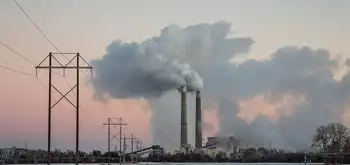
In an effort to promote conservation of power in Ontario and bring down prices in the competitive market, the provincial government will lead by example and cut its own electricity usage.

Related News
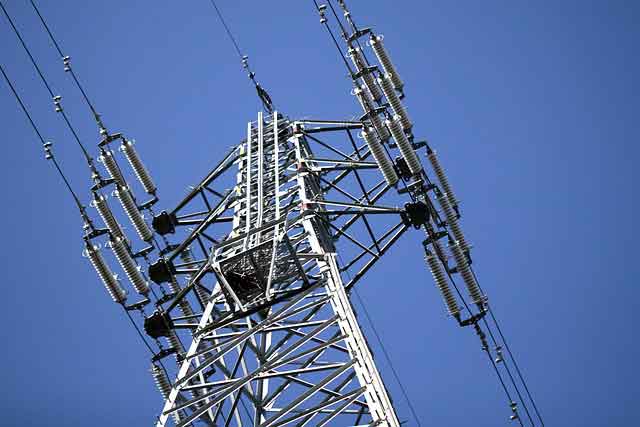
Canadian power crews head to Irma-hit Florida to help restore service

Canadian Power Crews Aid Florida after Hurricane Irma, supporting power restoration for Tampa Electric and Florida Power & Light. Hydro One and Nova Scotia Power teams provide mutual aid to speed outage repairs across communities.


Key Points

Mutual aid effort sending Canadian utility crews to restore power and repair outages in Florida after Hurricane Irma.

✅ Hydro One and Nova Scotia Power deploy line technicians

✅ Support for Tampa Electric and Florida Power & Light

✅ Goal: rapid power restoration and outage repairs statewide


Hundreds of Canadian power crews are heading to Florida to help restore power to millions of people affected by Hurricane Irma.

Two dozen Nova Scotia Power employees were en route Tampa on Tuesday morning. An additional 175 Hydro One employees from across Ontario are also heading south. Tuesday to assist after receiving a request for assistance from Tampa Electric.

Nearly 7½ million customers across five states were without power Tuesday morning as Irma — now a tropical storm — continued inland, while a power outage update from the Carolinas underscored the regional strain.

In an update On Tuesday, Florida Power & Light said its "army" of crews had already restored power to 40 per cent of the five million customers affected by Irma in the first 24 hours.

FPL said it expects to have power restored in nearly all of the eastern half of the state by the end of this coming weekend. Almost everyone should have power restored by the end of day on Sept. 22, except for areas still under water.Jason Cochrane took a flight from Halifax Stanfield International Airport along with 19 other NSP power line technicians, two supervisors and a restoration team lead, drawing on lessons from the Maritime Link first power project between Newfoundland and Nova Scotia. "It's different infrastructure than what we have to a certain extent, so there'll be a bit of a learning curve there as well," Cochrane said. "But we'll be integrated into their workforce, so we'll be assisting them to get everything put back together."

The NSP team will join 86 other Nova Scotians from their parent company, Emera, who are also heading to Tampa. Halifax-based Emera, whose regional projects include the Maritime Link, owns a subsidiary in Tampa.

"We're going to be doing anything that we can to help Tampa Electric get their customers back online," said NSP spokesperson Tiffany Chase. "We know there's been significant damage to their system as a result of that severe storm and so anything that our team can do to assist them, we want to do down in Tampa."

Crews have been told to expect to be on the ground in the U.S. for two weeks, but that could change as they get a better idea of what they're dealing with.

'It's neat to have an opportunity like this to go to another country and to help out.'- Jason Cochrane, power line technician

"It's neat to have an opportunity like this to go to another country and to help out and to get the power back on safely," said Cochrane.

Chase said she doesn't know how much the effort will cost but it will be covered by Tampa Electric. She also said Nova Scotia Power will pull its crews back if severe weather heads toward Atlantic Canada, as utilities nationwide work to adapt to climate change in their planning.


Related News

View more

Pacific Northwest's Renewable Energy Goals Hindered

Pacific Northwest Transmission Bottleneck slows clean energy progress as BPA's aging grid constrains renewable interconnections, delaying wind, solar, and data center growth; decarbonization targets depend on transmission upgrades, new substations, and policy reform.


Key Points

An interconnection and capacity shortfall on BPA's aging grid that delays renewables and impedes clean energy goals.

✅ BPA approvals lag: 1 of 469 projects since 2015.

✅ Yakama solar waits for substation upgrades until 2027.

✅ Data centers and decarbonization targets face grid constraints.


Oregon and Washington have set ambitious targets to decarbonize their power sectors, aiming for 100% clean electricity in the coming decades. However, a significant obstacle stands in the way: the region's aging and overburdened transmission grid, underscoring why 100% renewables remain elusive even as momentum builds.

The Grid Bottleneck

The BPA operates a transmission system that is nearly a century old in some areas, and its capacity has not expanded sufficiently to accommodate the influx of renewable energy projects, reflecting stalled grid spending in many parts of the U.S., according to recent analyses. Since 2015, 469 large renewable projects have applied to connect to the BPA's grid; however, only one has been approved—a stark contrast to other regions in the country. This bottleneck has left numerous wind and solar projects in limbo, unable to deliver power to the grid.

One notable example is the Yakama Nation's solar project. Despite receiving a $32 million federal grant under the bipartisan infrastructure law as part of a broader grid overhaul for renewables, the tribe faces significant delays. The BPA estimates that it will take until 2027 to complete the necessary upgrades to the transmission system, including a new substation, before the solar array can be connected. This timeline poses a risk of losing federal funding if the project isn't operational by 2031.

Economic and Environmental Implications

The slow pace of grid expansion has broader implications for the region's economy and environmental goals. Data centers and other energy-intensive industries are increasingly drawn to the Pacific Northwest due to its clean energy potential, while interregional projects like the Wyoming-to-California wind link illustrate how transmission access can unlock supply. However, without adequate infrastructure, these industries may seek alternatives elsewhere. Additionally, the inability to integrate renewable energy efficiently hampers efforts to reduce greenhouse gas emissions and combat climate change.

Policy Challenges and Legislative Efforts

Efforts to address the grid limitations through state-level initiatives have faced challenges, even as a federal rule to boost transmission advances nationally. In 2025, both Oregon and Washington considered legislation to establish state bonding authorities aimed at financing transmission upgrades. However, these bills failed to pass, leaving the BPA as the primary entity responsible for grid expansion. The BPA's unique structure—operating as a self-funded federal agency without direct state oversight—has made it difficult for regional leaders to influence its decision-making processes.

Looking Ahead

The Pacific Northwest's renewable energy aspirations hinge on modernizing its transmission infrastructure, aligning with decarbonization strategies that emphasize grid buildout. While the BPA has proposed several projects to enhance grid capacity, the timeline for completion remains uncertain. Without significant investment and policy reforms, the region risks falling behind in the transition to a clean energy future. Stakeholders across Oregon and Washington must collaborate to advocate for necessary changes and ensure that the grid can support the growing demand for renewable energy.

The Pacific Northwest's commitment to clean energy is commendable, but achieving these goals requires overcoming substantial infrastructure challenges, and neighboring jurisdictions such as British Columbia have pursued B.C. regulatory streamlining to accelerate projects. Addressing the limitations of the BPA's transmission system is critical to unlocking the full potential of renewable energy in the region. Only through concerted efforts at the federal, state, and local levels can Oregon and Washington hope to realize their green energy ambitions.


Related News

View more

Britain Goes Full Week Without Coal Power

Britain Coal-Free Week signals a historic shift to clean energy, with zero coal power, increased natural gas and renewables, lower greenhouse gas emissions, and ambitious UK energy policy targeting a 2025 coal phase-out and decarbonization.


Key Points

A seven-day period with no coal power in the UK, signaling cleaner energy and progress on emission reductions.

✅ Seven days of zero coal generation in the UK

✅ Natural gas and renewables dominated the electricity mix

✅ Coal phase-out targeted by 2025; emissions cuts planned


For the first time in a century, Britain weaned itself off of coal consumption for an entire week, a coal-free power record for the country.

Reuters reported that Britain went seven days without relying on any power generated by coal-powered stations as the share of coal in the grid continued to hit record lows.

The accomplishment is symbolic of a shift to more clean energy sources, with wind surpassing coal in 2016 and the UK leading the G20 in wind share as of recent years; Britain was home to the first coal-powered plant back in the 1880s.

Today, Britain has some aggressive plans in place to completely eliminate its coal power generation permanently by 2025, with a plan to end coal power underway. In addition, Britain aims to cut its total greenhouse gas emissions by 80 percent from 1990 levels within the next 30 years.

Natural gas was the largest source of power for Britain in 2018, providing 39 percent of the nation's total electricity, as the Great Britain generation dashboard shows. Coal contributed only about 5 percent, though low-carbon generation stalled in 2019 according to reports. Burning natural gas also produces greenhouse gases, but it is much more efficient and greener than coal.

In the U.S., 63.5 percent of electricity generated in 2018 came from fossil fuels. About 35.1 percent was produced from natural gas and 27.4 percent came from coal. In addition, 19.3 percent of electricity came from nuclear power and 17.1 percent came from renewable energy sources, according to the U.S. Energy Information Administration.


Related News

View more

Want Clean And Universal Electricity? Create The Incentives To Double The Investment, World Leaders Say

IRENA Climate Investment Platform accelerates renewable energy financing through de-risking, bankable projects, and public-private partnerships, advancing Paris Agreement goals via grid integration, microgrids, and decarbonization while expanding access, jobs, and sustainable economic growth.


Key Points

A global platform linking bankable renewable projects with finance, derisking and partners to scale decarbonization.

✅ Connects developers with banks, funds, and insurers

✅ Promotes de-risking via policy, PPAs, and legal frameworks

✅ Targets Paris goals with grid, microgrids, and off-grid access


The heads-of-state and energy ministers from more than 120 nations just met in Abu Dhabi and they had one thing in common: a passion to increase the use of renewable energy to reduce the threat from global warming — one that will also boost economic output and spread prosperity. Access to finance, though, is critical to this goal. 

Indeed, the central message to emerge from the conference hosted by the International Renewable Energy Agency (IRENA) this week in the United Arab Emirates is that a global energy transition is underway that has the potential to revitalize economies and to lift people out of poverty. But such a conversion requires international cooperation and a common desire to address the climate cause. 

“The renewable energy sector created jobs employing 11 million people in 2019 and provided off-grid solutions, having helped bring the number of people with no access to electricity to under 1 billion,” the current president of the UN General Assembly Tiijani Muhammad-Bande of Nigeria told the audience. 

Today In: Business
While renewables are improving energy access and reducing inequities, they also have the potential to curb CO2 emissions globally. The goal is to shrink them by 45% by 2030 and 90% by 2050, with Canada's net-zero race highlighting the role of renewable energy in achieving those targets. Getting there, though, requires progressive government policies that will help to attract financing. 

According to IRENA, investment in the clean energy sector is now at $330 billion a year. But if the 2050 goals are to be reached, those levels must nearly double to $750 billion annually. The green energy sector does not want to compete with the oil and gas sectors but rather, it is seeking to diversify fuel sources — a strategy that could help make electricity systems more resilient to climate risks. To hit the Paris agreement’s targets, it says that renewable energy deployment must increase by a factor of six.  

To that end, IRENA is forming a “climate investment platform” that will bring ideas to the table and then introduce prospective parties. It will focus on those projects that it believes are “bankable.”

It’s about helping project developers find banks, private companies and pension funds to finance their worthy projects, IRENA Director General Francesco La Camera said in response to this reporter’s question. Moreover, he said that the platform would work to ensure there is a sound legal structure and that there is legislative support to “de-risk” the investments. 

“Overcoming investment needs for energy transformation infrastructure is one of the most notable barriers to the achievement of national goals,” La Camera says. “Therefore, the provision of capital to support the adoption of renewable energy is key to low-carbon sustainable economic development and plays a central role in bringing about positive social outcomes.”

If the monies are to flow into new projects, governments have to create an environment where innovation is to be rewarded: tax incentives for renewables along with the design and implementation of transition plans. The aim is to scale up which in turn, leads to new jobs and greater economic productivity — a payback of three-to-seven times the initial investment.  

The path of least resistance, for now, is off-grid green energy solutions, or providing electricity to rural areas by installing solar panels that may connect to localized microgrids. Africa, which has a half-billion people without reliable electricity, would benefit. However, “If you want to go to scale and have bankable projects, you have to be connected to the grid,” Moira Wahba, with the UN Development Program, told this writer. “That requires large capital and private enterprise.”

Public policy must thus work to create the knowledge base and the advocacy to help de-risk the investments. Government’s role is to reassure investors that they will not be subject to arbitrary laws or the crony allocation of contracts. Risk takers know there are no guarantees. But they want to compete on a level playing. 

Analyzing Risk Profiles

He is speaking during the World Energy Future Summit. 
Sultan Al Jabber, chief executive of Abu Dhabi’s national oil company, Adnoc, who is also the former ... [+]ABU DHABI SUSTAINABILITY WEEK
How do foreign investors square the role of utilities that are considered safe and sound with their potential expansion into new fields such as investing in carbon-free electricity and in new places? The elimination of risk is not possible, says Mohamed Jameel Al Ramahi, chief executive officer of UAE-based Masdar. But the need to decarbonize is paramount. The head of the renewable energy company says that every jurisdiction has its own risk profile but that each one must be fully transparent while also properly structuring their policies and regulations. And there needs to be insurance for political risks. 

The United States and China, for example, are already “de-risked,” because they are deploying “gigawatts of renewables,” he told this writer. “When we talk about doubling the amount of needed investment, we have to take into account the risk profile of the whole world. If it is a high-risk jurisdiction, it will be difficult to bring in foreign capital.” 

The most compelling factor that will drive investment is whether the global community can comply with the Paris agreement, says Dr. Thani Ahmed Al Zeyoudi, Minister of the Ministry of Climate Change and the Environment for the United Arab Emirates. The goal is to limit increases to 2 degrees Celsius by mid-century, with the understanding that the UN’s latest climate report emphasizes that positive results are urgently needed. 

One of the most effective mechanisms is the public-private model. Governments, for example, are signing long-term power purchase agreements, giving project developers the necessary income they need to operate, and in the EU plans to double electricity use by 2050 are reinforcing these commitments. They can also provide grants and bring in international partners such as the World Bank. 

“We are seeing the impact of climate change with the various extreme events: the Australian fires, the cyclones and the droughts,” the minister told reporters. “We can no longer pass this to future generations to deal with.” 

The United Arab Emirates is not just talking about it, adds Sultan Al Jabber, chief executive of Abu Dhabi’s national oil company, Adnoc, who is also the former head of subsidiary Masdar. It is acting now, and across Europe Big Oil is turning electric as traditional players pivot too. His comments came during Abu Dhabi’s Sustainability Week at the World Future Energy Summit. The country is “walking the walk” by investing in renewable projects around the globe and it is growing its own green energy portfolio. Addressing climate change is “right” while it is also making “perfect economic sense.” 

The green energy transition has taken root in advanced economies while it is making inroads in the developing world — a movement that has the twin effect of addressing climate change and creating economic opportunities, and one that aligns with calls to transform into a sustainable electric planet for long-term prosperity. But private investment must double, which requires proactive governments to limit unnecessary risks and to craft the incentives to attract risk-takers. 


Related News

View more

More than Two-thirds of Americans Indicate Willingness to Give or Donate Part of their Income in Support of the Fight Against Climate Change

U.S. Climate Change Donation Survey reveals Americans' willingness to fund sustainability via government incentives, electrification, and renewable energy. Public opinion favors wind, solar, and decarbonization, highlighting policy support post-pandemic amid economic recovery efforts.


Key Points

A 2020 U.S. poll on climate attitudes: donation willingness, renewable support, and views on government incentives.

✅ 70% would donate income; 31% would donate nothing.

✅ 59% prefer government incentives; 47% support taxes, conservation.

✅ 85% land wind, 83% offshore wind, 90% solar support.


A new study of American consumers' attitudes toward climate change finds that more than two-thirds of respondents (70%) indicate their willingness to give or donate a percentage of their personal income to support the fight against climate change and the path to net-zero electricity emissions by mid-century. 

Twenty-eight percent indicated they were willing to provide less than 1% of their income; 33% said they would be willing to contribute 1-5% of their income; 6% said they would give between 6-10% of their income; and 3% indicated they would contribute more than 10% of their income. Just under one-third (31%) of those surveyed indicated they were unwilling to give or donate any percentage of their income to support the fight against climate change.

The U.S. findings are part of a series of surveys commissioned by Nexans in the U.S., UK and France, in order to determine public opinion on climate change and related issues in the wake of the COVID-19 pandemic. The U.S. study was conducted online by Researchscape from August 20 – 24, 2020. It had 1,013 respondents, ages 18 or older, with the results weighted to be representative of the overall population (variables available upon request).

Nexans, is headquartered in Paris with a major offshore wind cable manufacturing facility in Charleston, S.C. and an industrial cable manufacturing facility in El Dorado, Ark. The company is fully committed to fighting climate change and is helping to make sustainable electrification possible. The survey was developed as part of its celebration of the first Climate Day in Paris which included a roundtable event with world-renowned experts, the release of an unprecedented global study by Roland Berger on the challenges raised by the electrification of the world, the question of whether the global energy transition is on track, and Nexans' own commitment to be carbon neutral by 2030.

Paying the Tab to Address Climate Change

Participants were given the opportunity to choose from seven multiple responses to the question "How should the fight against climate change be paid for?" The majority (59%) replied it should be paid for by "government incentives for both businesses and consumers." It was followed by "federal, state and/or local taxes" and "conservation programs" (tied at 47%); "business investments" (42%), such as carbon-free electricity initiatives, and "consumer-driven purchases" (33%). Just 9% selected none of the above and 2% selected other.

"Through the organization of this Climate Day, Nexans is asserting itself not only as an actor but also a thought leader of the energy transition for a sustainable electrification of the world. This electrification raises a number of challenges and paradoxes that must be overcome. And it will only happen with the direct involvement of the populations concerned. These surveys provide a better understanding of the level of information and disinformation, including climate change denial, in public opinion as well as their level of acceptability of these lifestyle changes," said Christopher Guérin, CEO, Nexans.

Among other findings, 44% are dissatisfied with the job that federal and state governments are doing to address climate change, while utilities like Duke Energy face investor pressure to release climate reports, 35% are somewhat satisfied and 21% are either very satisfied or completed satisfied with government's role.

Americans expressed overwhelmingly favorable views of wind and solar renewable energy proposals, as carbon emissions fall when electricity producers move away from coal. Specifically, 85% stated being in favor of wind turbines on land (15% against), 83% in favor of wind turbines off the coast (17% against) and 90% in support of solar panel farms (10% opposed).

Those surveyed were asked about their current and changing priorities towards climate change as influenced by the coronavirus pandemic and impacts like extreme heat on electricity bills. Thirty-nine percent indicated that climate change was no more and no less a priority due to the current health emergency; just under a third (31%) indicated that climate change is more of a priority while 30% said it was less of a priority.

In similar research conducted by Nexans in the United Kingdom, nearly two thirds (65.8%) of UK respondents said they would be willing to donate part of their salary to fight climate change. Furthermore, nearly a third (29%) of the UK's consumers believe that combating climate change has become more of a priority in light of the coronavirus pandemic. The UK research was conducted online by Savanta from August 21 – 24, 2020. A total of 2210 respondents, aged 16 and above, representative of the UK population took part.


Related News

View more

ABL Secures Contract for UK Subsea Power

ABL has secured a contract for the UK Subsea Power Link, highlighting ABL Group’s marine warranty role in Eastern Green Link 2, a 2 GW offshore electricity superhighway connecting Scotland and England to enhance grid reliability and renewable energy transmission.


Key Points: ABL Group’s contract for the UK Subsea Power Link

ABL Group has been appointed to provide marine warranty survey services for the 2 GW Eastern Green Link 2 subsea interconnector between Scotland and England.

✅ Manages vessel suitability checks, installation oversight, and DP assurance

✅ Strengthens UK grid reliability and advances the clean energy transition

✅ Sizeable contract valued between USD 1 million and 3 million


Energy and marine consultancy ABL, a subsidiary of ABL Group, has been awarded a contract by Eastern Green Link 2 (EGL2) to provide marine warranty survey (MWS) services for the installation of a new 2 GW subsea power connection between Scotland and England.

EGL2 is one of the United Kingdom’s most significant energy-infrastructure projects, involving the creation of a 505-kilometre “electricity superhighway” that will enable simultaneous power transfer between Peterhead in Aberdeenshire and Drax in North Yorkshire, mirroring a renewable power link announced for the same corridor recently. The project is designed to strengthen grid resilience, integrate renewable energy from Scotland’s offshore resources, and advance the UK’s broader energy transition goals.

Under the terms of the contract, ABL will be responsible for the technical review and approval of the project and procedural documentation, as well as conducting suitability surveys of the proposed fleet for marine transportation and installation operations. The company will also provide dynamic positioning (DP) assurance where required and will review and approve all warranted operations through on-site attendances, reflecting practices used on projects like the Great Northern Transmission Line in North America.

Cable-laying operations for the link are scheduled to take place between January and September 2028, amid wider efforts to fast-track grid connections across the UK. According to ABL, the engagement represents a “sizeable” contract, valued between USD 1 million and 3 million.

“This appointment reflects ABL's reputation as a trusted MWS partner for major power transmission infrastructure development and reinforces our position at the forefront of supporting the UK's energy transition,” said Hege Norheim, CEO of ABL Group. “We look forward to contributing to this strategic initiative.”

The subsea interconnector, known as Eastern Green Link 2, will transmit up to 2 gigawatts of electricity—enough to power approximately 2 million homes. It forms part of the Great Grid Upgrade, National Grid’s nationwide program to modernize and expand the transmission network in preparation for a low-carbon future, alongside a recent 2 GW substation milestone.

By linking renewable-rich northern Scotland with high-demand regions in England, EGL2 is expected to reduce congestion on the existing grid by leveraging HVDC technology to improve transfer efficiency, enhance security of supply, and facilitate the more efficient flow of surplus renewable energy south. The connection will also support the UK government’s target of decarbonizing the electricity system by 2035.

ABL’s appointment follows a period of intensive marine and geotechnical surveys along the proposed cable route to assess seabed conditions and environmental sensitivities. The company’s marine warranty oversight will ensure that transportation and installation operations meet strict safety, technical, and environmental standards demanded by insurers and project partners, as seen in a recent cross-border transmission approval in North America.

For ABL Group, which provides engineering and risk services to the offshore energy and marine industries worldwide, the contract marks another milestone in its expanding portfolio of subsea power and transmission projects across Europe. With operations set to begin in 2028, the Eastern Green Link 2 initiative represents both a major engineering challenge and a key enabler of the UK’s offshore energy ambitions, echoing a recent offshore wind power milestone in the U.S.


Related Articles


View more

Sign Up for Electricity Forum’s Newsletter

Stay informed with our FREE Newsletter — get the latest news, breakthrough technologies, and expert insights, delivered straight to your inbox.

Electricity Today T&D Magazine Subscribe for FREE

Stay informed with the latest T&D policies and technologies.
  • Timely insights from industry experts
  • Practical solutions T&D engineers
  • Free access to every issue

Download the 2025 Electrical Training Catalog

Explore 50+ live, expert-led electrical training courses –

  • Interactive
  • Flexible
  • CEU-cerified