By That puts each person in Ontario on the hook for about $3,000, Pietrangelo said.


NFPA 70b Training - Electrical Maintenance

Our customized live online or in‑person group training can be delivered to your staff at your location.

  • Live Online
  • 12 hours Instructor-led
  • Group Training Available
Regular Price:
$699
Coupon Price:
$599
Reserve Your Seat Today
"In actuality, we're keeping the dollars instead of sending them on to Toronto," he said.

Wayne Gates, the chairman of Niagara Falls Citizens for Democracy, complained that nobody told the public that it was happening. Canceling the debt could result in lower electricity bills, Gates said.

The city's chief administrative officer said that impression was wrong. A report went to council in May 2000 when Niagara Falls Hydro was created.

"It was discussed at council. It was approved unanimously at that time," CAO John MacDonald said during Monday night's council meeting. "There was nothing hidden here."

Niagara Falls Hydro pays 7.25 per cent interest on the $22-million debt created when the old hydro commission's assets were transferred to the new electric utility. The payment gives about $133,000 a month to the city, collected through the $30 service charge on each hydro customer's bill.

Because the province forced Niagara Falls Hydro “and every other utility in Ontario” to incorporate as a private company, it's now subject to corporate income tax. If Niagara Falls Hydro didn't make the payment, that money would be taken out of the community through taxation, MacDonald said.

"Since we own Niagara Falls Hydro, can we just waive the debt?" Ald. Kim Craitor asked.

MacDonald said the answer "would probably be yes." But doing that would subject the money to corporate income tax, something the new electricity utilities have to contend with.

Hydro chairman Bill Haskin, agreed the new rules could allow council and hydro to eliminate the payment, but the effect would be "negligible."

Council continued to blame the provincial government for the new costs associated with electricity deregulation.

The changes in Ontario's electricity industry occurred because "the government was persistent," said Mayor Wayne Thomson. Neither the city council nor the old hydro commission wanted to deal with privatization of electricity, he said.

There are similar arrangements in almost every other municipality, where the local council opted to keep its electric utility instead of selling to the private sector.

"We're not unique. We've done what we've been mandated to do," Thomson said.

Every customer in Ontario is now forced to pay part of the $38-billion debt racked up by the former Ontario Hydro.

Related News

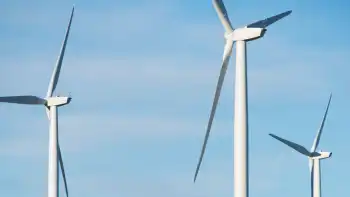
Doug Ford's New Stance on Wind Power in Ontario

Ontario Wind Power Policy Shift signals renewed investment in renewable energy, wind farms, and grid resilience, aligning with climate goals, lower electricity costs, job creation, and turbine technology for cleaner, diversified power.


Key Points

A provincial pivot to expand wind energy, meet climate goals, lower costs, and boost jobs across Ontario’s power system.

✅ Diversifies Ontario's grid with scalable renewable capacity.

✅ Targets emissions cuts while stabilizing electricity prices.

✅ Spurs rural investment, supply chains, and skilled jobs.


Ontario’s energy landscape is undergoing a significant transformation as Premier Doug Ford makes a notable shift in his approach to wind power. This change represents a strategic pivot in the province’s energy policy, potentially altering the future of Ontario’s power generation, environmental goals, and economic prospects.

The Backdrop: Ford’s Initial Stance on Wind Power

When Doug Ford first assumed the role of Premier in 2018, his administration was marked by a strong stance against renewable energy projects, including wind power, with Ford later saying he was proud of tearing up contracts as part of this shift. Ford’s government inherited a legacy of ambitious renewable energy commitments from the previous Liberal administration under Kathleen Wynne, which had invested heavily in wind and solar energy. The Ford government, however, was critical of these initiatives, arguing that they resulted in high energy costs and a surplus of power that was not always needed.

In 2019, Ford’s government began rolling back several renewable energy projects, including wind farms, and was soon tested by the Cornwall wind farm ruling that scrutinized a cancellation. This move was driven by a promise to reduce electricity bills and cut what was perceived as wasteful spending on green energy. The cancellation of several wind projects led to frustration among environmental advocates and the renewable energy sector, who viewed the decision as a setback for Ontario’s climate goals.

The Shift: Embracing Wind Power

Fast forward to 2024, and Premier Ford’s administration is taking a markedly different approach. The recent policy shift, which moves to reintroduce renewable projects, indicates a newfound openness to wind power, reflecting a broader acknowledgment of the changing dynamics in energy needs and environmental priorities.

Several factors appear to have influenced this shift:

  1. Rising Energy Demands and Climate Goals: Ontario’s growing energy demands, coupled with the pressing need to address climate change, have necessitated a reevaluation of the province’s energy strategy. As Canada commits to reducing greenhouse gas emissions and transitioning to cleaner energy sources, wind power is increasingly seen as a crucial component of this strategy. Ford’s change in direction aligns with these national and global goals.

  2. Economic Considerations: The economic landscape has also evolved since Ford’s initial opposition to wind power. The cost of wind energy has decreased significantly over the past few years, making it a more competitive and viable option compared to traditional energy sources, as competitive wind power gains momentum in markets worldwide. Additionally, the wind energy sector promises substantial job creation and economic benefits, which are appealing in the context of post-pandemic recovery and economic growth.

  3. Public Opinion and Pressure: Public opinion and advocacy groups have played a role in shaping policy. There has been a growing demand from Ontarians for more sustainable and environmentally friendly energy solutions. The Ford administration has been responsive to these concerns, recognizing the importance of addressing public and environmental pressures.

  4. Technological Advancements: Advances in wind turbine technology have improved efficiency and reduced the impact on wildlife and local communities. Modern wind farms are less intrusive and more effective, addressing some of the concerns that were previously associated with wind power.

Implications of the Policy Shift

The implications of Ford’s shift towards wind power are far-reaching. Here are some key areas affected by this change:

  1. Energy Portfolio Diversification: By reembracing wind power, Ontario will diversify its energy portfolio, reducing its reliance on fossil fuels and increasing the proportion of renewable energy in the mix. This shift will contribute to a more resilient and sustainable energy system.

  2. Environmental Impact: Increased investment in wind power will contribute to Ontario’s efforts to combat climate change. Wind energy is a clean, renewable source that produces no greenhouse gas emissions during operation. This aligns with broader environmental goals and helps mitigate the impact of climate change.

  3. Economic Growth and Job Creation: The wind power sector has the potential to drive significant economic growth and create jobs. Investments in wind farms and associated infrastructure can stimulate local economies, particularly in rural areas where many wind farms are located.

  4. Energy Prices: While the initial shift away from wind power was partly motivated by concerns about high energy costs, including exposure to costly cancellation fees in some cases, the decreasing cost of wind energy could help stabilize or even lower electricity prices in the long term. As wind power becomes a larger component of Ontario’s energy supply, it could contribute to a more stable and affordable energy market.

Moving Forward: Challenges and Opportunities

Despite the positive aspects of this policy shift, there are challenges to consider, and other provinces have faced setbacks such as the Alberta wind farm scrapped by TransAlta that illustrate potential hurdles. Integrating wind power into the existing grid requires careful planning and investment in grid infrastructure. Additionally, addressing local concerns about wind farms, such as their impact on landscapes and wildlife, will be crucial to gaining broader acceptance.

Overall, Doug Ford’s shift towards wind power represents a significant and strategic change in Ontario’s energy policy. It reflects a broader understanding of the evolving energy landscape and the need for a sustainable and economically viable energy future. As the province navigates this new direction, the success of this policy will depend on effective implementation, ongoing stakeholder engagement, and a commitment to balancing environmental, economic, and social considerations, even as the electricity future debate continues among party leaders.


Related News

View more

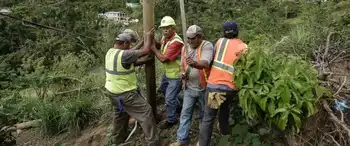
Electricity restored to 75 percent of customers in Puerto Rico

Puerto Rico Power Restoration advances as PREPA, FEMA, and the Army Corps rebuild the grid after Hurricane Maria; 75% of customers powered, amid privatization debate, Whitefish contract fallout, and a continuing island-wide boil-water advisory.


Key Points

Effort to rebuild Puerto Rico's grid and restore power, led by PREPA with FEMA support after Hurricane Maria.

✅ 75.35% of customers have power; 90.8% grid generating

✅ PREPA, FEMA, and Army Corps lead restoration work

✅ Privatization debate, Whitefish contract scrutiny


Nearly six months after Hurricane Maria decimated Puerto Rico, the island's electricity has been restored to 75 percent capacity, according to its utility company, a contrast to California power shutdowns implemented for different reasons.

The Puerto Rico Electric Power Authority said Sunday that 75.35 percent of customers now have electricity. It added that 90.8 percent of the electrical grid, already anemic even before the Sept. 20 storm barrelled through the island, is generating power again, though demand dynamics can vary widely as seen in Spain's power demand during lockdowns.

Thousands of power restoration personnel made up of the Puerto Rico Electric Power Authority (PREPA), the Federal Emergency Management Agency (FEMA), industry workers from the mainland, and the Army Corps of Engineers have made marked progress in recent weeks, even as California power shutoffs highlight grid risks elsewhere.

Despite this, 65 people in shelters and an island-wide boil water advisory is still in effect even though almost 100 percent of Puerto Ricans have access to drinking water, local government records show.

The issue of power became controversial after Puerto Rico Gov. Ricardo Rossello recently announced plans to privatize PREPA after it chose to allocate a $300 million power restoration contract to Whitefish, a Montana-based company with only a few staffers, rather than put it through the mutual-aid network of public utilities usually called upon to coordinate power restoration after major disasters, and unlike investor-owned utilities overseen by regulators such as the Florida PSC on the mainland.

That contract was nixed and Whitefish stopped working in Puerto Rico after FEMA raised "significant concerns" over the procurement process, scrutiny mirrored by the fallout from Taiwan's widespread outage where the economic minister resigned.


Related News

View more

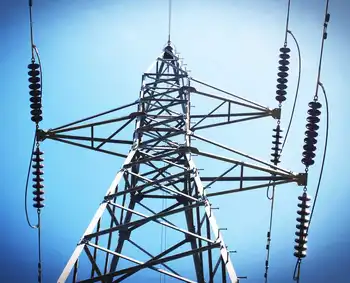
Prepare for blackouts across the U.S. as summer takes hold

US Summer Grid Blackout Risk: NERC and FERC warn of strained reliability as drought, heat waves, and transmission constraints hit MISO, hydro, and renewables, elevating blackout exposure and highlighting demand response and storage solutions.


Key Points

A forecast of summer power shortfalls across the US grid, driven by heat, drought, transmission limits, and a changing resource mix.

✅ NERC and FERC warn of elevated blackout risk and reliability gaps.

✅ MISO region strained by drought, heat, and limited hydro.

✅ Mitigations: demand response, storage, and stronger transmission.


Just when it didn’t seem things couldn’t get worse — gasoline at $5 to $8 a gallon, supply shortages in everything from baby formula to new cars — comes the devastating news that many of us will endure electricity blackouts this summer, and that the U.S. has more blackouts than other developed nations according to one study.

The alarm was sounded by the nonprofit North American Electric Reliability Corp. and the Federal Energy Regulatory Commission, following a recent power grid report card highlighting vulnerabilities.

The North American electric grid is the largest machine on earth and the most complex, incorporating everything from the wonky pole you see at the roadside with a bird’s nest of wires to some of the most sophisticated engineering ever devised. It runs in real-time, even more so than the air traffic control system: All the airplanes in the sky don’t have to land at the same time, but electricity must be there at the flick of every switch.

Except it may not always be there this summer. Rod Kuckro, a respected energy journalist, says it depends on Mother Nature, with extreme weather impacts increasingly straining the grid, but the prognosis isn’t good.

Speaking on “White House Chronicle,” the weekly news and public affairs program on PBS that I host and produce, Kuckro said: “There is a confluence of factors that could affect energy supply across the majority of the (lower) 48 states. These are continued reduced hydroelectric production in the West, and the continued drought in the Southwest.”

The biggest threat to power supply, according to the NERC and the FERC, is in the vast central region, reaching from Manitoba in Canada, where grids are increasingly exposed to harsh weather in recent years, down to the Gulf of Mexico. It is served by the regional transmission organization, the Midcontinent Independent System Operator.

These operational entities are nonprofit companies that organize and distribute their regions’ bulk power for utilities. In California, it is the California Independent System Operator, working to keep the lights on as the state enters a new energy era; in the Mid-Atlantic, it is PJM; and in the Northeast, it is the New England System Independent Operator. They generate no power, but they control power flows and could initiate brownouts and blackouts.

With record storm activity and high temperatures predicted this summer, blackouts are likely to be deadly. The old, the young and the sick are all vulnerable. If the electric supply fails, with it goes everything from air conditioning to refrigeration to lights and even the ability to pump gas or access money from ATMs.

The United States, along with other modern nations, runs on electricity and when that falls short, it is catastrophic. It is chaos writ large, especially if the failure lasts more than a few hours.

On the same episode of “White House Chronicle,” Daniel Brooks, vice president of integrated grid and energy systems at the Electric Power Research Institute, also referred to a “confluence of factors” contributing to the impending electricity crisis. Brooks said, “We’re going through a significant change in terms of the energy mix and resources, and the way those resources behave under certain weather conditions.”

If power supply is stressed this summer, change in the generating mix will get a lot of political attention. At heart is the switch from fossil fuel generation to renewables. If there are power outages, a political storm will ensue. The Biden administration will be accused of speeding the switch to renewables, although the utilities don’t say that.

The weather is deteriorating, and, as experts note, the grid’s biggest challenge isn’t demand but climate change pressures that compound risks, and the grid is stretched in dealing with new realities as well as coping with old bugaboos, like the extreme difficulty in building transmission lines. Better transmission would relieve a lot of grid stress.

Peter Londa, president of Tantalus Systems, which helps its 260 utility customers digitize and cope with the new realities, explained some of the difficulties facing the utilities not only in the shifting sources of generation but also in the new shape of the electric demand. For example, he said, electric vehicles, particularly the much-awaited Ford F-150 Lightning pickup, could be an asset to homeowners and utilities, as California increasingly turns to batteries to stabilize its grid. During a blackout, their EVs could be used to power their homes for days. They could be a source of storage if thousands of owners signed up with their utilities in a storage program.

The fact is that utilities are facing three major shifts: in the generation to wind and solar, in customer demand, and especially in weather. Mother Nature is on a rampage and we all must adjust to that.


Related News

View more

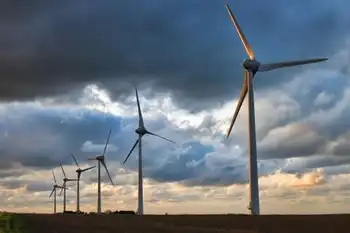
Michigan Public Service Commission grants Consumers Energy request for more wind generation

Consumers Energy Wind Expansion gains MPSC approval in Michigan, adding up to 525 MW of wind power, including Gratiot Farms, while solar capacity requests face delays over cost projections under the renewable portfolio standard targets.


Key Points

A regulatory-approved plan enabling Consumers Energy to add 525 MW of wind while solar additions await cost review.

✅ MPSC approves up to 525 MW in new wind projects

✅ Gratiot Farms purchase allowed before May 1

✅ Solar request delayed over high cost projections


Consumers Energy Co.’s efforts to expand its renewable offerings gained some traction this week when the Michigan Public Service Commission (MPSC) approved a request for additional wind generation capacity.

Consumers had argued that both more wind and solar facilities are needed to meet the state’s renewable portfolio standard, which was expanded in 2016 to encompass 12.5 percent of the retail power of each Michigan electric provider. Those figures will continue to rise under the law through 2021 when the figure reaches 15 percent, alongside ongoing electricity market reforms discussions. However, Consumers’ request for additional solar facilities was delayed at this time due to what the Commission labeled unrealistically high-cost projections.

Consumers will be able to add as much as 525 megawatts of new wind projects amid a shifting wind market, including two proposed 175-megawatt wind projects slated to begin operation this year and next. Consumers has also been allowed to purchase the Gratiot Farms Wind Project before May 1.

The MPSC said a final determination would be made on Consumers’ solar requests during a decision in April. Consumers had sought an additional 100 megawatts of solar facilities, hoping to get them online sometime in 2024 and 2025.


Related News

View more

Bruce Power cranking out more electricity after upgrade

Bruce Power Capacity Uprate boosts nuclear output through generator stator upgrades, turbine and transformer enhancements, and cooling pump improvements at Bruce A and B, unlocking megawatts and efficiency gains from legacy heavy water design capacity.


Key Points

Upgrades that raise Bruce Power capacity via stator, turbine, transformer, and cooling enhancements.

✅ Generator stator replacement increases electrical conversion efficiency

✅ Turbine and transformer upgrades enable higher MW output

✅ Cooling pump enhancements optimize plant thermal performance


Bruce Power’s Unit 3 nuclear reactor will squeeze out an extra 22 megawatts of electricity, thanks to upgrades during its recent planned outage for refurbishment.

Similar gains are anticipated at its three sister reactors at Bruce A generating station, which presents the opportunity for the biggest efficiency gains and broader economic benefits for Ontario, due to a design difference over Bruce B’s four reactors, Bruce Power spokesman John Peevers said.

Bruce A reactor efficiency gains stem mainly from the fact Bruce A’s non-nuclear side, including turbines and the generator, was sized at 88 per cent of the nuclear capacity, Peevers said, while early Bruce C exploration work advances.

This allowed 12 per cent of the energy, in the form of steam, to be used for heavy water production, which was discontinued at the plant years ago. Heavy water, or deuterium, is used to moderate the reactors.

That design difference left a potential excess capacity that Bruce Power is making use of through various non-nuclear enhancements. But the nuclear operator, which also made major PPE donations during the pandemic, will be looking at enhancements at Bruce B as well, Peevers said.

Bruce Power’s efficiency gain came from “technology advancements,” including a “generator-stator improvement project that was integral to the uprate,” and contributed to an operating record at the site, a Bruce Power news release said July 11.

Peevers said the stationary coils and the associated iron cores inside the generator are referred to as the stator. The stator acts as a conductor for the main generator current, while the turbine provides the mechanical torque on the shaft of the generator.

“Some of the other things we’re working on are transformer replacement and cooling pump enhancements, backed by recent manufacturing contracts, which also help efficiency and contribute to greater megawatt output,” Peevers said.

The added efficiency improvements raised the nuclear operator’s peak generating capacity to 6,430 MW, as projects like Pickering life extensions continue across Ontario.


Related News

View more

Ontario Supports Plan to Safely Continue Operating the Pickering Nuclear Generating Station

Pickering Nuclear Generating Station Refurbishment will enable OPG to deliver reliable, clean electricity in Ontario, cut CO2 emissions, support jobs, boost Cobalt-60 medical isotopes supply, and proceed under CNSC oversight alongside small modular reactor leadership.


Key Points

A plan to assess and renew Pickering's B units, extending safe, clean, low-cost power in Ontario for up to 30 years.

✅ Extends zero-emissions baseload by up to 30 years

✅ Requires CNSC approval and rigorous safety oversight

✅ Supports Ontario jobs and Cobalt-60 isotope production


The Ontario government is supporting Ontario Power Generation’s (OPG) continued safe operation of the Pickering Nuclear Generating Station. At the Ontario government’s request, as a formal extension request deadline approaches, OPG reviewed their operational plans and concluded that the facility could continue to safely generate electricity.

“Keeping Pickering safely operating will provide clean, low-cost, and reliable electricity to support the incredible economic growth and new jobs we’re seeing, while building a healthier Ontario for everyone,” said Todd Smith, Minister of Energy. “Nuclear power has been the safe and reliable backbone of Ontario’s electricity system since the 1970s and our government is working to secure that legacy for the future. Our leadership on Small Modular Reactors and consideration of a refurbishment of Pickering Nuclear Generating Station are critical steps on that path.”

Maintaining operations of Pickering Nuclear Generation Station will also protect good-paying jobs for thousands of workers in the region and across the province. OPG, which reported 2016 financial results that provide context for its operations, employs approximately 4,500 staff to support ongoing operation at its Pickering Nuclear Generating Station. In total, there are about 7,500 jobs across Ontario related to the Pickering Nuclear Generating Station.

Further operation of Pickering Nuclear Generating Station beyond September 2026 would require a complete refurbishment. The last feasibility study was conducted between 2006 and 2009. With significant economic growth and increasing electrification of industry and transportation, and a growing electricity supply gap across the province, Ontario has asked OPG to update its feasibility assessment for refurbishing Pickering “B” units at the Nuclear Generating Station, based on the latest information, as a prudent due diligence measure to support future electricity planning decisions. Refurbishment of Pickering Nuclear Generating Station could result in an additional 30 years of reliable, clean and zero-emissions electricity from the facility.

“Pickering Nuclear Generating Station has never been stronger in terms of both safety and performance,” said Ken Hartwick, OPG President and CEO. “Due to ongoing investments and the efforts of highly skilled and dedicated employees, Pickering can continue to safely and reliably produce the clean electricity Ontarians need.”

Keeping Pickering Nuclear Generating Station operational would ensure Ontario has reliable, clean, and low-cost energy, even as planning for clean energy when Pickering closes continues across the system, while reducing CO2 emissions by 2.1 megatonnes in 2026. This represents an approximate 20 per cent reduction in projected emissions from the electricity sector in that year, which is the equivalent of taking up to 643,000 cars off the road annually. It would also increase North America’s supply of Cobalt-60, a medical isotope used in cancer treatments and medical equipment sterilization, by about 10 to 20 per cent.

OPG requires approval from the Canadian Nuclear Safety Commission (CNSC) for its revised schedule. The CNSC, which employs a rigorous and transparent decision-making process, will make the final decision regarding Pickering’s safe operating life, even though the station was slated to close as planned earlier. OPG will continue to ensure the safety of the Pickering facility through rigorous monitoring, inspections, and testing.


Related News

View more

Sign Up for Electricity Forum’s Newsletter

Stay informed with our FREE Newsletter — get the latest news, breakthrough technologies, and expert insights, delivered straight to your inbox.

Electricity Today T&D Magazine Subscribe for FREE

Stay informed with the latest T&D policies and technologies.
  • Timely insights from industry experts
  • Practical solutions T&D engineers
  • Free access to every issue

Download the 2025 Electrical Training Catalog

Explore 50+ live, expert-led electrical training courses –

  • Interactive
  • Flexible
  • CEU-cerified