By -- Source Reuters


CSA Z463 Electrical Maintenance -

Our customized live online or in‑person group training can be delivered to your staff at your location.

  • Live Online
  • 6 hours Instructor-led
  • Group Training Available
Regular Price:
$249
Coupon Price:
$199
Reserve Your Seat Today
TORONTO - Ontario Power Generation said on Wednesday it would lay off about 20 percent of its workforce to improve profitability as the province's electricity market opens up for competition on May 1.

The 2000 layoffs, which will be made over two years, are part of a restructuring plan that will shave nearly C$400 million ($252 million) in costs at the provincially owned utility.

Ontario Power Generation said the layoffs would improve "efficiency and effectiveness".

The power generator is one of the two main spinoffs from Ontario Hydro, the sprawling provincially owned company that once was the largest electrical utility in North America. The other spinoff is electricity distributor Hydro One.

Deregulation involves converting Hydro One into a publicly traded company this year through a share offering that could be worth as much as C$7 billion.

Ontario Power Generation said that as part of the deregulation plan, which is running about two years behind schedule, it must sell or lease several of its facilities to reduce its power production.

Reducing its capacity will allow competitors to come into the market.

($1=$1.59 Canadian)

Related News

Hydro One, Avista to ask U.S. regulator to reconsider order against acquisition

Hydro One Avista Takeover faces Washington UTC scrutiny as regulators deny approval; companies plan a reconsideration petition, citing acquisition terms, governance concerns, merger risks, EPS dilution, and balance sheet impacts across regulated utility operations.


Key Points

A $6.7B bid by Hydro One to buy Avista, denied by Washington UTC on governance risk, under reconsideration petition.

✅ UTC denied over potential provincial interference.

✅ Petition for reconsideration due by Dec. 17.

✅ Deal seen diluting EPS, weakening balance sheet.


Hydro One Ltd. and Avista Corp. say they plan to formally request that the Washington Utilities and Transportation Commission reconsider its order last week denying approval of the $6.7-billion takeover, which previously received U.S. antitrust clearance from federal regulators, of the U.S.-based energy utility.

The two companies say they will file a petition no later than Dec. 17 but haven't indicated on what grounds they are making the request, even as investor concerns about Hydro One persist.

Under Washington State law, the UTC has 20 days to consider the petition, otherwise it is deemed to be denied.

If it reconsiders its decision, the UTC can modify the prior order or take any actions it deems appropriate, similar to provincial rulings such as the OEB decision on Hydro One's first combined T&D rates, including extending deliberations.

Washington State regulators said they would not allow Ontario's largest utility to buy Avista for fear the provincial government, which owns 47 per cent of Hydro One's shares and recently prompted a CEO and board exit at the utility, might meddle in Avista's operations.

Hydro One's shares have risen since the order because the deal, announced in July 2017, would have eroded earnings per share and weakened Hydro One's balance sheet, according to analysts, even as the company reported a one-time-boosted Q2 profit earlier this year.


Related News

View more

Pickering NGS life extensions steer Ontario towards zero carbon horizon

OPG Pickering Nuclear Refurbishment extends four CANDU reactors to bolster Ontario clean energy, grid reliability, and decarbonization goals, leveraging Darlington lessons, mature supply chains, and AtkinsRealis OEM expertise for cost effective life extension.


Key Points

Modernizing four Pickering CANDU units to extend life, add clean power, and enhance Ontario grid reliability.

✅ Extends four 515 MW CANDU reactors by 30 years

✅ Supports clean, reliable baseload and decarbonization

✅ Leverages Darlington playbook and AtkinsRealis OEM supply chain


In a pivotal shift last month, Ontario Power Generation (OPG) revised its strategy for the Pickering Nuclear Power Station, scrapping plans to decommission its six remaining reactors. Instead, OPG has opted to modernize four reactors (Pickering B Units 5-8) starting in 2027, while Units 1 and 4 are slated for closure by the end of the current year.

This revision ensures the continued operation of the four 515 MW Canada Deuterium Uranium (CANDU) reactors—originally constructed in the 1970s and 1980s—extending their service life by at least 30 more years amid an extension request deadline for Pickering.

Todd Smith, Ontario's Energy Minister, underscored the significance of nuclear power in maintaining Ontario's status as a region with one of the cleanest and most reliable electricity grids globally. He emphasized the integral role of nuclear facilities, particularly the Pickering station, in the provincial energy strategy during the announcement supporting continued operations, which was made in the presence of union workers at the plant.

The Pickering station has demonstrated remarkable efficiency and reliability, notably achieving its second-highest output in 2023 and setting a record in 2022 for continuous operation. Extending the lifespan of nuclear plants like Pickering is deemed the most cost-effective method for sustaining low-carbon electricity, according to research conducted by the International Energy Agency (IEA) and the OECD Nuclear Energy Agency (NEA) across 243 plants in 24 countries.

The refurbishment project is poised to significantly boost Ontario's economy, projected to add CAN$19.4 billion to the GDP over 11 years and generate approximately 11,000 jobs annually. The Independent Electricity System Operator (IESO) has indicated that to meet the province's future electrification and decarbonization goals, as it faces a growing electricity supply gap, Ontario will need to double its nuclear capacity by 2050, requiring an addition of 17.8 GW of nuclear power.

Subo Sinnathamby, OPG's Senior Vice President of Nuclear Refurbishment, emphasized the necessity of nuclear energy in reducing reliance on natural gas. Sinnathamby, who is leading the refurbishment efforts at OPG's Darlington nuclear power station, where SMR plans are also underway, highlighted the positive impact of the Darlington and Bruce Power projects on the nuclear power supply chain and workforce.

The procurement strategy employed for Darlington, which involved placing orders early to ensure readiness among suppliers, is set to be replicated for the Pickering refurbishment. This approach aims to facilitate a seamless transition of skilled workers and resources from Darlington to Pickering refurbishment, leveraging a matured supply chain and experienced vendors.

AtkinsRealis, the original equipment manufacturer (OEM) for CANDU reactors, has a track record of successfully refurbishing CANDU plants worldwide. The CANDU reactor design, known for its refurbishment capabilities, allows for individual replacement of pressure tubes and access to fuel channels without decommissioning the reactor. Gary Rose, Executive Vice-President of Nuclear at AtkinsRealis, highlighted the economic benefits and environmental benefits of refurbishing reactors, stating it as a viable and swift solution to maximize fossil-free energy.

Looking forward, AtkinsRealis is exploring the potential for multiple refurbishments of CANDU reactors, which could extend their operational life beyond 100 years, addressing local energy needs and economic factors in the decision-making process. This innovative approach underscores the role of nuclear refurbishment in meeting global energy demands sustainably and economically.


Related News

View more

Peterborough Distribution sold to Hydro One for $105 million.

Peterborough Distribution Inc. Sale to Hydro One delivers a $105 million deal pending Ontario Energy Board approval, a 1% distribution rate cut, five-year rate freeze, job protections, and a new operations centre and fleet facility.


Key Points

A $105M acquisition of PDI by Hydro One, with OEB review, rate freeze, job protections, and a new operations centre.

✅ $105 million purchase; Ontario Energy Board approval required

✅ 1% distribution rate cut and a five-year rate freeze

✅ New operations centre; PDI employees offered roles at Hydro One


The City of Peterborough said Wednesday it has agreed to sell Peterborough Distribution Inc. to Hydro One for $105 million, amid a period when Hydro One shares fell after leadership changes.

The deal requires approval from the Ontario Energy Board before it can proceed.

According to the city, the deal includes a one per cent distribution rate reduction and a five-year freeze in distribution rates for customers, plus:

  • A second five-year period with distribution rate increases limited to inflation and an earnings sharing mechanism to offset rates in year 11 and onward
  • Protections for PDI employees with employees receiving employment offers to move to Hydro One
  • A sale price of $105 million
  • An agreement to develop a regional operations centre and new fleet maintenance facility in Peterborough

“Hydro One was unique in its ability to offer new investment and job creation in our community through the addition of a new operations centre to serve customers throughout the broader region,” Mayor Daryl Bennett said.

“We’re surrounded by Hydro One territory — in fact, we already have Hydro One customers within the City of Peterborough and new subdivisions will be in Hydro One territory. Hydro One will be able to create efficiencies by better utilizing its existing infrastructure, benefiting customers and supporting growth.”

The sale comes after months of negotiations amid investor concerns about Hydro One’s uncertainties. At one point, it looked like the sale wouldn’t go through, after it was announced that Hydro One had walked away from the bargaining table.

City council approved the sale of PDI in December 2016, despite a strong public opposition and debate over proposals to make hydro public again among some parties.

Elsewhere in Canada, political decisions around utilities have also sparked debate, as seen when Manitoba Hydro faced controversy over policy shifts.


Related News

View more

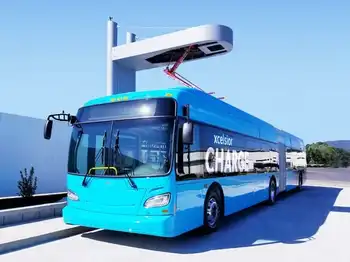
Why electric buses haven't taken over the world—yet

Electric Buses reduce urban emissions and noise, but require charging infrastructure, grid upgrades, and depot redesigns; they offer lower operating costs and simpler maintenance, with range limits influencing routes, schedules, and on-route fast charging.


Key Points

Battery-electric buses cut emissions and noise while lowering operating and maintenance costs for transit agencies.

✅ Lower emissions, noise; improved rider experience

✅ Requires charging, grid upgrades, depot redesigns

✅ Range limits affect routes; on-route fast charging helps


In lots of ways, the electric bus feels like a technology whose time has come. Transportation is responsible for about a quarter of global emissions, and those emissions are growing faster than in any other sector. While buses are just a small slice of the worldwide vehicle fleet, they have an outsize effect on the environment. That’s partly because they’re so dirty—one Bogotá bus fleet made up just 5 percent of the city’s total vehicles, but a quarter of its CO2, 40 percent of nitrogen oxide, and more than half of all its particulate matter vehicle emissions. And because buses operate exactly where the people are concentrated, we feel the effects that much more acutely.

Enter the electric bus. Depending on the “cleanliness” of the electric grid into which they’re plugged, e-buses are much better for the environment. They’re also just straight up nicer to be around: less vibration, less noise, zero exhaust. Plus, in the long term, e-buses have lower operating costs, and related efforts like US school bus electrification are gathering pace too.

So it makes sense that global e-bus sales increased by 32 percent last year, according to a report from Bloomberg New Energy Finance, as the age of electric cars accelerates across markets worldwide. “You look across the electrification of cars, trucks—it’s buses that are leading this revolution,” says David Warren, the director of sustainable transportation at bus manufacturer New Flyer.

Today, about 17 percent of the world’s buses are electric—425,000 in total. But 99 percent of them are in China, where a national mandate promotes all sorts of electric vehicles. In North America, a few cities have bought a few electric buses, or at least run limited pilots, to test the concept out, and early deployments like Edmonton's first e-bus offer useful lessons as systems ramp up. California has even mandated that by 2029 all buses purchased by its mass transit agencies be zero-emission.

But given all the benefits of e-buses, why aren’t there more? And why aren’t they everywhere?

“We want to be responsive, we want to be innovative, we want to pilot new technologies and we’re committed to doing so as an agency,” says Becky Collins, the manager of corporate initiative at the Southeastern Pennsylvania Transportation Authority, which is currently on its second e-bus pilot program. “But if the diesel bus was a first-generation car phone, we’re verging on smartphone territory right now. It’s not as simple as just flipping a switch.”

One reason is trepidation about the actual electric vehicle. Some of the major bus manufacturers are still getting over their skis, production-wise. During early tests in places like Belo Horizonte, Brazil, e-buses had trouble getting over steep hills with full passenger loads. Albuquerque, New Mexico, canceled a 15-bus deal with the Chinese manufacturer BYD after finding equipment problems during testing. (The city also sued). Today’s buses get around 225 miles per charge, depending on topography and weather conditions, which means they have to re-up about once a day on a shorter route in a dense city. That’s an issue in a lot of places.

If you want to buy an electric bus, you need to buy into an entire electric bus system. The vehicle is just the start.

The number one thing people seem to forget about electric buses is that they need to get charged, and emerging projects such as a bus depot charging hub illustrate how infrastructure can scale. “We talk to many different organizations that get so fixated on the vehicles,” says Camron Gorguinpour, the global senior manager for the electric vehicles at the World Resources Institute, a research organization, which last month released twin reports on electric bus adoption. “The actual charging stations get lost in the mix.”

But charging stations are expensive—about $50,000 for your standard depot-based one. On-route charging stations, an appealing option for longer bus routes, can be two or three times that. And that’s not even counting construction costs. Or the cost of new land: In densely packed urban centers, movements inside bus depots can be tightly orchestrated to accommodate parking and fueling. New electric bus infrastructure means rethinking limited space, and operators can look to Toronto's TTC e-bus fleet for practical lessons on depot design. And it’s a particular pain when agencies are transitioning between diesel and electric buses. “The big issue is just maintaining two sets of fueling infrastructure,” says Hanjiro Ambrose, a doctoral student at UC Davis who studies transportation technology and policy.

“We talk to many different organizations that get so fixated on the vehicles. The actual charging stations get lost in the mix as the American EV boom gathers pace across sectors.”

Then agencies also have to get the actual electricity to their charging stations. This involves lengthy conversations with utilities about grid upgrades, rethinking how systems are wired, occasionally building new substations, and, sometimes, cutting deals on electric output, since electric truck fleets will also strain power systems in parallel. Because an entirely electrified bus fleet? It’s a lot to charge. Warren, the New Flyer executive, estimates it could take 150 megawatt-hours of electricity to keep a 300-bus depot charged up throughout the day. Your typical American household, by contrast, consumes 7 percent of that—per year. “That’s a lot of work by the utility company,” says Warren.

For cities outside of China—many of them still testing out electric buses and figuring out how they fit into their larger fleets—learning about what it takes to run one is part of the process. This, of course, takes money. It also takes time. Optimists say e-buses are more of a question of when than if. Bloomberg New Energy Finance projects that just under 60 percent of all fleet buses will be electric by 2040, compared to under 40 percent of commercial vans and 30 percent of passenger vehicles.

Which means, of course, that the work has just started. “With new technology, it always feels great when it shows up,” says Ambrose. “You really hope that first mile is beautiful, because the shine will come off. That’s always true.”


Related News

View more

Canadians Support Tariffs on Energy and Minerals in U.S. Trade Dispute

Canada Tariffs on U.S. Energy and Minerals signal retaliatory tariffs amid trade tensions, targeting energy exports and critical minerals, reflecting sovereignty concerns and shifting consumer behavior, reduced U.S. purchases, and demand for Canadian-made goods.


Key Points

They are proposed retaliatory tariffs on energy exports and critical minerals to counter U.S. trade pressures.

✅ 75% support tariffs; 70% back dollar-for-dollar retaliation

✅ Consumer shift: fewer U.S. purchases, more Canadian-made goods

✅ Concerns over sovereignty and U.S. trade tactics intensify


A recent survey has revealed that a significant majority of Canadians—approximately 75%—support the implementation of tariffs on energy exports and critical minerals in response to electricity exports at risk amid trade tensions with the United States. This finding underscores the nation's readiness to adopt assertive measures to protect its economic interests amid escalating trade disputes.​

Background on Trade Tensions

The trade relationship between Canada and the United States has experienced fluctuations in recent years, with both nations navigating complex issues related to tariffs and energy tariffs and trade tensions as well as trade agreements and economic policies. The introduction of tariffs has been a contentious strategy, often leading to reciprocal measures and impacting various sectors of the economy.​

Public Sentiment Towards Retaliatory Tariffs

The survey, conducted by Leger between February 14 and 17, 2025, sampled 1,500 Canadians and found that 70% favored implementing dollar-for-dollar retaliatory tariffs against the U.S. Notably, 45% of respondents were strongly in favor, while 25% were somewhat in favor. This strong support reflects widespread dissatisfaction with U.S. trade policies and growing support for Canadian energy projects among voters, alongside a collective sentiment favoring decisive action. ​

Concerns Over U.S. Economic Strategies

The survey also highlighted that 81% of Canadians are apprehensive about potential U.S. economic tactics aimed at drawing Canada into a closer political union. These concerns are fueled by statements from U.S. President Donald Trump, who has suggested annexation and employed tariffs that could spike NY energy prices to influence Canadian sovereignty. Such sentiments have heightened fears about the erosion of Canada's political autonomy under economic duress. ​

Impact on Consumer Behavior

In response to these trade tensions, including reports that Ford threatened to cut U.S. electricity exports, many Canadians have adjusted their purchasing habits. The survey indicated that 63% of respondents are buying fewer American products in stores, and 62% are reducing online purchases from U.S. retailers. Specific declines include a 52% reduction in Amazon purchases, a 50% drop in fast-food consumption from American chains, and a 43% decrease in spending at U.S.-based retail stores. Additionally, 30% of Canadians have canceled planned trips to the United States, while 68% have increased their purchases of Canadian-made products. These shifts demonstrate a tangible impact on consumer behavior driven by nationalistic sentiments and support for retaliatory measures. ​

Economic and Political Implications

The widespread support for retaliatory tariffs and the corresponding changes in consumer behavior have significant economic and political implications. Economically, while tariffs can serve as a tool for asserting national interests, they also risk triggering trade wars that can harm various sectors, including agriculture, manufacturing, and technology, with experts cautioning against cutting Quebec's energy exports in response. Politically, the situation presents a challenge for Canadian leadership to balance assertiveness in defending national interests with the necessity of maintaining a stable and mutually beneficial relationship with the U.S., Canada's largest trading partner.​

As Canada approaches its federal elections, trade policy is emerging as a pivotal issue. Voters are keenly interested in how political parties propose to navigate the complexities of international trade, particularly with the United States and how a potential U.S. administration's stance, such as Biden's approach to the energy sector could shape outcomes. The electorate's strong stance on retaliatory tariffs may influence party platforms and campaign strategies, emphasizing the need for clear and effective policies that address both the immediate concerns of trade disputes and the long-term goal of sustaining positive international relations.​

The survey results reflect a nation deeply engaged with its trade dynamics and protective of its sovereignty. While support for retaliatory tariffs is robust, it is essential for policymakers to carefully consider the broader consequences of such actions. Striking a balance between defending national interests and fostering constructive international relationships will be crucial as Canada navigates these complex trade challenges in the coming years.


Related News

View more

New Hampshire rejects Quebec-Massachusetts transmission proposal

Northern Pass Project faces rejection by New Hampshire regulators, halting Hydro-Quebec clean energy transmission lines to Massachusetts; Eversource vows appeal as the Site Evaluation Committee cites development concerns and alternative routes through Vermont and Maine.


Key Points

A project to transmit Hydro-Quebec power to Massachusetts via New Hampshire, recently rejected by state regulators.

✅ New Hampshire SEC denied the transmission application

✅ Up to 9.45 TWh yearly from Hydro-Quebec to Massachusetts

✅ Eversource plans appeal; alternative routes via Vermont, Maine


Regulators in the state of New Hampshire on Thursday rejected a major electricity project being piloted by Quebec’s hydro utility and its American partner, Eversource.

Members of New Hampshire’s Site Evaluation Committee unanimously denied an application for the Northern Pass project a week after the state of Massachusetts green-lit the proposal.

Both states had to accept the project, as the transmission lines were to bring up to 9.45 terawatt hours of electricity per year from Quebec’s hydroelectric plants to Massachusetts as part of Hydro-Quebec’s export bid to New England, through New Hampshire.

The 20-year proposal was to be the biggest export contract in Hydro-Quebec’s history, in a region where Connecticut is leading a market overhaul that could affect pricing, and would generate up to $500 million in annual revenues for the provincial utility.

Hydro-Quebec’s U.S. partner, Eversource, said in a new release it was “shocked and outraged” by the New Hampshire regulators’ decision and suggested it would appeal.

“This decision sends a chilling message to any energy project contemplating development in the Granite State,” said Eversource. “We will be seeking reconsideration of the SEC’s decision, as well as reviewing all options for moving this critical clean energy project forward, including lessons from electricity corridor construction in Maine.”

The New Hampshire Union Leader reported Thursday the seven members of the evaluation committee said the project’s promoters couldn’t demonstrate the proposed energy transport lines wouldn’t interfere with the region’s orderly development.

Hydro-Quebec spokesman Serge Abergel said the decision wasn’t great news but it didn’t put a end to the negotiations between the company and the state of Massachusetts.

The hydro utility had proposed alternatives routes through Vermont and Maine amid a 145-mile transmission line debate over the corridor should the original plan fall through.

“There is a provision included in the process in the advent of an impasse, which allows Massachusetts to go back and choose the next candidate on the list,” Abergel said in an interview. “There are still cards left on the table.”


Related News

View more

Sign Up for Electricity Forum’s Newsletter

Stay informed with our FREE Newsletter — get the latest news, breakthrough technologies, and expert insights, delivered straight to your inbox.

Electricity Today T&D Magazine Subscribe for FREE

Stay informed with the latest T&D policies and technologies.
  • Timely insights from industry experts
  • Practical solutions T&D engineers
  • Free access to every issue

Live Online & In-person Group Training

Advantages To Instructor-Led Training – Instructor-Led Course, Customized Training, Multiple Locations, Economical, CEU Credits, Course Discounts.

Request For Quotation

Whether you would prefer Live Online or In-Person instruction, our electrical training courses can be tailored to meet your company's specific requirements and delivered to your employees in one location or at various locations.