Power Cuts Threat As Plants Are Shut

By Daily Mail


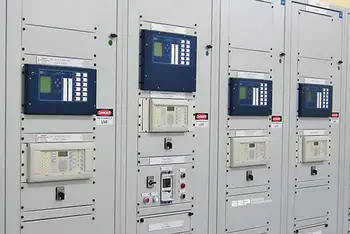
CSA Z463 Electrical Maintenance -

Our customized live online or in‑person group training can be delivered to your staff at your location.
  • Live Online
  • 6 hours Instructor-led
  • Group Training Available
Regular Price:
$249
Coupon Price:
$199
Reserve Your Seat Today
Families could face power cuts this winter because UK generators are mothballing their plants.

Britain could run out of generating capacity in December and January particularly if the weather turns very cold.

Bills will also rise next year, industry figures have recently warned.

At a private meeting in June, National Grid bosses are believed to have issued a plea to the generators to stop shutting down power stations.

The plants are being taken off line because with wholesale prices low for a number of years, the generators cannot afford to keep stations standing idle.

It may not be easy to persuade them to bring power stations back on line because of the cost and financial risk involved.

Last night, David Porter, of the Association of Electricity Producers, said there was a real risk of demand outstripping supply in the event of a bad winter.

Britain could then have to rely on importing electricity from France.

Mr Porter said major industrial companies could be asked to scale down their use of electricity this winter. After that, there could be power cuts.

"The testing time will come if we have a December like last year," he said.

'Much depends on the weather.

A crisis would not mean everyone's lights going out at the same time. The grid company would initially start rationing, particularly with large industrial companies.

"There are companies that have expressed a willingness to give up on contracted electricity if they are recompensed," he said. "But the grid company has flagged up the potential of intermittent power cuts unless more generating capacity is brought back into use."

Current UK generating capacity is put at 65,000 megawatts.

Demand peaked last December at 54,000 megawatts.

France can export 2,000 megawatts to the UK via a cable under the channel.

This would be enough electricity to power two cities the size of Bristol.

The spot price of electricity doubled earlier this week because of high demand on both sides of the Channel.

France has had to cut output from its nuclear power stations dramatically because of the heatwave.

Mr. Porter said prices could rise in the long term because of shortages linked to a lack of generating capacity, new EUinspired taxes on gas and coalfired generation and a switch from nuclear power to expensive wind, water and wave power.

Energy traders said the days of cheap power were coming to an end as the market was pulled into line with the Continent, where electricity is more expensive.

The cost of wholesale electricity is expected to rise by a third this winter, which will be a blow to industrial users such as the chemical sector, which requires huge quantities of power.

Prices for private users could start rising by next April.

Home electricity bills are expected to increase over the next few years from an average of 250 to 277 a year.

Mr. Porter said: "Wholesale prices have been so depressed for a couple of years that some companies have begun to close power stations because they can't afford to have them standing idle." But he warned: "These power stations will have been closed down for sound business reasons." "Companies will want to be confident that they will not be left with white elephants if they go to the expense of bringing them back on line, he added. FROM THE POWER STATION TO YOUR KITCHEN

Total UK generating capacity 65,000 megawatts per hour.

1 megawatt is enough to boil 400 kettles.

Source of UK electricity: Hydro/wind: 2%* Oil: 1% Nuclear: 25% Coal power stations: 36% Gas power stations: 36%

*Ministers are insisting that 10% of power should come from 'green' sources by 2010.

The 30 major electricity generators in the UK sell to seven main supply companies.

Average annual household electricity bill: UK...........250.00 France.....277.50 UK electricity exported to France when there is surplus via a cable under the sea, which carries up to 2,000 megawatts per hour. Power also imported to UK from France.

There are plans for cables between UK and Netherlands and Norway.

Related News

New president at Manitoba Hydro to navigate turmoil at Crown corporation

Jay Grewal Manitoba Hydro Appointment marks the first woman CEO at the Crown utility, amid debt, rate increase plans, privatization debate, and Metis legal challenge, following board turmoil and Premier Pallister's strained relations.


Key Points

The selection of Jay Grewal as Manitoba Hydro's first woman CEO amid debt, rate hikes, and legal disputes.

✅ First woman CEO of Manitoba Hydro

✅ Faces debt, rate hikes, and project overruns

✅ Amid privatization debate and Metis legal action


The Manitoba government has appointed a new president and chief executive officer at its Crown-owned energy utility.

Jay Grewal becomes the first woman to head Manitoba Hydro, and takes over the top spot as the utility faces mounting financial challenges, rising electricity demand and turmoil.

Grewal has previously held senior roles at Capstone Mining Corp and B.C. Hydro, and is currently president of the Northwest Territories Power Corporation.

She will replace outgoing president Kelvin Shepherd, who recently announced he is retiring, on Feb. 4.

The utility was hit by the sudden resignations of nine of its 10 board members in March, who said they had been unable to meet with Premier Brian Pallister to discuss pressing issues like servicing energy-intensive customers facing the utility.

Manitoba Hydro is also in the middle of a battle between the Progressive Conservative government and the Manitoba Metis Federation over the cancellation of two agreements that would have given the Metis $87 million.

The federation has launched a legal challenge over one deal and says its likely going to do the same over the second agreement.

Grewal also takes over the utility at a time when it has racked up billions of dollars in debt building new generating stations and transmission lines. Manitoba Hydro has told the provincial regulatory agency it needs rate increases of nearly eight per cent a year for the next few years to help pay for the projects.

The utility also exports electricity, with deals such as SaskPower's purchase agreement expanding sales to Saskatchewan.

"Ms. Grewal is a proven leader, with extensive senior leadership experience in the utility, resource and consulting sectors," Crown Services Minister Colleen Mayer said in a written statement Thursday.

The Opposition New Democrats said Grewal's appointment is a sign the government wants to privatize Manitoba Hydro. Grewal's time at B.C. Hydro coincided with the privatization of some parts of that Crown utility, the NDP said.

The B.C. premier at the time, Gordon Campbell, was recently hired by Manitoba to review two major projects that ran over-budget and have added to the provincial debt.

NDP Leader Wab Kinew asked Pallister in the legislature Thursday to promise not to privatize Manitoba Hydro. Pallister would only point to a law that requires a referendum to be held before a Crown entity can be sold off.

"We stand by that (law)," Pallister said. "We believe Manitobans are the proper decision-makers in respect of any of the future structuring of Manitoba Hydro."


Related News

View more

Abu Dhabi seeks investors to build hydrogen-export facilities

ADNOC Hydrogen Export Projects target global energy transition, courting investors and equity stakes for blue and green hydrogen, ammonia shipping, CCS at Ruwais, and long-term supply contracts across power, transport, and industrial sectors.


Key Points

ADNOC plans blue and green hydrogen exports, leveraging Ruwais, CCS, and ammonia to secure long-term supply.

✅ Blue hydrogen via gas reforming with CCS; ammonia for shipping.

✅ Green hydrogen from solar-powered electrolysis under development.

✅ Ruwais expansions and Fertiglobe ammonia tie-up target long-term supply.


Abu Dhabi is seeking investors to help build hydrogen-export facilities, as Middle Eastern oil producers plan to adopt cleaner energy solutions, sources told Bloomberg.

Abu Dhabi National Oil Company (ADNOC) is holding talks with energy companies for them to purchase equity stakes in the hydrogen projects, the sources referred, as Germany's hydrogen strategy signals rising import demand.

ADNOC, which already produces hydrogen for its refineries, also aims to enter into long-term supply contracts, as Canada-Germany clean energy cooperation illustrates growing cross-border demand, before making any progress with these investments.

Amid a global push to reduce greenhouse-gas emissions, the state-owned oil companies in the Gulf region seek to turn their expertise in exporting liquid fuel into shipping hydrogen or ammonia across the world for clean and universal electricity needs, transport, and industrial use.

Most of the ADNOC exports are expected to be blue hydrogen, created by converting natural gas and capturing the carbon dioxide by-product that can enable using CO2 to generate electricity approaches, according to Bloomberg.

The sources said that the Abu Dhabi-based company will raise its production of hydrogen by expanding an oil-processing plant and the Borouge petrochemical facility at the Ruwais industrial hub, supporting a sustainable electric planet vision, as the extra hydrogen will be used for an ammonia facility planned with Fertiglobe.

Abu Dhabi also plans to develop green hydrogen, similar to clean hydrogen in Canada initiatives, which is generated from renewable energy such as solar power.

Noteworthy to mention, in May 2021, ADNOC announced that it will construct a world-scale blue ammonia production facility in Ruwais in Abu Dhabi to contribute to the UAE's efforts to create local and international hydrogen value chains.


Related News

View more

Some old dams are being given a new power: generating clean electricity

Hydroelectric retrofits for unpowered dams leverage turbines to add renewable capacity, bolster grid reliability, and enable low-impact energy storage, supporting U.S. and Canada decarbonization goals with lower costs, minimal habitat disruption, and climate resilience.


Key Points

They add turbines to existing dams to make clean power, stabilize the grid, and offer low-impact storage at lower cost.

✅ Lower capex than new dams; minimal habitat disruption

✅ Adds firming and storage to support wind and solar

✅ New low-head turbines unlock more retrofit sites


As countries race to get their power grids off fossil fuels to fight climate change, there's a big push in the U.S. to upgrade dams built for purposes such as water management or navigation with a feature they never had before — hydroelectric turbines. 

And the strategy is being used in parts of Canada, too, with growing interest in hydropower from Canada supplying New York and New England.

The U.S. Energy Information Administration says only three per cent of 90,000 U.S. dams currently generate electricity. A 2012 report from the U.S. Department of Energy found that those dams have 12,000 megawatts (MW) of potential hydroelectric generation capacity. (According to the National Hydropower Association, 1 MW can power 750 to 1,000 homes. That means 12,000 MW should be able to power more than nine million homes.)

As of May 2019, there were projects planned to convert 32 unpowered dams to add 330 MW to the grid over the next several years.

One that was recently completed was the Red Rock Hydroelectric Project, a 60-year-old flood control dam on the Des Moines River in Iowa that was retrofitted in 2014 to generate 36.4 MW at normal reservoir levels, and up to 55 MW at high reservoir levels and flows. It started feeding power to the grid this spring, and is expected to generate enough annually to supply power to 18,000 homes.

It's an approach that advocates say can convert more of the grid from fossil fuels to clean energy, often with a lower cost and environmental impact than building new dams.

Hydroelectric facilities can also be used for energy storage, complementing intermittent clean energy sources such as wind and solar with pumped storage to help maintain a more reliable, resilient grid.

The Nature Conservancy and the World Wildlife Fund are two environmental groups that oppose new hydro dams because they can block fish migration, harm water quality, damage surrounding ecosystems and release methane and CO2, and in some regions, Western Canada drought has reduced hydropower output as reservoirs run low. But they say adding turbines to non-powered dams can be part of a shift toward low-impact hydro projects that can support expansion of solar and wind power.

Paul Norris, president of the Ontario Waterpower Association, said there's typically widespread community support for such projects in his province amid ongoing debate over whether Ontario is embracing clean power in its future plans. "Any time that you can better use existing assets, I think that's a good thing."

New turbine technology means water doesn't need to fall from as great a height to generate power, providing opportunities at sites that weren't commercially viable in the past, Norris said, with recent investments such as new turbines in Manitoba showing what is possible.

In Ontario, about 1,000 unpowered dams are owned by various levels of government. "With the appropriate policy framework, many of these assets have the potential to be retrofitted for small hydro," Norris wrote in a letter to Ontario's Independent Electricity System Operator this year as part of a discussion on small-scale local energy generation resources.

He told CBC that several such projects are already in operation, such as a 950 kW retrofit of the McLeod Dam at the Moira River in Belleville, Ont., in 2008. 

Four hydro stations were going to be added during dam refurbishment on the Trent-Severn Waterway, but they were among 758 renewable energy projects cancelled by Premier Doug Ford's government after his election in 2018, a move examined in an analysis of Ontario's dirtier electricity outlook and its implications.

Patrick Bateman, senior vice-president of Waterpower Canada, said such dam retrofit projects are uncommon in most provinces. "I don't see it being a large part of the future electricity generation capacity."

He said there has been less movement on retrofitting unpowered dams in Canada compared to the U.S., because:

There are a lot more opportunities in Canada to refurbish large, existing hydro-generating stations to boost capacity on a bigger scale.

There's less growth in demand for clean energy, because more of Canada's grid is already non-carbon-emitting (80 per cent) compared to the U.S. (40 per cent).

Even so, Norris thinks Canadians should be looking at all opportunities and options when it comes to transitioning the grid away from fossil fuels, including retrofitting non-powered dams, especially as a recent report highlights Canada's looming power problem over the coming decades.

"If we're going to be serious about addressing the inevitable challenges associated with climate change targets and net zero, it really is an all-of-the-above approach."


Related News

View more

New England Emergency fuel stock to cost millions

Inventoried Energy Program pays ISO-NE generators for fuel security to boost winter reliability, with FERC approval, covering fossil, nuclear, hydropower, and batteries, complementing capacity markets to enhance grid resilience during severe cold snaps.


Key Points

ISO-NE program paying generators to hold fuel or energy reserves for emergencies, boosting winter reliability.

✅ FERC-approved stopgap for 2023 and 2024 winter seasons

✅ Pays for on-site fuel or stored energy during cold-trigger events

✅ Open to fossil, nuclear, hydro, batteries; limited gas participation


Electricity ratepayers in New England will pay tens of millions of dollars to fossil fuel and nuclear power plants later this decade under a program that proponents say is needed to keep the lights on during severe winters but which critics call a subsidy with little benefit to consumers or the grid, even as Connecticut is pushing a market overhaul across the region.

Last week the Federal Energy Regulatory Commission said ISO-New England, which runs the six-state power grid, can create what it calls the Inventoried Energy Program or IEP. This basically will pay certain power plants to stockpile of fuel for use in emergencies during two upcoming winters as longer-term solutions are developed.

The federal commission called it a reasonable short-term solution to avoid brownouts which doesn’t favor any given technology.

Not all agree, however, including FERC Commissioner Richard Glick, who wrote a fiery dissent to the other three commissioners.

“The program will hand out tens of millions of dollars to nuclear, coal and hydropower generators without any indication that those payments will cause the slightest change in those generators’ behavior,” Glick wrote. “Handing out money for nothing is a windfall, not a just and reasonable rate.”

The program is the latest reaction by ISO-NE to the winter of 2013-14 when New England almost saw brownouts because of a shortage of natural gas to create electricity during a pair of week-long deep freezes.

ISO-New England says the situation is more critical now because of the possible retirement of the gas-fired Mystic Generating Station in Massachusetts. As with closed nuclear plants such as Vermont Yankee and Pilgrim in Massachusetts, power plant owners say lower electricity prices, partly due to cheap renewables and partly to stagnant demand, means they can’t be profitable just by selling power.

Programs like the IEP are meant to subsidize such plants – “incentivize” is the industry term – even though some argue there is no need to subsidize nuclear in deregulated markets so they’ll stay open if they are needed.

The IEP approved last week will be applied to the winters of 2023 and 2024, after a different subsidy program expires. It sets prices, despite warnings about rushing pricing changes from industry groups, for stocking certain amounts of fuel and payments during any “trigger” event, defined as a day when the average of high and low temperatures at Bradley International Airport in Connecticut is no more than 17 degrees Fahrenheit.

These payments will be made on top of a complex system of grid auctions used to decide how much various plants get paid for generating electricity at which times.

ISO-NE estimates the new program will cost between $102 million and $148 million each winter, depending on weather and market conditions.

It says the payments are open to plants that burn oil, coal, nuclear fuel, wood chips or trash; utility-scale battery storage facilities; and hydropower dams “that store water in a pond or reservoir.” Natural gas plants can participate if they guarantee to have fuel available, but that seems less likely because of winter heating contracts.

A major complaint and groups that filed petitions opposing the project is that ISO-NE presented little supporting evidence of how prices, amount and overall cost were determined. ISO-NE argued that there wasn’t time for such analysis before the Mystic shutdown, and FERC agreed.

“The proposal is a step in the right direction … while ISO-NE finishes developing a long-term market solution,” the commission said in its ruling.

The program is the latest example of complexities facing the nation’s electricity system evolves in the face of solar and wind power, which produce electricity so cheaply that they can render traditional power uneconomic but which can’t always produce power on demand, prompting discussions of Texas grid improvements among policymakers. Another major factor is climate change, which has increased the pressure to support renewable alternatives to plants that burn fossil fuels, as well as stagnant electricity demand caused by increased efficiency.

Opponents, including many environmental groups, say electricity utilities and regulators are too quick to prop up existing systems, as the 145-mile Maine transmission line debate shows, built when electricity was sent one way from a few big plants to many customers. They argue that to combat climate change as well as limit cost, the emphasis must be on developing “non-wire alternatives” such as smart systems for controlling demand, in order to take advantage of the current system in which electricity goes two ways, such as from rooftop solar back into the grid.


Related News

View more

Russian Strikes Threaten Ukraine's Power Grid

Ukraine Power Grid Attacks intensify as missile and drone strikes hit substations and power plants, causing blackouts, humanitarian crises, strained hospitals, and emergency repairs, with winter energy shortages and civilian infrastructure damage worsening nationwide.


Key Points

Strikes on energy infrastructure causing blackouts, service disruption, and heightened humanitarian risk in winter.

✅ Missile and drone strikes cripple plants, substations, and lines

✅ Blackouts disrupt water, heating, hospitals, and critical services

✅ Emergency repairs, generators, and aid mitigate winter shortages


Ukraine's energy infrastructure remains a primary target in Russia's ongoing invasion, with a recent wave of missile strikes causing power outages in western regions and disrupting critical services across the country. These attacks have devastating humanitarian consequences, leaving millions of Ukrainians without heat, water, and electricity as winter approaches.


Systematic Targeting of Energy Infrastructure

Russia's strategy of deliberately targeting Ukraine's power grid marks a significant escalation, directly affecting the lives of civilians. Power plants, substations, and transmission lines have been hit with missiles and drones, with the latest strikes in late April causing blackouts in cities across Ukraine, including the capital, Kyiv, as the country fights to keep the lights on amid relentless bombardment.


Humanitarian Catastrophe Looms

The damage to Ukraine's electrical system hinders essential services like water supply, sewage treatment, and heating. Hospitals and other critical facilities struggle to operate without reliable power. With winter around the corner, the ongoing attacks threaten a humanitarian catastrophe even as authorities outline plans to keep the lights on this winter for vulnerable communities.


Ukrainian Resolve Remains Unbroken

Despite the devastation, Ukrainian engineers and workers race against time to repair damaged infrastructure and restore power as quickly as possible, while communities adopt new energy solutions to overcome blackouts to maintain essential services. The nation's energy workers have been hailed as heroes for their tireless efforts to keep the lights on amidst relentless attacks. Officials have urged civilians to reduce energy consumption whenever possible to alleviate strain on the fragile grid.


International Condemnation and Support

The systematic attacks on Ukraine's power grid have been widely condemned by the international community.  Western nations have accused Russia of war crimes, highlighting the deliberate targeting of civilian infrastructure. Aid organizations and countries are coordinating efforts to provide emergency power supplies, including generators and transformers, to help Ukraine mitigate the immediate crisis, even as the U.S. ended support for grid restoration in a recent policy shift.


Implications Beyond Ukraine

The humanitarian crisis unfolding in Ukraine due to power grid attacks carries implications far beyond its borders. The disruption of energy supplies could lead to further instability in neighbouring countries dependent on Ukraine's power exports, although officials say electricity reserves are sufficient to prevent scheduled outages if attacks subside. Additionally, a surge in Ukrainian refugees fleeing the deteriorating conditions could put a strain on resources within the European Union.


War Crimes Allegations

International human rights organizations are documenting evidence of Russia's deliberate attacks on Ukraine's civilian infrastructure. Human Rights Watch (HRW) has stated that Russia's targeting of power stations could violate the laws of war and amount to war crimes. This documentation will be crucial for holding Russia accountable for its actions in the future.


Uncertain Future for Ukraine's Power Supply

The long-term consequences of Russia's sustained attacks on Ukraine's power grid remain uncertain. While Ukrainian workers demonstrate incredible resilience, the sheer scale of repeated damage may eventually overwhelm their ability to keep pace with repairs, and, as winter looms over the battlefront, electricity is civilization for frontline communities. Rebuilding destroyed infrastructure could take years and cost billions, a daunting task for a nation already ravaged by war.


Related News

View more

Electricity turns garbage into graphene

Waste-to-Graphene uses flash joule heating to convert carbon-rich trash into turbostratic graphene for composites, asphalt, concrete, and flexible electronics, delivering scalable, low-cost, high-quality material from food scraps, plastics, and tires with minimal processing.


Key Points

A flash heating method converting waste carbon into turbostratic graphene for scalable, low-cost industrial uses.

✅ Converts food scraps, plastics, and tires into graphene

✅ Produces turbostratic flakes that disperse well in composites

✅ Scalable, low-cost process via flash joule heating


Science doesn’t usually take after fairy tales. But Rumpelstiltskin, the magical imp who spun straw into gold, would be impressed with the latest chemical wizardry. Researchers at Rice University report today in Nature that they can zap virtually any source of solid carbon, from food scraps to old car tires, and turn it into graphene—sheets of carbon atoms prized for applications ranging from high-strength plastic to flexible electronics, and debates over 5G electricity use continue to evolve. Current techniques yield tiny quantities of picture-perfect graphene or up to tons of less prized graphene chunks; the new method already produces grams per day of near-pristine graphene in the lab, and researchers are now scaling it up to kilograms per day.

“This work is pioneering from a scientific and practical standpoint” as it promises to make graphene cheap enough to use to strengthen asphalt or paint, says Ray Baughman, a chemist at the University of Texas, Dallas. “I wish I had thought of it.” The researchers have already founded a new startup company, Universal Matter, to commercialize their waste-to-graphene process, while others are digitizing the electrical system to modernize infrastructure.

With atom-thin sheets of carbon atoms arranged like chicken wire, graphene is stronger than steel, conducts electricity and heat better than copper, and can serve as an impermeable barrier preventing metals from rusting, while advances such as superconducting cables aim to cut grid losses. But since its 2004 discovery, high-quality graphene—either single sheets or just a few stacked layers—has remained expensive to make and purify on an industrial scale. That’s not a problem for making diminutive devices such as high-speed transistors and efficient light-emitting diodes. But current techniques, which make graphene by depositing it from a vapor, are too costly for many high-volume applications. And higher throughput approaches, such as peeling graphene from chunks of the mineral graphite, produce flecks composed of up to 50 graphene layers that are not ideal for most applications.

Graphene comes in many forms. Single sheets, which are ideal for electronics and optics, can be grown using a method called chemical vapor deposition. But it produces only tiny amounts. For large volumes, companies commonly use a technique called liquid exfoliation. They start with chunks of graphite, which is just myriad stacked graphene layers. Then they use acids and solvents, as well as mechanical grinding, to shear off flakes. This approach typically produces tiny platelets each made up of 20 to 50 layers of graphene.

In 2014, James Tour, a chemist at Rice, and his colleagues found they could make a pure form of graphene—each piece just a few layers thick—by zapping a form of amorphous carbon called carbon black with a laser. Brief pulses heated the carbon to more than 3000 kelvins, snapping the bonds between carbon atoms; for comparison, researchers have also generated electricity from falling snow using triboelectric effects. As the cloud of carbon cooled, it coalesced into the most stable structure possible, graphene. But the approach still produced only tiny qualities and required a lot of energy.

Two years ago, Luong Xuan Duy, one of Tour’s graduate students, read that other researchers had created metal nanoparticles by zapping a material with electricity, creating the same brief blast of heat behind the success of the laser graphene approach. “I wondered if I could use that to heat a carbon source and produce graphene,” Duy says. So, he put a dash of carbon black in a clear glass vial and zapped it with 400 volts, similar in spirit to electrical weed zapping approaches in agriculture, for about 200 milliseconds. Initially he got junk. But after a bit of tweaking, he managed to create a bright yellowish white flash, indicating the temperature inside the vial was reaching about 3000 kelvins. Chemical tests revealed he had produced graphene.

It turned out to be a type of graphene that is ideal for bulk uses. As the carbon atoms condense to form graphene, they don’t have time to stack in a regular pattern, as they do in graphite. The result is a material known as turbostatic graphene, with graphene layers jumbled at all angles atop one another. “That’s a good thing,” Duy says. When added to water or other solvents, turbostatic graphene remains suspended instead of clumping up, allowing each fleck of the material to interact with whatever composite it’s added to.

“This will make it a very good material for applications,” says Monica Craciun, a materials physicist at the University of Exeter. In 2018, she and her colleagues reported that adding graphene to concrete more than doubled its compressive strength. Tour’s team saw much the same result. When they added just 0.05% by weight of their flash-produced graphene to concrete, the compressive strength rose 25%; graphene added to polydimethylsiloxane, a common plastic, boosted its strength by 250%.

As digital control spreads across energy networks, research to counter ransomware-driven blackouts is increasingly important for grid resilience.

Those results could reignite efforts to use graphene in a wide range of composites. Researchers in Italy reported recently that adding graphene to asphalt dramatically reduces its tendency to fracture and more than doubles its life span. Last year, Iterchimica, an Italian company, began to test a 250-meter stretch of road in Milan paved with graphene-spiked asphalt. Tests elsewhere have shown that adding graphene to paint dramatically improves corrosion resistance.

These applications would require high-quality graphene by the ton. Fortunately, the starting point for flash graphene could hardly be cheaper or more abundant: Virtually any organic matter, including coffee grounds, food scraps, old tires, and plastic bottles, can be vaporized to make the material. “We’re turning garbage into graphene,” Duy says.


Related News

View more

Sign Up for Electricity Forum’s Newsletter

Stay informed with our FREE Newsletter — get the latest news, breakthrough technologies, and expert insights, delivered straight to your inbox.

Electricity Today T&D Magazine Subscribe for FREE

Stay informed with the latest T&D policies and technologies.
  • Timely insights from industry experts
  • Practical solutions T&D engineers
  • Free access to every issue

Download the 2025 Electrical Training Catalog

Explore 50+ live, expert-led electrical training courses –

  • Interactive
  • Flexible
  • CEU-cerified