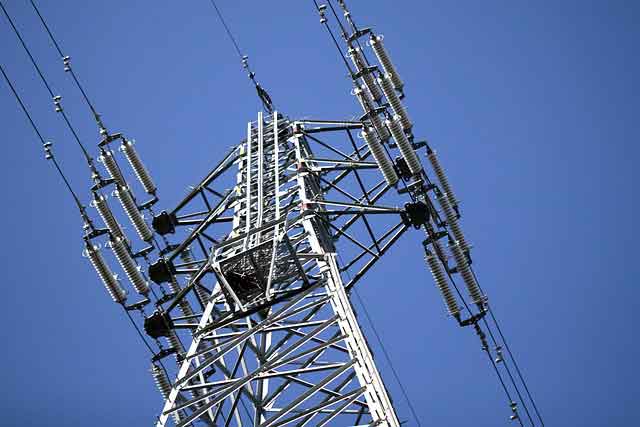
Coal plant fires up Painesville residents

By The News-Herald


NFPA 70b Training - Electrical Maintenance

Our customized live online or in‑person group training can be delivered to your staff at your location.
  • Live Online
  • 12 hours Instructor-led
  • Group Training Available
Regular Price:
$599
Coupon Price:
$499
Reserve Your Seat Today
A proposed coal plant could stabilize electric rates: sounds good, right?

An environmental organization, a handful of Painesville residents and at least one councilman disagree and say it could mean increased rates.

During a town hall-style forum, representatives from the Sierra Club informed residents about the proposed coal plant that will be built in southern Ohio.

In 2007, Painesville City Council voted to participate in the construction of the plant, along with 81 other municipalities that are members of American Municipal Power.

Resident Angelo Cimaglio said he was confused about the city's involvement. If council did indeed participate, Cimaglio said he thinks it was the wrong decision to make.

"Why are we a city of 17,000 involved in a deal like this?" said Cimaglio, adding Painesville is small compared to Cleveland, which also is participating.

"I don't know how they sold this to our city fathers."

Councilman Andrew Flock hosted the meeting and voted against signing the contract, which locks Painesville into a 1.3 percent share of the 960 megawatt-hour facility for 50 years. AMP was not invited to the forum.

"I still don't know what price we're going to have to pay for this plant," Flock said. From an initial price of $1.5 billion in 2006, the plant jumped in price to $3.94 billion in 2008, according to the Sierra Club.

"I feel today like I did two years ago. Voting for a 50-year contract was not a good idea," Flock said.

While the market could conceivably drive prices down, AMP's Senior Director of Communications Kent Carson said the whole point of the proposed plant is to offer market stability to its members.

Sierra Club spokesman Nachy Kanfer pointed out that electric usage could in fact go down. With the help of Senate Bill 221, electric rates will cumulatively reduce energy consumption by 22 percent over the next 25 years.

"No one knows what the reality will be like in 50 years, but no matter what, Painesville will be involved in this plant," Kanfer said.

Instead of building coal-fired plants, Kanfer said AMP needs to focus on renewable energy.

AMP received $143.7 million in bonds from the U.S. Treasury Department to use toward renewable energy products, Carson said.

AMP will focus on eight projects in five states, which will use at least one of the following renewable energy sources: hydroelectric, and wind and solar energies, as well as harnessing methane gas from landfills, Carson said.

In Bowling Green, AMP operates a wind farm.

Carson added that AMP does not focus all of its resources on coal.

"We understand the need for diversification. We understand the need to support renewable energy sources," said Carson, adding that there should be a balance.

AMP's annual conference is under way this week in Cleveland, and Kanfer said it offers members a unique opportunity to voice their concerns about the proposed plant.

If enough communities are against the project, AMP would likely shut it down.

"It's not set in stone. AMP would you tell you they serve their members," Kanfer said.

Carson agreed that they would respond to their members' wishes, but he advised against pulling out of the project.

During the conference, Kanfer suspects that AMP's members could vote on a final notice to proceed on the project. Carson added that he is not aware of any votes taking place.

With an alleged vote going on, city resident Sandy Miller said she's more concerned that no one seems to care.

"I can't believe our council people would sign this," Miller said.

"I've gone door-to-door and the people don't even know about this."

Related News

$550 Million in Clean Energy Funding to Benefit More than 250 Million Americans

EECBG Program Funding empowers states, Tribes, and local governments with DOE grants to deploy clean energy, energy efficiency, EV infrastructure, and community solar, cutting emissions, lowering utility bills, and advancing net-zero decarbonization.


Key Points

EECBG Program Funding is a $550M DOE grant for states, Tribes, and governments to deploy clean energy and efficiency.

✅ Supports EV infrastructure and community solar deployment

✅ Cuts emissions and lowers utility costs via efficiency

✅ Prioritizes Justice40 benefits for underserved communities


The Biden-Harris Administration, through the U.S. Department of Energy (DOE), today released a Notice of Intent announcing $550 million to support community-based clean energy in state, Tribal, and local governments — serving more than 250 million Americans. This investment in American communities, through the Energy Efficiency and Conservation Block Grant (EECBG) Program, will support communities across the country to develop local programming and deploy clean energy technologies to cut emissions, advance a 90% carbon-free electricity goal nationwide, and reduce consumers’ energy costs, and help meet President Biden’s goal of a net-zero economy by 2050. 

“This funding is a streamlined and flexible tool for local governments to build their electricity future with clean energy,” said U.S. Secretary of Energy Jennifer M. Granholm. “State, local, and Tribal communities nationwide will be able to leverage this funding to drive greater energy efficiency and conservation practices to lower utility bills and create healthier environments for American families.”   

The EECBG Program will fund 50 states, five U.S. territories, the District of Columbia, 774 Tribes, and 1,878 local governments in a variety of capacity-building, planning, and infrastructure efforts to reduce carbon emissions and energy use and improve energy efficiency in the transportation, building, and other related sectors. For example, communities with this funding can build out electric vehicle infrastructure and deploy community solar to serve areas that otherwise do not have access to electric vehicles or clean energy, particularly through a rural energy security program where appropriate.  

The $550 million made available through the Bipartisan Infrastructure Law (BIL) represents the second time that the EECBG Program has been funded, the first of which was through the American Recovery and Reinvestment Act of 2009. With this most recent funding, communities can build on prior investments and leverage additional clean energy funding from DOE, other federal agencies, and the private sector to achieve sustained impacts, supported by a Clean Electricity Standard where applicable, that can put their communities on a pathway to decarbonization. 

Through the EECBG Program and the Office of State and Community Energy Programs (SCEP), DOE will support the many diverse state, local, and tribal communities across the U.S., including efforts to revitalize coal communities through clean energy, as they implement this funding and other clean energy projects. To ensure no communities are left behind, the program aligns with President’s Justice40 initiative and efforts toward equity in electricity regulation to help ensure that 40% of the overall benefits of clean energy investments go to underserved and overburdened communities. 


Related News

View more

How to Get Solar Power on a Rainy Day? Beam It From Space

Space solar power promises wireless energy from orbital solar satellites via microwave or laser power beaming, using photovoltaics and rectennas. NRL and AFRL advances hint at 24-7 renewable power delivery to Earth and airborne drones.


Key Points

Space solar power beams orbital solar energy to Earth via microwaves or lasers, enabling continuous wireless electricity.

✅ Harvests sunlight in orbit and transmits via microwaves or lasers

✅ Provides 24-7 renewable power, independent of weather or night

✅ Enables wireless power for remote sites, grids, and drones


Earlier this year, a small group of spectators gathered in David Taylor Model Basin, the Navy’s cavernous indoor wave pool in Maryland, to watch something they couldn’t see. At each end of the facility there was a 13-foot pole with a small cube perched on top. A powerful infrared laser beam shot out of one of the cubes, striking an array of photovoltaic cells inside the opposite cube. To the naked eye, however, it looked like a whole lot of nothing. The only evidence that anything was happening came from a small coffee maker nearby, which was churning out “laser lattes” using only the power generated by the system as ambitions for cheap abundant electricity gain momentum worldwide.

The laser setup managed to transmit 400 watts of power—enough for several small household appliances—through hundreds of meters of air without moving any mass. The Naval Research Lab, which ran the project, hopes to use the system to send power to drones during flight. But NRL electronics engineer Paul Jaffe has his sights set on an even more ambitious problem: beaming solar power to Earth from space. For decades the idea had been reserved for The Future, but a series of technological breakthroughs and a massive new government research program suggest that faraway day may have finally arrived as interest in space-based solar broadens across industry and government.

Since the idea for space solar power first cropped up in Isaac Asimov’s science fiction in the early 1940s, scientists and engineers have floated dozens of proposals to bring the concept to life, including inflatable solar arrays and robotic self-assembly. But the basic idea is always the same: A giant satellite in orbit harvests energy from the sun and converts it to microwaves or lasers for transmission to Earth, where it is converted into electricity. The sun never sets in space, so a space solar power system could supply renewable power to anywhere on the planet, day or night, as recent tests show we can generate electricity from the night sky as well, rain or shine.

Like fusion energy, space-based solar power seemed doomed to become a technology that was always 30 years away. Technical problems kept cropping up, cost estimates remained stratospheric, and as solar cells became cheaper and more efficient, and storage improved with cheap batteries, the case for space-based solar seemed to be shrinking.

That didn’t stop government research agencies from trying. In 1975, after partnering with the Department of Energy on a series of space solar power feasibility studies, NASA beamed 30 kilowatts of power over a mile using a giant microwave dish. Beamed energy is a crucial aspect of space solar power, but this test remains the most powerful demonstration of the technology to date. “The fact that it’s been almost 45 years since NASA’s demonstration, and it remains the high-water mark, speaks for itself,” Jaffe says. “Space solar wasn’t a national imperative, and so a lot of this technology didn’t meaningfully progress.”

John Mankins, a former physicist at NASA and director of Solar Space Technologies, witnessed how government bureaucracy killed space solar power development firsthand. In the late 1990s, Mankins authored a report for NASA that concluded it was again time to take space solar power seriously and led a project to do design studies on a satellite system. Despite some promising results, the agency ended up abandoning it.

In 2005, Mankins left NASA to work as a consultant, but he couldn’t shake the idea of space solar power. He did some modest space solar power experiments himself and even got a grant from NASA’s Innovative Advanced Concepts program in 2011. The result was SPS-ALPHA, which Mankins called “the first practical solar power satellite.” The idea, says Mankins, was “to build a large solar-powered satellite out of thousands of small pieces.” His modular design brought the cost of hardware down significantly, at least in principle.

Jaffe, who was just starting to work on hardware for space solar power at the Naval Research Lab, got excited about Mankins’ concept. At the time he was developing a “sandwich module” consisting of a small solar panel on one side and a microwave transmitter on the other. His electronic sandwich demonstrated all the elements of an actual space solar power system and, perhaps most important, it was modular. It could work beautifully with something like Mankins' concept, he figured. All they were missing was the financial support to bring the idea from the laboratory into space.

Jaffe invited Mankins to join a small team of researchers entering a Defense Department competition, in which they were planning to pitch a space solar power concept based on SPS-ALPHA. In 2016, the team presented the idea to top Defense officials and ended up winning four out of the seven award categories. Both Jaffe and Mankins described it as a crucial moment for reviving the US government’s interest in space solar power.

They might be right. In October, the Air Force Research Lab announced a $100 million program to develop hardware for a solar power satellite. It’s an important first step toward the first demonstration of space solar power in orbit, and Mankins says it could help solve what he sees as space solar power’s biggest problem: public perception. The technology has always seemed like a pie-in-the-sky idea, and the cost of setting up a solar array on Earth is plummeting, as proposals like a tenfold U.S. solar expansion signal rapid growth; but space solar power has unique benefits, chief among them the availability of solar energy around the clock regardless of the weather or time of day.

It can also provide renewable energy to remote locations, such as forward operating bases for the military, which has deployed its first floating solar array to bolster resilience. And at a time when wildfires have forced the utility PG&E to kill power for thousands of California residents on multiple occasions, having a way to provide renewable energy through the clouds and smoke doesn’t seem like such a bad idea. (Ironically enough, PG&E entered a first-of-its-kind agreement to buy space solar power from a company called Solaren back in 2009; the system was supposed to start operating in 2016 but never came to fruition.)

“If space solar power does work, it is hard to overstate what the geopolitical implications would be,” Jaffe says. “With GPS, we sort of take it for granted that no matter where we are on this planet, we can get precise navigation information. If the same thing could be done for energy, especially as peer-to-peer energy sharing matures, it would be revolutionary.”

Indeed, there seems to be an emerging race to become the first to harness this technology. Earlier this year China announced its intention to become the first country to build a solar power station in space, and for more than a decade Japan has considered the development of a space solar power station to be a national priority. Now that the US military has joined in with a $100 million hardware development program, it may only be a matter of time before there’s a solar farm in the solar system.


Related News

View more

Rolls-Royce signs MoU with Exelon for compact nuclear power stations

Rolls-Royce and Exelon UKSMR Partnership accelerates factory-built small modular reactors, nuclear power, clean energy, 440MW units, advanced manufacturing, fleet deployment, net zero goals, and resilient, low-cost baseload generation in the UK and globally.


Key Points

A partnership to deploy factory-built SMR stations, providing 440MW low-carbon baseload for the UK and export markets.

✅ 440MW factory-built SMR units with rapid modular assembly

✅ Exelon to operate and enhance high capacity factors

✅ Supports UK net zero, jobs, and export-led manufacturing


Rolls-Royce and Exelon Generation have signed a Memorandum of Understanding to pursue the potential for Exelon Generation to operate compact nuclear power stations both in the UK and internationally, including markets such as Canada where New Brunswick SMR questions are prompting public debate today.

Exelon Generation will be using their operational experience to assist Rolls Royce in the development and deployment of the UKSMR.

Rolls-Royce is leading a consortium that is designing a low-cost factory built nuclear power station, known as a small modular reactor (SMR), with UK mini-reactor approval anticipated as development progresses. Its standardised, factory-made components and advanced manufacturing processes push costs down, while the rapid assembly of the modules and components inside a weatherproof canopy on the power station site itself avoid costly schedule disruptions.

The consortium is working with its partners and UK Government to secure a commitment for a fleet of factory built nuclear power stations, each providing 440MW of electricity, to be operational within a decade, helping the UK meet its net zero obligations in line with the green industrial revolution policy set out by government. A fleet deployment in the UK will lead to the creation of new factories that will make the components and modules which will help the economy recover from the Covid-19 pandemic and pave the way for significant export opportunities as well.

The consortium members feature the best of nuclear engineering, construction and infrastructure expertise in Assystem, Atkins, BAM Nuttall, Jacobs, Laing O'Rourke, National Nuclear Laboratory, Nuclear Advanced Manufacturing Research Centre, Rolls-Royce and TWI. Exelon will add valuable operational experience to the team.

Tom Samson, interim Chief Executive Officer of the UKSMR consortium, said: 'Nuclear power is central to tackling climate change and economic recovery, but it must be affordable, reliable and investable and the way we manufacture and assemble our power station brings its cost down to be comparable with offshore wind.

'It's a compelling proposition that could draw new players into the UK's power generation landscape, improving choice for consumers and providing uninterrupted low carbon energy to homes and businesses.

'The opportunity to partner with Exelon is a very exciting prospect for our program, complementing our existing Consortium partnerships with one of the world's largest nuclear operator adds an important dimension to our growth ambitions, embodies the strength of the UK and USA alliance on nuclear matters and reflects wider international moves, such as a Canadian premiers' SMR initiative to accelerate technology development, and offers our future customers the ability to achieve the highest performance standards associated with Exelon's outstanding operational track record.'

The power stations will be built by the UKSMR consortium, before being handed over to be operated by power generation companies. Exelon Generation will work closely with the consortium during the pre-operation period. Exelon Nuclear operates 21 nuclear reactors in America, and U.S. regulators recently issued a final safety evaluation for a NuScale SMR that underscores momentum in the sector. The Exelon nuclear fleet is an integral part of the U.S. clean power mix; it produces more than 158 million megawatt-hours of clean electricity every year.

Bryan Hanson, EVP and COO of Exelon Generation said: 'We believe that SMRs are a crucial part of the world's clean energy mix, as projects like Darlington SMRs advance in Ontario. With our experience both in the US and internationally, Exelon is confident that we can help Rolls Royce ensure SMRs play a key role in the UK's energy future. We've had a very strong record of performance for 20 consecutive years, with a 2019 capacity factor of 95.7 percent. We will leverage this experience to achieve sustainably high capacity factors for the UKSMRs.'

Ralph Hunter, Managing Director of Exelon Nuclear Partners, who runs Exelon's international clean energy business, said: 'We have a strong track record of success to be the operator of choice for the UKSMR. We will help develop operational capability, training and human capacity development in the UK, as utilities such as Ontario Power Generation commit to SMRs abroad, ensuring localisation of skills and a strong culture of safety, performance and efficiency.'

By 2050 a full UK programme of a fleet of factory built nuclear power stations in the UK could create:

Up to 40,000 jobs GBP52BN of value to the UK economy GBP250BN of exports

The current phase of the programme has been jointly funded by all consortium members and UK Research and Innovation.


Related News

View more

Utilities see benefits in energy storage, even without mandates

Utility Battery Storage Rankings measure grid-connected capacity, not ownership, highlighting MW, MWh, and watts per customer across PJM, MISO, and California IOUs, featuring Duke Energy, IPL, ancillary services, and frequency regulation benefits.


Key Points

Rankings that track energy storage connected to utility grids, comparing MW, MWh, and W/customer rather than ownership.

✅ Ranks by MW, MWh, and watts per customer, not asset ownership

✅ Highlights PJM, MISO cases and California IOUs' deployments

✅ Examples: Duke Energy, IPL, IID; ancillary services, frequency response


The rankings do not tally how much energy storage a utility built or owns, but how much was connected to their system. So while IPL built and owns the storage facility in its territory, Duke does not own the 16 MW of storage that connected to its system in 2016. Similarly, while California’s utilities are permitted to own some energy storage assets, they do not necessarily own all the storage facilities connected to their systems.

Measured by energy (MWh), IPL ranked fourth with 20 MWh, and Duke Energy Ohio ranked eighth with 6.1 MWh.

Ranked by energy storage watts per customer, IPL and Duke actually beat the California utilities, ranking fifth and sixth with 42 W/customer and 23 W/customer, respectively.

Duke ready for next step

Given Duke’s plans, including projects in Florida that are moving ahead, the utility is likely to stay high in the rankings and be more of a driving force in development. “Battery technology has matured, and we are ready to take the next step,” Duke spokesman Randy Wheeless told Utility Dive. “We can go to regulators and say this makes economic sense.”

Duke began exploring energy storage in 2012, and until now most of its energy storage efforts were focused on commercial projects in competitive markets where it was possible to earn revenues. Those included its 36 MW Notrees battery storage project developed in partnership with the Department of Energy in 2012 that provides frequency regulation for the Electric Reliability Council of Texas market and two 2 MW storage projects at its retired W.C. Beckjord plant in New Richmond, Ohio, that sells ancillary services into the PJM Interconnection market.

On the regulated side, most of Duke’s storage projects have had “an R&D slant to them,” Wheeless said, but “we are moving beyond the R&D concept in our regulated territory and are looking at storage more as a regulated asset.”

“We have done the demos, and they have proved out,” Wheeless said. Storage may not be ready for prime time everywhere, he said, but in certain locations, especially where it can it can be used to do more than one thing, it can make sense.

Wheeless said Duke would be making “a number of energy storage announcements in the next few months in our regulated states.” He could not provide details on those projects.

More flexible resources
Location can be a determining factor when building a storage facility. For IPL, serving the wholesale market was a driving factor in the rationale to build its 20 MW, 20 MWh storage facility in Indianapolis.

IPL built the project to address a need for more flexible resources in light of “recent changes in our resource mix,” including decreasing coal-fired generation and increasing renewables and natural gas-fired generation, as other regions plan to rely on battery storage to meet rising demand, Joan Soller, IPL’s director of resource planning, told Utility Dive in an email. The storage facility is used to provide primary frequency response necessary for grid stability.

The Harding Street storage facility in May. It was the first energy storage project in the Midcontinent ISO. But the regulatory path in MISO is not as clear as it is in PJM, whereas initiatives such as Ontario storage framework are clarifying participation. In November, IPL with the Federal Energy Regulatory Commission, asking the regulator to find that MISO’s rules for energy storage are deficient and should be revised.

Soller said IPL has “no imminent plans to install energy storage in the future but will continue to monitor battery costs and capabilities as potential resources in future Integrated Resource Plans.”

California legislative and regulatory push

In California, energy storage did not have to wait for regulations to catch up with technology. With legislative and regulatory mandates, including CEC long-duration storage funding announced recently, as a push, California’s IOUs took high places in SEPA’s rankings.

Southern California Edison and San Diego Gas & Electric were first and fourth (63.2 MW and 17.2 MW), respectively, in terms of capacity. SoCal Ed and SDG&E were first and second (104 MWh and 28.4 MWh), respectively, and Pacific Gas and Electric was fifth (17 MWh) in terms of energy.

But a public power utility, the Imperial Irrigation District (IID), ended up high in the rankings – second in capacity (30 MW) and third  in energy (20 MWh) – even though as a public power entity it is not subject to the state’s energy storage mandates.

But while IID was not under state mandate, it had a compelling regulatory reason to build the storage project. It was part of a settlement reached with FERC over a September 2011 outage, IID spokeswoman Marion Champion said.

IID agreed to a $12 million fine as part of the settlement, of which $9 million was applied to physical improvements of IID’s system.

IID ended up building a 30 MW, 20 MWh lithium-ion battery storage system at its El Centro generating station. The system went into service in October 2016 and in May, IID used the system’s 44 MW combined-cycle natural gas turbine at the generating station.

Passing savings to customers
The cost of the storage system was about $31 million, and based on its experience with the El Centro project, Champion said IID plans to add to the existing batteries. “We are continuing to see real savings and are passing those savings on to our customers,” she said.

Champion said the battery system gives IID the ability to provide ancillary services without having to run its larger generation units, such as El Centro Unit 4, at its minimum output. With gas prices at $3.59 per million British thermal units, it costs about $26,880 a day to run Unit 4, she said.

IID’s territory is in southeastern California, an area with a lot of renewable resources. IID is also not part of the California ISO and acts as its own balancing authority. The battery system gives the utility greater operational flexibility, in addition to the ability to use more of the surrounding renewable resources, Champion said.

In May, IID’s board gave the utility’s staff approval to enter into contract negotiations for a 7 MW, 4 MWh expansion of its El Centro storage facility. The negotiations are ongoing, but approval could come in the next couple months, Champion said.

The heart of the issue, though, is “the ability of the battery system to lower costs for our ratepayers,” Champion said. “Our planning section will continue to utilize the battery, and we are looking forward to its expansion,” she said.” I expect it will play an even more important role as we continue to increase our percentage of renewables.”


Related News

View more

The Cool Way Scientists Turned Falling Raindrops Into Electricity

Raindrop Triboelectric Energy Harvesting converts falling water into electricity using Teflon (PTFE) on indium tin oxide and an aluminum electrode, forming a transient water bridge; a low frequency nanogenerator for renewable, static electricity harvesting.


Key Points

A method using PTFE, ITO, and an aluminum electrode to turn raindrop impacts into low frequency electrical power.

✅ PTFE on ITO boosts charge transfer efficiency.

✅ Water bridge links electrodes for rapid discharge.

✅ Low frequency output suits continuous energy harvesting.


Scientists at the City University of Hong Kong have used a Teflon-coated surface and a phenomenon called triboelectricity to generate a charge from raindrops. “Here we develop a device to harvest energy from impinging water droplets by using an architecture that comprises a polytetrafluoroethylene [Teflon] film on an indium tin oxide substrate plus an aluminium electrode,” they explain in their new paper in Nature as a step toward cheap, abundant electricity in the long term.

Triboelectricity itself is an old concept. The word means “friction electricity”—from the Greek tribo, to rub or wear down, which is why a diatribe tires you out—and dates back a long, long time. Static electricity is the most famous kind of triboelectric, and related work has shown electricity from the night sky can be harvested as well in niche setups. In most naturally occurring kinds, scientists have studied triboelectric in order to avoid its effects, like explosions inside of grain silos or hospital workers touching off pure oxygen. (Blowing sand causes an electric field, and NASA even worries about static when astronauts eventually land on Mars.)

One of the most studied forms of intentional and useful triboelectric is in systems such as ocean wave generators where the natural friction of waves meets nanogenerators of triboelectric energy. These even already use Teflon, which has natural conductivity that makes it ideal for this job. But triboelectricity is chaotic, and harnessing it generally involves a bunch of complicated, intersecting variables that can vary with the hourly weather. Promises of static electricity charging devices have often been, well, so much hot, sandy wind.

The scientists at City University of Hong Kong used triboelectric ideas to turn falling raindrops into energy. They say previous versions of the same idea were not very efficient, with materials that didn’t allow for high-fidelity transfer of electrical charge. (Many sources of renewable energy aren’t yet as efficient to turn into power, both because of developing technology and because their renewability means even less efficient use could be better than, for example, fossil fuels, and advances in renewable energy storage could help.)

“[A]chieving a high density of electrical power generation is challenging,” the team explains in its paper. “Traditional hydraulic power generation mainly uses electromagnetic generators that are heavy, bulky, and become inefficient with low water supply.” Diversifying how power is generated by water sources such as oceans and rivers is good for the existing infrastructure as well as new installations.

The research team found that as simulated raindrops fell on their device, the way the water accumulated and spread created a link between their two electrodes, one Teflon-coated and the other aluminum. This watery de facto wire link closes the loop and allows accumulated energy to move through the system. Because it’s a mechanical setup, it’s not limited to salty seawater, and because the medium is already water, its potential isn’t affected by ambient humidity either.

Raindrop energy is very low frequency, which means this tech joins many other existing pushes to harvest continuously available, low frequency natural energy, including underwater 'kites' that exploit steady currents. To make an interface that increases “instantaneous power density by several orders of magnitude over equivalent devices,” as the researchers say they’ve done here, could represent a major step toward feasibility in triboelectric generation.


Related News

View more

Canadian Solar and Tesla contribute to resilient electricity system for Puerto Rico school

SunCrate Solar Microgrid delivers resilient, plug-and-play renewable power to Puerto Rico schools, combining Canadian Solar PV, Tesla Powerwall battery storage, and Black & Veatch engineering to ensure off-grid continuity during outages and disasters.


Key Points

A compact PV-and-battery system for resilient, diesel-free power and microgrid backup at schools and clinics.

✅ Plug-and-play, modular PV, inverter, and battery architecture

✅ Tesla Powerwall storage; Canadian Solar 325 W panels

✅ Scales via daisy-chain for higher loads and microgrids


Eleven months since their three-building school was first plunged into darkness by Hurricane Maria, 140 students in Puerto Rico’s picturesque Yabucoa district have reliable power. Resilient electricity service was provided Saturday to the SU Manuel Ortiz school through an innovative scalable, plug-and-play solar system pioneered by SunCrate Energy with Black & Veatch support. Known as a “SunCrate,” the unit is an effective mitigation measure to back up the traditional power supply from the grid. The SunCrate can also provide sustainable power in the face of ongoing system outages and future natural disasters without requiring diesel fuel.

The humanitarian effort to return sustainable electricity to the K-8 school, found along the island’s hard-hit southeastern coast, drew donated equipment and expertise from a collection of North American companies. Additional support for the Yabucoa project came from Tesla, Canadian Solar and Lloyd Electric, reflecting broader efforts to build a solar-powered grid in Puerto Rico after Hurricane Maria.

“We are grateful for this initiative, which will equip this school with the technology needed to become a resilient campus and not dependent on the status of the power grid. This means that if we are hit with future harmful weather events, the school will be able to open more quickly and continue providing services to students,” Puerto Rico Secretary of Education Julia Keleher said.

The SunCrate harnesses a scalable rapid-response design developed by Black & Veatch and manufactured by SunCrate Energy. Electricity will be generated by an array of 325-W CS6U-Poly modules from Canadian Solar. California-based Tesla contributed advanced battery energy storage through various Powerwall units capable of storing excess solar power and delivering it outside peak generation periods, with related experience from a virtual power plant in Texas informing deployment.  Lloyd Electric Co. of Wichita Falls, Texas, partnered to support delivery and installation of the SunCrate.

“As families in the region begin to prepare for the school year, this community is still impacted by the longest U.S. power outage in history,” said Dolf Ivener, a Midwestern entrepreneur who owns King of Trails Construction and SunCrate Energy, which is donating the SunCrate. “SunCrate, with its rapid deployment and use of renewable energy, should give this school peace of mind and hopefully returns a touch of long-overdue normalcy to students and their parents. When it comes to consistent power, SunCrate is on duty.”

The SunCrate is a portable renewable energy system conceived by Ivener and designed and tested by Black & Veatch. Its modular design uses solar PV panels, inverters and batteries to store and provide electric power in support of critical services such as police, fire, schools, clinics and other community level facilities.

A SunCrate can generate 23 to 156 kWh per day, and store 10 kWh to 135 kWh depending on configuration. A SunCrate’s power generation and storage capacity can be easily scaled through daisy-chained configurations to accommodate larger buildings and loads. Leveraging resources from Tesla, Canadian Solar, Lloyd Electric and Lord Electric, the unit in Yabucoa will provide an estimated 52 kWh of storable power without requiring use of costlier diesel-powered generators and cutting greenhouse gas emissions. Its capabilities allow the school to strengthen its function as a designated Community Emergency Response Center in the event of future natural disasters.

“Canadian Solar has a long history of using solar power to support humanitarian efforts aiding victims of social injustice and natural disasters, including previous donations to Puerto Rico after Hurricane Maria,” said Dr. Shawn Qu, Chairman and Chief Executive Officer of Canadian Solar. “We are pleased to make the difference for these schoolchildren in Yabucoa who have been without reliable power for too long.”

The SunCrate will also substantially lower the school’s ongoing electricity costs by providing a reliable source of renewable energy on site, as falling costs of solar batteries improve project economics overall.

“Through our experience providing engineering services in Puerto Rico for nearly 50 years, including dozens of specialized projects for local government and industrial clients, we see great potential for SunCrate as a source of resilient power for the Commonwealth’s remote schools and communities at large, underscoring the importance of electricity resilience across critical infrastructure,” said Charles Moseley, a Program Director in Black & Veatch’s water business. “We hope that the deployment of the SunCrate in Yabucoa sets a precedent for facility and municipal level migro-grid efforts on the island and beyond.”

SunCrate also has broad potential applications in conflict/post-conflict environments and in rural electrification efforts in the developing world, serving as a resilient source of electricity within hours of its arrival on site and could enable peer-to-peer energy within communities. Of particular benefit, the system’s flexibility cuts fuel costs to a fraction of a generator’s typical consumption when they are used around the clock with maintenance requirements.


Related News

View more

Sign Up for Electricity Forum’s Newsletter

Stay informed with our FREE Newsletter — get the latest news, breakthrough technologies, and expert insights, delivered straight to your inbox.

Electricity Today T&D Magazine Subscribe for FREE

Stay informed with the latest T&D policies and technologies.
  • Timely insights from industry experts
  • Practical solutions T&D engineers
  • Free access to every issue

Live Online & In-person Group Training

Advantages To Instructor-Led Training – Instructor-Led Course, Customized Training, Multiple Locations, Economical, CEU Credits, Course Discounts.

Request For Quotation

Whether you would prefer Live Online or In-Person instruction, our electrical training courses can be tailored to meet your company's specific requirements and delivered to your employees in one location or at various locations.