QFL asks Hydro Quebec to limit hikes

By Montreal Gazette


Protective Relay Training - Basic

Our customized live online or in‑person group training can be delivered to your staff at your location.

  • Live Online
  • 12 hours Instructor-led
  • Group Training Available
Regular Price:
$699
Coupon Price:
$599
Reserve Your Seat Today
The Quebec Federation of Labour has cautioned Hydro-Québec "not to throw the baby out with the bath water," when it asks to increase electricity bills in November.

Hydro-Québec has said it needs to boost the cost of retail electricity by as much as three per cent each year for the next five years.

The QFL, which represents 17,500 unionized Hydro-Québec employees, says it is not against a rate increase, but says the Charest government has to curb its appetite for unreasonable profit.

"Obviously we say yes to an increase - there hasn't been one in five years - but it has to be reasonable and allow us to maintain our competitive energy advantage," QFL president Henri Massé told a news conference recently.

"We say no to excessive profits that the government could then use to finance the tax reductions it has promised. That in the long term would rob Quebec of its enviable hydro-electric heritage that has been built up over the years."

When Hydro-Québec appears before the Régie de l'energie in the middle of November, and it is expected to ask the regulatory agency for permission to impose a three-per-cent rate hike before the end of this year and another three-per-cent increase in 2004.

Hydro's profits fell sharply in the first nine months of this year. It blames the decline in profits on a "significant reduction" in the volume of short-term electricity sales to external markets to meet increased demand in Quebec.

The president of the public utility, André Caillé, has said rate hikes of two to three per cent each year until 2008 are in order.

Charles Paradis, co-ordinator of Hydro-Québec's QFL employees, thinks that's too high, but he wouldn't spell out what a fair rate increase might be.

"We have confidence in the régie to determine the new tariff," he said.

"But it is necessary to show prudence and to put things in their proper perspective.

"We wouldn't want rates that endanger Quebec's independence when it comes to energy, or rates so high they would discourage investment in Quebec. Have we learned nothing from what has happened in Ontario?"

A consumer revolt over soaring hydro bills in Ontario is often cited as one of the reasons for the defeat of the Conservative government of Ernie Eves earlier this year.

Quebec and Manitoba have the lowest electricity rates in North America.

Related News

PG&E’s Pandemic Response Includes Precautionary Health and Safety Actions; Moratorium on Customer Shutoffs for Nonpayment

PG&E COVID-19 Shutoff Moratorium suspends service disconnections, offers flexible payment plans, and expands customer support with safety protocols, social distancing, and public health guidance for residential and commercial utility customers during the pandemic.


Key Points

A temporary halt to utility shutoffs with flexible payment plans to support PG&E customers during COVID-19.

✅ Suspends shutoffs for residential and commercial accounts

✅ Offers most flexible payment plans upon COVID-19 hardship

✅ Enhances safety: social distancing, PPE, remote work protocols


Pacific Gas and Electric Company has announced that due to the COVID-19 pandemic, it has voluntarily implemented a moratorium on service disconnections for non-payment, effective immediately. This suspension, similar to policies in New Jersey and New York, will apply to both residential and commercial customers and will remain in effect until further notice. To further support customers who may be impacted by the pandemic, PG&E will offer its most flexible pay plans to customers who indicate either an impact or hardship as a result of COVID-19. PG&E will continue to monitor current events and identify opportunities to support our customers and communities through concrete actions.

In addition to the moratorium on service shut-offs, PG&E’s response to the COVID-19 pandemic is focused on efforts to protect the health and safety of its customers, employees, contractors and the communities it serves, including ongoing wildfire risk reduction efforts that continue alongside its pandemic response. Actions the company has taken include providing guidance for employees who have direct customer contact to take social distancing precautionary measures, such as avoiding handshakes and wearing disposable nitrile gloves while in customers' homes, and continuing safety work related to power line-related fires across its service area.

Customers who visit local offices to pay bills and are sick or experiencing symptoms are being asked to use other payment options such as online or by phone, as seen when Texas utilities waived fees during the pandemic, at 1-877-704-8470.

“We recognize that this is a rapidly changing situation and an uncertain time for many of our customers. Our most important responsibility is the health and safety of our customers and employees. We also want to provide some relief from the stress and financial challenges many are facing during this worldwide, public health crisis, and with rates set to stabilize in 2025 the company remains focused on affordability. We understand that many of our customers may experience a personal financial strain due to the slowdown in the economy related to the pandemic, and programs like the Wildfire Assistance Program can help eligible customers,” said Chief Customer Officer and Senior Vice President Laurie Giammona.

Internally, the company is taking advanced cleaning measures, communicating best practices frequently with employees, and is asking its leaders to let employees work remotely if their job allows, while avoiding critical business disruption. PG&E has activated an enterprise-wide incident response team and is vigilantly monitoring the Centers for Disease Control and Prevention and World Health Organization for updates related to the virus. The company is committed to continue addressing customer service needs and does not expect any disruption in gas or electric service due to the public health crisis.


Related News

View more

U.A.E. Becomes First Arab Nation to Open a Nuclear Power Plant

UAE Nuclear Power Plant launches the Barakah facility, delivering clean electricity to the Middle East under IAEA safeguards amid Gulf tensions, proliferation risks, and debates over renewables, natural gas, grid resilience, and energy security.


Key Points

The UAE Nuclear Power Plant, Barakah, is a civilian facility expected to supply 25% of electricity under IAEA oversight.

✅ Barakah reactors target 25% of national electricity.

✅ Operates under IAEA oversight, no enrichment per US 123 deal.

✅ Raises regional security, proliferation, and environmental concerns.


The United Arab Emirates became the first Arab country to open a nuclear power plant on Saturday, following a crucial step in Abu Dhabi earlier in the project, raising concerns about the long-term consequences of introducing more nuclear programs to the Middle East.

Two other countries in the region — Israel and Iran — already have nuclear capabilities. Israel has an unacknowledged nuclear weapons arsenal and Iran has a controversial uranium enrichment program that it insists is solely for peaceful purposes.

The U.A.E., a tiny nation that has become a regional heavyweight and international business center, said it built the plant to decrease its reliance on the oil that has powered and enriched the country and its Gulf neighbors for decades. It said that once its four units were all running, the South Korean-designed plant would provide a quarter of the country’s electricity, with Unit 1 reaching 100% power as a milestone toward commercial operations.

Seeking to quiet fears that it was trying to build muscle to use against its regional rivals, it has insisted that it intends to use its nuclear program only for energy purposes.

But with Iran in a standoff with Western powers over its nuclear program, Israel in the neighborhood and tensions high among Gulf countries, some analysts view the new plant — and any that may follow — as a security and environmental headache. Other Arab countries, including Saudi Arabia and Iraq, are also starting or planning nuclear energy programs.

The Middle East is already riven with enmities that pit Saudi Arabia and the U.A.E. against Iran, Qatar and Iran’s regional proxies. One of those proxies, the Yemen-based Houthi rebel group, claimed an attack on the Barakah plant when it was under construction in 2017.

And Iran is widely believed to be behind a series of attacks on Saudi oil facilities and oil tankers passing through the Gulf over the last year.

“The UAE’s investment in these four nuclear reactors risks further destabilizing the volatile Gulf region, damaging the environment and raising the possibility of nuclear proliferation,” Paul Dorfman, a researcher at University College London’s Energy Institute, wrote in an op-ed in March.

Noting that the U.A.E. had other energy options, including “some of the best solar energy resources in the world,” he added that “the nature of Emirate interest in nuclear may lie hidden in plain sight — nuclear weapon proliferation.”
But the U.A.E. has said it considered natural gas and renewable energy sources before dismissing them in favor of nuclear energy because they would not produce enough for its needs.

Offering evidence that its intentions are peaceful, it points to its collaborations with the International Atomic Energy Agency, which has reviewed the Barakah project, and the United States, with which it signed a nuclear energy cooperation agreement in 2009 that allows it to receive nuclear materials and technical assistance from the United States while barring it from uranium enrichment and other possible bomb-development activities.

That has not persuaded Qatar, which last year lodged a complaint with the international nuclear watchdog group over the Barakah plant, calling it “a serious threat to the stability of the region and its environment.”

The U.A.E.’s oil exports account for about a quarter of its total gross domestic product. Despite its gusher of oil, it has imported increasing amounts of natural gas in recent years in part to power its energy-intensive desalination plants.

“We proudly witness the start of Barakah nuclear power plant operations, in alignment with the highest international safety standards,” Mohammed bin Zayed, the U.A.E.’s de facto ruler, tweeted on Saturday.

The new nuclear facility, which is in the Gharbiya region on the coast, close to Qatar and Saudi Arabia, is the first of several prospective Middle East nuclear plants, even as Europe reduces nuclear capacity elsewhere. Egypt plans to build a power plant with four nuclear reactors.

Saudi Arabia is also building a civilian nuclear reactor while pursuing a nuclear cooperation deal with the United States, and globally, China's nuclear program remains on a steady development track, though the Trump administration has said it would sign such an agreement only if it includes safeguards against weapons development.


Related News

View more

Shell’s strategic move into electricity

Shell's Industrial Electricity Supply Strategy targets UK and US industrial customers, leveraging gas-to-power, renewables, long-term PPAs, and energy transition momentum to disrupt utilities, cut costs, and secure demand in the evolving electricity market.


Key Points

Shell will sell power directly to industrial clients, leveraging gas, renewables, and PPAs to secure demand and pricing.

✅ Direct power sales to industrials in UK and US

✅ Leverages gas-to-power, renewables, and flexible sourcing

✅ Targets long-term PPAs, price stability, and demand security


Royal Dutch Shell’s decision to sell electricity direct to industrial customers is an intelligent and creative one. The shift is strategic and demonstrates that oil and gas majors are capable of adapting to a new world as the transition to a lower carbon economy develops. For those already in the business of providing electricity it represents a dangerous competitive threat. For the other oil majors it poses a direct challenge on whether they are really thinking about the future sufficiently strategically.

The move starts small with a business in the UK that will start trading early next year, in a market where the UK’s second-largest electricity operator has recently emerged, signaling intensifying competition. Shell will supply the business operations as a first step and it will then expand. But Britain is not the limit — Shell recently announced its intention of making similar sales in the US. Historically, oil and gas companies have considered a move into electricity as a step too far, with the sector seen as oversupplied and highly politicised because of sensitivity to consumer price rises. I went through three reviews during my time in the industry, each of which concluded that the electricity business was best left to someone else. What has changed? I think there are three strands of logic behind the strategy.

First, the state of the energy market. The price of gas in particular has fallen across the world over the last three years to the point where the International Energy Agency describes the current situation as a “glut”. Meanwhile, Shell has been developing an extensive range of gas assets, with more to come. In what has become a buyer’s market it is logical to get closer to the customer — establishing long-term deals that can soak up the supply, while options such as storing electricity in natural gas pipes gain attention in Europe. Given its reach, Shell could sign contracts to supply all the power needed by the UK’s National Health Service or with the public sector as a whole as well as big industrial users. It could agree long-term contracts with big businesses across the US.

To the buyers, Shell offers a high level of security from multiple sources with prices presumably set at a discount to the market. The mutual advantage is strong. Second, there is the transition to a lower carbon world. No one knows how fast this will move, but one thing is certain: electricity will be at the heart of the shift with power demand increasing in transportation, industry and the services sector as oil and coal are displaced. Shell, with its wide portfolio, can match inputs to the circumstances and policies of each location. It can match its global supplies of gas to growing Asian markets, including China’s 2060 electricity share projections, while developing a renewables-based electricity supply chain in Europe. The new company can buy supplies from other parts of the group or from outside. It has already agreed to buy all the power produced from the first Dutch offshore wind farm at Egmond aan Zee.

The move gives Shell the opportunity to enter the supply chain at any point — it does not have to own power stations any more than it now owns drilling rigs or helicopters. The third key factor is that the electricity market is not homogenous. The business of supplying power can be segmented. The retail market — supplying millions of households — may be under constant scrutiny, as efforts to fix the UK’s electricity grid keep infrastructure in the headlines, with suppliers vilified by the press and governments forced to threaten price caps but supplying power to industrial users is more stable and predictable, and done largely out of the public eye. The main industrial and commercial users are major companies well able to negotiate long-term deals.

Given its scale and reputation, Shell is likely to be a supplier of choice for industrial and commercial consumers and potentially capable of shaping prices. This is where the prospect of a powerful new competitor becomes another threat to utilities and retailers whose business models are already under pressure. In the European market in particular, electricity pricing mechanisms are evolving and public policies that give preference to renewables have undermined other sources of supply — especially those produced from gas. Once-powerful companies such as RWE and EON have lost much of their value as a result. In the UK, France and elsewhere, public and political hostility to price increases have made retail supply a risky and low-margin business at best. If the industrial market for electricity is now eaten away, the future for the existing utilities is desperate.

Shell’s move should raise a flag of concern for investors in the other oil and gas majors. The company is positioning itself for change. It is sending signals that it is now viable even if oil and gas prices do not increase and that it is not resisting the energy transition. Chief executive Ben van Beurden said last week that he was looking forward to his next car being electric. This ease with the future is rather rare. Shareholders should be asking the other players in the old oil and gas sector to spell out their strategies for the transition.


Related News

View more

Abu Dhabi seeks investors to build hydrogen-export facilities

ADNOC Hydrogen Export Projects target global energy transition, courting investors and equity stakes for blue and green hydrogen, ammonia shipping, CCS at Ruwais, and long-term supply contracts across power, transport, and industrial sectors.


Key Points

ADNOC plans blue and green hydrogen exports, leveraging Ruwais, CCS, and ammonia to secure long-term supply.

✅ Blue hydrogen via gas reforming with CCS; ammonia for shipping.

✅ Green hydrogen from solar-powered electrolysis under development.

✅ Ruwais expansions and Fertiglobe ammonia tie-up target long-term supply.


Abu Dhabi is seeking investors to help build hydrogen-export facilities, as Middle Eastern oil producers plan to adopt cleaner energy solutions, sources told Bloomberg.

Abu Dhabi National Oil Company (ADNOC) is holding talks with energy companies for them to purchase equity stakes in the hydrogen projects, the sources referred, as Germany's hydrogen strategy signals rising import demand.

ADNOC, which already produces hydrogen for its refineries, also aims to enter into long-term supply contracts, as Canada-Germany clean energy cooperation illustrates growing cross-border demand, before making any progress with these investments.

Amid a global push to reduce greenhouse-gas emissions, the state-owned oil companies in the Gulf region seek to turn their expertise in exporting liquid fuel into shipping hydrogen or ammonia across the world for clean and universal electricity needs, transport, and industrial use.

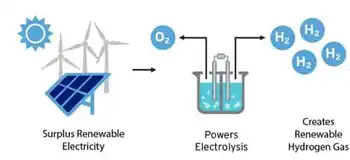
Most of the ADNOC exports are expected to be blue hydrogen, created by converting natural gas and capturing the carbon dioxide by-product that can enable using CO2 to generate electricity approaches, according to Bloomberg.

The sources said that the Abu Dhabi-based company will raise its production of hydrogen by expanding an oil-processing plant and the Borouge petrochemical facility at the Ruwais industrial hub, supporting a sustainable electric planet vision, as the extra hydrogen will be used for an ammonia facility planned with Fertiglobe.

Abu Dhabi also plans to develop green hydrogen, similar to clean hydrogen in Canada initiatives, which is generated from renewable energy such as solar power.

Noteworthy to mention, in May 2021, ADNOC announced that it will construct a world-scale blue ammonia production facility in Ruwais in Abu Dhabi to contribute to the UAE's efforts to create local and international hydrogen value chains.


Related News

View more

BC announces grid development, job creation

BC Hydro Power Pathway accelerates electrification with clean energy investments, new transmission lines, upgraded substations, and renewable projects like wind and solar, strengthening the grid, supporting decarbonization, and creating jobs across British Columbia's growing economy.


Key Points

A $36B, 10-year BC Hydro plan to expand clean power infrastructure, accelerate electrification, and support jobs.

✅ $36B for new lines, substations, dam upgrades, and distribution

✅ Supports 10,500-12,500 jobs per year across B.C.

✅ Adds wind and solar, leveraging hydro to balance renewables


BC Hydro is gearing up for a decade of extensive construction to enhance British Columbia's electrical system, supporting a burgeoning clean economy and community growth while generating new employment opportunities.

Premier David Eby emphasized the necessity of expanding the electrical system for industrial growth, residential needs, and future advancements. He highlighted the role of clean, affordable energy in reducing pollution, securing well-paying jobs, and fostering economic growth.

At the B.C. Natural Resources Forum in Prince George, Premier Eby unveiled a $36-billion investment plan for infrastructure projects in communities and regions and green energy solutions to provide clean, affordable electricity for future generations.

The Power Pathway: Building BC’s Energy Future, BC Hydro’s revised 10-year capital plan, involves nearly $36 billion in investments across the province from 2024-25 to 2033-34. This marks a 50% increase from the previous plan of $24 billion and includes a substantial rise in electrification and emissions-reduction projects (nearly $10 billion, up from $1 billion).

These upcoming construction projects are expected to support approximately 10,500 to 12,500 jobs annually. The plan is set to bolster and sustain BC Hydro’s capital investments as significant projects like Site C are near completion.

The plan addresses the increasing demand for electricity due to population and housing growth, industrial development, such as a major hydrogen project, and the transition from fossil fuels to clean electricity. Key projects include constructing new high-voltage transmission lines from Prince George to Terrace, building or expanding substations in high-growth areas, and upgrading dams and generating facilities for enhanced safety and efficiency.

Minister of Energy, Mines, and Low Carbon Innovation Josie Osborne stated that this plan aims to build a clean energy future and support EV charging expansion while creating construction jobs. With BC Hydro’s capital plan allocating almost $4 billion annually for the next decade, it will drive economic growth and ensure access to clean, affordable electricity.

BC Hydro aims to add new clean, renewable energy sources like wind and solar, while acknowledging power supply challenges that must be managed as capacity grows. B.C.’s hydroelectric dams, functioning as batteries, enable the integration of intermittent renewables into the grid, providing reliable backup.

Chris O’Riley, president and CEO of BC Hydro, said the grid is one of the world’s cleanest. The new $36 billion capital plan encompasses investments in generation assets, large transmission infrastructure, and local distribution networks.

In partnership with BC Hydro, Premier Eby also announced a new streamlined approval process to expedite electrification for high-demand industries and support job creation, complementing measures like the BC Hydro rebate and B.C. Affordability Credit that help households.

Minister of Environment and Climate Change Strategy George Heyman highlighted the importance of rapid electrification in collaboration with the private sector to achieve CleanBC climate goals by 2030, including corridor charging via the BC's Electric Highway, and maintain the competitiveness of B.C. industries. The new process will streamline approvals for industrial electrification projects, enhancing efficiency and funding certainty.


Related News

View more

Starting Texas Schools After Labor Day: Power Grid and Cost Benefits?

Texas After-Labor Day School Start could ease ERCOT's power grid strain by shifting peak demand, lowering air-conditioning loads in schools, improving grid reliability, reducing electricity costs, and curbing emissions during extreme heat the summer months.


Key Points

A proposed calendar shift to start school after Labor Day to lower ERCOT peak demand, costs, and grid risk.

✅ Cuts school HVAC loads during peak summer heat

✅ Lowers costly peaker plant use and electricity rates

✅ Requires calendar changes, testing and activities shifts


As Texas faces increasing demands on its power grid, a new proposal is gaining traction: starting the school year after Labor Day. This idea, reported by the Dallas News, suggests that delaying the start of the academic year could help alleviate some of the pressure on the state’s electricity grid during the peak summer months, potentially leading to both grid stability and financial savings. Here’s an in-depth look at how this proposed change could impact Texas’s energy landscape and education system.

The Context of Power Grid Strain

Texas's power grid, operated by the Electric Reliability Council of Texas (ERCOT), has faced significant challenges in recent years. Extreme weather events, record-breaking temperatures, and high energy demand have strained the grid, and some analyses argue that climate change, not demand is the biggest challenge today, leading to concerns about reliability and stability. The summer months are particularly taxing, as the demand for air conditioning surges, often pushing the grid to its limits.

In this context, the idea of adjusting the school calendar to start after Labor Day has been proposed as a potential strategy to help manage electricity demand. By delaying the start of school, proponents argue that it could reduce the load on the power grid during peak usage periods, thereby easing some of the stress on energy resources.

Potential Benefits for the Power Grid

The concept of delaying the school year is rooted in the potential benefits for the power grid. During the hottest months of summer, the demand for electricity often spikes as families use air conditioning to stay cool, and utilities warn to prepare for blackouts as summer takes hold. School buildings, typically large and energy-intensive facilities, contribute significantly to this demand when they are in operation.

Starting school later could help reduce this peak demand, as schools would be closed during the hottest months when the grid is under the most pressure. This reduction in demand could help prevent grid overloads and reduce the risk of power outages, at a time when longer, more frequent outages are afflicting the U.S. power grid, ultimately contributing to a more stable and reliable electricity supply.

Additionally, a decrease in peak demand could help lower electricity costs. Power plants, particularly those that are less efficient and more expensive to operate, are often brought online during periods of high demand. By reducing the peak load, the state could potentially minimize the need for these costly power sources, leading to lower overall energy costs.

Financial and Environmental Considerations

The financial implications of starting school after Labor Day extend beyond just the power grid. By reducing energy consumption during peak periods, the state could see significant savings on electricity costs. This, in turn, could lead to lower utility bills for schools, businesses, and residents alike, a meaningful relief as millions risk electricity shut-offs during summer heat.

Moreover, reducing the demand for electricity from fossil fuel sources can have positive environmental impacts. Lower peak demand may reduce the reliance on less environmentally friendly energy sources, and aligns with calls to invest in a smarter electricity infrastructure nationwide, thereby decreasing greenhouse gas emissions and contributing to overall environmental sustainability.

Challenges and Trade-offs

While the proposal offers potential benefits, it also comes with challenges and trade-offs. Adjusting the school calendar would require significant changes to the academic schedule, potentially affecting extracurricular activities, summer programs, and family plans, and comparisons to California's reliability challenges underscore the complexity. Additionally, there could be resistance from various stakeholders, including parents, educators, and students, who are accustomed to the current school calendar.

There are also logistical considerations to address, such as how a delayed start might impact standardized testing schedules and the academic calendar for higher education institutions. These factors would need to be carefully evaluated to ensure that the proposed changes do not adversely affect educational outcomes or create unintended consequences.

Looking Ahead

The idea of starting Texas schools after Labor Day represents an innovative approach to addressing the challenges facing the state’s power grid. By potentially reducing peak demand and lowering energy costs, and alongside efforts to connect Texas's grid to the rest of the nation, this proposal could contribute to greater grid stability and financial savings. However, careful consideration and planning will be essential to navigate the complexities of altering the school calendar and to ensure that the benefits outweigh the challenges.

As Texas continues to explore solutions for managing its power grid and energy resources, the proposal to shift the school year schedule provides an intriguing possibility. It reflects a broader trend of seeking creative and multifaceted approaches to balancing energy demand, environmental sustainability, and public needs.

In conclusion, starting schools after Labor Day could offer tangible benefits for Texas’s power grid and financial well-being. As discussions on this proposal advance, it will be important to weigh all factors and engage stakeholders to ensure a successful and equitable implementation.


Related News

View more

Sign Up for Electricity Forum’s Newsletter

Stay informed with our FREE Newsletter — get the latest news, breakthrough technologies, and expert insights, delivered straight to your inbox.

Electricity Today T&D Magazine Subscribe for FREE

Stay informed with the latest T&D policies and technologies.
  • Timely insights from industry experts
  • Practical solutions T&D engineers
  • Free access to every issue

Download the 2025 Electrical Training Catalog

Explore 50+ live, expert-led electrical training courses –

  • Interactive
  • Flexible
  • CEU-cerified