By However, engineering and structural woes have pushed back the restart date, from 2001 to either late this year or early 2003. The nuclear plant has the capacity to produce 2,000 MW, or enough power for a city of two million, and that would allev


Arc Flash Training CSA Z462 - Electrical Safety Essentials

Our customized live online or in‑person group training can be delivered to your staff at your location.

  • Live Online
  • 6 hours Instructor-led
  • Group Training Available
Regular Price:
$249
Coupon Price:
$199
Reserve Your Seat Today
-- The Ontario government's failure to move full-steam ahead in the restructuring of its $10-billion electricity market is part of the reason there's a strain on the system and warnings of rolling blackouts, industry observers say.

"I think it's the political uncertainty that's caused the problems," said John McNeil, a principal with Barker Dunn & Rossi, an energy consultancy in Toronto. "It's regulatory delay and obfuscation."

"It's not deregulation that's the problem -- it's the indecisive deregulation," added Tom Adams, executive director of Energy Probe, an industry watchdog. "The problem is going halfway with these initiatives and dithering about them."

The two men say uncertainty has emerged over the following issues: the two-year delay in opening Ontario's power market to competition, originally slated for May, 2000, but pushed back to May, 2002; change in policy on the privatization of Hydro One Inc.; and lack of progress on selling assets of Ontario Power Generation Inc., the Crown-owned utility.

This confusion, they argue, has prompted utilities to rethink their strategies about building plants in the province.

"I talk to [U.S. companies] that want to come into this market but they don't see the government make any decisions, so they are going to other markets," said one Bay Street financier who did not want to be named.

Only one major power plant is in the offing -- a 500 megawatt (MW) generator in the Sarnia, Ont., area, which is scheduled to come on line in the fall. TransAlta Corp. got the project rolling, but the Alberta utility -- which warned last year it wouldn't invest another cent in Ontario unless the situation surrounding Hydro One was settled -- has sold a 50% stake in the plant to Epcor Corp.

"If we continued with the restructuring, we'd have much more certainty, much more investment and much better generation reserves," Mr. McNeil said. "The more interference we have from the politicians, the less the generation we are going to have."

This lack of generation reserve forced the Independent Electricity Market Operator (IMO) to issue a "power warning" on Monday, saying hydro consumption had to be cut back or, if necessary, it would be forced to undertake rolling blackouts, as California did earlier this decade. The strain on the power system was due to a brutal heat wave that gripped most of Ontario, sending temperatures to the mid-30s.

The power warning was still in effect until late last night. The price of power shot up again yesterday, hitting a high of $211.55 a megawatt hour (MwH) or about seven times the average price since last May.

Jan Carr, managing director of Barker Dunn & Rossi, said the warning about rolling blackouts would have been issued even if there reforms were not undertaken and the old Ontario Hydro monopoly remained in place.

"What we are talking about is physics," he said. "There's exactly the same number of consumers, they are using the same amount of power and exactly the same number of suppliers, and the same number of generators and located in the same places. Now what difference does market structure make in terms of brownouts and blackouts. Nothing."

The other factor at play, observers say, is the failure by Ontario Power Generation to get its Pickering A nuclear plant up and running. The IMO, in its original forecasts, expected Pickering to be up and running when the Ontario market opened its doors to competition last May.

Related News

Electricity Shut-Offs in a Pandemic: How COVID-19 Leads to Energy Insecurity, Burdensome Bills

COVID-19 Energy Burden drives higher electricity bills as income falls, intensifying energy poverty, utility shut-offs, and affordability risks for low-income households; policy moratoriums, bill relief, and efficiency upgrades are vital responses.


Key Points

The COVID-19 energy burden is the rising share of income spent on energy as bills increase and earnings decline.

✅ Rising home demand and lost wages increase energy cost share.

✅ Mandated shut-off moratoriums and reconnections protect health.

✅ Fund assistance, efficiency, and solar for LMI households.


I have asthma. It’s a private piece of medical information that I don’t normally share with people, but it makes the potential risks associated with exposure to the coronavirus all the more dangerous for me. But I’m not alone. 107 million people in the U.S. have pre-existing medical conditions like asthma and heart disease; the same pre-existing conditions that elevate their risk of facing a life-threatening situation were we to contract COVID-19. There are, however, tens of millions more house-bound Americans with a condition that is likely to be exacerbated by COVID-19: The energy burden.

The energy burden is a different kind of pre-existing condition:
In the last four weeks, 22 million people filed for unemployment. Millions of people will not have steady income (or the healthcare tied to it) to pay rent and utility bills for the foreseeable future which means that thousands, possibly millions of home-bound Americans will struggle to pay for energy.

Your energy burden is the amount of your monthly income that goes to paying for energy, like your monthly electric bill. So, when household energy use increases or income decreases, your energy burden rises. The energy burden is not a symptom of the pandemic and the economic downturn; it is more like a pre-existing condition for many Americans.

Before the coronavirus outbreak, I shared a few maps that showed how expensive electricity is for some. The energy burden in most pronounced in places already struggling economically, like in Appalachia, where residents in some counties must put more than 30 percent of their income toward their electric bills, and in the Midwest where states such as Michigan have some families spending more than 1/5 of their income on energy bills. The tragic facts are that US families living below the poverty line are far more likely to also be suffering from their energy burden.

But like other pre-existing conditions, the impacts of the coronavirus pandemic are exacerbating the underlying problems afflicting communities across the country.

Critical responses to minimize the spread of COVID-19 are social distancing, washing hands frequently, covering our faces with masks and staying at home. More time at home for most will drive up energy bills, and not by a little. Estimates on how much electricity demand during COVID-19 will increase vary but I’ve seen estimates as high as a 20% increase on average. For some families that’s a bag of groceries or a refill on prescription medication.

What happens when the power gets turned off?
Under normal conditions, if you cannot pay your electric bill your electricity can get turned off. This can have devastating consequences. Most states have protections for health and medical reasons and some states have protections during extreme heat or cold weather. But enforcement of those protections can vary by utility service area and place unnecessary burdens on the customer.

UCS
Only Florida has no protections of any kind against utility shut-offs when health or medical reasons would merit protection against it. However, when it comes to protection against extreme heat, only a few states have mandatory protections based on temperature thresholds.

The NAACP has also pointed out that utilities have unceremoniously disconnected the power of millions of people, disproportionally African-American and Latinx households.

April tends to be a mild month for most of the country, but the South already had its first heat wave at the end of March. If this pandemic lasts into the summer, utility disconnects could become deadly, and efforts to prevent summer power outages will be even more critical to public health. In the summer, during extreme summer heat families can’t turn off the A/C and go to the movies if we are following public health measures and sheltering in place. Lots of families that don’t have or can’t afford to run A/C would otherwise gather at local community pools, beaches, or in cooling centers, but with parks, pools and community groups closed to prevent the virus’s spread, what will happen to these families in July or August?

But we won’t have to wait till the summer to see how families will be hard hit by falling behind on bills and losing power. Here are a few ways electricity disconnection policies cause people harm during the pandemic:

Loss of electricity during the COVID-19 pandemic means families will lose their ability to refrigerate essential food supplies.
Child abuse guidance discusses how unsanitary household conditions are a contributing factor to child protective services involvement. Unsanitary household conditions can include, for example, rotting food (which might happen if electricity is cut off).

HUD’s handbook on federally subsidized housing includes a chapter on termination, which says that lease agreements can be terminated for repeated minor infractions including failing to pay utilities.
Airway machines used to treat respiratory ailments—pre-existing conditions in this pandemic—will not work. Our elderly neighbors in particular might rely on medicine that requires refrigeration or medical equipment that requires electricity. They too have fallen victim to utility shut-offs even during the pandemic.

Empowering solutions are available today

Decisionmakers seeking solutions can look to implement utility shut off moratoriums as a good start. Good news is that many utilities have voluntarily taken action to that effect, and New Jersey and New York have suspended shut-offs, one of the best trackers on who is taking what action has been assembled by Energy Policy Institute.

But voluntary actions do not always provide comprehensive protection, and they certainly have not been universally adopted across the country. Some utilities are waiving fees as relief measures, and some moratoriums only apply to customers directly affected by COVID-19, which will place additional onerous red tape on households that are stricken and perhaps unable to access testing. Others might only be an extension of standard medical shut off protections. Moratoriums put in place by voluntary action can also be revoked or lifted by voluntary action, which does not provide any sense of certainty to people struggling to make ends meet.

This is why the US needs mandatory moratoriums on all utility disconnections. These normally would be rendered at the state level, either by a regulatory commission, legislative act, or even an emergency executive order. But the inconsistent leadership among states in response to the COVID-19 crisis suggests that Congressional action is needed to ensure that all vulnerable utility customers are protected. That’s exactly what a coalition of organizations, including UCS, is calling for in future federal aid legislation. UCS has called for a national moratorium on utility shut-offs.

And let’s be clear, preventing new shut-offs isn’t enough. Cutting power off at residence during a pandemic is not good public policy. People who are without electricity should have it restored so residents can safely shelter in place and help flatten the curve. So far, only Colorado and Wisconsin’s leadership has taken this option.

Addressing the root causes of energy poverty
Preventing shut-offs is a good first step, but the increased bill charges will nevertheless place greater economic pressure on an incalculable number of families. Addressing the root of the problem (energy affordability) must be prioritized when we begin to recover from the health and economic ramifications of the COVID-19 pandemic.

One way policymakers can do that is to forgive outstanding balances on utility bills, perhaps with an eligibility cap based on income. Additional funds could be made available to those who are still struggling to pay their bills via capping bills, waiving late payment fees, automating payment plans or other protective measures that rightfully place consumers (particularly vulnerable consumers) at the center of any energy-related COVID-19 response. Low-and-moderate-income energy efficiency and solar programs should be funded as much as practically possible.

New infrastructure, particularly new construction that is slated for public housing, subsidized housing, or housing specifically marketed for low- and moderate-income families, should include smart thermostats, better insulation, and energy-efficient appliances.

Implementing these solutions may seem daunting, let us not forget that one of the best ways to ease people’s energy burden is to keep a utility’s overall energy costs low. That means state utility commissions must be vigilant in utility rate cases and fuel recovery cost dockets to protect people facing unfathomable economic pressures. Unscrupulous utilities have been known to hide unnecessary costs in our energy bills. Commissions and their staff are overwhelmed at this time, but they should be applying extra scrutiny during proceedings when utilities are recovering costs associated with delivering energy.

What might a utility try to get past the commission?
Well, residential demand is up, so for many people, bills will increase. However, wholesale electricity rates are low right now, in some cases at all-time lows. Why? Because industrial and commercial demand reductions (from social distancing at home) have more than offset residential demand increases. Overall US electricity demand is flat or declining, and supply/demand economics predicts that when demand decreases, prices decrease.

At the same time, natural gas prices have set record lows each month of this year and that’s a trend that is expected to hold true for a while.

Low demand plus low gas prices mean wholesale market prices are incredibly low. Utilities should be taking advantage of low market prices to ensure that they deliver electricity to customers at as low a cost as possible. Utilities must also NOT over-run coal plants uneconomically or lean on aging capacity despite disruptions in coal and nuclear that can invite brownouts because that will not only needlessly cost customers more, but it will also increase air pollution which will exacerbate respiratory issues and susceptibility to COVID-19, according to a recent study published by Harvard.


Related News

View more

Solar Plus Battery Storage Cheaper Than Conventional Power in Germany

Germany Solar-Plus-Storage Cost Parity signals grid parity as solar power with battery storage undercuts conventional electricity. Falling LCOE, policy incentives, and economies of scale accelerate the energy transition and decarbonization across Germany's power market.


Key Points

The point at which solar power with battery storage is cheaper than conventional grid electricity across Germany.

✅ Lower LCOE from tech advances and economies of scale

✅ EEG incentives and streamlined installs cut total costs

✅ Enhances energy security, reduces fossil fuel dependence


Germany, a global leader in renewable energy adoption, with clean energy supplying about half of its electricity in recent years, has reached a significant milestone: the cost of solar power combined with battery storage has now fallen below that of conventional electricity sources. This development marks a transformative shift in the energy landscape, showcasing the increasing affordability and competitiveness of renewable energy technologies and reinforcing Germany’s position as a pioneer in the transition to sustainable energy.

The decline in costs for solar power paired with battery storage represents a breakthrough in Germany’s energy sector, especially amid the recent solar power boost during the energy crisis, where the transition from traditional fossil fuels to cleaner alternatives has been a central focus. Historically, conventional power sources such as coal, natural gas, and nuclear energy have dominated electricity markets due to their established infrastructure and relatively stable pricing. However, the rapid advancements in solar technology and energy storage solutions are altering this dynamic, making renewable energy not only environmentally preferable but also economically advantageous.

Several factors contribute to the cost reduction of solar power with battery storage:

  1. Technological Advancements: The technology behind solar panels and battery storage systems has evolved significantly over recent years. Solar panel efficiency has improved, allowing for greater energy generation from smaller installations. Similarly, cheaper batteries have advanced, with reductions in cost and increases in energy density and lifespan. These improvements mean that solar installations can produce more electricity and store it more effectively, enhancing their economic viability.

  2. Economies of Scale: As demand for solar and battery storage systems has grown, manufacturers have scaled up production, leading to economies of scale. This scaling has driven down the cost of both solar panels and batteries, making them more affordable for consumers. As the market for these technologies expands, prices are expected to continue decreasing, further enhancing their competitiveness.

  3. Government Incentives and Policies: Germany’s commitment to renewable energy has been supported by robust government policies and incentives. The country’s Renewable Energy Sources Act (EEG) and other supportive measures, alongside efforts to remove barriers to PV in Berlin that could accelerate adoption, have provided financial incentives for the adoption of solar power and battery storage. These policies have encouraged investment in renewable technologies and facilitated their integration into the energy market, contributing to the overall reduction in costs.

  4. Falling Installation Costs: The cost of installing solar power systems and battery storage has decreased as the industry has matured. Advances in installation techniques, increased competition among service providers, and streamlined permitting processes have all contributed to lower installation costs. This reduction in upfront expenses has made solar with battery storage more accessible and financially attractive to both residential and commercial consumers.

The economic benefits of solar power with battery storage becoming cheaper than conventional power are substantial. For consumers, this shift translates into lower electricity bills and reduced reliance on fossil fuels. Solar installations with battery storage allow households and businesses to generate their own electricity, store it for use during times of low sunlight, and even sell excess power back to the grid, reflecting how solar is reshaping electricity prices in Northern Europe as markets adapt. This self-sufficiency reduces exposure to fluctuating energy prices and enhances energy security.

For the broader energy market, the decreasing cost of solar power with battery storage challenges the dominance of conventional power sources. As renewable energy becomes more cost-effective, it creates pressure on traditional energy providers to adapt and invest in cleaner technologies, including responses to instances of negative electricity prices during renewable surpluses. This shift can accelerate the transition to a low-carbon energy system and contribute to the reduction of greenhouse gas emissions.

Germany’s achievement also has implications for global energy markets. The country’s success in making solar with battery storage cheaper than conventional power serves as a model for other nations pursuing similar energy transitions. As the cost of renewable technologies continues to decline, other countries can leverage these advancements to enhance their own energy systems, reduce carbon emissions, and achieve energy independence amid over 30% of global electricity now from renewables trends worldwide.

The impact of this development extends beyond economics. It represents a significant step forward in addressing climate change and promoting sustainability. By reducing the cost of renewable energy technologies, Germany is accelerating the shift towards a cleaner and more resilient energy system. This progress aligns with the country’s ambitious climate goals and reinforces its role as a leader in global efforts to combat climate change.

Looking ahead, several challenges remain. The integration of renewable energy into existing energy infrastructure, grid stability, and the management of energy storage are all areas that require continued innovation and investment. However, the decreasing cost of solar power with battery storage provides a strong foundation for addressing these challenges and advancing the transition to a sustainable energy future.

In conclusion, the fact that solar power with battery storage in Germany has become cheaper than conventional power is a groundbreaking development with wide-ranging implications. It underscores the technological advancements, economic benefits, and environmental gains associated with renewable energy technologies. As Germany continues to lead the way in clean energy adoption, this achievement highlights the potential for renewable energy to drive global change and reshape the future of energy.


Related News

View more

Expanding EV Charging Infrastructure in Calgary's Apartments and Condos

Calgary EV Charging for Apartments and Condos streamlines permitting for multi-unit dwellings, guiding condo boards and property managers to install EV charging stations, expand infrastructure, and advance sustainability with cleaner air and lower emissions.


Key Points

A Calgary program simplifying permits and guidance to add EV charging stations in multi-unit residential buildings.

✅ Streamlined permitting for condo boards and property managers

✅ Technical assistance to install EV charging stations

✅ Boosts property value and reduces emissions citywide


As the demand for electric vehicles (EVs) continues to rise, and as national EV targets gain traction, Calgary is taking significant strides to enhance its charging infrastructure, particularly in apartment and condominium complexes. A recent initiative has been introduced to facilitate the installation of EV charging stations in these residential buildings, addressing a critical barrier for potential EV owners living in multi-unit dwellings.

The Growing EV Market

Electric vehicles are no longer a niche market; they have become a mainstream option for many consumers. As of late 2023, EV sales have surged, with projections indicating that the trend will only continue. However, a significant challenge remains for those who live in apartments and condos, where high-rise charging can be a mixed experience and the lack of accessible charging stations persists. Unlike homeowners with garages, residents of multi-unit dwellings often rely on public charging infrastructure, which can be inconvenient and limiting.

The New Initiative

In response to this growing concern, the City of Calgary has launched a new initiative aimed at easing the process of installing EV chargers in apartment and condo buildings. This program is designed to streamline the permitting process, reduce red tape, and provide clear guidelines for property managers and condo boards, similar to strata installation rules adopted in other jurisdictions to ease installations.

The initiative includes various measures, such as providing technical assistance and resources to building owners and managers. By simplifying the installation process, the city hopes to encourage more residential complexes to adopt EV charging stations. The initiative also emphasizes practical support, such as providing technical assistance, including condo retrofit guidance, and resources to building owners and managers. This is a significant step towards creating an eco-friendly urban environment and meeting the growing demand for sustainable transportation options.

Benefits of the Initiative

The benefits of this initiative are manifold. Firstly, it supports Calgary's broader climate goals by promoting electric vehicle adoption. As more residents gain access to charging stations, the city can expect a corresponding reduction in greenhouse gas emissions, contributing to cleaner air and a healthier urban environment.

Additionally, providing charging infrastructure can enhance property values. Buildings equipped with EV chargers become more attractive to potential tenants and buyers who prioritize sustainability. As the market for electric vehicles expands, properties that offer charging facilities are likely to see increased demand, making them a sound investment for landlords and developers.

Overcoming Challenges

While this initiative marks a positive step forward, there are still challenges to address. Property managers and condo boards may face initial resistance from residents who are uncertain about the costs associated with installing and maintaining EV chargers, though rebates for home and workplace charging can offset upfront expenses and ease adoption. Clear communication about the long-term benefits, including potential energy savings and the value of sustainable living, will be essential in overcoming these hurdles.

Furthermore, the city will need to ensure that the installation of EV chargers is done in a way that is equitable and inclusive. This means considering the needs of all residents, including those who may not own an electric vehicle but would benefit from a greener community.

Looking Ahead

As Calgary moves forward with this initiative, it sets a precedent for other cities, as seen in Vancouver's EV-ready policy, facing similar challenges in promoting electric vehicle adoption. By prioritizing charging infrastructure in multi-unit residential buildings, Calgary is taking important steps towards a more sustainable future.

In conclusion, the push for EV charging stations in apartments and condos is a critical move for Calgary. It reflects a growing recognition of the role that urban planning and infrastructure play in supporting the transition to electric vehicles, which complements corridor networks like the BC Electric Highway for intercity travel. With the right support and resources, Calgary can pave the way for a greener, more sustainable urban landscape that benefits all its residents. As the city embraces this change, it will undoubtedly contribute to a broader shift towards sustainable living, ultimately helping to combat climate change and improve the quality of life for all Calgarians.


Related News

View more

Baltic States Disconnect from Russian Power Grid, Join EU System

Baltic States EU Grid Synchronization strengthens energy independence and electricity security, ending IPS/UPS reliance. Backed by interconnectors like LitPol Link, NordBalt, and Estlink, it aligns with NATO interests and safeguards against subsea infrastructure threats.


Key Points

A shift by Estonia, Latvia, and Lithuania to join the EU grid, boosting energy security and reducing Russian leverage.

✅ Synchronized with EU grid on Feb 9, 2025 after islanding tests.

✅ New interconnectors: LitPol Link, NordBalt, Estlink upgrades.

✅ Reduces IPS/UPS risks; bolsters NATO and critical infrastructure.


In a landmark move towards greater energy independence and European integration, the Baltic nations of Estonia, Latvia, and Lithuania have officially disconnected from Russia's electricity grid, a path also seen in Ukraine's rapid grid link to the European system. This decisive action, completed in February 2025, not only ends decades of reliance on Russian energy but also enhances the region's energy security and aligns with broader geopolitical shifts.

Historical Context and Strategic Shift

Historically, the Baltic states were integrated into the Russian-controlled IPS/UPS power grid, a legacy of their Soviet past. However, in recent years, these nations have sought to extricate themselves from Russian influence, aiming to synchronize their power systems with the European Union (EU) grid. This transition gained urgency following Russia's annexation of Crimea in 2014 and further intensified after the invasion of Ukraine in 2022, as demonstrated by Russian strikes on Ukraine's grid that underscored energy vulnerability.

The Disconnection Process

The process culminated on February 8, 2025, when Estonia, Latvia, and Lithuania severed their electrical ties with Russia. For approximately 24 hours, the Baltic states operated in isolation, conducting rigorous tests to ensure system stability and resilience, echoing winter grid protection efforts seen elsewhere. On February 9, they successfully synchronized with the EU's continental power grid, marking a historic shift towards European energy integration.

Geopolitical and Security Implications

This transition holds significant geopolitical weight. By disconnecting from Russia's power grid, the Baltic states reduce potential leverage that Russia could exert through energy supplies. The move also aligns with NATO's strategic interests, enhancing the security of critical infrastructure in the region, amid concerns about Russian hacking of US utilities that highlight cyber risks.

Economic and Technical Challenges

The shift was not without challenges. The Baltic states had to invest heavily in infrastructure to ensure compatibility with the EU grid and navigate regional market pressures such as a Nordic grid blockade affecting transmission capacity. This included constructing new interconnectors and upgrading existing facilities. For instance, the LitPol Link between Lithuania and Poland, the NordBalt cable connecting Lithuania and Sweden, and the Estlink between Estonia and Finland were crucial in facilitating this transition.

Impact on Kaliningrad

The disconnection has left Russia's Kaliningrad exclave isolated from the Russian power grid, relying solely on imports from Lithuania. While Russia claims to have measures in place to maintain power stability in the region, the long-term implications remain uncertain.

Ongoing Security Concerns

The Baltic Sea region has experienced heightened security concerns, particularly regarding subsea cables and pipelines. Increased incidents of damage to these infrastructures have raised alarms about potential sabotage, including a Finland cable damage investigation into a suspected Russian-linked vessel. Authorities continue to investigate these incidents, emphasizing the need for robust protection of critical energy infrastructure.

The successful disconnection and synchronization represent a significant step in the Baltic states' journey towards full integration with European energy markets. This move is expected to enhance energy security, promote economic growth, and solidify geopolitical ties with the EU and NATO. As the region continues to modernize its energy infrastructure, ongoing vigilance against security threats will be paramount, as recent missile and drone attacks on Kyiv's grid demonstrate.

The Baltic states' decision to disconnect from Russia's power grid and synchronize with the European energy system is a pivotal moment in their post-Soviet transformation. This transition not only signifies a break from historical dependencies but also reinforces their commitment to European integration and collective security. As these nations continue to navigate complex geopolitical landscapes, their strides towards energy independence serve as a testament to their resilience and strategic vision.


Related News

View more

Ford Threatens to Cut U.S. Electricity Exports Amid Trade Tensions

Ontario Electricity Export Retaliation signals tariff-fueled trade tensions as Doug Ford leverages cross-border energy flows to the U.S., risking grid reliability, higher power prices, and escalating a Canada-U.S. trade war over protectionist policies.


Key Points

A policy threat by Ontario to cut power exports to U.S. states in response to tariffs, leveraging grid dependence.

✅ Powers about 1.5M U.S. homes in NY, MI, and MN

✅ Risks price spikes, shortages, and legal challenges

✅ Part of Canada's CAD 30B retaliatory tariff package


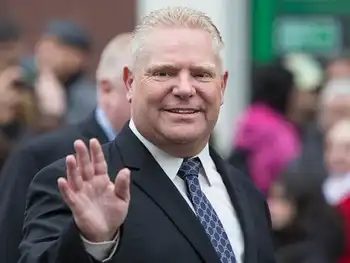
In a move that underscores the escalating trade tensions between Canada and the United States, Ontario Premier Doug Ford has threatened to halt electricity exports to U.S. states in retaliation for the Trump administration's recent tariffs. This bold stance highlights Ontario's significant role in powering regions across the U.S. and serves as a warning about the potential consequences of trade disputes.

The Leverage of Ontario's Electricity

Ontario's electricity exports are not merely supplementary; they are essential to the energy supply of several U.S. states. The province provides power to approximately 1.5 million homes in states such as New York, Michigan, and Minnesota, even as it eyes energy independence through domestic initiatives. This substantial export positions Ontario as a key player in the regional energy market, giving the province considerable leverage in trade negotiations.

Premier Ford's Ultimatum

Responding to the Trump administration's imposition of a 25% tariff on Canadian imports, Premier Ford, following a Washington meeting, declared, "If they want to play tough, we can play tough." He further emphasized his readiness to act, stating, "I’ll cut them off with a smile on my face." This rhetoric underscores Ontario's willingness to use its energy exports as a bargaining chip in the trade dispute.

Economic and Political Ramifications

The potential cessation of electricity exports to the U.S. would have profound economic implications. U.S. states that rely on Ontario's power could face energy shortages, leading to increased prices, particularly New York energy prices, and potential disruptions. Such an action would not only strain the energy supply but also escalate political tensions, potentially affecting other areas of bilateral cooperation.

Canada's Retaliatory Measures

Ontario's threat is part of a broader Canadian strategy to counteract U.S. tariffs. Prime Minister Justin Trudeau has announced retaliatory tariffs on U.S. goods worth approximately CAD 30 billion, targeting products such as food, textiles, and furniture. These measures aim to pressure the U.S. administration into reconsidering its trade policies.

The Risk of Escalation

While leveraging energy exports provides Ontario with a potent tool, it also carries significant risks, as experts warn against cutting Quebec's energy exports amid tariff tensions. Such actions could lead to a full-blown trade war, with both countries imposing tariffs and export restrictions. The resulting economic fallout could affect various sectors, from manufacturing to agriculture, and lead to job losses and increased consumer prices.

International Trade Relations

The dispute also raises questions about the stability of international trade agreements and the rules governing cross-border energy transactions. Both Canada and the U.S. are signatories to various trade agreements that promote the free flow of goods and services, including energy. Actions like export bans could violate these agreements and lead to legal challenges.

Public Sentiment and Nationalism

The trade tensions have sparked a surge in Canadian nationalism, with public sentiment largely supporting tariffs on energy and minerals as retaliatory measures. This sentiment is evident in actions such as boycotting American products and expressing discontent at public events. However, while national pride is a unifying force, it does not mitigate the potential economic hardships that may result from prolonged trade disputes.

The Path Forward

Navigating this complex situation requires careful diplomacy and negotiation. Both Canada and the U.S. must weigh the benefits of trade against the potential costs of escalating tensions. Engaging in dialogue, seeking compromise, and adhering to international trade laws are essential steps to prevent further deterioration of relations and to ensure the stability of both economies.

Ontario's threat to cut off electricity exports to the U.S. serves as a stark reminder of the interconnectedness of global trade and the potential consequences of protectionist policies. While such measures can be effective in drawing attention to grievances, they also risk significant economic and political fallout. As the situation develops, it will be crucial to monitor the responses of both governments and the impact on industries and consumers alike, including growing support for Canadian energy projects among stakeholders.


Related News

View more

Hydro One stock has too much political risk to recommend, Industrial Alliance says

Hydro One Avista merger faces regulatory scrutiny in Washington, Oregon, and Idaho, as political risk outweighs defensive utilities fundamentals like stable cash flow, rate base growth, EPS outlook, and a near 5% dividend yield.


Key Points

A planned Hydro One-Avista acquisition awaiting key state approvals amid elevated political and regulatory risk.

✅ Hold rating, $24 price target, 28.1% implied return

✅ EPS forecast: $1.27 in 2018; $1.38 in 2019

✅ Defensive utility: stable cash flow, 4-6% rate base growth


A seemingly positive development for Hydro One is overshadowed by ongoing political and regulatory risk, as seen after the CEO and board ouster, Industrial Alliance Securities analyst Jeremy Rosenfield says.

On October 4, staff from the Washington Utilities and Transportation Commission filed updated testimony in support of the merger of Hydro One and natural gas distributor Avista, which had previously received U.S. antitrust clearance from federal authorities.

The merger, which was announced in July of 2017 has received the green light from federal and key states, with Washington, Oregon and Idaho being exceptions, though the companies would later seek reconsideration from U.S. regulators in the process.

But Rosenfield says even though decisions from Oregon and Idaho are expected by December, there are still too many unknowns about Hydro One to recommend investors jump into the stock.


Hydro One stock defensive but risky

“We continue to view Hydro One as a fundamentally defensive investment, underpinned by (1) stable earnings and cash flows from its regulated utility businesses (2) healthy organic rate base and earning growth (4-6%/year through 2022) and (3) an attractive dividend (~5% yield, 70-80% target payout),” the analyst says. “In the meantime, and ahead of key regulatory approvals in the AVA transaction, we continue to see heightened political/regulatory risk as an overhand on the stock, outweighing Hydro One’s fundamentals in the near term.”

In a research update to clients today, Rosenfield maintained his “Hold” rating and one year price target of $24.00 on Hydro One, implying a return of 28.1 per cent at the time of publication.

Rosenfield thinks Hydro One will generate EPS of $1.27 per share in fiscal 2018, even though its Q2 profit plunged 23% as electricity revenue fell. He expects that number will improve to EPS of $1.38 a share the following year.


Related News

View more

Sign Up for Electricity Forum’s Newsletter

Stay informed with our FREE Newsletter — get the latest news, breakthrough technologies, and expert insights, delivered straight to your inbox.

Electricity Today T&D Magazine Subscribe for FREE

Stay informed with the latest T&D policies and technologies.
  • Timely insights from industry experts
  • Practical solutions T&D engineers
  • Free access to every issue

Live Online & In-person Group Training

Advantages To Instructor-Led Training – Instructor-Led Course, Customized Training, Multiple Locations, Economical, CEU Credits, Course Discounts.

Request For Quotation

Whether you would prefer Live Online or In-Person instruction, our electrical training courses can be tailored to meet your company's specific requirements and delivered to your employees in one location or at various locations.