AI Integration
Utility Wildfire Mitigation Plans for Grid Risk Control
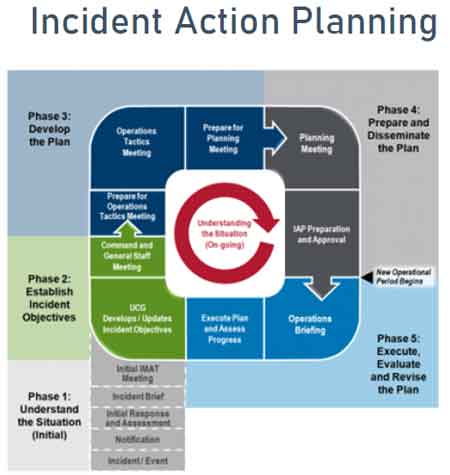
Utility wildfire mitigation plans define how utilities translate risk conditions into coordinated operational actions using ICS, incident action planning, resource control, and situational awareness to reduce ignition risk and maintain grid reliability during wildfire events.
Utility wildfire mitigation plans determine how utilities act when wildfire risk conditions exceed normal operating thresholds. These plans are not procedural references. They function as real-time control systems that translate environmental risk into operational decisions that directly affect ignition probability, system stability, and public safety.
The critical challenge is not identifying wildfire risk. It is coordinating decisions across control rooms, field crews, and external agencies…
View more
Latest AI Content
GenAI Copilots for Utility Engineering
GenAI copilots for utility engineering use AI waveform intelligence, system telemetry, and operational data to interpret grid conditions, identify developing faults, and support engineering decisions, enabling utilities to improve reliability, accelerate response, and manage increasingly complex electrical infrastructure.
Utility engineering has always depended on the ability to interpret electrical system behavior and act before instability becomes failure. As electrical infrastructure expands and becomes more interconnected, the volume of system data has exceeded the capacity of manual engineering review. GenAI copilots introduce a new operational capability by continuously interpreting waveform behavior, protection system activity, and asset condition data to support engineering…
View more
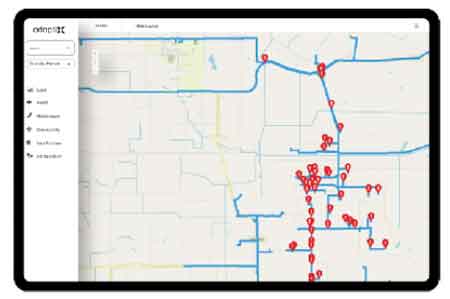
Grid Endpoint Monitoring for Operational Grid State Control
Grid endpoint monitoring turns AMI, GIS, and feeder data into a continuously verified grid model that exposes overloads, topology errors, voltage deviations, and outage risk before failure forces a reactive response.
In distribution operations, most failures are not sudden. They accumulate quietly at the edge of the network where instrumentation is thin, and models are outdated. When operators rely on partial SCADA visibility and static connectivity diagrams, restoration slows, switching confidence drops, and planning becomes defensive rather than predictive.
The practical question is not whether utilities have data. They do. The question is whether endpoint data can be trusted enough…
View more
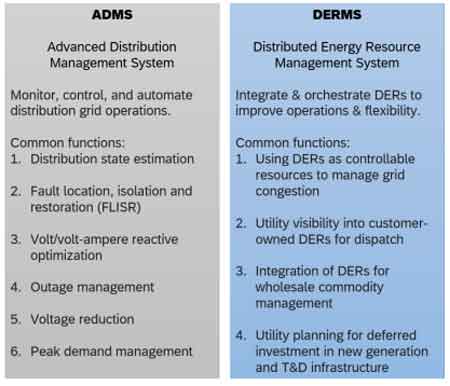
ADMS vs DERMS: Grid Control Authority and DER Coordination
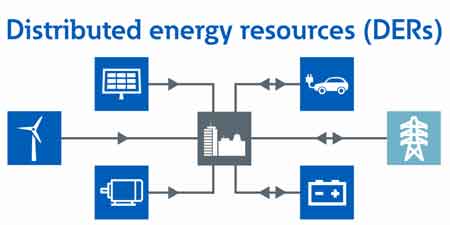
ADMS vs DERMS defines utility control hierarchy, where ADMS governs grid operations, and DERMS coordinates distributed energy resources, inverter dispatch, and voltage support to maintain reliability, stability, and flexible distribution system operation.
Utility distribution networks now operate with two distinct control layers that serve fundamentally different operational roles. ADMS controls the electrical network itself, maintaining switching authority, voltage stability, and feeder reliability. DERMS manages distributed energy resource behavior, coordinating inverter output, storage dispatch, and aggregated resource response to support grid operational objectives.
This distinction between ADMS and DERMS ensures utilities retain centralized operational authority over grid infrastructure while leveraging distributed…
View more
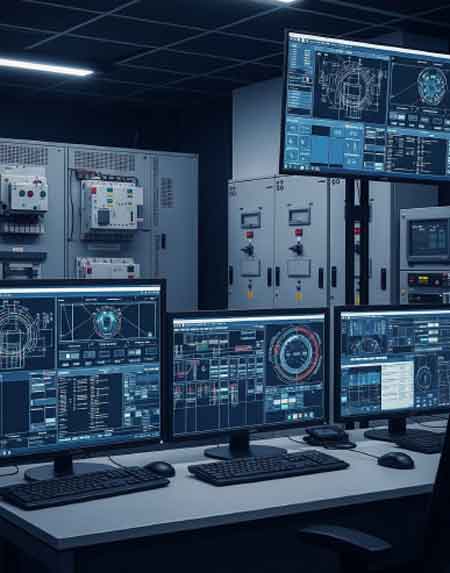
Automation in Cybersecurity for OT Response and Substation Security
Automation in cybersecurity enables utilities to execute OT device response actions automatically using SIEM and SOAR integration, improving substation security, configuration control, and credential management across multi vendor environments while reducing response time and operational risk.
Automation in cybersecurity is the process of automatically executing security actions across OT devices once a threat is detected, enabling utilities to move from detection to containment without manual coordination between IT and OT teams.
In most utilities, cybersecurity detection happens in the SOC, but execution happens in substations. That separation creates a delay. The SOC can detect a compromised credential, but it cannot…
View more
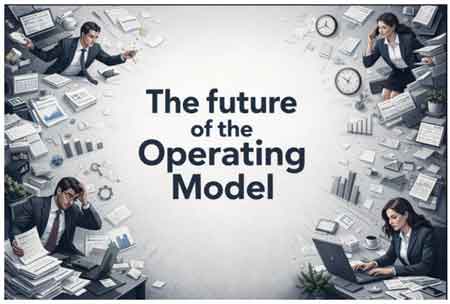
Designing the AI-Augmented Utility Workforce: Agentic AI in T&D Operations
AI-augmented utility workforce models use agentic AI copilots to support grid operations, outage response, asset monitoring, and workforce productivity. Engineers supervise digital agents that analyze system data, coordinate workflows, and accelerate decision-making in transmission and distribution.
Utility workforce constraints are no longer just a hiring problem—they are becoming an operational risk. As grid complexity accelerates, agentic AI introduces a new workforce layer: autonomous digital agents that monitor grid conditions, orchestrate workflows, and assist engineers in making faster, higher-confidence decisions. The consequence is a fundamental redesign of how transmission and distribution organizations operate, shifting responsibility from manual execution to AI-guided supervision…
View more
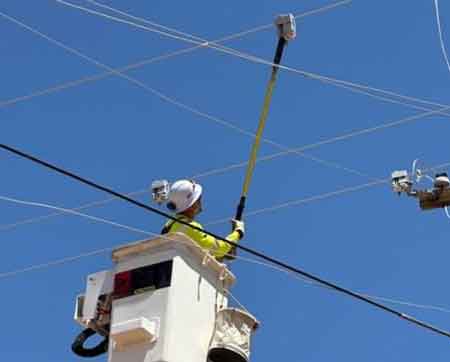
Overhead Power Line Sensors for Distribution Fault Intelligence
Overhead power line sensors deliver near real time fault current data, waveform capture, and feeder visibility for ADMS integration. Proper placement and governance reduce outage duration, prevent patrol misdirection, and protect high fire risk circuits.
Overhead power line sensors change how a utility answers a simple question: where did the fault occur? On long feeders with limited sectionalizing, that answer determines how far a crew must travel, how confidently operators can reclose, and how many customer minutes accumulate before restoration.
When a breaker trips at the substation, operators know that protection operated. What they do not know is the fault's…
View more
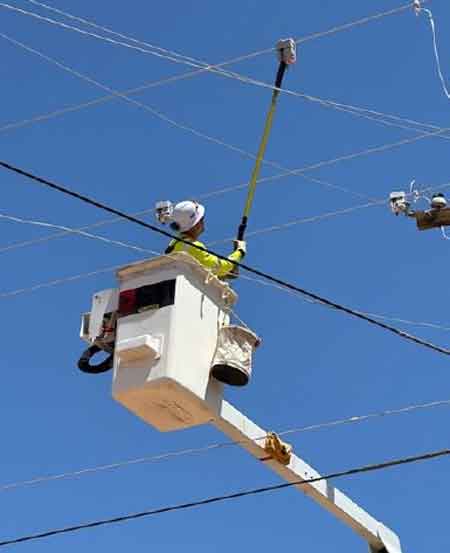
Real-Time Line Monitoring for Distribution Fault Visibility
Real-time line monitoring provides continuous visibility into fault current, waveforms, and power flow across distribution feeders, enabling faster restoration, ADMS model validation, and predictive analytics while reducing customer minutes of interruption in high-risk circuits.
Distribution systems are increasingly difficult to observe at the feeder level. Underground expansion, distributed energy resource backfeed, aging electromechanical protection, and wildfire exposure have widened the gap between breaker-level visibility and actual fault location. When operators cannot see beyond the substation, restoration becomes probabilistic rather than deterministic.
Breaker status alone does not explain where a fault occurred, how it propagated, or whether reverse power flow altered…
View more
AI News
AI Media

AI Articles From ET Magazine

Compatibility Issues with Generator-Backed Power Systems
Line-interactive uninterruptible power supply (UPS) systems play a vital role in maintaining seamless operation during power outages. Their integration with backup generators, however, can pose challenges regarding synchronization and power quality.
While both UPS systems and generators serve as safeguards against power disruptions, their integration isn't always seamless. Understanding these compatibility concerns is crucial for ensuring reliable backup power and avoiding damage to sensitive equipment.
Visit Our UPS Systems Study Course
Voltage and Frequency Stability
Generators, particularly smaller portable models, may not provide the same level of voltage and frequency stability as utility power. Line-interactive UPS units are designed…
View more
Line-Interactive UPS in Scalable IT Infrastructure
In the evolving landscape of IT infrastructure, reliable and flexible power solutions are paramount. Scalable line-interactive Uninterruptible Power Supply (UPS) systems provide an essential service to growing IT networks by adapting to increasing power demands without the need for complete system overhauls. This adaptability ensures that businesses can expand their IT capabilities while maintaining protection against power interruptions and fluctuations.
Visit Our UPS Systems Study Course
Scalability and Its Importance
Scalability in a UPS context refers to the ability to increase the UPS capacity to handle higher loads as demand grows. This is particularly crucial for businesses experiencing rapid…
View more
Securing Critical Infrastructure: The Role of Line-Interactive UPS
UPS (uninterruptible power supply) systems are essential for protecting critical infrastructure in healthcare and finance. They provide backup power in the event of a power outage, ensuring that sensitive equipment and data are protected. Line-interactive UPS systems are a popular choice for these applications, offering a number of advantages over other types of UPS systems.
Visit Our UPS Systems Study Course
Benefits of Line-Interactive UPS Systems
Line-interactive UPS systems offer a number of benefits over other types of UPS systems, including:
Lower cost: Line-interactive UPS systems are typically less expensive than other types of UPS systems, making them a…
View more
Battery Advancements and the Impact on Line-Interactive UPS
Advancements in Battery Technology and Their Impact on Line-Interactive UPS
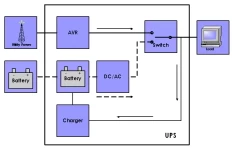
Line-interactive uninterruptible power supply (UPS) systems play a crucial role in ensuring power continuity for sensitive electronic equipment. Serving as a safeguard against power disruptions, these systems seamlessly switch to battery backup during outages, preventing data loss, equipment damage, and downtime. Recent advancements in battery technology, particularly lithium-ion batteries, have significantly influenced the capabilities and performance of line-interactive UPS systems.
Visit Our UPS Systems Study Course
Lithium-ion: The Emerging Choice
Lithium-ion (Li-ion) batteries, widely known for their use in laptops and electric vehicles, are increasingly finding their way into…
View more
FREE EF Electrical Training Catalog
Download our FREE Electrical Training Catalog and explore a full range of expert-led electrical training courses.

- Live online and in-person courses available
- Real-time instruction with Q&A from industry experts
- Flexible scheduling for your convenience
Sign Up for Electricity Forum’s AI Integration Newsletter
Stay informed with our FREE AI Integration Newsletter — get the latest news, breakthrough technologies, and expert insights, delivered straight to your inbox.