Grid Optimization, DER & Flexibility
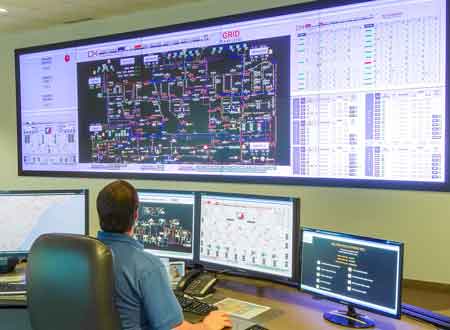
ADMS Enables Real-Time Control of Distribution Grid
ADMS is the real-time operational intelligence platform utilities use to monitor feeder conditions, validate power flow, predict constraint risk, and optimize switching, voltage, and DER coordination across the distribution grid.
ADMS provides real-time operational visibility
Distribution grid operation has shifted from passive monitoring to continuous operational intelligence. ADMS functions as the system of record for feeder state, switching configuration, load flow validity, and constraint risk, enabling utilities to operate increasingly dynamic networks with confidence and precision.
An advanced distribution management system consolidates telemetry, topology, asset models, and real-time measurements into a continuously synchronized operational model of the grid. This…
View more
Latest Grid Optimization, DER & Flexibility Articles
Advanced Distribution Management System Benefits Explained
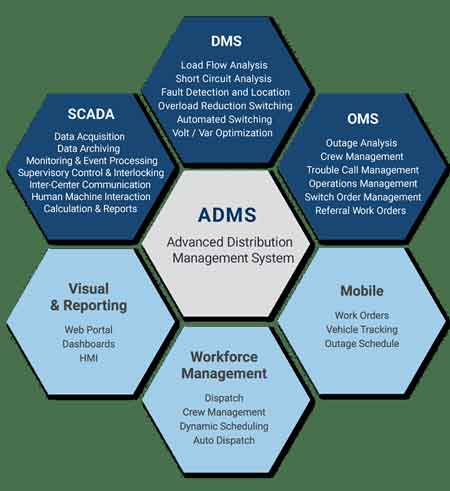
Advanced distribution management system benefits include centralized grid control, real-time feeder visibility, automated fault isolation, Volt/VAR optimization, and DER integration, allowing utilities to improve reliability, reduce outages, and maintain stable, safe distribution operations.
Utilities do not lose reliability because equipment suddenly fails. They lose reliability because they lack immediate operational control over evolving grid conditions. When operators cannot see or control real-time feeder behavior, outages propagate, restoration slows, and grid stability becomes dependent on manual intervention.
Advanced distribution management system benefits establish operational control authority
It becomes the system responsible for maintaining operational authority over the distribution network, allowing…
View more

Geospatial ADMS: The Grid Model Behind Safe Operations
Geospatial ADMS integrates GIS topology, feeder connectivity, asset location intelligence, and real-time telemetry into the operational grid model. This spatial electrical network model enables accurate power-flow analysis, safe switching, and ADMS operational decision support.
Distribution system operators depend on the accuracy of their operational network model every time they execute switching, isolate faults, or transfer load. When that model does not reflect actual device states, feeder connectivity, or asset relationships, operational decisions are made on assumptions rather than reality. Geospatial ADMS exists to prevent that disconnect by maintaining an accurate as-operated distribution network model that represents the physical and electrical…
View more
Distributed Energy Resource Management System Enables Real-time DER Coordination
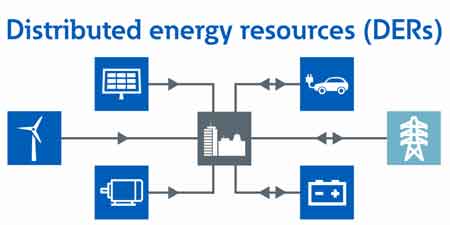
A distributed energy resource management system (DERMS) enables utilities to forecast grid conditions, dispatch DERs automatically, manage load flexibility, and maintain distribution system stability, allowing operators to increase asset utilization while preventing overloads and improving reliability.
Utilities once treated distributed energy resources as passive additions to the network. Solar installations, battery systems, and controllable loads connected at the grid edge, but their behavior remained largely independent of distribution operations. That model no longer holds. When Distributed Energy Resources (DER) penetration increases, unmanaged output can create voltage instability, overload transformers, and reduce operational certainty.
Why a distributed energy resource management…
View more
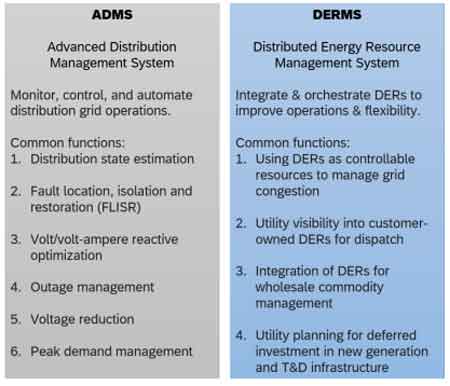
ADMS vs DERMS: Grid Control Authority and DER Coordination
ADMS vs DERMS defines utility control hierarchy, where ADMS governs grid operations, and DERMS coordinates distributed energy resources, inverter dispatch, and voltage support to maintain reliability, stability, and flexible distribution system operation.
Utility distribution networks now operate with two distinct control layers that serve fundamentally different operational roles. ADMS controls the electrical network itself, maintaining switching authority, voltage stability, and feeder reliability. DERMS manages distributed energy resource behavior, coordinating inverter output, storage dispatch, and aggregated resource response to support grid operational objectives.
This distinction between ADMS and DERMS ensures utilities retain centralized operational authority over grid infrastructure while leveraging distributed…
View more
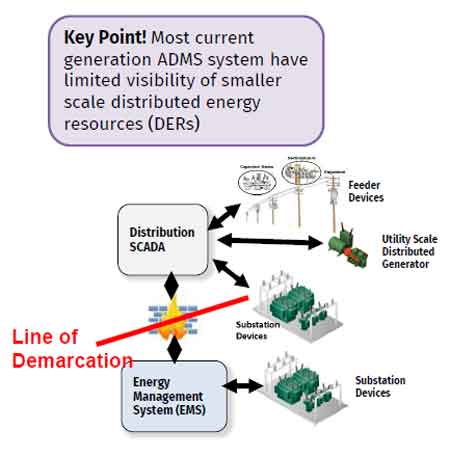
Grid Management Solutions
Grid management solutions integrate ADMS, DERMS, SCADA, and outage management into a unified operational control platform that enables real-time monitoring, automated switching, DER coordination, and secure command authority across modern utility distribution networks.
Electric utilities do not operate distribution networks solely by observation. They operate them through command authority. Grid management solutions provide that authority by integrating telemetry, network models, switching control, outage management, and distributed energy coordination into a unified operational control system. Without this integrated control layer, utilities lose the ability to maintain stability, restore outages safely, and coordinate distributed energy resources in real time.
Grid Management…
View more

ADMS Software for Distribution Grid Monitoring and Control
ADMS software enables utilities to monitor and control distribution networks in real time by integrating SCADA, outage management system OMS, and grid management functions. It allows operators to isolate faults, optimize power flows, and coordinate distributed energy resources safely.
Utilities operate energized distribution systems that cannot be observed directly. Every switching command, restoration action, and voltage control decision depends on reliable operational intelligence rather than visual confirmation. ADMS software provides this control authority by transforming telemetry, device status, and electrical connectivity into a continuously synchronized operational model that reflects actual system conditions.
Without this software layer, distribution grid operators cannot…
View more