AMI Integration and Modular Metering
By Jim Ketchledge, PMP, CEO, Nexcergy
By Jim Ketchledge, PMP, CEO, Nexcergy

Request for Quotation Service
Buyers Submit Free RFQs to top suppliers, no obligation.
Suppliers Browse real project RFQs directly from buyers.
Trust Electricity Forum 40 years connection buyers and suppliers.
AMI integration determines whether advanced metering infrastructure can coordinate cloud head end systems, API data exchange, multi HES orchestration, and ADMS connectivity without losing control during DER growth, telemetry surges, or vendor transition.
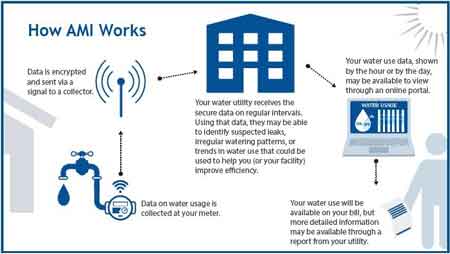
AMI integration determines whether a metering platform functions as a closed billing stack or as an operational control layer connected to the broader distribution system. As utilities modernize head end systems and expand DER visibility, integration design becomes a reliability issue rather than an IT preference.
Early AMI deployments were vertically integrated. The meter, communications network, head end system, and data management platform were delivered by a single vendor. That structure simplified procurement but constrained interoperability.
Next generation programs are different. Cloud head end systems, external analytics engines, and ADMS platforms require modular interfaces. Integration is no longer a static configuration. It is a dynamic operational dependency.
Modern head end systems increasingly operate in cloud environments. They expose meter events, voltage data, and status information through application programming interfaces rather than proprietary batch transfers.
The shift described in Next Generation AMI moves AMI from a self-contained platform to an open integration layer. API exposure allows ADMS, outage management, and planning tools to consume meter level telemetry in near real time.
This expands operational visibility but increases dependency on interface reliability. If API endpoints fail during a disturbance, control systems may continue operating on stale data.
Large utilities rarely replace every meter at once. Transitional states often include multiple head end systems operating simultaneously. A single-pane-of-glass model attempts to unify these feeds.
Stay informed with our FREE Metering, AMI & Edge Intelligence Newsletter — get the latest news, breakthrough technologies, and expert insights, delivered straight to your inbox.
In practice, multi HES orchestration introduces synchronization risk. Timestamp alignment, event deduplication, and latency variation must be managed carefully. If one HES reports voltage excursions seconds after another, the voltage optimization logic may misinterpret feeder conditions.
The traditional Advanced Metering Infrastructure stack did not anticipate parallel vendor ecosystems. Modular integration increases flexibility but also multiplies failure points.
Head end systems increasingly include embedded analytics rather than acting only as data routers. Simultaneously, external platforms process AMI Data for forecasting and asset management.
This dual processing model creates threshold discipline issues. Utilities must decide which analytics remain local to the HES and which migrate to enterprise data platforms. Duplicated logic can produce conflicting results.
For example, voltage anomaly detection executed at both HES and MDMS layers may generate separate event flags. Without clear governance, operators may receive inconsistent signals.
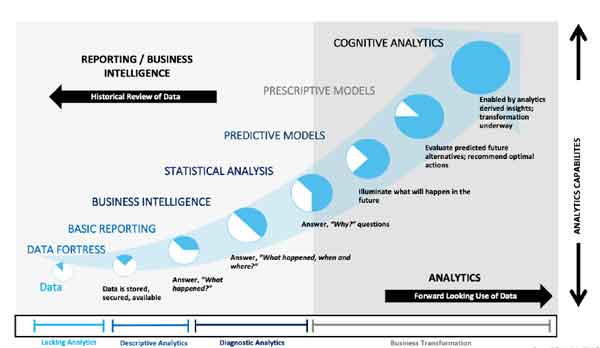
Vertically integrated AMI stacks concentrate risk with a single supplier. Modular ecosystems distribute risk but increase coordination requirements.
A cloud HES provider, a communications vendor, and a meter manufacturer may each control different portions of the integration chain. A firmware update that modifies event formatting can break downstream API ingestion if schema agreements are not tightly managed.
The implications for AMI Communications are direct. Reliable communication does not guarantee integration stability when application layers are misaligned.
An operational edge case illustrates the issue. During a feeder disturbance, meters transmit high-frequency voltage samples. If the integration layer drops event packets due to API throttling limits, ADMS voltage optimization may operate on incomplete feeder data.
A deployment scale example clarifies the risk. A system managing 750,000 endpoints cannot tolerate even a 1% event-loss rate during a telemetry surge without degrading situational awareness.
The financial justification for AMI 1.0 centered on meter-reading efficiency. In modular systems, value shifts toward ADMS coordination and DER enablement.
Integration with ADMS determines whether voltage optimization, conservation voltage reduction, and hosting capacity models can leverage meter level telemetry. Without reliable integration, advanced analytics remain theoretical.
The evolution from simple AMI Metering toward distributed intelligence also depends on clean orchestration between meters, head end systems, and enterprise control platforms.
AMI integration requires explicit governance structures. Change management, schema version control, and interface validation must be treated as operational safeguards rather than background IT tasks.
The modern AMI Smart Meter can generate event densities far beyond early deployment assumptions. Integration architecture must scale accordingly.
Even the physical AMI Meter becomes part of an integration chain that extends from field device to cloud analytics to control room dashboards.
If the integration layer fails under stress, modular flexibility becomes operational fragility. Distributed telemetry without reliable orchestration does not improve control. It increases uncertainty.
Utilities that treat AMI integration as a procurement exercise risk fragmenting their control environment. Utilities that treat it as an operational discipline align modular architecture with measurable reliability outcomes.
Think you know Metering, AMI & Edge Intelligence? Take our quick, interactive quiz and test your knowledge in minutes.
Advantages To Instructor-Led Training – Instructor-Led Course, Customized Training, Multiple Locations, Economical, CEU Credits, Course Discounts.
Request For QuotationWhether you would prefer Live Online or In-Person instruction, our electrical training courses can be tailored to meet your company's specific requirements and delivered to your employees in one location or at various locations.