Incipient Fault Detection Using AI Classification of Waveform Analysis
By Nico Payne, PE - San Diego Gas & Electric Company
By Nico Payne, PE - San Diego Gas & Electric Company
Request for Quotation Service
Buyers Submit Free RFQs to top suppliers, no obligation.
Suppliers Browse real project RFQs directly from buyers.
Trust Electricity Forum 40 years connection buyers and suppliers.
Incipient fault detection uses AI waveform classification and machine learning to identify precursor electrical disturbances, enabling utilities to predict equipment failure, locate degrading assets, and prevent outages before protective relays operate.
Electrical failures in distribution systems rarely begin abruptly. Most originate as incipient faults, subtle electrical disturbances that develop gradually and remain undetected by conventional protection. These precursor conditions may persist for days or weeks before escalating into sustained faults. Incipient fault detection using AI classification enables utilities to continuously monitor large distribution systems, allowing engineers to identify precursor electrical instability before protection systems operate. These early precursor signatures form the foundation for modern AI fault detection, where waveform intelligence continuously evaluates system behavior and identifies emerging electrical degradation.
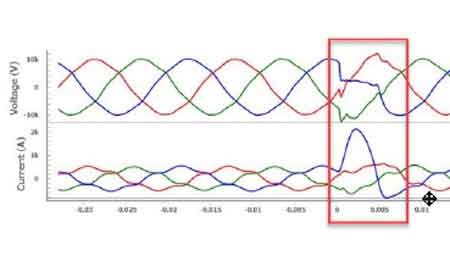
Traditional protection systems operate on magnitude thresholds. They respond when current exceeds defined limits, or voltage collapses beyond protection settings. Incipient faults rarely trigger these thresholds. Instead, they appear as small waveform irregularities, transient asymmetries, or intermittent disturbances that protection systems interpret as non-critical events. AI classification transforms these subtle waveform variations into actionable engineering intelligence, enabling earlier and more precise electrical fault detection across the distribution network.
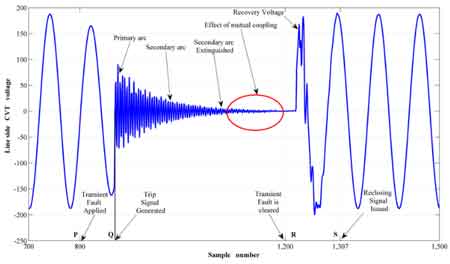
Every energized conductor operates with a stable waveform profile defined by system impedance, load behavior, and equipment condition. When insulation degrades, connectors loosen, or contamination develops, waveform characteristics begin to change. These changes often occur at time scales and magnitudes too small to trigger conventional alarms.
Incipient fault detection depends on identifying these precursor waveform signatures, which include:
• Transient high-frequency oscillations associated with partial discharge
• Harmonic distortion caused by insulation deterioration
• Intermittent waveform asymmetry indicating mechanical instability
• Momentary waveform disturbances linked to conductor contact or contamination
Stay informed with our FREE GenAI Copilots, Knowledge & Workforce Newsletter — get the latest news, breakthrough technologies, and expert insights, delivered straight to your inbox.
These waveform anomalies represent early indicators of asset degradation. Utilities using highly sampled waveform data have demonstrated that these precursor signatures can be detected and correlated with specific equipment failure mechanisms before outages occur.
Unlike conventional monitoring systems that capture waveform data for manual analysis, AI classification continuously evaluates waveform behavior and automatically identifies precursor conditions. Once precursor conditions are identified, engineers rely on structured fault analysis in power system processes to determine failure mechanisms, affected equipment, and required engineering response.
AI classification systems analyze waveform data using trained machine learning models that recognize patterns associated with known fault mechanisms. These models evaluate waveform features, including frequency-domain transformations, transient impulse characteristics, and symmetry relationships.
The classification process follows a structured analytical workflow:
Waveform acquisition provides high-resolution voltage and current samples. Feature extraction identifies signal characteristics associated with abnormal behavior. Machine learning models evaluate these features and classify events based on learned patterns. Engineering systems then interpret the classification results to determine whether field intervention is required.
Classification models distinguish between normal operational switching events, temporary disturbances, incipient faults, and sustained fault conditions. This capability enables utilities to maintain continuous awareness of system condition and protect infrastructure before failures occur, strengthening overall power system reliability.
Classification models distinguish between:
• Normal operational switching events
• Temporary disturbances with no reliability risk
• Incipient faults indicating developing equipment failure
• Permanent faults requiring immediate protection response
This distinction is critical because distribution systems generate large volumes of waveform data. AI classification allows utilities to isolate precursor conditions from routine operational variability.
Modern AI classification models achieve high accuracy in distinguishing precursor events from normal system behavior, enabling utilities to detect failure conditions before conventional protection systems operate.
Once AI classification identifies an incipient fault, utilities can initiate a targeted engineering investigation. Unlike traditional outage response, which requires locating faults after service interruption, incipient fault detection enables intervention while the infrastructure remains energized.
Engineering teams use classification results to prioritize inspection of specific equipment, such as underground cable terminations, overhead connectors, insulators, and transformer connections. Because AI classification can associate waveform signatures with specific failure mechanisms, utilities can efficiently focus their investigation efforts.
This approach significantly reduces fault location uncertainty. Instead of inspecting entire circuits, engineering teams can investigate targeted locations where precursor signatures have been detected.
Early identification enables utilities to repair or replace degrading components before failure occurs. This prevents unplanned outages, reduces emergency repair costs, and improves system reliability.
The full value of incipient fault detection emerges when AI classification is integrated with GenAI copilots that support engineering decision-making. These copilots interpret classification results and provide contextual engineering guidance, forming a critical component of the evolving AI-augmented utility workforce.
Rather than requiring engineers to review waveform data directly, GenAI copilots explain classification outcomes in operational terms. They identify likely failure mechanisms, estimate reliability risk, and recommend investigation priorities.
This capability is particularly important as distribution systems grow more complex. Increasing electrification, aging infrastructure, and distributed energy integration create conditions where manual waveform analysis becomes impractical.
GenAI copilots enable utilities to scale engineering expertise by translating classification results into actionable reliability decisions. Engineers remain in control of intervention decisions while benefiting from continuous automated waveform interpretation.

AI classification enables utilities to deploy incipient fault detection across large distribution systems. Cloud-based platforms ingest waveform data from multiple sources, including waveform recorders, relays, and advanced metering infrastructure. Machine learning models continuously analyze incoming waveform data and classify precursor events in real time.
This continuous classification capability allows utilities to maintain system-wide awareness of equipment condition. Instead of reacting to outages, utilities gain predictive visibility into developing faults.
Operational deployments have demonstrated that AI classification enables utilities to identify degrading equipment, issue targeted patrol requests, and prevent outages. Field crews use classification results to locate and replace failing components before catastrophic failure occurs.
This transforms reliability management from reactive response to predictive intervention.
Incipient fault detection using AI classification represents a fundamental advancement in distribution system reliability engineering. By continuously analyzing waveform behavior and classifying precursor fault signatures, AI systems allow utilities to detect equipment degradation at its earliest stages.
This predictive capability enables targeted engineering intervention, prevents unplanned outages, and improves asset lifecycle management. As utilities modernize distribution systems, AI classification will become an essential engineering function.
Rather than waiting for faults to occur, utilities can now identify and resolve failure conditions before service reliability is affected. Incipient fault detection transforms waveform data into actionable intelligence, allowing engineers to operate distribution systems with greater precision, efficiency, and reliability.
Advantages To Instructor-Led Training – Instructor-Led Course, Customized Training, Multiple Locations, Economical, CEU Credits, Course Discounts.
Request For QuotationWhether you would prefer Live Online or In-Person instruction, our electrical training courses can be tailored to meet your company's specific requirements and delivered to your employees in one location or at various locations.